Types of Band Saw Blades and How to Choose
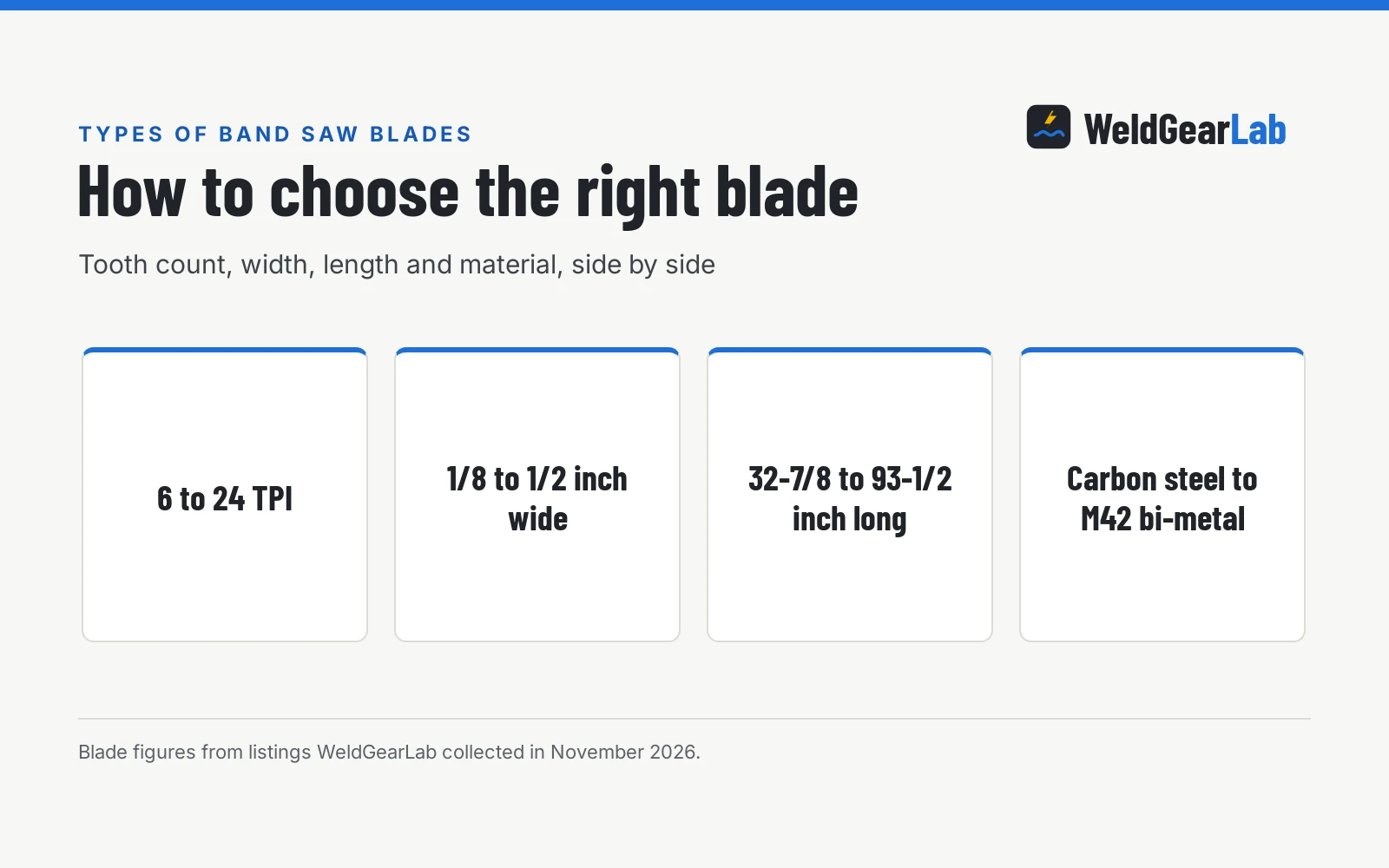
Band saw blades differ by tooth count, width, length and material, and this guide explains each type with figures from real listings so the right blade meets the saw and the cut.

On this page
Top picks at a glance
As an Amazon Associate I earn from qualifying purchases.
- 1
 FOXBC 44-7/8 inch Portable Bandsaw Blades 14 TPI9.7/10View on Amazon
- 2
 ElaraBerry 5 Pack 35-3/8 Inch Portable Band Saw Blades9.7/10View on Amazon
- 3
 FOXBC 44-7/8-inch Bandsaw Blades 24 TPI9.6/10View on Amazon
A length of steel tube waits on the bench, marked for a square cut, and the blade on the saw looks wrong for the wall thickness. That mismatch is where most band saw trouble starts. Types of band saw blades differ by tooth count, width, length and material, and each of those traits suits a different cut. This guide explains the types, the figures that define them, and how to match a blade to the saw and the work.
This guide links to our product roundups, where WeldGearLab gets a commission on purchases made through links on this page, and your price stays the same. Read our affiliate disclosure.
Types of band saw blades at a glance
| Tooth count | Width | Length | Notes | |
|---|---|---|---|---|
| Carbon steel wood blade | 6 TPI | 1/4 inch | 62 inch | POWERTEC lists a 62 inch set for a 9 inch saw |
| Carbon steel scroll blade | 14 TPI | 1/8 inch | 93-1/2 inch | FOXBC lists a 93-1/2 inch set for a 14 inch saw |
| Bi-metal portable blade | 14/18 TPI | 1/2 inch | 44-7/8 inch | FOXBC lists M42 high speed steel in a 5 Pack |
| High speed steel portable blade | 18 TPI | Not stated | 32-7/8 inch | DEWALT lists .020 inch thick with 8% cobalt and Rc 65-67 tooth hardness |
Length decides fit, width decides the curve, tooth count decides the finish. Get length right first, then pick tooth count for the material thickness.
Types of band saw blades by tooth count
Tooth count, written as TPI, sets how many teeth meet the work at once. A 6 TPI blade clears chips fast on wood and suits straight cuts and resaw work, where the large gullets clear chips and the blade can run cool. A 14 TPI blade suits scroll work and thin stock, where more teeth share the cut and leave a smoother edge. An 18 TPI blade suits thin metal on a portable saw, and a 24 TPI blade suits still thinner stock, where each tooth takes a small bite.
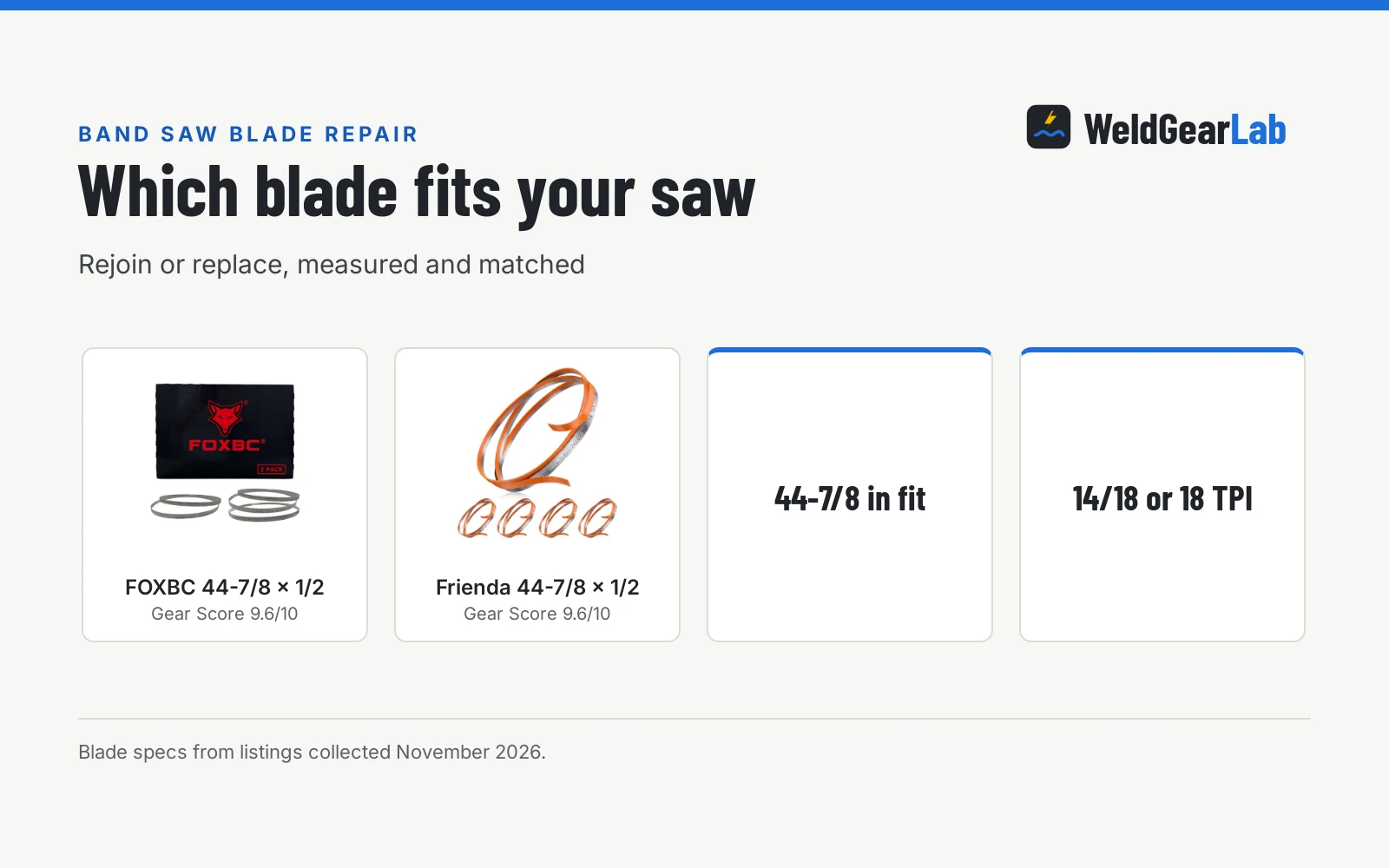
Variable pitch blades mix counts, such as 14/18 TPI, so the tooth spacing changes along the blade. The FOXBC portable blade lists 14/18 TPI with M42 high speed steel, and the listing pairs it with a 44-7/8 inch length and a 1/2 inch width. See the variable pitch vs constant pitch band saw blade comparison for the trade offs.
Blade material: carbon steel, bi-metal and high speed steel
Carbon steel blades suit hard and soft woods, plastic and non-ferrous metals. The POWERTEC 93-1/2 inch assortment lists premium high grade carbon steel, and the FOXBC 93-1/2 inch assortment lists Japan SK5 high grade carbon steel, each with a welded joint built for heat resistance. These blades suit the shop saw that cuts wood, plastic and non-ferrous metals, which the POWERTEC listing names as its use.
Bi-metal blades pair a high speed steel edge with a flexible backer. The FOXBC 44-7/8 inch blade lists Bi-Metal M42 High Speed Steel, and the DEWALT portable blades list a Matrix II high speed steel edge with an alloy steel backer. The DEWALT listing states 8% cobalt content and Rc 65-67 tooth hardness, figures that point to an edge built for heat and wear resistance on metal.
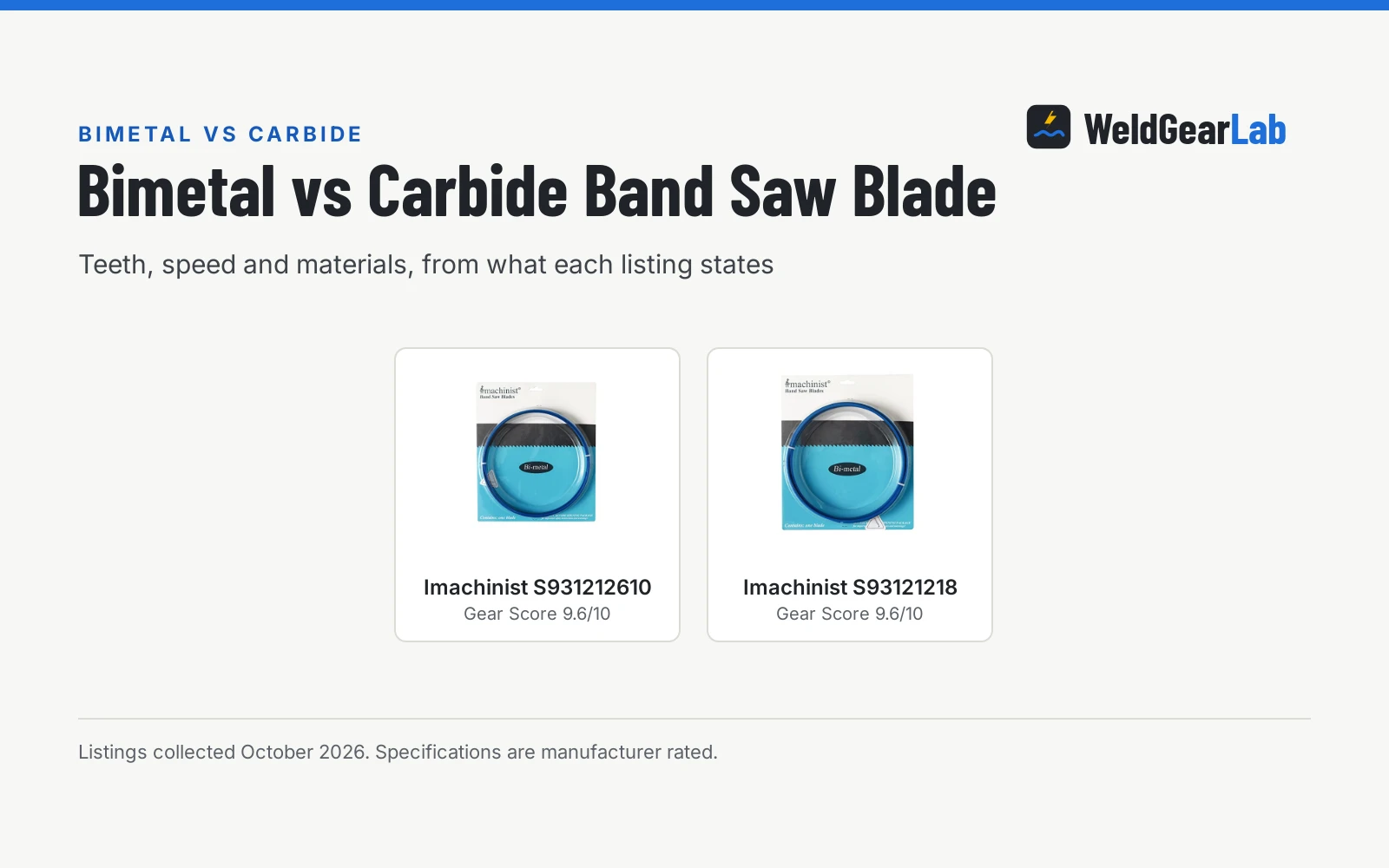
Material choice follows the work. Carbon steel covers wood, plastic and non-ferrous metals. Bi-metal and high speed steel cover metal, where the edge must hold up to heat. See the bi-metal vs carbide band saw blade comparison for a closer look at edge materials.
Blade width and the cut it suits
Width sets how tight a curve the blade can follow. A 1/8 inch blade follows scroll cuts and tight curves, which is why the 93-1/2 inch assortments from POWERTEC and FOXBC include a 1/8 inch by 14 TPI blade. A 1/4 inch blade suits general curve work and straight cuts on a shop saw. A 3/8 inch blade suits broader curves and straight cuts on the 62 inch POWERTEC set. A 1/2 inch blade suits straight cuts and resaw work, where a wide blade tracks straight and resists wander.
Width also sets the load on the saw. A wide blade needs more tension to track true, and a narrow blade needs less. Match the width to the cut and to the saw, and check the saw manual for the width range it accepts.
Blade length and saw size
Length must match the saw, and the listing states it plainly. Portable saws take short blades: the DEWALT portable blades list a 32-7/8 inch length, and the FOXBC portable blade lists a 44-7/8 inch length. Stationary saws take long blades: the POWERTEC 62 inch assortment fits a 9 inch saw, and the 93-1/2 inch assortments from POWERTEC and FOXBC fit a 14 inch saw.
Measure the old blade or check the saw manual before ordering, and confirm the length the listing states. A blade that is too long will not tension, and a blade that is too short will not fit the wheels. The band saw blade sizes guide covers width and length in more detail.
How to match a blade to the job
Start with the saw, then the material, then the cut.
- Fit the saw. Pick the length the saw takes, such as 32-7/8 inch for a portable saw or 93-1/2 inch for a 14 inch shop saw.
- Fit the material. Carbon steel for wood and plastic, bi-metal or high speed steel for metal.
- Fit the cut. A 6 TPI blade for fast straight cuts in wood, a 14 TPI blade for scroll cuts, an 18 TPI or 24 TPI blade for thin metal, and a 14/18 TPI blade where the stock thickness varies.
- Fit the curve. A 1/8 inch blade for tight curves, a 1/2 inch blade for straight cuts and resaw work.
Pack size matters when blades wear fast. The DEWALT portable blades come in a 3-Pack, the POWERTEC assortments come as a 3PK set with a blade for straight cuts, a blade for scroll cuts and a blade for general work, and the FOXBC portable blade comes in a 5 Pack. A set that covers several cuts keeps a spare on hand when a blade dulls mid job.
Safe cutting. Wear eye and face protection, clamp the work, keep guards in place, and keep gloves away from a running blade. A band saw cuts fast and quiet, so keep hands clear of the blade path and switch the saw off before clearing chips or changing a blade. OSHA machine guarding rules cover guards and safe practice on saws. See the metal fab tools hub for more shop guides.
FAQ for welders
What TPI band saw blade should I use for thin metal?
An 18 TPI blade suits thin metal on a portable saw, and a 24 TPI blade suits still thinner stock. The DEWALT portable blades list 18 TPI and 24 TPI in a 32-7/8 inch length with a .020 inch thickness. A 14/18 TPI variable pitch blade also suits stock where the thickness changes, such as tube with a thin wall.
Can I use a wood band saw blade on metal?
A carbon steel blade built for wood cuts wood, plastic and non-ferrous metals, which the POWERTEC listing names. For steel, a bi-metal or high speed steel blade holds its edge longer under heat. The FOXBC portable blade lists Bi-Metal M42 High Speed Steel for metal cutting, and the DEWALT portable blades list a Matrix II high speed steel edge.
How do I know the right blade length for my saw?
Check the saw manual or measure the old blade, then match the length the listing states. Portable saws in these listings take a 32-7/8 inch or 44-7/8 inch blade, while the shop saws take a 62 inch blade for a 9 inch saw or a 93-1/2 inch blade for a 14 inch saw. The how to coil a band saw blade guide shows how to handle a long blade for storage.
What width band saw blade do I need for curves?
A 1/8 inch blade follows tight curves and scroll work, and the 93-1/2 inch assortments include a blade for that use. A 1/4 inch blade suits general curves, and a 1/2 inch blade suits straight cuts and resaw work. Pick the widest blade that still follows the curve you need to cut, and check the saw manual for the width range it accepts.
How long does a band saw blade last?
Blade life depends on the material, the tooth count and how the saw is set up. A blade cutting clean wood lasts longer than a blade cutting metal, where heat wears the edge fast. Keep the blade cool, let the teeth do the work, and change the blade when cuts wander or the edge dulls. The how to sharpen band saw blades guide covers upkeep for blades that can be sharpened.
Related: best band saw blade for metal, best hand held band saw, portable vs stationary band saw, and chop saw vs band saw for metal.