Band Saw Blade Speed Chart for Metal Cutting
A band saw blade speed chart maps material and thickness to a blade speed, and this guide shows how to read it, match teeth per inch and width to the cut, and check the saw before the blade moves.

On this page
Top picks at a glance
As an Amazon Associate I earn from qualifying purchases.
- 1
 FOXBC 35-3/8 Inch Bandsaw Blade 10/14 TPI for Milwaukee9.6/10View on Amazon
- 2
 Lenox Tools 8009938PW14185 Wolf-Band Portable Band Saw Blade9.6/10View on Amazon
- 3
 FOXBC 27 Inch Bandsaw Blades 18 TPI for DeWalt DCS3779.6/10View on Amazon
A length of steel tube waits on the bench, marked for a cut that has to stay square. The saw stands ready, the blade is on, and the only question left is how fast that blade should move through the metal. A band saw blade speed chart answers that question, and reading it right is the difference between a clean cut and a ruined blade.
This guide links to our product roundups, where WeldGearLab gets a commission on purchases made through links on this page, and your price stays the same. Read our affiliate disclosure.
How to read a band saw blade speed chart
A band saw blade speed chart maps the metal in front of you to a blade speed. Find the material on the chart, find the thickness, and read the speed where they meet. That speed is a starting point, not a promise: the saw manual and the door chart on the machine itself win over any printed chart when they disagree. Set the saw to the chart speed, make a short cut in scrap, and watch the cut before committing to the real piece.
Speed and blade choice work together. The chart gives the speed, while the blade gives the cut: width sets how tight a curve the blade can follow, and teeth per inch sets how the blade clears chips. A chart speed means little with the wrong blade on the saw, so pick the blade with the chart, not after it.
Blade length, width and teeth per inch
| Blade | Length | Width | Teeth per inch | Listed use |
|---|---|---|---|---|
| DEWALT DW3983C | 32-7/8 inch | Not stated | 18 TPI | Portable band saw |
| DEWALT DW3984C | 32-7/8 inch | Not stated | 24 TPI | Portable band saw |
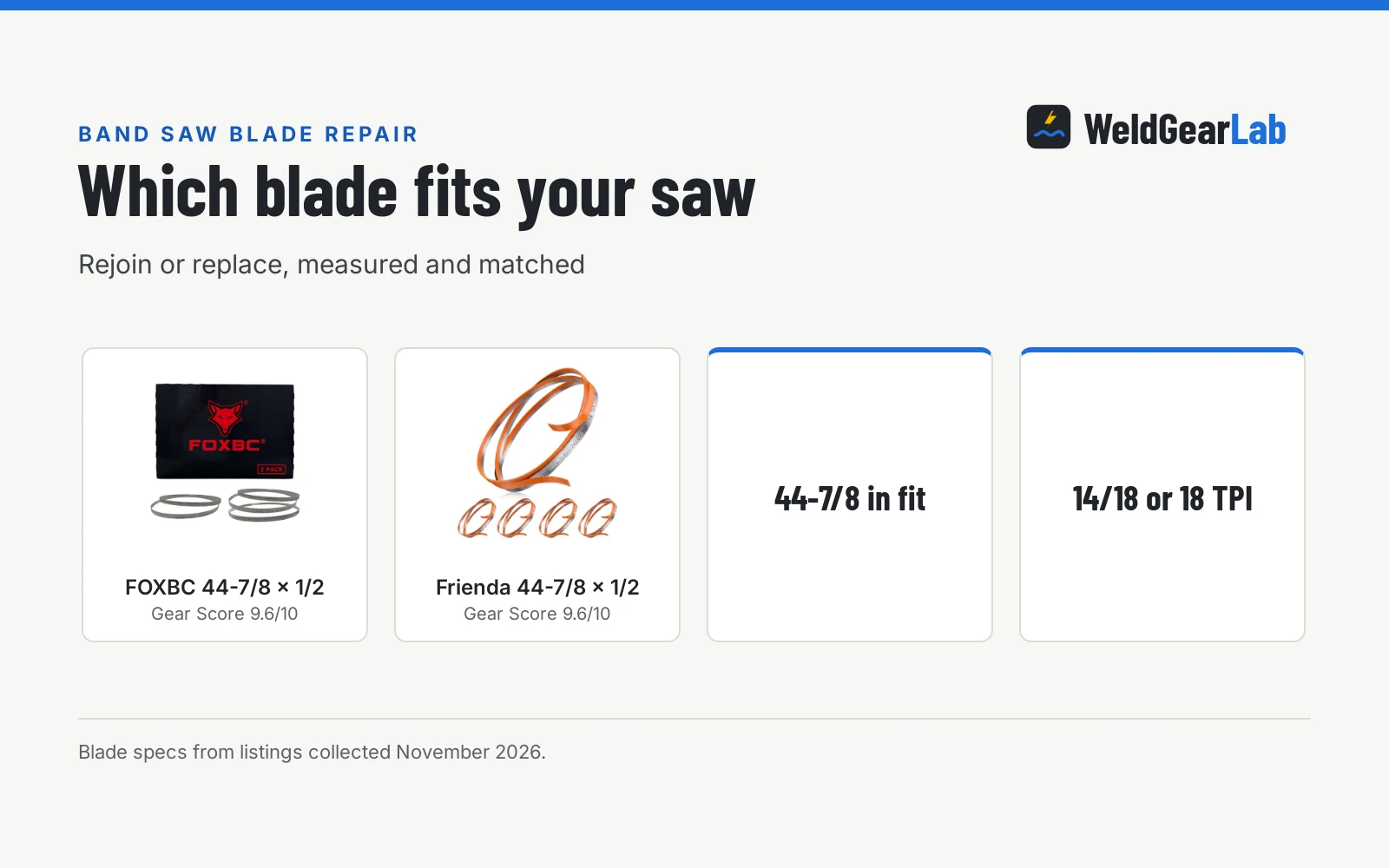
| FOXBC 44-7/8 | 44-7/8 inch | 1/2 inch | 14/18 TPI | Portable band saw |
| POWERTEC 13603 | 93-1/2 inch | 1/2, 1/8, 1/4 inch | 6, 14 TPI | Wood, plastic, non-ferrous metals |
| FOXBC 93-1/2 | 93-1/2 inch | 1/2, 1/8, 1/4 inch | 6, 14 TPI | Wood, plastic |
| POWERTEC 13601 | 62 inch | 1/4, 1/8, 3/8 inch | 6, 14 TPI | Wood, plastic, non-ferrous metals |
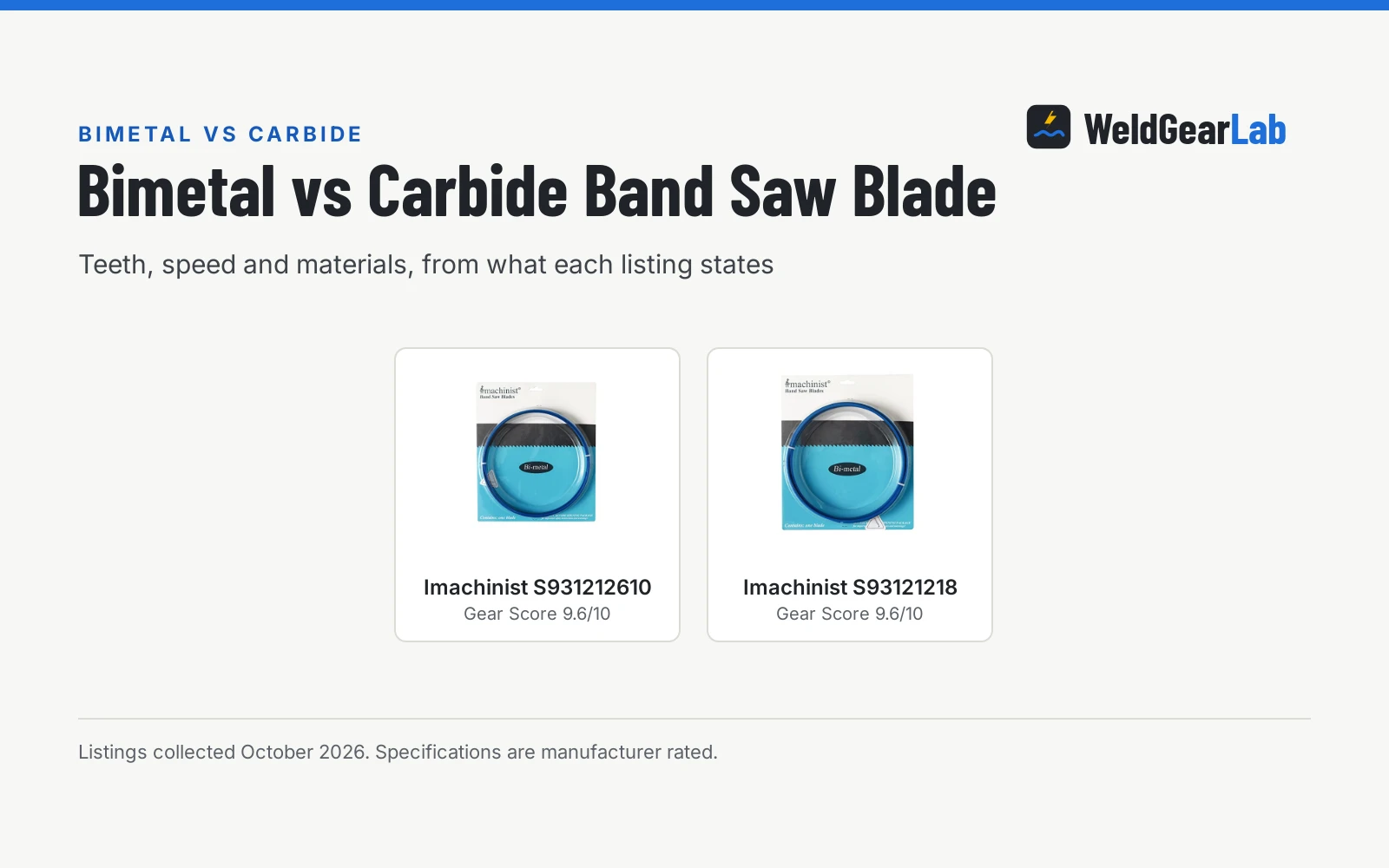
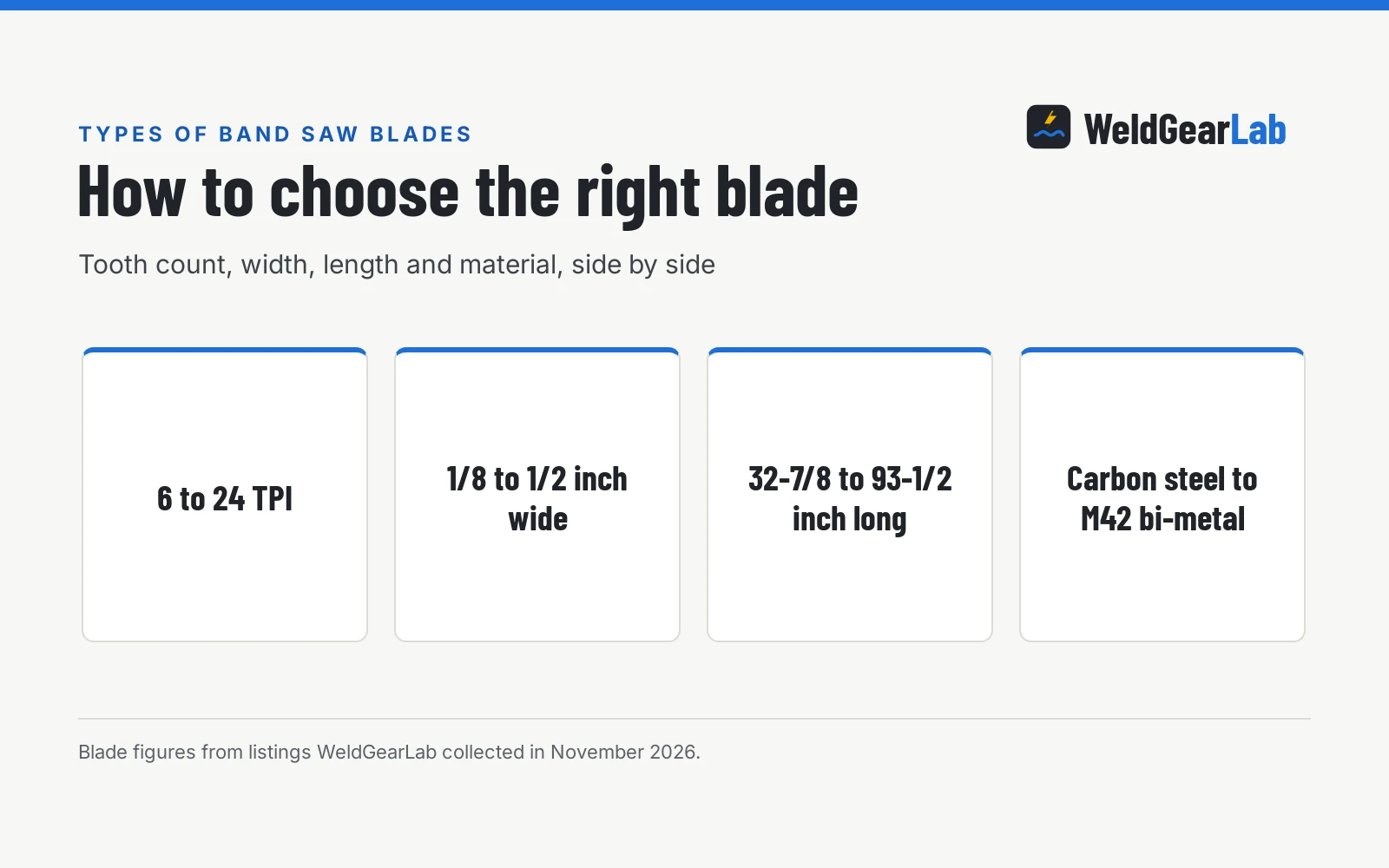
The table shows the spread in real blades. Lengths run from 32-7/8 inch portable blades to 93-1/2 inch stationary blades, and the length has to match the saw: a blade that is too long or too short will not track, so check the manual for the length the saw takes. Widths in the table run from 1/8 inch to 1/2 inch, and teeth per inch run from 6 TPI to 24 TPI, with a 14/18 TPI variable pitch blade in the mix. The DEWALT blades list a Matrix II high speed steel edge with 8% cobalt and Rc 65-67 tooth hardness, while the FOXBC portable blade lists Bi-Metal M42 high speed steel. Our band saw blade sizes guide covers width and length in more detail.
What teeth per inch does on the cut
Teeth per inch decides how much material teeth have to clear. Coarse teeth, like the 6 TPI blades in the table, clear chips well and suit thick stock, where teeth take a big bite. Fine teeth, like the 24 TPI DEWALT blade, take small bites and suit thin stock, where coarse teeth would snag and strip. The 14 TPI blades in the table sit between coarse and fine and handle scroll cutting and tight curves, which the POWERTEC and FOXBC listings call out. A 14/18 TPI variable pitch blade varies the tooth spacing between 14 and 18 TPI on the same blade, which cuts down on vibration. Our variable pitch vs constant pitch guide explains the trade-off.
What to check on the saw before the blade moves
Guards in place, blade tension and tracking set to the manual, and the work clamped tight. Wear eye and face protection, keep gloves away from rotating parts, and keep hands clear of the blade path. Check the blade for cracks or missing teeth before the cut, and check that the guides sit close to the work. See the OSHA machine guarding page for the rules that cover saws. Our best portable band saw for metal guide covers saws that run the blades in the table above.
When the cut tells you the speed is wrong
A speed that is too high shows up as heat: the blade dulls fast, the metal heats up, and teeth strip. A speed that is too low shows up as a blade that rubs instead of cutting, and the cut goes slow. When the cut goes wrong, stop the saw, let the blade cool, and check tension, tracking and tooth count against the chart. Change the blade before changing the speed when the teeth do not match the stock: a dull or wrong blade at the right speed still cuts badly, while the right blade at a chart speed cuts better.
FAQ for welders
What speed should a band saw blade run at for metal?
Read the chart for the material and the thickness, then set the saw to the speed the chart gives. Treat that speed as a starting point and check the saw manual and door chart, since the saw maker knows the machine. No chart speed suits every metal and every thickness, so match the chart to the job each time.
Does teeth per inch change the speed?
Teeth per inch changes the cut more than the speed. Coarse teeth like 6 TPI clear chips on thick stock, fine teeth like 24 TPI suit thin stock, and the chart still sets the speed. Pick the teeth per inch for the stock, then read the speed from the chart.
What blade length fits my saw?
The manual states the length the saw takes, and the blade has to match it. Lengths in the table run from 32-7/8 inch portable blades to 93-1/2 inch stationary blades, so measure the old blade when the manual is missing. A blade of the wrong length will not tension or track right.
Can a wood blade cut metal?
The POWERTEC sets in the table are listed for wood, plastic and non-ferrous metals, the FOXBC 93-1/2 set is listed for wood and plastic, and a blade listed for wood will dull fast on steel. For steel, use a blade listed for metal, like the DEWALT blades with a Matrix II high speed steel edge or the FOXBC Bi-Metal M42 blade. Match the blade to the metal, not to the saw.
Why does my band saw blade overheat?
Heat usually means the speed is too high for the material, the teeth per inch does not suit the thickness, or the blade is dull. Stop the saw, let the blade cool, and check the chart speed, the tooth count and the blade condition before cutting again. A sharp blade matched to the stock runs cooler than a dull blade pushed through the same cut.
Related: best band saw blade for metal, best band saw blades 44 7/8, how to sharpen band saw blades, and best band saw blade for aluminum.