How to Sharpen Band Saw Blades: A Step-by-Step Guide
A dull band saw blade can be sharpened by hand or with a rotary tool, and this guide shows when it is worth the effort and when to fit a fresh blade instead.

On this page
Top picks at a glance
As an Amazon Associate I earn from qualifying purchases.
- 1
 FOXBC 44-7/8 inch Portable Bandsaw Blades 14 TPI9.7/10View on Amazon
- 2
 ElaraBerry 5 Pack 35-3/8 Inch Portable Band Saw Blades9.7/10View on Amazon
- 3
 FOXBC 44-7/8-inch Bandsaw Blades 24 TPI9.6/10View on Amazon
The cut starts to wander, the blade drifts off the line, and the work smells hot before the cut is done. A dull band saw blade turns a simple cut into a fight, and it leaves a rough edge that needs more cleanup after. The good news is that learning how to sharpen band saw blades is a shop skill worth having, because a blade with even wear and no cracked teeth can often be brought back with a file or a rotary tool. This guide walks through when sharpening is worth the time, what to use, and how to keep the teeth even so the blade cuts straight again.
This guide links to our product roundups, where WeldGearLab gets a commission on purchases made through links on this page, and your price stays the same. Read our affiliate disclosure.
When a blade is worth sharpening
Sharpening pays off when the teeth are dull but still whole. Look along the edge in good light: if the tooth tips look rounded and the gullets still hold their shape, the blade is worth filing. If teeth are missing, cracked at the root, or the blade has a kink, no amount of filing brings it back, and a fresh blade is the sensible call.
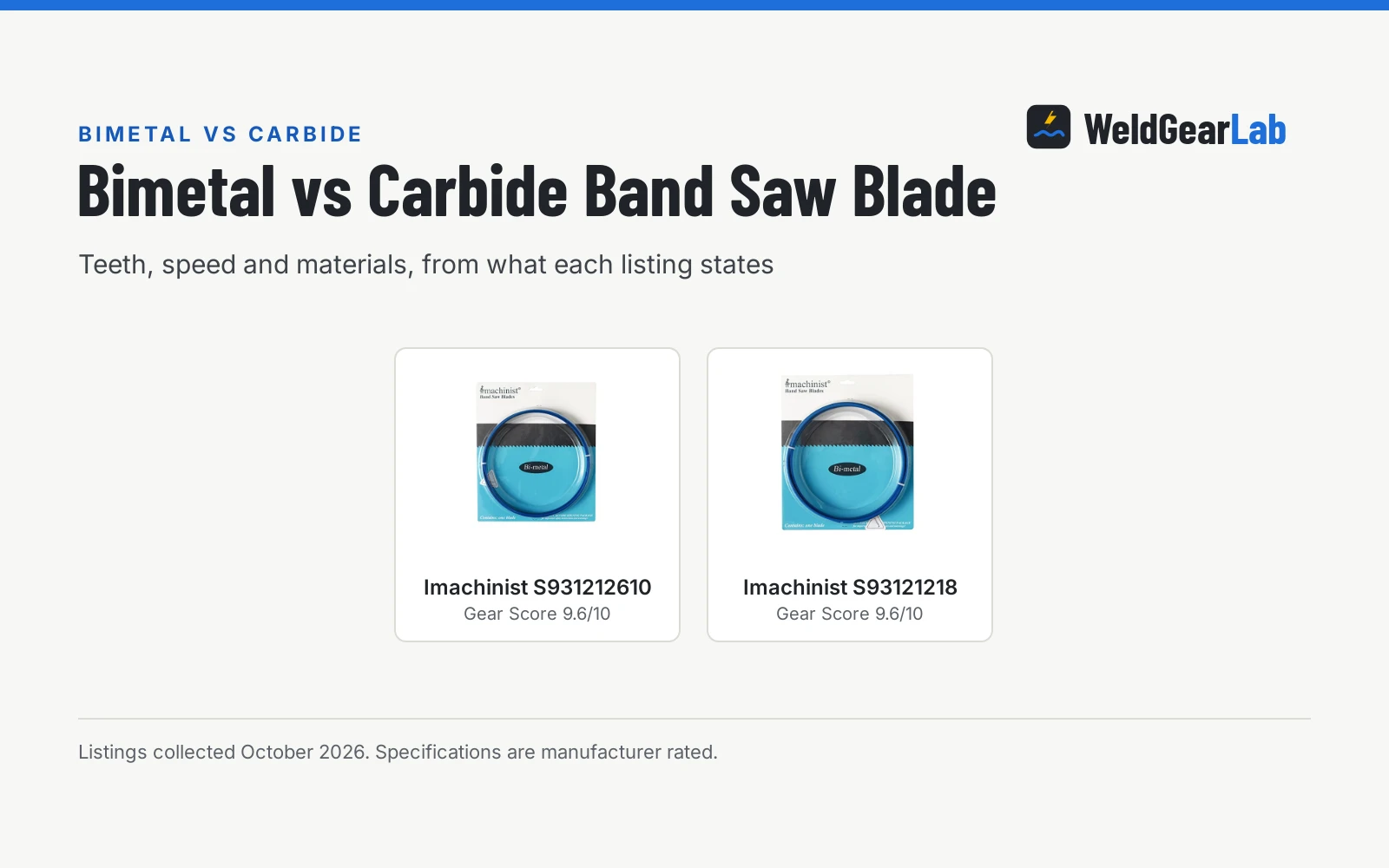
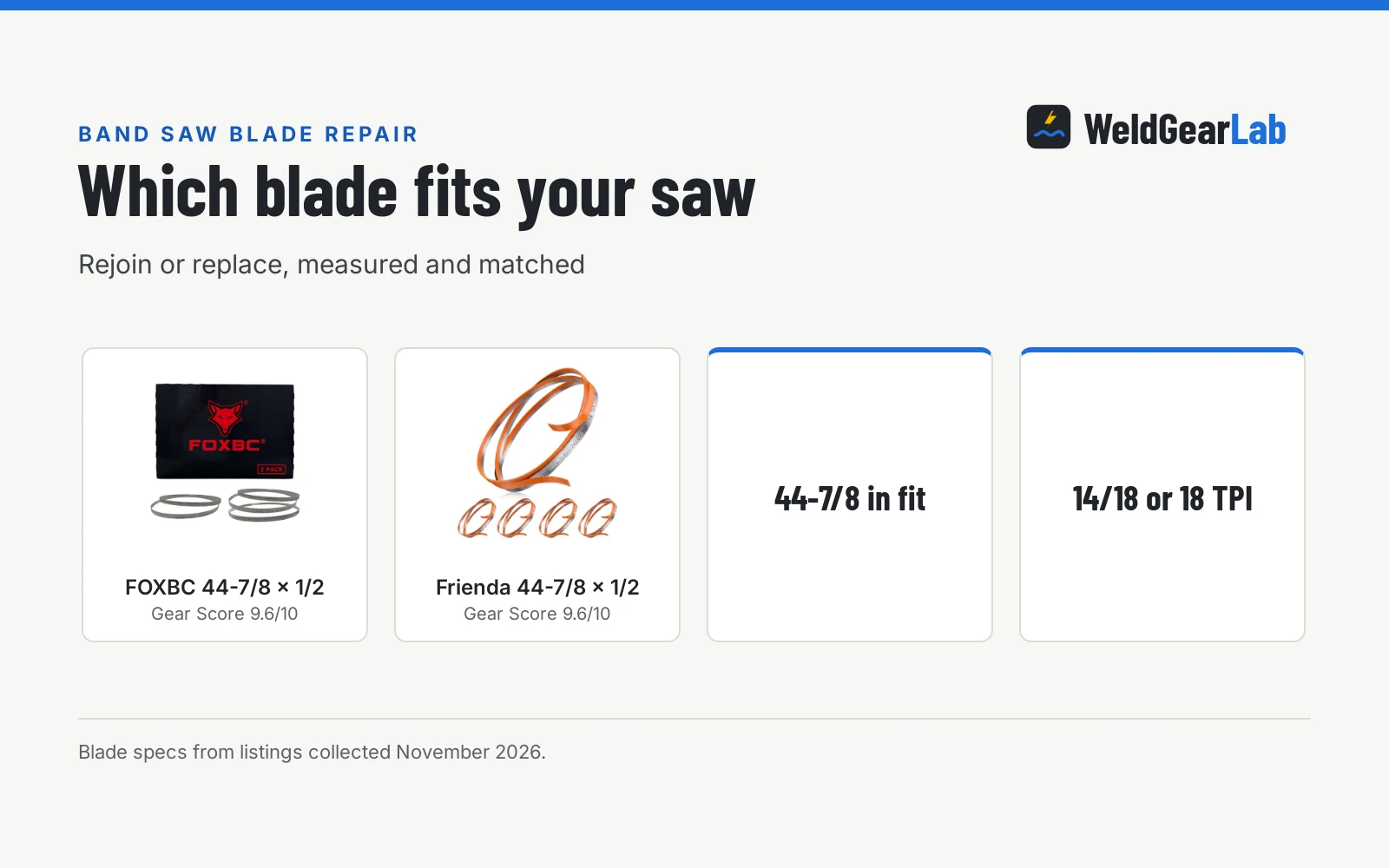
Tooth size sets how much work sharpening takes. Coarse blades, such as the 6 TPI blades in the POWERTEC and FOXBC 93-1/2 inch assortments, have wide gullets that a file reaches with ease. Fine blades take more patience: DEWALT lists its 32-7/8 inch portable blades at 18 TPI and 24 TPI, and FOXBC lists a 44-7/8 inch portable blade at 14/18 TPI. The finer the teeth, the lighter the touch.
Sharpening methods side by side
A few methods cover most shop sharpening, and each suits a different blade.
| Hand file | Rotary tool | Bench grinder | |
|---|---|---|---|
| Best for | Light touch-ups on coarse teeth | Small gullets and fine teeth | Fast work on large, coarse teeth |
| Tooth temper risk | Low, no heat from filing | Low with light passes | High if the tooth overheats |
| Speed | Slow, tooth by tooth | Faster than a file | Fastest of these methods |
| Skill needed | Steady hand and patience | Control of a small spinning bit | Careful pressure and cooling |
| Cost of setup | A file and a vise | A rotary tool and bits | A grinder and a wheel |
A hand file is the quiet choice and risks the least heat. A rotary tool suits fine teeth and tight gullets, where a file feels clumsy. A bench grinder is fast, but it is the easiest of the three to overheat a tooth, and a tooth that runs hot loses its edge fast.
What you need before you start
Gather the gear before the blade comes off the saw.
- A file that fits the gullet. It should sit in the gullet without rocking, and bite the steel.
- A rotary tool with a small grinding bit. Handy for fine teeth, such as the 24 TPI teeth on the DEWALT 32-7/8 inch blade.
- A vise or a clamp. It holds the blade still with the teeth up.
- A marker. Mark the tooth where you start.
- Eye protection. Filing throws fine chips, and a coiled blade can spring open.
- A brush and a rag. Clean the blade before you start.
How to sharpen band saw blades step by step
Work in good light, with the blade off the saw and held steady. The steps below suit a hand file, and the same order works with a rotary tool if you swap the file for a small bit and keep the passes light.
- Take the blade off the saw and clean it. Unplug the saw, release the tension, and lift the blade clear. Brush off chips.
- Mark the starting tooth. Put a mark on a tooth with a marker, so you know when you have worked around the loop.
- Clamp a short section. Hold the blade in a vise with the teeth up, and move it along as you work.
- File each gullet with steady strokes. Push the file in the direction the teeth point, lifting it on the return. Keep the angle the same from tooth to tooth.
- Keep the set even. On most blades the teeth lean alternately to each side, and that lean clears the cut. File without bending the teeth, or the blade will pull to a side.
- Knock off the burr. Run a fine stone lightly along the side of the teeth, then brush the blade clean.
- Refit the blade and check the cut. Set the tension and tracking as the saw manual directs, and make a light cut in scrap.
With a rotary tool, the order stays the same. Use a small bit that fits the gullet, keep each pass short, and let the bit do the work. Heat is the risk, and DEWALT lists tooth hardness at Rc 65-67 on its portable blades, a hardness worth keeping.
Common mistakes that ruin a blade
- Filing against the tooth. A file cuts on the push, so dragging it back only dulls the file. Lift the file clear on the return stroke.
- Changing the tooth angle. Match the angle that is already there, and hold it steady from tooth to tooth.
- Overheating a tooth on the grinder. On a carbon steel blade, a tooth that turns blue has lost its temper and will dull fast. The high speed steel edge DEWALT lists on its portable blades resists heat better, but it still pays to keep passes short and let the tooth cool.
- Sharpening a blade with missing teeth. A missing tooth leaves a gap that the teeth beside it cannot fill, and the blade will thump and pull.
- Ignoring the weld. A weld that has cracked is a weak spot, and the blade is usually past saving. If the weld looks suspect, retire the blade.
When to replace the blade instead
Some blades are past sharpening. Retire the blade if teeth are missing, if the blade is cracked anywhere along its length, if the weld has failed, or if the gullets have worn so shallow that filing has nothing left to shape.
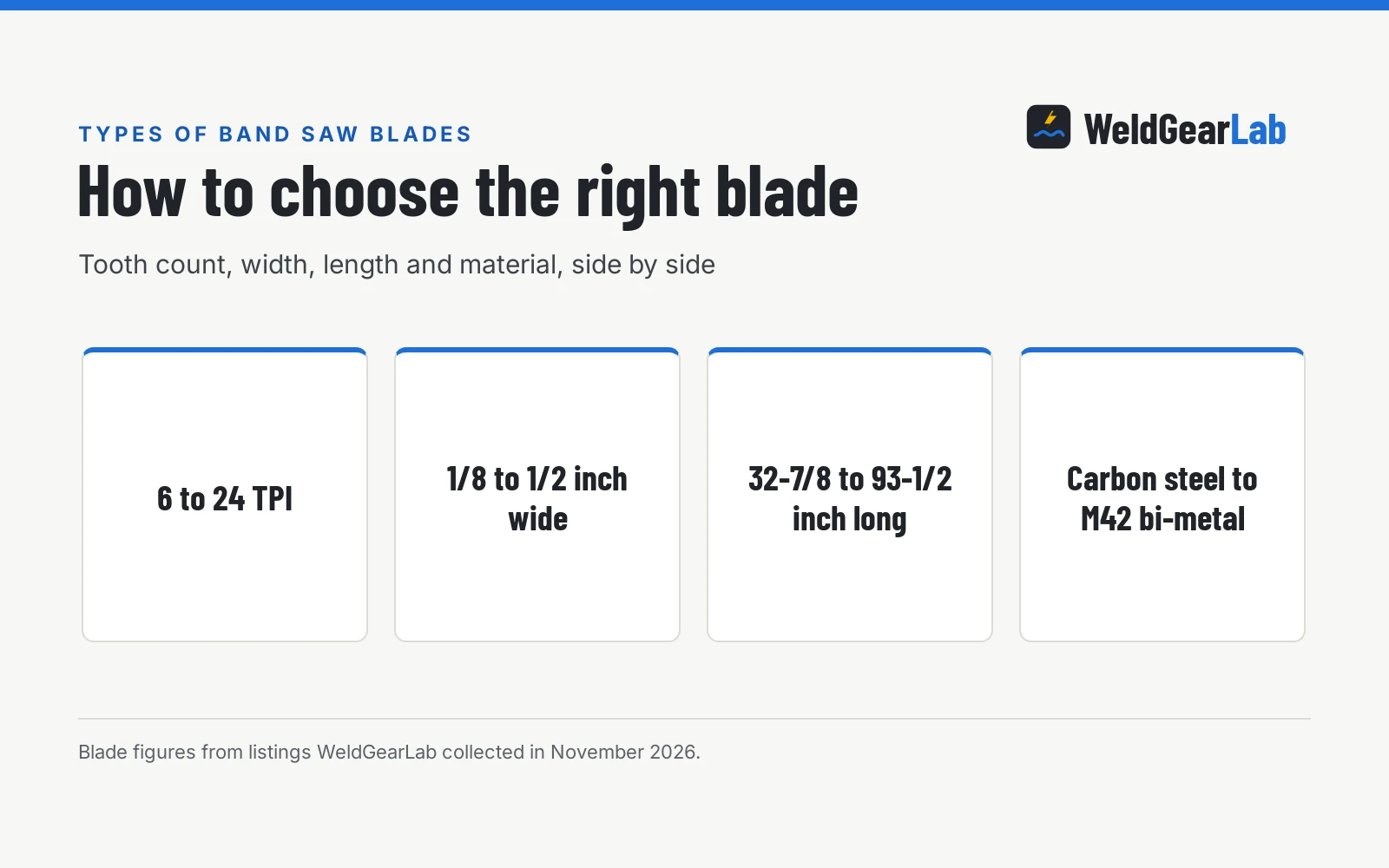
Width and length matter when you shop for a fresh blade: the blades listed here run from 1/8 inch to 1/2 inch wide, and lengths include 62 inch and 93-1/2 inch for shop saws and 32-7/8 inch and 44-7/8 inch for portable saws. Match the length and width to the saw. The band saw blade sizes guide lays out the sizes, and the best band saw blade for metal guide covers fresh blades for metal work.
Sharp teeth, stored energy and spinning wheels. A coiled blade can spring open with force, so wear eye protection when you uncoil it and keep your hands clear of the edge. Unplug the saw before you touch the blade, keep the guards in place when you run it, and never wear gloves near moving parts. Clamp the work when you cut. Machine guarding rules from OSHA cover much of this ground.
FAQ for welders
Can a band saw blade be sharpened again?
Yes, if the teeth are still whole and the blade has no cracks. Each sharpening takes a little metal off the tooth, so a blade sharpened until the teeth are short and the gullets are shallow is ready for retirement.
What file do you use to sharpen a band saw blade?
Use a file that fits the gullet. Coarse blades take a larger file: the 6 TPI blades in the POWERTEC and FOXBC 93-1/2 inch assortments have wide gullets that a file reaches with ease. Fine blades, such as the 24 TPI teeth on the DEWALT 32-7/8 inch blade, need a slim file and a light touch.
How do you know a band saw blade is dull?
The cut tells you. A dull blade wanders off the line, needs more feed pressure, and leaves a rough edge. If the tooth tips look rounded in good light, the blade is due for a file.
Can you sharpen a band saw blade while it is on the saw?
It can be done, but it is harder to keep the angle steady and to see each tooth clearly. Taking the blade off the saw and clamping a short span in a vise gives a steadier setup.
When should you replace a band saw blade instead of sharpening it?
Replace the blade when teeth are missing, when the blade is cracked, when the weld has failed, or when the gullets have worn so shallow that filing has nothing left to shape. The best band saw blade for metal guide covers fresh blades for metal work.
Related: band saw blade sizes, chop saw vs band saw for metal, and the metal fab tools hub.