Best Lens for Welding Helmet Under $25 (2026): 5 Picks for the Shop
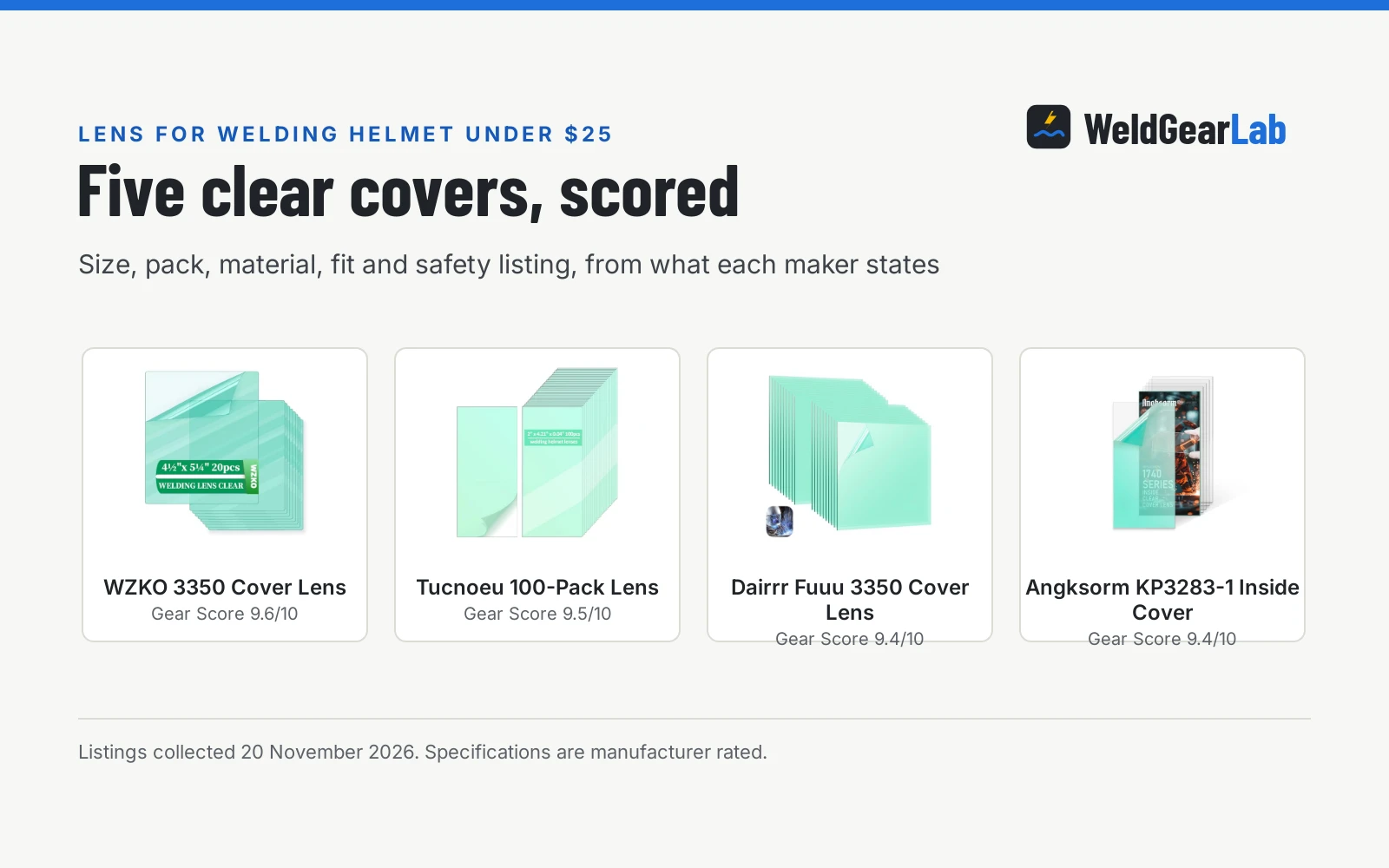
Five clear cover lenses for welding helmets, compared on size, pack count, material, fit and safety listing.

Auto-darkening and passive welding helmets. We compare shade range, viewing area, arc sensors, switching speed, optical class and stated ANSI Z87.1 or CSA Z94.3 ratings.
Five clear cover lenses for welding helmets, compared on size, pack count, material, fit and safety listing.
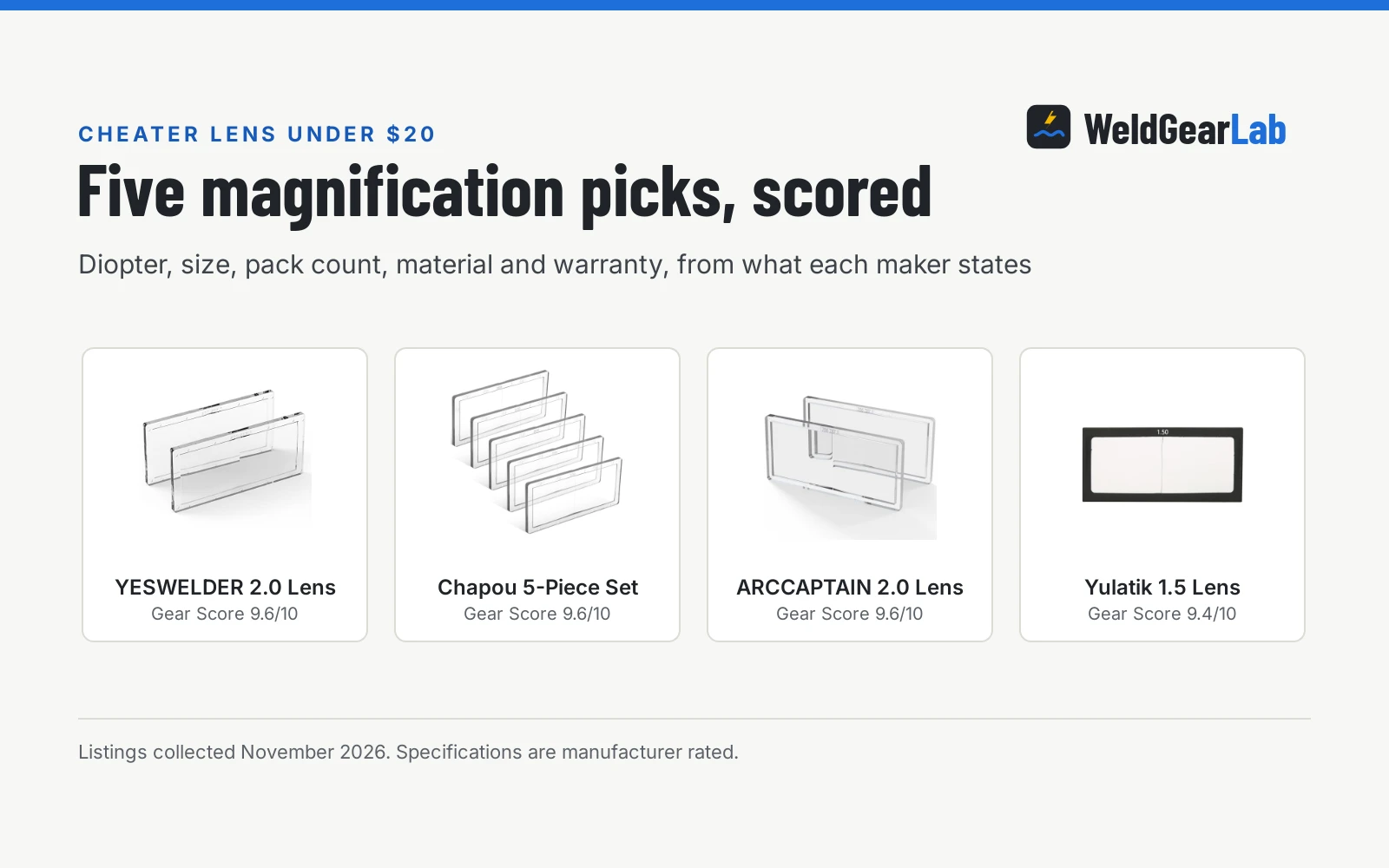
Five cheater lenses under $20 compared on stated diopter, 2 x 4.25 inch size, pack count, material, helmet fit and warranty.
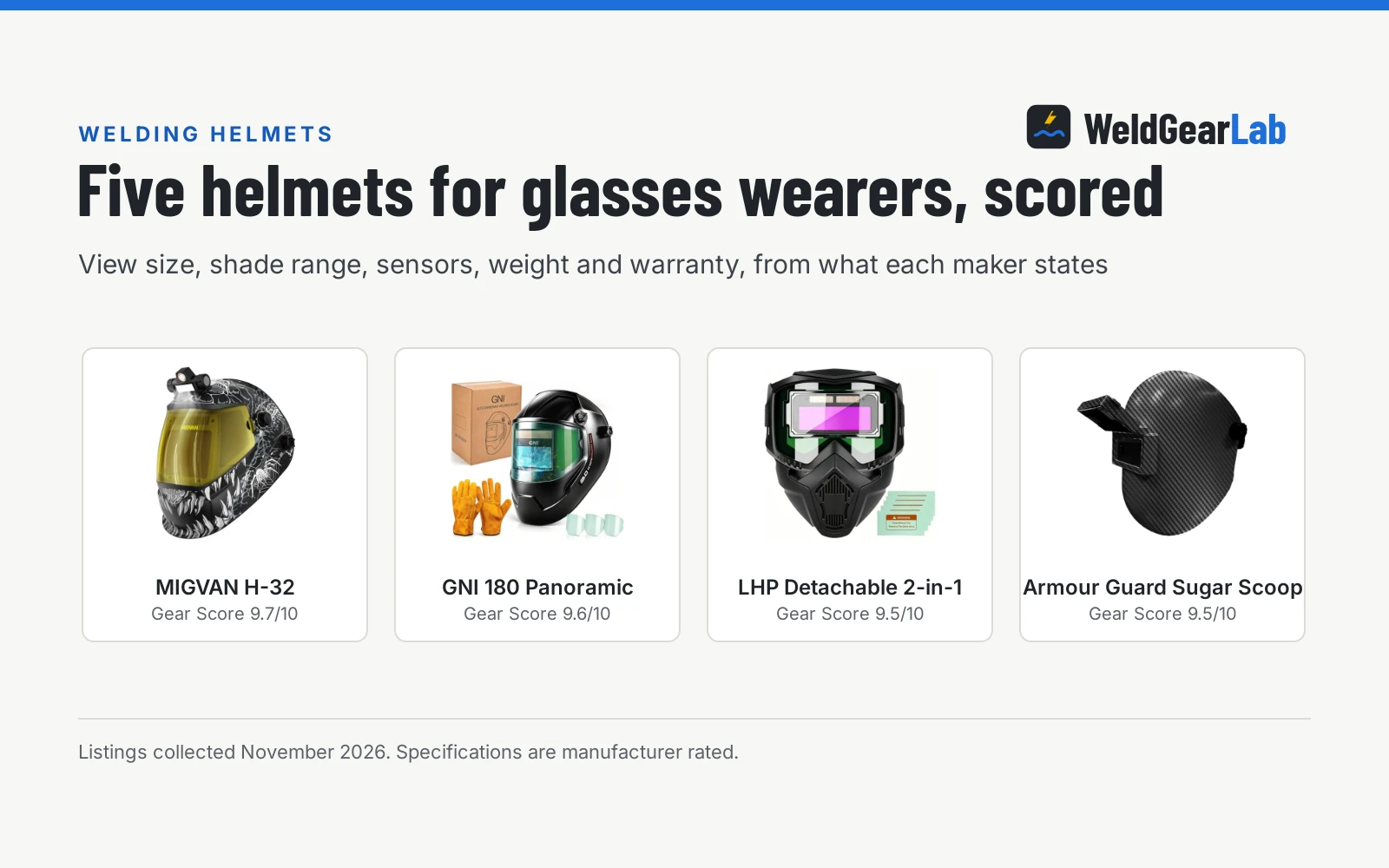
Five welding helmets for people who wear glasses, compared on view size, shade range, sensor count, response, weight and warranty.
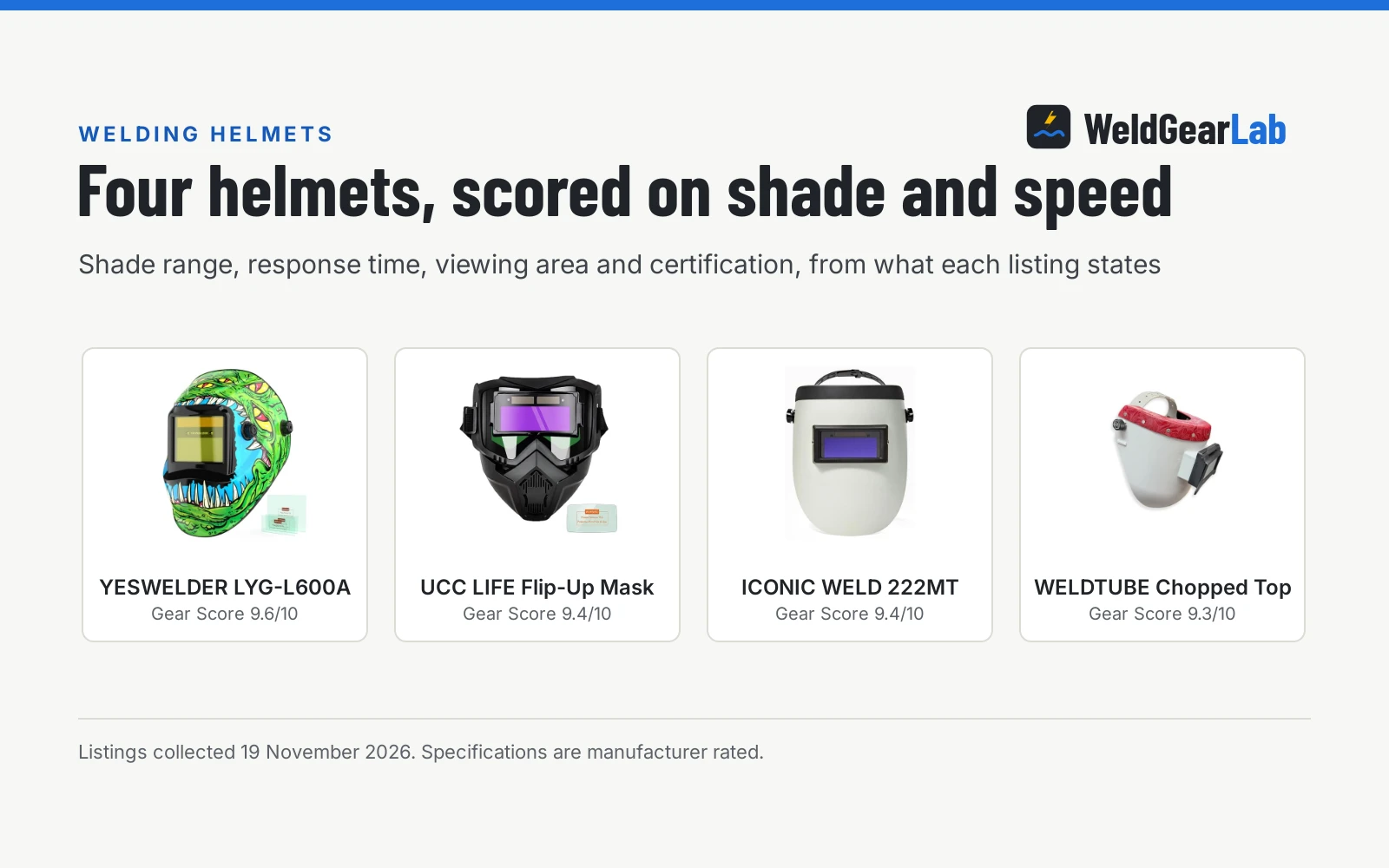
Four welding helmets compared on shade range, response time, viewing area and certification, for MIG, TIG, stick and grinding work.
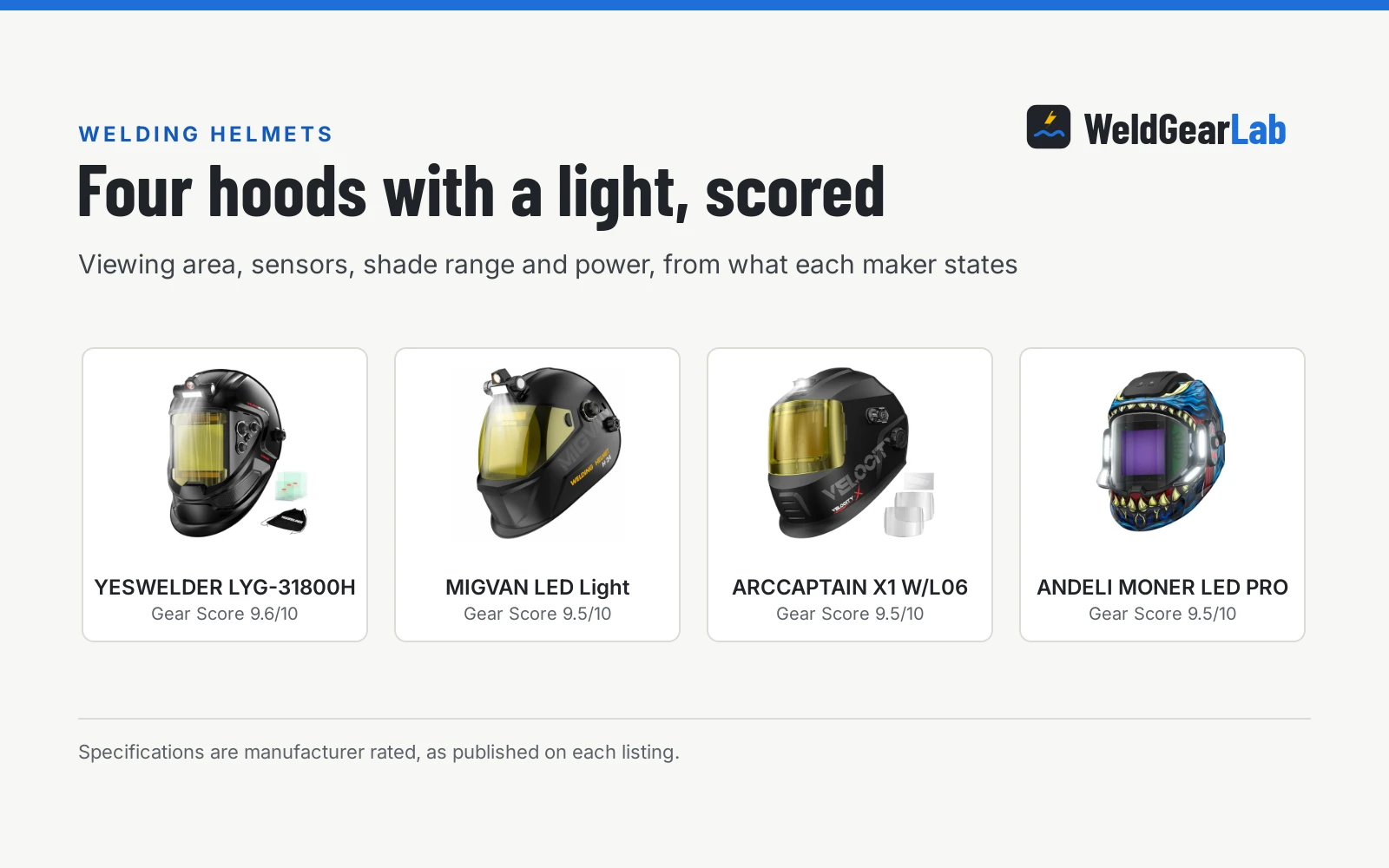
Four auto-darkening welding helmets with LED lights, compared on viewing area, sensors, switching speed, shade range and power, using only what each maker states.
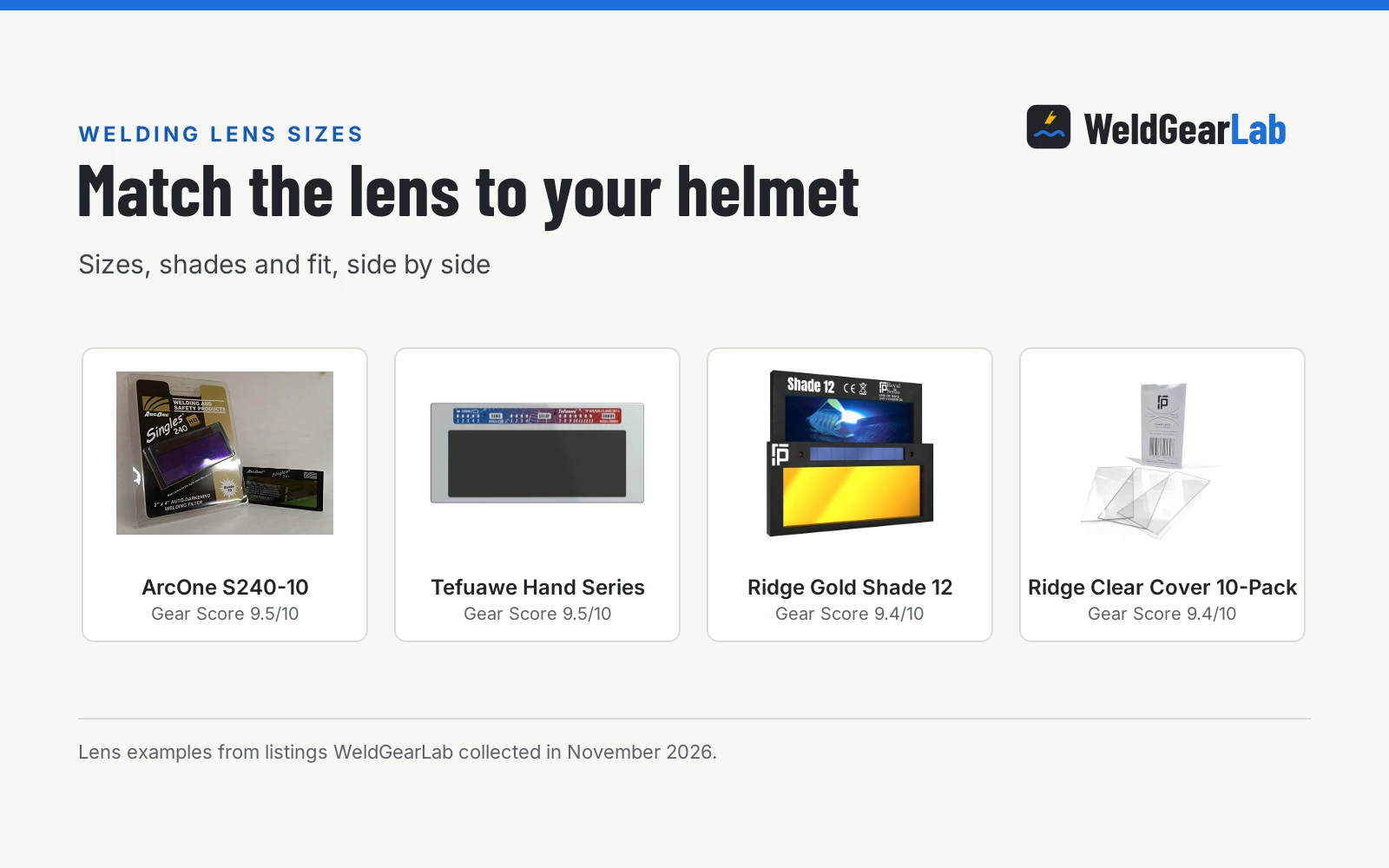
Welding lens sizes come down to the rectangle that fits the helmet window and the shade that sets how dark it goes, and this…
An auto darkening welding helmet for beginners keeps the view clear until the arc strikes, then darkens the lens so the puddle stays in…
Welding helmet cost comes down to the lens, the viewing area, the sensors, the headgear, the shell and the extras that come with the…
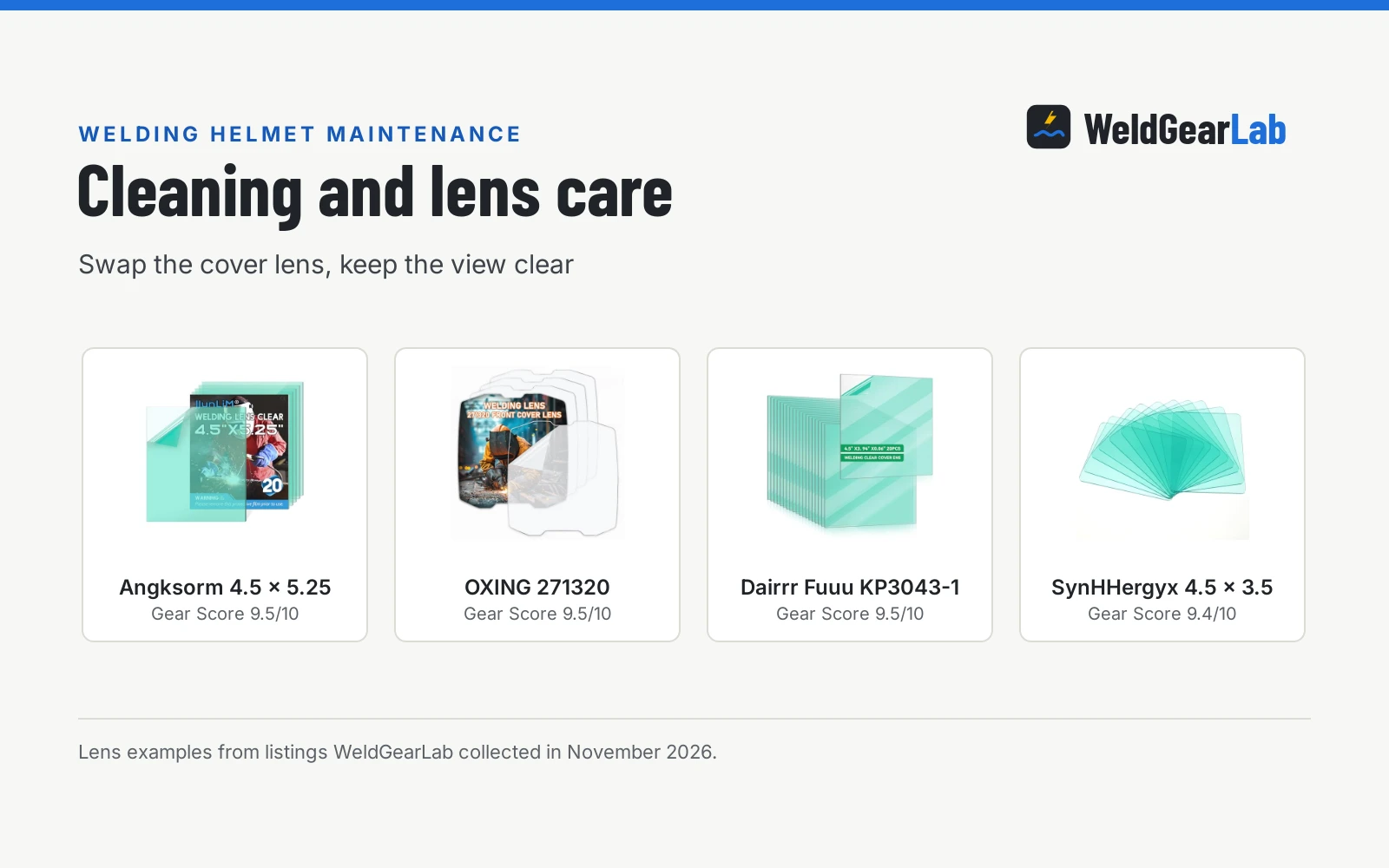
A welding helmet stays clear when the cover lens is checked often and swapped when spatter, scratches or a cloudy view mark it.
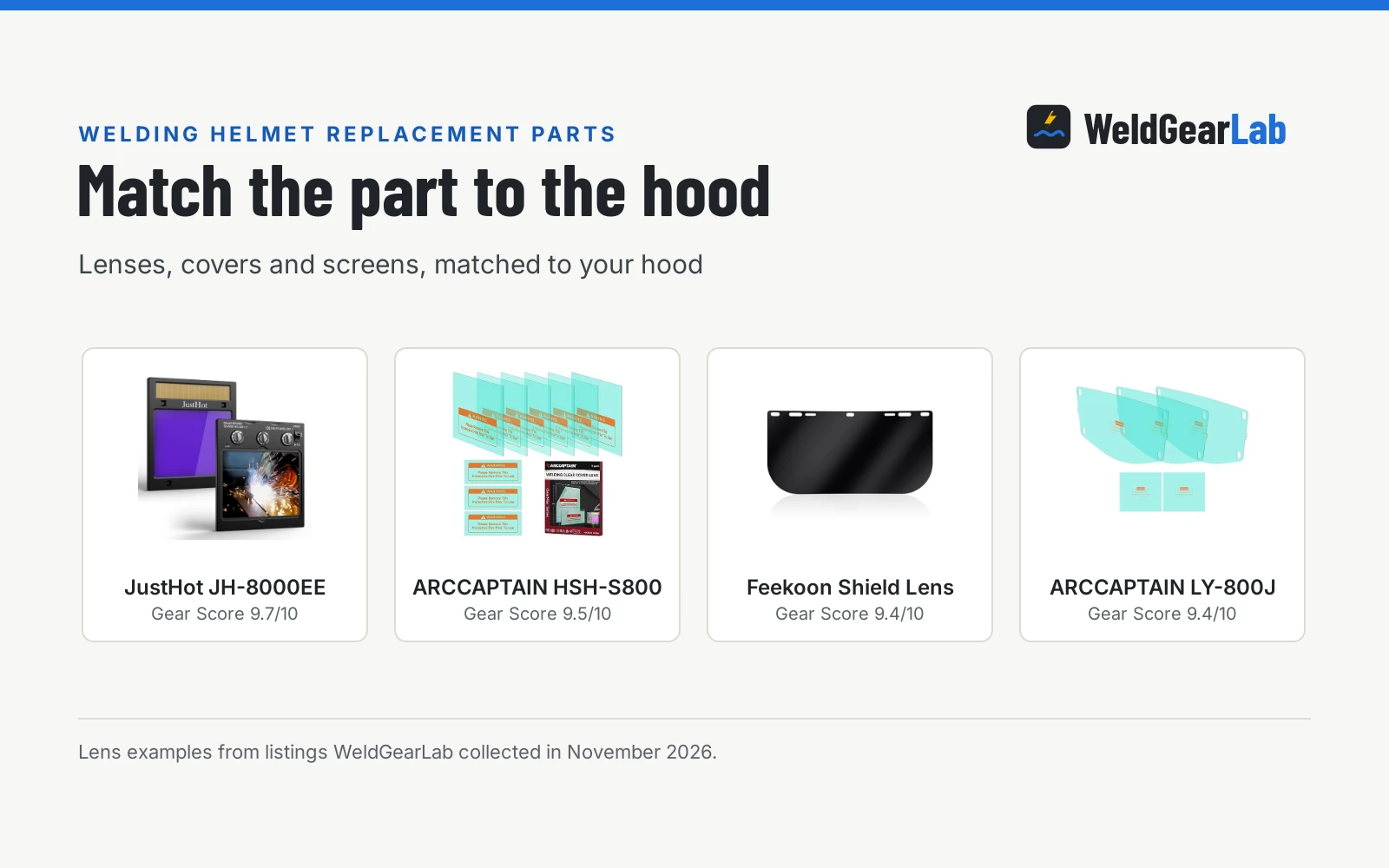
Welding helmet replacement parts keep a hood in service: an auto-darkening cartridge, outer and inner cover lenses, and a face shield visor for shield…
| Spec | Why it matters |
|---|---|
| Shade range | Variable shade lets you tune for low-amp TIG as well as grinding-level brightness. Fixed shade helmets suit one process. |
| Optical class | Listings may state a four-number clarity rating. Lower numbers are better; a 1/1/1/1 rating is the highest. |
| Viewing area | A larger lens helps in tight or awkward positions. It also adds weight and bulk. |
| Arc sensors and switching speed | More sensors reduce the chance of the lens failing to darken when the arc is blocked. Speed is stated in fractions of a second. |
| Power source | Solar-assisted lenses with a replaceable cell and batteries differ in upkeep. Check which the listing states. |
| Stated ANSI Z87.1 or CSA Z94.3 | Only treat a helmet as eye and face protection if the listing states a rating that covers the hazard. |
Comfort is the spec that never makes the data sheet. Headgear adjustment and weight are why a helmet that reads well still gets left on the shelf, so check them alongside the lens details. Replacement lenses, cover plates and headgear are sold separately for many models, so see what the maker lists before you commit to one.