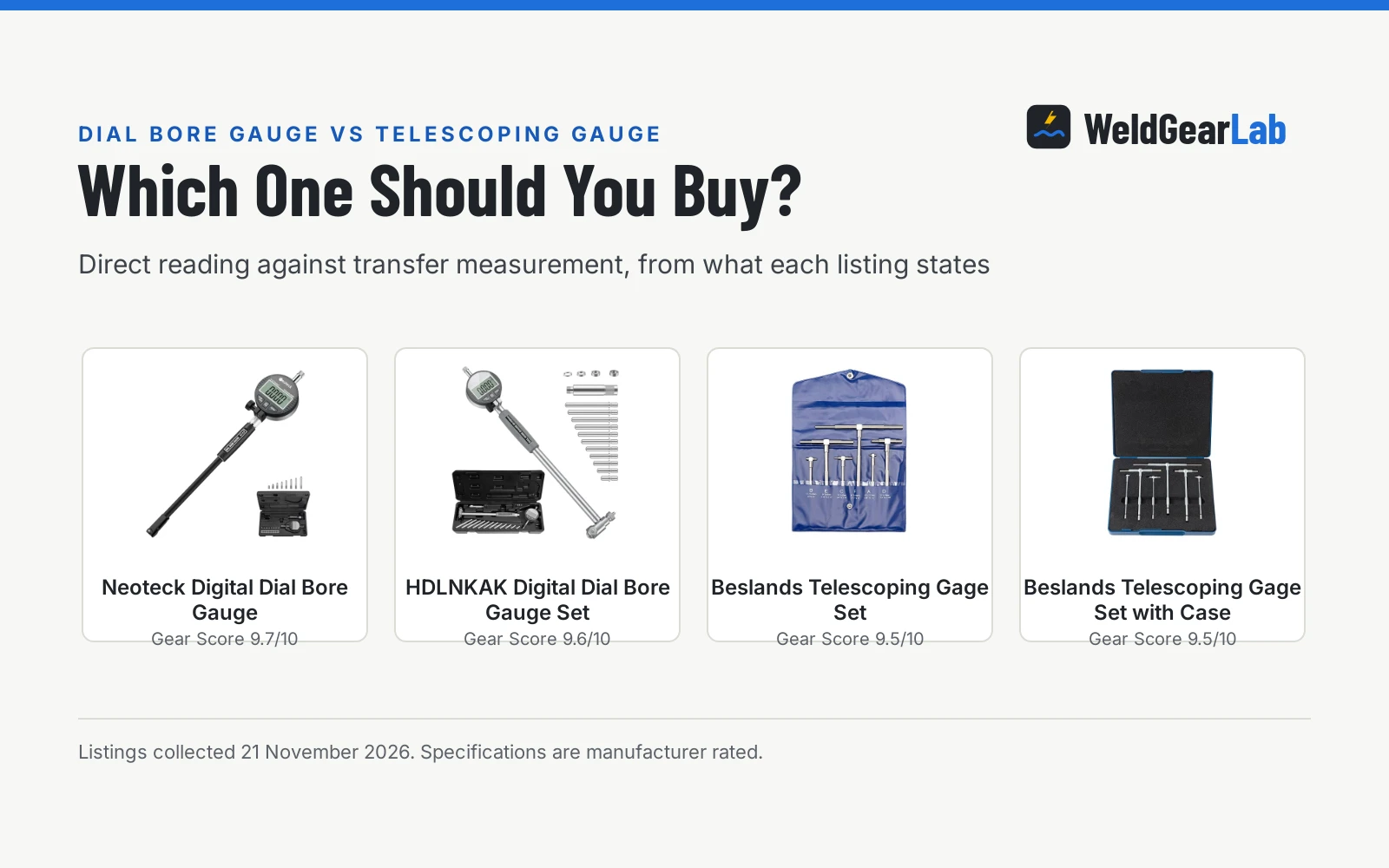
Dial Bore Gauge vs Telescoping Gauge: Which One Should You Buy?
The Neoteck and HDLNKAK dial bore gauges show the reading on a digital indicator, while the two Beslands telescoping gauge sets transfer the bore…

Welding machines for home, farm and small shop work: MIG, TIG, stick and multi-process. We compare them on input voltage, rated output, duty cycle at a stated amperage, and what comes in the box.
The Neoteck and HDLNKAK dial bore gauges show the reading on a digital indicator, while the two Beslands telescoping gauge sets transfer the bore…
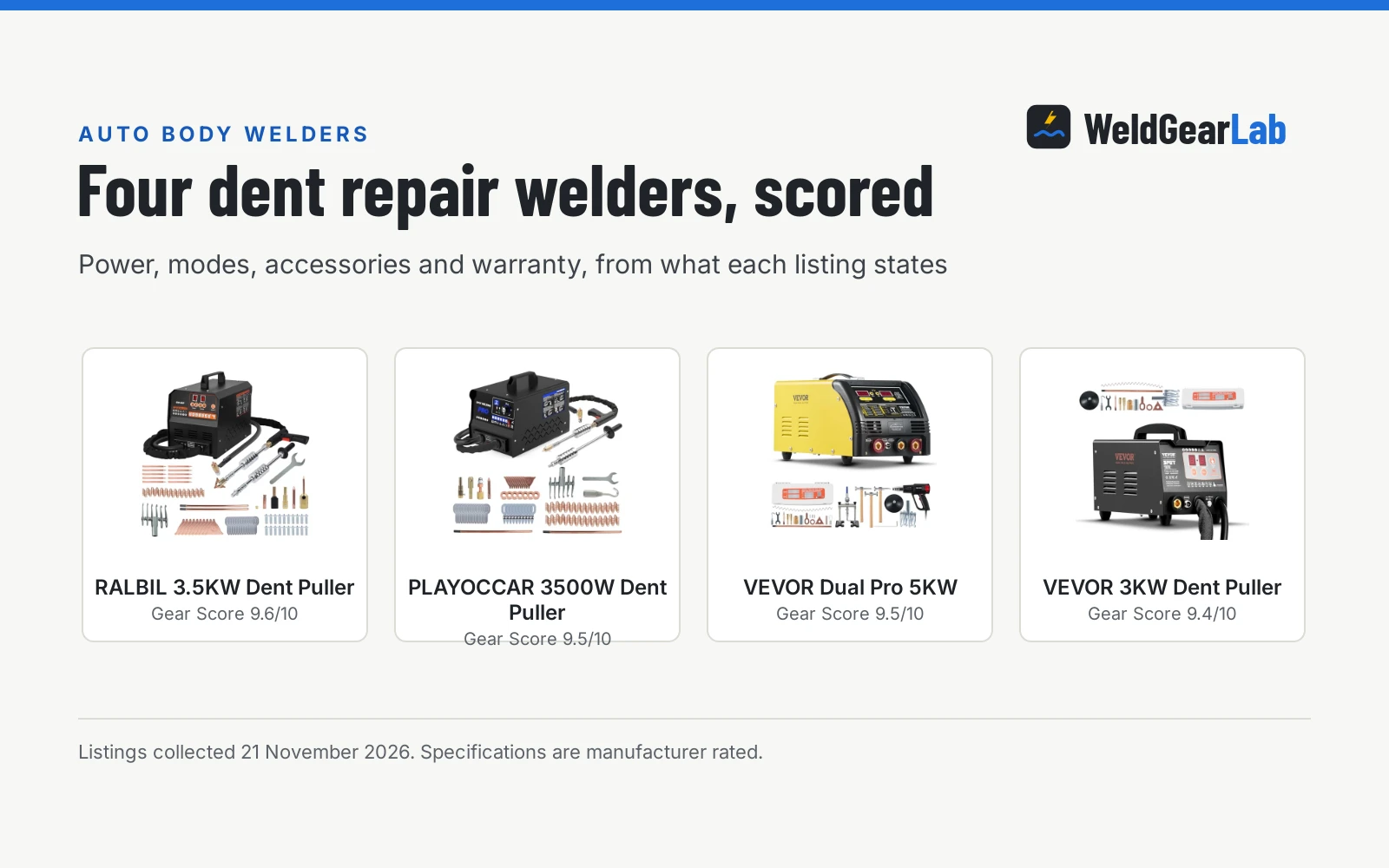
Four stud welders for auto body dent repair, compared on power, welding modes, accessories, weight and warranty, ranked by Gear Score.
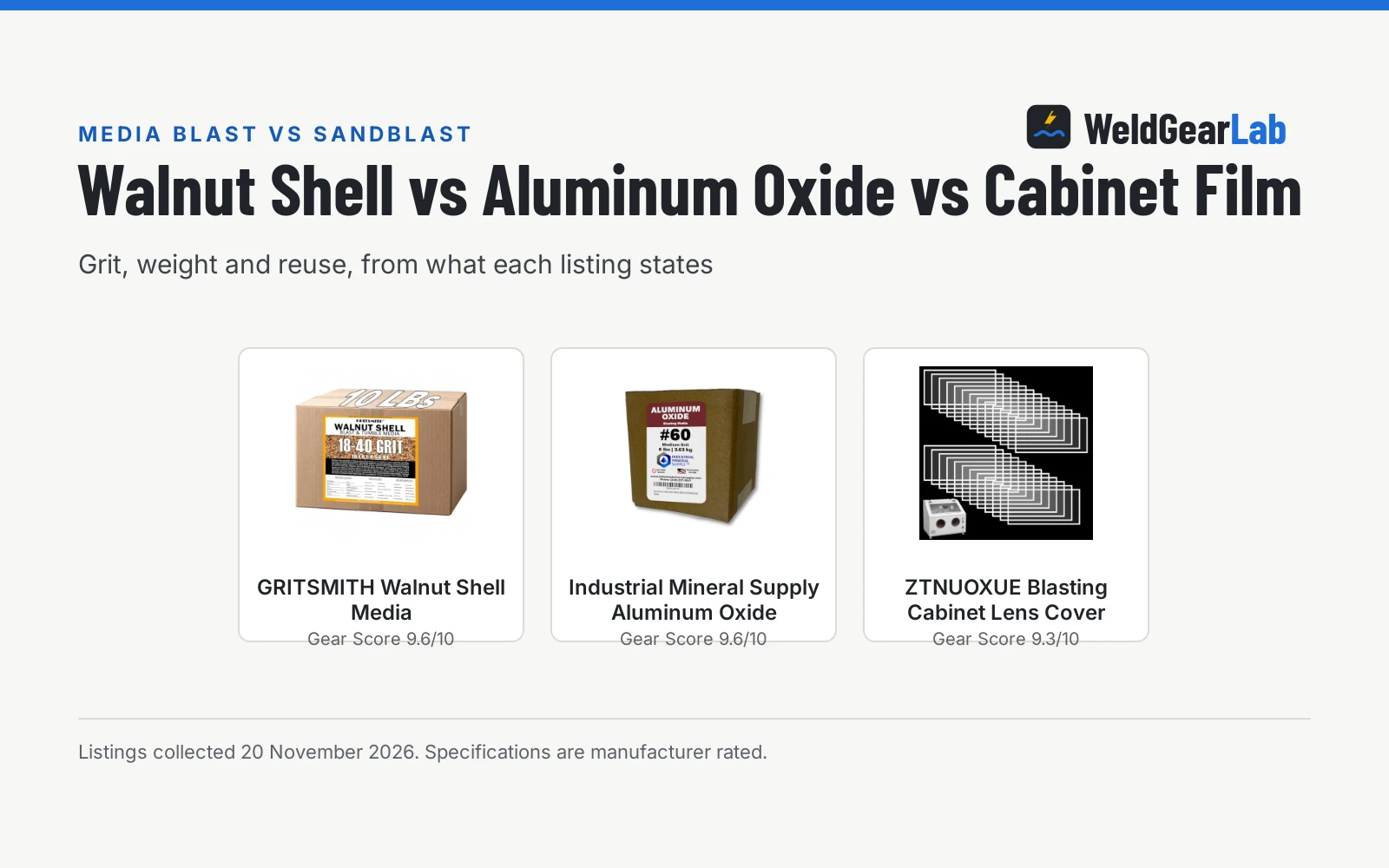
Media blast uses walnut shell for gentle cleaning and aluminum oxide for fast cutting, while the sandblast side in this set offers only a…
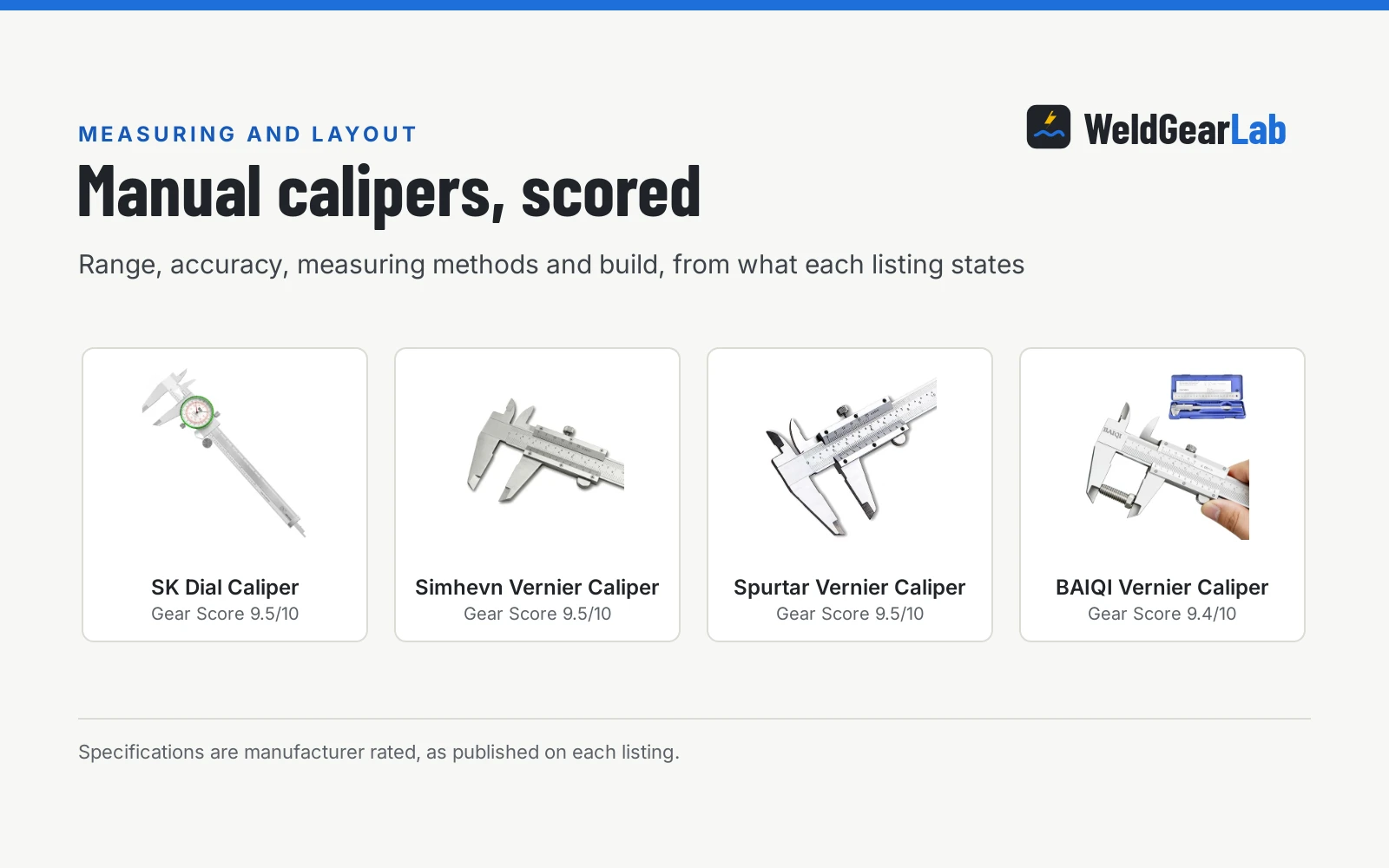
Manual calipers for the shop, compared on range, accuracy, measuring methods, build and the features each listing states.
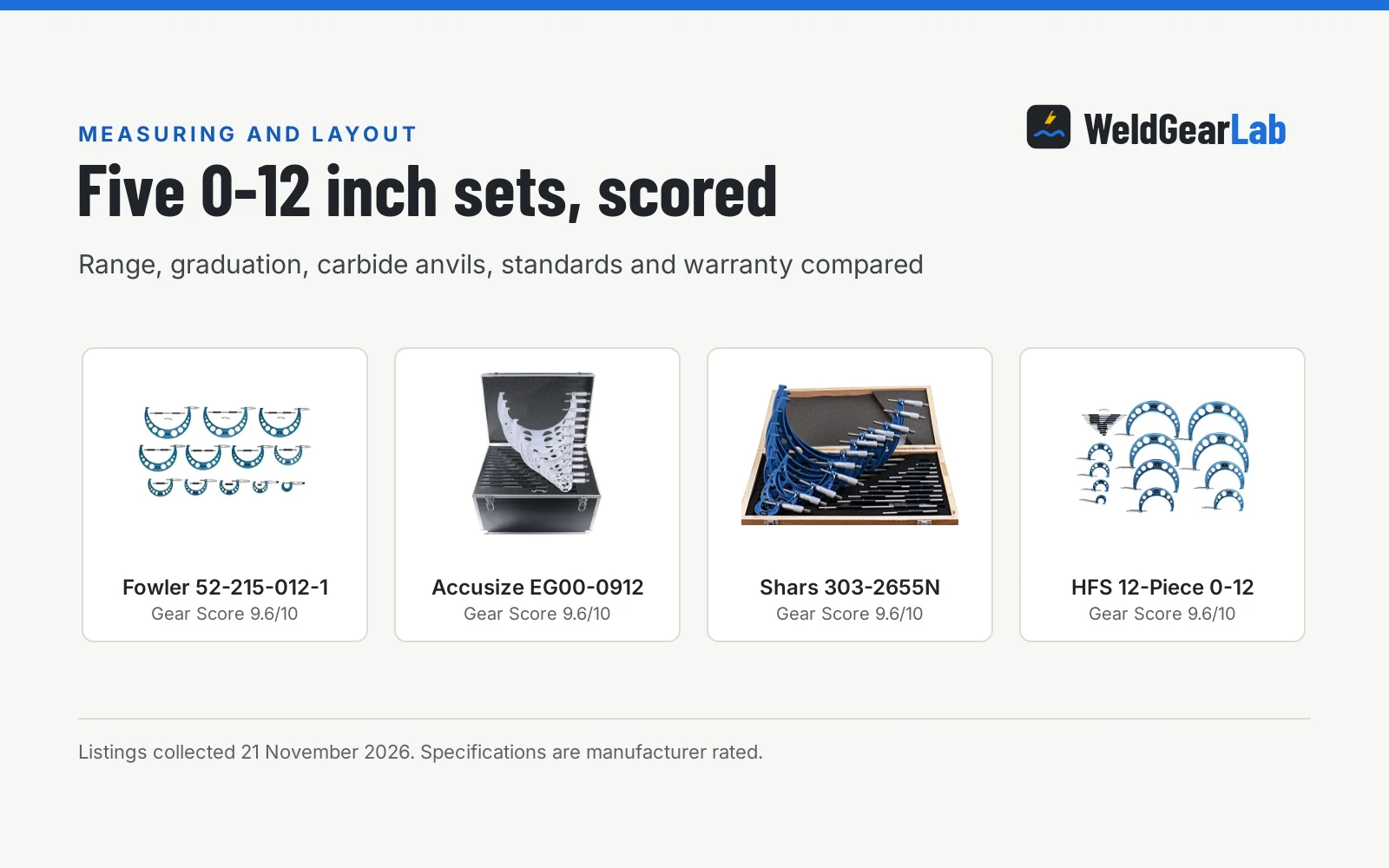
Five outside micrometer sets covering 0 to 12 inches, compared on range, graduation, carbide anvils, ratchet stops, standards and warranty.
Five desktop fume extractors for laser cutting, compared on stated airflow, filtration, noise and warranty.
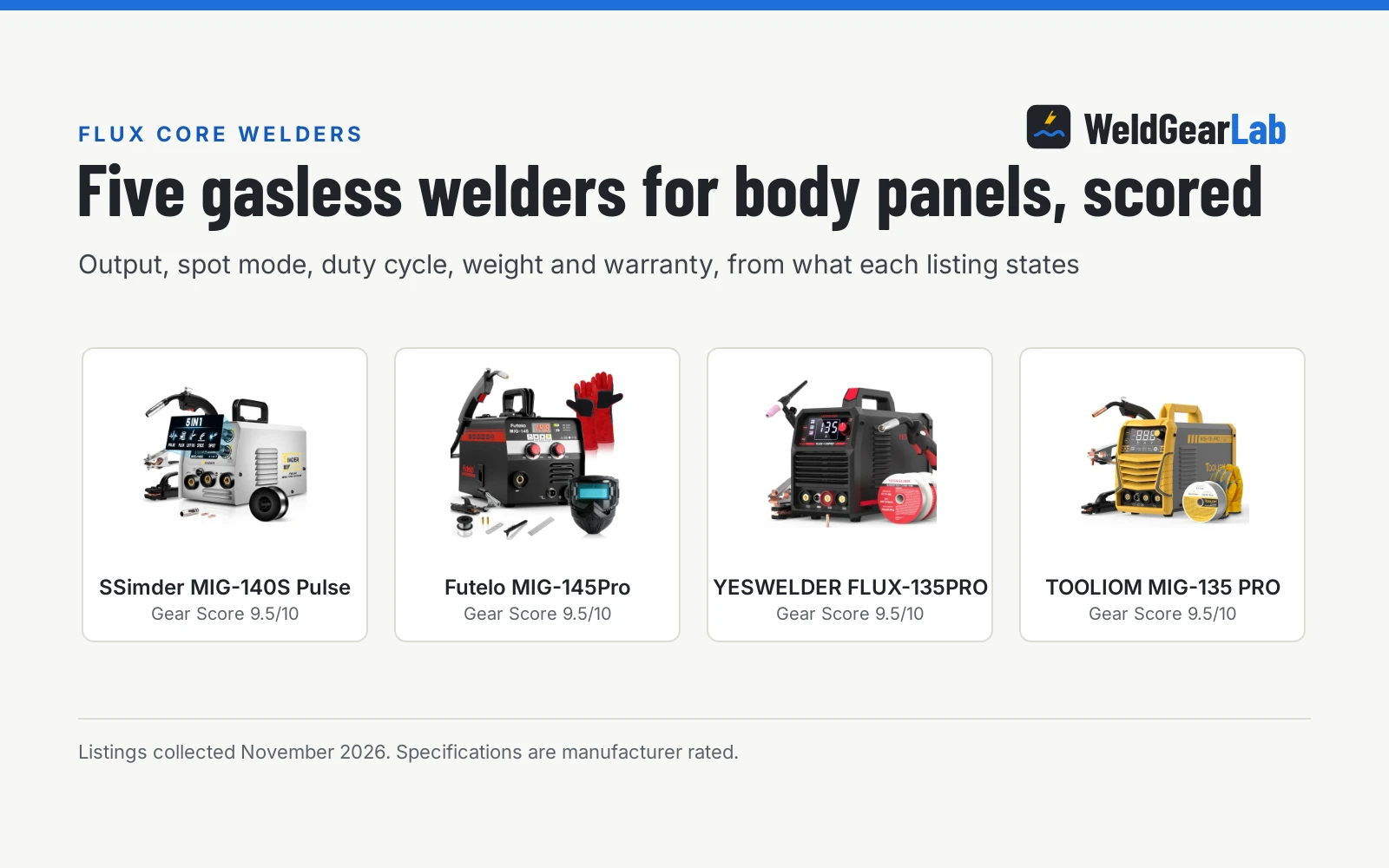
Five gasless flux core welders for auto body repair, compared on output, spot mode, duty cycle, weight and what each box holds.
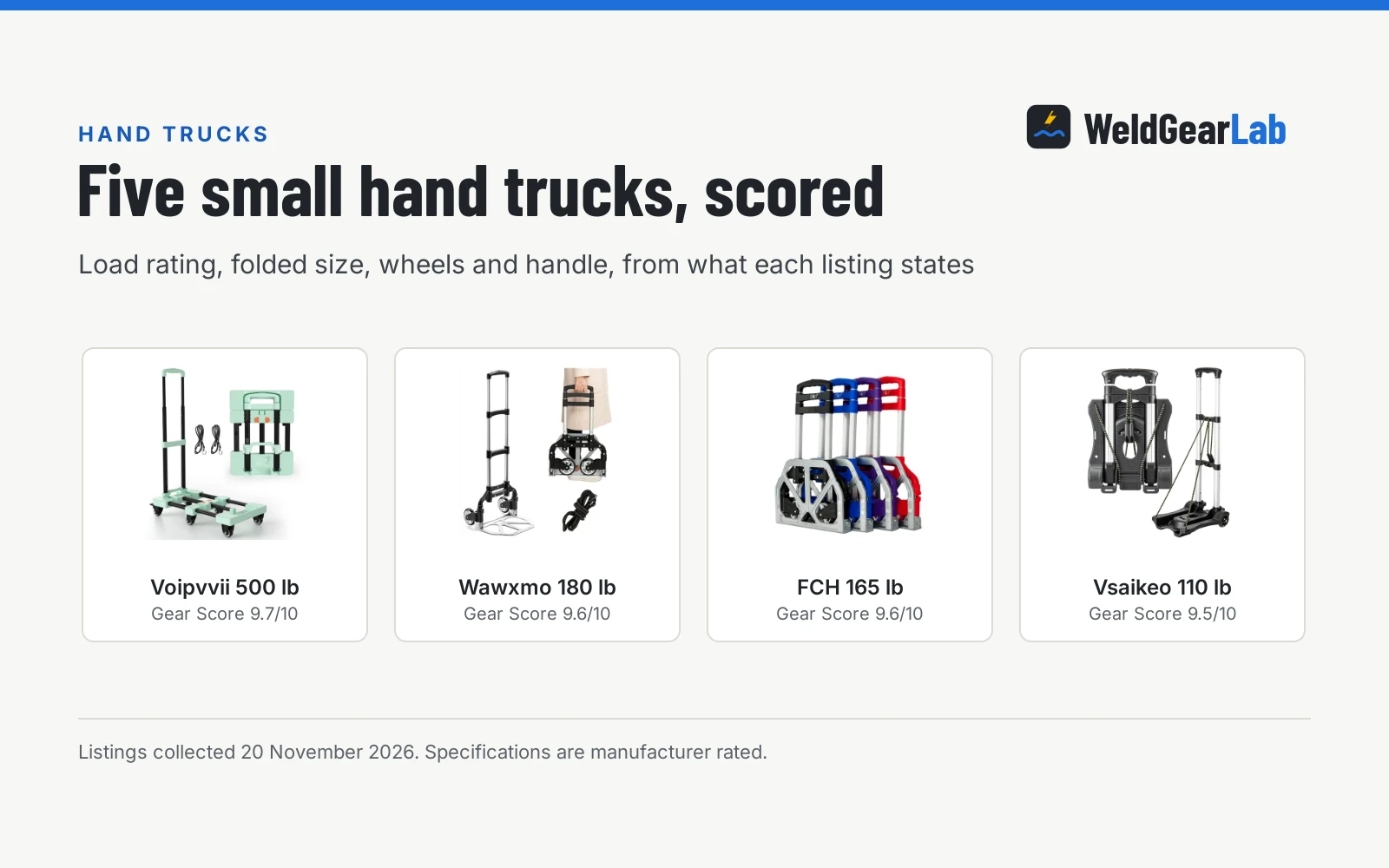
Five folding hand trucks for shop, home and travel, compared on load rating, folded size, wheels and handle.
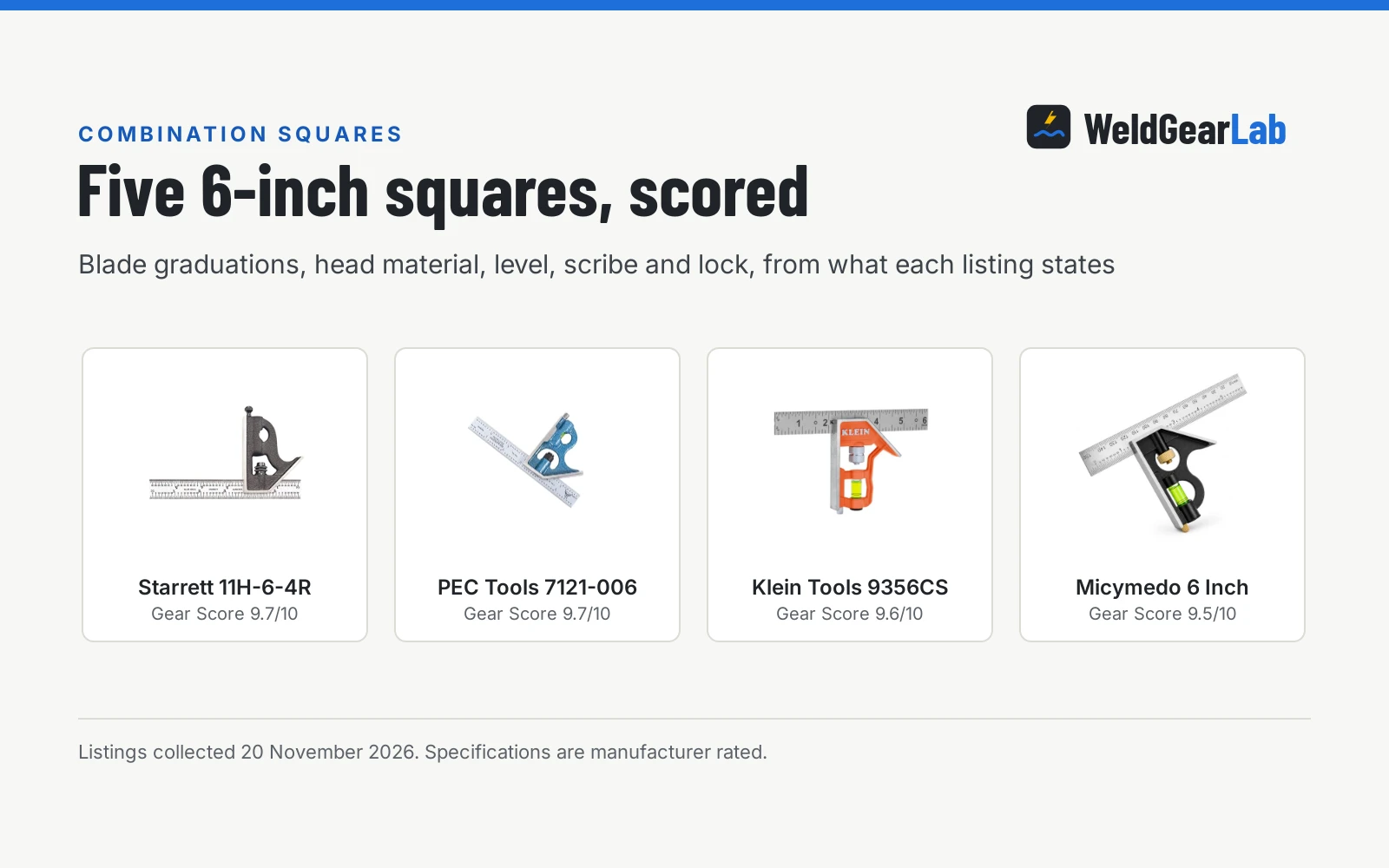
Five 6-inch combination squares compared on blade graduations, head material, level, scribe and lock, with the only stated warranty called out.
A MIG welder is a set of parts that work together: a power source, a wire feeder, a gun, a ground clamp, a gas…
| Spec | Why it matters |
|---|---|
| Input voltage | A 120V machine plugs into a household outlet; a 240V machine needs its own circuit. Dual-voltage listings usually state a lower output on 120V, so read both figures. |
| Rated output range | The low end decides how thin a sheet you can weld without burning through; the high end limits the thickest plate. |
| Duty cycle at a stated amperage | A percentage means nothing without the amps beside it. 30% at 90A and 30% at 130A describe very different machines. |
| Processes supported | MIG, flux core, stick and TIG each need different leads, torches or gas. Check what is in the box and what is extra. |
| Gas or gasless | Gas setups need a cylinder and regulator; flux core runs without them, which suits wind and farm repair. |
Most welding machine pages quote a maximum thickness. That figure comes from the maker and usually assumes several passes, so use it as an upper bound only. Each process has its own category page below. Treat any single headline amperage with caution: it can describe the best case on 240V, not the setting you will run most days.