Cutting Torch vs Plasma Cutter: Which One Should You Buy?
A cutting torch and a plasma cutter both cut steel, but one runs on gas and the other on electricity, so the choice comes…

Plasma cutters for cutting steel, stainless and aluminum. We compare rated clean cut and sever thickness, air requirements, duty cycle and input power.
A cutting torch and a plasma cutter both cut steel, but one runs on gas and the other on electricity, so the choice comes…
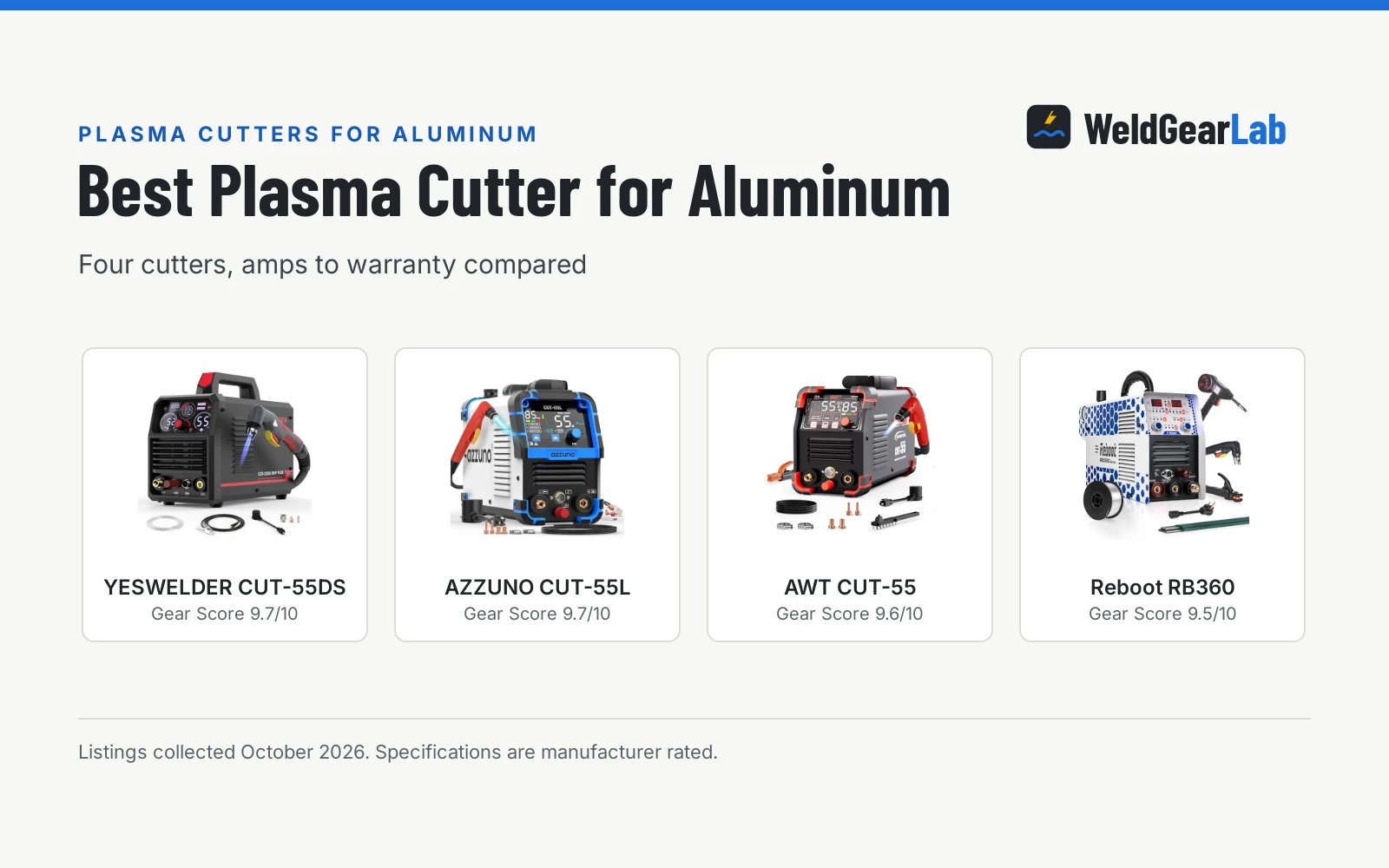
Four plasma cutters for aluminum compared by amps, clean and max cut, pilot arc, safety features and warranty, for plate, mesh and shop repairs.
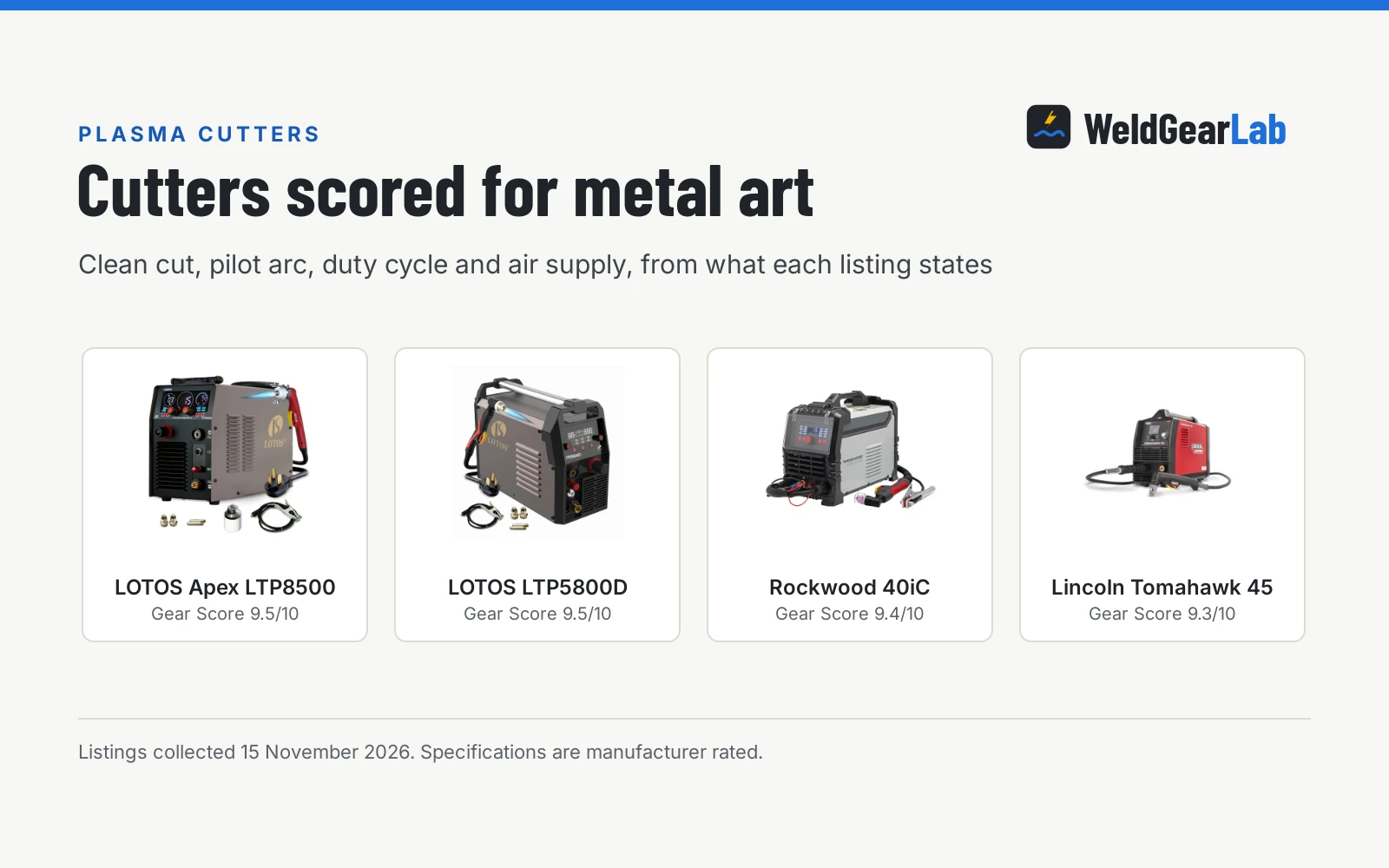
Plasma cutters for metal art compared by clean cut, severance cut, pilot arc, duty cycle, input power and air supply.
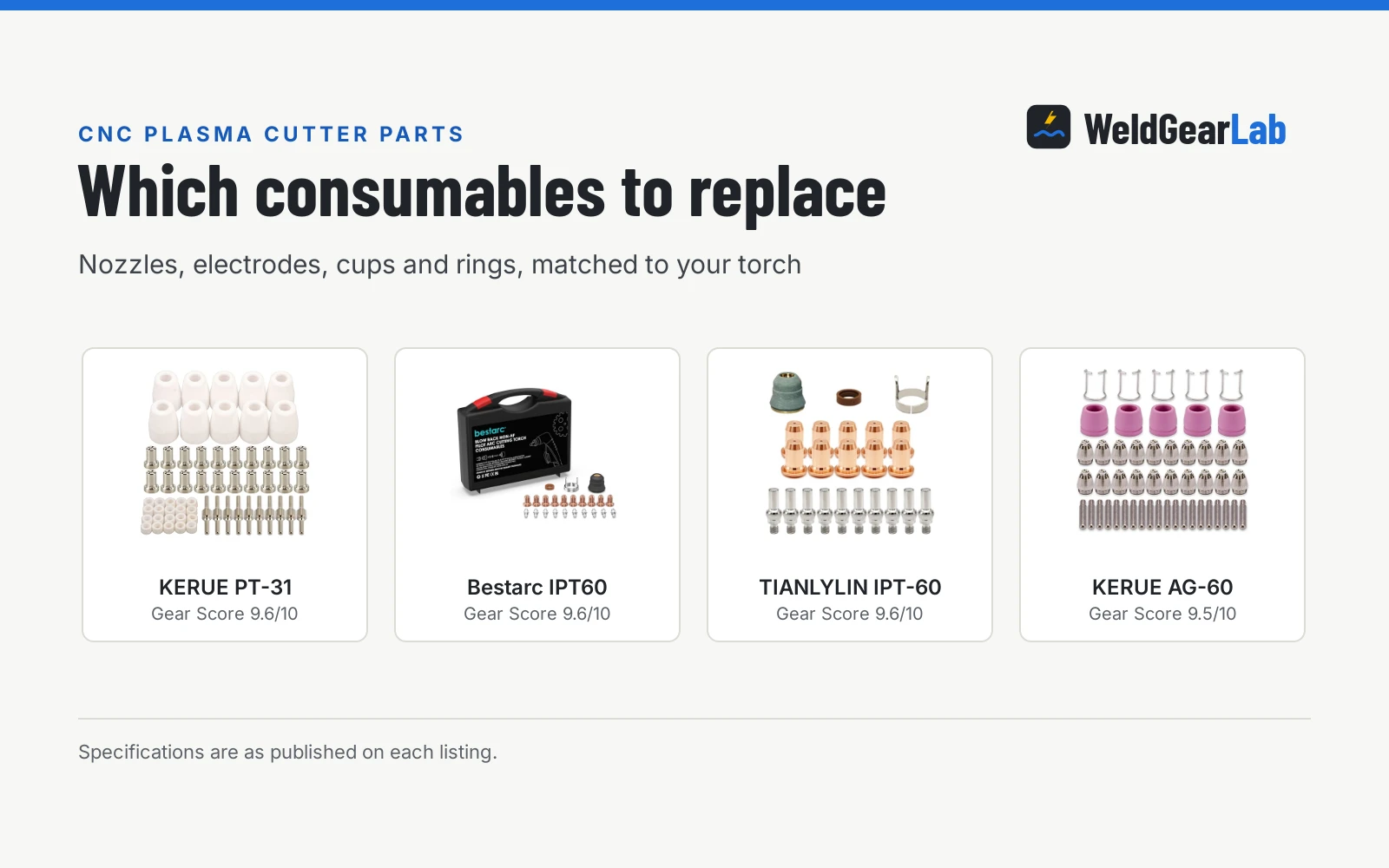
CNC plasma cutter parts wear out at the nozzle and electrode first; this guide covers which consumables to replace, how to match them to…
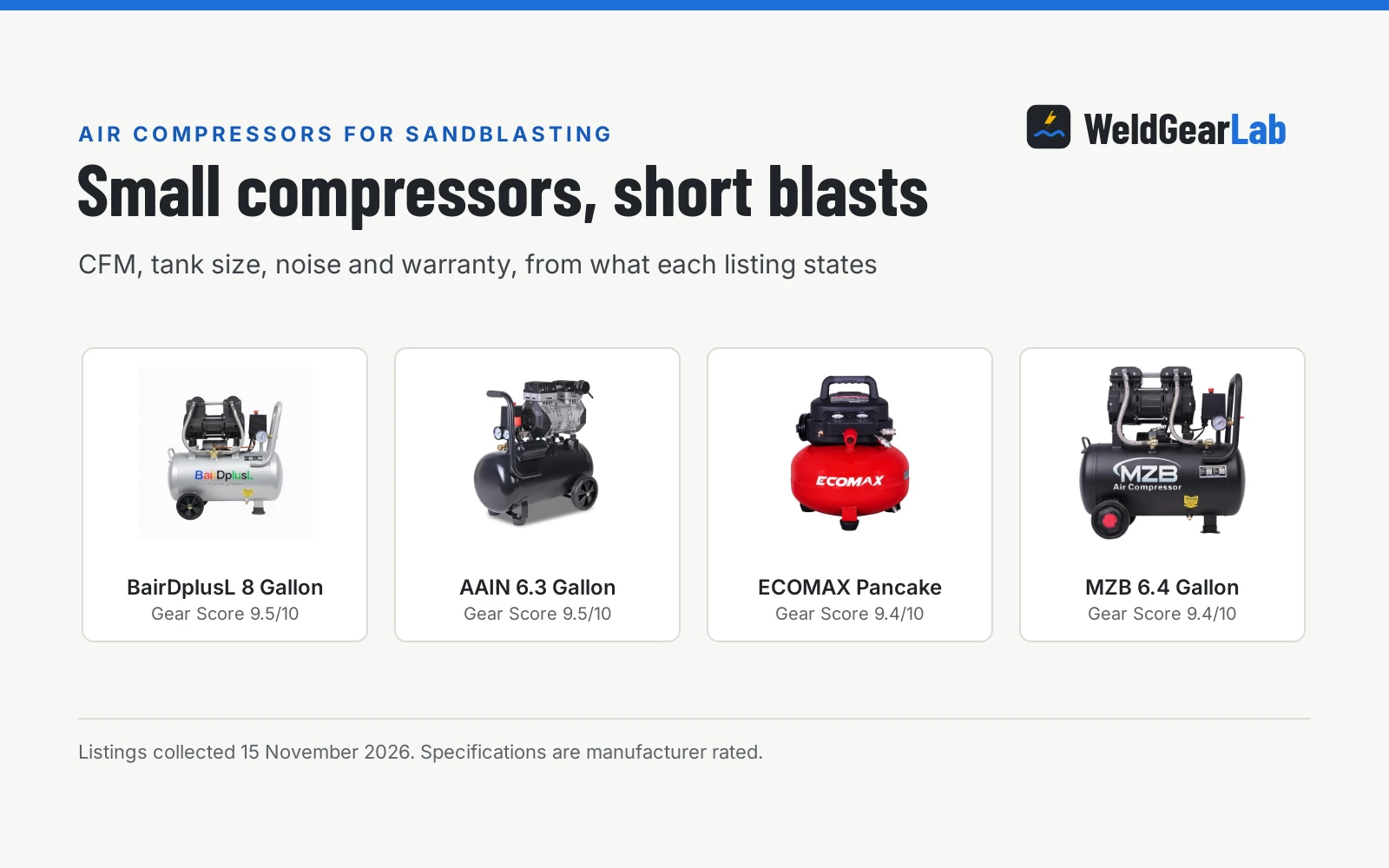
Oil-free 1.5 HP compressors for sandblasting, compared on CFM at working pressure, tank size, noise, weight and warranty.
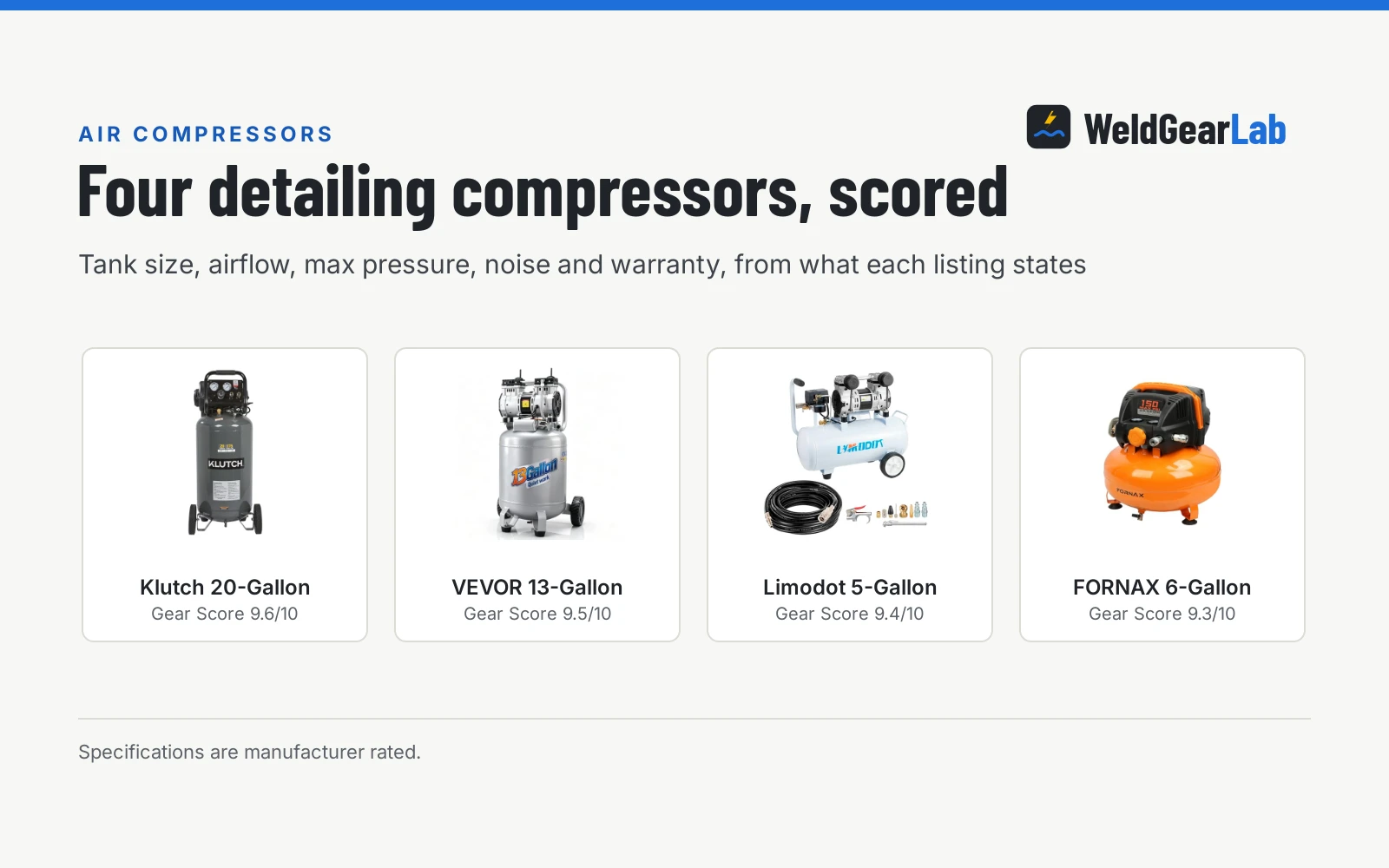
Four shop air compressors for detailing work, compared on tank size, airflow at 90 PSI, max pressure, noise and the warranty each listing states.
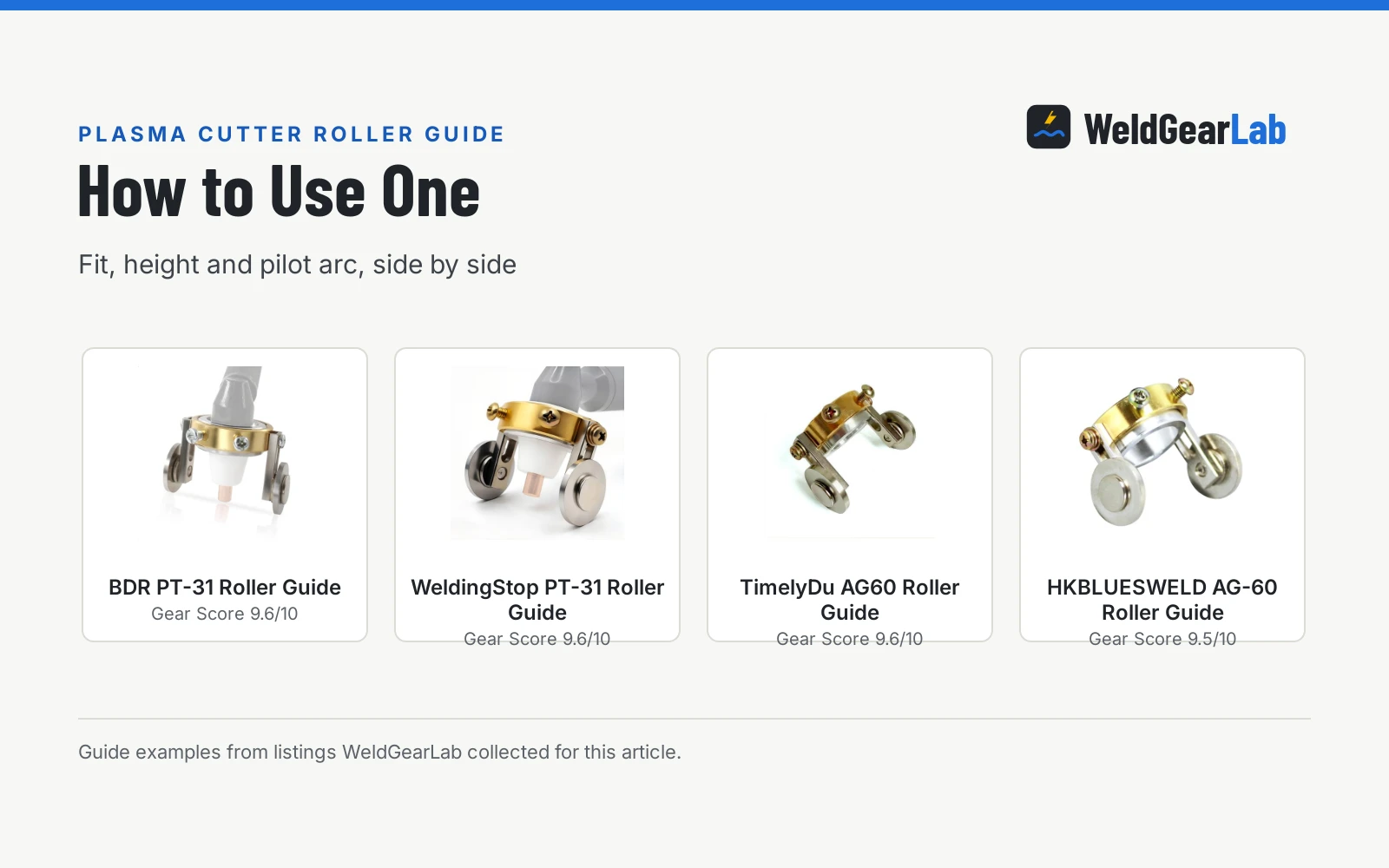
A plasma cutter roller guide holds the torch off the plate at a set height so long cuts stay straight, and this guide covers…
Plasma cutter set up means connecting power, air, ground and torch in the right order, then setting the current to suit the metal before…
A magnetic plasma cutter guide holds itself to steel and steers the torch along a straight or round path, and this guide covers the…
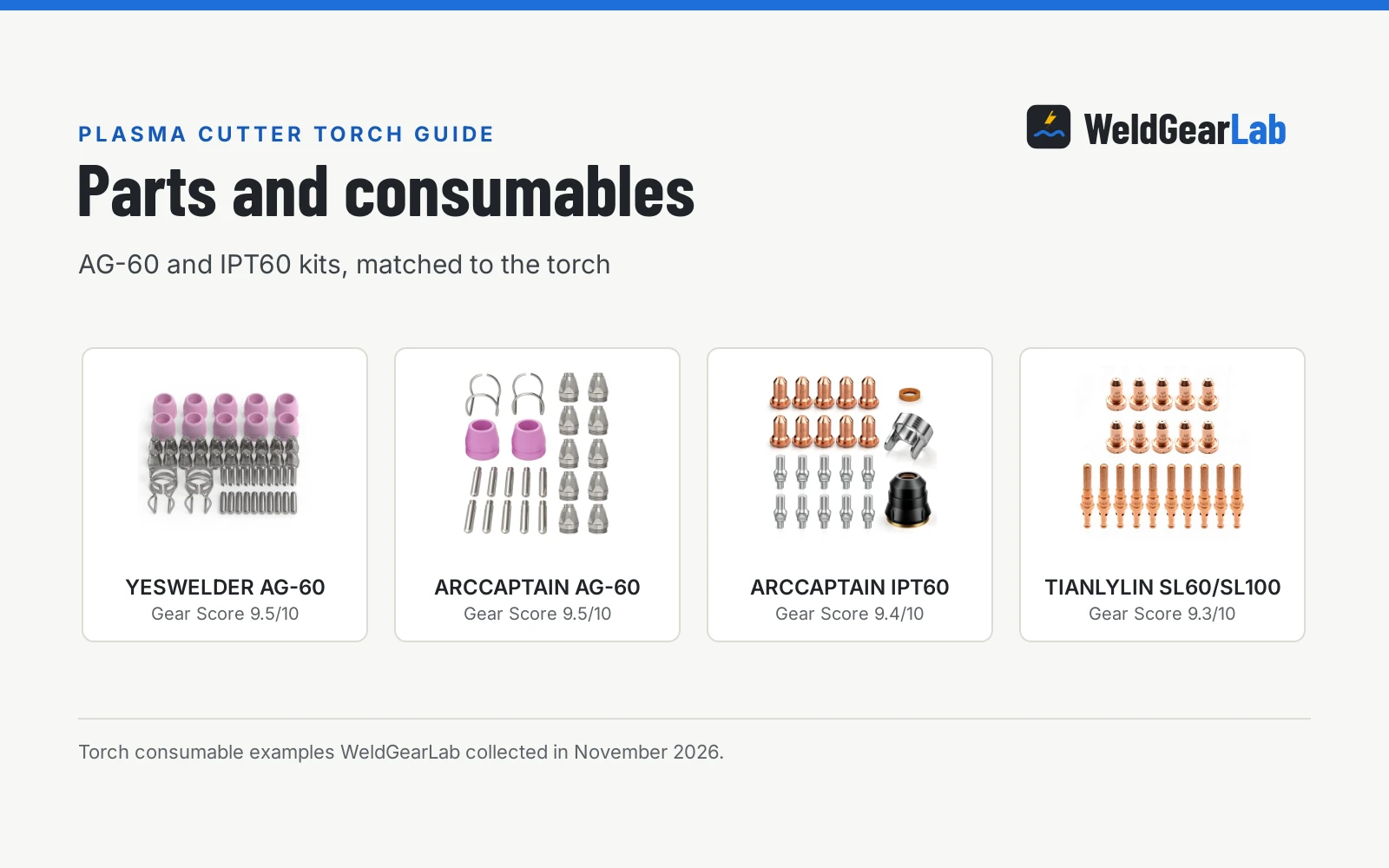
A plasma cutter torch guide matches AG-60, IPT60 and SL60 torch consumables to the torch, with tip sizes, kit contents and the four kits…
| Spec | Why it matters |
|---|---|
| Clean cut thickness | This is the thickness the maker says leaves a usable edge. Severance is the maximum it can part at slow speed, and is a bigger number. |
| Input voltage | Dual-voltage units run on 120V and 240V but cut thinner on the lower setting. |
| Duty cycle at stated amps | Cutting time before cooldown is limited by this figure. Short duty cycles are fine for brackets, slow for long sheet runs. |
| Air supply requirement | Most machines list a required PSI and flow in CFM. A small compressor may not keep up on long cuts. |
| Pilot arc and torch type | Pilot arc starts without touching the metal, helping on rust and paint. Check the torch connector for consumable availability. |
Plasma consumables wear out, so a machine is only as practical as its tips and electrodes are easy to find. Before choosing, confirm the torch style, whether a compressor is needed, and what the manufacturer says about cutting painted or rusted steel. Cutting stainless or aluminum is often listed at a lower thickness than mild steel, so read the material notes rather than the biggest number on the box.