Plasma Cutting Consumables Guide: Torch Parts, Fit, and Wear
A complete plasma cutting consumables guide covering swirl rings, electrodes, nozzles, shield cups, wear signs, orifice sizing, and torch maintenance.

On this page
Top picks at a glance
As an Amazon Associate I earn from qualifying purchases.
- 1
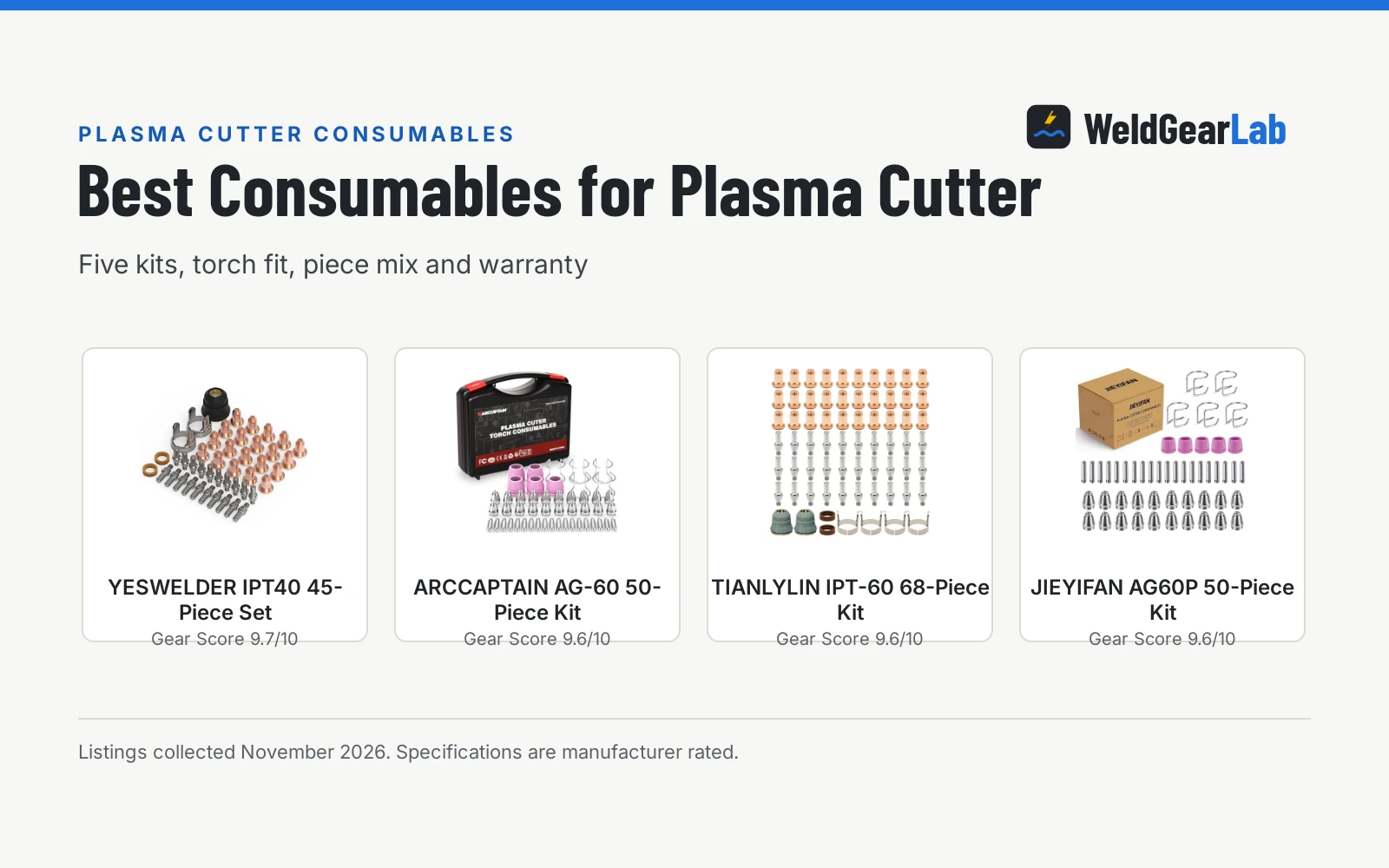
 YESWELDER 45PCS Plasma Cutting Torch Consumables Set Tip9.7/10View on Amazon
- 2
 JIEYIFAN AG60P Plasma Cutter Consumables Kit Includes Cutting9.6/10View on Amazon
- 3
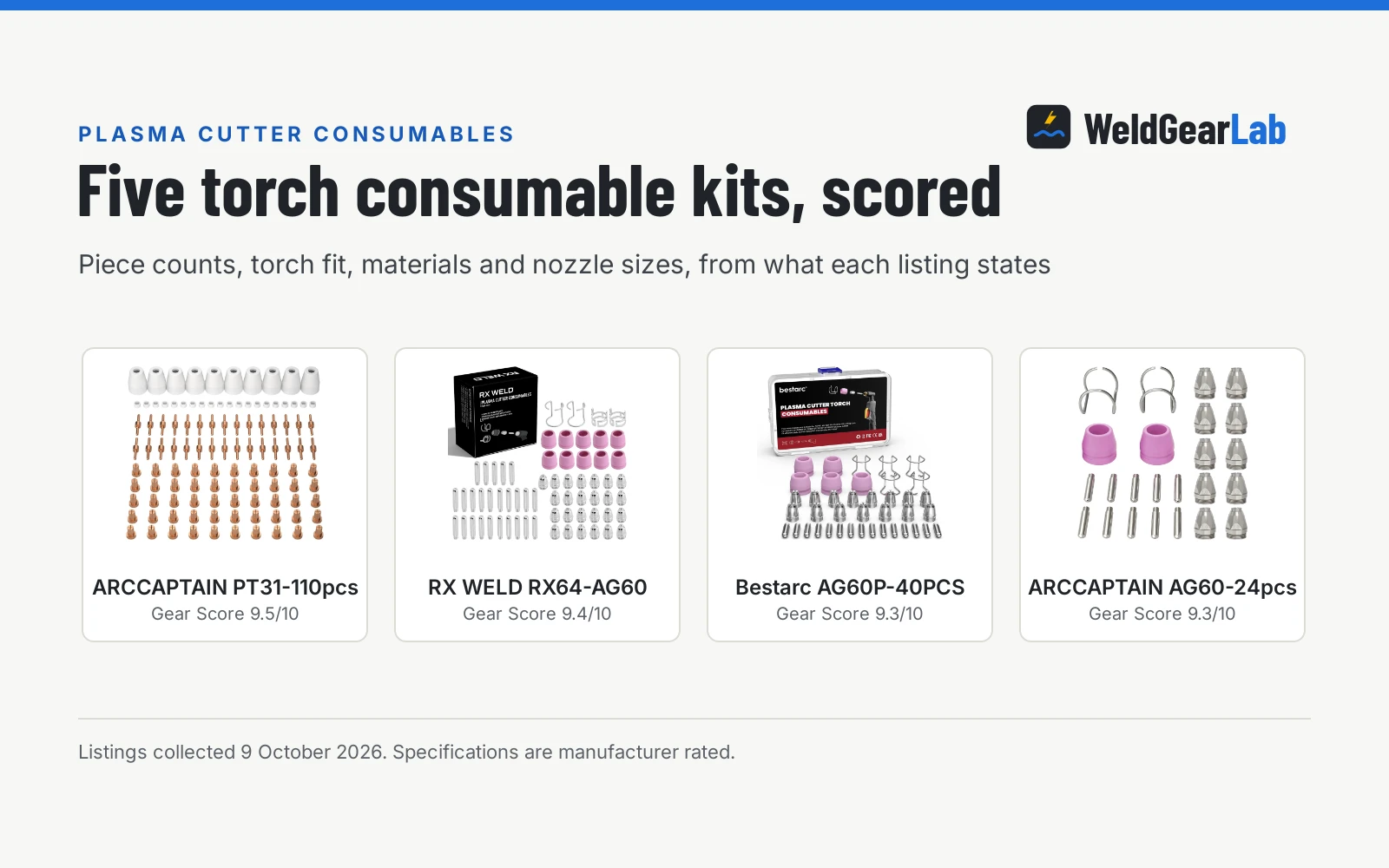
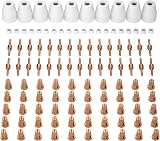 ARCCAPTAIN 110PCS PT31 Plasma Cutting Consumables Fit CUT-459.5/10View on Amazon
When an arc starts wandering across plate on the cutting table or throwing heavy dross under a cut edge, worn torch parts are almost always the cause. This plasma cutting consumables guide explains how torch wear parts work together, how nozzle orifices match cutting amperage, and when to replace each piece for clean cuts. Handheld torches rely on an electrode, nozzle tip, and outer shield or spacer guide, often paired with a swirl ring or retaining cap, to shape compressed air into a focused cutting stream. Swapping wear parts before the nozzle orifice widens or the electrode pits out protects your torch head from heat damage and prevents rough, beveled cuts on the bench.
This guide links to our product roundups, where WeldGearLab gets a commission on purchases made through links on this page, and your price stays the same. Read our affiliate disclosure.
Plasma cutting consumables guide: torch parts and how they work
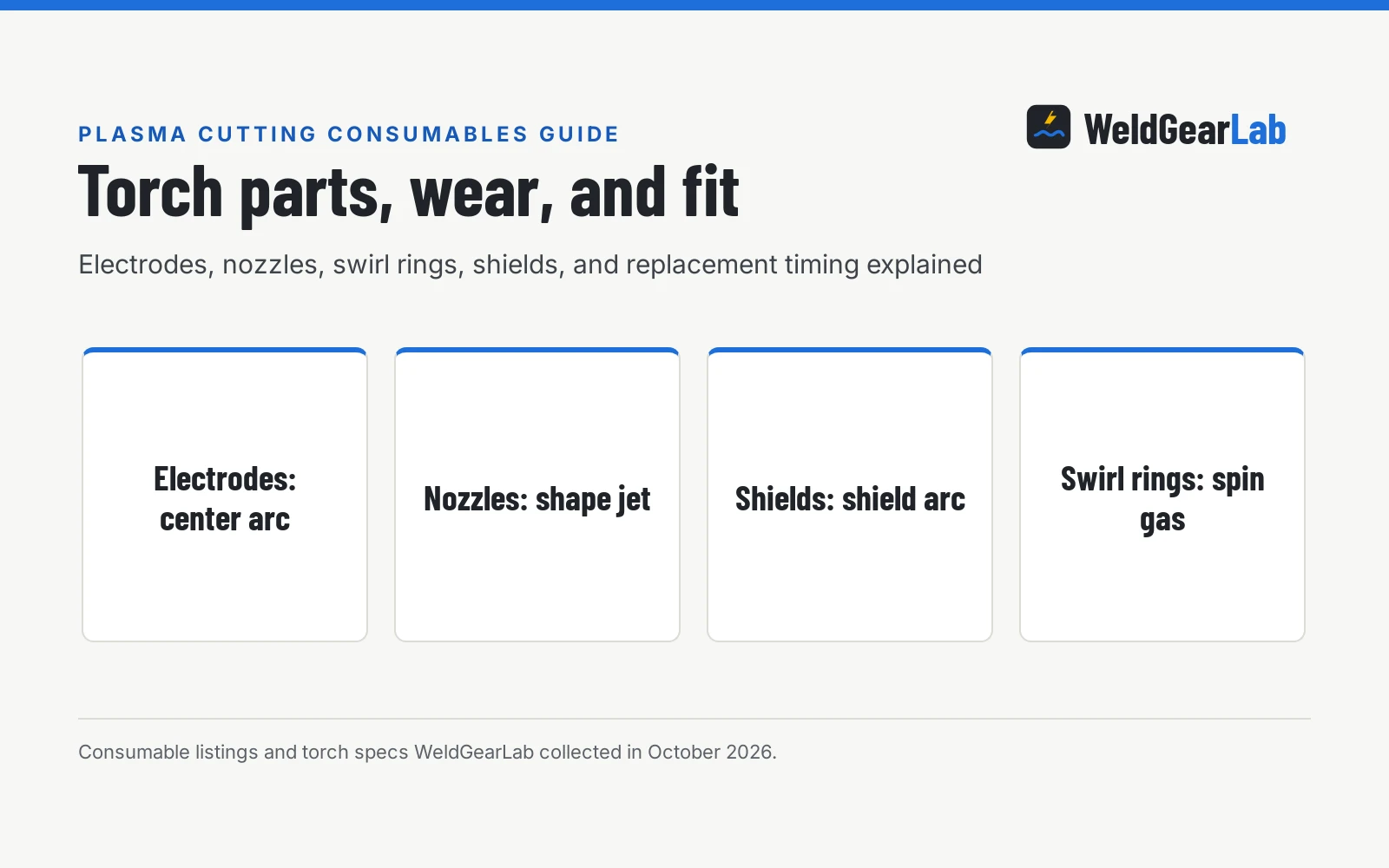
A plasma torch cuts metal by passing compressed air past an electrode inside a constricted nozzle chamber. An electric arc ionizes the gas into plasma, driving intense heat through the nozzle orifice to melt plate while high-velocity air blows molten metal out of the kerf. The electrode carries the negative electrical charge and houses a high-temperature hafnium or emitter insert that feeds the arc. Inside the torch head, swirling air centers the arc column directly through the nozzle orifice. The nozzle constricts and focuses the arc column, while the outer shield cup or retaining cap directs cooling airflow and shields the nozzle from back-spatter when piercing plate.
Side by side
| AG-60 / SG-55 torch style | IPT-40 / S45 torch style | T45v / PMX45 torch style | |
|---|---|---|---|
| Arc starting mechanism | High frequency or pilot arc starting | Blowback pneumatic arc starting | Blowback pneumatic arc starting |
| Common machine fittings | CUT50, CUT60, LGK-60, and LTP 5000 | CUT-55DS Pro, CUT-55NHF, and CUT-65DS | PMX 45 and T45v torches |
| Stated nozzle orifice sizes | .040 inch and .045 inch | 1.1mm-2.0mm | Not stated in listing table |
| Stated part numbers | AG60, AG-60P, SG-55, and WSD-60 | IPT40-55DS/65DS and S45 | 220669, 220671, and 220674 |
| Standoff guide type | Wire spacer guides or spring brackets | Protective shield caps | Shield cup 220674 |
| Electrode and nozzle materials | Copper, metal, and ceramic | Brass, stainless steel, and zinc alloy | Tellurium copper |
| Typical pack counts | 50Pcs and 54PCS sets | 24-Piece and 24Pcs kits | 45Pcs kit |
Torch specifications, nozzle orifice diameters, and part counts reflect listing details from replacement kits on the market. Always match replacement parts to the specific torch model stamped on your torch handle or listed in your machine manual, because thread pitches and internal seating dimensions differ across torch platforms.
When to replace the electrode
- Deep pit in the emitter center. Every arc strike vaporizes a microscopic amount of the hafnium center insert. When the center pit erodes beyond a shallow crater, the arc begins to jump to the copper casing, causing severe gouging.
- Green or discolored arc flame. A green tint in the plasma plume indicates the hafnium core is gone and the electric arc is burning straight into the copper housing. Stop cutting immediately to prevent torch head meltdown.
- Stubborn arc starts. When an electrode face develops heavy oxidation or uneven craters, high frequency and pilot arcs struggle to jump cleanly to the workpiece.
- Blackened tip and slag build-up. Severe carbon tracking or molten blowback encrusted around the electrode tip blocks air swirl channels and destabilizes the cut.
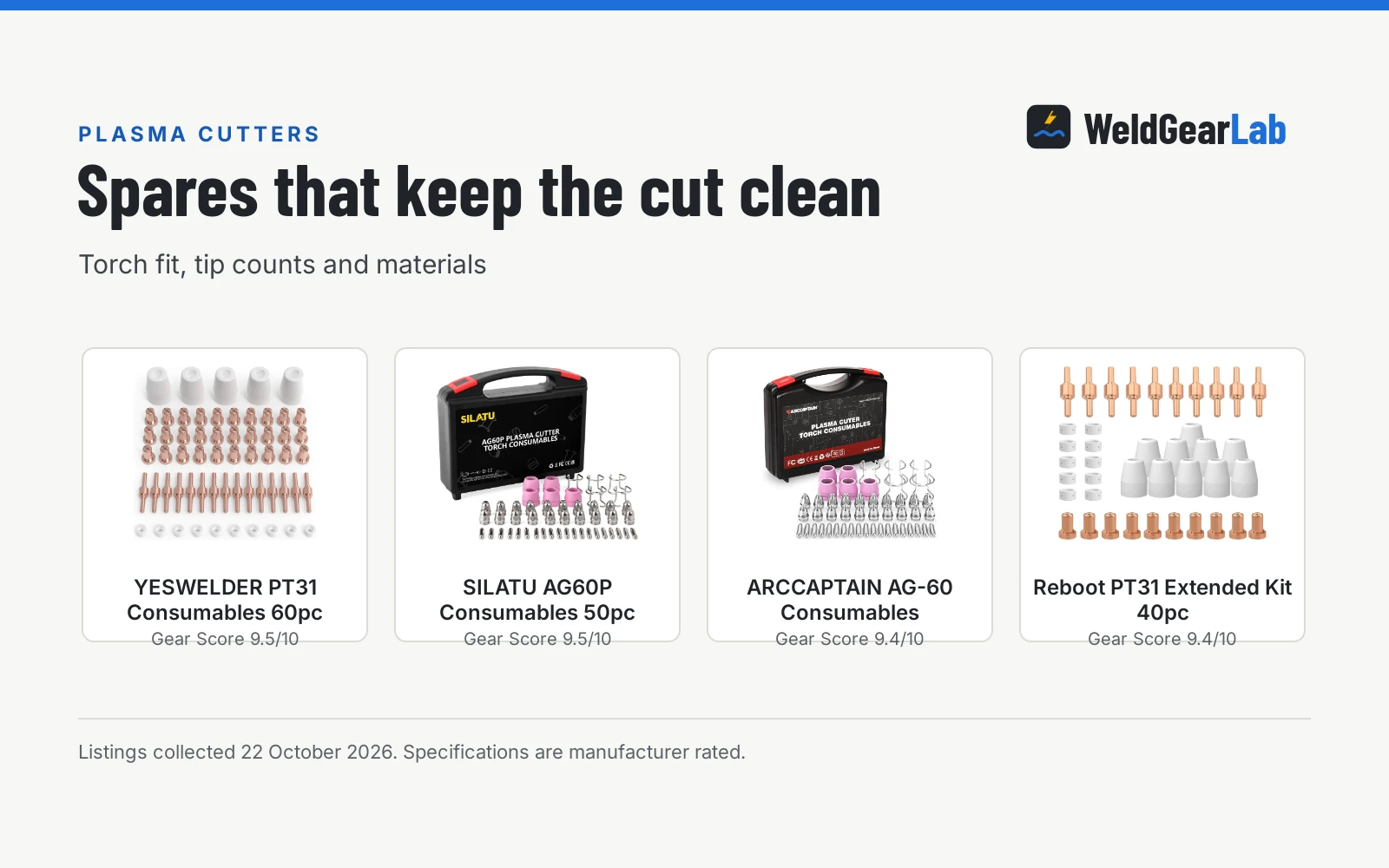
Replacement kits often package matching numbers of electrodes and nozzles. For example, YESWELDER lists packs with 20 electrodes and 20 nozzles, while ARCCAPTAIN supplies sets with 20 electrodes and 20 nozzles alongside 5 shield cups and 5 wire spacer guides. For portable cutting setups in the shop and field, see our best portable plasma cutter guide.
When to replace the nozzle tip
- Out-of-round orifice. The nozzle orifice constricts the plasma jet into a cylindrical column. When molten splash or wear ovalizes the hole, the plasma stream flattens, producing beveling along the cut face.
- Blown-out hole diameter. As the orifice erodes wider than its factory specification, arc density drops, cut width expands, and cutting speed slows down.
- Heavy slag build-up on the face. Piercing too close to plate throws spatter against the nozzle face, blocking air passages and diverting the arc stream sideways.
- Gouged inner bore. If an electrode fails while cutting, the arc burns into the nozzle sidewall, creating double arcing that destroys cutting precision instantly.
Nozzle orifice sizing directly dictates cutting current and cut kerf. ARCCAPTAIN lists AG-60 replacement nozzles in .040-inch and .045-inch sizes, while KISSWELD lists .040-inch nozzles rated for 55 Amps to cut plate up to 18mm on 220V and 12mm on 110V. Using an orifice matched to your amperage maintains arc velocity and clean travel; check our plasma cutter amperage vs thickness chart for material pairings.
How to tell which consumables fit your torch
Consumables are engineered for specific torch heads rather than plasma power supplies. A 50-amp machine from one maker might carry an AG-60 torch, while a similar unit uses an IPT-40 torch. Look for these markings and design details before ordering:
- Torch model stamped on the handle. Check the molded plastic torch neck for designations like AG-60, AG-60P, SG-55, WSD-60, or IPT-40. KERUE lists kits compatible across AG-60, SG-55, and WSD-60 torches for machines like the LGK-60 and LTP 5000, while KAICUTTING lists 45-piece sets specifically matching part numbers 220669, 220671, and 220674 for T45v torches.
- Threaded retention versus push-fit cups. Blowback torches like the IPT40 use threaded components. Fuziddn lists 24-piece IPT40 replacement sets with threaded parts designed for YESWELDER CUT 55DS Pro and CUT 65DS machines, whereas AG-60 torches use drop-in nozzles clamped by an outer ceramic cup.
- Arc ignition style. Pilot arc torches feature a dedicated wire or contact pin routing auxiliary current to the nozzle. Torches differ by ignition style, detailed in our guide on pilot arc vs blowback start plasma cutter torches.
Never force a nozzle or electrode that resists threading or fails to seat flat. An improper fit leaves air gaps that disrupt gas swirling, overheat the torch head, and cause premature part failure.
Which air supply protects your consumables
Moisture and oil in your compressed air line are the primary enemies of plasma cutting consumables. When wet air reaches the plasma arc, water droplets flash to steam and cause thermal shock to the white-hot hafnium insert, pitting the electrode rapidly. Oily air carbonizes inside the torch and coats the nozzle interior, causing the arc to short across internal walls. Installing a dedicated particulate trap and desiccant dryer directly before the machine inlet dramatically extends consumable life. To protect torch parts from water in shop air, check our best air dryer filter for plasma cutter reviews. Always inspect your compressor moisture drain before firing the torch, and verify proper airflow as outlined in our guide on what size air compressor do I need for a plasma cutter.
Can worn consumables damage the torch?
Yes. Pushing worn consumables past their service limits risks destroying the entire torch head. When an electrode hafnium core erodes completely away, the arc melts into the copper holder, fusing the electrode and nozzle together in a solid slug. The resulting electrical short can burn through internal torch insulators and melt the torch wiring harness. Replacing low-cost wear parts promptly saves you from replacing a costly torch assembly.
Plasma cutting safety and arc protection. Plasma arcs generate intense ultraviolet radiation, toxic metal fumes, high open-circuit voltage, and showers of molten sparks. Always wear a shade-appropriate welding helmet or face shield; protect your eyes by checking what shade for plasma cutting matches your amperage output. Wear flame-resistant leather gloves and protective gear, keep a clear fire watch, and ensure proper shop ventilation or extraction when cutting. Disconnect power to the cutting unit before inspecting or replacing torch consumables to avoid accidental trigger firing.
FAQ for welders
How often should plasma cutting consumables be replaced?
Consumable life depends directly on air cleanliness, cutting amperage, metal condition, and standoff control rather than a fixed clock schedule. Replacing parts based on visual inspection of electrode pit depth and nozzle orifice roundness prevents poor cuts and torch damage. Check your electrode center and nozzle hole before beginning critical cuts instead of relying on estimated run time.
Can I use .040-inch and .045-inch nozzles interchangeably?
No. Nozzle orifice diameter must match your cutting amperage. A .040-inch nozzle orifice constricts lower cutting current for thinner metal, but running it at high amperage will overheat and blow out the tip. A .045-inch orifice handles higher current, such as 50-60A torches, but running it at low amperage reduces arc density and produces excessive beveling.
What causes plasma cutter nozzles to burn out quickly?
Moisture in compressed air lines and dragging a non-drag nozzle directly on plate metal are the two most common causes of rapid nozzle failure. Wet air causes severe internal arcing, while direct plate contact splashes molten blowback into the nozzle orifice. Using a wire spacer guide or maintaining a small standoff distance protects the nozzle face from premature erosion.
Do I need to replace the electrode and nozzle at the same time?
Most fabricators replace the electrode and nozzle as a matched pair during routine maintenance. A worn electrode produces an erratic arc that quickly damages a fresh nozzle orifice, while an eroded nozzle disrupts cooling airflow around the electrode. Packaged kits from KERUE, ARCCAPTAIN, and KISSWELD provide equal counts of 20 electrodes and 20 nozzles in 50-piece sets to support paired replacement.
Why is my plasma cutter leaving heavy dross on the cut edges?
Heavy dross forms when the torch travel speed is incorrect, air pressure drops, or the nozzle orifice has eroded out of round. An enlarged or damaged nozzle creates a turbulent plasma stream that cannot eject molten steel cleanly from the bottom of the kerf. Inspect the nozzle orifice under good lighting and consult our guide on why a plasma cutter is not cutting through if dross persists.
Related: how long plasma cutter consumables last, Cut 50 plasma cutter tips, best arc plasma cutter consumables, and the plasma cutters hub. Also see our guide on how to reduce dross when plasma cutting.