Rivet Gun Sizes: Which One to Buy
Rivet gun size means matching the gun, nose piece and pull force to the rivet diameter, and this guide shows how 3/32, 1/8, 5/32 and 3/16 inch rivets line up with the guns that pull them.

On this page
Top picks at a glance
As an Amazon Associate I earn from qualifying purchases.
- 1
 STANLEY Heavy Duty Contractor Grade Blind Rivet Gun9.8/10View on Amazon
- 2
 WETOLS Pop Rivet Gun Kit with 200 Blind Rivets9.7/10View on Amazon
- 3
 Campbell Hausfeld TL053900 Pneumatic Pop Rivet Gun9.7/10View on Amazon
A bracket hangs loose on a trailer gate, the old rivet drilled out and the hole waiting for a fresh one. The gun on the bench has to pull that rivet clean, and the wrong size gun leaves a loose joint or a mandrel that snaps before the rivet sets. Rivet gun size is the match between the rivet diameter, the nose piece on the gun, and the pull the gun can deliver, and this guide walks through that match step by step.
This guide links to our product roundups, where WeldGearLab gets a commission on purchases made through links on this page, and your price stays the same. Read our affiliate disclosure.
Rivet gun size starts with the rivet
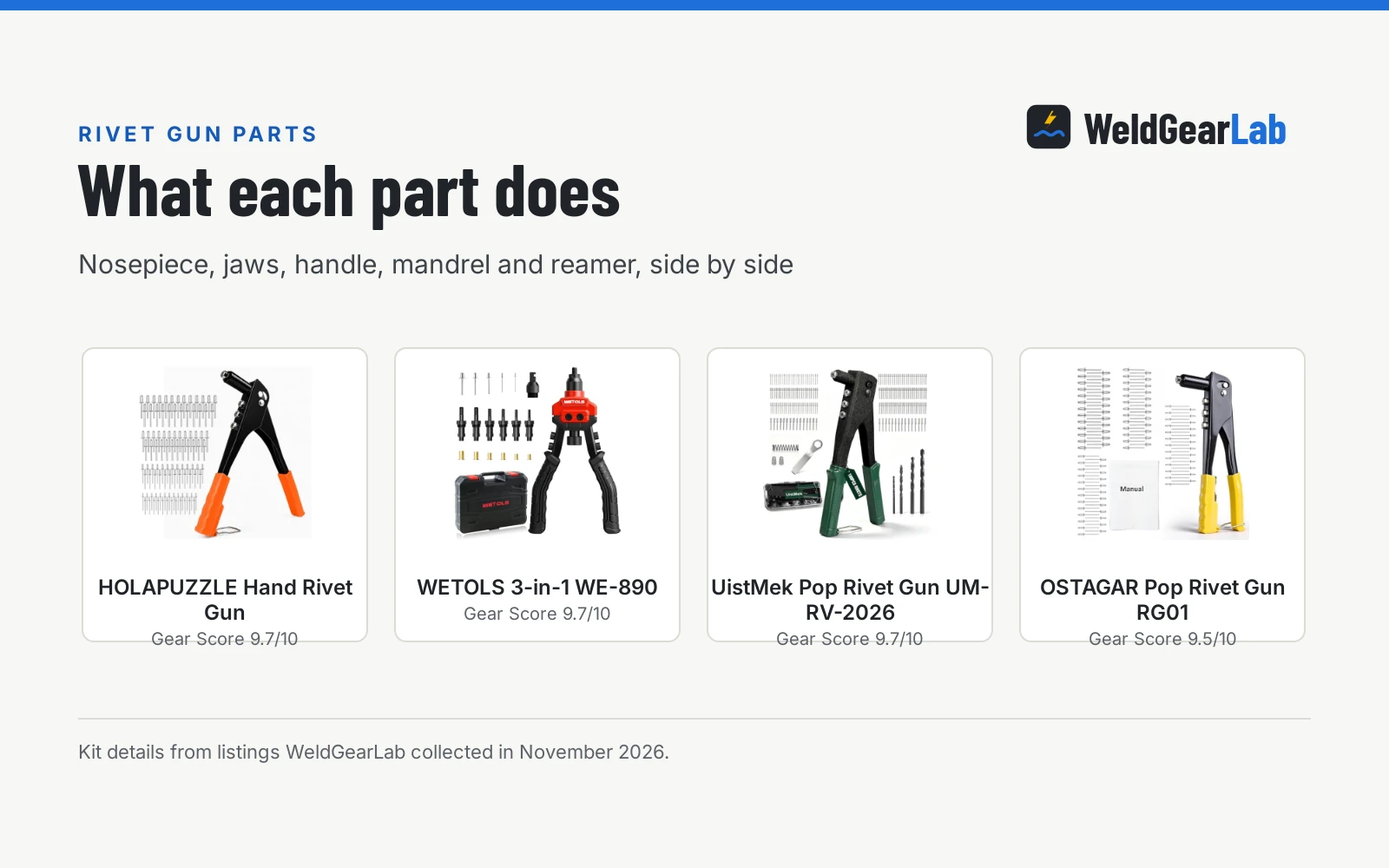
Size means the diameter of the blind rivet the gun pulls. The listings WeldGearLab collected name four diameters again and again: 3/32, 1/8, 5/32 and 3/16 inch. Each diameter needs its own nose piece, the small tip that grips the mandrel and seats against the rivet head. Fit the wrong nose piece and the gun slips off the mandrel or jams on it, so the nose piece is part of the size question, not an afterthought.
The Milwaukee 2550-22 M12 Rivet Tool Kit lists all four sizes, 3/32, 1/8, 5/32 and 3/16 inch, for rivets in aluminum, steel and stainless steel. The SAKAI pneumatic gun (on Amazon) ships with four nose pieces in the same sizes: 3/16 inch (4.8 mm), 5/32 inch (4 mm), 1/8 inch (3.2 mm) and 3/32 inch (2.4 mm). Match the nose piece to the rivet before you pull, and swap it whenever the rivet size changes.
For the rivet side of the match, see our types of blind rivets guide and the blind rivet sizes chart.
Side by side
| 3/32 inch | 1/8 inch | 5/32 inch | 3/16 inch | |
|---|---|---|---|---|
| Nose piece, SAKAI pneumatic | 2.4 mm | 3.2 mm | 4 mm | 4.8 mm |
| Milwaukee 2550-22 pulls it | Yes | Yes | Yes | Yes |
| Typical shop use | Light trim and thin sheet | General sheet metal work | Brackets and heavier sheet | Thick sheet and frames |
The nose piece figures in the table come from the SAKAI listing, and the Milwaukee 2550-22 kit (on Amazon) lists the same four rivet diameters. A gun that covers the full range from 3/32 to 3/16 inch handles most sheet metal and bracket work without a second tool.
What the figures on a gun listing mean
Pull force is a headline figure, and it matters most when the rivet is steel or stainless. The Milwaukee 2550-22 lists 2, 000 lbs of pull force with a 0.8 inch stroke length, and capacity of 450 1/8 inch steel rivets per charge. Stroke length is how far the gun draws the mandrel in a pull, and a longer stroke sets a rivet in fewer pulls.
Air guns add pressure and inlet figures. The SAKAI gun has a 1/4 inch NPT air inlet, a rivet catcher at the back, and a cup that turns to pour out spent mandrels. The UPWOOD rivet nut tool (on Amazon) is a different kind of tool, and its figures show the difference: air pressure of 5 to 7 bar, stroke length of 0.314 inch (8 mm), pull force over 5750 lbf (25.5 kN), motor speed of 3500 RPM and noise under 75 dB(A). It sets rivet nuts from M3 to M12 (#6-32 to 1/2-13) with 8 nose pieces: M5, M6, M8, M10, #10-24, 1/4-20, 5/16-18 and 3/8-16. A rivet nut tool sets a threaded insert into the sheet instead of pulling a blind rivet, so do not shop it by blind rivet size. See our rivet gun vs rivet nut tool guide if the job calls for threaded inserts.
Cordless, pneumatic and hand guns
The Milwaukee M12BPRT-0 Pop Rivet Tool runs on 12 volts, which suits bench and field work where no air line reaches. The 2550-22 kit is also an M12 tool and lists the pull force and per-charge capacity above. If the work is a long run of rivets on a bench with shop air, a pneumatic gun like the SAKAI keeps pulling without a battery to swap, and its trigger action suits repeat work.
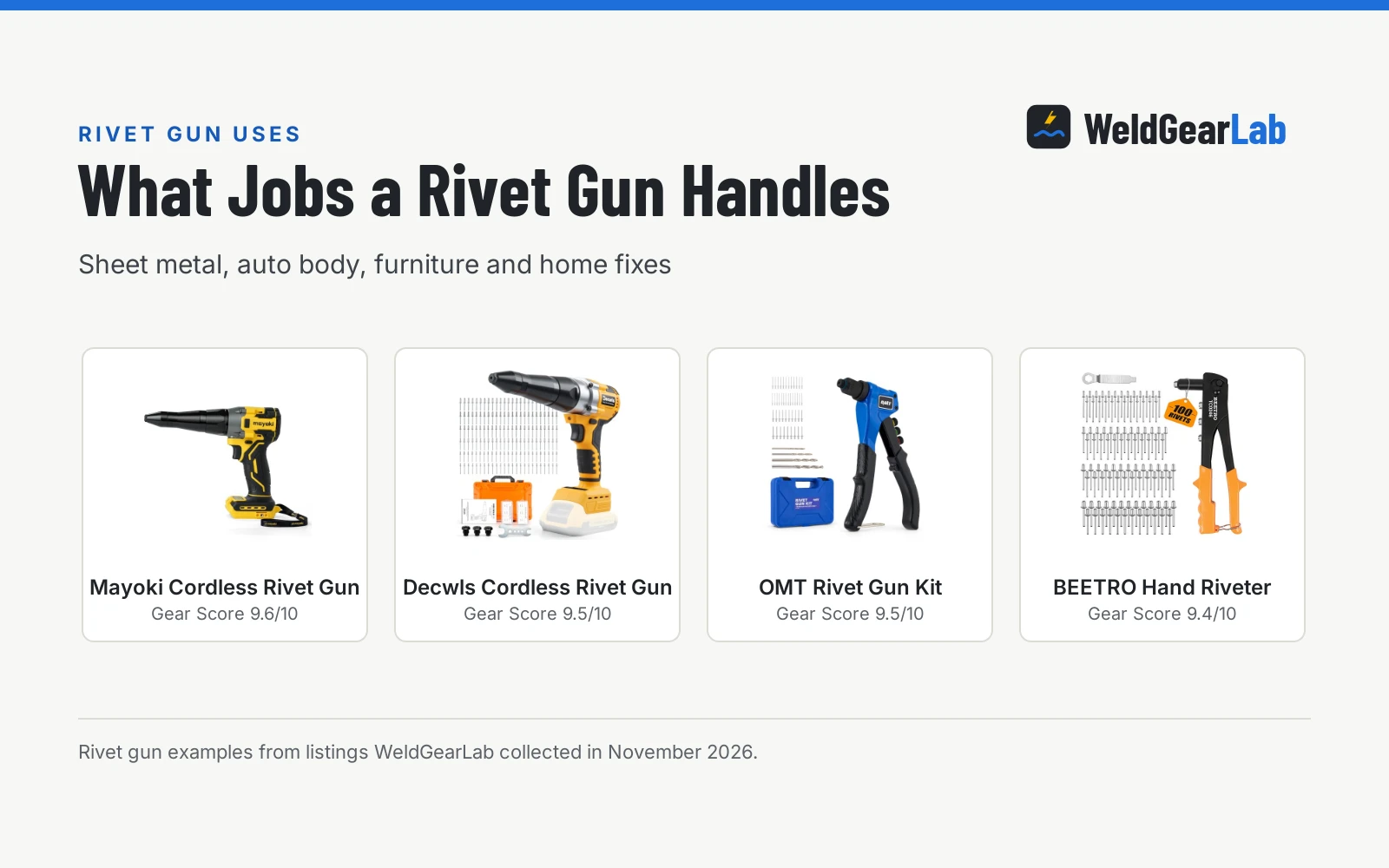
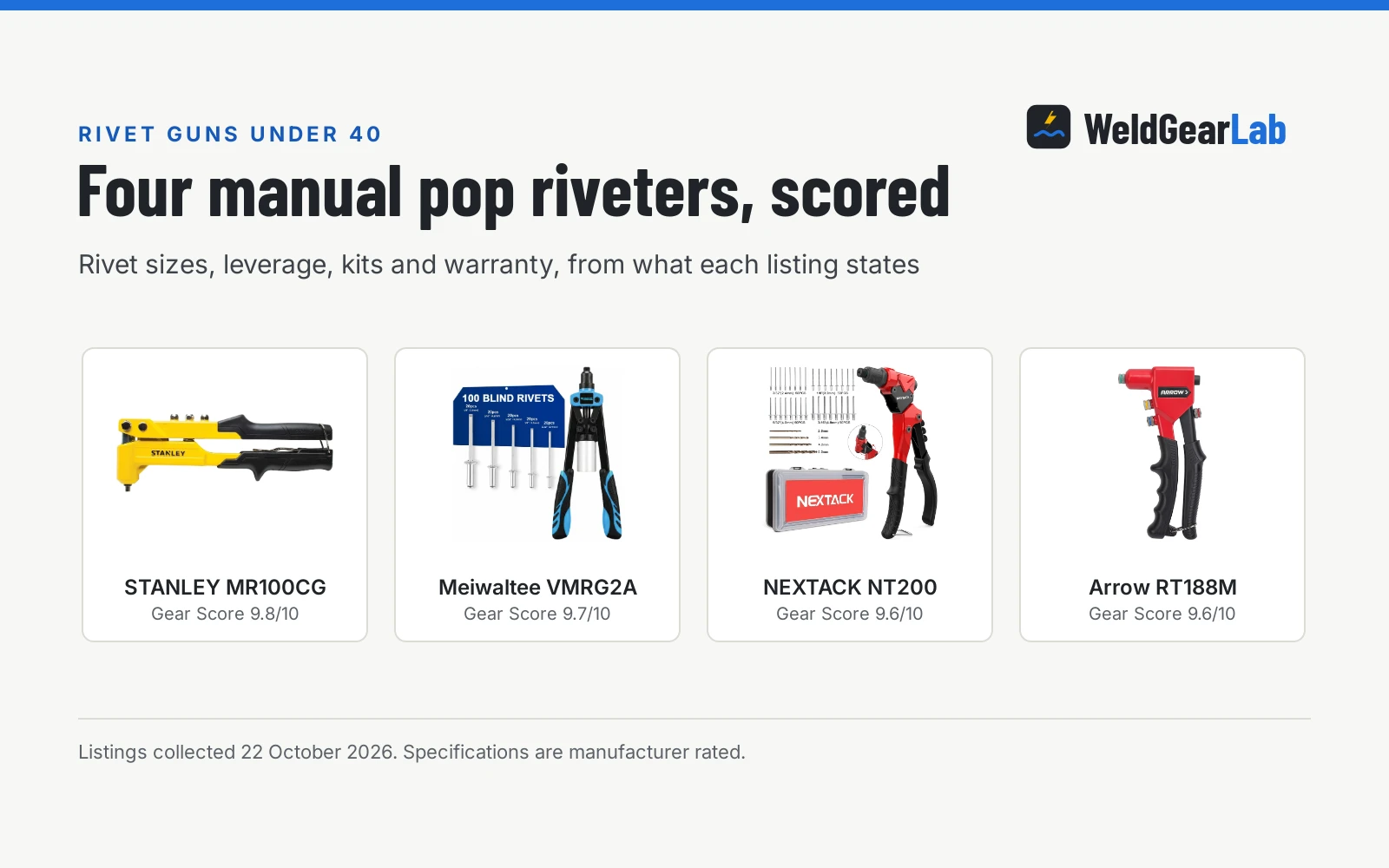
A hand lever gun suits a short run of rivets. It needs no battery and no air, but every rivet costs a squeeze, and steel rivets at the large end of the range ask more of the hand than aluminum rivets do. For a long run of rivets, pick a powered gun. Our cordless vs corded rivet gun guide and pneumatic vs electric rivet gun guide compare the power choices in more depth.
How to pick the right rivet gun size
- Measure the rivet. Read the diameter off the rivet box or the old rivet, and pick a gun that lists that diameter.
- Check the nose piece. Confirm the gun ships with the nose piece for that diameter, or that the piece is in the box.
- Match the material. Steel and stainless rivets ask for more pull force than aluminum rivets, so check the pull force figure against the material.
- Count the rivets. A short run suits a hand gun, while a long run suits a cordless or pneumatic gun that keeps pulling without tiring the hand.
- Check the air or battery. A pneumatic gun needs a shop air line with the right inlet, and a cordless gun needs a charged battery on the same platform.
Our best rivet gun for metal roundup and best heavy duty rivet gun roundup score guns that list these figures.
FAQ for welders
What rivet gun size do I need for sheet metal?
A gun that covers 3/32 to 3/16 inch handles most sheet metal work. Match the nose piece to the rivet diameter, and check the pull force if the rivets are steel or stainless. The blind rivet sizes chart lists the diameters side by side.
Can one rivet gun pull every rivet size?
Only the sizes it lists, and only with the matching nose piece fitted. The Milwaukee 2550-22 kit and the SAKAI pneumatic gun each list 3/32, 1/8, 5/32 and 3/16 inch, which covers the four diameters named in the listings here. A gun that lists fewer sizes needs a second gun or a different nose piece set for the rest.
What does pull force mean on a rivet gun?
Pull force is the force the gun applies to the mandrel to set the rivet, and the maker lists it in pounds or pound force. The Milwaukee 2550-22 lists 2, 000 lbs. Steel and stainless rivets need more pull force than aluminum rivets of the same diameter.
Do I need a pneumatic rivet gun?
A pneumatic gun suits a bench with shop air and a long run of rivets, since it keeps pulling without a battery to swap. The SAKAI gun uses a 1/4 inch NPT air inlet. A cordless gun like the Milwaukee M12BPRT-0 (on Amazon) runs on 12 volts and suits field work or a bench without an air line. See our best air rivet gun roundup for pneumatic picks.
What size rivet gun do I need for aluminum rivets?
A gun that lists the rivet diameter and aluminum is a good match, since aluminum rivets need less pull force than steel rivets of the same diameter. The Milwaukee 2550-22 lists aluminum, steel and stainless steel rivets from 3/32 to 3/16 inch, and the SAKAI gun is built for aluminum, copper and softer materials. Our best rivet gun for aluminum rivets guide covers guns for aluminum work.
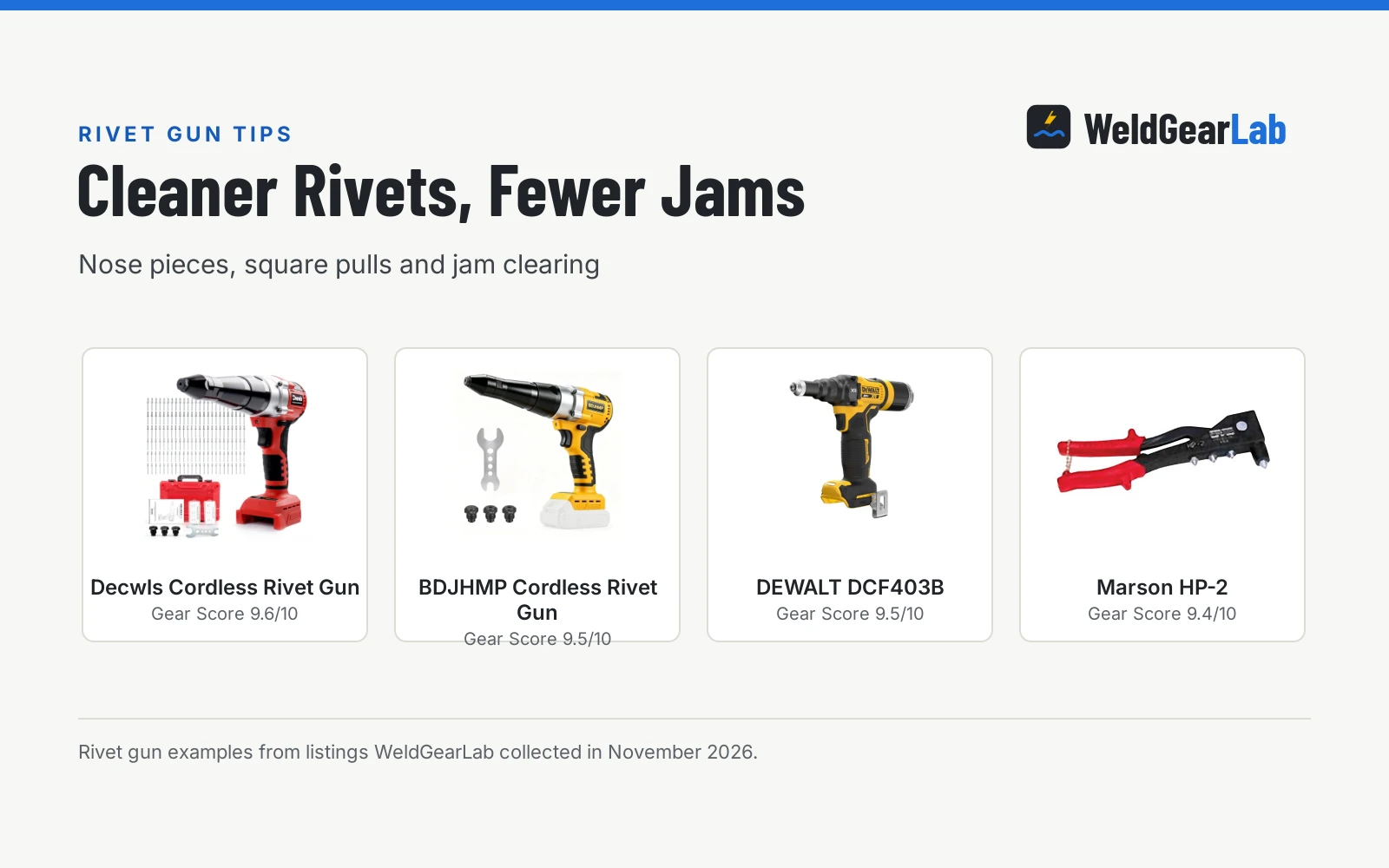
Related: rivet gun size hub, types of rivet guns, rivet gun tips, rivet gun uses, and the types of rivet nuts guide.