Parts Washer on Wheels: Portable Cleaning Stations
A parts washer on wheels rolls a cleaning tank, pump and drain tray to the job, so greasy parts get cleaned where the work happens.

On this page
Top picks at a glance
As an Amazon Associate I earn from qualifying purchases.
- 1
 Jack Boss 3.5 Gallon Capacity Portable Steel Cabinet Parts9.6/10View on Amazon
- 2
 VEVOR Parts Washer 5-Gallon9.5/10View on Amazon
- 3
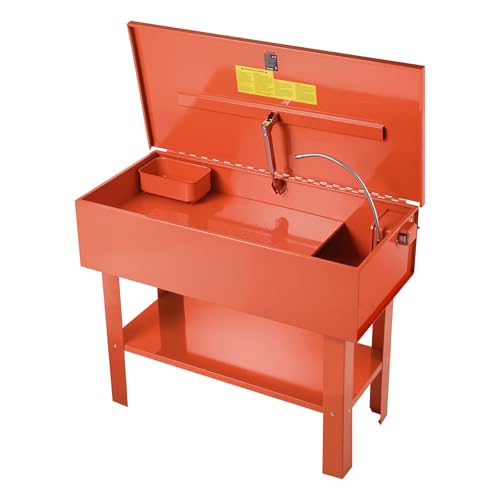 VEVOR Parts Washer 40-Gal 17 Gal Solvent Capacity Automotive9.5/10View on Amazon
A greasy gearbox, a set of bearings caked in old grease, and a carburetor that needs a clean pass before it goes back on the engine all land on the same bench in a home shop. A parts washer on wheels rolls the cleaning station to the job, holds the fluid and the part in a lidded tub, and lets the pump push fluid over the part while the mess stays inside the tank.
This guide links to our product roundups, where WeldGearLab gets a commission on purchases made through links on this page, and your price stays the same. Read our affiliate disclosure.
What a parts washer on wheels is
A parts washer on wheels is a mobile cleaning station built around a steel tank, an electric pump, a spray nozzle and a drain tray, all mounted on casters. The pump moves cleaning fluid from the reservoir to the nozzle, the fluid washes grease, dirt and oil off the part, and the fluid drains back into the tank for circulation. The lid closes over the tub between jobs, which keeps dust out and keeps the fluid inside the tank.
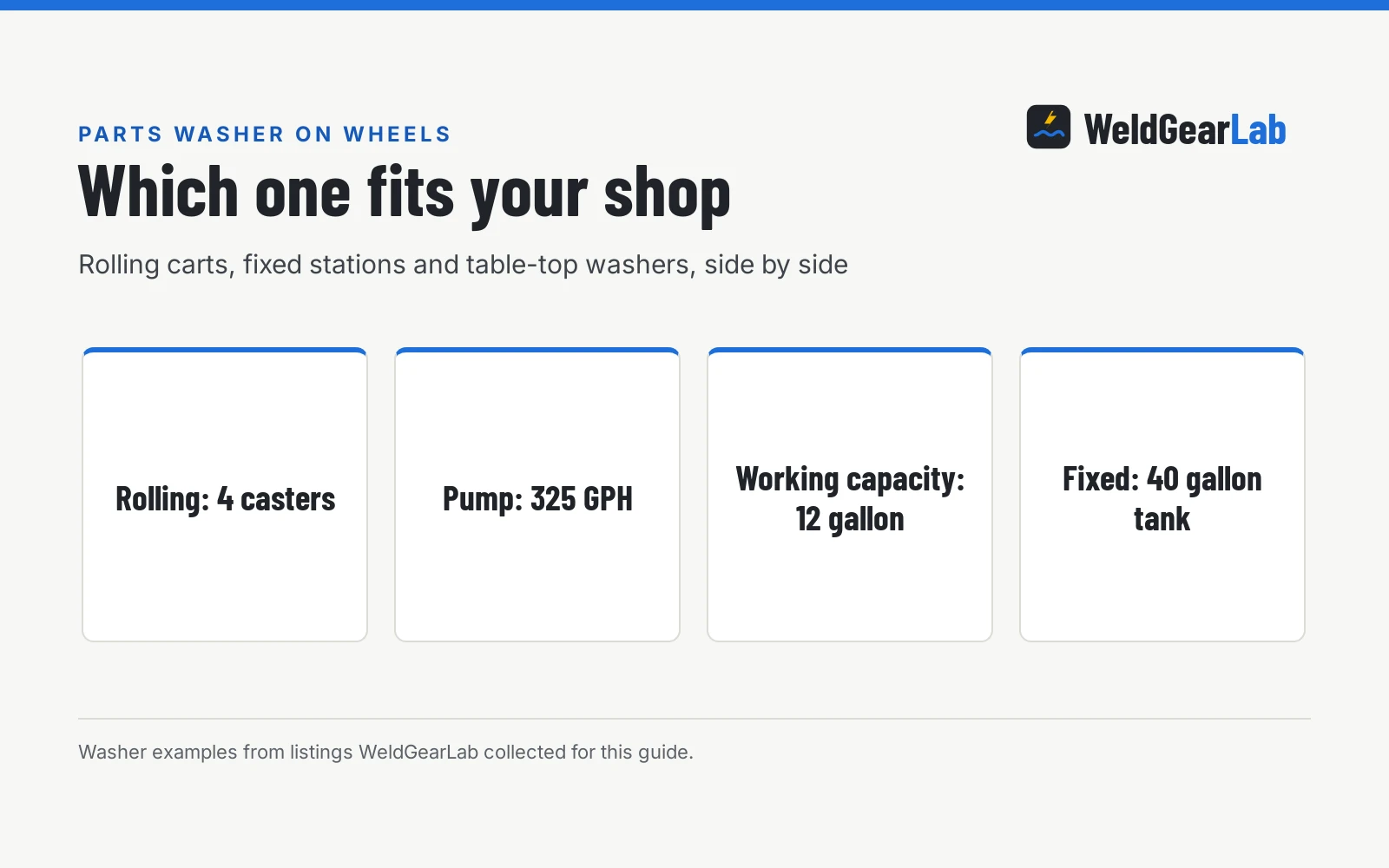
Several rolling carts in the listings share a common size. A 20-gallon tank holds a 12-gallon working capacity, the pump is rated at 325 GPH, and the base rides on 4 casters with 2 locking. The JEGS cart (on Amazon) is the exception: it lists a 317 gph pump and a 12-gallon solvent capacity. The tank is powder-coated 20 gauge steel, which the listings describe as leak resistant and rust resistant. A drain tray and a drying shelf sit above the reservoir, so a part can drain back into the tank after it has been sprayed.
Parts washer on wheels side by side
| Rolling 20-gallon cart | Fixed 40-gallon station | Table-top 5-gallon washer | |
|---|---|---|---|
| Tank size | 20 gallon | 40 gallon | 5 gallon |
| Working capacity | 12 gallon | 17 gallon solvent capacity | 3.5 gallon solvent capacity |
| Pump | 325 GPH | 1 gallon per minute | Not stated |
| Casters | 4 casters, 2 locking | Not stated | Not stated |
| Steel | 20 gauge steel | Heavy-duty steel | Heavy-duty steel |
| Fluid | Water-based solutions | Solvent | Solvent |
| Parts it suits | Engine parts, bearings and tools | Wheel bearings, gears and carburetors | Small parts |
When a rolling cart fits
- Cleaning moves around the shop. Roll the cart to the vehicle or the bench where the part came off, clean the part there, and roll the cart back to storage.
- Mid-size parts. A 20-gallon tank with a 12-gallon working capacity holds bearings, gears, tools and engine parts, with a drain tray for parts that need to drip dry.
- Water-based fluid. Several rolling carts in the listings are designed for water-based cleaning solutions, and their listings state that they are not suitable for petroleum-based cleaning solvents. The JEGS cart lists a 12-gallon solvent capacity instead, so it runs on solvent.
See the parts washer large guide for a closer look at a 20-gallon tank and the fluid for shop use.
When a fixed station or a table-top washer fits
A fixed station suits a shop with a set cleaning spot and parts that stay large. The VEVOR station lists a 40-gallon cleaning tank with a 17-gallon solvent capacity, a pump output of 1 gallon per minute, and a tank that can support 220 lbs. The listings name wheel hub bearings, gears, carburetors, valve assemblies and transmission cases among the parts it cleans, and a storage shelf at the bottom holds supplies.
A table-top washer suits small parts and a crowded bench. The JEGS table-top washer lists a 5-gallon tank with a 3.5-gallon solvent capacity, a weight of 15 pounds, and a compact design for small parts and projects. A removable tray adds room for clean-up, and the powder-coated steel body is built for bench use. It holds far less fluid than a rolling cart, so it fits a shop that cleans small parts and leaves large parts to a bigger tank.
The table top parts washer guide covers what to know before buying a bench-size washer, and the parts washer tank guide explains tank options in more detail.
Water-based fluid or solvent
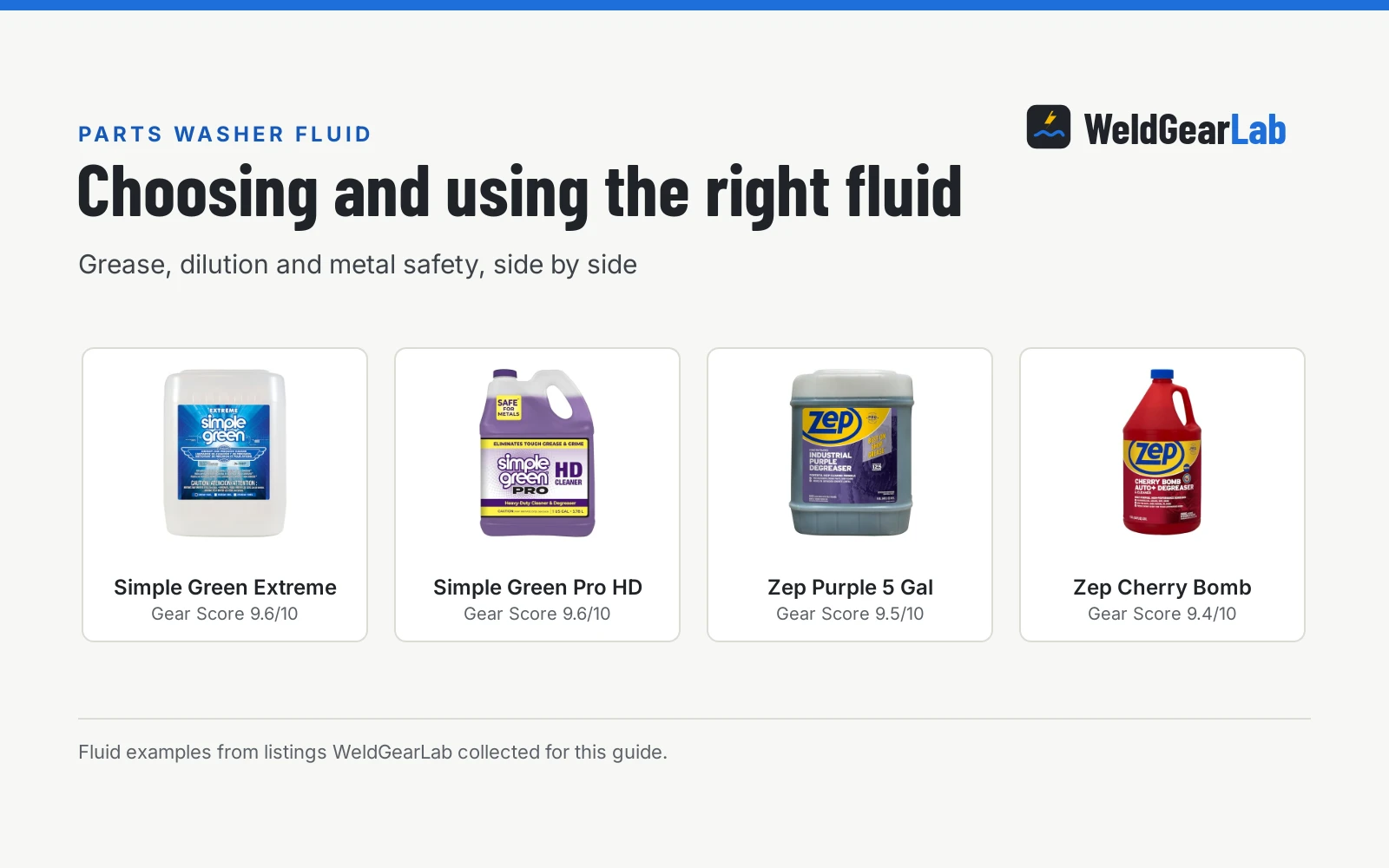
Fluid choice follows the washer, not the other way around. Several of the rolling carts in the listings are designed for water-based cleaning solutions, and their listings state that they are not suitable for petroleum-based cleaning solvents. The JEGS rolling cart lists a 12-gallon solvent capacity, so its fluid is a solvent. The VEVOR station and the JEGS table-top washer also list a solvent capacity. Read the fluid the maker states for the washer in hand and use that fluid only.
Several rolling carts list a fusible link that closes the lid in case of fire. Keep the lid closed when the washer is not in use, and keep a fire extinguisher in the shop. For more on choosing fluid, see the parts washer cleaner guide.
How to use a rolling parts washer
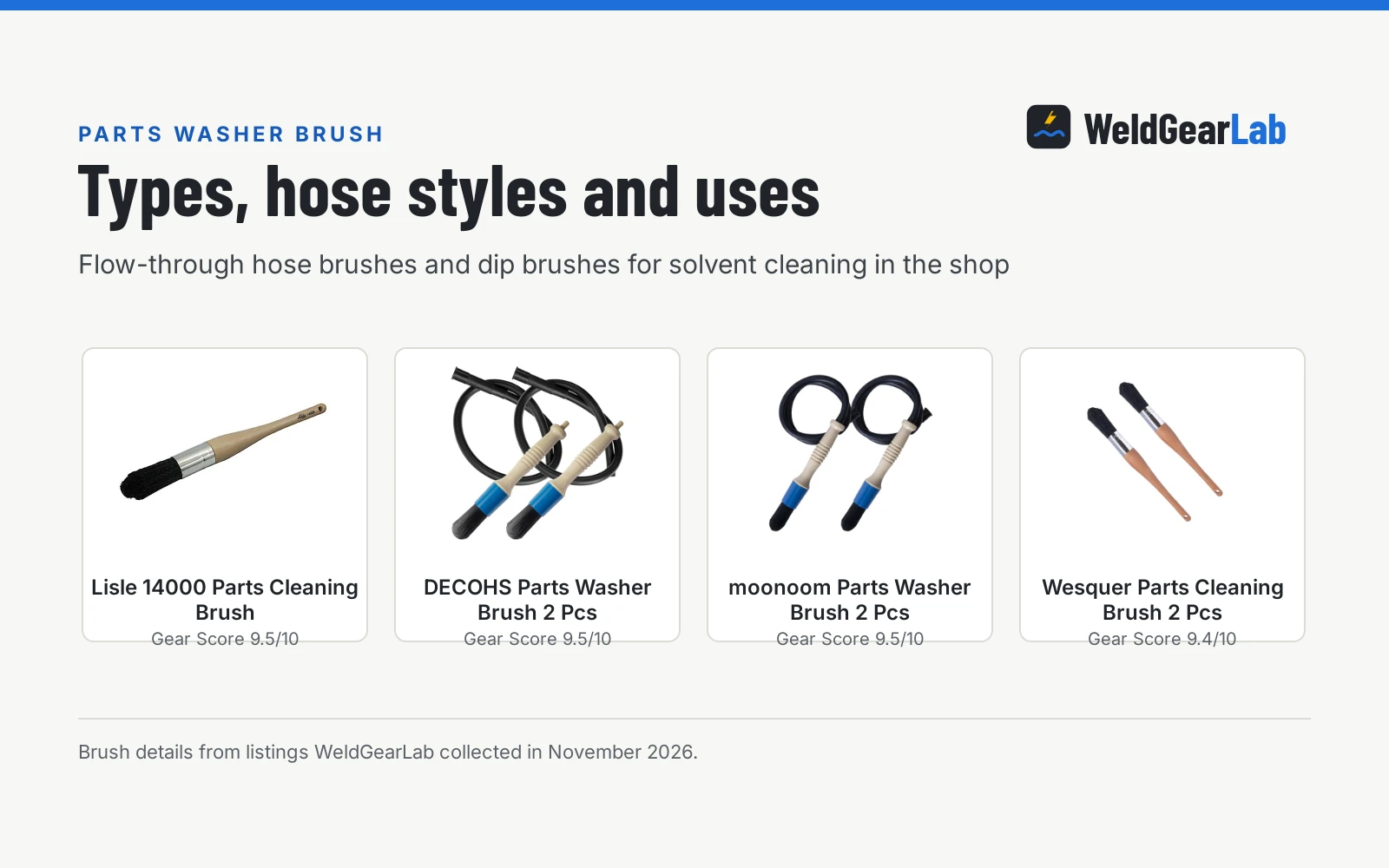
Roll the cart to the job and lock the casters so it stays put while the part is inside. Fill the tank to the working capacity the maker lists, using the fluid the maker states for that washer. Set the part in the tub or on the drain tray, run the pump, and aim the flexible spray nozzle so the fluid flows over the greasy faces. A brush helps on caked grease, and the drain tray catches the runoff so it flows back to the reservoir.
Lift the part out, set it on the drain tray, and let the fluid drain back into the tank before moving the part to the bench. Close the lid when the cleaning is done, and clear chips and sludge from the drain tray so the pump keeps its flow.
What to check before you roll it
- Casters. Roll the cart and check that the casters turn freely, then lock the locking casters before cleaning starts.
- Lid and fusible link. Check that the lid closes over the tub, and on a cart that lists a fusible link, check that the link is in place, since the listings describe it as the part that closes the lid in case of fire.
- Drain tray and reservoir. Check that the drain tray sits in place and that the reservoir holds fluid at the working capacity, so the pump does not run dry.
- Nozzle and hose. Check that the flexible spray nozzle aims into the tub and that the hose has no kinks, so fluid lands on the part and not on the floor.
FAQ for welders
Can a parts washer on wheels clean a carburetor?
Yes, if the carburetor fits in the tub and the washer fluid suits the part. The rolling carts clean engine components and tools, and the VEVOR station lists carburetors among the parts a parts washer cleans, along with wheel hub bearings, gears, valve assemblies and transmission cases.
How much fluid does a 20-gallon cart hold?
A 20-gallon cart holds a 12-gallon capacity, according to the listings for the rolling carts. The tank itself is 20 gallon, and the working capacity is the fluid the cart runs with.
Can I use petroleum solvent in a water-based washer?
No. Several of the rolling carts in the listings are designed for water-based cleaning solutions, and their listings state that they are not suitable for petroleum-based cleaning solvents. Use the fluid the maker states for the washer in hand, and keep solvent washers and water-based washers separate.
What does a 325 GPH pump do in a parts washer?
The pump moves cleaning fluid from the reservoir to the spray nozzle, so fluid flows over the part while it sits in the tub. Several rolling carts in the listings pair a 325 GPH pump with a flexible spray nozzle and a drain tray, so fluid drains back to the reservoir for circulation.
Is a table-top washer enough for small parts?
Yes, for small parts and small projects. The JEGS table-top washer lists a 5-gallon tank with a 3.5-gallon solvent capacity and a weight of 15 pounds, with a removable tray for clean-up. It suits a bench and small parts, while a rolling cart suits larger parts that need a 20-gallon tank and a 12-gallon working capacity.
Related: parts washer accessories, parts washer with filter, high pressure parts washer, and the metal fab tools hub.