Parts Washer Cleaner: What to Choose
A parts washer cleaner is the fluid that cleans metal parts inside a washer tank, and the right one matches the washer, the metal and the dirt.

On this page
Top picks at a glance
As an Amazon Associate I earn from qualifying purchases.
- 1
 VEVOR Parts Washer 5-Gallon9.5/10View on Amazon
- 2
 Parts Washer Brush with 31 Inch Hose9.4/10View on Amazon
- 3
 Oil Eater Parts Washer Fluid9.4/10View on Amazon
A parts washer cleaner is the fluid that does the cleaning inside a parts washer, and the washer is the tank, pump and brush that move it over the part. Grease, oil and dirt come off in the tank instead of on the bench, so the part comes out clean enough to measure, fit or paint. This guide explains what the cleaner is, how to pick the fluid and the washer size, and how to use both safely.
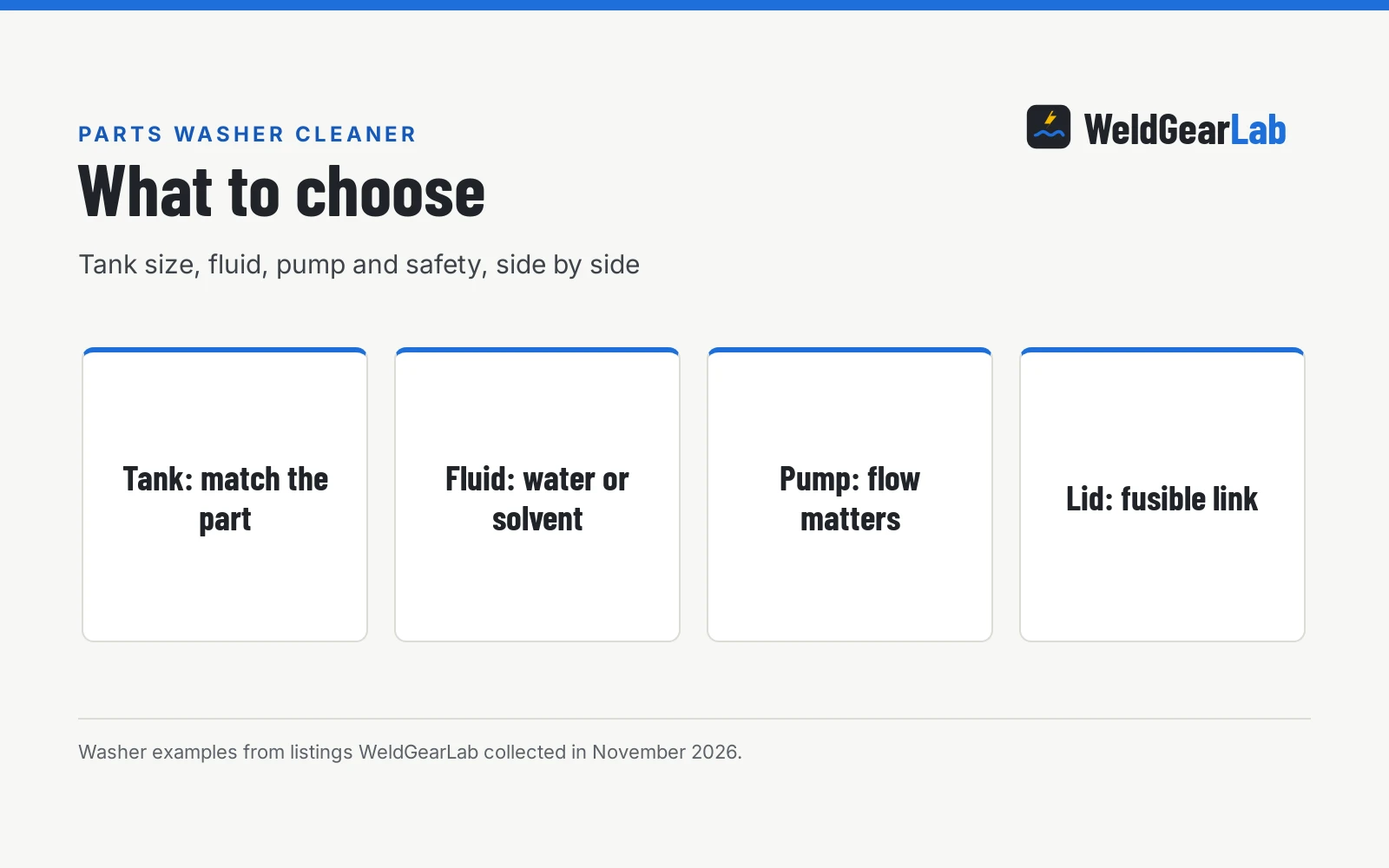
Start with the part, then match the tank and the fluid to it, then check the pump and the lid. That order keeps the choice simple, because a tank that fits the part and a fluid that suits the metal decide most of the result.
This guide links to our product roundups, where WeldGearLab gets a commission on purchases made through links on this page, and your price stays the same. Read our affiliate disclosure.
Parts washer cleaner: what it is and what it does
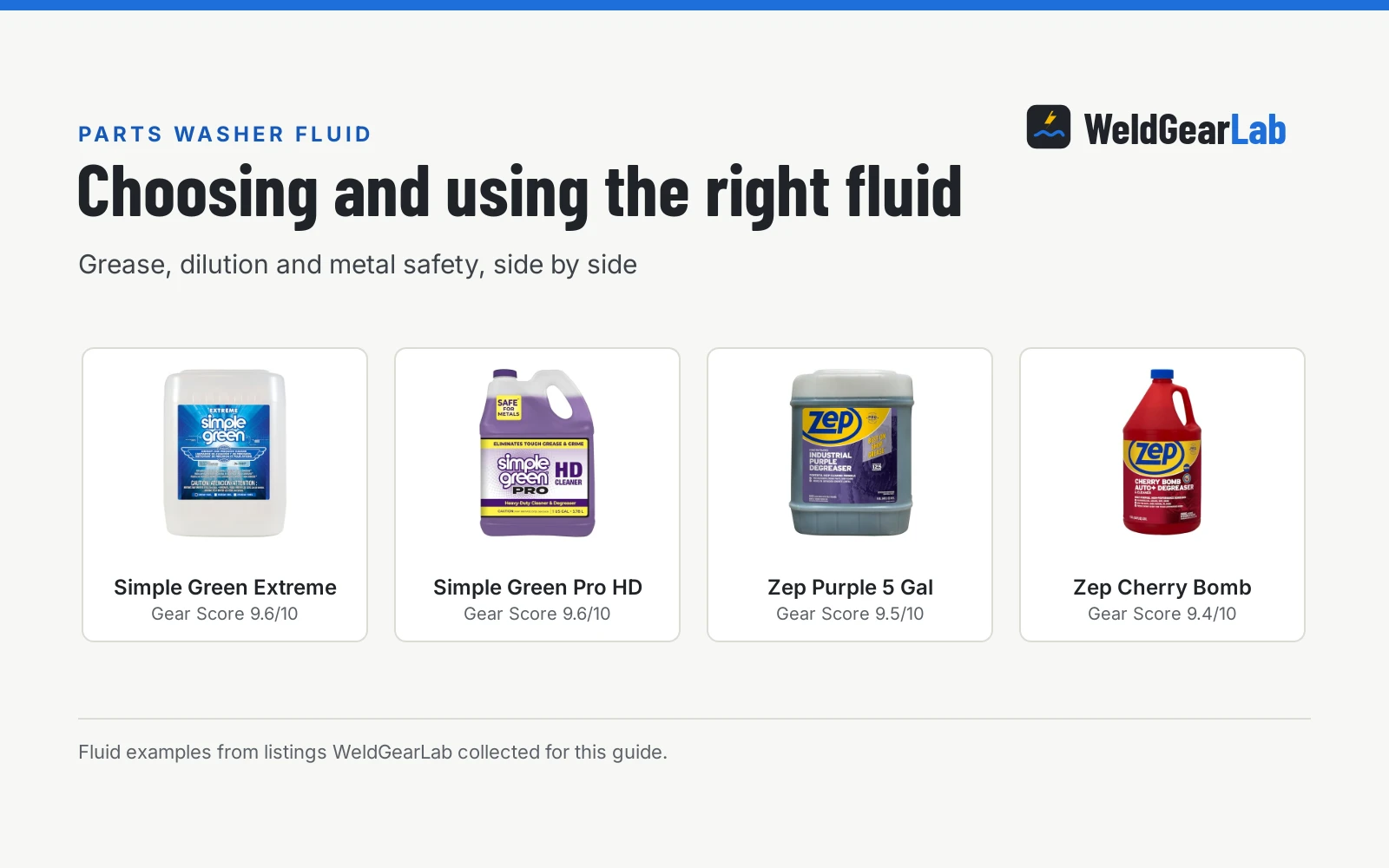
A parts washer cleaner is a fluid made to lift grease and grime off metal parts, used inside a washer tank where a pump moves it over the part. Oil Eater lists a 5 gallon water based fluid that is pH neutral and safe for microbe based washers, while the solvent washers here hold solvent in the tank instead. The cleaner does the chemical work, and the pump and brush do the physical work.
The fluid matters as much as the machine. A fluid that suits the metal and the dirt cleans fast, while the wrong fluid can stain aluminum, strip paint or eat seals. Read the fluid listing for the metals it suits and the washer listing for the fluids it allows before you fill the tank.
Side by side
| Small bench washer | Large cabinet washer | Notes | |
|---|---|---|---|
| Tank size | 5 gallon | 40 gallon | JEGS lists a 5 gallon tank; VEVOR lists a 40 gallon tank |
| Solvent capacity | 3.5 gallon | 24 gallon | JEGS lists both figures |
| Pump flow | 50 gallons per hour | 1 gallon per minute | ECARPATEYE states its flow in gallons per hour; VEVOR states its flow in gallons per minute, so the figures are not in the same unit |
| Power | 110V | 115V | JEGS lists 115V on the 40 gallon |
| Lid | Fusible link | Not stated | Jack Boss lists a fusible link lid |
| Weight | 15 lbs | 92.81 lb | JEGS lists 15 lbs; VEVOR lists 92.81 lb |
| Warranty | 30 days | Not stated | JEGS lists 30 days |
Small washers fit the bench and small parts, while large washers fit the floor and large parts; the table above lines up what each size states.
Tank size: match the washer to the part
Tank size decides which parts fit. Jack Boss lists a 3.5 gallon bench washer with a basin 18 inches wide by 13.5 inches deep by 9 inches high, sized for wheel bearings, gears and carburetors. JEGS lists a 5 gallon tank with a 3.5 gallon solvent capacity, a 20 gallon tank with a 12 gallon solvent capacity, and a 40 gallon tank with a 24 gallon solvent capacity, while VEVOR lists a 40 gallon tank with a 17 gallon solvent capacity.
Solvent capacity is smaller than tank size on the listings that state both figures, so size the washer by the solvent figure, not the tank figure. A part that soaks must sit under the liquid level to clean, and the ECARPATEYE lists a maximum liquid level of 10 gallons or 5 inches and a minimum of 6 gallons or 3 inches, so check the level marks before you load parts.
Fluid: water based or solvent
Fluids split into water based cleaners and solvents. Oil Eater lists a water based, biodegradable, pH neutral fluid in a 5 gallon pail, safe for smart washers and microbe based parts washers, and heat tolerant in heated systems. Solvent washers use a solvent in the tank, and the Jack Boss 3.5 gallon washer states it is not for use with flammable or combustible solvents such as mineral spirits.
Match the fluid to the washer, not just to the dirt. A water based fluid suits a washer built for it, and a solvent suits a washer with a fusible link lid and a pump rated for solvent. Never mix fluids, and never pour a flammable solvent into a washer that forbids it: the Jack Boss lid closes on a fusible link to help prevent fire, and that link only helps if the fluid is allowed in the first place.
Pump and flow
The pump moves the fluid over the part, and flow helps decide how fast the dirt comes off. Jack Boss lists a 110V electric pump that recycles liquid at 1/2 gallon per minute on the 3.5 gallon washer, and VEVOR lists a 1 gallon per minute max pump output on the 40 gallon washer. JEGS lists a pump output of 317 gph on the 20 gallon washers, and the ECARPATEYE lists about 50 gallons per hour.
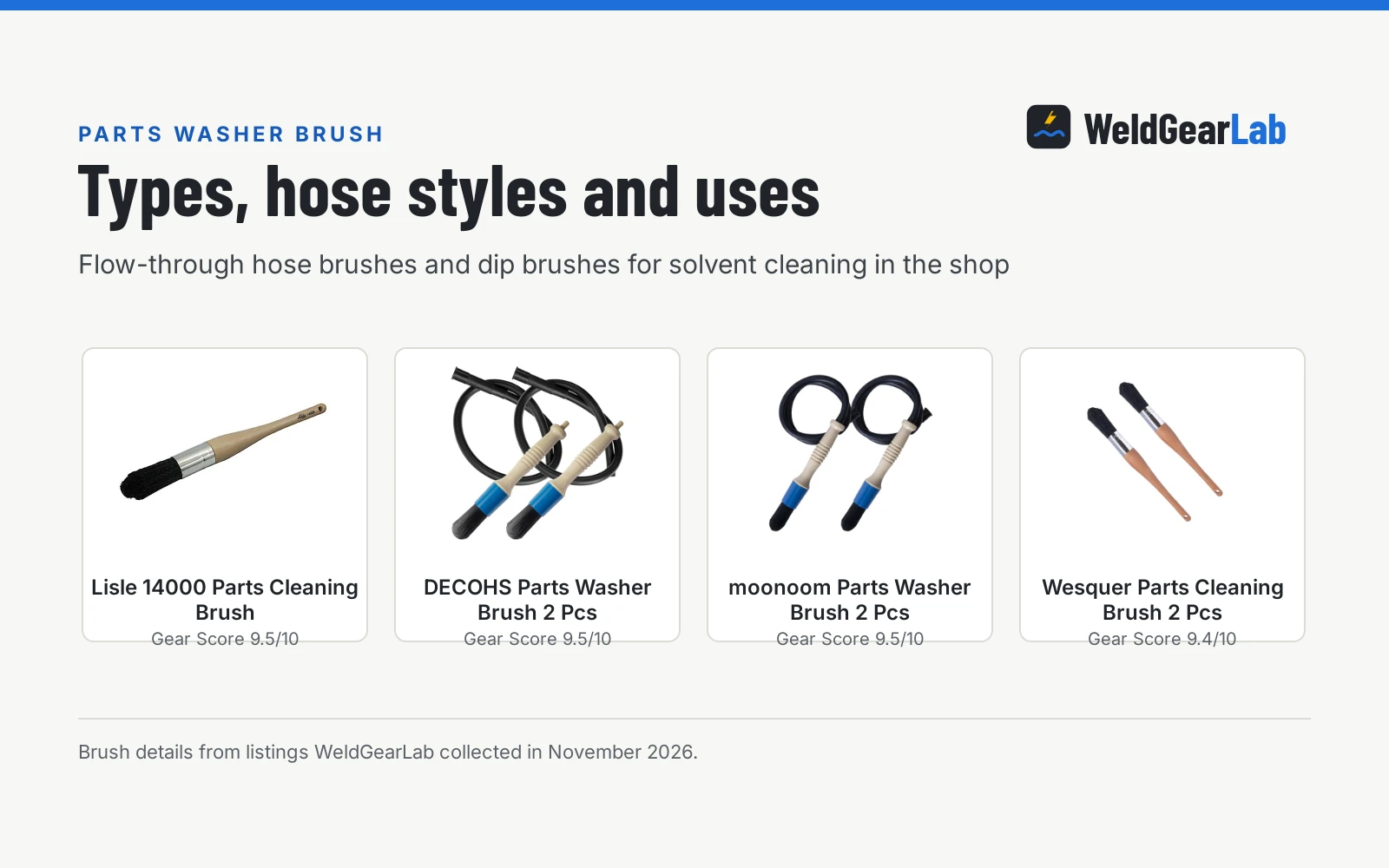
A flow through brush helps on caked dirt: the DECOHS brush (on Amazon) has a 31 inch hose that delivers solvent to the bristles, and the brush itself is 10.5 inches long. The Jack Boss 5 gallon washer has a flow through hard bristle brush and a channel drainage system that catches waste and cycles clean water. Rinse the part after washing when the fluid is water based, and change the fluid when it stops cleaning.
Safety: lids, solvents and ventilation
Cleaning fluid and solvent fumes need air: work with ventilation, wear safety glasses and gloves, and keep the lid closed when the washer is not in use. The Jack Boss and ECARPATEYE lids close on a fusible link, which shuts the lid if a flash fire starts. Never use a flammable solvent in a washer that forbids it, and never smoke or weld near an open washer.
Keep the washer on a level bench or floor, away from sparks and open flame, and keep a fire extinguisher close. Drain and store the fluid as the listing directs, and keep it away from drains and soil. If fluid splashes in eyes or on skin, rinse with water and follow the fluid label.
FAQ for welders
What is parts washer cleaner?
It is the fluid that cleans metal parts inside a parts washer, moved over the part by a pump and a brush. Water based fluids suit microbe based and smart washers, while solvents suit washers built for solvent, with a fusible link lid and a solvent rated pump.
How much fluid does a parts washer hold?
It depends on the washer. The listings here state solvent capacities of 3.5 gallons, 12 gallons, 17 gallons and 24 gallons, with tank sizes of 5 gallons, 20 gallons and 40 gallons. Size the washer by the solvent figure, and keep the liquid between the level marks the listing states.
Can any cleaner be used in a parts washer?
No. Match the fluid to the washer: Oil Eater lists a water based fluid for smart and microbe based washers, and the Jack Boss 3.5 gallon washer forbids flammable solvents such as mineral spirits. Read the washer listing for the fluids it allows before you fill the tank.
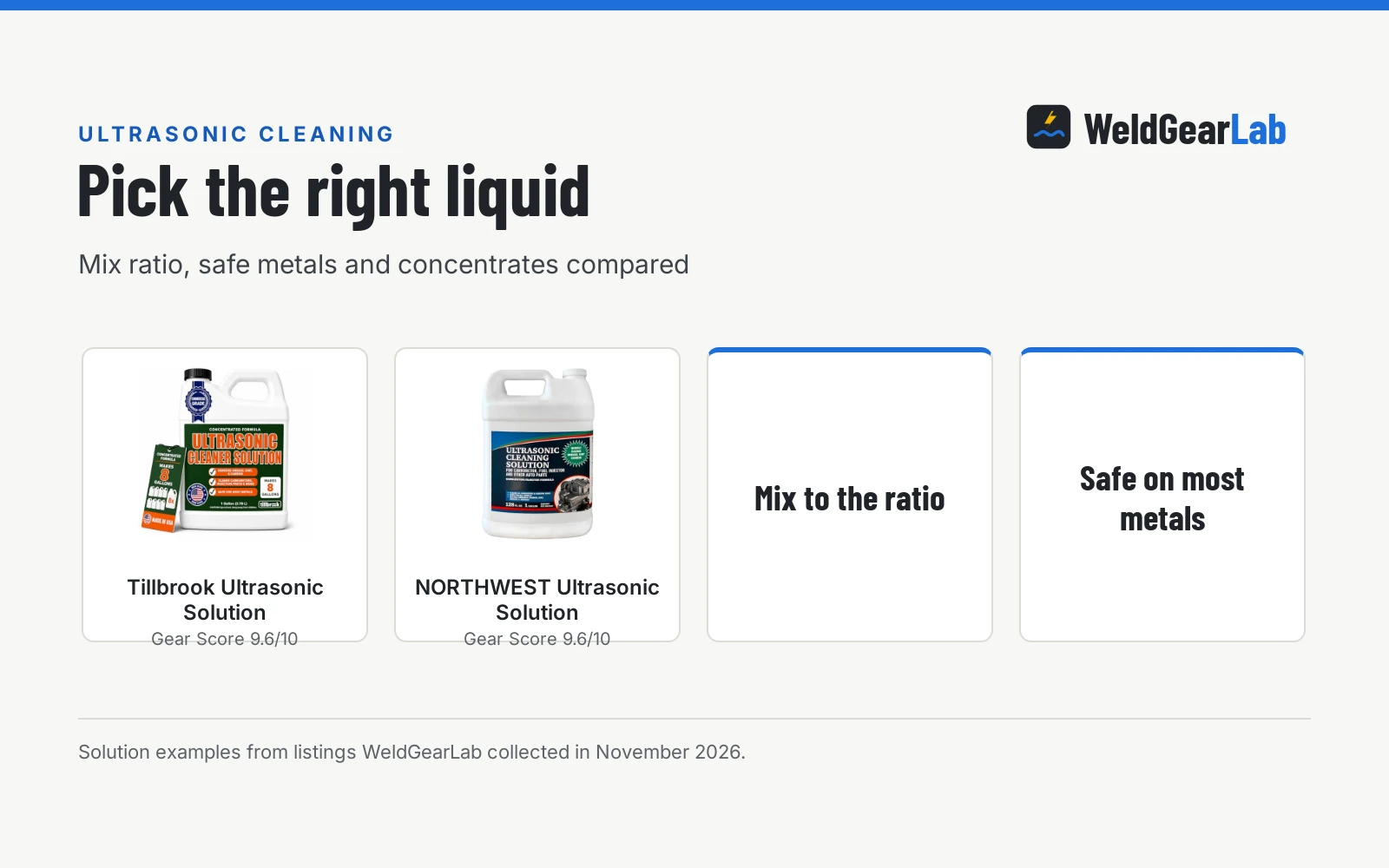
What is the difference between a parts washer and an ultrasonic cleaner?
A parts washer moves fluid over the part with a pump and a brush, while an ultrasonic cleaner shakes the fluid with sound waves. The washers here use pumps from 1/2 gallon per minute to 5 gpm. A washer suits large, greasy parts; an ultrasonic cleaner suits small parts with blind holes.
How is used parts washer fluid disposed of?
Follow the fluid label and local rules: used fluid holds oil, grease and metals, so it does not go down a drain or onto soil. Drain it into a sealed container, label it, and take it to a waste handler that accepts it. Change the fluid when it stops cleaning, not when the tank runs dry.
Related: our parts washer ultrasonic guide, our parts washer with filter guide, and the metal fab tools hub.