Parts Washer Heater: Options for the Shop Floor
A parts washer heater warms the cleaning fluid so grease and carbon lift faster, and this guide covers heated ultrasonic tanks and plain solvent washers.

On this page
Top picks at a glance
As an Amazon Associate I earn from qualifying purchases.
- 1
 VEVOR 15L Ultrasonic Cleaner9.6/10View on Amazon
- 2
 VEVOR 6L Ultrasonic Cleaner9.6/10View on Amazon
- 3
 Jack Boss 3.5 Gallon Capacity Portable Steel Cabinet Parts9.6/10View on Amazon
A greasy bracket comes off the bench and goes into the wash tank, and it still wears a film of old oil after a long soak. Cold solvent cuts grease slowly, and scrubbing only moves it around. A parts washer heater warms the cleaning fluid so grease, carbon and grime lift faster, and this guide covers the heater options for the shop: a heated ultrasonic tank and plain solvent washers with no heater at all.
This guide links to our product roundups, where WeldGearLab gets a commission on purchases made through links on this page, and your price stays the same. Read our affiliate disclosure.
What a Parts Washer Heater Does
Heat thins grease. Warm fluid flows into threads, blind holes and gear teeth and softens cooked-on carbon, rust and tarnish that cold fluid leaves behind. A heater does not replace the cleaning action itself: it makes the fluid work faster, so a part that would need a long soak and heavy brushing comes out clean with less scrubbing.
The clearest heated option in the listings is a heated ultrasonic cleaner. The CREWORKS unit pairs 240W of ultrasonic power with a 300W heater, a 10L stainless tank holding 2.6 gal, and heated cleaning at temperatures ranging from 70 to 175°F, with timed cleaning of up to 30 minutes. The ultrasonic action makes cavitation bubbles that fill the basin, while the heat keeps the fluid warm enough to cut grease. That combination suits small parts: auto parts, tools, drill bits, jewelry, glasses and utensils.
Side by Side
| Heated ultrasonic cleaner | Solvent parts washer | What it means in the shop | |
|---|---|---|---|
| Heater | 300W heater, 70 to 175°F | No heater stated | Heat thins grease so it lifts faster |
| Cleaning action | 240W ultrasonic cavitation | Pump flow, 50 gallons per hour | Ultrasonic reaches blind holes; a pump washes the surface |
| Tank size | 10L, 2.6 gal | 20 gal or 40 gal | Match the tank to the largest part |
| Timer | Up to 30 minutes | No timer stated | A timer ends the cycle without watching it |
| Power | 240W ultrasonic plus 300W heater | 110V or 120V | Check the outlet before buying |
| Lid safety | No lid safety stated | Hinged lid with fusible link | A fusible link shuts the lid in a flash fire |
| Warranty | No warranty term stated | 1-year limited warranty | Terms vary by maker; Eastwood states 1 year |
The table above compares what the listings state, not what a washer might do. Heated ultrasonic cleaners state their heater wattage and temperature range. Solvent washers state tank size and pump flow instead, and none of them state a heater. Read the two columns as two different tools: one warms a small tank for fine cleaning, the other moves a lot of fluid over big parts.
When a Heated Washer Is the Better Choice
- Greasy engine parts. Heat plus ultrasonic action lifts cooked-on carbon and tarnish from parts with blind holes and fine threads.
- Small, detailed parts. A 10L tank with a basket suits carburetor parts, drill bits, jewelry and glasses, where a brush cannot reach.
- Cold shops. A 300W heater holds the fluid at 70 to 175°F, so winter cleaning does not start with cold fluid.
- Timed cycles. A timer of up to 30 minutes lets the washer run its cycle while the bench work continues.
For more on what an ultrasonic tank can and cannot do, see can an ultrasonic cleaner remove rust and the ultrasonic cleaner sizes guide.
When a Plain Solvent Washer Is Enough
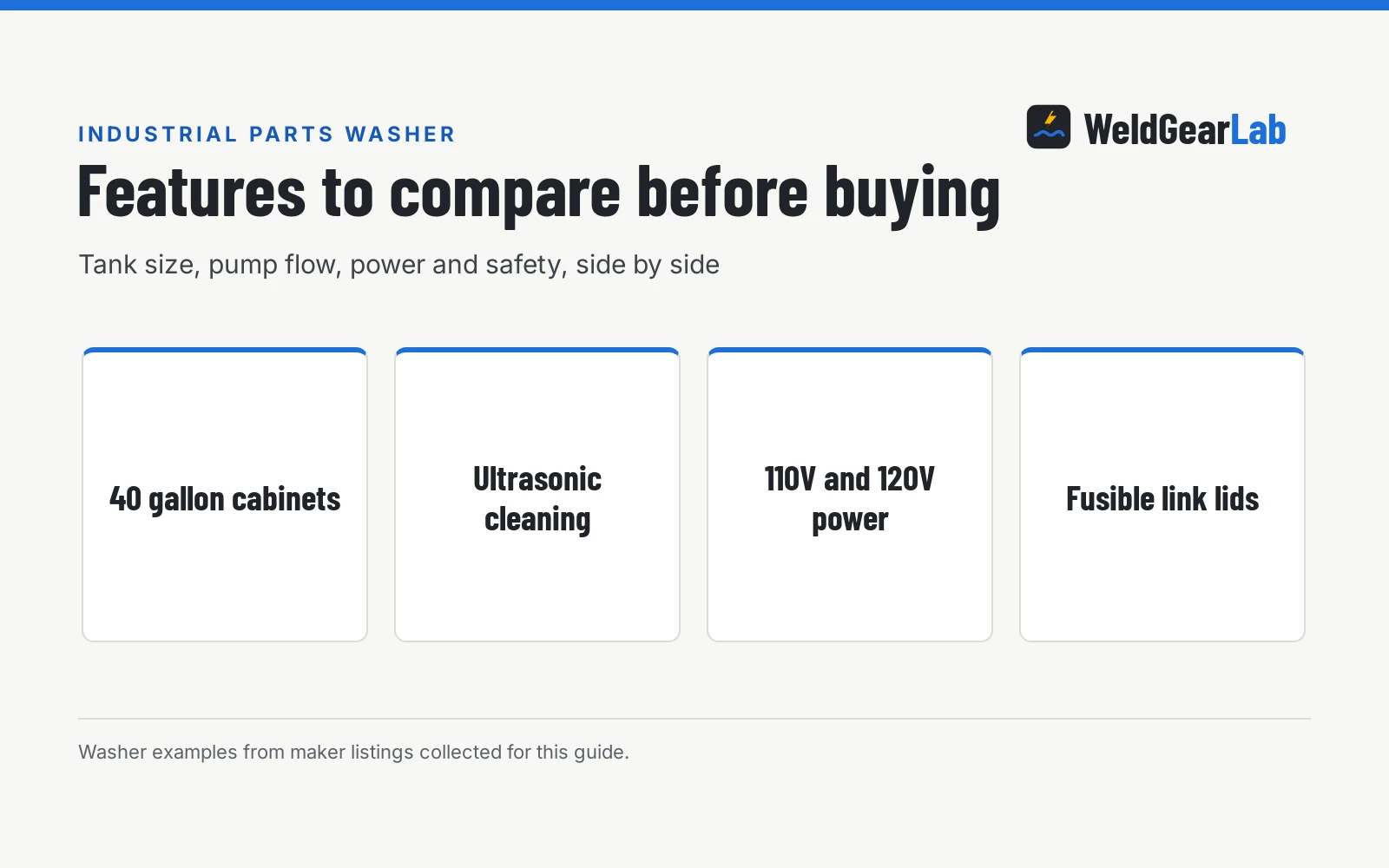
- Big parts. A 20 gal cabinet or a 40 gal Eastwood tank (on Amazon) takes gears, wheel bearings and carburetors, the parts the solvent cabinets are built for.
- Heavy grease on the surface. A pump moving 50 gallons per hour over the part, or 5.3 gallons per minute on the Eastwood, washes the surface without heat.
- Simple setup. No heater to set and no temperature to watch: place the part on the tray, bend the gooseneck over it and brush off stubborn deposits.
- Long fluid life. A re-usable filter and an oversize tub keep the fluid working longer between changes.
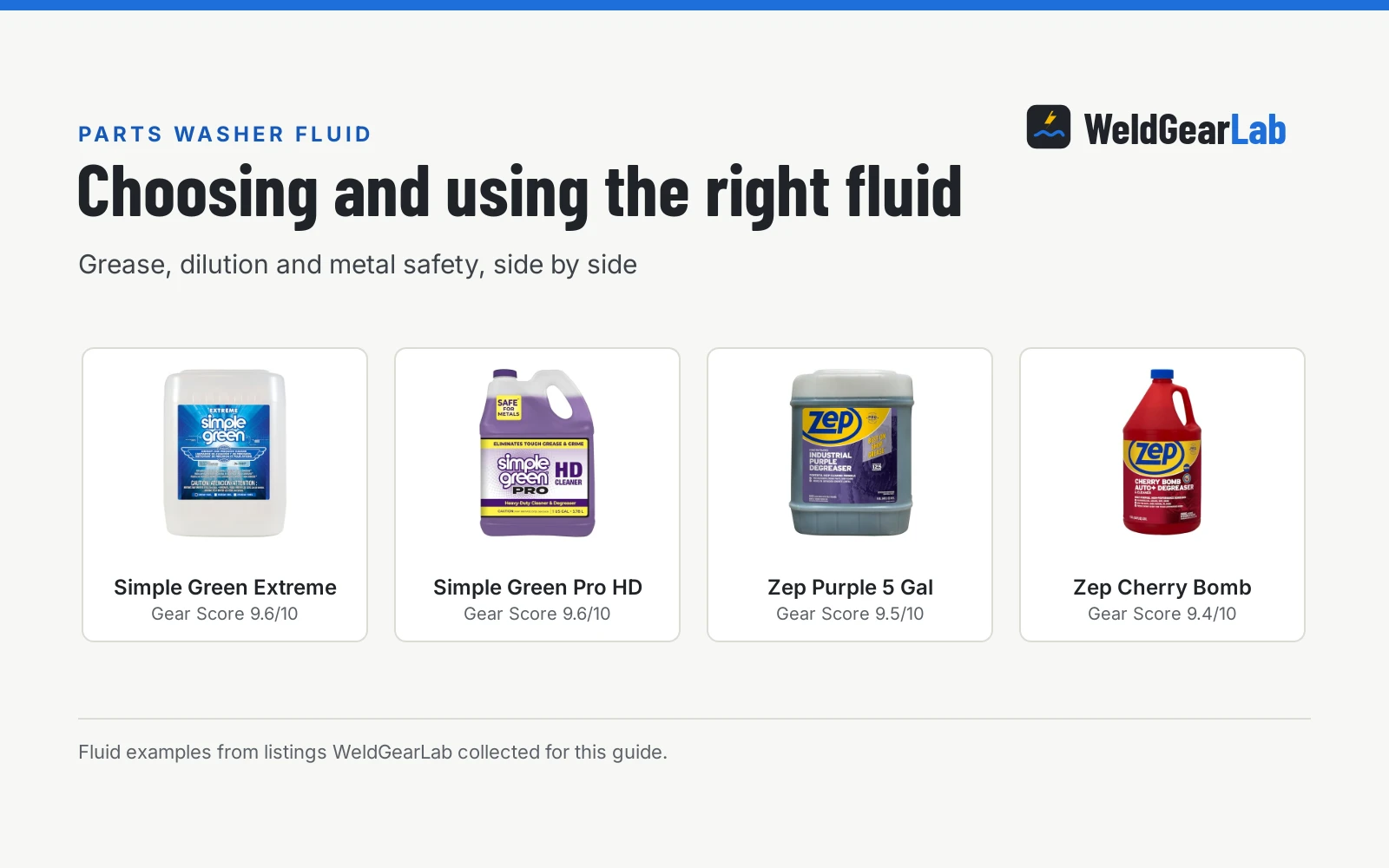
Fluid choice matters as much as the washer. The parts washer fluid guide covers choosing and using the right fluid, and how to use a parts washer walks through setup step by step.
How to Size the Heater and Tank
Match the tank to the largest part, not the average one. A 10L ultrasonic tank suits small parts and a basket load. A 20 gal cabinet holds a 12 gallons solvent capacity, and the Eastwood 40 gal tank takes the largest parts with a 10 inch deep tub. Check the liquid levels too: one 20 gal cabinet lists a maximum liquid level of 10 gallons or 5 inches and a minimum of 6 gallons or 3 inches, so the tank size on the label is not the fluid it holds.
Power is the other sizing check. The heated ultrasonic cleaner draws 240W for ultrasonic cleaning plus 300W for the heater. Solvent washers list 110V or 120V supply, with a 0.7A pump motor on one 20 gal cabinet, so check the outlet and the circuit before buying. The parts washer tank guide covers tank options in more depth.
Warranty terms vary. Eastwood states a 1-year limited warranty and 90-day return on its 40 gal washer, while the heated ultrasonic listing states no warranty term. A stated term is worth weighing when two washers look alike on size and power.
Heater Safety in the Shop
Heat adds a fire risk to a cleaning station, so treat the washer like any hot shop tool. Keep flammable solvent away from heat, and never heat a solvent the maker does not rate for heating. The listings pair heat with water-based ultrasonic cleaning, not with solvent washers, and that split is worth respecting.
Ventilation matters with any heated cleaning fluid, since warm fluid gives off more fumes than cold fluid. Work with air moving through the shop and keep the head out of the vapor. Lid safety helps too: one 20 gal cabinet has a hinged lid with a fusible link that automatically shuts the lid in the event of a flash fire, and another lists a hinged cover with a fuse that closes when the temperature exceeds the safety limit. The BikeMaster washer (on Amazon) states UL and SAA certification. Unplug the unit when done, close the lid and let parts drain before rinsing.
FAQ for welders
Does a parts washer need a heater?
No. A plain solvent washer cleans with pump flow and brushing, and it suits big parts and heavy surface grease. A heater helps when grease, carbon or tarnish resist cold fluid, and when the parts are small enough for a heated ultrasonic tank.
How hot should a parts washer run?
It depends on the washer. The CREWORKS heated ultrasonic cleaner lists heated cleaning at temperatures ranging from 70 to 175°F, set with a knob. Solvent washers in the listings state no temperature, so follow the fluid maker and the washer manual.
Can I heat a solvent parts washer?
Not with the washers in the listings. Heat appears only on the ultrasonic cleaner, which uses water-based cleaning, while the solvent washers state no heater. Keep heat away from flammable solvent and follow the washer manual.
What size parts washer do I need?
Match the tank to the largest part. A 10L ultrasonic tank suits small parts, a 20 gal cabinet suits gears, bearings and carburetors, and a 40 gal tank suits the largest parts. Check the maximum liquid level too, since a 20 gal cabinet may hold only 10 gallons of fluid.
How long should parts soak in a heated washer?
The CREWORKS cleaner (on Amazon) offers timed cleaning of up to 30 minutes, which covers most small parts. Heavy carbon may need a second cycle or a brush pass, and the parts should drain before rinsing in warm water.
Related: the metal fab tools hub, parts washer heater kit, parts washer fluid and industrial parts washers. Also see our parts washer cabinet for the home shop.