Parts Washer Tank Options Explained
A parts washer tank circulates cleaning fluid over greasy parts while they soak; this guide explains tank sizes, pump flow and fluid levels, and how to pick the size that fits the parts on the bench.

On this page
Top picks at a glance
As an Amazon Associate I earn from qualifying purchases.
- 1
 Portable Parts Washer Cart 20-Gallon Tank Solvent Capacity:9.5/10View on Amazon
- 2
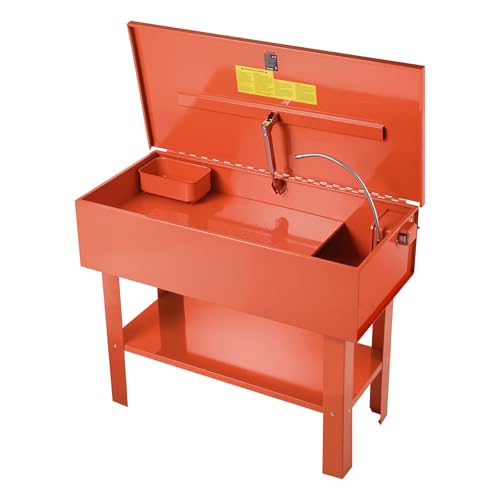 VEVOR Parts Washer 40-Gal 17 Gal Solvent Capacity Automotive9.5/10View on Amazon
Grease, carbon and old oil coat every part that comes off an engine, a gearbox or a mower deck, and a rag with a bucket only moves the mess around. A parts washer tank is a steel tub with a pump that circulates cleaning fluid over the part while it soaks, so the solvent loosens the grime and the dirt settles away from the work. This guide explains the tank sizes, pump flow and fluid levels the listings state, and how to match the tank to the parts on the bench.
This guide links to our product roundups, where WeldGearLab gets a commission on purchases made through links on this page, and your price stays the same. Read our affiliate disclosure.
What a parts washer tank is
A parts washer tank is a steel cabinet or benchtop tub with a pump, a filter and a gooseneck spout. The pump draws cleaning fluid from the tank through a mesh filter and sends it out through the gooseneck so it flows over the part. The fluid drains back into the tank and the cycle repeats while the part soaks. A removable shelf or work basket holds small parts above the fluid.
The size of the tank sets the size of the part it can hold. VEVOR lists a 40-gallon tank with a 17-gallon solvent capacity and a pump rated at 1 gallon per minute, and states the tank supports 220 lbs, so large parts can soak while they are scrubbed. Eastwood lists a 40-gallon washer with a tub 10 inches deep and a pump rated at 5.3 gallons per minute, while JEGS lists a 40-gallon tank with a pump rated at 5 gpm.
Side by side
| Benchtop tank | Portable cart tank | Cabinet tank | |
|---|---|---|---|
| Tank size | 3.5 gallons | 20 gallons | 40 gallons |
| Solvent capacity | Not stated | 12 gallons | 17 gallons (VEVOR) |
| Pump flow | 30 gallons per hour | 317 gph | 5.3 gallons per minute |
| Weight | 15.0 pounds | 80.0 pounds | 92.4 pounds |
| Power | 110V | 110/120V | 120V |
Flow is listed in gallons per hour on some pumps and in gallons per minute on others: the JEGS cart washer (on Amazon) lists 317 gph while the Eastwood cabinet washer lists 5.3 gallons per minute, so read the unit beside the figure before comparing tanks.
Tank sizes and what fits
Benchtop tanks suit small parts on a bench. The AVGVLIJ portable washer (on Amazon) holds 3.5 gallons, weighs 15.0 pounds, and measures 18.1 inches by 13.4 inches by 9.1 inches, which fits screws, gaskets, wheel bearings, gears and carburetors. The JEGS portable washer holds 5 gallons, weighs 15 lbs, and measures 17.375 inches by 14.250 inches by 8.750 inches, with a removable tray for small parts.
Cart tanks move the wash to the job. The JEGS portable cart washer holds 20 gallons with a 12-gallon solvent capacity, a pump rated at 317 gph, and weighs 80.0 pounds, measuring 38.0 inches by 21.5 inches by 37.0 inches.
Cabinet tanks hold large parts. The VEVOR cabinet washer (on Amazon) holds 40 gallons with a 17-gallon solvent capacity, weighs 92.81 pounds, and measures 44.49 inches by 21.65 inches by 35.04 inches. The Eastwood cabinet washer holds 40 gallons, weighs 92.4 pounds, measures 35.0 inches by 21.5 inches by 43.0 inches, and runs on 120V. The JEGS cabinet washer holds 40 gallons and weighs 99.35 pounds.
The parts washer large guide looks at a 20-gallon tank and the fluid that goes with it.
Pump flow and fluid levels
Pump flow decides how fast fluid moves over the part. The AVGVLIJ benchtop pump moves approximately 30 gallons per hour, which suits screws, bearings and gaskets, and the ECARPATEYE pump (on Amazon) moves approximately 50 gallons per hour. Cabinet pumps move more: the VEVOR pump is rated at 1 gallon per minute and the Eastwood pump (on Amazon) at 5.3 gallons per minute.
Fluid level matters as much as flow. The ECARPATEYE listing states a maximum liquid level of 10 gallons or 5 inches and a minimum liquid level of 6 gallons or 3 inches, with a tub depth of 10 inches. Keep the fluid between those marks so the pump stays covered and the part stays wet without flooding the rim.
How to use a parts washer tank
Set the tank on a level bench or floor where splashed fluid drains back into the tub, and fill it to the level the maker states. Place the part on the tray or shelf, bend the gooseneck so fluid flows over the whole surface, and give the solution time to soften grease and dirt before brushing.
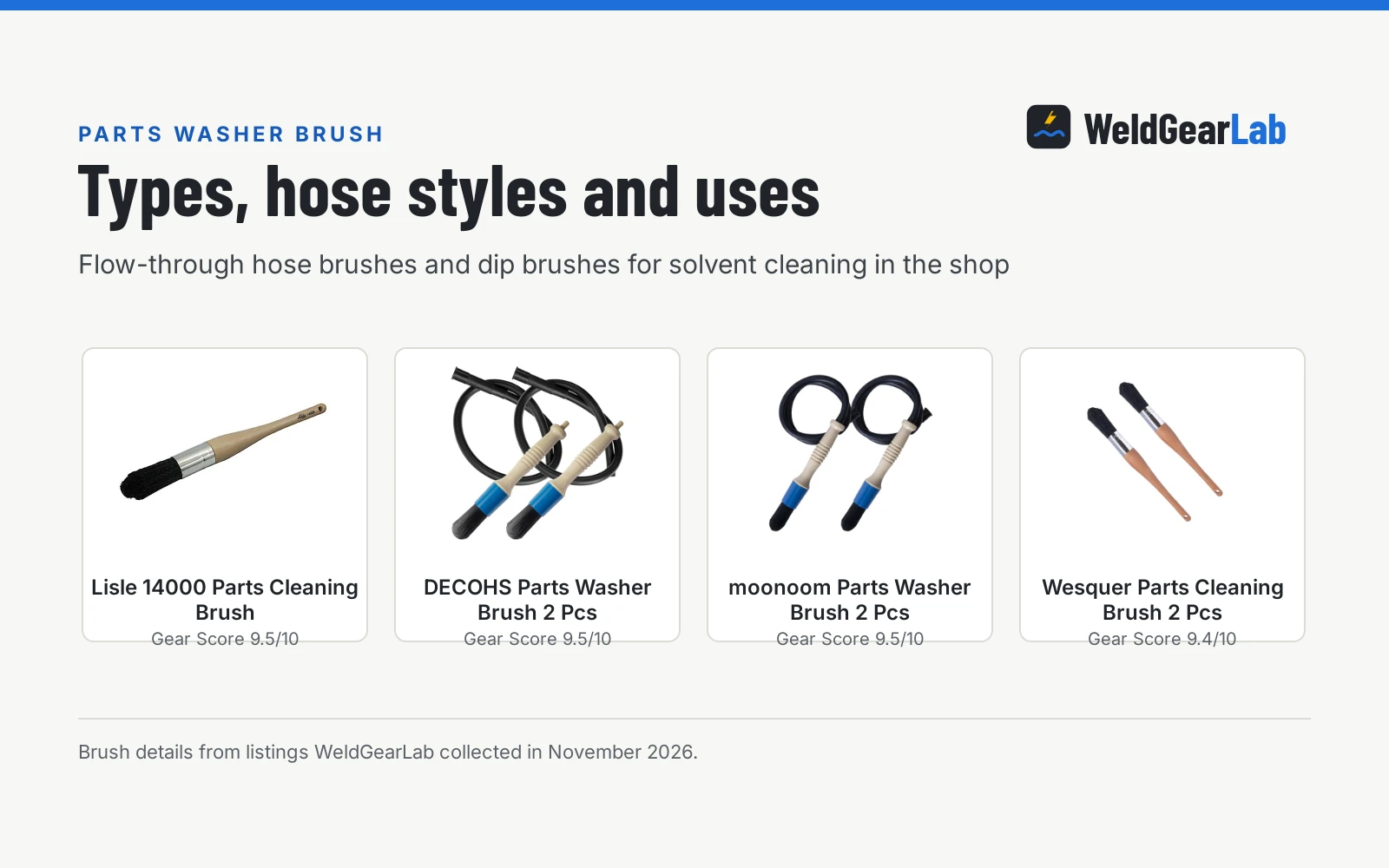
Brush stubborn deposits with a parts cleaning brush, let excess fluid drain from the part, then rinse in warm water. When the wash is done, switch the pump off, close the lid and unplug the unit. Store brushes and spare fluid on the shelf under the cabinet so the bench stays clear for the next job.
Safety around solvent and fire
Cleaning solvent can flash, so treat the tank with the same care as any flammable liquid in the shop. The ECARPATEYE and AVGVLIJ washers carry a hinged lid with a fusible link that shuts the lid if solvent flashes, and the MOTORHOT washer has a hinged cover with a fuse that closes it when the temperature passes the safety limit, which smothers the flame. Keep the lid closed when the washer is idle, and keep the tank away from open flame, sparks and hot work.
Work with ventilation so solvent vapor does not build up, and wear a respirator rated for the vapor when the fluid label calls for it. See the respirator picks for the shop and keep a welding blanket for auto body work near the bench to smother a small fire.
For more options, see our metal fab tools guides.
FAQ for welders
How much solvent does a parts washer tank hold?
It depends on the tank. The VEVOR 40-gallon tank holds 17 gallons of solvent, the JEGS 20-gallon cart washer holds 12 gallons, and the ECARPATEYE 20-gallon washer states a maximum liquid level of 10 gallons and a minimum of 6 gallons.
What size parts washer tank do I need?
Match the tank to the largest part that must fit under the fluid. A 3.5-gallon benchtop washer suits screws, gaskets, bearings and carburetors, a 20-gallon cart washer suits larger parts that need room to soak, and a 40-gallon cabinet washer suits large parts that need to soak, with the VEVOR tank rated to support 220 lbs.
Do parts washer tanks need power?
The pump models do. The washers in the listings run on 110V, 115V or 120V household power, with the Eastwood cabinet washer listed at 120V, the JEGS cabinet washer at 115V, and the small benchtop washers listed at 110V. Plug it into a grounded outlet and unplug it when the wash is done.
Can parts soak in the tank overnight?
Soaking is what the tank is for, and the listings describe parts soaking while the pump circulates fluid over them. Leave the lid closed while parts soak, and check the fluid level before running the pump again.
What happens if the solvent catches fire?
The hinged lid with a fusible link is built for that moment: the link melts in a flash fire and the lid shuts, which cuts off air to the flame. Keep the lid free to close, never prop it open, and keep a fire extinguisher and a welding blanket within reach of the bench.
Related: parts washer large guide, welding blanket for auto body work, and respirator picks for the shop.