Ultrasonic Parts Cleaner Solution Guide
An ultrasonic parts cleaner solution lifts grease, varnish and dirt off metal parts in the tank, and the right one matches the metal and mixes to the ratio the listing states.

On this page
Top picks at a glance
As an Amazon Associate I earn from qualifying purchases.
- 1
 Ultrasonic Cleaner Solution, Makes 8 Gallons9.6/10View on Amazon
- 2
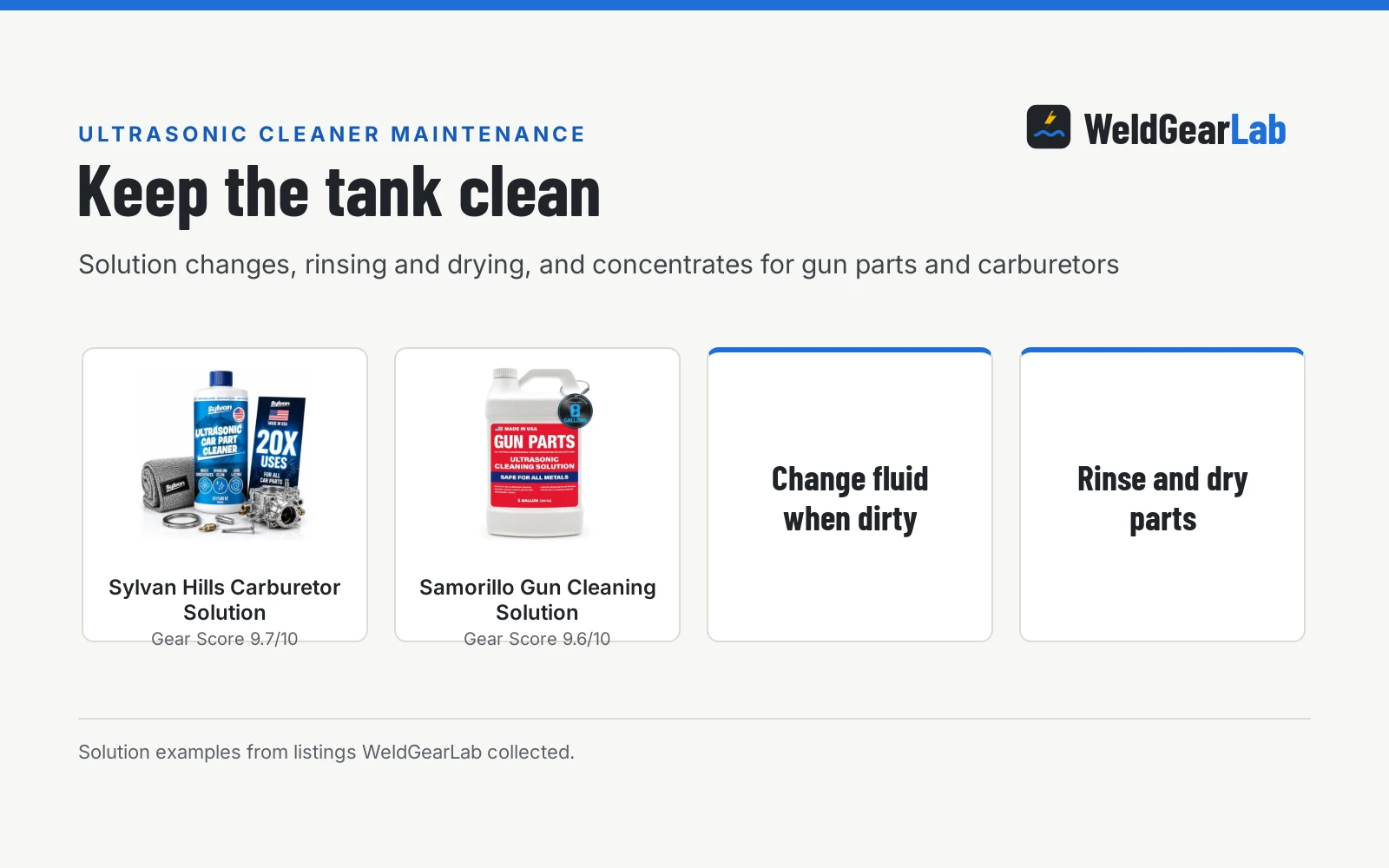
 Ultrasonic Cleaner Solution for Carburetors Parts.9.6/10View on Amazon
An ultrasonic parts cleaner solution is the liquid that goes in the tank while the machine does the shaking: it lifts grease, varnish and dirt off metal parts that hand scrubbing cannot reach. The right solution matches the metal, the dirt and the machine, and the wrong one can stain or etch the part. This guide explains what the solution does, how to mix it, which metals it suits, and the concentrates below.
Start with the job, then match the solution to the metal, then mix it to the ratio the listing states. That order keeps the parts safe, because a solution that suits steel can still mark aluminum, and a mix that is too strong wastes concentrate.
This guide links to our product roundups, where WeldGearLab gets a commission on purchases made through links on this page, and your price stays the same. Read our affiliate disclosure.
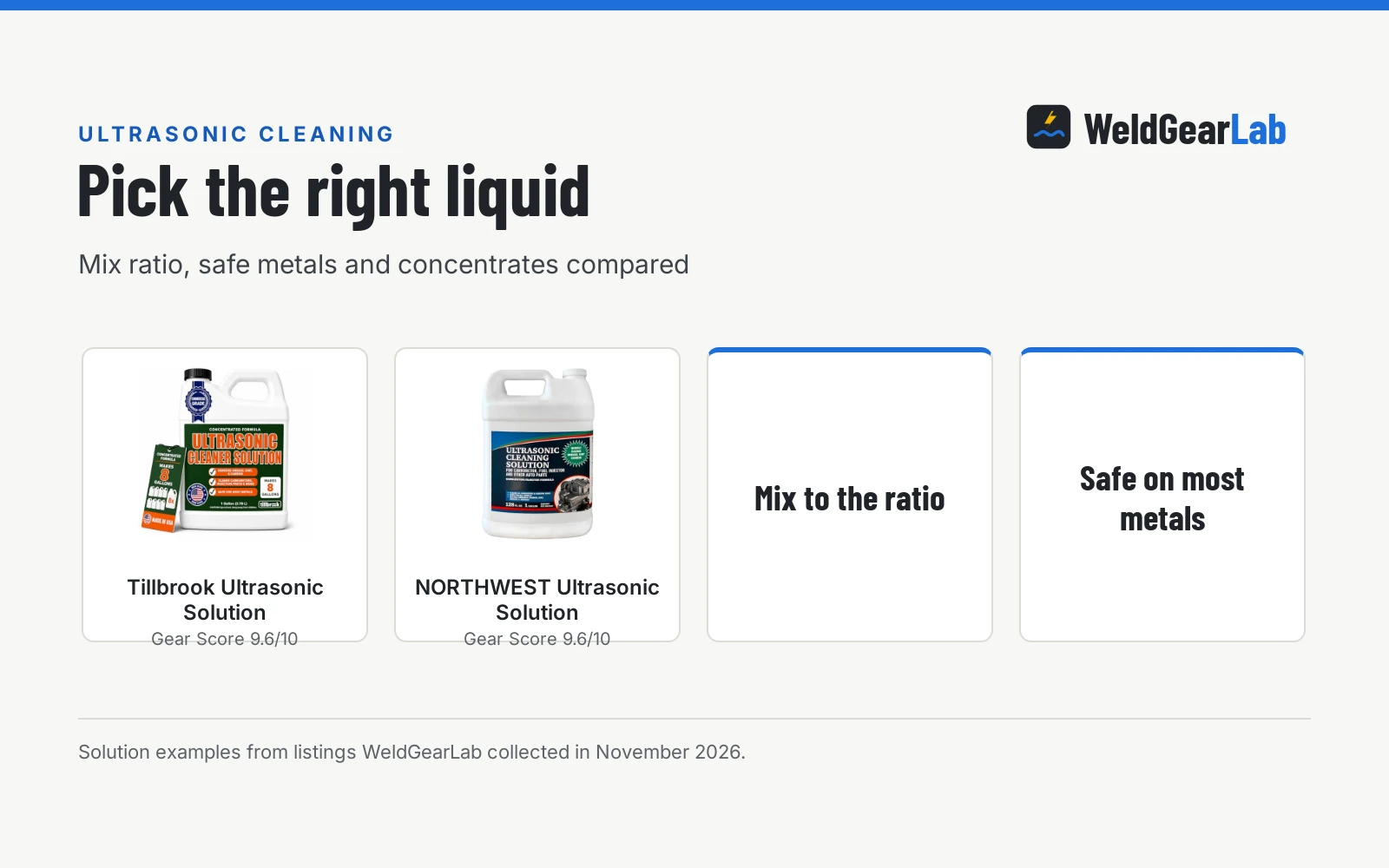
Ultrasonic Cleaner Solution, Makes 8 Gallons
A concentrated ultrasonic cleaner solution: one 128 oz bottle makes 8 gallons at 2 cups of concentrate per gallon, safe for most metals.
Pros
- Makes 8 gallons from one bottle
- Mix ratio stated: 2 cups per gallon
- Safe for most metals, per the listing
- Made in USA
Cons
- No weight stated
- No warranty term stated
- No safety standard stated
- Concentrate needs measuring at mix time
Ultrasonic Cleaner Solution for Carburetors Parts.
A concentrated 1 gallon ultrasonic cleaner solution, 128 fl oz and 8.5 pounds, safe for most metals and free of borates, phenols and nitrates.
Pros
- Concentrated 1 gallon bottle
- Stated weight 8.5 lb and dimensions
- Safe for most metals, per the listing
- Lists what it leaves out: no borates, phenols or nitrates
Cons
- Concentrated with no mix ratio stated
- No warranty term stated
- No safety standard stated
- 8.5 lb bottle to carry and store
Ultrasonic parts cleaner solution: what it is and what it does
The solution is a cleaning liquid made for an ultrasonic tank. The machine sends sound waves through the liquid, and the waves make tiny bubbles that collapse against the part, knocking dirt, varnish and gums off the surface. The liquid carries the dirt away, and the bubbles reach cracks, crevices and blind holes that a brush cannot reach.
The solution does the chemical work, and the machine does the physical work. Without the right liquid, the bubbles have nothing to lift the dirt with, and without the machine, the liquid cleans only as a soak, without the implosions that reach blind holes. Both listings here match the solution with an ultrasonic machine; NORTHWEST also names immersion washers.
Mixing and using it
Tillbrook states its mix plainly: 2 cups (16 oz) of concentrate per gallon of solution, and one bottle makes 8 gallons. NORTHWEST calls its gallon concentrated but states no mix ratio, so the listing gives no figure to mix by. Measure the concentrate with a cup, not by eye, and mix it in the tank before you load the parts.
Load the parts so they hang free in the liquid, not stacked on each other, and keep the liquid level above the parts. Run the machine per its manual, then rinse the parts and dry them, so no solution dries on the metal. Change the liquid when it turns dark or stops cleaning, and store the concentrate with the cap on.
Metals it is safe for
Both listings name the same safe metals: aluminum, aluminum alloys, brass, cast iron, copper, copper alloys, ferrous metals, magnesium, yellow alloys, zinc, and coins. That list covers most shop parts, from carburetors and valves to heads, seats and rockers. If a part is plated, painted or of an unknown alloy, check the listing for that metal before you drop it in the tank.
Safe for most metals does not mean safe for every part. Gaskets, seals and plastic parts may not belong in the tank, and the listing does not cover them, so keep them out unless the maker says otherwise. When in doubt, clean one small part first and check the finish before you load the rest.
The solutions that do the work
Each solution below handles the cleaning step: it lifts the grease and varnish so the machine can reach the metal, and the choice is a stated mix ratio or a gallon with no ratio stated.
Side by side
| Gear Score | Size | Makes | Notes | |
|---|---|---|---|---|
| Tillbrook Ultrasonic Solution | 9.6/10 | 128 oz | 8 gallons | Mix 2 cups per gallon |
| NORTHWEST Ultrasonic Solution | 9.6/10 | 128 fl oz | Not stated | No borates, phenols or nitrates |
Tillbrook leads on value, with 8 gallons from one bottle, while NORTHWEST is a concentrated gallon with a stated weight. Both list the same safe metals, so the choice is how you want to mix, not what you want to clean.
FAQ for welders
What is ultrasonic parts cleaner solution?
It is the liquid that fills an ultrasonic tank and lifts grease, varnish and dirt off metal parts while the machine runs. The solution does the chemical work, and the sound waves do the physical work, reaching cracks and blind holes a brush cannot reach.
How is ultrasonic cleaner solution mixed?
Follow the ratio on the listing. Tillbrook states 2 cups (16 oz) of concentrate per gallon, and one bottle makes 8 gallons. NORTHWEST calls its gallon concentrated but states no mix ratio, so the listing gives no figure to mix by. Measure with a cup, mix in the tank, and load the parts after mixing.
Can ultrasonic cleaner solution be used on aluminum?
Yes, per both listings here: aluminum and aluminum alloys are on the safe list, with brass, cast iron, copper, magnesium, zinc and coins. If the part is plated or painted, check the listing for that finish before you clean it.
Does ultrasonic cleaning damage delicate parts?
Not when the solution and the machine suit the part. Both listings say the process cleans without damaging delicate parts, because the bubbles work the surface without scrubbing. Keep gaskets, seals and plastic out of the tank, and clean one small part first when in doubt.
How long does ultrasonic cleaning take?
It depends on the dirt and the part. Both listings say parts clean quickly once the machine starts, and the bubbles reach blind holes that hand scrubbing cannot reach. If a part is still dirty after a run, rinse it, check the liquid, and run it again rather than scrubbing it by hand.
Related: our parts washer ultrasonic guide, our parts washer with filter guide, and the metal fab tools hub.