How to Set Oxy Acetylene Regulators for Cutting
Two regulators, two cylinders, one order: fit each regulator to its cylinder, open the valves slowly, and set delivery pressure from the gauges before lighting the torch.

On this page
Top picks at a glance
As an Amazon Associate I earn from qualifying purchases.
- 1
 RX WELD Oxygen Acetylene Regulator SetView on Amazon
- 2
 TWSupply Victor SR450 Series Heavy Duty Oxygen & AcetyleneView on Amazon
- 3
 JZWELD Oxygen Acetylene RegulatorsView on Amazon
- 4
 VEVOR Oxygen Acetylene Regulator SetView on Amazon
- 5
 Oxygen Acetylene Regulator SetView on Amazon
- 6
 Jackson Safety GPL500 Shade 5IR Safety Goggles with FaceView on Amazon
A cutting torch only cuts clean when the gas behind it arrives at steady pressure. That pressure comes from the regulators on the cylinders, and setting them is a short job once the order is clear. This guide shows how to set oxy acetylene regulators for cutting, from fitting each regulator to its cylinder to reading the gauges and shaping the flame.
Other welders and gear to compare
 RX WELD Oxygen Acetylene Regulator SetCheck price on Amazon
 TWSupply Victor SR450 Series Heavy Duty Oxygen & AcetyleneCheck price on Amazon
 JZWELD Oxygen Acetylene RegulatorsCheck price on Amazon
 VEVOR Oxygen Acetylene Regulator SetCheck price on Amazon
 Oxygen Acetylene Regulator SetCheck price on Amazon
 Jackson Safety GPL500 Shade 5IR Safety Goggles with FaceCheck price on Amazon
This guide links to our product roundups, where WeldGearLab gets a commission on purchases made through links on this page, and your price stays the same. Read our affiliate disclosure.
How to set oxy acetylene regulators for cutting
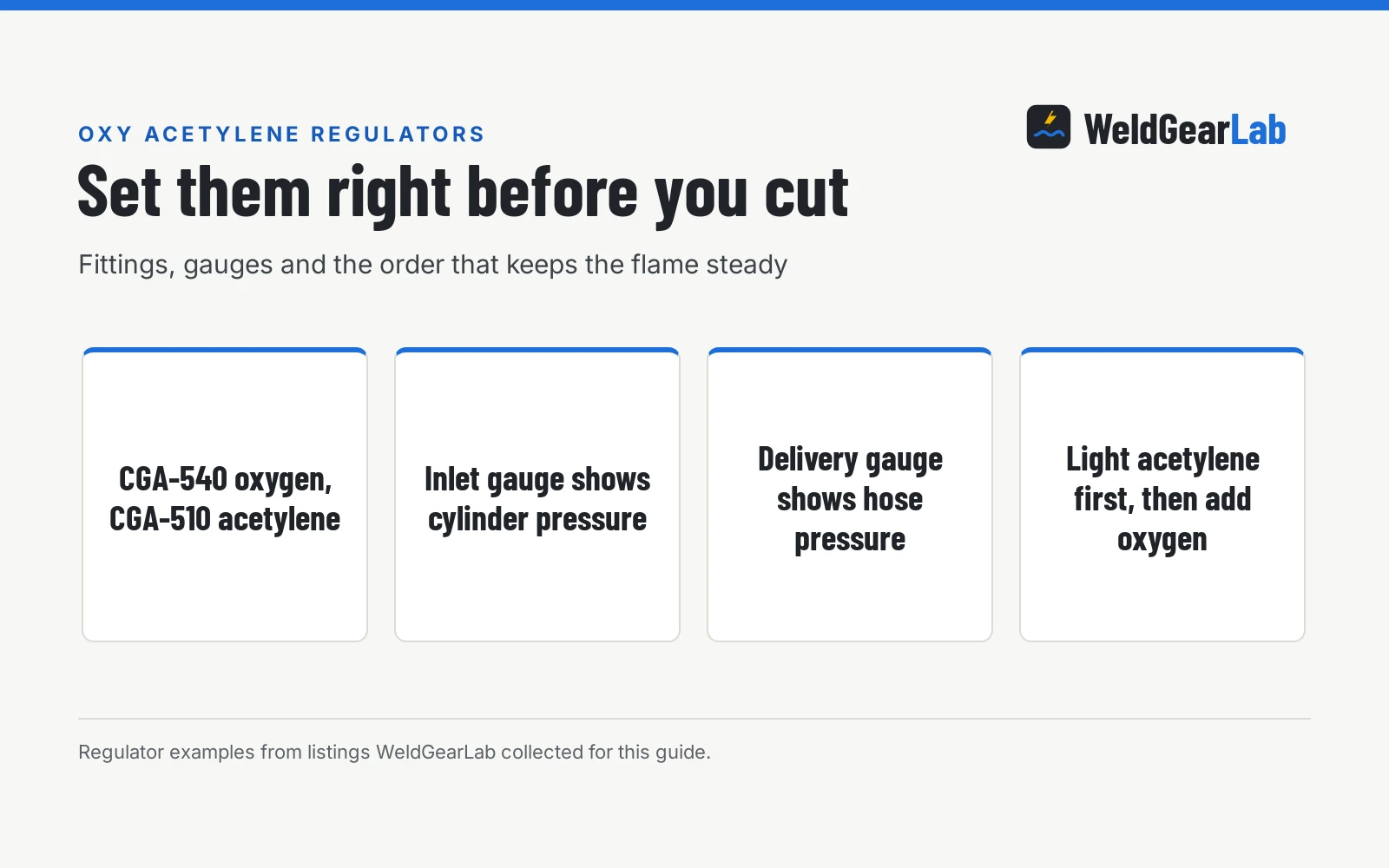
Two cylinders feed a cutting torch, and each cylinder gets its own regulator. The oxygen regulator drops high cylinder pressure down to a working pressure the torch can use, and the acetylene regulator does the same on the fuel side. The fittings differ on purpose: the oxygen regulator fits a CGA-540 valve and the acetylene regulator fits a CGA-510 valve, so the two cannot swap by mistake. Each regulator carries two gauges. The inlet gauge shows cylinder pressure and the delivery gauge shows the pressure sent to the hose. Set the regulators in the same order every time, so the setup stays consistent from one cut to the next.
Fit the regulators to the cylinders
Start with both cylinder valves closed and both regulator adjusting screws backed out, so neither regulator can pass gas the moment a valve opens. Chain both cylinders upright before fitting anything, and keep the torch valves closed while the regulators go on.
- Clear the valves. Stand clear of the outlet and open each cylinder valve briefly to blow dust from the valve, then close it again.
- Match the fittings. Oxygen regulator to the CGA-540 valve on the oxygen cylinder, acetylene regulator to the CGA-510 valve on the acetylene cylinder.
- Tighten the inlet nuts. Turn each nut by hand first, then snug it with a wrench. A nut that cross-threads or stops short needs a look, not more force.
- Connect the hoses. On the RX WELD set, the outlet thread is 9/16″-18 for 1/4 inch B fittings on a twin welding hose. Oxygen hose goes to the oxygen regulator and acetylene hose to the acetylene regulator. Check that each hose seats on the right side before moving on.
With the regulators fitted and the hoses on, the set is ready for gas. The RX WELD set in the listings ships as 1 oxygen regulator and 1 acetylene regulator, a pair that covers both cylinders.
Open the cylinders and set delivery pressure
Open the oxygen cylinder valve slowly, all the way. Then open the acetylene cylinder valve slowly, only a short turn, so it shuts fast if something goes wrong. The inlet gauges move first: on the RX WELD set, the oxygen inlet gauge reads 0-4000 PSI and the acetylene inlet gauge reads 0-400 PSI, and each one shows the pressure in its cylinder. A cylinder that reads near the bottom of its gauge is close to empty and will not hold a steady flame for long.
Open the torch valves one at a time and turn each adjusting screw in until the delivery gauge shows the pressure the cutting tip chart calls for while the gas is flowing, then close the torch valve. On the RX WELD set, the oxygen delivery gauge runs 0-200 PSI and the acetylene delivery gauge runs 0-30 PSI. Set the acetylene side first, then the oxygen side, and check the tip chart that came with the torch for the pressures that tip calls for. A Victor single stage set, like the SR450D-540 oxygen regulator paired with the SR460A-510 acetylene regulator, is listed for stable, reliable pressure delivery for welding, cutting, brazing and heating work.
Light the torch with acetylene first, then add oxygen until the flame turns neutral, with a clear inner cone and no feather at the tip. If the flame lifts off the tip or pops, close the torch valves and start the lighting step again. The flame should stay steady when the torch valves open and close. Watch the delivery gauges while cutting, and turn an adjusting screw again if a reading drifts from the pressure the tip chart calls for.
The two regulators side by side
| Oxygen regulator | Acetylene regulator | What to check | |
|---|---|---|---|
| Cylinder fitting | CGA-540 | CGA-510 | Match the nut to the cylinder valve |
| Inlet gauge range | 0-4000 PSI | 0-400 PSI | Shows cylinder pressure |
| Delivery gauge range | 0-200 PSI | 0-30 PSI | Shows pressure sent to the hose |
| Outlet thread | 9/16″-18 | 9/16″-18 | Fits 1/4 inch B hose fittings |
| In the set | 1 oxygen regulator | 1 acetylene regulator | Two regulators in the box |
The table shows why the two regulators are not interchangeable. The oxygen side works across a wider gauge range than the acetylene side, and the inlet fittings differ, so each regulator only fits its own cylinder.
What the gauges tell you
Each regulator carries two gauges, and each one answers a different question. The inlet gauge shows the pressure in the cylinder: on the oxygen side it falls as the gas is used, while on the acetylene side it holds nearly steady until the cylinder is almost empty, then falls fast. The delivery gauge answers how much pressure the torch receives. Read the delivery gauge while the torch is flowing, since that is the pressure the cut sees. If the delivery gauge reading climbs after the torch valve closes, the regulator seat may be passing gas, and the regulator needs a look before the next cut. If the inlet gauge drops fast during a cut, the cylinder is running low.
Mistakes that waste gas and tips
- Opening a cylinder valve with the adjusting screw turned in. Delivery pressure jumps the moment gas reaches the regulator. Back the screw out first, every time.
- Lighting with oxygen first. Light acetylene first, then add oxygen. Oxygen alone will not light, and a torch full of oxygen before the flame starts is a poor way to begin a cut.
- Swapping the hoses. Oxygen hose to the oxygen regulator, acetylene hose to the acetylene regulator. The fittings differ, so a hose that will not thread on is on the wrong side.
- Ignoring a falling inlet gauge. A cylinder near empty cannot hold delivery pressure steady, and the flame wanders. Swap the cylinder before the cut, not during it.
- Leaving a cylinder valve open after the job. Close both cylinder valves and bleed the hoses through the torch when the work ends, so no gas sits in the lines.
Safety checks before you cut
Cutting with oxy acetylene means open flame, hot metal and gas under pressure, so the checks before the first cut matter as much as the settings. Chain the cylinders upright and keep them clear of the cutting area. Clear dry grass, paper and anything flammable from the area, and keep a fire extinguisher within reach. Wear shaded eye protection, gloves and clothing that covers skin, and cut with good ventilation or outdoors with the head out of the plume. Check hoses for cracks and worn spots, and check every joint with soapy water: bubbles mark a leak, and a leaking joint needs a fix before the torch lights. For the full rundown, see the oxy acetylene torch safety guide.
The best acetylene regulator for torch roundup and the oxygen regulator for welding tank roundup compare regulator sets with the gauges and fittings this guide describes.
FAQ for welders
Can I use an acetylene regulator for propane?
No, not as a straight swap. An acetylene regulator is built for a CGA-510 acetylene cylinder valve, and propane needs its own regulator rated for propane service. See can you use an acetylene regulator for propane for the fitting and pressure details.
Why does the acetylene regulator have a lower delivery range?
On the RX WELD set, the acetylene delivery gauge runs 0-30 PSI while the oxygen delivery gauge runs 0-200 PSI. Acetylene must stay at low pressure, so its regulator is built with a lower delivery range, while oxygen drives the cut at higher pressure.
What fittings do oxy acetylene regulators use?
The oxygen regulator fits a CGA-540 cylinder valve and the acetylene regulator fits a CGA-510 cylinder valve. The hose side uses a 9/16″-18 outlet thread for 1/4 inch B fittings on a twin welding hose. Check the fitting sizes against the cylinder valves before ordering, since a regulator that does not match the cylinder valve will not fit.
Do I need a separate regulator for each cylinder?
Yes. Each cylinder gets its own regulator, since the oxygen and acetylene sides use different fittings, different inlet gauge ranges and different delivery gauge ranges. The RX WELD set ships as a pair for that reason: 1 oxygen regulator and 1 acetylene regulator in the box.
Can I swap the oxygen and acetylene regulators?
No. The oxygen regulator fits a CGA-540 valve and the acetylene regulator fits a CGA-510 valve, so each one only threads onto its own cylinder. Swapping them is not a matter of preference; the nuts will not fit.
Related: oxy acetylene torch setup, oxy fuel cutting setup, cutting torch tips sizes charts, parts of a cutting torch, and the welders hub. Also see the best oxy acetylene torch kit roundup.