Can You Use Acetylene Regulator for Propane?
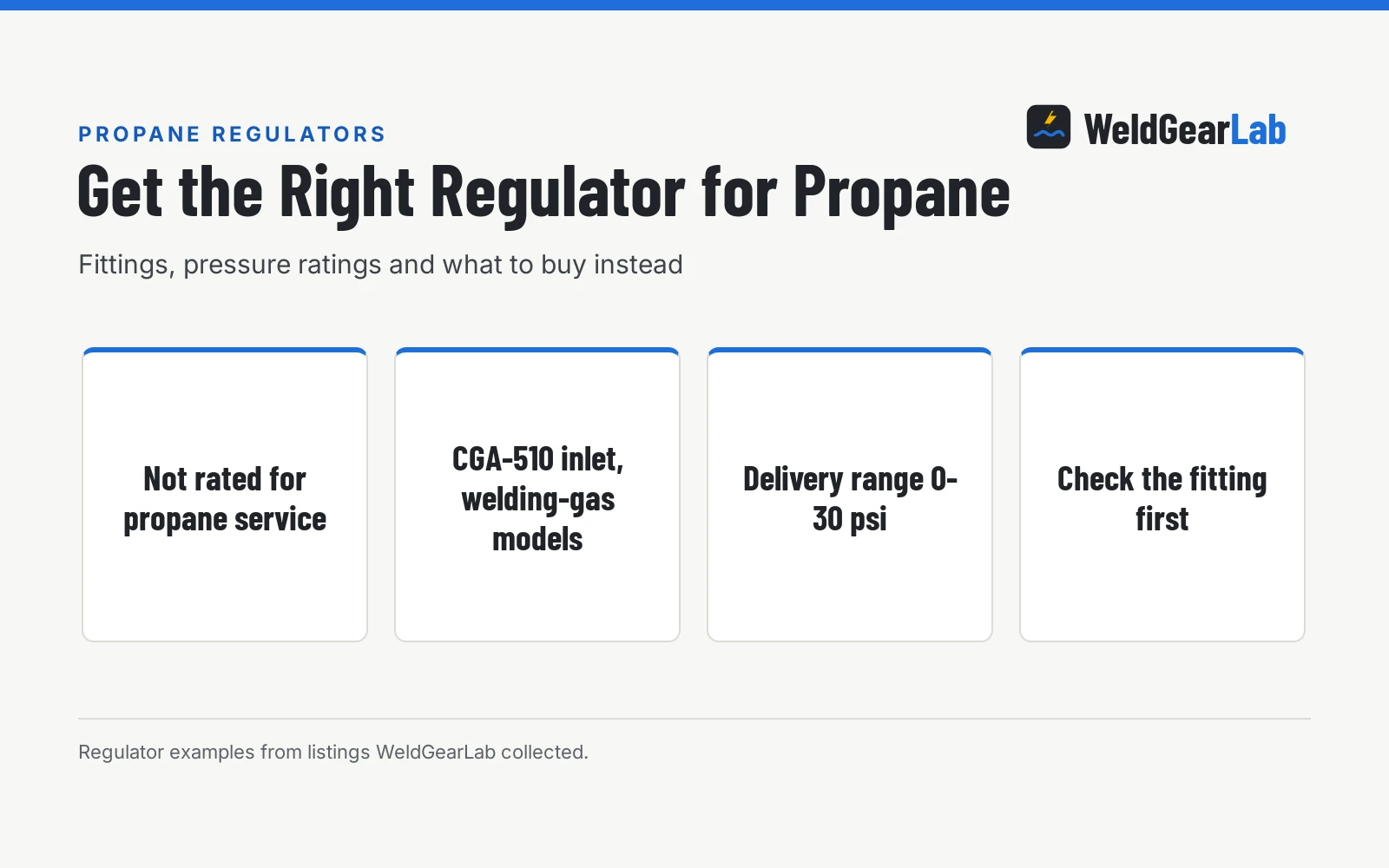
An acetylene regulator is not made for propane service, so use a propane regulator with a CGA-510 inlet and a matching delivery range.

On this page
Top picks at a glance
As an Amazon Associate I earn from qualifying purchases.
- 1
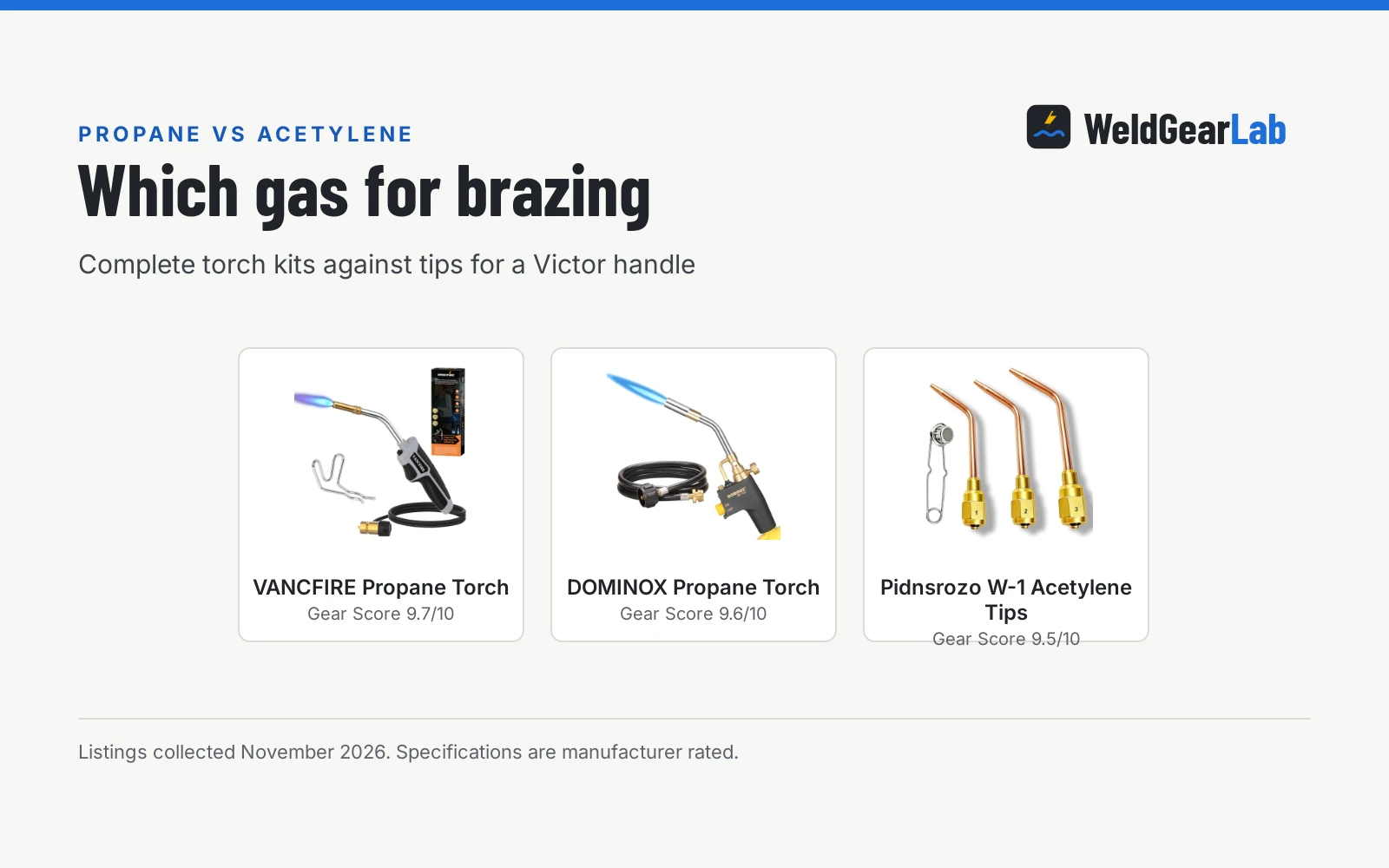
 Propane Torch Head with 5FT Hose9.7/10View on Amazon
- 2
 DOMINOX High Intensity Propane Torch Head with 5FT Hose9.6/10View on Amazon
- 3
 W-1 Oxy Acetylene Welding Nozzle for Victor 100 Torch Handles9.5/10View on Amazon
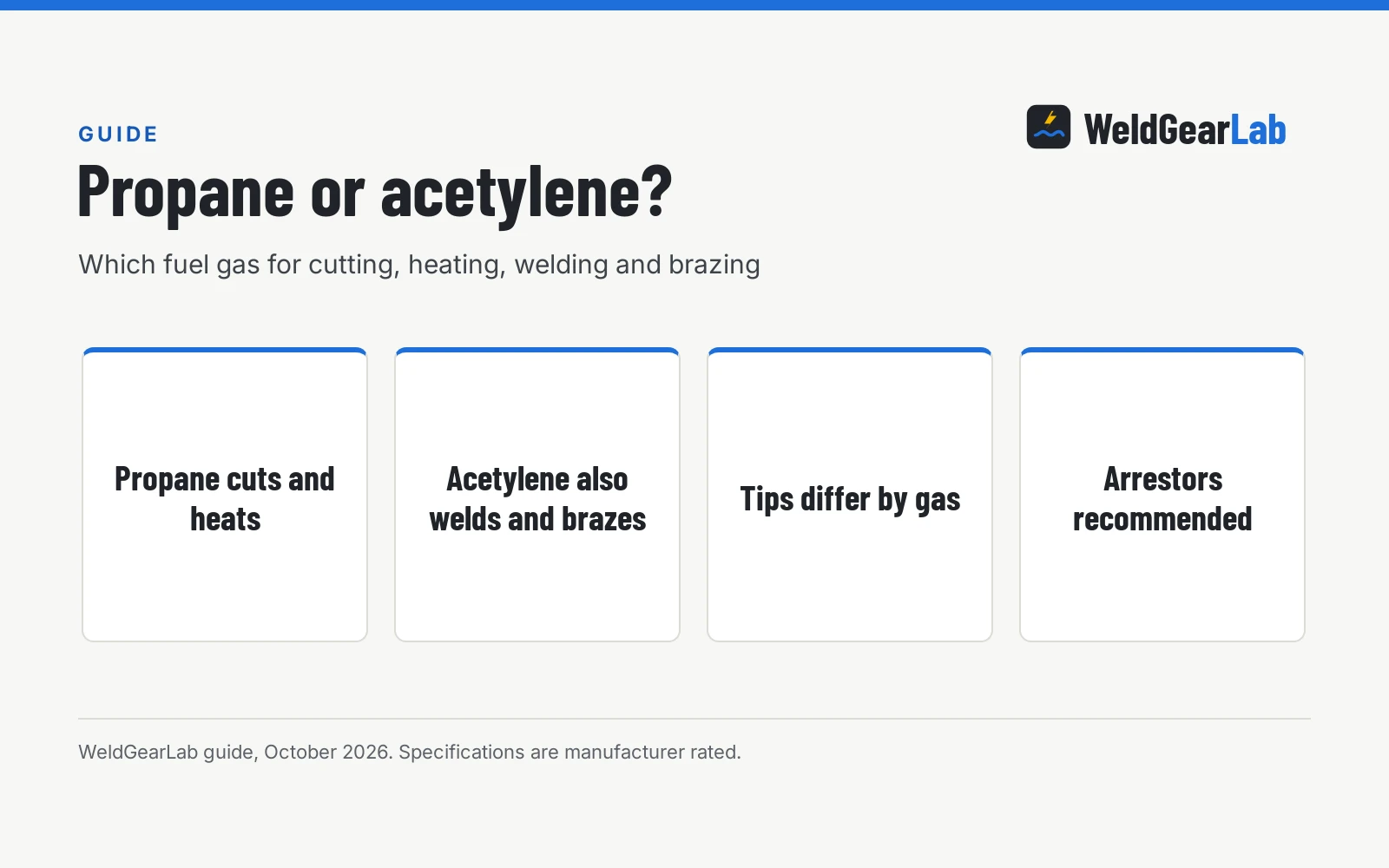
A propane tank sits on the bench, the torch set is ready, and the regulator in the drawer came off an acetylene cylinder. The question is whether that regulator can do the job, and the answer for can you use acetylene regulator for propane is no. An acetylene regulator is built for a different gas and a different pressure range, so it does not belong on a propane cylinder. This guide explains why the parts do not swap, what a propane regulator looks like, and what to use instead.
This guide links to our product roundups, where WeldGearLab gets a commission on purchases made through links on this page, and your price stays the same. Read our affiliate disclosure.
Can you use acetylene regulator for propane?
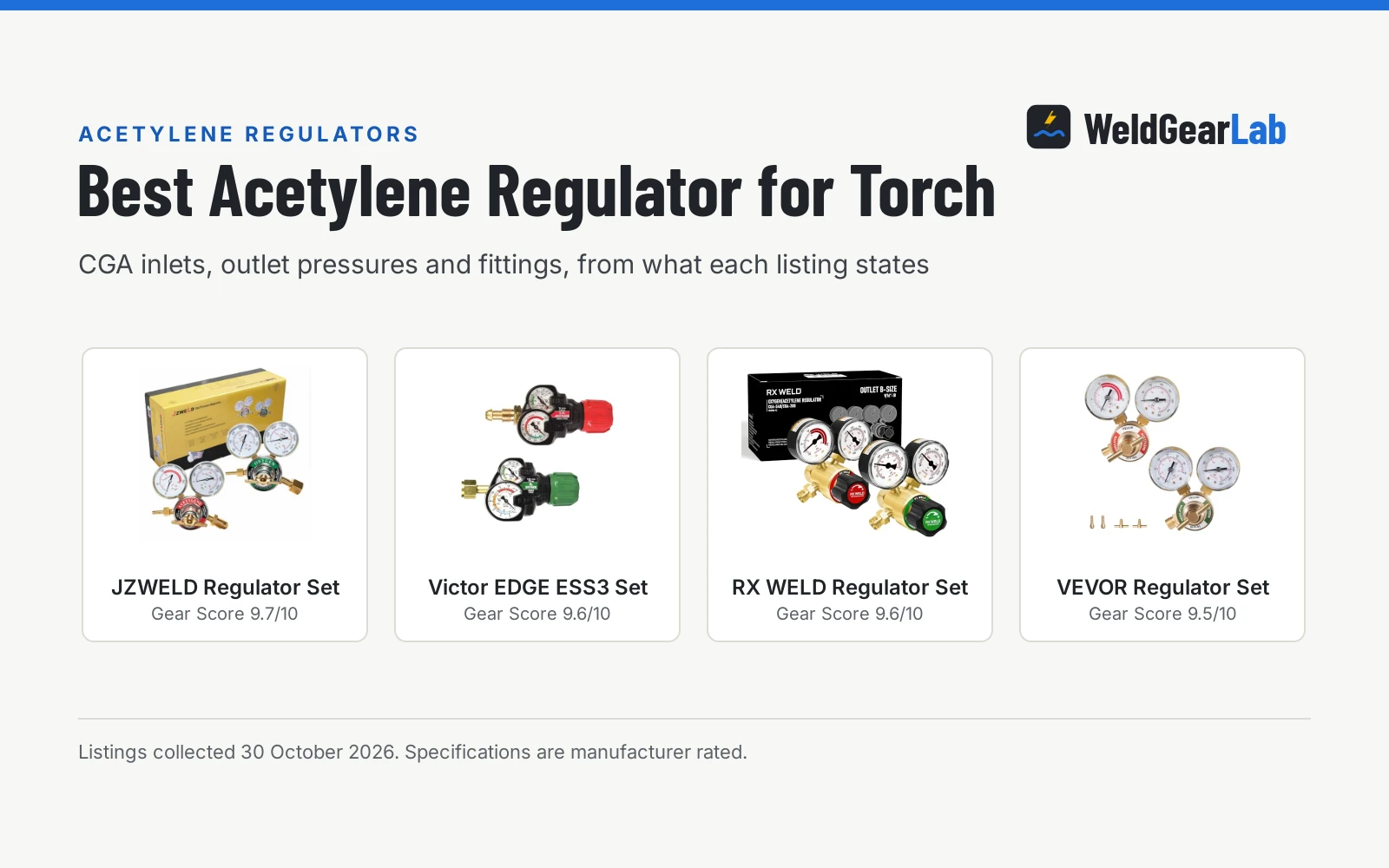
No. A regulator is not a generic pressure valve. It is built for its own gas and its own delivery range, and propane and acetylene differ on both points. Fitting an acetylene regulator to a propane tank risks a gauge that reads the wrong range and a delivery pressure the appliance was not built for. The safe move is a regulator made and marked for propane.
Side by side
| Acetylene regulator | Propane regulator | Why it matters | |
|---|---|---|---|
| Tank fitting | Not stated | CGA-510 inlet | The regulator must be marked for the gas it will feed |
| Hose fitting | Not stated | 9/16 inch, 18 LH outlet (welding gas) | The outlet must match the hose fitting |
| Delivery pressure range | Not stated | 0-30 psi (welding gas) | The appliance is built for a low delivery pressure |
| Maximum inlet pressure | Not stated | 300 psi (welding gas) | The body must hold full tank pressure |
| Outlet pressure, grill regulator | Not stated | 11 inch W.C. (1/2 PSI) | Grills and appliances need a low, steady pressure |
| Typical use | Acetylene cutting and welding | Propane grills, burners, forges and welding gas | Each regulator is built and rated for its own gas |
| Gauge | Reads the acetylene range | 0-40 psi low pressure gauge | The gauge must read the range the regulator delivers |
The table shows the mismatch in plain terms. The propane side lists a CGA-510 inlet, a 9/16 inch outlet and a 0-30 psi delivery range for a welding-gas regulator, while the acetylene side has no matching figure for propane service. A regulator built for another gas cannot be made right by tightening harder, and a gauge built for a different gas cannot be trusted on propane.
Why the fittings do not swap
A propane propylene regulator for welding gas uses a CGA-510 inlet fitting at the tank end, and the hose end uses a 9/16 inch, 18 LH Type B-B outlet fitting. An acetylene regulator is built and marked for acetylene service, so it does not belong on a propane cylinder. Forcing a mismatched fitting damages threads and leaves a joint that can leak gas. The hose side matters too: propane grill hoses use 3/8 inch flare fittings, and a regulator outlet must match the hose it feeds.
Why the pressure ratings do not swap
A propane propylene regulator for welding gas is rated for a maximum inlet pressure of 300 psi and a delivery pressure range of 0-30 psi, and a low pressure gauge for the delivery side reads 0-40 psi on a 2 inch dial. A grill regulator holds an outlet pressure of 11 inch W.C. (1/2 PSI). An acetylene regulator is built around a different delivery range, and its gauge scale and spring setting do not match propane service. A gauge that reads the wrong range cannot tell the reader what the torch or appliance is actually getting, and a regulator set for the wrong gas can feed too much pressure to a burner or torch built for propane.
What to use instead
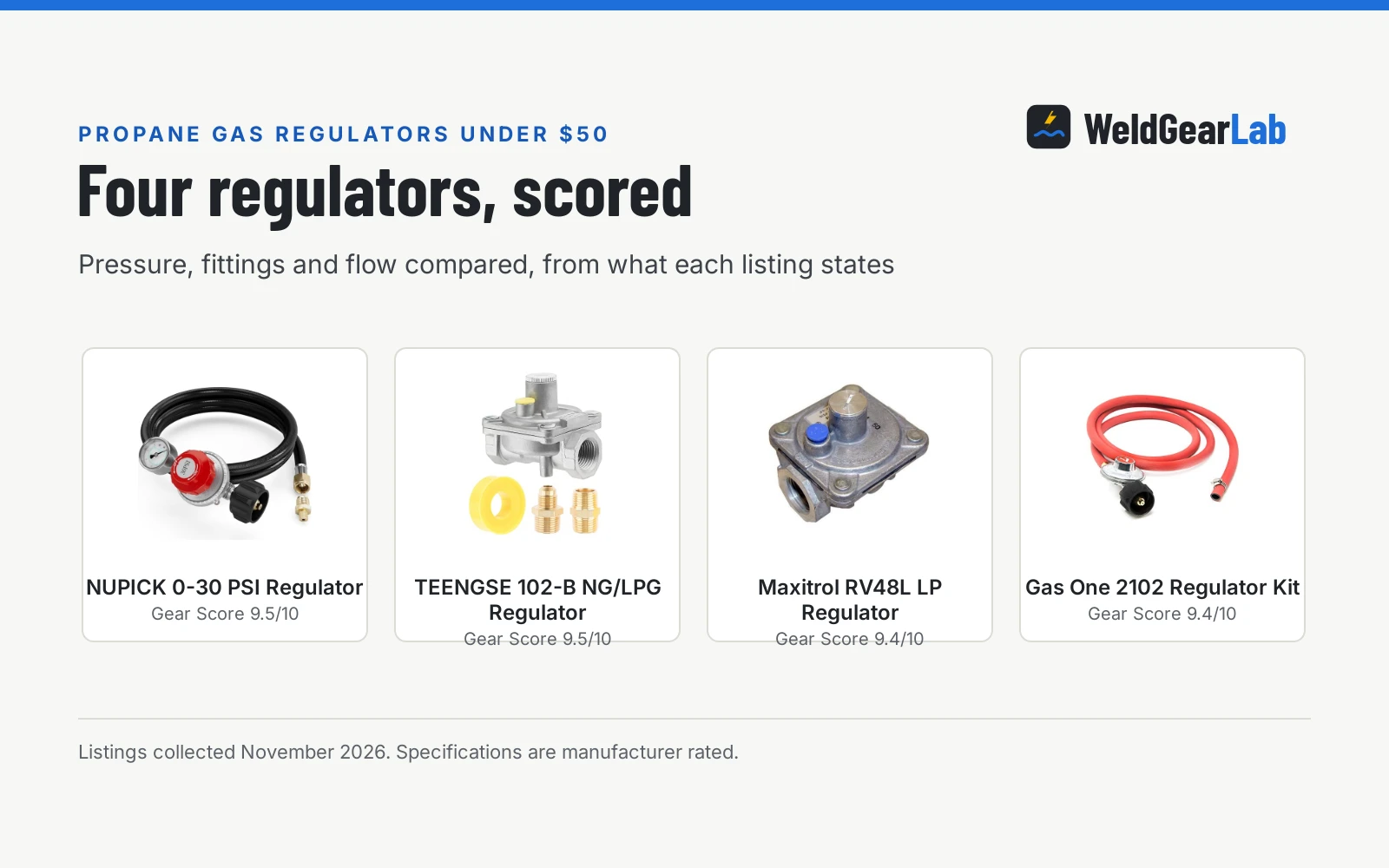
Buy a regulator marked for propane or propane propylene service, with an inlet fitting that matches the cylinder and a delivery range that suits the appliance. For welding gas, a propane propylene regulator with a CGA-510 inlet, a 0-30 psi delivery range and a 300 psi maximum inlet pressure, built with a forged brass body, covers the job. For a grill or fire pit, a propane hose with regulator and gauge comes in a 2 feet length with a 3/8 inch female flare fitting, and an adjustable propane regulator with gauge on a 5 feet hose lists a maximum output of 110000 BTU per hour. Match the hose length and fitting to the appliance, check the fitting sizes before ordering, and see the best propane gas regulator guide for picks. The best gas regulator for MIG welding guide covers shielding gas regulators.
After fitting a propane regulator, check each joint for leaks before lighting anything, keep the cylinder upright and steady, and work with ventilation. A joint that hisses or bubbles needs tightening or a new seal, not a lit torch.
For more options, see our welding consumables guides.
FAQ for welders
Can I use an acetylene regulator for propane?
No. The regulator is built for acetylene service, not propane, and its delivery range and gauge are set for acetylene. Use a regulator made for propane. Swapping regulators between gases risks feeding the wrong pressure to an appliance built for propane.
What fitting does a propane regulator use?
A propane propylene regulator for welding gas uses a CGA-510 inlet fitting for the tank connection, with a 9/16 inch, 18 LH outlet fitting for the hose. Grill regulators use a QCC-1 Type 1 tank connection with a 3/8 inch female flare fitting for the appliance hose. Check the fitting on the tank valve and the hose before ordering.
What pressure does a propane regulator deliver?
A propane propylene regulator lists a delivery pressure range of 0-30 psi and a maximum inlet pressure of 300 psi. A grill regulator holds an outlet pressure of 11 inch W.C. (1/2 PSI). A low pressure gauge for the delivery side reads 0-40 psi. Match the delivery range to the appliance the regulator will feed.
Can I change the hose and keep the acetylene regulator?
No. Changing the hose does not change the tank fitting, the gauge range or the delivery setting inside the regulator. The regulator body itself is built for acetylene, so a different hose leaves the mismatch in place. Replace it with a regulator made for propane.
What regulator should I buy for propane welding gas?
Look for a regulator marked for propane or propane propylene service with a CGA-510 inlet fitting, a delivery range of 0-30 psi and a maximum inlet pressure of 300 psi. A propane propylene regulator with a forged brass body and a 2 inch low pressure gauge that reads 0-40 psi fits that description. See the best propane gas regulator guide for picks.
Related: best gas regulator for MIG welding and argon gas regulator for TIG welding.