Oxy Propane vs Oxy Acetylene Torch: Which One Should You Buy?
Oxy propane vs oxy acetylene torch explained: which fuel gas for cutting, heating, welding and brazing, with three torches that show the options.

On this page
Top picks at a glance
As an Amazon Associate I earn from qualifying purchases.
- 1
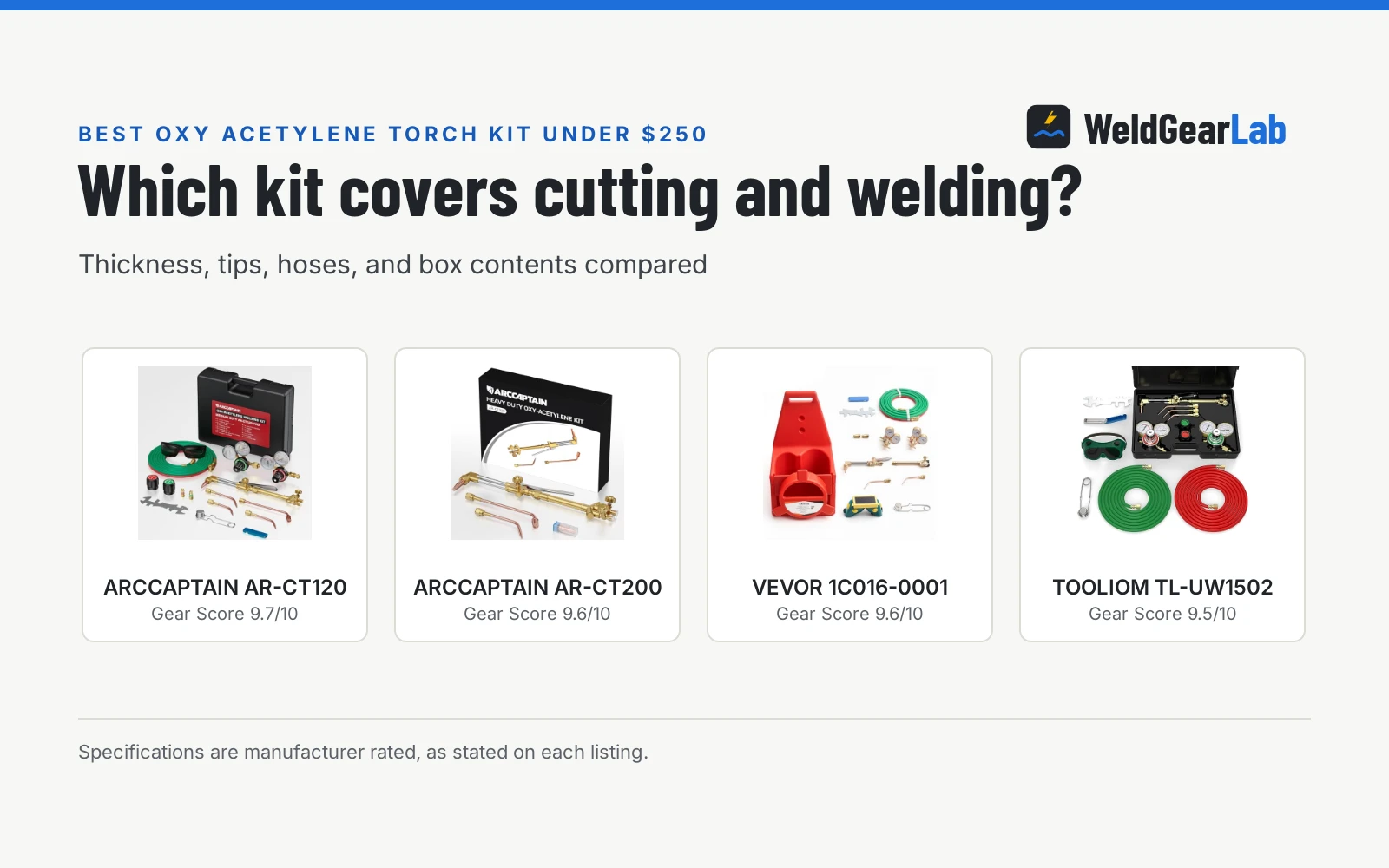
 ARCCAPTAIN Oxy Acetylene Torch Kit with Check Valves9.7/10View on Amazon
- 2
 ARCCAPTAIN Heavy Duty Oxy Acetylene Cutting Torch Kit with9.6/10View on Amazon
- 3
 VEVOR Oxygen Acetylene Torch Kit with Check Valves9.6/10View on Amazon
- 4
 TOAUTO Heavy Duty Cutting TorchView on Amazon
- 5
 Bernzomatic Standard Propane Fuel CylinderView on Amazon
- 6
 Propane Torch HeadView on Amazon
- 7
 Aluminum Brazing Rod 1/16 For Propane TorchView on Amazon
- 8
 KOMAN BLUEFIRE 1lb Propane Tank Camping Propane Tank Pack ofView on Amazon
- 9
 Welding Torch Fueled By 20 lb Propane With Type 1 ValveView on Amazon
You need to cut and heat steel with a torch, and the fuel choice is propane or acetylene. The short answer to oxy propane vs oxy acetylene torch is that propane covers cutting and heating, while acetylene is the pick when you also want to weld or braze. The listings below show why: the same torch hardware takes different tips and configurations for each gas.
Other welders and gear to compare
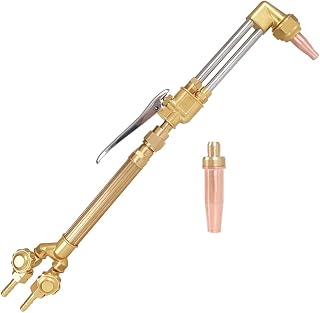 TOAUTO Heavy Duty Cutting TorchCheck price on Amazon
 Bernzomatic Standard Propane Fuel CylinderCheck price on Amazon
 Propane Torch HeadCheck price on Amazon
 Aluminum Brazing Rod 1/16 For Propane TorchCheck price on Amazon
 KOMAN BLUEFIRE 1lb Propane Tank Camping Propane Tank Pack ofCheck price on Amazon
 Welding Torch Fueled By 20 lb Propane With Type 1 ValveCheck price on Amazon
This guide links to our product roundups, where WeldGearLab gets a commission on purchases made through links on this page, and your price stays the same. Read our affiliate disclosure.
The difference in one paragraph
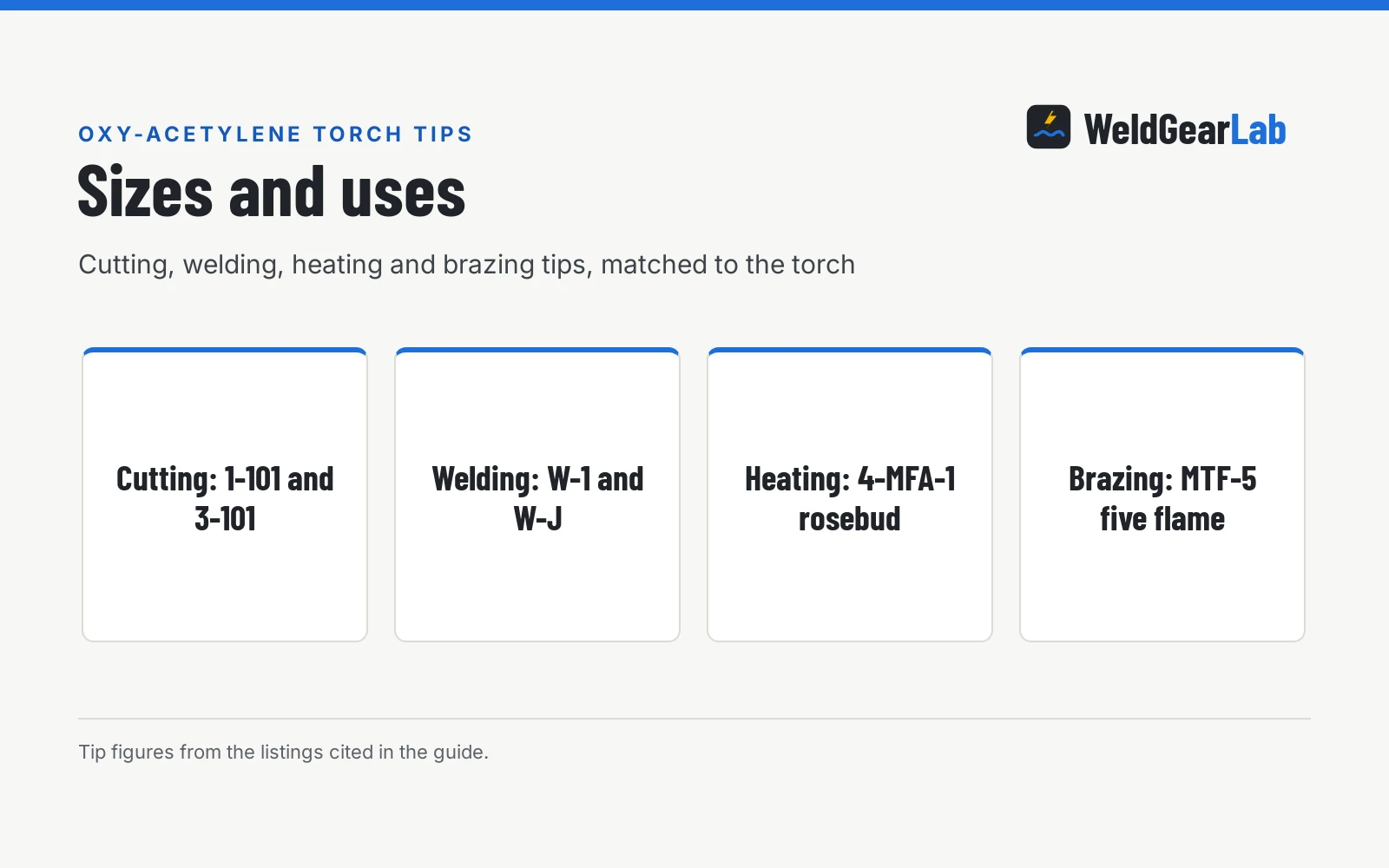
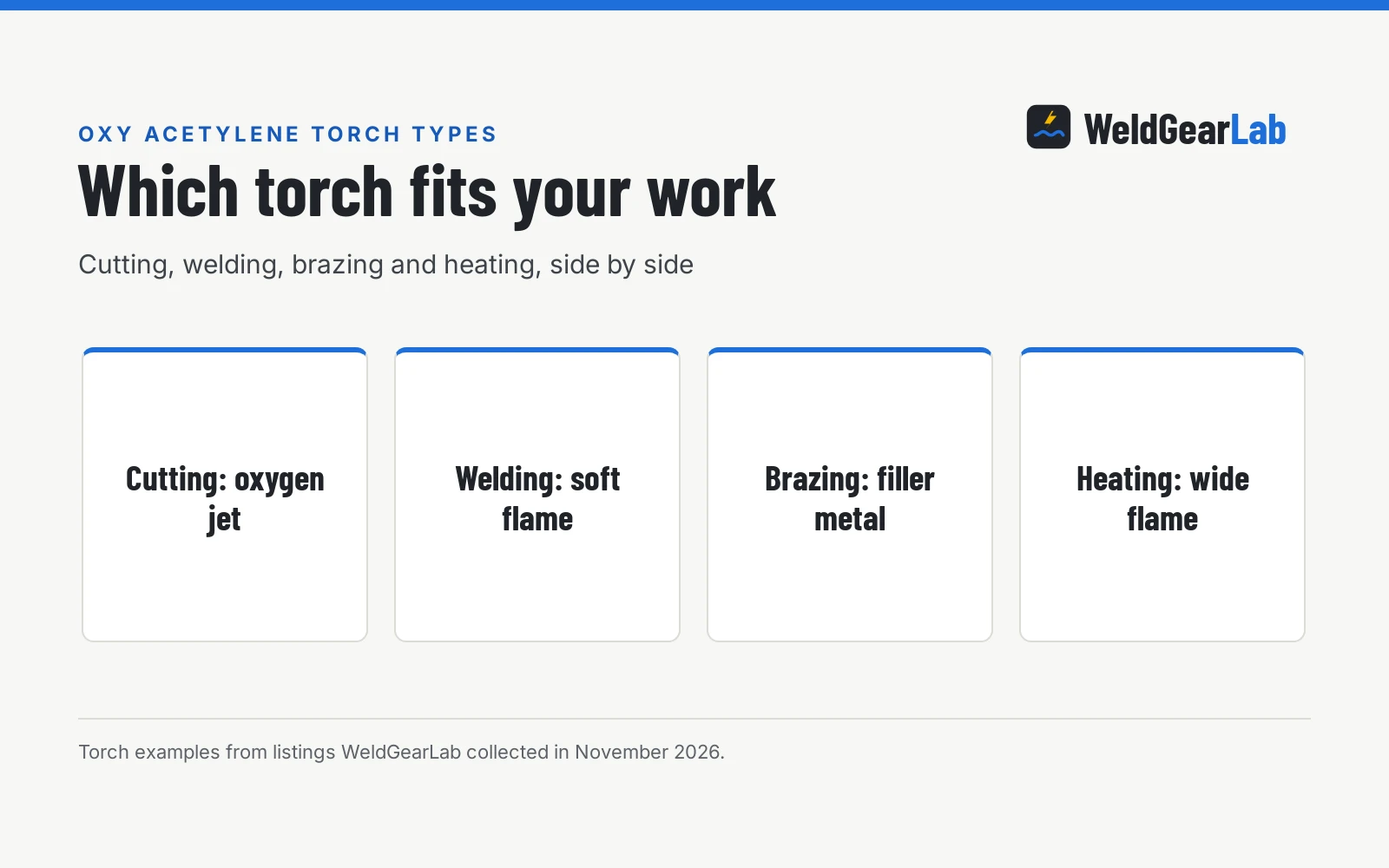
Both burn a fuel gas with oxygen. Propane (LPG) is the fuel for cutting and heating; the SÜA listing offers LPG/propane configurations with a 1-GPN-1 cutting tip and an 8-MFN rosebud heating tip. Acetylene is the hotter fuel that also welds and brazes; the SÜA acetylene configurations add a 1-W welding/brazing tip alongside the 1-101-1 cutting tip and 4-MFA rosebud. The FLKQC cutting attachment is built for multiple gases: oxy-acetylene, propane, butane, natural and LP.
Side by side
| Oxy propane (LPG) | Oxy acetylene | Source | |
|---|---|---|---|
| Cutting | Yes: 1-GPN-1 cutting tip | Yes: 1-101-1 cutting tip | SÜA listing |
| Heating | Yes: 8-MFN rosebud | Yes: 4-MFA rosebud | SÜA listing |
| Welding / brazing | Not offered in these listings | Yes: 1-W welding/brazing tip | SÜA listing |
| Configurations listed | LPG/propane cutting and heating | Acetylene cutting, welding/brazing and heating | SÜA listing |
| Multi-gas torches | FLKQC supports propane plus others | FLKQC supports oxy-acetylene plus others | FLKQC listing |
When oxy propane is the better choice
Cutting and heating. The SÜA listing builds its propane configurations around exactly those two jobs: cutting with the 1-GPN-1 tip and heating with the 8-MFN rosebud. If your torch work is cutting plate and heating parts for bending, propane covers both jobs.
Multi-gas shops. The FLKQC attachment lists propane among its supported gases alongside oxy-acetylene, butane, natural and LP, so one torch body covers whatever fuel you have. That flexibility is the propane argument in a sentence: the listing names propane among its supported gases.
When oxy acetylene is the better choice
Welding and brazing. The SÜA acetylene configurations include a 1-W welding/brazing tip that the propane configurations do not offer. If you want to weld or braze with the torch rather than just cut and heat, acetylene is the configuration the listings build for.
Established setups. The SÜA listing offers Victor-style Series 300 replacement components, and its acetylene configurations include the 1-101-1 cutting tip. The FLKQC is also Victor-type, with a CA2460 cutting attachment and 315FC handle. If your shop already runs acetylene, the listings meet you there.
The gear: three torches that show the options
Cybring oxygen MAPP torch kit. The kit pick: a torch with a built-in pressure gauge so you work without an extra gauge, a cylinder stand, a flint spark lighter and glasses, in stainless steel at 5.4 lb. The listing claims 100% anti-backfire safety design and a second valve on the handle for gas adjustment. Note that the listing contradicts itself on flame temperature: the bullets claim up to 6432°F while the spec table says 2860°F, so treat that figure as unreliable. Gas cylinders are not included.
SÜA oxy-fuel torch for Victor Series 300. The configurator pick: heavy-duty brass replacement components in acetylene or LPG/propane configurations. Acetylene options include the 1-101-1 cutting tip, the 1-W welding/brazing tip and the 4-MFA rosebud; propane options include the 1-GPN-1 cutting tip and the 8-MFN rosebud. Check valves are included, and the listing recommends flashback arrestors for additional safety. At 4.4 lb. Choose the configuration before you buy: handle-only and attachment-only options include no tips at all.
FLKQC Victor-type cutting attachment and handle. The multi-gas pick: a CA2460 cutting attachment with a 315FC torch handle in stainless steel and brass, at 3.1 lb. The included 1-1-101 cutting tip cuts up to 3/4 in steel per the listing, and a 6-1-101 tip cuts up to 8 in. The listing states support for oxy-acetylene, propane, butane, natural and LP gases, with a maximum temperature of 1500°C.
A final practical note: the SÜA listing warns that handle-only and attachment-only options include no tips, hoses, regulators or accessories at all. Read the configuration you select before you check out, and verify the fuel gas type, included tips and connection requirements against your regulators. A torch body without tips is a paperweight until the rest arrives.
Safety notes the listings state
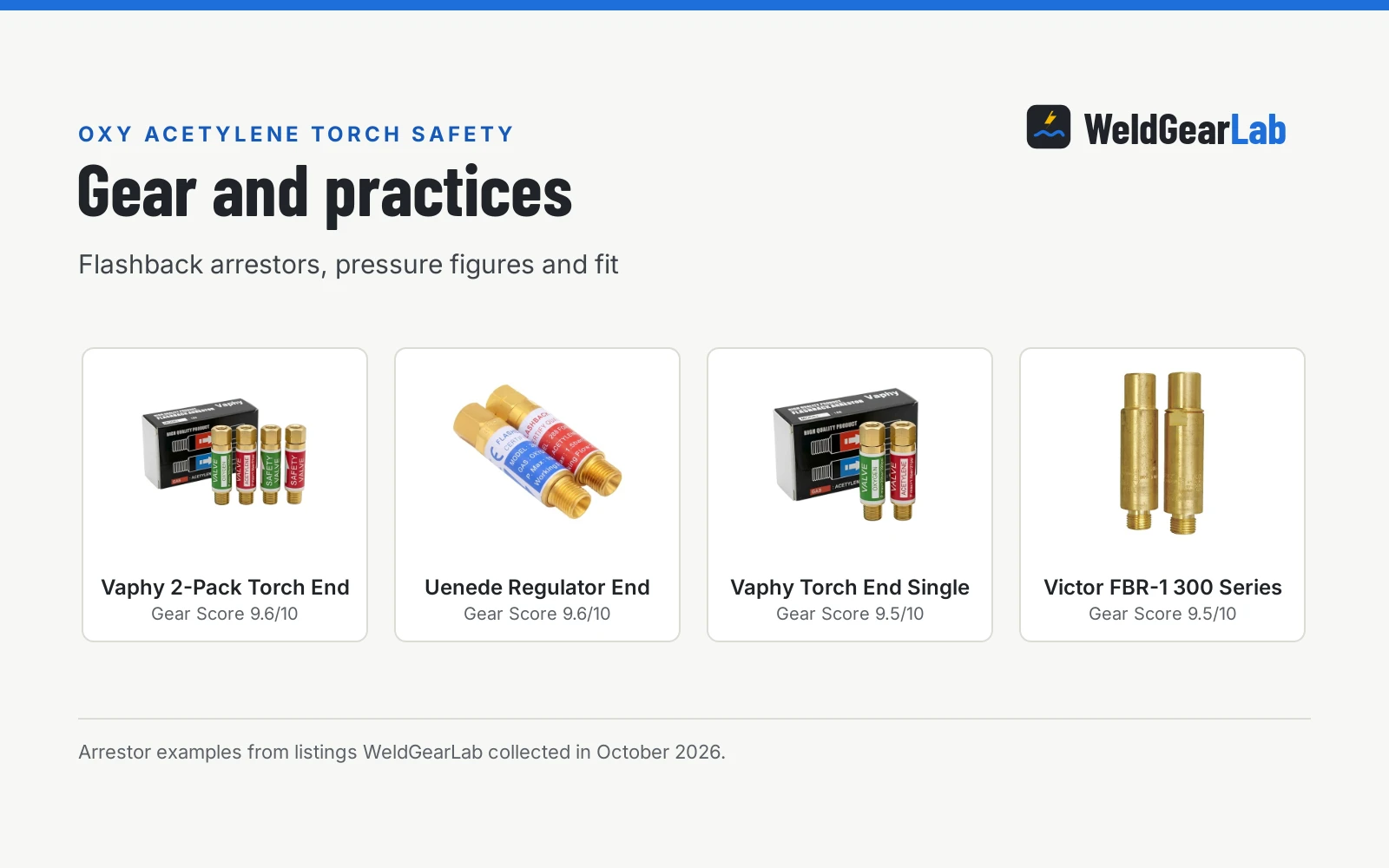
The listings are unusually direct about safety. The SÜA listing recommends flashback arrestors for additional safety and includes check valves. The Cybring claims an anti-backfire valve design. Take both seriously: check valves and flashback arrestors are cheap insurance on any oxy-fuel rig, and the listings say so themselves.
Oxy propane vs oxy acetylene torch: the verdict
Buy the gas for the jobs you actually do. Cutting and heating steel in the home shop: propane, with the SÜA propane configuration or the multi-gas FLKQC. Cutting plus welding and brazing: acetylene, with the SÜA acetylene configuration that includes the welding tip. The Cybring kit suits the MAPP user who wants a gauged torch with glasses and lighter in the box. Whichever you choose, fit flashback arrestors and check the tips match the gas.
FAQ for welders
Can I cut steel with oxy propane?
Yes. The SÜA listing offers LPG/propane cutting configurations with a 1-GPN-1 cutting tip, and the FLKQC lists propane among its supported gases. Propane cuts and heats well.
Can I weld with oxy propane?
The listings do not offer it. The SÜA welding/brazing tip comes only in the acetylene configurations. For welding and brazing with a torch, the listings point to acetylene.
Are propane and acetylene tips interchangeable?
No. The SÜA listing uses different tips for each gas: 1-101-1 for acetylene cutting and 1-GPN-1 for propane cutting, with different rosebuds. Buy the tips for the gas you run.
What does the Cybring kit include?
The torch with a built-in pressure gauge, a cylinder stand, a flint spark lighter and glasses. Gas cylinders are not included.
Do I need flashback arrestors?
The SÜA listing recommends them for additional safety, and its configurations include check valves. The Cybring claims an anti-backfire valve design. Fit arrestors regardless.
Related: propane vs acetylene cutting torch, MAPP gas vs acetylene torch, best oxy acetylene torch kit for home shop and oxy acetylene vs TIG welder.