Oxy Acetylene vs Tig Welder: Which One Should You Buy?
Oxy-acetylene cuts and welds without electricity; TIG welds precise beads on shop power. Three gas outfits compared by capacity, weight and kit.

On this page
Top picks at a glance
As an Amazon Associate I earn from qualifying purchases.
- 1
 ARCCAPTAIN DC 5 In 1 TIG Welder With Pulse9.6/10View on Amazon
- 2
 MC 10 cu ft Acetylene + 20 cu ft OxygenView on Amazon
- 3
 RX WELD Oxy Acetylene Regulator SetView on Amazon
- 4
 Hobart 770096 Welding Oxy-Acetylene GoggleView on Amazon
- 5
 RX WELD 12 PCS Medium Oxy Acetylene Cutting TorchView on Amazon
- 6
 Dual Welding Gas GaugesView on Amazon
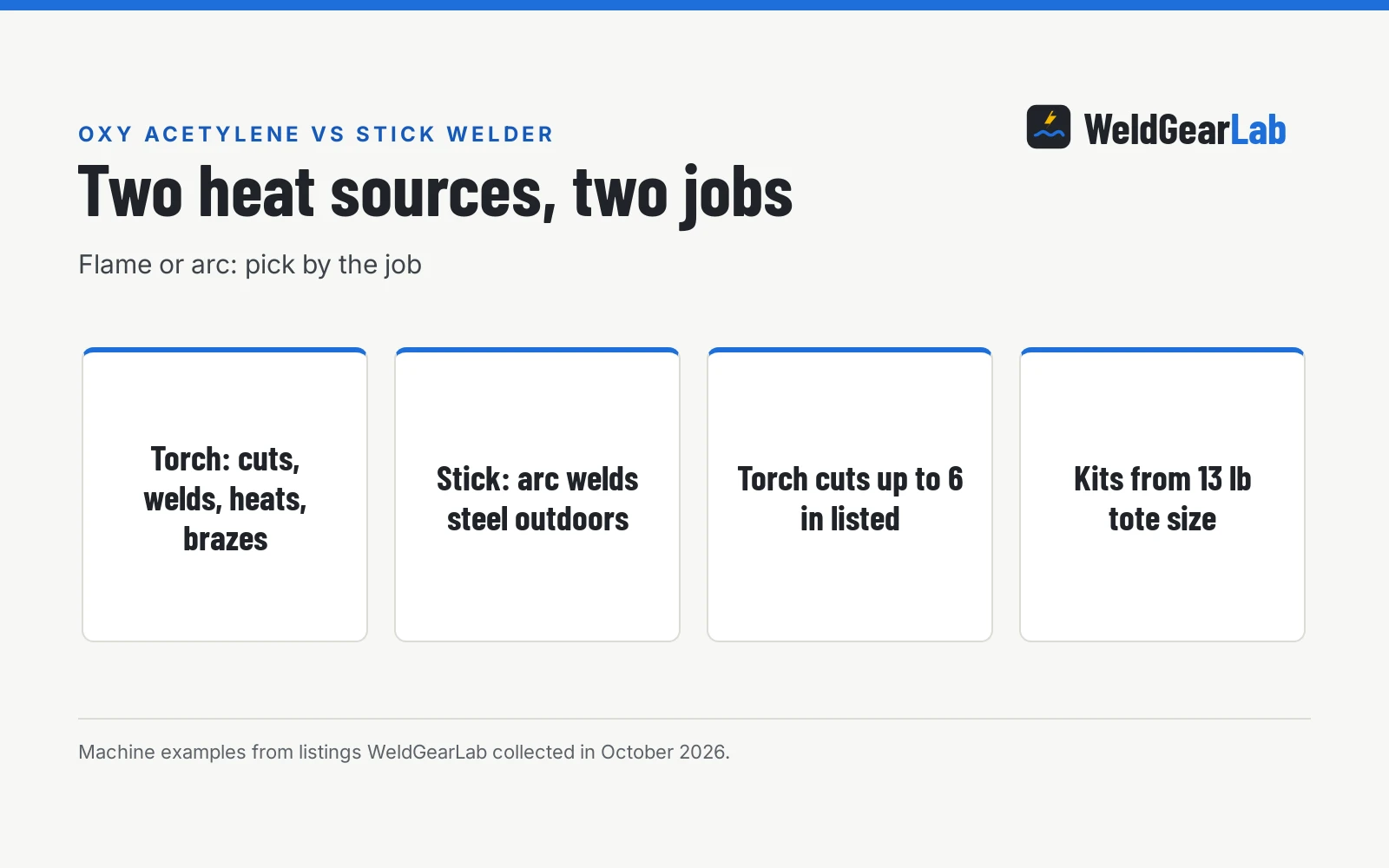
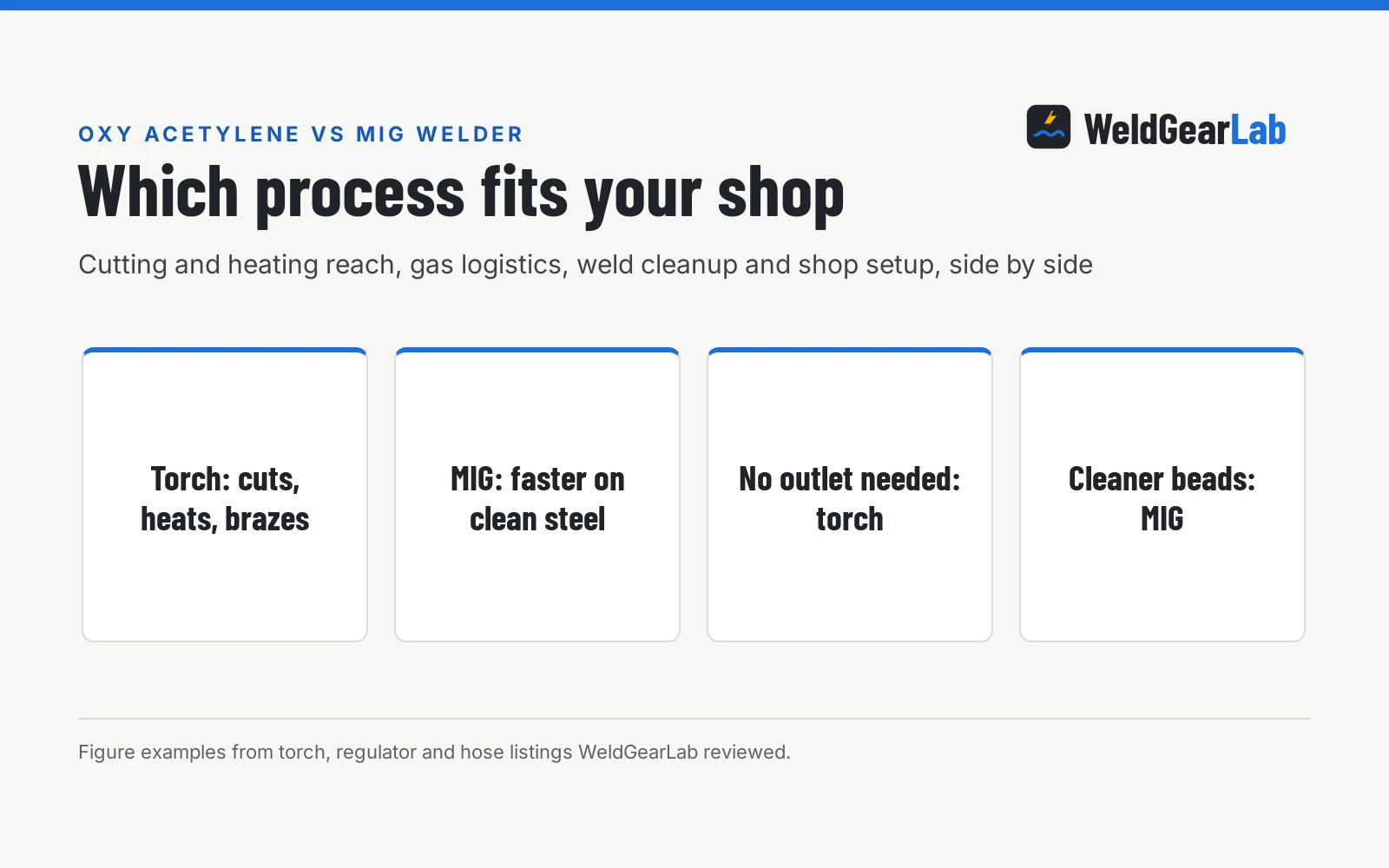
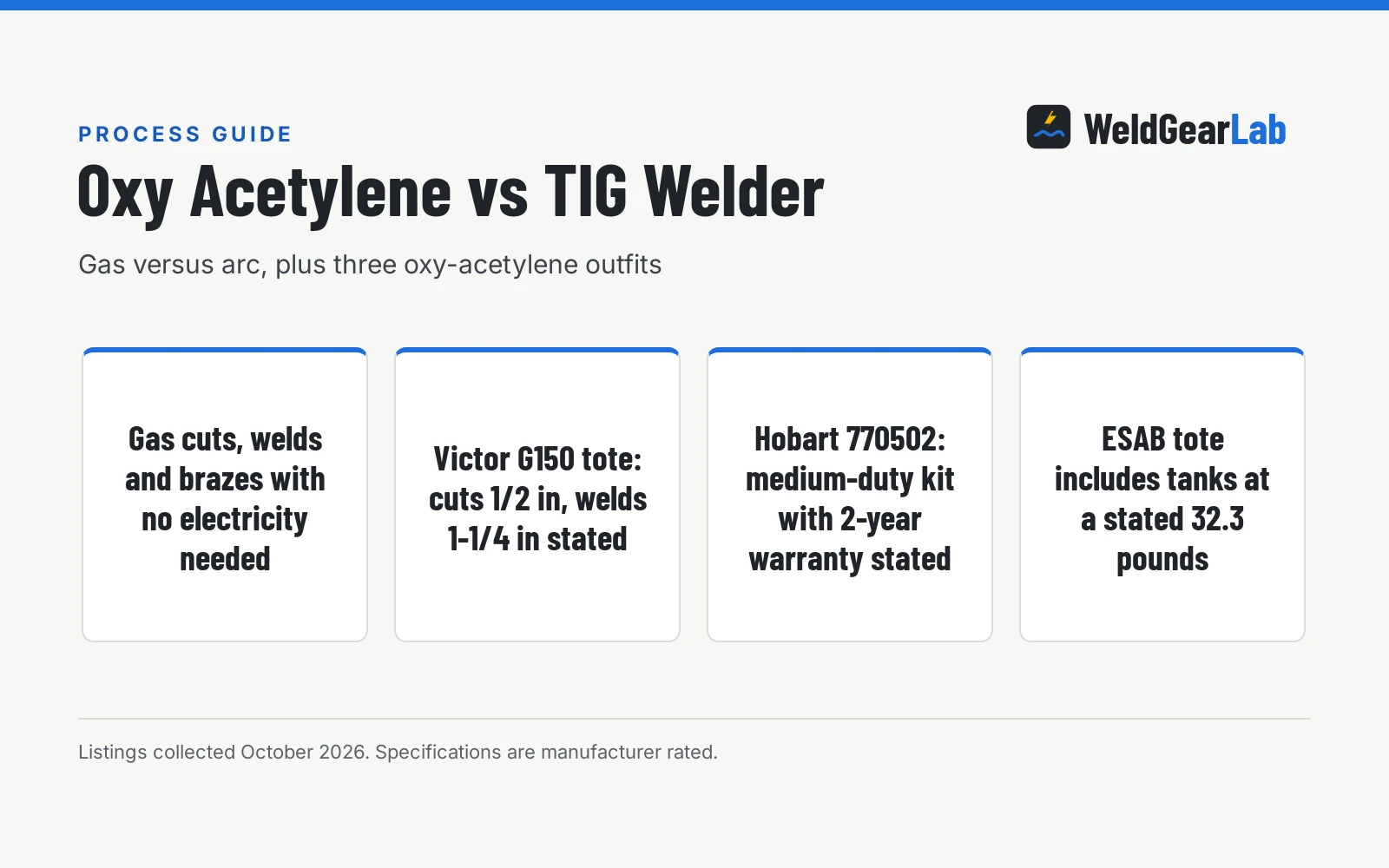
You are choosing between two ways to join metal: a flame or an arc. Oxy acetylene vs tig welder comes down to what you need the tool to do: oxy-acetylene cuts, welds, brazes and heats with gas bottles and no electricity, while TIG welds with an electric arc for precise, clean beads on thin metal. If you want one outfit that cuts and welds without shop power, gas is the pick; if you want the finest arc welds, TIG is.
Other welders and gear to compare
 MC 10 cu ft Acetylene + 20 cu ft OxygenCheck price on Amazon
 RX WELD Oxy Acetylene Regulator SetCheck price on Amazon
 Hobart 770096 Welding Oxy-Acetylene GoggleCheck price on Amazon
 RX WELD 12 PCS Medium Oxy Acetylene Cutting TorchCheck price on Amazon
 Dual Welding Gas GaugesCheck price on Amazon
This guide links to our product roundups, where WeldGearLab gets a commission on purchases made through links on this page, and your price stays the same. Read our affiliate disclosure.
Oxy acetylene vs tig welder: the difference in one paragraph
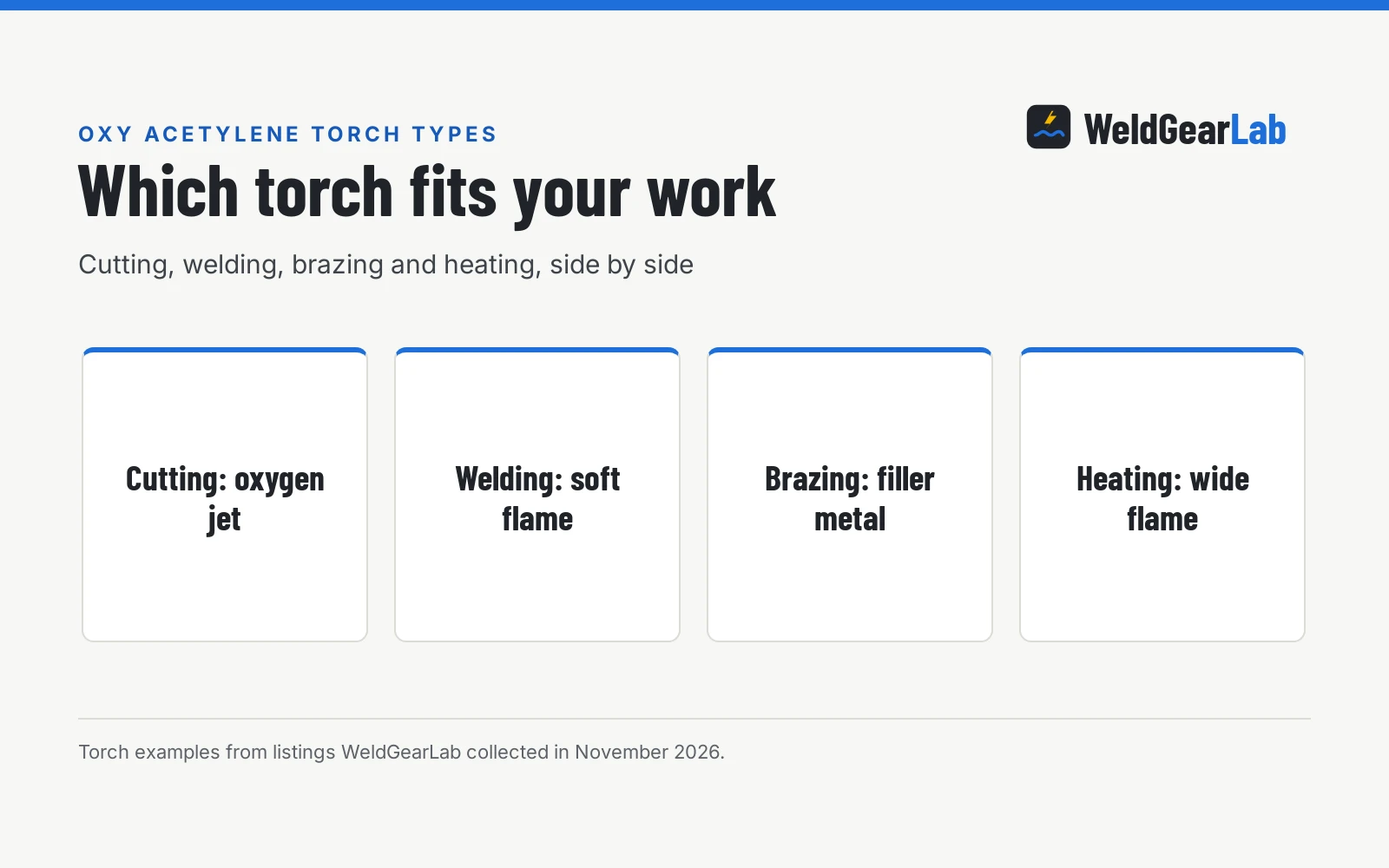
Oxy-acetylene is the gas process: oxygen and fuel gas feed a torch that cuts steel, welds, brazes and heats for bending. It needs no electricity, and the same outfit cuts and welds. TIG is the electric arc process: a tungsten electrode strikes an arc for precise welds, and it needs shop power plus a shielding gas bottle. The listings here cover the gas side only: three oxy-acetylene outfits, two light-duty totes and one medium-duty kit.
Side by side
| Oxy-acetylene outfit | Cut capacity | Weld capacity | Weight | Tanks |
|---|---|---|---|---|
| Victor G150 J-P Tote | 1/2 in | 1-1/4 in (optional nozzles) | 13 lb | Not included |
| ESAB Victor G150 J-CPT | Not stated | Not stated | 32.3 lb | Included |
| Hobart 770502 | Not stated | Not stated | 16.4 lb | Not stated |
When oxy-acetylene is the better choice
Pick gas when the job list is wider than welding. The Victor G150 tote states it cuts up to 1/2 inch and welds up to 1-1/4 inches with optional nozzles, and the Hobart states its kit for farming, automotive work and light fabrication with fuel flexibility: designed for acetylene but compatible with propane tips. The listings state no electrical requirement: the outfits run from gas bottles with regulators, torch and hose. The ESAB tote includes the tanks; the Victor tote does not. For a farm or a remote repair, gas is the self-contained option.
When a TIG welder is the better choice
Pick TIG when the work is precise arc welding: thin sheet, clean beads and metals where heat control matters. This guide states no TIG specs: see our best entry-level TIG welder and AC TIG vs DC TIG welder for the arc side. The trade-off the listings make clear is power source: every gas outfit here works from bottles, while the TIG side needs shop power.
The gear: three oxy-acetylene outfits ranked
The Hobart 770502 leads on stated kit. It is the medium-duty pick with a forged brass handle, reverse-flow check valves, and a stated accessory list: welding and cutting tips, goggles, regulators, flashback arrestors, spark lighter, tank wrench and twin hose. It states fuel flexibility for acetylene with propane tip compatibility, a 16.4-pound weight and a 2-year limited warranty.
The Victor G150 J-P tote is the light-duty portable pick. It states cuts up to 1/2 inch and welds up to 1-1/4 inches with optional nozzles, with R150-200 and R150-540 regulators, a 103-01FP torch handle, striker, 12.5-foot 3/16-inch hose, goggles and tank key in a molded plastic tote at a stated 13 pounds. Tanks are not included: the listing states it plainly. No warranty term is stated.
The ESAB Victor G150 J-CPT is the same series with tanks included at a stated 32.3 pounds and 26 by 14 by 10 inches. Its listing is the thinnest: no bullets, no stated cut or weld capacity, no warranty term. The tanks-included format is the stated difference against the Victor tote, and the weight reflects it.
Oxy-acetylene kit contents compared
The three kits differ in what the box holds. The Hobart states the fullest list: a forged brass handle, reverse-flow check valves, welding and cutting tips, goggles, regulators, flashback arrestors, spark lighter, tank wrench and twin hose. The Victor G150 tote states R150-200 and R150-540 gas regulators, a 103-01FP torch handle, striker, 12.5-foot 3/16-inch hose, goggles and tank key in a molded plastic tote with an ergonomic handle and storage compartments. The ESAB tote states its included components only as welding equipment, with no itemized list.
Safety hardware is stated on two. The Hobart states reverse-flow check valves and flashback arrestors. The Victor tote states a striker and tank key. The ESAB listing states no safety hardware. For a first gas outfit, the Hobart’s stated flashback arrestors and check valves are the safety features to weigh.
Portability: tote weight and tanks
Weight tells the portability story. The Victor G150 tote states 13 pounds without tanks, in a molded plastic carrying case with an ergonomic handle. The Hobart states 16.4 pounds. The ESAB tote states 32.3 pounds at 26 by 14 by 10 inches with the tanks included. The ESAB is the only listing that includes tanks, which explains the weight: it is the grab-and-go option, while the Victor tote needs bottles sourced separately.
For shop use where bottles stay put, the tank question matters less. For field repairs, the ESAB’s tanks-included format against the Victor’s 13-pound tote is the trade-off the listings state: carry weight against completeness.
FAQ for welders
Can an oxy-acetylene torch cut steel?
The Victor G150 listing states cuts up to 1/2 inch, and the Hobart states a cutting attachment with cutting tips included. The cutting figures here cover the gas side only.
Do oxy-acetylene outfits need electricity?
The listings state no electrical requirement: the outfits run from gas bottles with regulators, torch and hose. The ESAB tote includes the tanks; the Victor tote does not.
Can I run propane instead of acetylene?
The Hobart listing states it is designed for acetylene but compatible with propane tips. The Victor and ESAB listings state no propane compatibility.
What safety gear comes with these outfits?
The Victor tote states goggles, a striker and a tank key. The Hobart states goggles, flashback arrestors and a spark lighter among its accessories. The ESAB listing states no accessories. Check your torch manual for setup and leak checks before first use.
Which outfit has a warranty?
The Hobart states a 2-year limited warranty. The Victor and ESAB listings state no warranty term.
Related: our best entry-level TIG welder, the AC TIG vs DC TIG welder comparison, the best TIG torch and air-cooled vs water-cooled TIG torch.