AC TIG vs DC TIG Welder: Which One Do You Need?
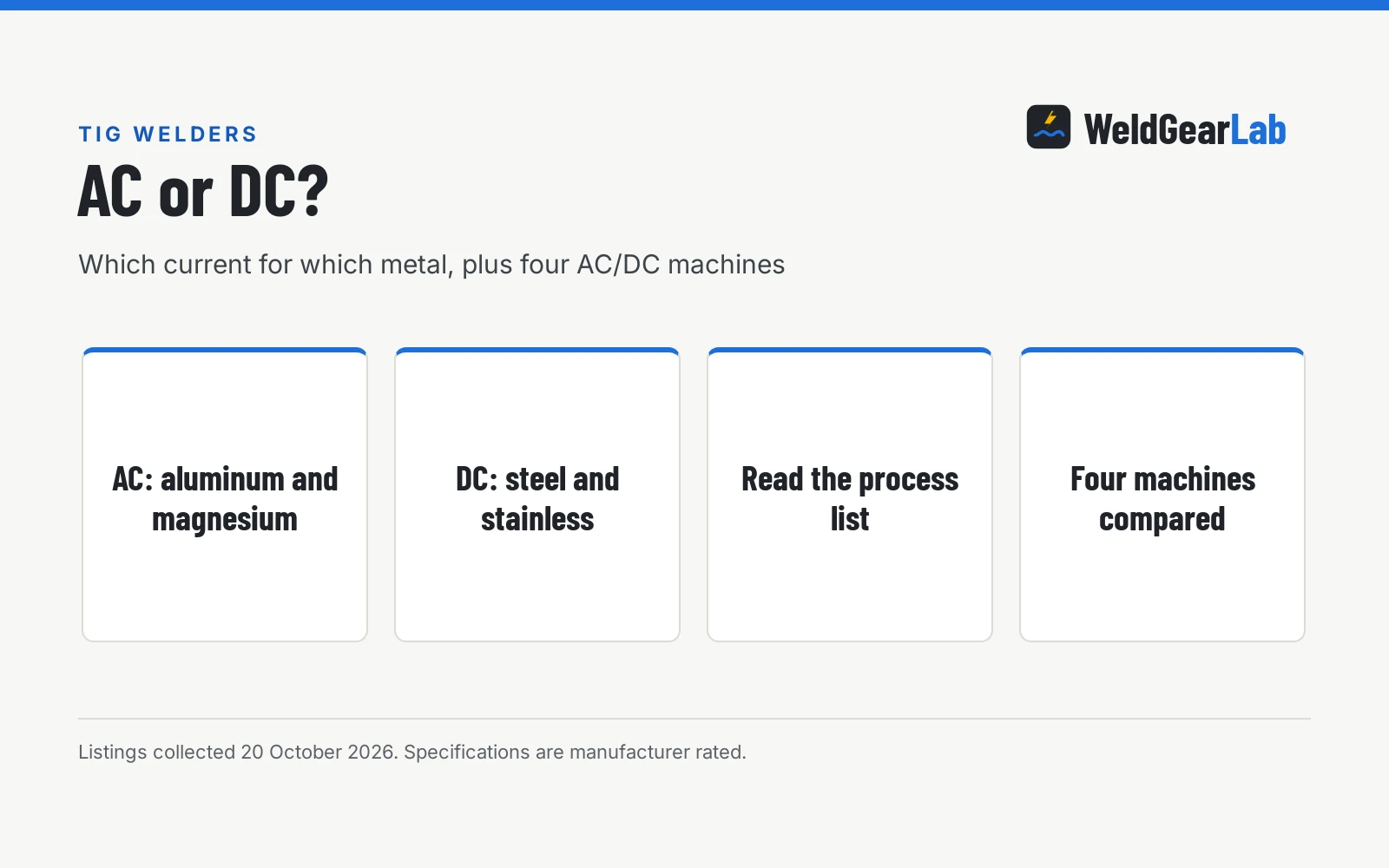
AC TIG vs DC TIG: which current for aluminum and which for steel, how to read a machine's process list, and four AC/DC TIG machines compared.

On this page
Top picks at a glance
As an Amazon Associate I earn from qualifying purchases.
- 1
 ARCCAPTAIN Mild Steel TIG Welding Rod ER70S-69.4/10View on Amazon
- 2
 Weldpro Digital TIG ACDC 250GD AC DC 250 Amp Tig/Stick WelderView on Amazon
- 3
 2021 Everlast PowerTIG 185DV AC/DC TIG Stick Welder 110/220View on Amazon
- 4
 ANDELI 10-in-1 Aluminum TIG Welder with Foot PedalView on Amazon
- 5
 Lincoln Electric Square Wave® 205 TIG Welder K5613-1View on Amazon
- 6
 H HZXVOGEN TIG Welder AC DC with PulseView on Amazon
- 7
 AWT LED Display 180A Cold TIG Welder with DC PulseView on Amazon
AC TIG vs DC TIG welder comes down to the metal: AC TIG is for aluminum and magnesium, DC TIG is for steel, stainless steel and most other metals. AC current breaks up the oxide layer on aluminum; DC current gives a stable, focused arc for steel. All four machines in this guide state AC/DC TIG, which is why AC/DC TIG welders are the standard pick for a shop that welds more than one metal.
Other welders and gear to compare
 Weldpro Digital TIG ACDC 250GD AC DC 250 Amp Tig/Stick WelderCheck price on Amazon
 2021 Everlast PowerTIG 185DV AC/DC TIG Stick Welder 110/220Check price on Amazon
 ANDELI 10-in-1 Aluminum TIG Welder with Foot PedalCheck price on Amazon
 Lincoln Electric Square Wave® 205 TIG Welder K5613-1Check price on Amazon
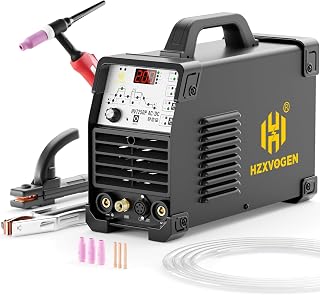 H HZXVOGEN TIG Welder AC DC with PulseCheck price on Amazon
 AWT LED Display 180A Cold TIG Welder with DC PulseCheck price on Amazon
WeldGearLab gets a commission on purchases made through links on this page, and your price stays the same. Affiliate disclosure.
AC TIG vs DC TIG welder: the difference in one paragraph
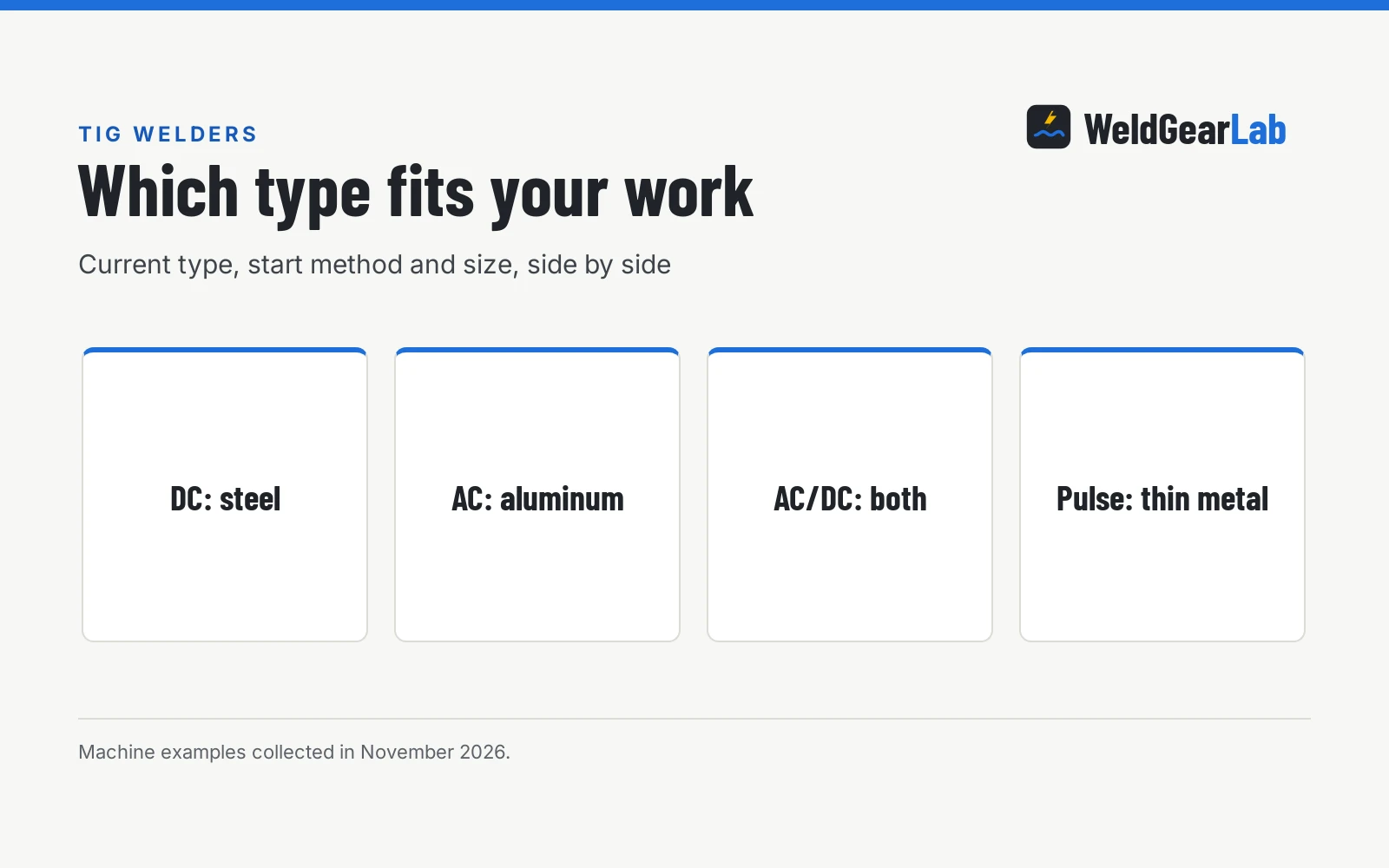
TIG welding runs an arc between a tungsten electrode and the work, shielded by argon gas. On DC, the current flows one way and the arc stays tight and stable, which suits steel, stainless and titanium. On AC, the current alternates, and the electrode-positive half of the cycle cleans oxides off aluminum while the electrode-negative half drives heat in. That cleaning action is why aluminum needs AC, and why a DC-only machine cannot weld it properly.
The practical upshot: if you only weld steel, a DC machine is enough, but an AC/DC machine keeps aluminum open for later. All four machines in this guide are AC/DC, so the choice between them is about amps, processes and features rather than current type.
Side by side
| Machine | Max amps (stated) | Processes (stated) | Voltage (stated) | Weight (stated) |
|---|---|---|---|---|
| Weldpro TIGACDC250GD | 250A | AC/DC TIG, stick, pulse | 220V | 92 lb |
| ANDELI TIG-205 Pro | 205A | 10-in-1: AC/DC TIG, pulse, cold, spot, stick | 110/220V | 44.9 lb |
| Weldpro Omni210 | 200A | MIG, flux core, stick, spool gun, AC/DC TIG | 110/220V | 81.8 lb |
| Everlast PowerTIG 185DV | 185A | AC/DC TIG, stick, pulse | 110/220V | 40 lb |
Ratings in this table are the makers’ own claims taken from each product page (19 October 2026). All four machines below are AC/DC, so each one covers both sides of this comparison.
When AC TIG is the better choice
Choose AC for aluminum and magnesium. The ANDELI listing is the most explicit here: its pulse, square wave, sine wave and trapezoidal wave controls are aimed at aluminum work, with the trapezoidal wave stated for thin plates and cold TIG for heat-sensitive metals. The Weldpro 250GD lists fully adjustable AC balance and AC frequency, the two knobs that tune aluminum welding. The Everlast and Omni210 both list AC/DC TIG with pulse. For aluminum thicker than sheet, the 250-amp Weldpro 250GD is the only one here with that ceiling.
Wave shape matters on thin aluminum. The ANDELI states square wave for a stable molten pool, sine wave for lower noise, and trapezoidal wave for low heat input on thin plates. The 250GD’s adjustable AC frequency does similar work by shaping the arc. For thin aluminum sheet, these controls are the difference between a clean bead and a burned edge.
When DC TIG is the better choice
Choose DC for steel, stainless steel and titanium. Every machine here does DC TIG, and all four list stick welding: the Weldpro 250GD, the Omni210 and the Everlast all list stick, and the ANDELI lists stick (MMA) too. DC TIG with pulse, stated on the 250GD, Everlast and ANDELI, gives finer heat control on thin stainless. For a shop that welds mostly steel with occasional aluminum, any of the four covers it, and the lighter dual-voltage machines travel better.
Stick welding is the backup process on all four. The 250GD lists MMA stick in AC or DC with a stinger included, the Omni210 lists stick with VRD, hot start and arc force, and the Everlast lists stick alongside its TIG. For outdoor or dirty steel where the TIG gas shield struggles, stick is the process that still works.
How to tell what a machine supports
Read the process list. An AC/DC TIG machine states both currents; a DC-only machine states DC TIG only and cannot weld aluminum properly. All four listings here state AC/DC explicitly, with the ANDELI going furthest: AC+DC TIG, DC pulse TIG, AC pulse TIG, lift TIG, AC and DC cold welding and spot welding in one 10-in-1 package. The Omni210 is the multi-process outlier, adding MIG, flux core, stick and spool gun to its AC/DC TIG. Check the listing for the exact processes before you buy, since model names alone do not tell you.
Also check what is not in the box. The 250GD’s water-cooled torch option needs a separately purchased water cooler, and the ANDELI’s cold welding helmet is not included. The ANDELI’s kit is otherwise the most complete: torches, electrodes, nozzles, collets and two foot pedals.
The gear: four AC/DC machines compared
The Weldpro TIGACDC250GD opens the set: a 250-amp AC/DC TIG and stick welder with fully adjustable pulse, AC balance, AC frequency, 2T-4T, start and end amps, upslope and downslope, plus a memory function. It runs on 220 volts with a NEMA 6-50 plug, weighs 92 pounds, and takes an optional water-cooled torch with a rear receptacle for a liquid cooler. The listing names thicker metals as its territory, which matches the 250-amp ceiling.
The ANDELI TIG-205 Pro is the features pick: 205 amps with 10 processes including cold TIG and spot welding, pulse plus square, sine and trapezoidal wave control, a memory function for 10 parameter sets, and a 4.3-inch LCD. It runs dual voltage 110/220V, weighs 44.9 pounds, and ships the most complete kit here: two foot pedals, aluminum and cold TIG torches, 20 tungsten electrodes, 20 nozzles and 20 collets.
The Weldpro Omni210 is the multi-process pick: 200 amps across MIG, flux core, stick, spool gun and AC/DC TIG with pulse, synergic MIG with auto-set, dual voltage 110/220V, and a digital display with VRD, hot start and arc force. At 81.8 pounds with a 12-pound wire spool capacity, it is the one-machine shop for someone who welds with wire and TIG both.
The Everlast PowerTIG 185DV is the portable pick: 185 amps of AC/DC TIG and stick on dual voltage 110/220V, with a digitally controlled IGBT inverter, TIG pulse at 1 or 50 pulses per second, and a pedal package. At 40 pounds it is the lightest here and the easiest to carry to the job. The listing claims a wide adjustment range and strong duty cycle against similar models.
Foot pedals and torches
Three listings include foot pedals: the 250GD with an SSC rocker-style pedal, the Omni210 with a rocker-style pedal, and the ANDELI with two foot pedals. The Everlast ships a pedal package. A pedal gives hands-free amperage control, which is how TIG welders taper off at the end of a bead. Torch options vary: the 250GD offers CK Worldwide air/gas or liquid-cooled torches with 25-foot cables, the Omni210 includes a KT26 TIG torch with a trigger switch, and the ANDELI ships aluminum and cold TIG torches. Match the torch to the amps you will run.
Weight and size decide where the machine lives. The 250GD at 92 pounds is a shop machine on a cart, the Omni210 at 81.8 pounds likewise, the ANDELI at 44.9 pounds is movable, and the Everlast at 40 pounds is the one you carry to the job. Dual voltage on the last three means 110V where that is all you have; the 250GD wants its 220V NEMA 6-50.
FAQ for welders
Can I weld aluminum with a DC TIG welder?
Not properly. Aluminum needs the cleaning action of AC to break up its oxide layer. All four machines here are AC/DC, so each one welds aluminum on AC and steel on DC.
What does AC balance do?
It sets how much of the AC cycle cleans versus penetrates. The Weldpro 250GD lists fully adjustable AC balance and AC frequency, the controls that tune aluminum welding.
Do I need pulse for TIG?
Pulse helps on thin metal by lowering average heat input. The 250GD, Everlast and ANDELI all list pulse TIG; the ANDELI adds square, sine and trapezoidal wave shapes.
What voltage do these need?
The 250GD lists 220 volts with a NEMA 6-50 plug. The Omni210, Everlast and ANDELI list dual voltage 110/220V, so they run on household 110V power or on 220V.
Can one machine do MIG and TIG?
The Omni210 does: MIG, flux core, stick, spool gun and AC/DC TIG in one 200-amp machine. The other three are TIG and stick focused, with the ANDELI adding cold and spot welding.
Which is best for a beginner?
The ANDELI’s pulse and wave controls plus its 4.3-inch LCD make settings visible, and the listing calls pulse TIG easy for beginners. The Omni210’s synergic MIG auto-set helps on the wire side. Match the machine to the metal you will weld first.
Related: the best TIG welder for aluminum roundup.