TIG Welder Tungsten Tips: Choosing and Prep
Tungsten tips for TIG welding: read the color band, match the diameter to the joint, and grind the point at the right angle for AC and DC work.

On this page
Top picks at a glance
As an Amazon Associate I earn from qualifying purchases.
- 1
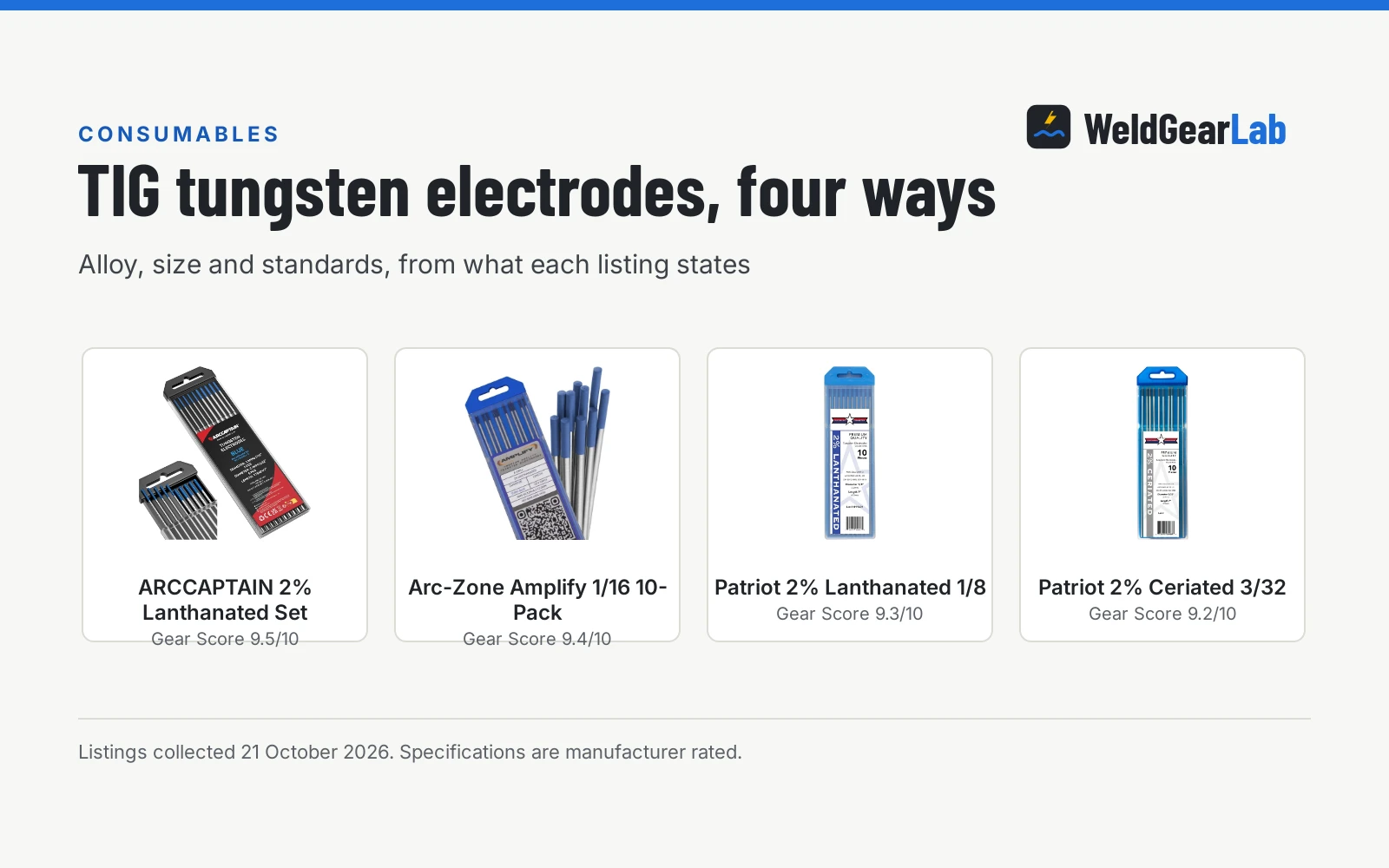
 ARCCAPTAIN TIG Tungsten9.5/10View on Amazon
- 2
 Arc-Zone Amplify Tungsten Electrode for TIG Welding9.4/10View on Amazon
- 3
 TIG Welding Electrodes 2% Lanthanated WL209.3/10View on Amazon
TIG welding lives or dies on the tip of the tungsten. A dull, balled or contaminated point makes the arc wander, and the puddle follows it. These tig welder tungsten tips cover how to read the color band, pick a diameter, grind the point and know when to change it, so the arc starts where you point it.
This guide links to our product roundups, where WeldGearLab gets a commission on purchases made through links on this page, and your price stays the same. Read our affiliate disclosure.
Tig welder tungsten tips: what the color band means
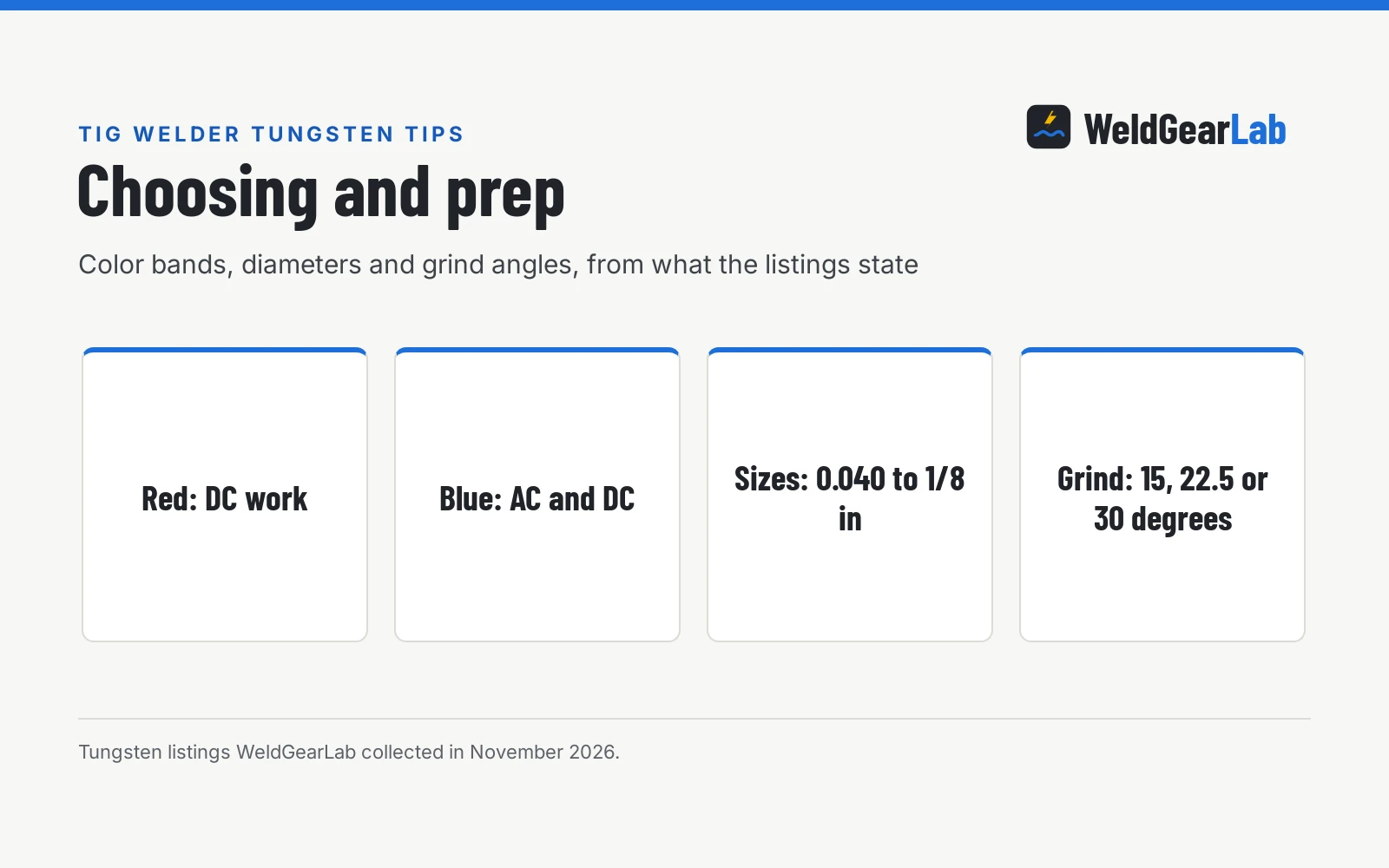
The color band on a tungsten electrode names its type. Red marks thoriated tungsten, coded WT20, and blue marks lanthanated tungsten, coded WL20. The listings also include black ceriated tungsten, coded WC20. Read the band on the electrode itself, not the color of the pack, since packs and labels vary.
Red thoriated tungsten suits DC work. The listings name copper alloys, nickel alloys, titanium alloys and stainless steel for red, and the YESWELDER red listings state conformance to AWS A5.12M/A5.12:2009. Blue lanthanated tungsten suits AC and DC work. The ARCCAPTAIN blue listing names aluminum alloys, magnesium alloys, nickel alloys, copper alloys, titanium alloys and low-alloyed steel, and states the same AWS standard. Blue lanthanated is also the non radioactive type in the listings, while red thoriated contains thorium, so treat red and blue as different electrodes, not as the same rod in a different color.
Black ceriated tungsten appears in the listings as a 1.6 mm rod for iron, carbon steel and stainless steel, with cerium oxide content stated at CeO2 1.93 percent or higher. Match the type to the metal and the current before you buy, and keep the colors separate in the shop so a red rod never ends up in an AC torch by mistake.
Side by side
| Red thoriated (WT20) | Blue lanthanated (WL20) | Notes | |
|---|---|---|---|
| Color code | Red | Blue | Read the band on the electrode |
| Current | DC | AC and DC | Blue suits both |
| Metals in the listings | Copper, nickel, titanium, stainless steel | Aluminum, magnesium, nickel, copper, titanium, low-alloy steel, non-corroding steels | Match the listing to the metal |
| Standard stated | AWS A5.12M/A5.12:2009 | AWS A5.12M/A5.12:2009 (ARCCAPTAIN), A5.12M/A5.12:2036 (Midwest) | The blue listings do not all state the same year |
| Diameters in the listings | 1/16, 3/32, 1/8 in | 0.040, 1/16, 3/32 in | Diameters are in inches |
The ARCCAPTAIN and YESWELDER listings state AWS A5.12M/A5.12:2009, while the Midwest blue listing states A5.12M/A5.12:2036. The standard alone does not pick a winner, so read the year on the listing you buy. The choice follows the current and the metal: DC work on stainless steel points to red, while aluminum and other AC work points to blue.
Picking the diameter
Diameter is the size that matters at the torch, and the listings here run from 0.040 inch to 1/8 inch. Common sizes are 1/16 inch, 3/32 inch and 1/8 inch, with 0.040 inch at the fine end of the range. The ARCCAPTAIN and YESWELDER electrodes in the listings measure 7 inches long, while the LD-Teemm ceriated rod measures 450 mm long, so check the length on the listing before you buy.
Pack counts vary: the listings show 10-pack boxes and a mixed pack with 5 pieces of 1/16 inch and 5 pieces of 3/32 inch. Buy the size you use most in the larger pack, and keep a spare of the next size up for thicker joints.
Grinding the point
Grind the point with the lines running along the length of the electrode, not around it, so the arc stays centered on the tip. A dedicated sharpener keeps the angle steady: the YESWELDER sharpener in the listings supports 0.040, 1/16, 3/32 and 1/8 inch electrodes at angles of 15, 22.5 and 30 degrees, with 6 speeds, a cut-off slot for damaged tips and a dust cover that contains the particles from grinding. It runs on 110V and states a 1 year warranty. The best tungsten electrode grinder guide covers dedicated sharpeners.
When the tip balls up, splits or picks up filler metal, cut it back and grind a fresh point instead of welding on. A clean point strikes the arc fast and holds it steady; a dirty point wanders and spits. Keep a spare electrode of the same type and size at the bench so a bad tip costs a swap, not the job.
Setting the tungsten in the torch
Seat the electrode in the collet with the point out past the cup, and keep the distance from the tip to the work short. The LD-Teemm listing states a distance of 1 to 3 mm between the tungsten needle and the workpiece, with the gas fed in advance and the tip not touching the work. Set the stick-out by the joint and the cup size, then check the arc starts clean before you run the bead.
Tungsten dust and arc light. Grinding tungsten makes fine dust, so grind with the dust cover on and ventilation running, and keep the dust out of the air you breathe. Thoriated tungsten contains thorium, so collect the dust rather than sweeping it into the shop air. Wear a welding helmet for the arc and safety glasses under it when grinding. See the OSHA welding overview and our Safety Disclaimer.
FAQ for welders
What color tungsten should I use for aluminum?
Blue lanthanated tungsten. The listings name aluminum alloys for blue WL20 electrodes, which suit AC and DC work. Red thoriated tungsten is listed for DC work, so it does not cover the AC side aluminum needs.
What size tungsten do I need?
Match the diameter to the joint and the amps, then check the listing. The sizes in the listings run from 0.040 inch to 1/8 inch, with 1/16 inch and 3/32 inch in the middle. The sharpener in the listings supports each of these sizes, so the same sharpener covers the range.
Can I grind tungsten on a bench grinder?
You can, but a dedicated sharpener holds the angle steady. The YESWELDER sharpener in the listings grinds at 15, 22.5 and 30 degrees with 6 speeds and a cut-off slot. Whatever you grind on, keep the grind lines along the length of the electrode and use the dust cover or ventilation to catch the dust. See the tungsten grinder vs bench grinder comparison.
How do I know when to change a tungsten tip?
Change it when the point balls up, splits, or picks up filler metal, or when the arc wanders and will not stay on the joint. Cut the damaged end off and grind a fresh point. Keep a spare of the same type and size at the bench.
Is lanthanated tungsten better than thoriated?
Blue lanthanated is the simpler pick for a shop that welds both AC and DC: it suits AC and DC work, covers aluminum and steel, and is the non radioactive type in the listings. Red thoriated suits DC work on stainless steel, copper, nickel and titanium. Match the type to the metal and the current, not to habit.
Related: best tungsten electrode for aluminum, best tungsten electrode for beginners, how to sharpen tungsten for TIG welding, and lanthanated vs thoriated tungsten. Also see the welding consumables hub.