Analog vs Digital Tig Welder: Which One Should You Buy?
Analog vs digital TIG welder: knobs and dials against displays with pulse, memory and AC tuning, with what each control style buys you from the listings.

On this page
Top picks at a glance
As an Amazon Associate I earn from qualifying purchases.
- 1
 HONE Stick Welder 110vView on Amazon
- 2
 2021 Everlast PowerTIG 185DV AC/DC TIG Stick Welder 110/220View on Amazon
- 3
 ARCCAPTAIN DC 5 In 1 TIG Welder With PulseView on Amazon
- 4
 Sunstac 200A TIG Welder with PulseView on Amazon
- 5
 Lincoln Electric Square Wave® 205 TIG Welder K5613-1View on Amazon
- 6
 AWT LED Display 180A Cold TIG Welder with DC PulseView on Amazon
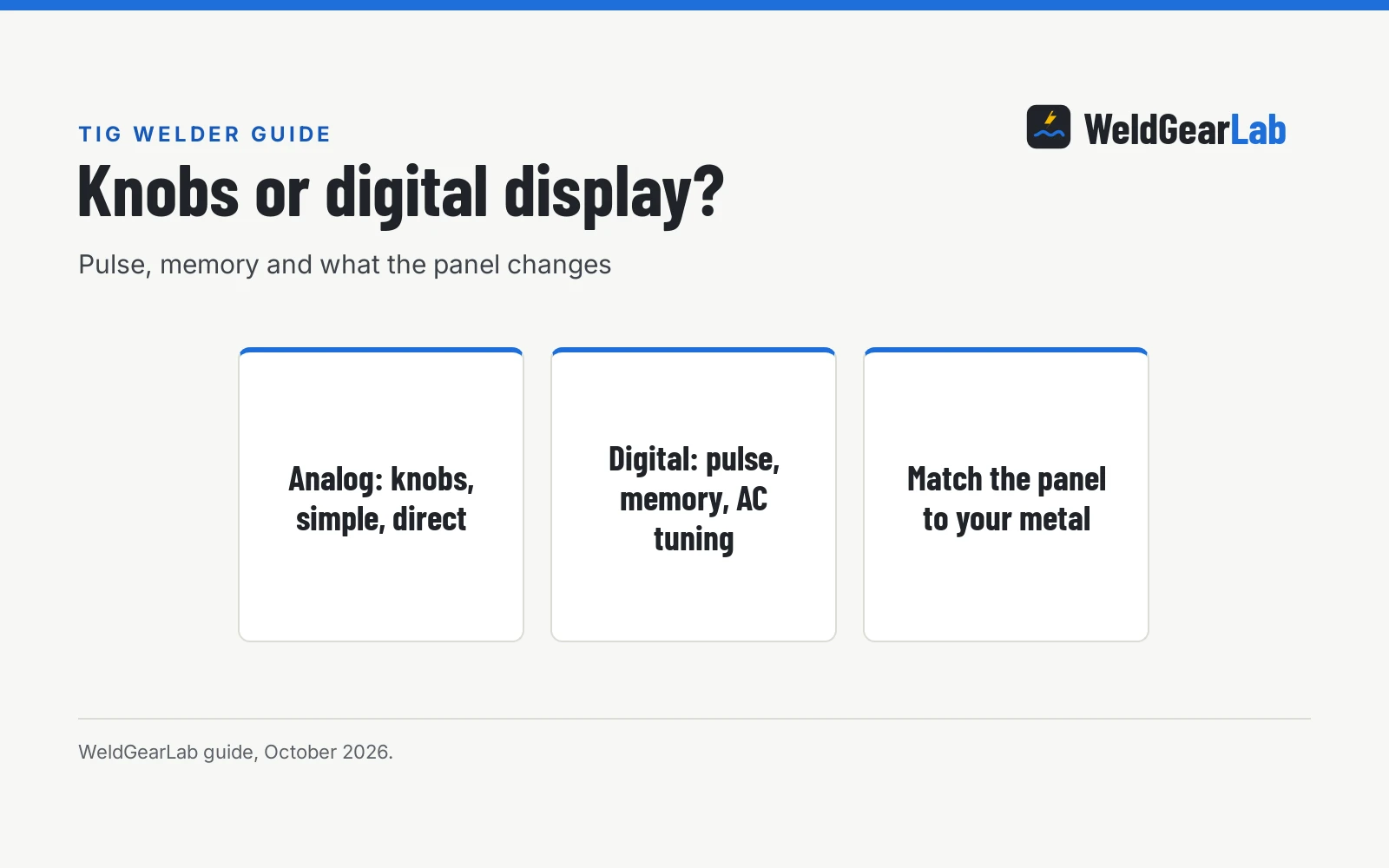
Analog vs digital TIG welder is a question about the control panel, not the welding process. An analog TIG welder sets amperage and basic functions with knobs and dials; a digital TIG welder sets them through a display, with features like pulse, memory and 2T/4T sequencing. The Weldpro TIGACDC250GD is the digital example in these listings: a 250-amp AC/DC machine with start and end amps, upslope, downslope, fully adjustable pulse, AC balance, AC frequency and a memory function. Choose digital for aluminum and thin metals where pulse and AC balance matter; choose analog for straightforward steel work where knobs are enough.
Other welders and gear to compare
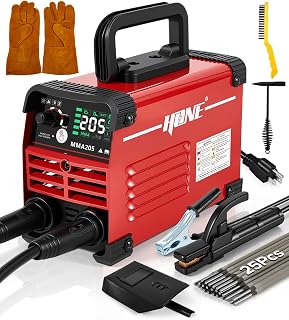 HONE Stick Welder 110vCheck price on Amazon
 2021 Everlast PowerTIG 185DV AC/DC TIG Stick Welder 110/220Check price on Amazon
 ARCCAPTAIN DC 5 In 1 TIG Welder With PulseCheck price on Amazon
 Sunstac 200A TIG Welder with PulseCheck price on Amazon
 Lincoln Electric Square Wave® 205 TIG Welder K5613-1Check price on Amazon
 AWT LED Display 180A Cold TIG Welder with DC PulseCheck price on Amazon
WeldGearLab gets a commission on purchases made through links on this page, and your price stays the same. Affiliate disclosure.
Analog vs digital TIG welder: what actually changes
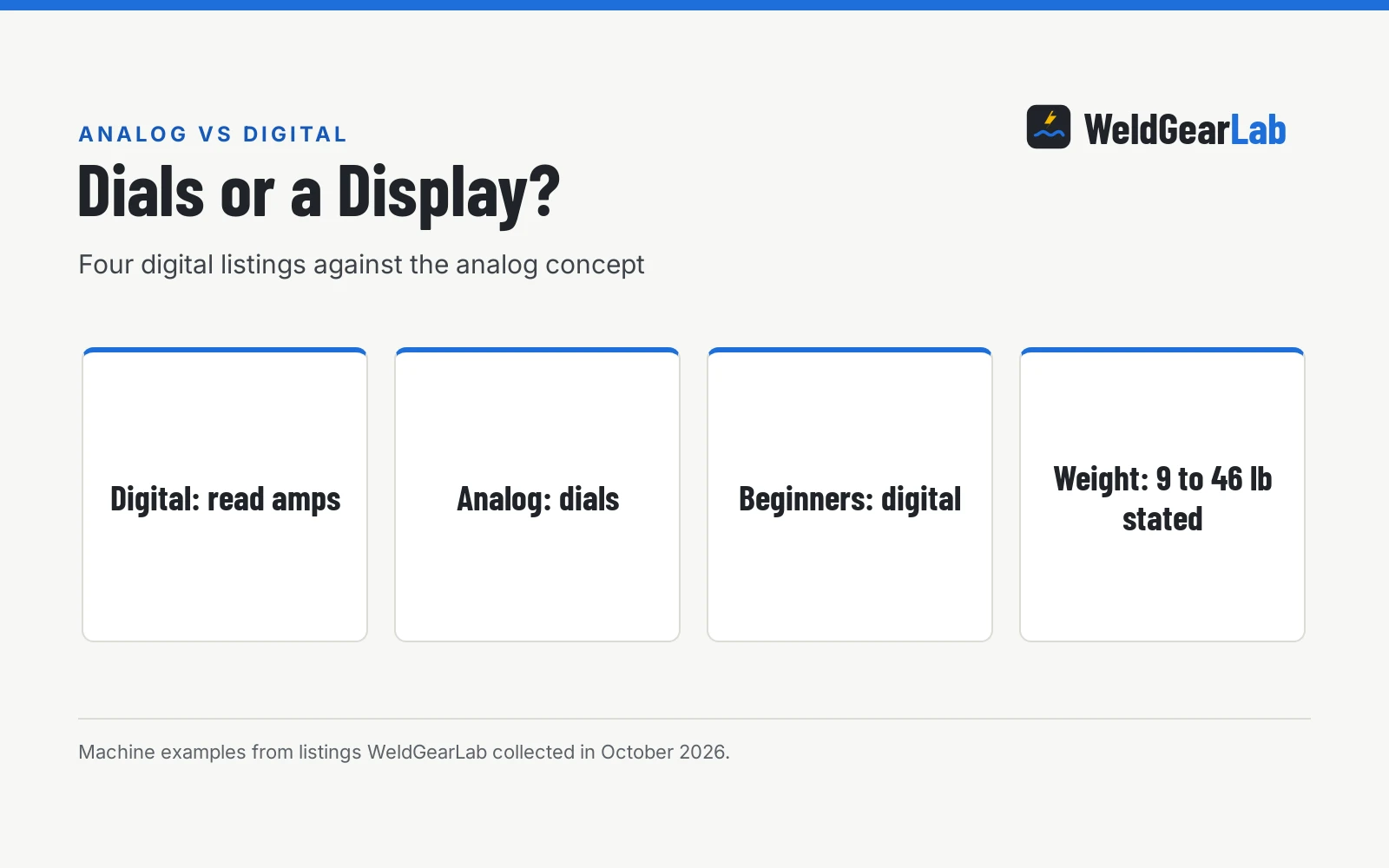
The arc is the same either way: a tungsten electrode, shielding gas and a filler rod you feed by hand. What changes is how you tell the machine what to do. Analog control is one or two knobs, amperage and maybe downslope, with the setting wherever you left the dial. Digital control puts the settings on a display, often with a dial for adjustment, and adds functions that simple analog panels typically do not offer: pulse with adjustable rate, stored memory slots, 2T/4T trigger logic, and AC balance and frequency for aluminum. The line blurs in the middle: the Everlast PowerTIG 185DV is a digitally controlled IGBT inverter whose listing advertises easy-to-read analog-style settings, digital guts with a knob feel.
Side by side
| Analog control | Digital control | Notes | |
|---|---|---|---|
| Setting amps | Knob or dial | Display plus dial or buttons | Amps set by hand on analog, shown on digital |
| Pulse | Rare | Common: 1 or 50 pps (Everlast), adjustable (Weldpro) | Pulse is rare on analog, common on digital |
| Memory slots | No | Yes (Weldpro memory function) | Digital recalls settings |
| AC balance and frequency | No | Yes (Weldpro) | Digital-only tuning |
| 2T/4T trigger | Basic | Yes (Weldpro) | Digital adds full trigger modes |
| Synergic help | No | Yes (TOOLIOM) | Digital-only help |
| Display | None or small readout | Up to 7-inch LCD (YESWELDER) | Digital shows settings on screen |
| Example | HONE 20-205A lift TIG | Weldpro 250A AC/DC | HONE analog-style, Weldpro digital |
Feature lists are manufacturer stated; check the listing’s exact functions before you buy.
What digital control buys you
Pulse is the headline digital feature. It alternates the current between a high and low value to control heat input, which matters on thin metals and heat-sensitive joints. The Everlast listing states two pre-programmed pulse settings, 1 or 50 pulses per second; the TOOLIOM CT-520D listing describes pulsed TIG with intelligent high-low alternation for thin metals; the Weldpro listing goes further with fully adjustable pulse plus start and end amps, upslope and downslope. Memory is the second digital win: the Weldpro 250GD stores settings so a repeat job recalls the same program instead of re-dialing it.
For aluminum, digital control adds AC balance and AC frequency, both stated on the Weldpro listing, which tune the cleaning and penetration of the AC arc. Synergic control, stated on the TOOLIOM listings, goes further for beginners: set one parameter and the machine picks matching parameters from its built-in data. And the display itself is a feature: the YESWELDER MCT-520 uses a 7-inch LCD the listing calls 30 percent larger than standard models, readable with gloves on, against the small dials of an analog panel.
What analog simplicity buys you
Fewer menus means fewer ways to get lost. An analog-style machine like the HONE MMA205, a 20 to 205 amp 110V unit at 4.4 lb with lift TIG, sets current with a dial and welds; hot start, arc force and anti-stick handle the arc behavior without a settings tree. For steel practice, tacking and repair, that is the whole job. Analog panels also keep working the way they always have: no firmware quirks, no accidentally changed memory slot, and a knob you can adjust by feel. The trade is precision you cannot dial in, because the functions do not exist: no pulse, no memory, no AC balance.
How to tell what a machine offers
Read the feature list, not the word digital. A listing that names pulse, memory, 2T/4T, AC balance or synergic control is selling digital functions, like the Weldpro, the TOOLIOMs and the YESWELDER here. A listing that names amperage range, hot start and lift TIG, like the HONE 20 to 205 amp or the Rotvik 20 to 200 amp at 12.03 lb, is selling a simpler machine even when it carries a digital display for the readout. Weight and size tell the rest of the story: the 92 lb Weldpro 250GD is a shop machine on 220 volts with a NEMA 6-50 plug, while the 4.4 lb HONE is a carry-it-anywhere 110V unit.
Which one should you buy?
- Choose digital if you weld aluminum, thin stainless or heat-sensitive parts, where pulse and AC balance earn their keep, or you repeat jobs that memory slots recall.
- Choose analog if you weld mild steel, practice, tack and repair, and want the shortest path from box to arc.
- Either way, match amperage to your metal: the Everlast lists 185 amps, the Weldpro lists 250 amps, and the Rotvik lists 20 to 200 amps.
FAQ for welders
Is a digital TIG welder always better?
No. Digital adds pulse, memory and AC tuning that matter for aluminum and thin metals; for straightforward steel work, an analog-style machine welds just as well with less to learn.
Do I need pulse for TIG?
Not for basic steel joints. Pulse helps on thin metals and heat-sensitive parts by alternating high and low current; the Everlast lists 1 or 50 pulses per second and the Weldpro offers fully adjustable pulse.
What is 2T/4T?
Two trigger modes stated on digital machines like the Weldpro: 2T runs the arc while you hold the trigger, 4T latches it on with a press so long welds do not cramp your finger.
Can an analog machine weld aluminum?
Control type is not what decides it; AC output is. Aluminum needs AC TIG, which the 250-amp AC/DC Weldpro provides. Check for AC/DC in the specs, not just the panel style.
Is digital harder to learn?
The basics are the same: set amps and weld. Digital adds menus to explore, while synergic control, as on the TOOLIOM listings, actually simplifies setup by choosing matching parameters from built-in data.
More welding guides
Related guides are coming soon on WeldGearLab.