Parts of a Cutting Torch: Components Explained
A cutting torch breaks down into a handle, valves, mixer, lever and tip, and the tip size and series decide how the cut behaves.

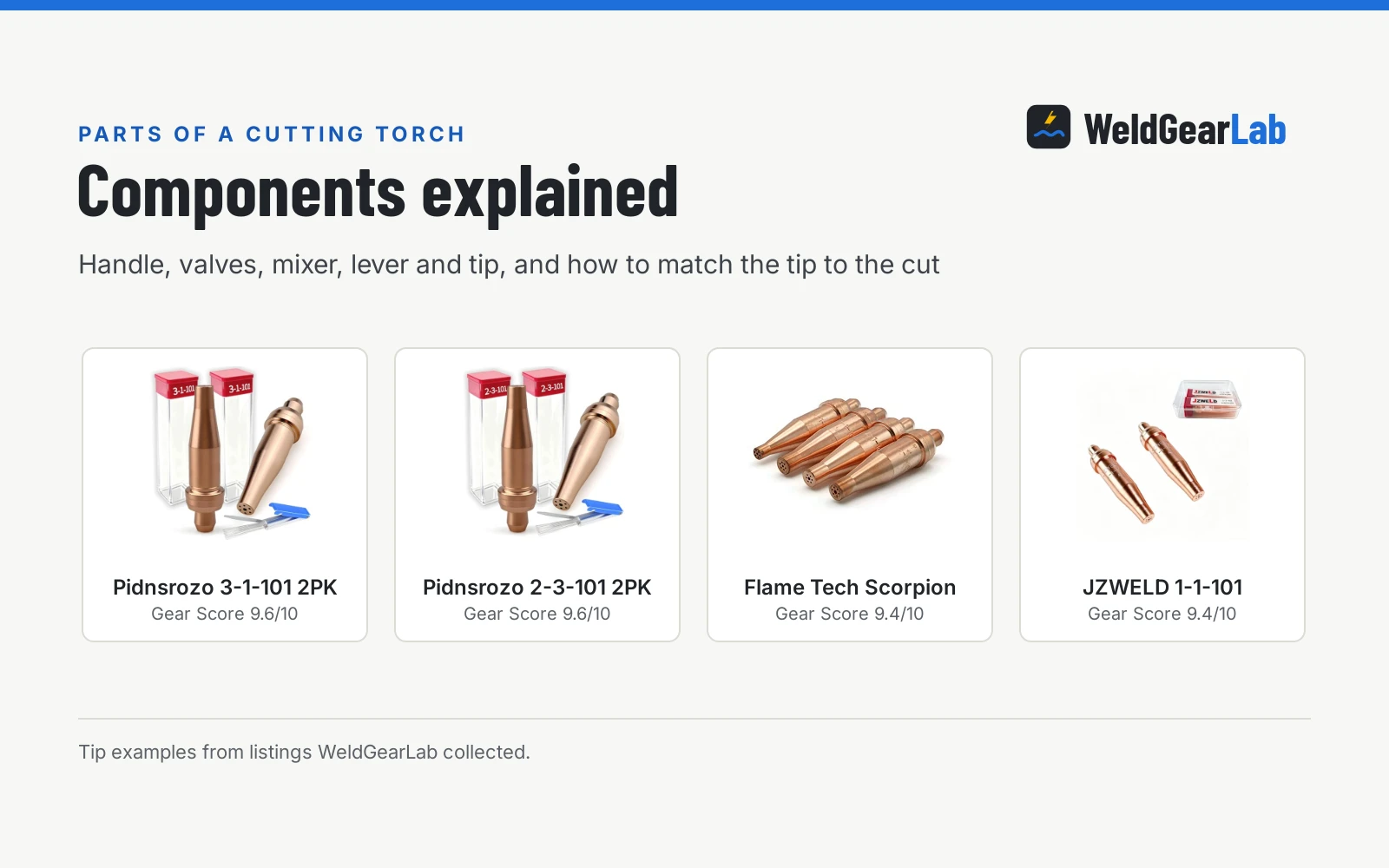
On this page
Top picks at a glance
As an Amazon Associate I earn from qualifying purchases.
- 1
 2PK 3-1-101 Acetylene Cutting Torch Tips9.6/10View on Amazon
- 2
 2PK 2-3-101 Acetylene Cutting Torch Tips9.6/10View on Amazon
- 3
 Flame Tech Scorpion Tip Acetylene Victor Style9.4/10View on Amazon
- 4
 JZWELD 0330-0005 2 Pieces 1-1-101 Acetylene9.4/10View on Amazon
A cut that wanders, a tip that pops, a flame that will not stay lit: the tip is only a single piece of the tool, and it is the first place to check when a cut goes wrong. The parts of a cutting torch work as a chain, from the handle in the hand to the tip at the plate, and knowing what each part does makes the whole tool easier to set up, light and keep lit. This guide names each part, explains what it does, and matches the tip sizes and series in this guide to the cut.
This guide links to our product roundups, where WeldGearLab gets a commission on purchases made through links on this page, and your price stays the same. Read our affiliate disclosure.
2PK 3-1-101 Acetylene Cutting Torch Tips
A 2 piece pack of 3-1-101 tips for Victor heavy duty torches, in the 1-101 series in sizes 0-1-101 through 3-1-101, with a torch tip cleaner in the box.
Pros
- Heavy duty 1-101 series in sizes 0-1-101 through 3-1-101, covering light-gauge metal through medium-thickness steel
- Copper alloy body with precision-machined orifices for a stable, concentrated flame
- Installs with no complicated tools, per the listing
- Leak-proof seal and heat-resistant base stated in the listing
Cons
- No cutting thickness stated for any size
- No warranty term stated
- Heavy duty fit only: the listing names Victor heavy duty and V-Style heavy duty torches
2PK 2-3-101 Acetylene Cutting Torch Tips
A 2 piece pack of 2-3-101 tips for Victor light and medium duty torches, in the 3-101 series in sizes 0-3-101 through 3-3-101, with a torch tip cleaner in the box.
Pros
- 3-101 series in sizes 0-3-101 through 3-3-101, covering thin-gauge trimming through medium-thickness steel
- High-purity copper alloy with precision-machined orifices for a stable, focused flame
- Tool-free installation stated in the listing
- Leak-proof seal and heat-resistant base stated in the listing
Cons
- No cutting thickness stated for any size
- No warranty term stated
- Light and medium duty only: the listing does not name heavy duty torches
Flame Tech Scorpion Tip Acetylene Victor Style
A Series 1, Type 101 tip kit in sizes 0, 1, 2 and 3 for Victor style torches, with a solid copper outer shell and single-piece construction.
Pros
- Single-piece tips with a solid copper outer shell
- Kit covers sizes 0, 1, 2 and 3 in Series 1, Type 101
- Made for Victor style torches, per the listing
- Sold as a kit, so sizes 0 through 3 arrive together
Cons
- No safety feature or certification stated in the listing
- No pack count stated: the listing says kit and sizes, not how many tips
- No cutting thickness stated for any size
- No warranty term stated
JZWELD 0330-0005 2 Pieces 1-1-101 Acetylene
A 2 piece pack of the 1-1-101 size only, in premium copper for Victor type torches, and the only tip here that states a cutting thickness, 19mm, 3/4 inch.
Pros
- States a cutting thickness: 19mm, 3/4 inch, for the 1-1-101 size
- Premium copper body stated in the listing
- 2 piece pack stated in the listing
- Made for Victor type torches, per the listing
Cons
- A single size only: the listing names 1-1-101 and no other size
- No safety feature or certification stated in the listing
- No tip cleaner stated in the listing
- No warranty term stated
Parts of a Cutting Torch, Piece by Piece
The handle is the body of the torch. It holds the valves, carries the gas passages and gives the hand something steady to hold while the flame does the work. At the back of the handle sit the hose connections for fuel gas and for oxygen, and each hose should stay on its own fitting, since the threads differ and the gases must never swap sides.
The valves meter the gas. A cutting torch has a fuel-gas valve and an oxygen valve on the handle, and the pair set the preheat flame. Open the fuel valve, light the gas, then bring in oxygen until the flame turns neutral, with a sharp inner cone and no feather at the end. The preheat flame warms the plate to ignition, and the cutting jet does the cutting.
Between the handle and the tip sits the mixer, where fuel gas and oxygen meet before they reach the tip. On a torch built for acetylene, the mixer and tip are matched to that gas, and a tip made for another fuel gas will not behave the same way. Past the mixer, the cutting oxygen lever sits under the thumb. Press it and a jet of pure oxygen hits the heated spot, burns the steel and blows the slag out of the kerf. Release it and the torch goes back to a preheat flame.
The tip is the working end. Its preheat holes shape the preheat flame and its center hole carries the cutting oxygen jet. Tip size sets how much gas flows and how thick a plate the flame can heat: a small tip suits thin sheet, a large tip suits plate that needs more heat. The tip nut holds the tip to the torch head, and a tip cleaner keeps the holes open, since a blocked hole bends the flame and roughens the cut.
Tip Sizes and Series
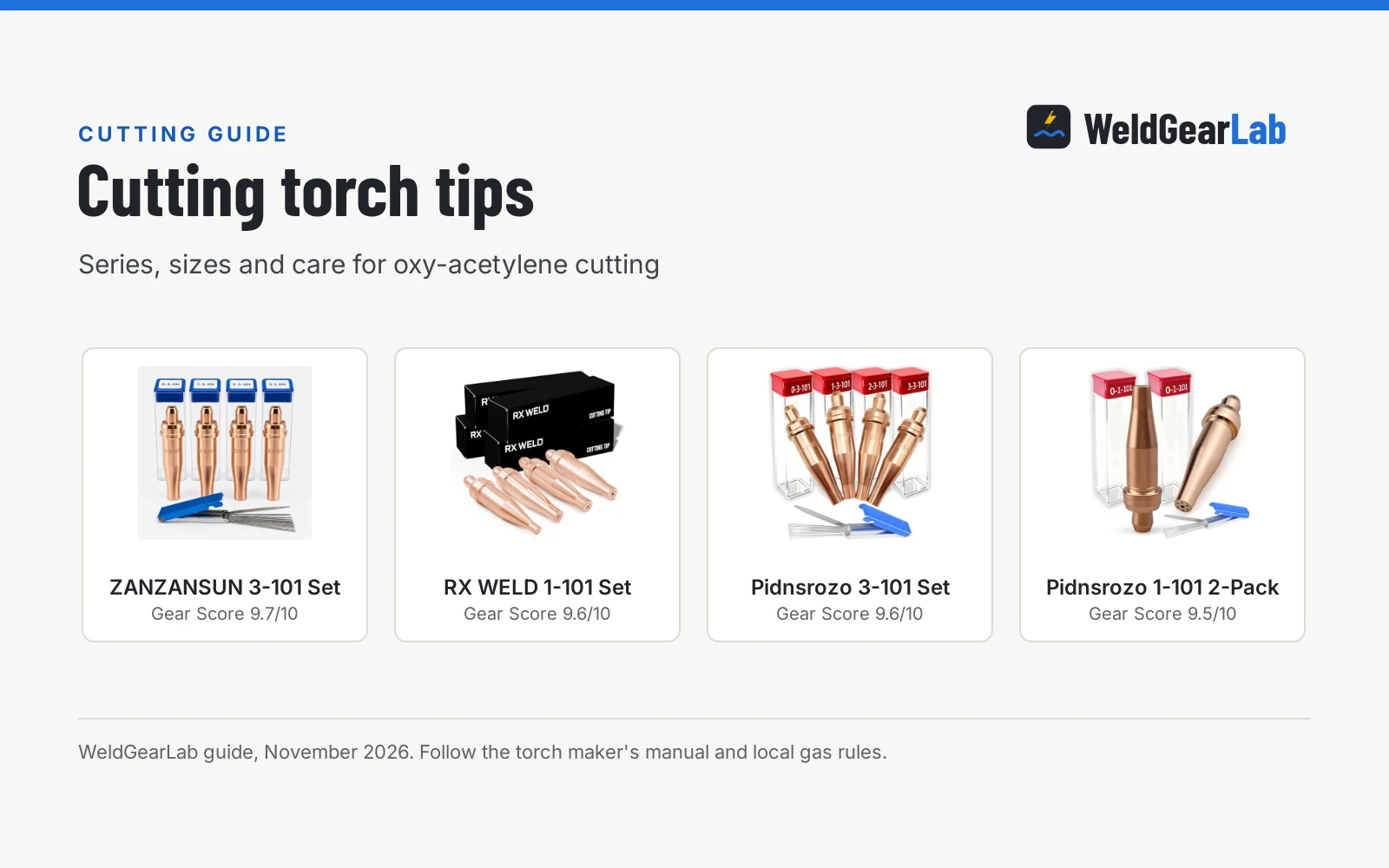
Tips carry a size and a series, and both matter. The series names the torch the tip fits: the 1-101 series fits Victor heavy duty torches, and the 3-101 series fits Victor light and medium duty torches. The size, marked on the tip, steps from size 0 up through size 3, and a larger size passes more gas for thicker plate.
The listings in this guide show both series. The 1-101 series runs in sizes 0-1-101 through 3-1-101, and the 3-101 series runs in sizes 0-3-101 through 3-3-101, though the JZWELD kit below is a single size, 1-1-101. The JZWELD 1-1-101 states a cutting thickness of 19mm, 3/4 inch, the only thickness stated anywhere in this guide, and the rest of the listings state no thickness at all. Match the series to the torch, then pick the size for the plate in front of the torch.
Side by Side
| Series | Sizes | Fuel gas | Material | |
|---|---|---|---|---|
| Pidnsrozo 3-1-101 2PK | 1-101 | 0-1-101 to 3-1-101 | Acetylene | Copper alloy |
| Pidnsrozo 2-3-101 2PK | 3-101 | 0-3-101 to 3-3-101 | Acetylene | Copper alloy |
| Flame Tech Scorpion | Series 1, Type 101 | 0, 1, 2, 3 | Acetylene | Copper |
| JZWELD 1-1-101 | 1-101 | 1-1-101 | Acetylene | Copper |
The table above lines up the tip kits in this guide by series, sizes, fuel gas and material. Series and fit come first when choosing: a 1-101 tip does not belong on a light duty torch, and a 3-101 tip does not belong on a heavy duty torch. Size comes next, and the cleaner in the box keeps the tip holes open between cuts.
Cutting Torch Tip Kits Scored
The tip is the part that shapes the preheat flame and carries the cutting jet, so the kits below are ranked on how fully each listing states its series, sizes, fit and safety features.
FAQ for welders
What does each part of a cutting torch do?
The handle carries the valves and gas passages, the valves meter fuel gas and oxygen, the mixer blends them, the cutting oxygen lever releases the cutting jet, and the tip shapes the preheat flame and carries that jet to the plate. The tip nut holds the tip on the torch head. When a cut goes wrong, check the tip holes first, since a blocked hole bends the flame.
How do I pick a tip size?
Match the series to the torch, then match the size to the plate. A 1-101 series tip fits a Victor heavy duty torch, a 3-101 series tip fits a Victor light or medium duty torch, and sizes run from size 0 through size 3 in both series here, except the JZWELD kit, which is the 1-1-101 size only. The only stated cutting thickness in this guide is the JZWELD 1-1-101 at 19mm, 3/4 inch, so for other sizes go by the listing and the torch manual.
Can I use an acetylene tip with another fuel gas?
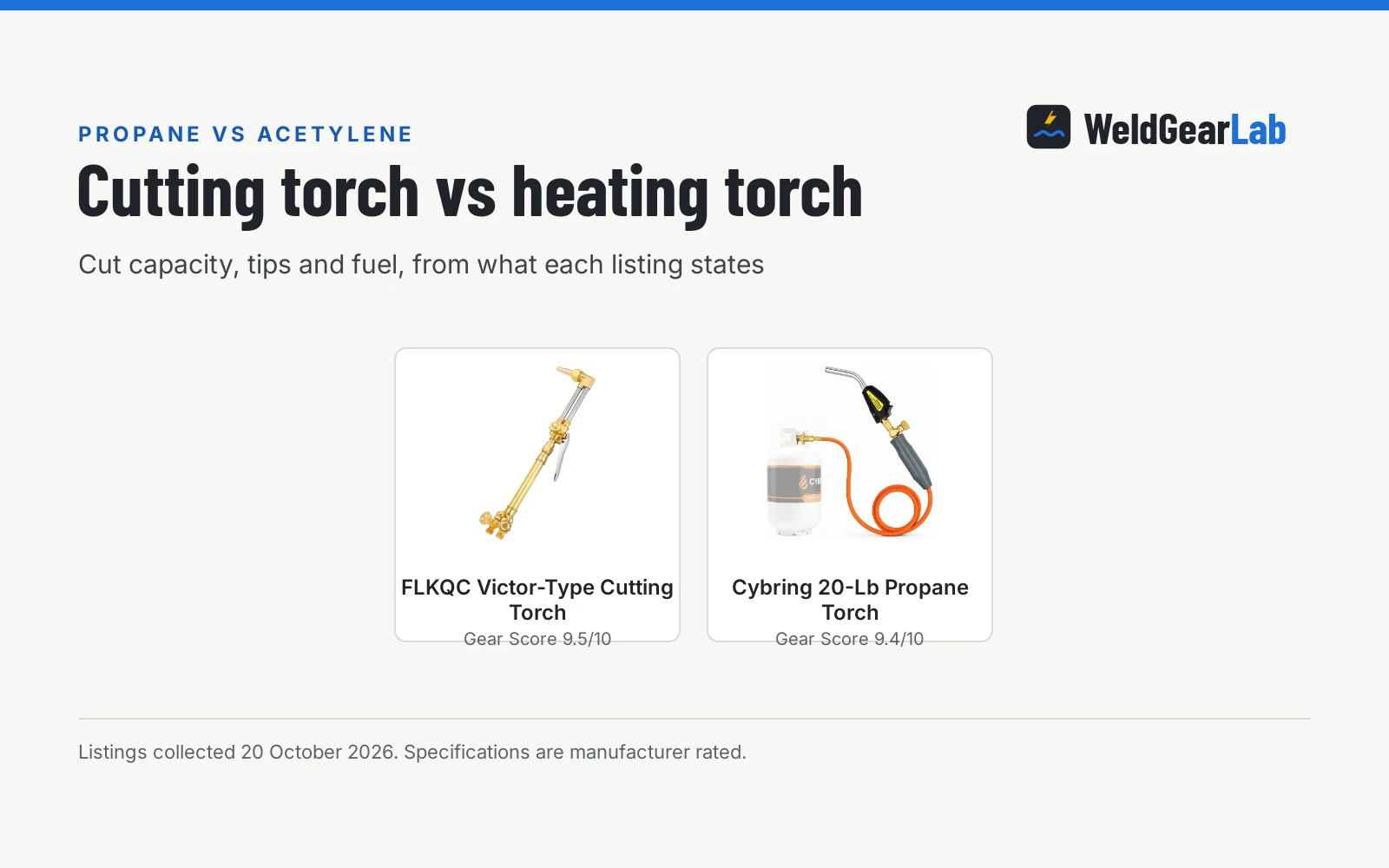
No. The tips in this guide are acetylene tips, and the mixer and tip are matched to acetylene. A tip made for another fuel gas will not behave the same way, so match the tip to the gas the torch is set up for. See the propane comparison for how the gases differ: propane vs acetylene cutting torch.
Why does a tip need a cleaner?
The preheat holes and the center hole must stay open for the flame to hold its shape. A blocked hole bends the flame, roughens the cut and can pop. The Pidnsrozo kits in this guide include a torch tip cleaner, and a dedicated cleaner guide covers the tool: best cutting torch tip cleaner tool.
When should a cutting tip be replaced?
Replace a tip when the holes will not clean up, the flame will not hold its shape, or the seat is worn and the seal leaks. A tip that pops, backfires or will not stay lit after cleaning may be worn out, but check the tip nut and the seat first, since a loose nut or a damaged seat can cause the same trouble. Keep a spare from the same series on hand, since the size and series must match the torch.
Related: best oxy acetylene torch kit for home shop, best torch tip for cutting thick metal, oxy propane vs oxy acetylene torch, and the metal fab tools hub.