ESAB Rebel EMP 215ic Review: Pros, Cons & Who It’s For
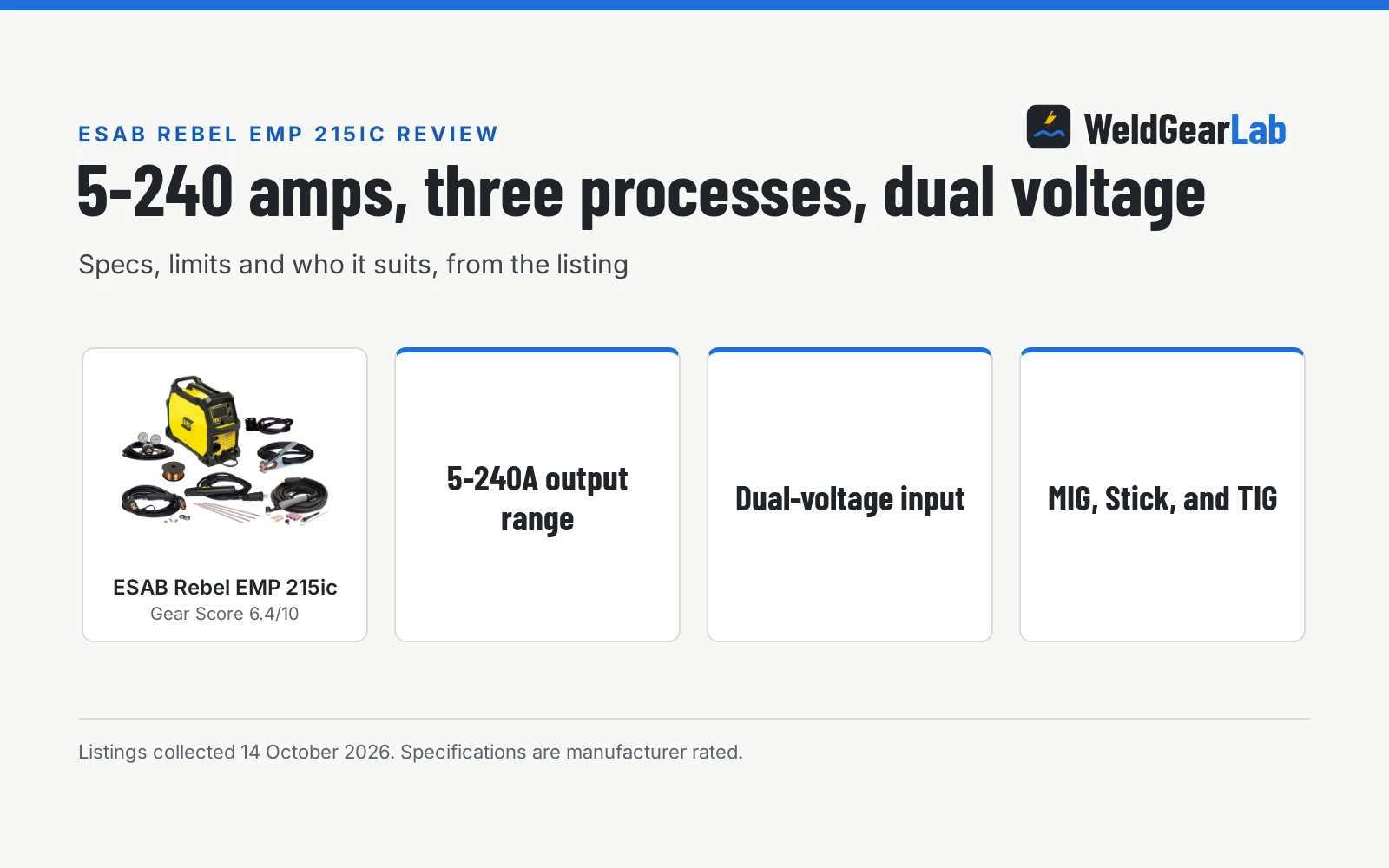
An ESAB Rebel EMP 215ic review from the listing: a 5-240A multi-process welder with dual-voltage input, its specs, gaps, and who it fits.

Welding machines for home, farm and small shop work: MIG, TIG, stick and multi-process. We compare them on input voltage, rated output, duty cycle at a stated amperage, and what comes in the box.
An ESAB Rebel EMP 215ic review from the listing: a 5-240A multi-process welder with dual-voltage input, its specs, gaps, and who it fits.
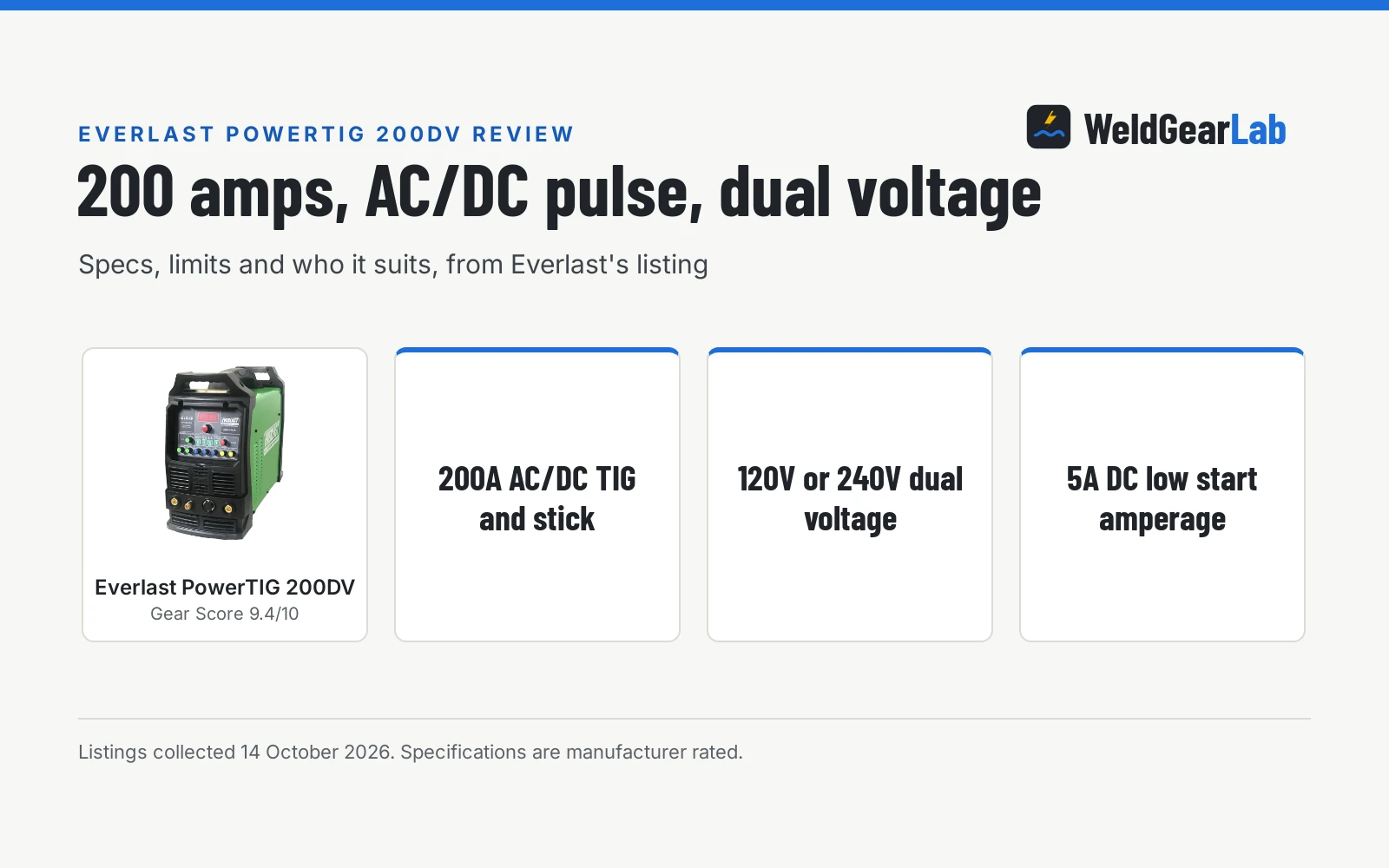
An Everlast PowerTIG 200DV review from the listing: a 200A AC/DC pulse TIG welder for 120V or 240V shops, with its low-amp starts, gaps…
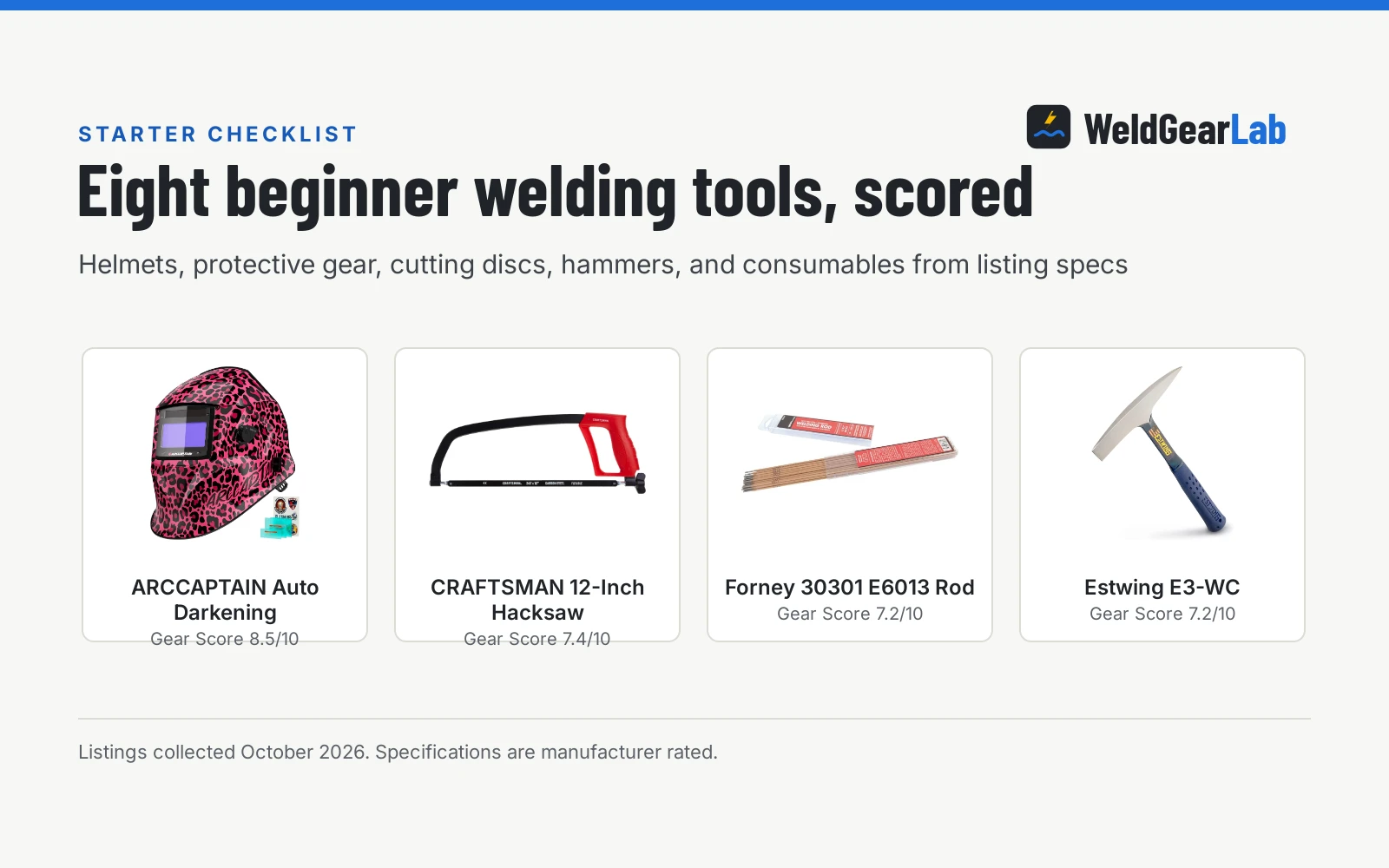
Eight essential welding tools for beginners, compared on stated specifications, build quality, safety certifications, and manufacturer warranty terms.
Lift TIG and scratch start TIG ignite the arc differently on basic DC machines, affecting tungsten wear, weld cleanliness, and torch setup.
Air cooled and water cooled TIG torches handle heat differently, shaping torch size, duty cycle, cable weight and cooler requirements for your welding setup.
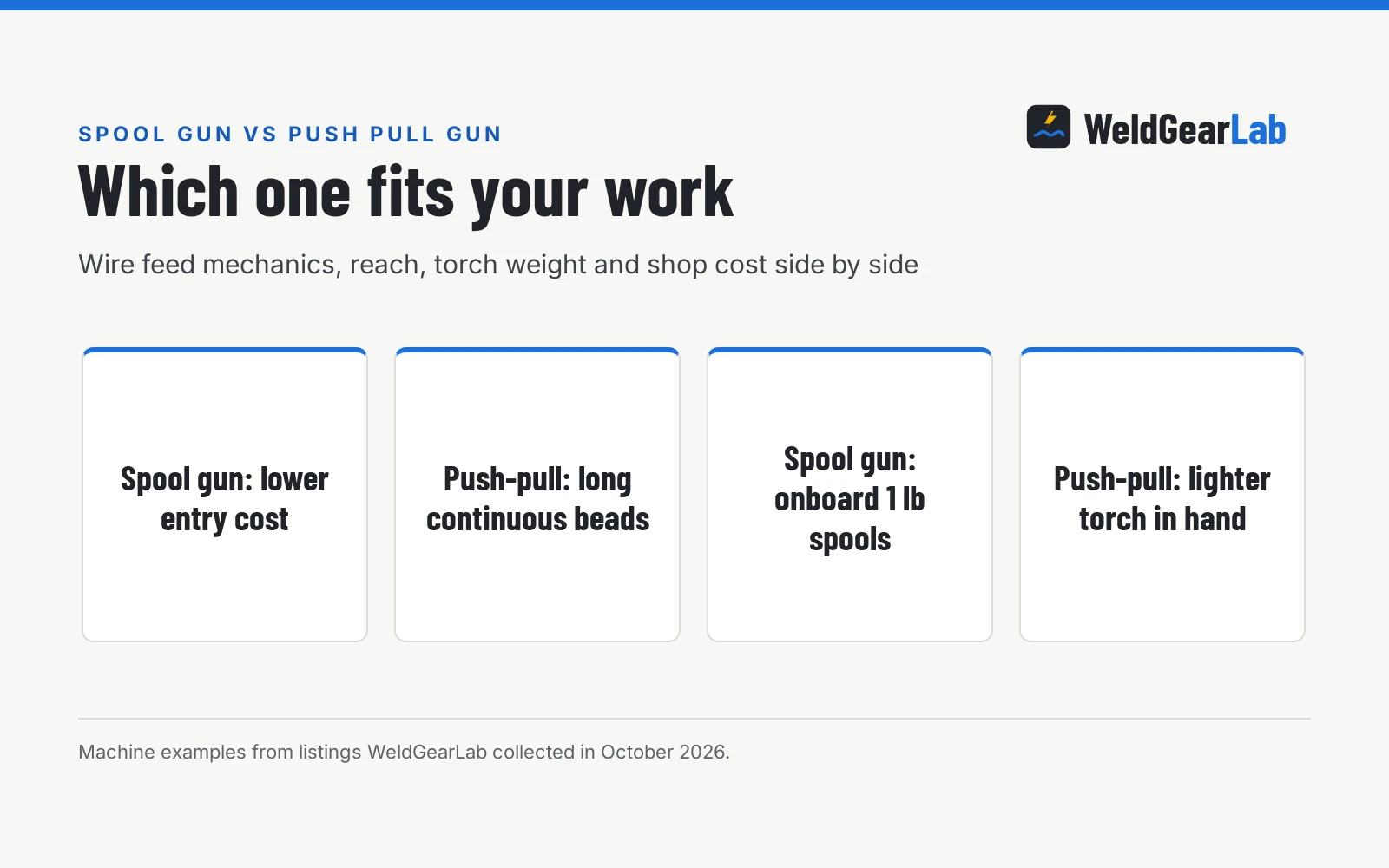
Spool guns and push-pull guns solve aluminum wire feeding in different ways, balancing gun weight, reach, wire spool capacity, and shop budget.
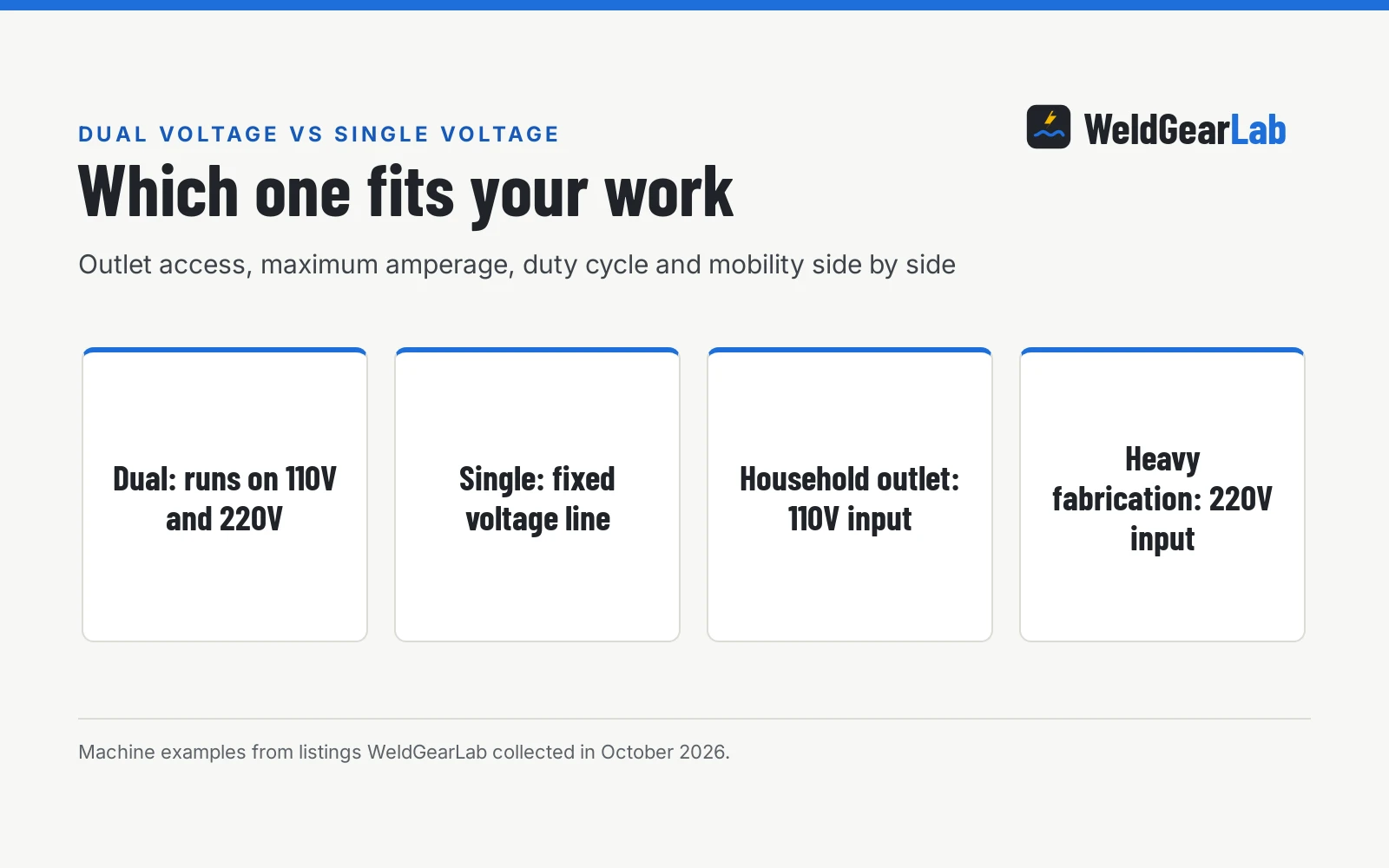
Dual voltage and single voltage welders differ in power flexibility, output, and shop mobility, deciding whether you can weld anywhere or need dedicated 240V.
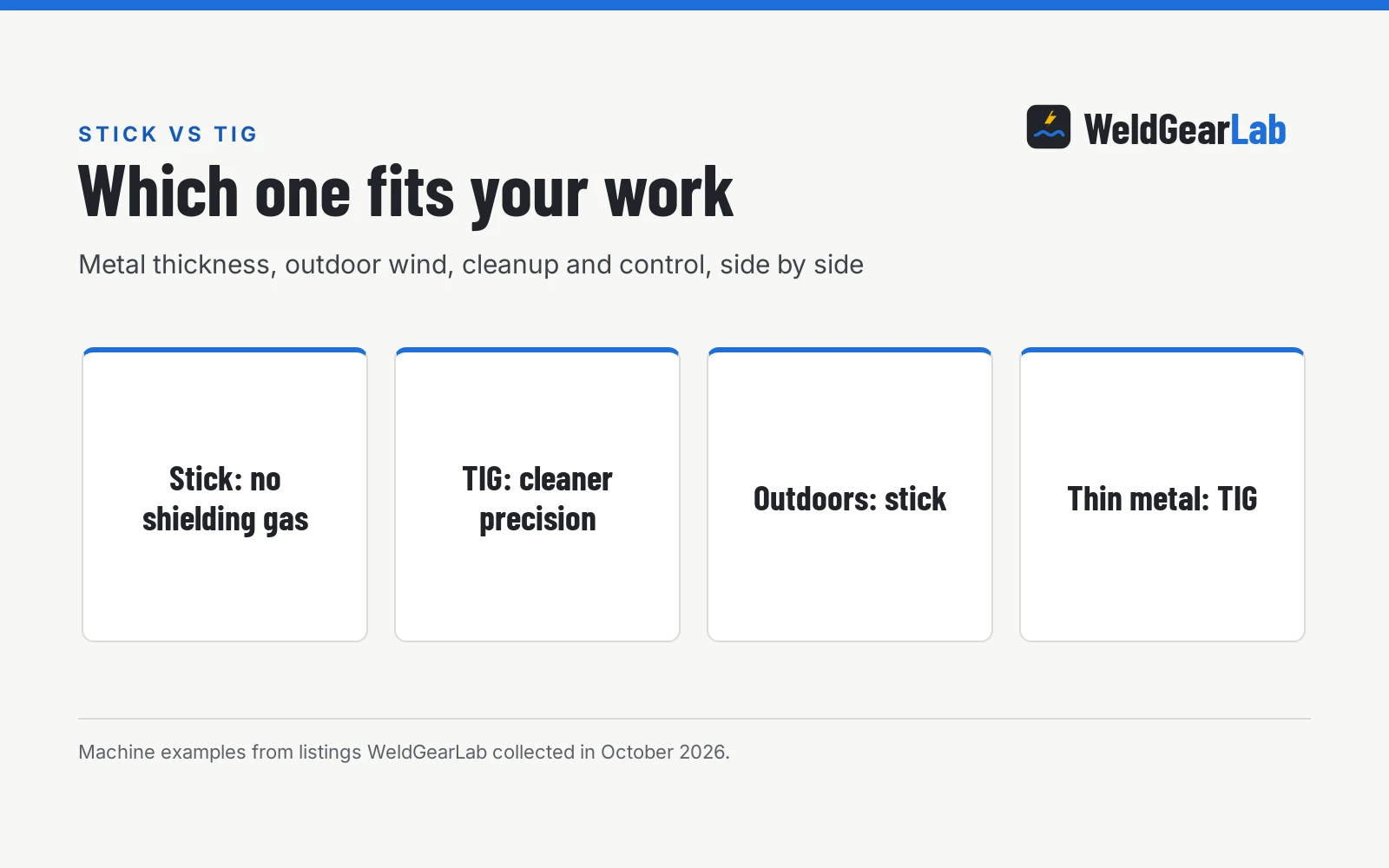
Stick and TIG welding use electric arcs to fuse metal but fit completely different shop jobs, metal thicknesses, skill levels and equipment setups.
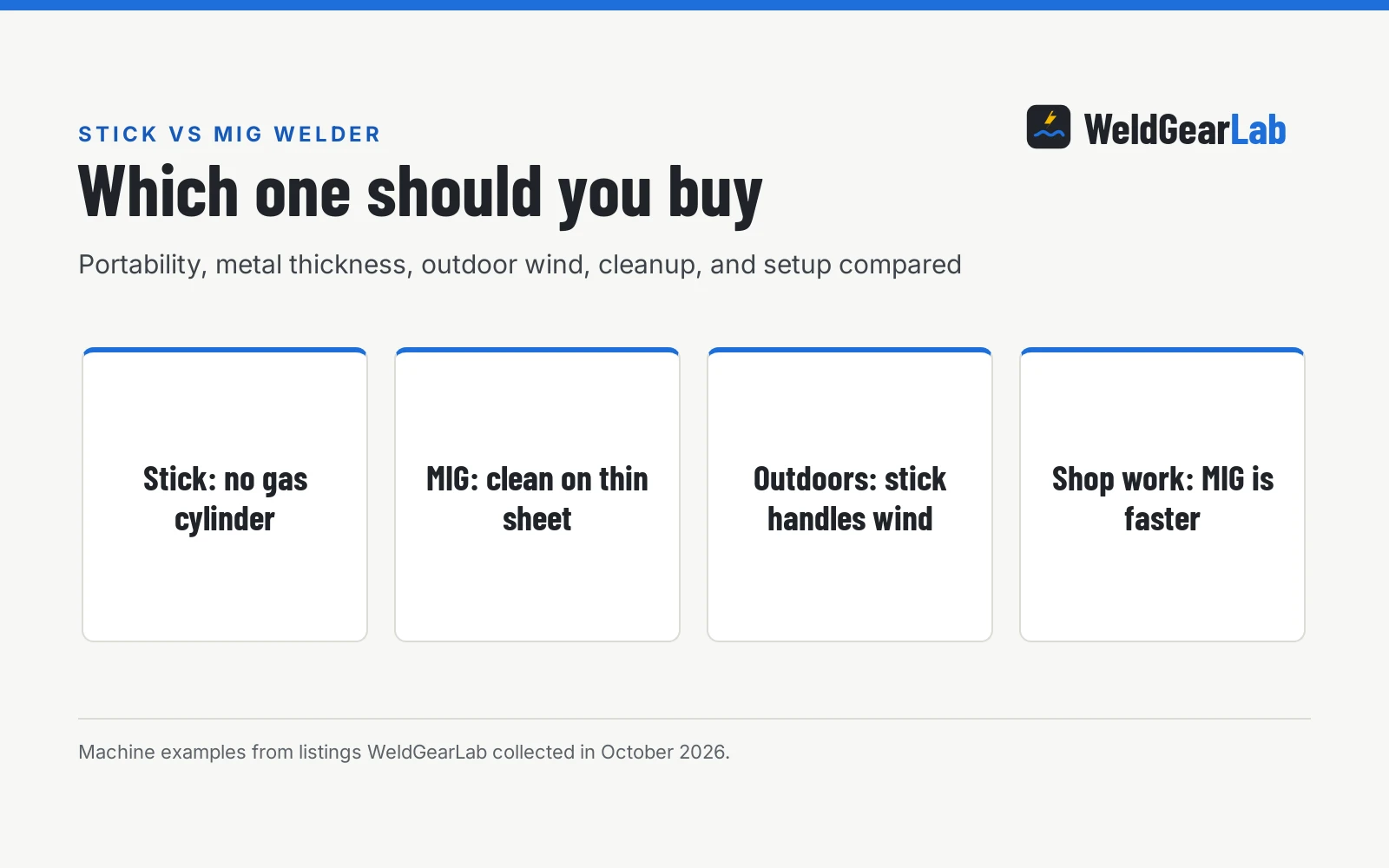
Stick welding and MIG welding suit different shop tasks, differing on outdoor wind tolerance, metal thickness, cleanup time, and equipment portability.
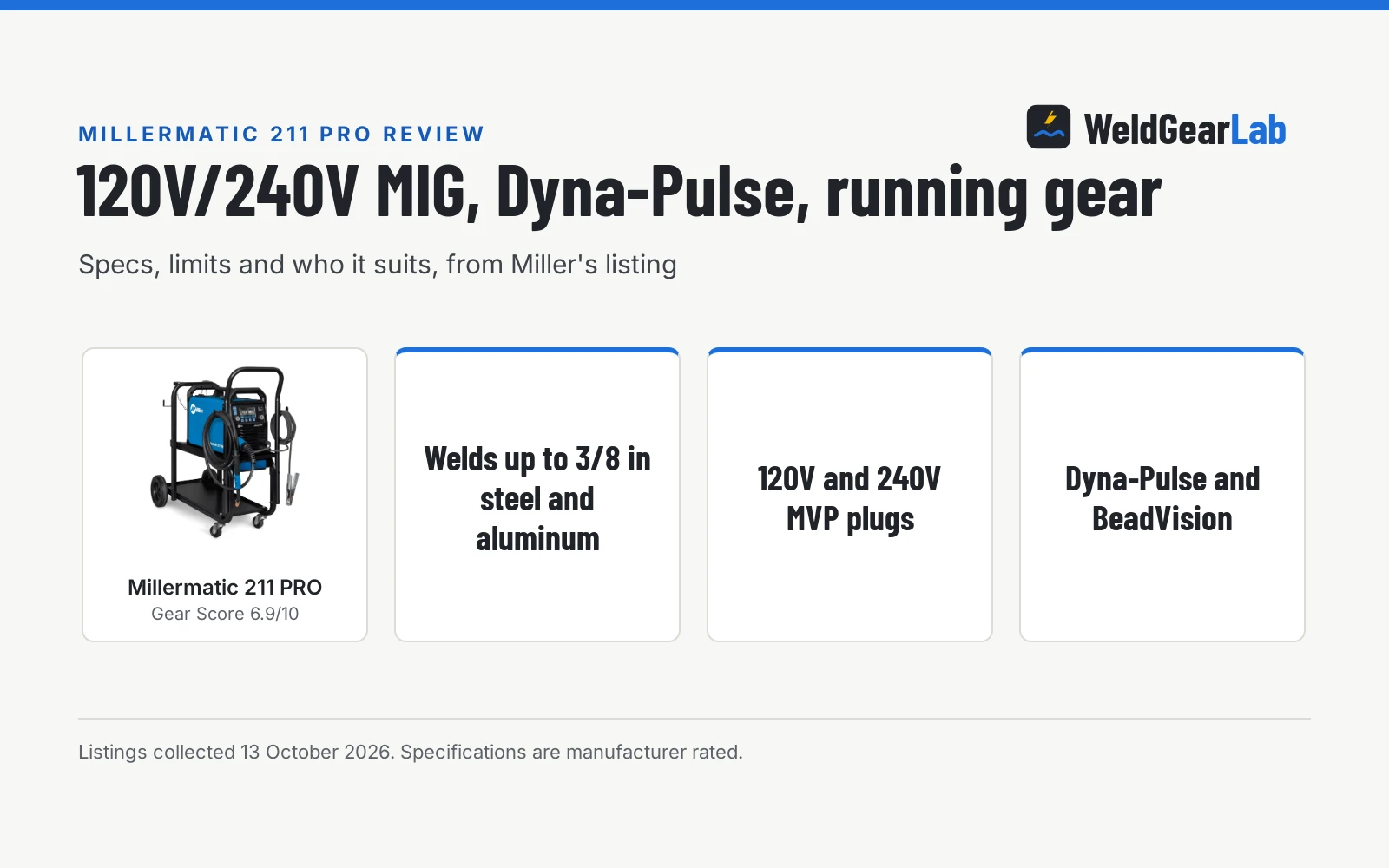
A Millermatic 211 PRO review from the listing: a 120V and 240V MIG welder rated up to 3/8 in steel, with its pulse feature,…