Welder Maintenance: Shop Care and Inspection Guide
Routine welder maintenance prevents wire feeding problems, erratic arcs, and overheating by keeping torch consumables, drive rolls, and internal components clean.

Welding machines for home, farm and small shop work: MIG, TIG, stick and multi-process. We compare them on input voltage, rated output, duty cycle at a stated amperage, and what comes in the box.
Routine welder maintenance prevents wire feeding problems, erratic arcs, and overheating by keeping torch consumables, drive rolls, and internal components clean.
Choosing the best welding machine company depends on whether your shop needs heavy commercial distributor support or portable multi-process inverter versatility.
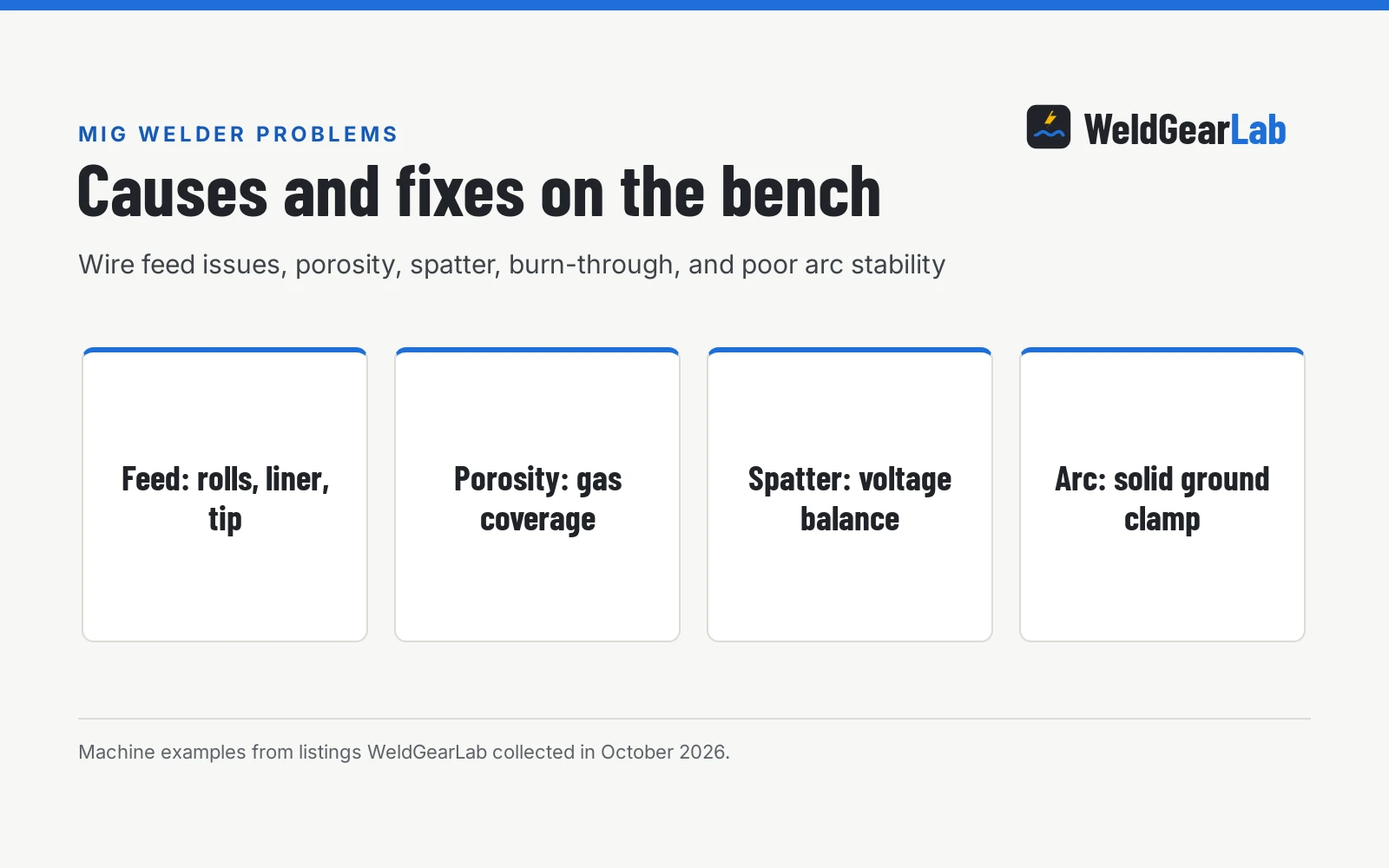
Most MIG welder problems stem from wire feed slipping, shielding gas loss, incorrect drive roll tension, poor ground contact, or wrong voltage balance on…
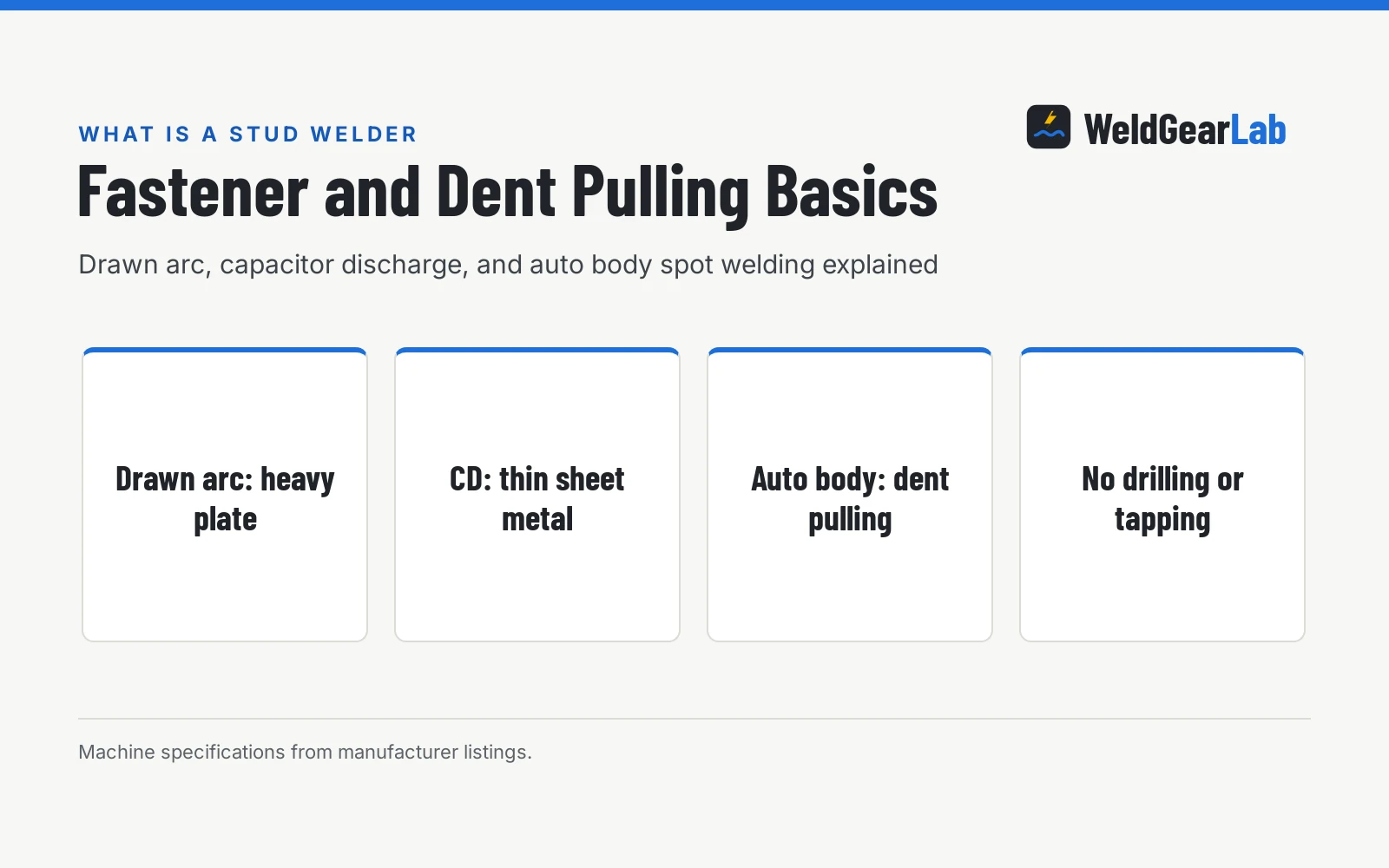
A stud welder joins threaded studs, pins, or pull tabs directly to sheet metal or plate without drilling, tapping, or through-holes.
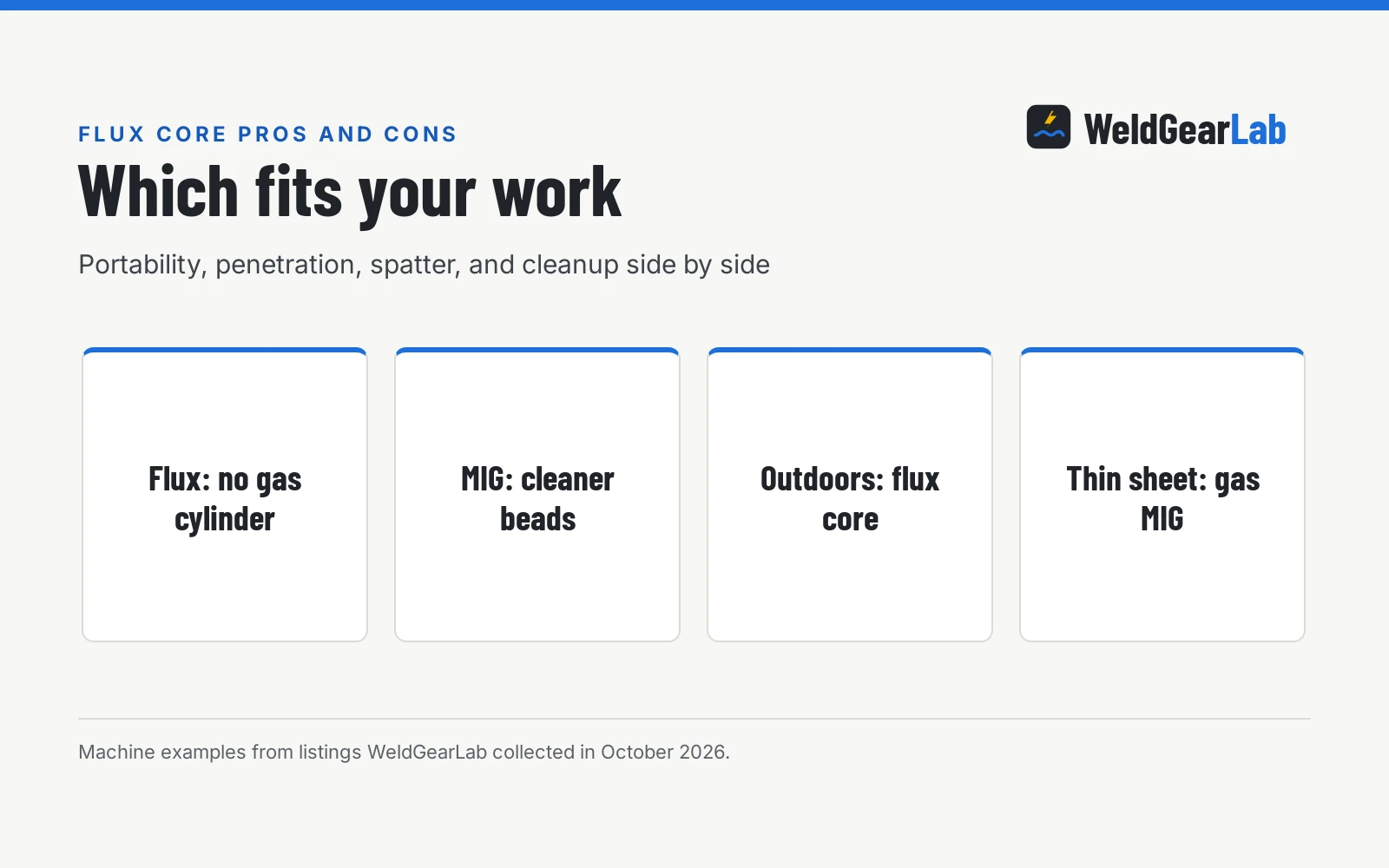
Gasless MIG welding skips bulky gas bottles for field portability and outdoor wind tolerance, but trades off clean beads on thin sheet metal.
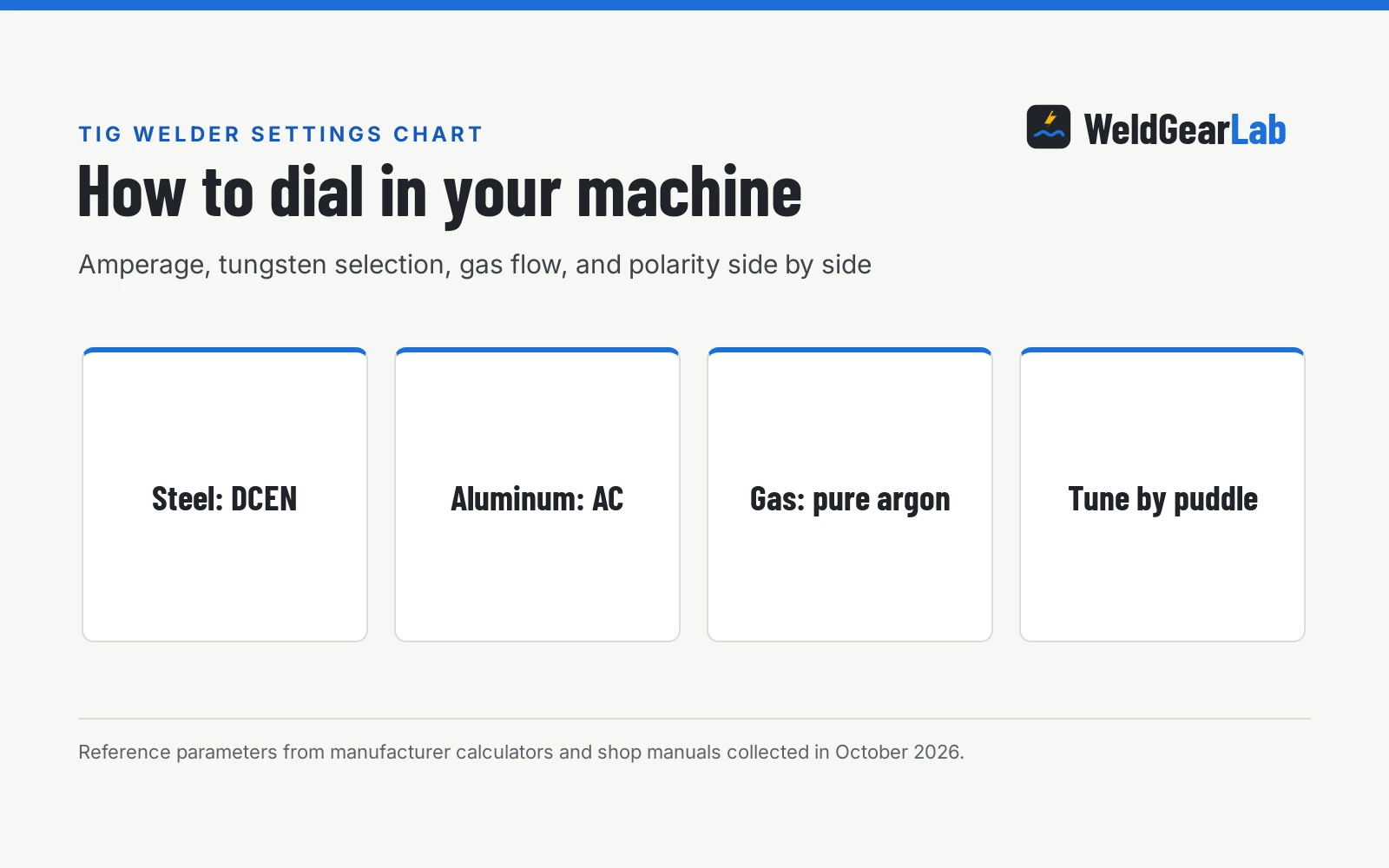
A TIG welder settings chart maps amperage, tungsten selection, shielding gas flow, and cup size to your metal type and joint thickness so you…
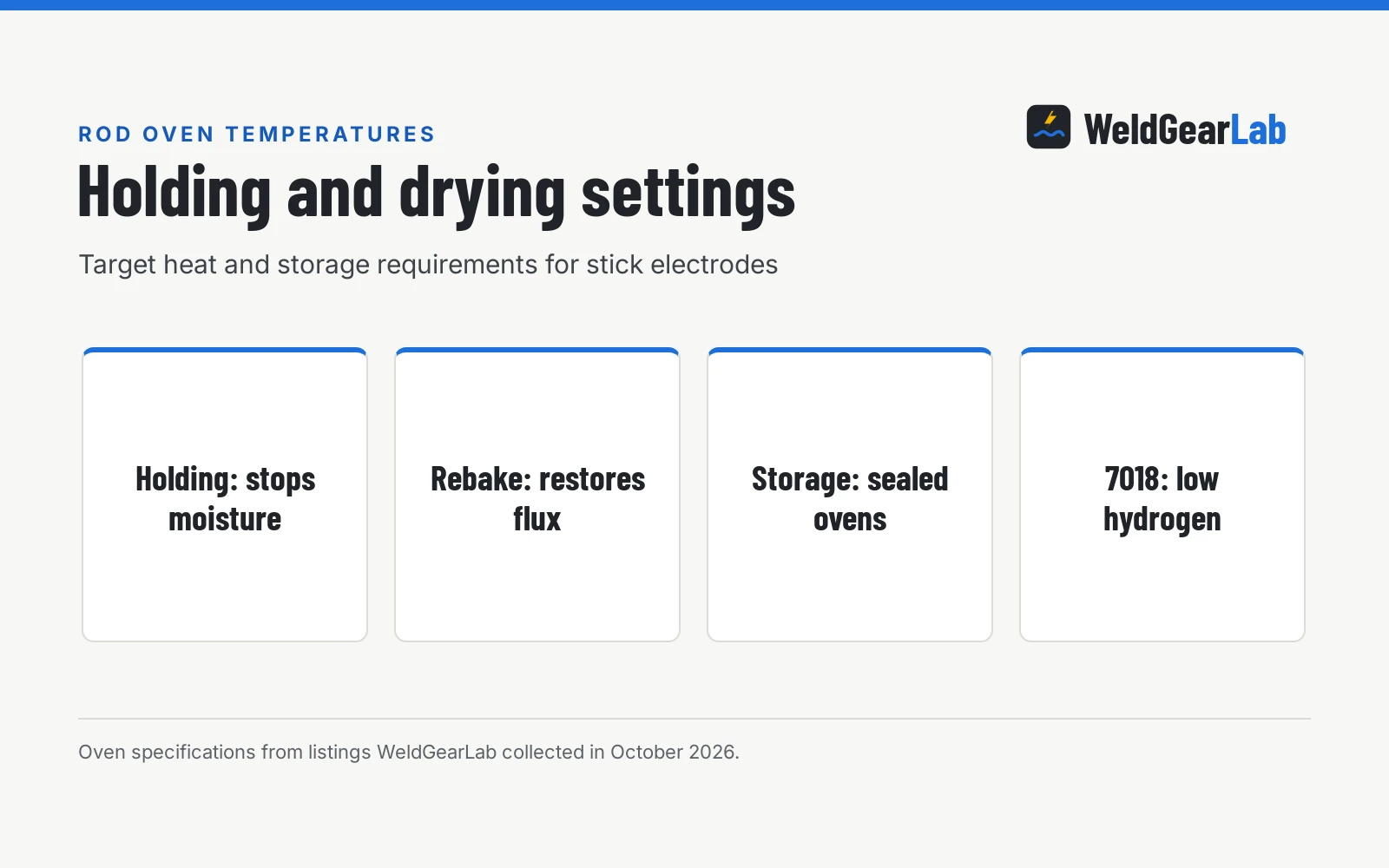
A welding rod oven temperature chart shows holding and rebake settings for low hydrogen stick electrodes to keep flux dry and prevent weld cracking.
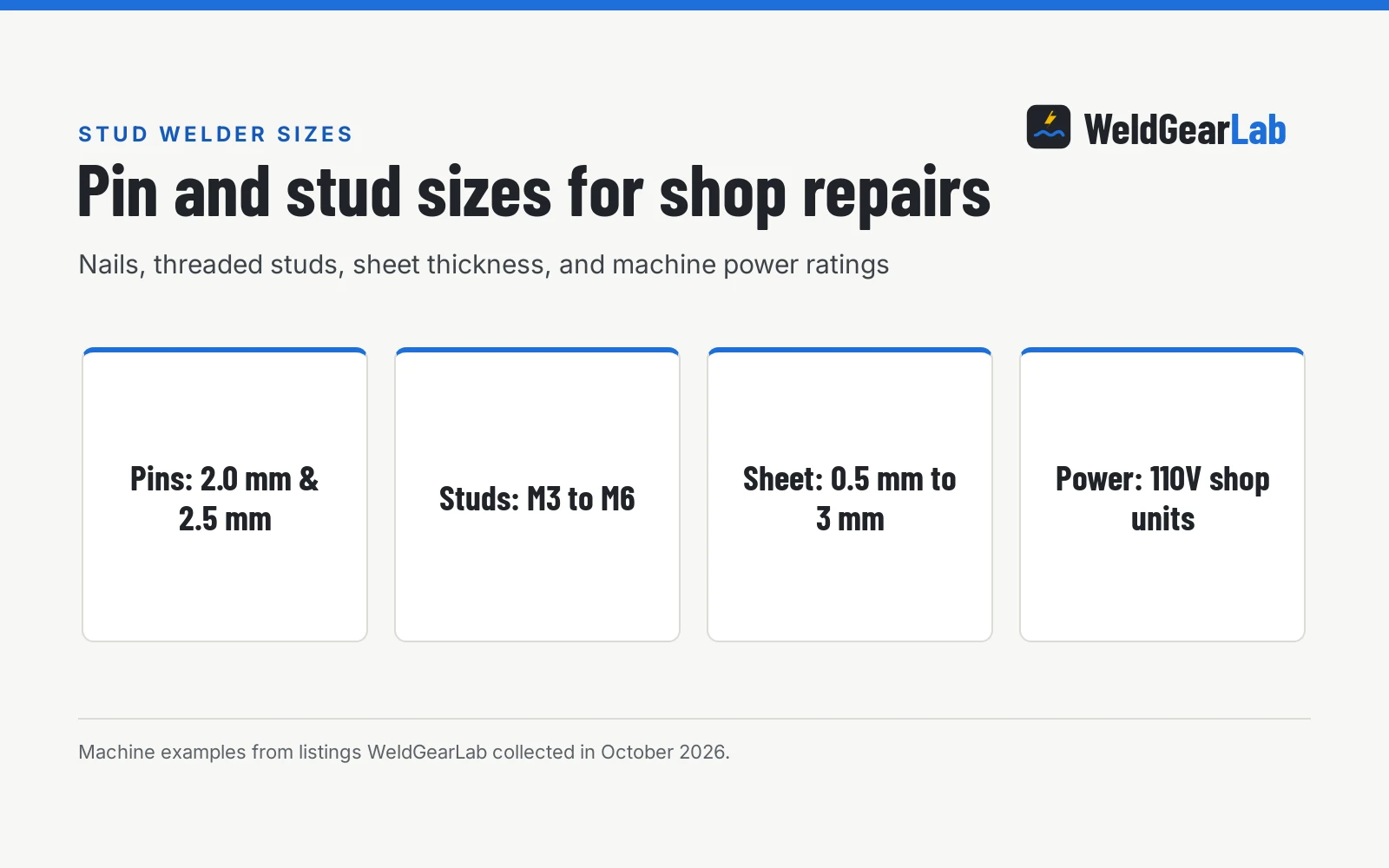
Stud welder sizes range from 2.0 mm and 2.5 mm dent pulling pins to M3 through M6 threaded studs, matching sheet thickness and shop…
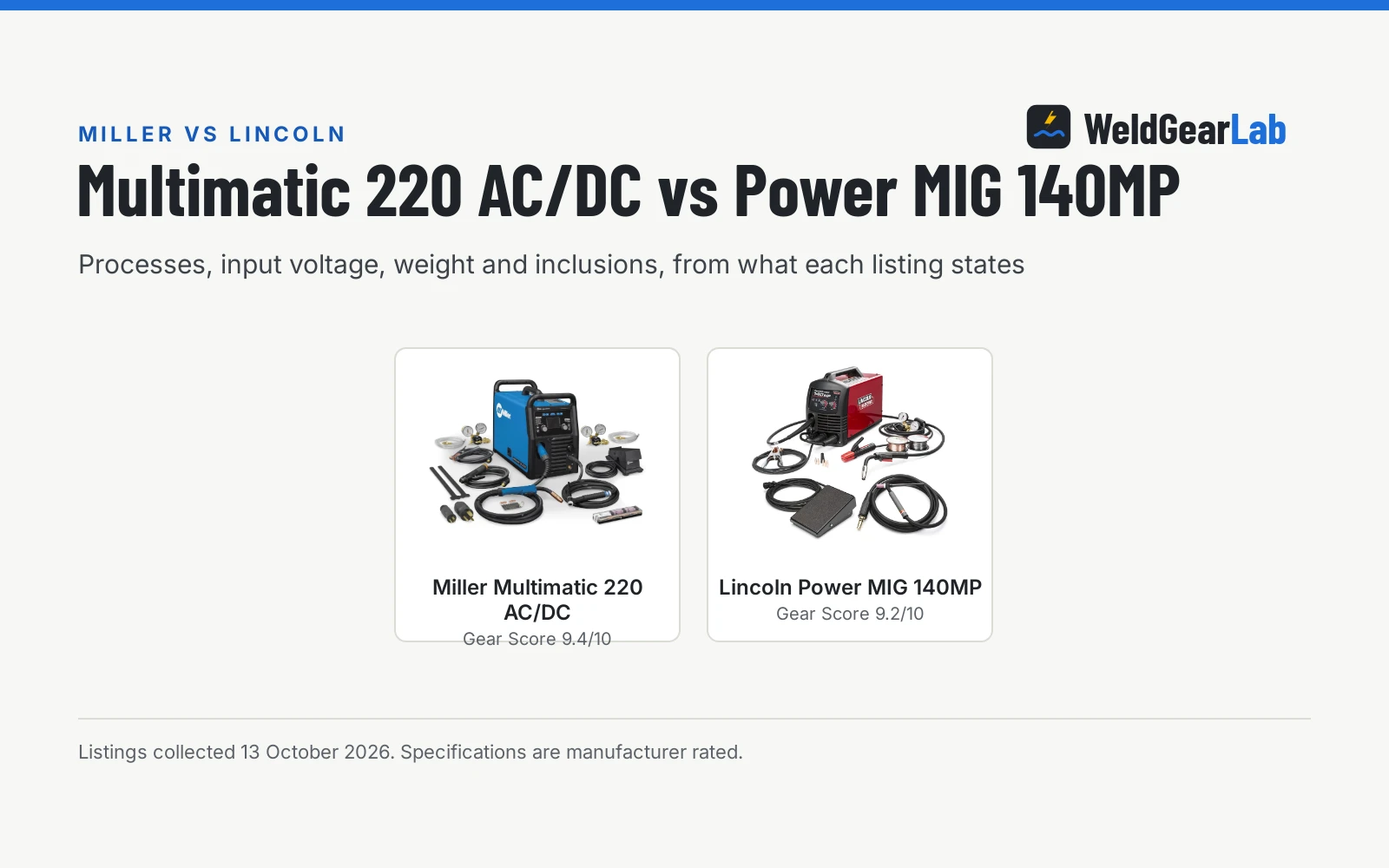
Miller's Multimatic 220 AC/DC and Lincoln's Power MIG 140MP compare on welding processes, input voltage, stated weight, included gear and listing clarity.
Flux core welding skips the gas cylinder and handles breezy outdoor repairs and dirty steel, but produces more spatter, smoke, and slag than gas-shielded…