Welding Rod Oven Temperature Chart: Holding and Reconditioning Guide
A welding rod oven temperature chart shows holding and rebake settings for low hydrogen stick electrodes to keep flux dry and prevent weld cracking.

On this page
Top picks at a glance
As an Amazon Associate I earn from qualifying purchases.
- 1
 YESWELDER 24lb Welding Rod Oven 110V Temperature ControlledView on Amazon
- 2
 10 Rods Copper Brazing Rod 15.7"View on Amazon
- 3
 15 PCS Low Temperature Welding RodsView on Amazon
- 4
 MAPP/MAP/PROPANE Gas TorchView on Amazon
- 5
 High Temperature Ceramic Fiber24/12 inch Insulation BlanketView on Amazon
- 6
 Seimneire 24 Pieces Low Temperature Welding RodsView on Amazon
When fitting structural joints or repairing heavy equipment, moisture in stick electrode coatings ruins welds. A welding rod oven temperature chart gives the heat settings needed to protect stick welding electrodes from moisture in the air. For low hydrogen rods, holding ovens maintain heat up to 300°F to keep flux dry, while the YESWELDER listing includes cellulosic rods among the electrode types its oven is designed to dry. Reconditioning moisture-damaged electrodes requires higher baking heat per manufacturer instructions. This guide explains how to store, hold, and handle your electrodes so welds stay sound and crack-free.
Other welders and gear to compare
 YESWELDER 24lb Welding Rod Oven 110V Temperature ControlledCheck price on Amazon
 10 Rods Copper Brazing Rod 15.7"Check price on Amazon
 15 PCS Low Temperature Welding RodsCheck price on Amazon
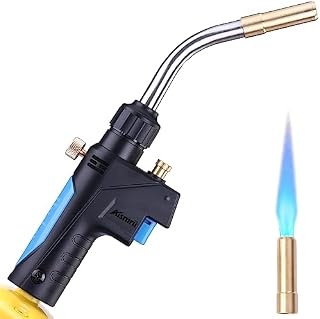 MAPP/MAP/PROPANE Gas TorchCheck price on Amazon
 High Temperature Ceramic Fiber24/12 inch Insulation BlanketCheck price on Amazon
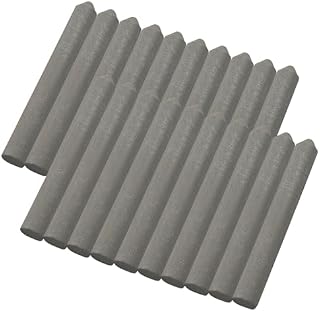 Seimneire 24 Pieces Low Temperature Welding RodsCheck price on Amazon
This guide links to our product roundups, where WeldGearLab gets a commission on purchases made through links on this page, and your price stays the same. Read our affiliate disclosure.
The difference in one paragraph
Stick electrodes absorb moisture from humid air once hermetically sealed packaging is opened. Arc heat turns that moisture into hydrogen gas, causing porosity, underbead cracking, and brittle joints. Holding ovens keep factory-dry electrodes warm while you work, preventing humidity from entering the flux coating. Rebake ovens apply high industrial heat to drive out moisture that has already penetrated exposed coatings. Low hydrogen rods require warm storage, and the listings include cellulosic rods among the types their ovens dry.
Side by side: welding rod oven temperature chart
A welding rod oven temperature chart matches holding and rebake cycles to your electrode coating. Holding units keep dry rods warm at the joint, while shop rebake equipment restores rods exposed beyond allowable atmospheric limits.
| Electrode type | Recommended holding heat | Rebake procedure | Storage and handling rule |
|---|---|---|---|
| 7018 low hydrogen | Hold up to 300°F (dials adjust from 80°F or 150°F) | High heat per manufacturer spec | Keep warm at the joint to stop moisture pickup |
| 6018 low hydrogen | Hold up to 300°F (dials adjust from 150°F) | High heat per manufacturer spec | Store in heated oven once unsealed |
| E6010 cellulosic | Included in the YESWELDER drying range of 85°F to 300°F | Reconditioning up to 390°F listed for moisture-sensitive electrodes including cellulosic rods | Listed among electrodes the ovens are designed to dry |
| E6011 cellulosic | Included in the YESWELDER drying range of 85°F to 300°F | Reconditioning up to 390°F listed for moisture-sensitive electrodes including cellulosic rods | Listed among electrodes the ovens are designed to dry |
| E6013 rutile | Included in the YESWELDER drying range of 85°F to 300°F | No separate rebake figure stated for E6013 in these listings | No separate storage setting stated for E6013 in these listings |
| 316L stainless steel | Hold up to 300°F (dial setting to 300°F) | Bake per stainless maker guide | Protect coating from humidity to avoid porosity |
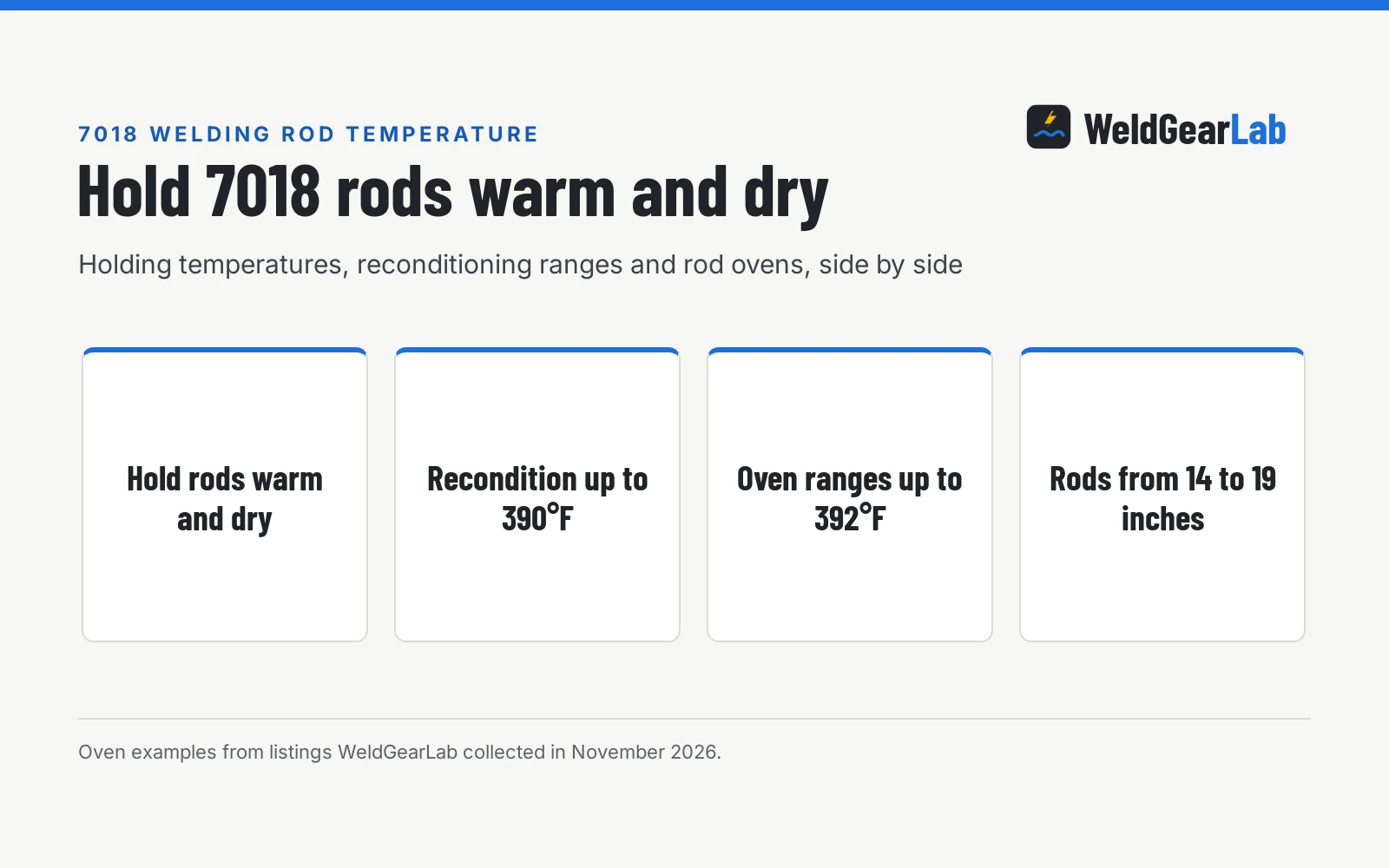
The figures above reflect stated specifications from workshop rod storage equipment. Thermostat dials on portable holding ovens sweep from ambient temperatures up to holding levels. Arc Union and Oakwonder specify ranges from 80°F to 300°F on 110V or 115V power, where the upper numbers deliver holding heat. Vouyar provides an operating dial from 150°F to 300°F for 7018, 6018, and 316L electrodes. TOOLIOM provides control from 120°F to 390°F, citing 390°F to recondition electrodes in damp environments. VEVOR offers portable models with fixed heating at 300°F, an adjustable 22 lb unit operating from 86°F to 302°F, and a stationary countertop model reaching 104°F to 392°F.
When holding ovens are the right choice
Holding ovens suit daily fabrication, field repairs, and structural work where you need warm electrodes at the joint.
- Daily shift work. When you unseal low hydrogen electrodes, unheated flux absorbs humidity. A portable holding oven preserves coating dryness throughout the work shift.
- Humid and outdoor jobs. Damp air and unheated garages accelerate moisture pickup. Storing rods in a heated chamber stops moisture before it penetrates the core wire.
- Job site mobility. Portable ovens run on standard 110V or 120V power. YESWELDER lists a 24 lb capacity unit weighing under 8 pounds for mobile work.
- Controlled dispensing. Keeping the lid closed preserves internal heat. Oakwonder provides an 11 lb ejection oven that dispenses electrodes individually using an external crank to avoid opening the lid.
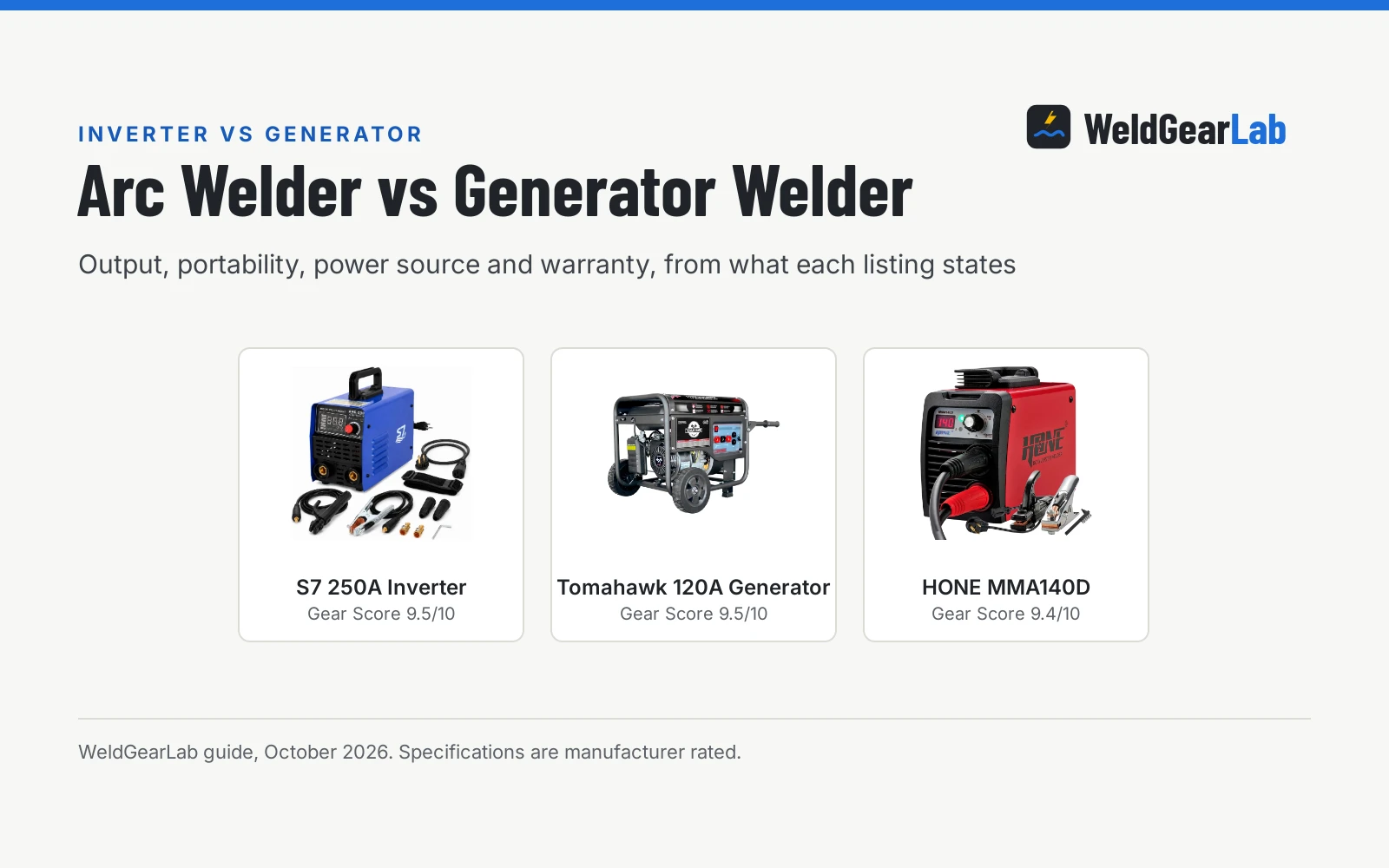
For remote jobs, portable rod storage pairs with inverter machines; see our guide to the best portable stick welder models. If you lack an electric oven, read our guide on how to store 7018 rods without a rod oven.
When rebake ovens are the right choice
While holding ovens keep dry rods warm, rebake ovens restore electrodes that have already absorbed atmospheric moisture.
- Exceeded exposure limits. When low hydrogen rods remain unheated beyond allowable atmospheric limits, rebaking drives absorbed moisture out before welding.
- Damaged packaging. Rods stored in torn packaging absorb humidity over time. Rebaking re-establishes low hydrogen properties.
Rebaking requires dedicated high-temperature equipment matching manufacturer specifications. Typical portable ovens cannot replace an industrial rebake chamber. Among portable units, TOOLIOM lists an upper heat setting of 390°F to recondition exposed rods in humid environments, but restoring severely damp rods requires industrial shop baking ovens.
How to tell what an oven supports
When selecting a rod oven, examine these key specifications:
- Thermostat control versus fixed heat. VEVOR lists fixed 300°F heating on its 10 lb and 50 lb models, maintaining holding temperature without dials. For variable adjustment, dials sweep from ambient levels up to holding heat: Arc Union and Oakwonder list 80°F to 300°F, YESWELDER lists 85°F to 300°F, and VEVOR’s 22 lb oven lists 86°F to 302°F.
- Electrode length capacity. Verify chamber depth against your rods. TOOLIOM accommodates rods up to 14 inches, YESWELDER fits 17 inches, VEVOR and Oakwonder ejection units hold 18-inch or 450 mm rods, and Vouyar and Oakwonder 22 lb ovens fit 19 inches.
- Chamber capacity. Match capacity to consumption. Small portable units hold 10 lbs or 11 lbs, mid-size site ovens hold 20 lbs, 22 lbs, or 24 lbs, and VEVOR’s countertop shop model stores up to 200 lbs.
- Input voltage. Most portable rod ovens run on 110V or 120V circuits. Vouyar switches between 110V and 220V outlets.
- Latch and seal construction. A latching lid keeps humid air out. Look for steel bodies with sturdy locking latches.
Proper chamber sizing prevents crowding, allowing warm air to circulate around flux coatings.
Which electrodes need oven storage
Electrode flux coatings react differently to oven heat:
- Low hydrogen electrodes (7018, 6018). Low hydrogen coatings draw moisture from air. Welded damp, moisture releases hydrogen into the puddle, causing cracks. Hold these rods in an oven heated up to 300°F after opening, using dials that adjust from ambient levels (80°F or 150°F) up to full holding heat.
- Cellulosic electrodes (E6010, E6011). The YESWELDER listing includes E6010 and E6011 among the electrode types its oven is designed to dry, and the TOOLIOM listing includes cellulosic rods among the moisture-sensitive electrodes its chamber reconditions up to 390°F. The listings give no separate holding figure for cellulosic rods.
- Rutile electrodes (E6013). The YESWELDER listing includes E6013 among the electrode types its oven is designed to dry. The listings give no separate holding figure for rutile rods.
- Stainless steel electrodes (316L). Coated stainless rods require dry flux to prevent puddle porosity. Vouyar lists compatibility with 316L rods to maintain dry coatings before welding.
To learn more about rod selection, read our welding rods guide and our head-to-head comparison of 6011 vs 7018 welding rod coatings.
Can home ovens do the job?
Using a kitchen oven to store or rebake welding rods is unsafe for several practical reasons:
Kitchen ovens prepare food. Heated electrode coatings release chemical fumes and mineral dust, contaminating food surfaces. Domestic ovens also lack vertical tubes and tight seals needed to store long electrodes without damaging brittle flux.
Operationally, domestic ovens cycle unevenly and consume heavy power. Dedicated portable rod ovens draw modest power on standard 110V or 120V circuits. VEVOR’s 10 lb oven draws 230W, the 22 lb model uses 200W, and the 50 lb unit operates at 420W. Oakwonder’s 11 lb ejection unit is rated at 600W. These purpose-built tools provide steady heating and latching lids right at the bench. For farm or maintenance work, explore our recommendations for the best stick welder for farm use and browse our welders hub.
FAQ for welders
What temperature should a welding rod oven be set to?
For dry low hydrogen rods like 7018, holding ovens should maintain heat up to 300°F. While thermostat dials start at ambient levels like 80°F or 85°F, actual holding heat must stay elevated to prevent moisture absorption.
Can you keep 6010 or 6011 rods in a rod oven?
The YESWELDER listing includes E6010 and E6011 among the electrode types its oven is designed to dry, with a dial from 85°F to 300°F, and the TOOLIOM listing includes cellulosic rods among the moisture-sensitive electrodes its chamber reconditions up to 390°F. The listings give no separate holding figure for cellulosic rods.
How long can 7018 rods stay out of an oven before welding?
Low hydrogen rods begin absorbing humidity upon exposure to air. Storing electrodes in an energized portable oven preserves dryness throughout the work shift.
What happens if you weld with moisture-contaminated 7018 rods?
Arc heat breaks absorbed water down into hydrogen gas that enters the molten puddle. As the weld cools, trapped hydrogen causes porosity and delayed underbead cracking that weakens the joint.
Can a portable rod oven rebake wet welding rods?
Most portable ovens operate as holding units up to 300°F or 302°F rather than high-temperature rebake ovens. While TOOLIOM reaches 390°F to recondition electrodes in damp environments, restoring severely wet rods requires industrial high-heat baking equipment.
Related: how to store 7018 rods without a rod oven, best portable stick welder, 6011 vs 7018 welding rod, best stick welder for farm use, and the stick welders hub. Also see our welding rods guide and general welders guide.