Inverter Arc Welder vs Generator Welder: 3 Machines Compared
Inverter arc welder vs generator welder: 3 machines compared on output, portability, power source and warranty, from two wall-powered inverters to one engine-driven Tomahawk.

On this page
Top picks at a glance
As an Amazon Associate I earn from qualifying purchases.
- 1
 250A Stick Welder, 110V/220V Dual Voltage Portable9.5/10View on Amazon
- 2
 TOMAHAWK Welder Generator Stick Welder Engine9.5/10View on Amazon
- 3
 HONE Stick Welder, 110V/220V Actual 140Amp ARC9.4/10View on Amazon
Verdict. Inverter arc welder vs generator welder comes down to where the job is. Fence, gate and trailer repair in a shop or garage with an outlet suits an inverter arc welder: light, wall powered and simple. A repair out in the field with no outlet suits a generator welder, since it brings its own engine and 120V power for tools. The inverter examples here are the S7 250A and the HONE 140A, at 9.13 and 9.44 lb; the generator example is the Tomahawk 120A engine-driven unit at 99 lb.
WeldGearLab gets a commission on purchases made through links on this page, and your price stays the same. Read our affiliate disclosure.
The three machines
250A Stick Welder, 110V/220V Dual Voltage Portable
S7 (model S7, maker listed as winwin) 250A dual-voltage IGBT inverter stick welder at a listed 9.13 lb, compatible with E6010 through E7018 electrodes, with a 2-year warranty description.
Pros
- 250A output on a 110V/220V dual-voltage machine
- Listed at 9.13 lb, easy to carry between job areas
- Compatible with E6010, E6011, E6013 and E7018 electrodes
- Hot start, arc force and anti-stick functions listed
Cons
- No duty cycle figure stated
- No included accessories named
- Needs wall power, no field use
- Package dimensions only, no product dimensions
TOMAHAWK Welder Generator Stick Welder Engine
Engine-driven stick welder listed at up to 120A with a 60% duty cycle, a 2200W generator with two 120V/20A outlets, a 7 HP gasoline engine and a wheel kit.
Pros
- Up to 120A output at a 60% duty cycle
- 2200W generator output with two 120V/20A outlets
- Brings its own power, no wall outlet needed
- Wheel kit included, with US-based support named in the bullets
Cons
- 99 lb, far heavier than the inverter units
- 28 x 22 x 23 in body against the HONE's 9 x 3.9 x 5.6 in
- Engine needs fuel, oil and upkeep
- 120A max is lower than the S7's 250A

HONE Stick Welder, 110V/220V Actual 140Amp ARC
140A dual-voltage IGBT inverter arc welder at 9.44 lb with a 40% duty cycle, arc force and a compact 9 x 3.9 x 5.6 in body.
Pros
- 140A on 220V at 9.44 lb
- 40% duty cycle stated, at both 120A and 140A
- IGBT inverter with hot start, arc force and anti-stick
- Compact 9 x 3.9 x 5.6 in body with a carrying handle
Cons
- No warranty term stated
- 140A max is lower than the S7's 250A
- Rod size listed only as 1/16 to 1/8 in
- Needs wall power, no field use
Other welders and gear to compare
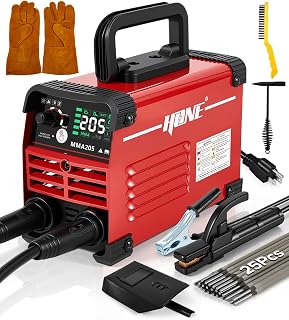 HONE Stick Welder 110vCheck price on Amazon
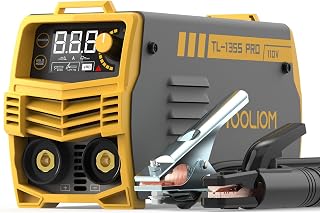 TOOLIOM 135A 110V Mini Stick WelderCheck price on Amazon
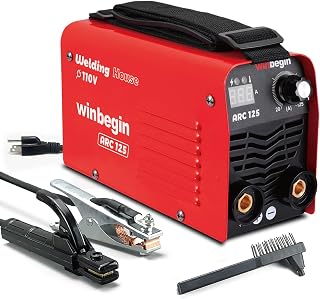 125A 110V Mini Welding MachineCheck price on Amazon
 ARCCAPTAIN 250A Stick WelderCheck price on Amazon
 Hpoouo Stick/LIFT TIG 2 IN 1 MINI WelderCheck price on Amazon
 Arc Stick Welder 165ACheck price on Amazon
Inverter arc welder vs generator welder: side by side
| S7 250A Inverter | Tomahawk 120A Generator | HONE MMA140D | |
|---|---|---|---|
| Side | Inverter arc welder | Generator welder | Inverter arc welder |
| Output | 250A | Up to 120A (40-120A range) | 10-140A on 220V, 10-120A on 110V |
| Duty cycle | Not stated | 60% | 40% at 120A (110V) and 140A (220V) |
| Power source | 110V/220V wall | Gasoline engine, 7 HP | 110V/220V wall |
| Tool power | None | 2200W, two 120V/20A outlets | None |
| Weight | 9.13 lb | 99 lb | 9.44 lb |
| Warranty | 2 Year | 2 Year Manufacturer | Not stated |
Ratings in this table are the makers’ own claims taken from each product page (19 October 2026).
Power and output
The S7 lists 250A on 110V or 220V, with no duty cycle stated. The HONE MMA140D lists 10 to 140A on 220V and 10 to 120A on 110V, with a 40% duty cycle at 120A on 110V and at 140A on 220V. The generator side trades lightness for independence: the Tomahawk 120A lists up to 120 amps at a 60% duty cycle, plus 2200W of generator output through two 120V/20A outlets for running tools alongside the weld. Duty cycle alone does not settle it. The S7 does not state one, so the listings do not let you rank all three on how long they weld at full output.
Portability and power source
This is the real split. The inverter welders plug into the wall: 110V or 220V, at 9.13 and 9.44 lb. They go anywhere with an outlet. The Tomahawk 120A brings its own power from a 7 HP 4-stroke gasoline engine and lists a wheel kit, at 99 lb and 28 x 22 x 23 in. The cost is weight, fuel and maintenance: an engine needs oil, gas and upkeep that an inverter box never asks for. The Tomahawk bullets call it quiet and lightweight, which is the maker’s claim, and the listing gives no noise figure to compare against the inverters. For farm and field repair with no outlet nearby, the generator side is the option that needs no outlet; for shop and garage work with power on the wall, the inverter side is lighter and simpler.
What is in the box
The listings are thin on box contents. The Tomahawk 120A lists a wheel kit and names US-based support in its bullets. The S7 listing names no included accessories beyond the machine, and the HONE lists welding accessories without naming them. Check the box against your order on arrival.
Warranty
Two of the three listings state a warranty term, shown in the cards below, and the HONE listing states none. On a machine with an engine or an inverter board, ask the seller who handles claims before you buy.
Choose the inverter side if
You weld in a shop or garage with wall power, you carry the machine to the work, and you want a light machine. The S7 states the higher output at 250A; the HONE’s 140A comes with a stated 40% duty cycle. See our best stick welder with hot start guide for more inverter picks.
Choose the generator side if
You weld in the field, on the farm or at a site with no power, and you want 120V tool power from the same machine. The Tomahawk 120A states a 60% duty cycle at up to 120A, and its 99 lb is the price of carrying its own engine. See our engine driven welder vs portable generator comparison for the wider field.
Before You Strike an Arc
- Match the machine to the supply: the S7 and HONE list 110V/220V wall power, so check the outlet and circuit before you plug in. The Tomahawk runs on gasoline and needs fuel and oil.
- Check the rod size against the listing: the HONE lists 1/16 to 1/8 in rods, and the S7 lists E6010, E6011, E6013 and E7018 compatibility.
- On arrival, check the box contents against the listing. The S7 and HONE name no specific accessories, and the Tomahawk lists a wheel kit.
- Confirm the duty cycle with the seller for the S7, since its listing does not state one.
- Wear a helmet, gloves and flame resistant clothing, and clear anything flammable from the work area.
FAQ for welders
Can a generator welder run power tools?
The Tomahawk 120A listing states 2200W of generator output with two 120V/20A outlets, and its bullets say it welds and powers tools at the same time. The inverter welders list no tool power.
Which side is better for a beginner?
The inverter side has no engine to maintain and plugs into the wall. The S7 and HONE both list hot start, arc force and anti-stick functions and a digital display. The generator adds fuel and oil to the routine.
Do the inverter welders need a 220V outlet?
Both list 110V/220V dual voltage. The HONE states 10 to 120A on 110V and 10 to 140A on 220V. The S7 lists 250A without splitting it by voltage, so confirm what you get on 110V before you buy.
How heavy is the generator welder next to the inverters?
The Tomahawk 120A lists 99 lb. The S7 lists 9.13 lb and the HONE lists 9.44 lb. The S7 figure is the listing’s own, so confirm it with the seller.
What does the Tomahawk 120A use for fuel?
The listing states a gasoline 4-stroke engine rated at 7 HP. It needs fuel and oil, which the wall-powered inverters do not.
Scoring, line by line
Each machine is scored out of 10 on performance, build, value, safety listing and warranty. No listing states a safety certification, so none earns safety points. The S7 leads on stated output; the Tomahawk 120A follows on duty cycle and its engine-driven independence; the HONE loses on the missing warranty term.
| Product | Gear Score | Perf. /35 | Build /25 | Value /25 | Safety /10 | Warranty /5 |
|---|---|---|---|---|---|---|
| S7 250A Inverter | 9.5 | 30 | 21 | 20 | 0 | 3 |
| Tomahawk 120A Generator | 9.5 | 28 | 21 | 20 | 0 | 3 |
| HONE MMA140D | 9.4 | 27 | 20 | 21 | 0 | 0 |
The lowest score we show is 9.2 and the highest is 9.8; every point total is spread proportionally across that span, so extra points mean a higher figure.
More welding guides
Related: our inverter welder pros and cons and stick welder picks guides.