TIG Welder Settings Chart: How to Dial In Your Machine
A TIG welder settings chart maps amperage, tungsten selection, shielding gas flow, and cup size to your metal type and joint thickness so you can dial in a clean arc without guessing.

On this page
Top picks at a glance
As an Amazon Associate I earn from qualifying purchases.
- 1
 PRIMEWELD TIG225X 225 Amp IGBT AC DC Tig/Stick Welder with9.6/10View on Amazon
- 2
 LOTOS TIG200ACDC 200A AC/DC Aluminum Tig Welder with DC9.6/10View on Amazon
- 3
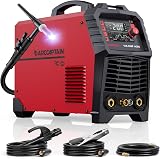 ARCCAPTAIN TIG Welder AC/DC 200A with Pulse 7 in 1 Aluminum9.6/10View on Amazon
When you sit down at the bench with clean tubing, sheet metal, or bracket plate, dialing in your machine before striking an arc saves scrap and grinding time. A tig welder settings chart gives you baseline parameters for amperage, tungsten diameter, cup size, shielding gas flow, and polarity based on your metal type and material thickness. Instead of guessing your heat input or blowing through thin stock, you set your machine to the chart baseline, establish a stable puddle, and fine-tune current with your foot pedal. This guide breaks down each setting step by step so you can dial in sound welds on steel, stainless, and aluminum.
This guide links to our product roundups, where WeldGearLab gets a commission on purchases made through links on this page, and your price stays the same. Read our affiliate disclosure.
TIG Welder Settings Chart in One Paragraph
A TIG setup relies on balancing electrical heat input against shielding gas coverage. Current determines puddle fluidity and penetration depth, while direct current electrode negative concentrates heat into steel workpieces and alternating current cleans oxide films from aluminum surfaces. Tungsten diameter and cup size must match that amperage so the arc stays focused and the molten pool remains protected from atmospheric oxygen and nitrogen. Start at the recommended baseline in your machine manual or reference chart, then adjust your foot pedal as heat builds in the workpiece.
Side by side
| Parameter | Mild steel | Stainless steel | Aluminum |
|---|---|---|---|
| Current and polarity | DCEN (electrode negative) | DCEN (electrode negative) | AC (alternating current) |
| Shielding gas | Pure argon | Pure argon | Pure argon (or argon-helium mix) |
| Tungsten tip shape | Ground sharp to a needle point | Ground sharp with a tapered grind | Pointed with flat for inverter AC, balled for transformer |
| Tungsten electrode type | Lanthanated, ceriated, or thoriated | Lanthanated, ceriated, or thoriated | Lanthanated, zirconiated, or pure |
| Arc ignition | High frequency or lift arc start | High frequency or lift arc start | High frequency start (prevents aluminum contamination) |
| Heat control with foot pedal | Establish puddle, taper slightly as heat builds | Lower baseline current, taper off smoothly to avoid craters | Depress pedal firmly to start puddle, back off as metal heats |
| Base metal preparation | Grind clean of mill scale, rust, and paint | Degrease joint thoroughly with dedicated solvent | Stainless wire brush to remove oxide film |
| Filler rod addition | Dip rod smoothly into leading puddle edge | Dab rod sparingly, keep hot rod under gas shield | Dab rod quickly, keep rod tip inside gas cone |
| Back shielding purge | Not required for standard joints | Argon back purge recommended on open root joints | Not required for standard joints |
Polarity and torch parameters follow standard fab shop practice. Always confirm the polarity and gas settings against the machine manual and the filler metal packaging before initiating an arc. Machines equipped with a foot pedal let you feather the current as the base metal absorbs heat during a continuous bead.
When welding mild steel and stainless steel
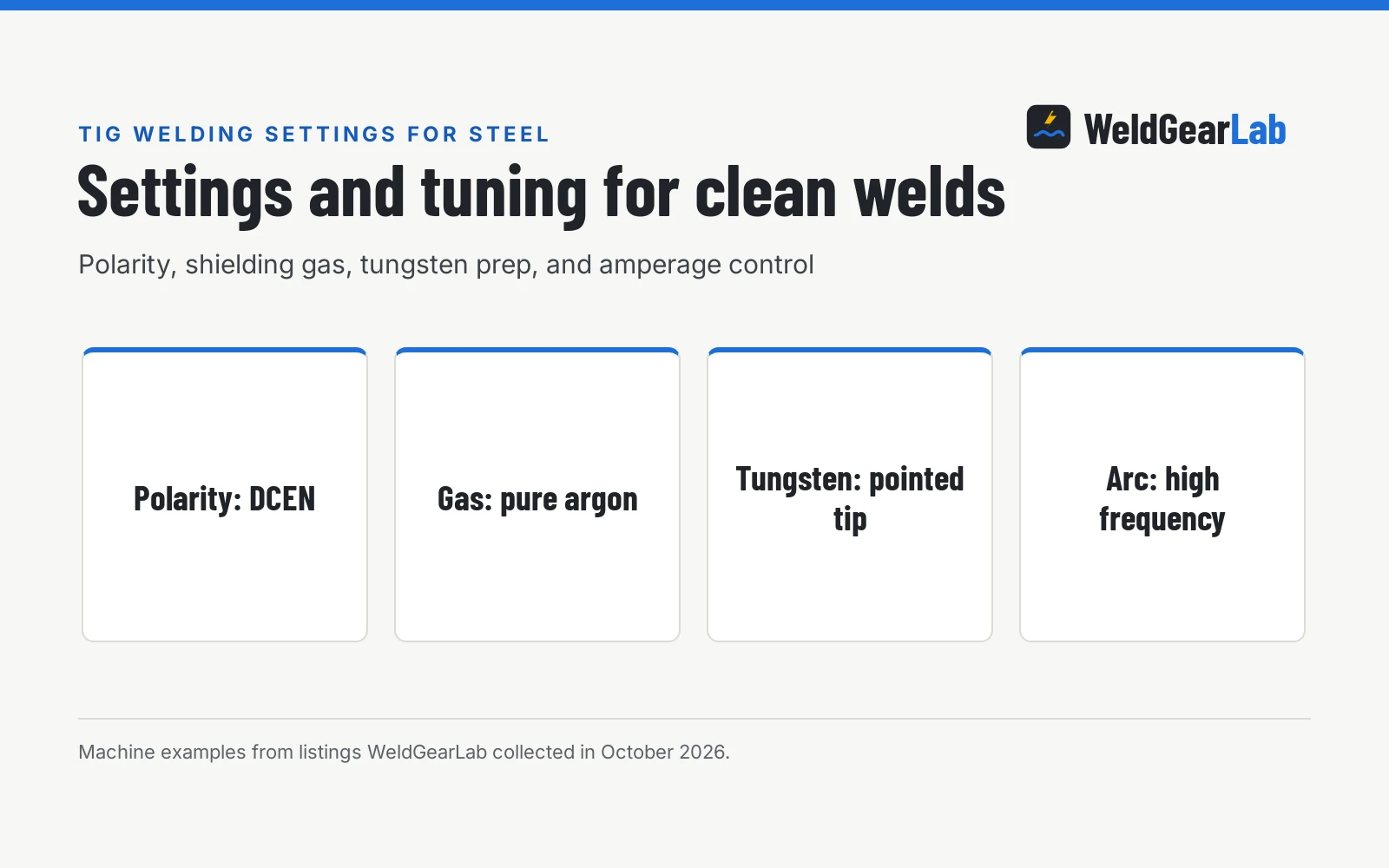
- Direct current electrode negative. Steel requires straight polarity (DCEN), directing the majority of the arc heat into the base metal for deep, narrow penetration.
- Sharp ground tungsten. Grind your tungsten to a clean needle point with grind lines running lengthwise along the taper to keep the arc column stiff and prevent wandering.
- Pure argon shielding gas. Run straight argon through a gas lens to provide smooth laminar flow that blankets the molten puddle without atmospheric contamination.
- Heat management on stainless. Stainless steel holds heat longer than carbon steel and distorts easily. Back off the amperage, move briskly, and allow parts to cool between passes to prevent carbide precipitation.
Our guide on TIG welding settings for steel details joint fit-up and torch angles for bench fabrication.
When welding aluminum
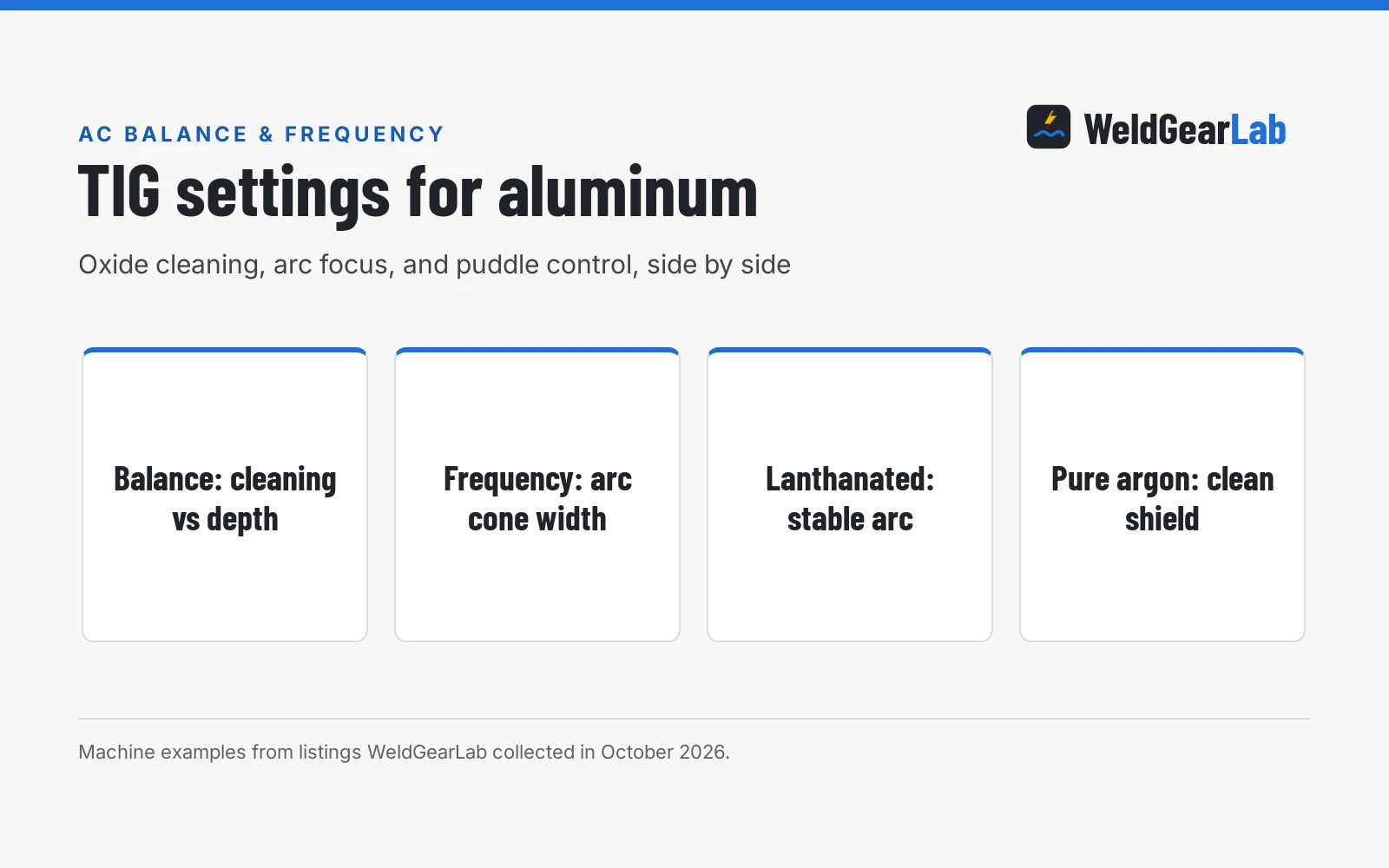
- Alternating current mode. Aluminum forms a resilient oxide skin that melts at a far higher temperature than the base metal beneath. Alternating current (AC) provides cleaning action on the positive electrode phase and penetration on the negative electrode phase.
- Tungsten preparation. On modern inverter AC machines, grind rare-earth or lanthanated tungsten to a point with a slight flat on the tip to maintain a focused arc. On older transformer machines, pure or zirconiated tungsten is balled to distribute heat over the electrode end.
- High pedal start. Aluminum draws heat away from the weld joint rapidly. Depress the foot pedal firmly to form a wet puddle quickly, then ease off the current as the surrounding plate heats up.
- Oxide cleaning prep. Clean the joint with a dedicated stainless steel wire brush right before welding to strip away the stubborn surface oxide layer.
If you fabricate aluminum tanks or repair cast brackets, review our roundup of the best TIG welder for aluminum to compare dedicated AC machines.
How to choose tungsten, cup size, and gas flow
Setting up your torch hardware correctly ensures arc stability and prevents porosity in the puddle. Match your consumable stack to the metal thickness and amperage:
- Tungsten diameter selection. Match the electrode diameter to your operating amperage. Running high current through a slender tungsten causes the tip to melt and erode into the puddle, while running low current on an oversized tungsten causes the arc to wander erratically across the tip.
- Cup size and gas lenses. Cup diameter determines the width of the protective shielding envelope. Standard collet bodies produce turbulent gas flow, whereas a gas lens uses fine mesh screens to deliver a smooth, laminar gas stream that allows longer tungsten stickout for improved puddle visibility.
- Shielding gas flow rate. Set gas flow to maintain complete coverage over the puddle without generating turbulence that draws surrounding air into the shield. Breezy shop environments require wind barriers or higher flow to protect the bead.
- Post-flow timing. Keep the torch stationary over the puddle after extinguishing the arc until the metal solidifies and the tungsten cools below its oxidation threshold. Clean tungsten remains shiny rather than discolored.
For shop-floor parameter checks without consulting a digital screen, physical slide calculators offer quick setup guidance. As listed in manufacturer catalog references, the Miller 043125 calculator (on Amazon) set comes in a 3-pack covering MIG, TIG, and stick parameters across different metal thicknesses and electrode choices.
Which gas to run for TIG welding
Unlike MIG welding, which commonly uses mixed carbon dioxide blends on carbon steel, TIG welding requires pure inert gas. Straight argon is the standard shielding gas for mild steel, stainless steel, and aluminum because it ionizes easily, maintains a smooth arc column, and will not oxidize the molten puddle or tungsten electrode. Specialized thick-section aluminum work occasionally utilizes an argon and helium mixture to increase arc heat, but straight argon remains the versatile choice for shop fabrication. When welding open-root joints on stainless steel tubing or pipe, run an auxiliary argon back-purge line inside the pipe to prevent atmospheric oxygen from sugaring the backside of the root bead.
Check our detailed guide on TIG welding argon flow rate for regulator setup, flowmeters, and draft management.
Can one machine handle steel and aluminum?
A direct-current TIG machine welds carbon steel, stainless steel, chromoly, and titanium smoothly, but cannot weld aluminum effectively with standard argon shielding. In DCEN mode, there is no electrode-positive cleaning action to break through aluminum’s stubborn surface oxide layer, while running DCEP concentrates destructive heat into the tungsten rather than the workpiece. Alternating current (AC) is required to combine electrode-positive oxide cleaning with electrode-negative penetration. To weld both steel and aluminum in the same shop, select an AC and DC inverter power source equipped with adjustable AC balance and frequency controls. Review our comparison on AC vs DC TIG welding and our roundup of the best entry level TIG welder picks to see which power supplies support both current types.
TIG welding safety and arc radiation. The TIG arc emits intense ultraviolet radiation that burns unprotected skin quickly and causes severe flash burns to the eyes. Always wear a shade-appropriate auto-darkening hood, dry leather gloves, and flame-retardant sleeves during operation. High frequency arc starters initiate the welding arc without touching the tungsten to the workpiece, protecting the sharp tip and preventing base metal inclusions. Keep work grounds securely clamped directly to the workpiece. Consult our guide on what shade lens for TIG welding to protect your vision across different amperage ranges.
FAQ for welders
What amperage should I set on a TIG welder?
Set your base current according to material thickness and joint design. The goal is establishing a puddle promptly without overheating the entire piece, then modulating heat using a foot pedal or torch trigger. For heavy joints or thick plate, bevel the edges and complete the weld in multiple passes rather than applying excessive current in a single run.
Why does TIG welding use pure argon instead of MIG shielding gas?
MIG gas mixes often contain active gases like carbon dioxide or oxygen that react aggressively with molten metal and hot tungsten. At TIG arc temperatures, even small percentages of carbon dioxide erode the tungsten electrode instantly and produce severe porosity in the bead. TIG welding requires inert shielding gas like straight argon to shield both the tungsten and the weld pool from atmospheric contamination.
What happens if TIG polarity is set wrong?
Connecting your torch to electrode positive (DCEP) when welding steel drives most of the heat into the tungsten rather than the metal, causing the electrode tip to melt into a ball and spit into the puddle. Steel requires electrode negative (DCEN) to drive heat into the workpiece. Setting an AC machine to DC mode on aluminum prevents oxide cleaning and leaves a dirty, unbonded bead.
How do I know what cup size to use?
Select your cup size based on joint access and the width of the weld puddle. A broader cup provides a larger gas envelope for wide weave beads and flat butt welds, while a smaller cup fits into tight corners and inside pipe joints. Using a gas lens allows superior shielding coverage across all cup sizes with reduced gas turbulence.
Why does my tungsten electrode turn black or melt?
A blackened tungsten tip indicates inadequate shielding gas coverage, either from insufficient flow, windy conditions, or cutting off post-flow shielding before the electrode has cooled. A melting tip indicates that your current exceeds the tungsten diameter capacity or that polarity is accidentally set to electrode positive. Grind away the contaminated portion and re-sharpen the tip before striking another arc.
Related: TIG welding settings for steel, AC vs DC TIG welding, TIG welding argon flow rate, and our directory of welder reviews and guides. Also check our overview of TIG welding problems and solutions.