Aluminum MIG Settings Chart: Wire, Gas and How to Read It
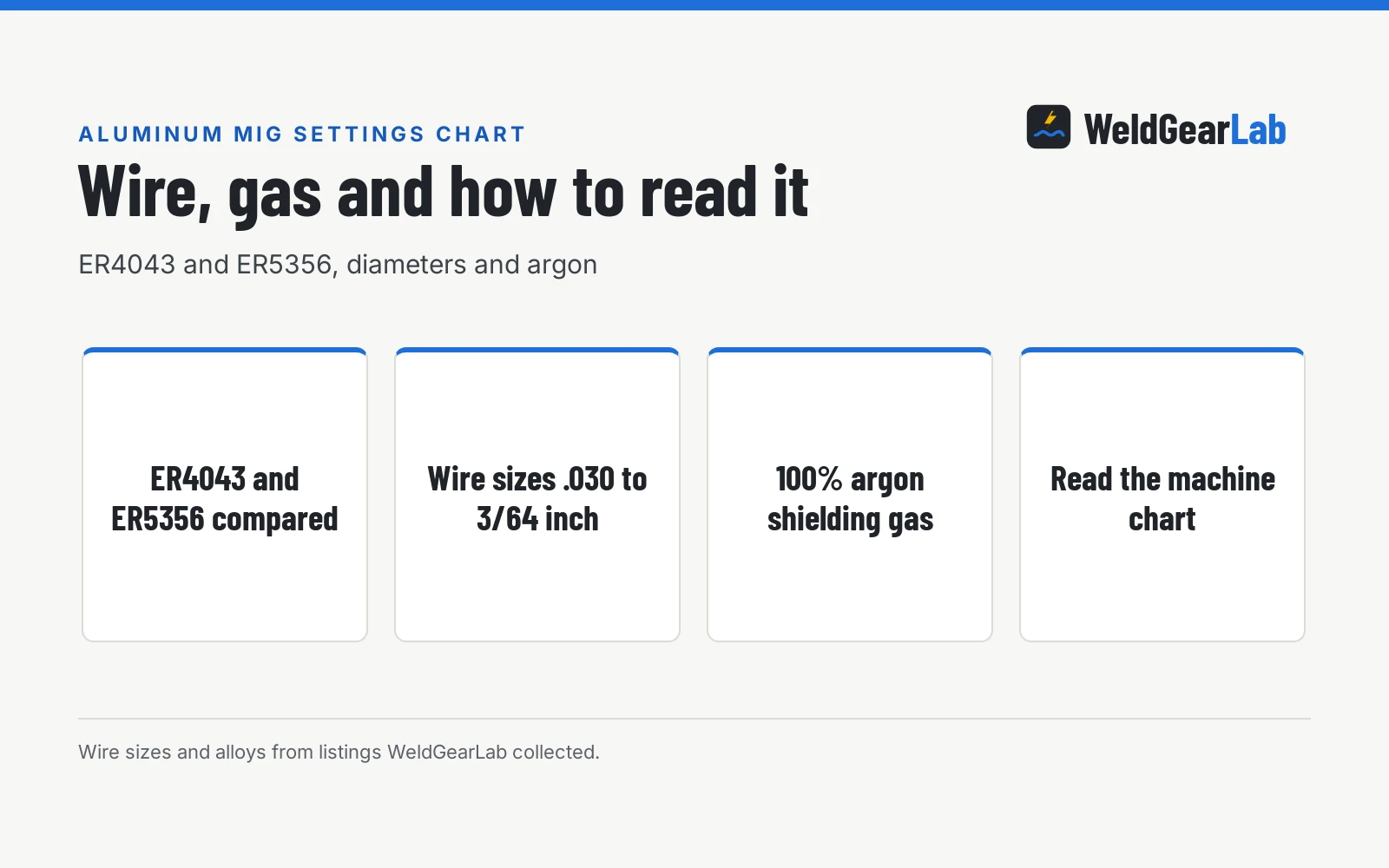
How to read an aluminum MIG settings chart: pick the wire alloy and diameter, set the gas, and use the machine chart for voltage and wire feed speed.

On this page
Top picks at a glance
As an Amazon Associate I earn from qualifying purchases.
- 1
 WeldingCity 5 Rolls of ER4043 Aluminum MIG Welding Wire 1-Lb9.7/10View on Amazon
- 2
 ARCCAPTAIN Silicon Aluminum Welding Wire ER4043 .035" Mig9.6/10View on Amazon
- 3
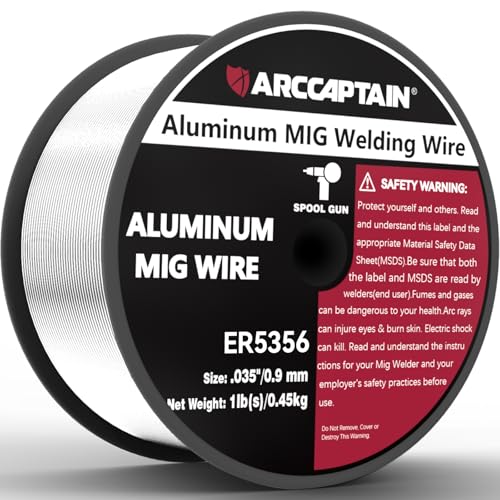 ARCCAPTAIN Magnesium Aluminum MIG Welding Wire ER5356 .035"9.6/10View on Amazon
Aluminum MIG welding rewards a steady hand and a chart that matches the wire to the work. An aluminum MIG settings chart lists the wire, gas and machine settings for a given thickness of aluminum, so the welder can set voltage and wire feed speed before striking an arc. This guide explains how to read that chart, how to pick the wire alloy and diameter, and what to check on the machine before welding.
This guide links to product roundups, where WeldGearLab gets a commission on purchases made through links on this page, and your price stays the same.
Aluminum MIG settings chart: how to read it
A settings chart is a table, and each row is a thickness of aluminum. Read across the row for the wire diameter, then for the voltage and the wire feed speed that go with that thickness and wire. The chart also names the shielding gas. The numbers on a chart are starting points for a given machine and wire, not fixed values for every shop. When the chart on the machine door and the chart in the manual disagree, follow the manual, and run a practice bead on scrap of the same thickness before welding the part.
Wire first: ER4043, ER5356 and ER5554
| ER4043 | ER5356 | ER5554 | |
|---|---|---|---|
| Wire sizes listed | .030, .035, .045 and 3/64 inch | .030, .035 and .045 inch | 3/64 inch |
| Filler metal | 5% silicon | 5% magnesium | Not stated |
| Base metals listed | 3003, 3004, 5052, 6061, 6063 | 5050, 5052, 5083, 5356, 5454, 5456 | Not stated |
| Melting range | Not stated | 1060 to 1175 degrees Fahrenheit | 1155 to 1195 degrees Fahrenheit |
| Shielding gas | 100% argon | Not stated | Not stated |
| Spool sizes listed | 1 lb and 5 lb | 5 lb and 16 lb | 5 lb |
ER4043 is a 5% silicon aluminum filler metal, and ER5356 is a 5% magnesium aluminum filler metal. The ER4043 listings recommend it for base metals 3003, 3004, 5052, 6061, 6063 and casting alloys 43, 355, 356 and 214. The ER5356 listings name base metals 5050, 5052, 5083, 5356, 5454 and 5456. ER5356 weld deposits have good ductility and higher tensile strength, and the post anodizing color is white. ER5356 is not suitable for temperatures sustained above 150 degrees Fahrenheit. ER5554 is listed with a melting range of 1155 to 1195 degrees Fahrenheit and a density of .097 lbs per cubic inch, while ER5356 lists a melting range of 1060 to 1175 degrees Fahrenheit and a density of 0.096 lbs per cubic inch.
Wire diameter
Aluminum MIG wire comes in diameters the listings show as .030 inch, .035 inch, .045 inch and 3/64 inch. ER4043 is listed in .030 inch, .035 inch, .045 inch and 3/64 inch sizes, and ER5356 is listed in .030 inch, .035 inch and .045 inch sizes. The .035 inch size appears in listings for ER4043 and ER5356, in 1 lb and 5 lb rolls for ER4043 and in a 16 lb spool for ER5356. ER5554 is listed as a 3/64 inch wire on a 5 lb spool. Match the diameter to the chart row for the thickness being welded, and match the drive rolls and contact tip to the wire diameter.
Gas for aluminum MIG
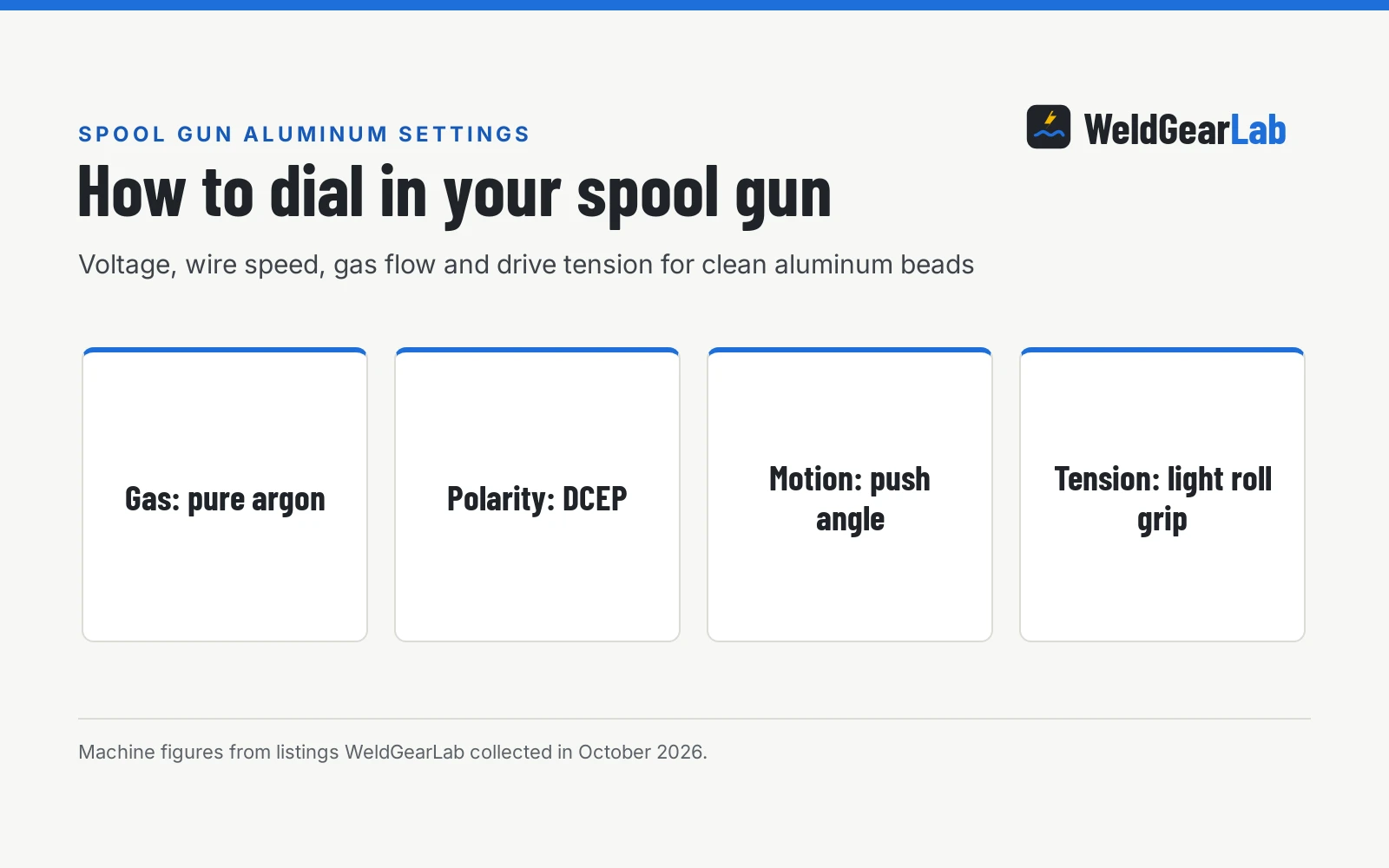
Aluminum MIG uses 100% argon gas. The ER4043 listing that names a gas calls for 100% argon, so the gas does the shielding. Keep the gas flowing long enough to cover the puddle, and keep the gun angle and stickout steady so the gas blanket stays over the weld. Wind blows shielding gas away, so weld aluminum indoors or behind a windbreak when the work allows it. Check the cylinder, regulator and hose before welding, and keep the cylinder secured upright.
How to use the chart, step by step
Start with the thickness of the aluminum and find that row on the chart. Read the wire diameter for that row and fit that wire to the machine. Read the voltage and wire feed speed for that row and set the machine to those values. Set the gas for 100% argon. Run a practice bead on scrap of the same thickness and look at the bead: a flat, even bead with good wetting at the edges means the settings are close, while a tall, ropy bead or a bead that sits on top of the metal means the settings need work. Change voltage or wire feed speed a little at a time and run another practice bead until the bead looks right, then weld the part.
Practice beads and common problems
Burn through means too much heat for the thickness, so move to a lower setting on the chart or move faster along the joint. Lack of fusion shows as a bead that sits on the surface without tying into the base metal, which points to low voltage or a wire feed speed that is too high for the voltage. Porosity, small holes in the bead, points to gas coverage, dirty metal or a leak in the gas path, so check the gas, clean the joint and check the hose and fittings. Spatter and a rough bead can come from the wrong wire feed speed for the voltage. Aluminum oxidizes fast, so clean the joint and the wire before welding, and keep the filler wire covered when it is not in use.
Arc flash, fumes and fire. Aluminum MIG gives off a bright arc, fumes and spatter, and the work stays hot after the arc stops. Weld with ventilation or outdoors with the head out of the plume, wear a welding helmet, gloves and protective clothing, and clear dry grass and anything flammable from the area. Secure gas cylinders upright with a chain. See the OSHA welding overview.
FAQ for welders
What wire should I use for 6061 aluminum?
ER4043 is recommended for 6061, along with base metals 3003, 3004, 5052 and 6063 and casting alloys 43, 355, 356 and 214. ER5356 is listed for 5050, 5052, 5083, 5356, 5454 and 5456. Pick the wire by the base metal first, then check the chart row for the thickness being welded.
What is the difference between ER4043 and ER5356?
ER4043 is a 5% silicon filler metal, and ER5356 is a 5% magnesium filler metal. ER5356 deposits have good ductility and higher tensile strength, and the post anodizing color is white. ER5356 is not suitable for temperatures sustained above 150 degrees Fahrenheit. Both are listed in .030 inch, .035 inch and .045 inch sizes, so the diameter does not pick the alloy.
What gas do I use for aluminum MIG?
Use 100% argon gas. The ER4043 listing that names a gas calls for 100% argon, and the gas shields the puddle from air while the bead forms. Keep the gun steady so the gas blanket stays over the weld, and weld out of the wind when the work allows it.
What wire diameter should I start with?
The listings show .035 inch wire for ER4043 and ER5356, in 1 lb and 5 lb rolls for ER4043 and in a 16 lb spool for ER5356. The .035 inch size is a common starting point in the listings, but the chart row for the thickness being welded is what decides the diameter, so check the door chart or manual for the machine.
Where do I find the voltage and wire feed speed?
On the chart inside the machine door or in the machine manual. Find the row for the thickness and the wire diameter, then read the voltage and wire feed speed from that row. Those values are starting points, so run a practice bead on scrap of the same thickness and adjust a little at a time until the bead looks right.
Related: aluminum MIG welding tips, TIG aluminum filler rod chart, MIG vs stick for aluminum, can you MIG weld aluminum without gas, and the MIG welders hub, and the welders hub. Also see how to choose a MIG welder.