Spool Gun Settings for Aluminum: Setup and Tuning Guide (2026)
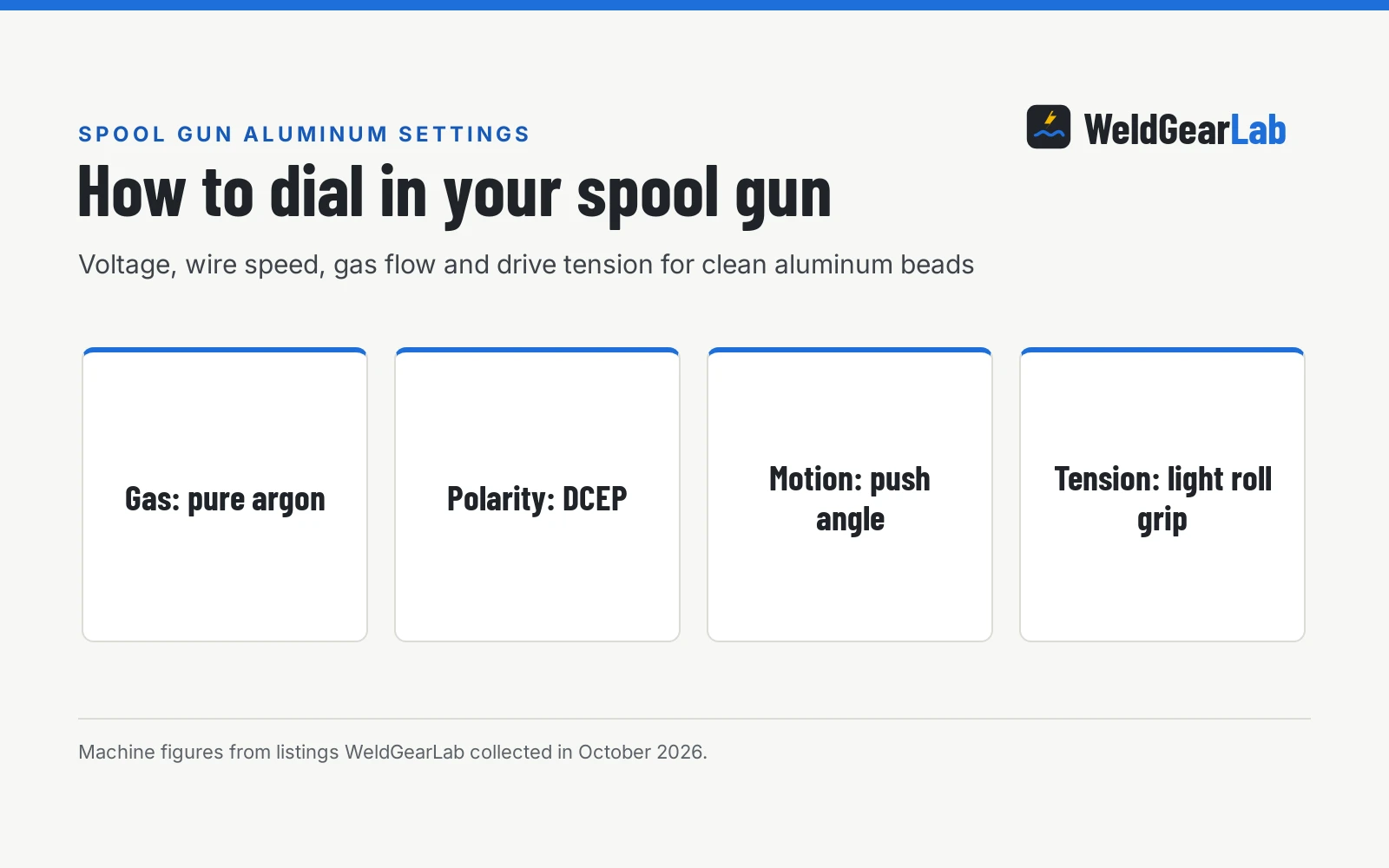
Dialing in spool gun settings for aluminum requires higher arc voltage, rapid wire feed speed, light drive roll tension and pure argon gas to weld clean beads without wire jams.

On this page
Top picks at a glance
As an Amazon Associate I earn from qualifying purchases.
- 1
 Spool Gun9.5/10View on Amazon
- 2
 Weldpro 200 Amp MIG Welder9.5/10View on Amazon
- 3
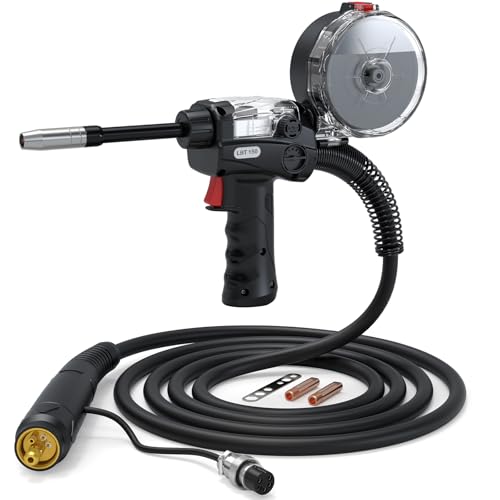 ARCCAPTAIN Spool Gun 5-Pin for Aluminum Welding 150A Euro9.5/10View on Amazon
Proper spool gun settings for aluminum require balancing higher arc voltage, rapid wire feed speed, light drive roll tension and pure argon shielding gas to establish a clean spray transfer arc. Because aluminum conducts heat rapidly and soft alloy wire binds easily inside standard torch cables, dialing in your spool gun demands significantly different parameters than steel MIG. Starting with high wire feed rates, matching contact tip clearance, proper nozzle-to-work distance and a forward push travel angle prevents wire burnback and lays flat, sound beads across aluminum joints.
This guide links to our product roundups, where WeldGearLab gets a commission on purchases made through links on this page, and your price stays the same. Read our affiliate disclosure.
Spool gun settings for aluminum summary
Aluminum wire melts rapidly and typically requires spray transfer rather than short circuit transfer to avoid cold lap and excessive spatter. To achieve spray transfer on a conventional machine, you need direct current electrode positive polarity, sufficient voltage to spray droplets across the arc gap, fast wire feed speed to keep up with the melting rate, and pure argon shielding gas. Because soft aluminum wire buckles under column pressure, a spool gun mounts the wire drive mechanism directly on the torch handle. Setting drive roll tension just tight enough to pull wire from the spool eliminates feeding friction while preventing drive rolls from crushing or shaving the wire.
Side by side
| Aluminum Spool Gun | Aluminum Standard Torch | Steel Standard Torch | |
|---|---|---|---|
| Shielding gas | Pure argon | Pure argon | Argon and carbon dioxide mix |
| Wire delivery path | Direct feed from gun mounted spool | Long liner prone to birdnesting | Long flexible steel liner |
| Feed reliability | High reliability on soft wire | Prone to friction jams and birdnesting | High reliability on stiff wire |
| Drive roll style | Smooth U-groove rolls | Smooth U-groove rolls | Smooth V-groove rolls |
| Drive roll tension | Very light to prevent wire deformation | Very light to prevent wire deformation | Moderate to firm tension |
| Transfer mode | Spray or pulse transfer | Spray or pulse transfer | Short circuit or spray transfer |
| Torch travel technique | Push angle only | Push angle only | Push or drag angle |
| Contact tip style | Dedicated oversized aluminum tip | Dedicated oversized aluminum tip | Standard wire matching tip |
| Puddle freeze rate | Rapid freeze with fast heat loss | Rapid freeze with fast heat loss | Slower freeze with held heat |
Machine door charts provide a starting baseline for voltage and wire speed, but aluminum demands active adjustments at the bench. Because aluminum pulls heat away from the weld zone rapidly, a setting that runs clean on a cold joint can produce excessive penetration as the parent metal heats up. Polarity must always remain direct current electrode positive for solid aluminum wire.
Dialing in voltage and wire feed speed
Setting the correct relationship between voltage and wire feed speed is the foundation of clean aluminum MIG welding. Unlike steel, which often runs in short circuit mode with a steady crackle, standard aluminum MIG relies on spray transfer. In spray transfer, the wire does not touch the puddle. Instead, tiny molten droplets stream across the arc gap into the joint, producing a smooth hissing sound with minimal spatter.
If your voltage is too low for the selected wire speed, the wire stubs into the puddle, pops loudly, and pushes the gun back against your hand. Increase your voltage setting or trim back wire feed speed until the stubbing stops and the arc settles into a quiet hiss. Conversely, if your voltage is too high or your wire feed speed is too slow, the arc length grows and climbs up the wire toward the contact tip, causing immediate burnback that fuses the wire directly into the copper tip. When the arc flares excessively or burns back toward the tip, lower your voltage or increase wire feed speed slightly. For troubleshooting stubborn tip meltdowns, see our guide on why MIG wire burns back to the tip.
Drive roll tension and contact tip setup
Feeding problems cause more failed aluminum welds than incorrect voltage. Aluminum wire is soft and malleable. If you apply the same drive roll tension used for steel, the rolls squash the wire into an oval profile. An oval wire wedges inside the contact tip and jams instantly, causing wire birdnesting at the drive rolls. For step by step fixes when wire wraps around the drive mechanism, read our guide on how to fix MIG wire birdnesting.
Loosen the spool gun tension screw completely. Pull the trigger and tighten the tension screw gradually until the drive rolls feed wire smoothly without slipping. Hold a wooden block in front of the nozzle: the rolls should slip on the wire rather than bunching it up behind the guide tube. Use smooth U-groove drive rolls designed specifically for aluminum rather than knurled rolls that bite into the metal and create metal shavings.
Contact tip selection is equally critical. Aluminum expands at a much higher rate than steel when heated. If you feed aluminum wire through a standard contact tip sized for steel, thermal expansion causes the wire to bind inside the tip orifice as soon as you establish an arc. Always install a dedicated aluminum contact tip, which features a slightly enlarged bore to accommodate thermal growth. When selecting wire spools, pair your gun with quality filler metals reviewed in our best aluminum MIG wire guide.
Shielding gas selection and flow rates
Pure argon is the standard shielding gas for spool gun aluminum welding in home and fabrication shops. Never use carbon dioxide or steel shielding mixes containing carbon dioxide or oxygen. Carbon dioxide reacts with molten aluminum, creating severe oxidation, black soot and massive porosity throughout the joint.
Set your shielding gas flow rate to provide generous coverage over the molten puddle. Because aluminum creates a wide, fluid puddle and spray transfer generates an expansive arc cone, gas coverage must be sufficient to shield the entire molten zone from atmospheric contamination. However, setting the regulator excessively high creates turbulent gas flow, which pulls surrounding air into the shielding envelope and causes pinhole porosity. Dial in steady flow using the methods detailed in our guide on how to set gas flow rate for MIG welding. Protect your work area from drafts, as even a mild breeze will displace argon shielding gas and ruin the weld.
Gun angle and travel technique
Welding aluminum with a spool gun requires a dedicated push technique. Never drag or pull a spool gun when welding aluminum. Dragging directs the shielding gas away from the puddle, leaving the hot metal exposed to oxygen and nitrogen. This produces heavy black soot, dirty oxide inclusions and weak joints. Pushing directs shielding gas ahead of the arc, pre-cleans the joint with arc action and yields bright, clean bead surfaces. Learn when to push and drag across various materials in our breakdown of push vs pull MIG welding.
Hold the spool gun with a slight forward push angle. Maintain proper nozzle-to-work distance so the shielding gas envelope fully blankets the puddle without letting the contact tip get too close to radiant heat. Keeping the contact tip recessed slightly inside the gas nozzle protects the tip from heat while maintaining effective gas coverage over the broad aluminum puddle.
Travel speed must be rapid. Because aluminum conducts heat away from the joint quickly, you must establish the puddle immediately with sufficient arc energy and move forward promptly. As the base metal heats up, the puddle expands rapidly. If your travel speed is too sluggish, excess heat accumulates, leading to keyholing and complete burn-through on sheet metal.
Matching your spool gun to your welder
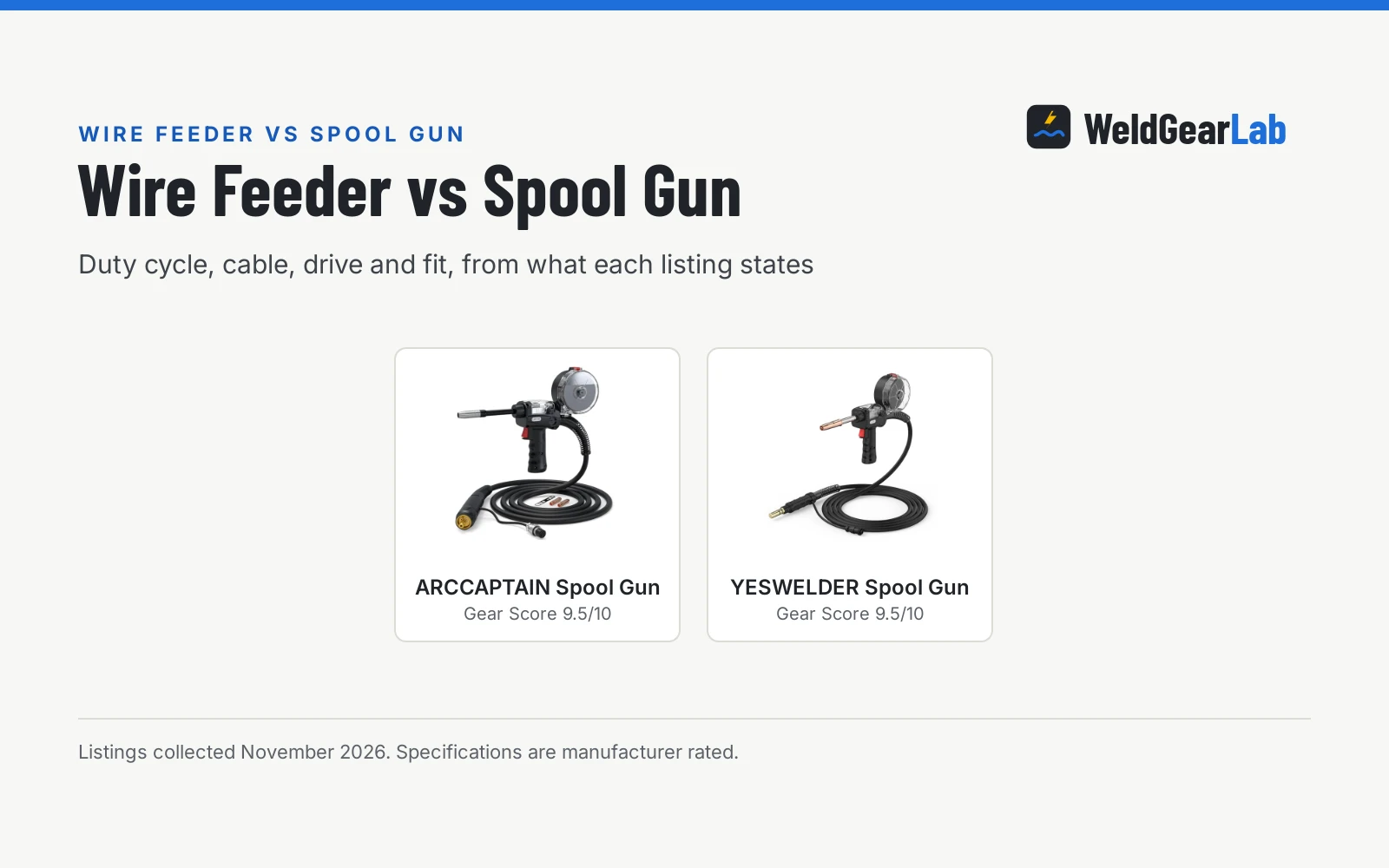
Connecting a spool gun requires confirming electrical compatibility with your power supply. Spool guns rely on an internal direct current motor that requires control signals from the machine. Control connections vary across manufacturers and are not universally interchangeable. For example, the ARCCAPTAIN spool gun listing states a 4-pin control plug, which only fits power supplies configured for that specific pinout. Always verify your welder control pin count and wiring pinout before buying an aftermarket gun.
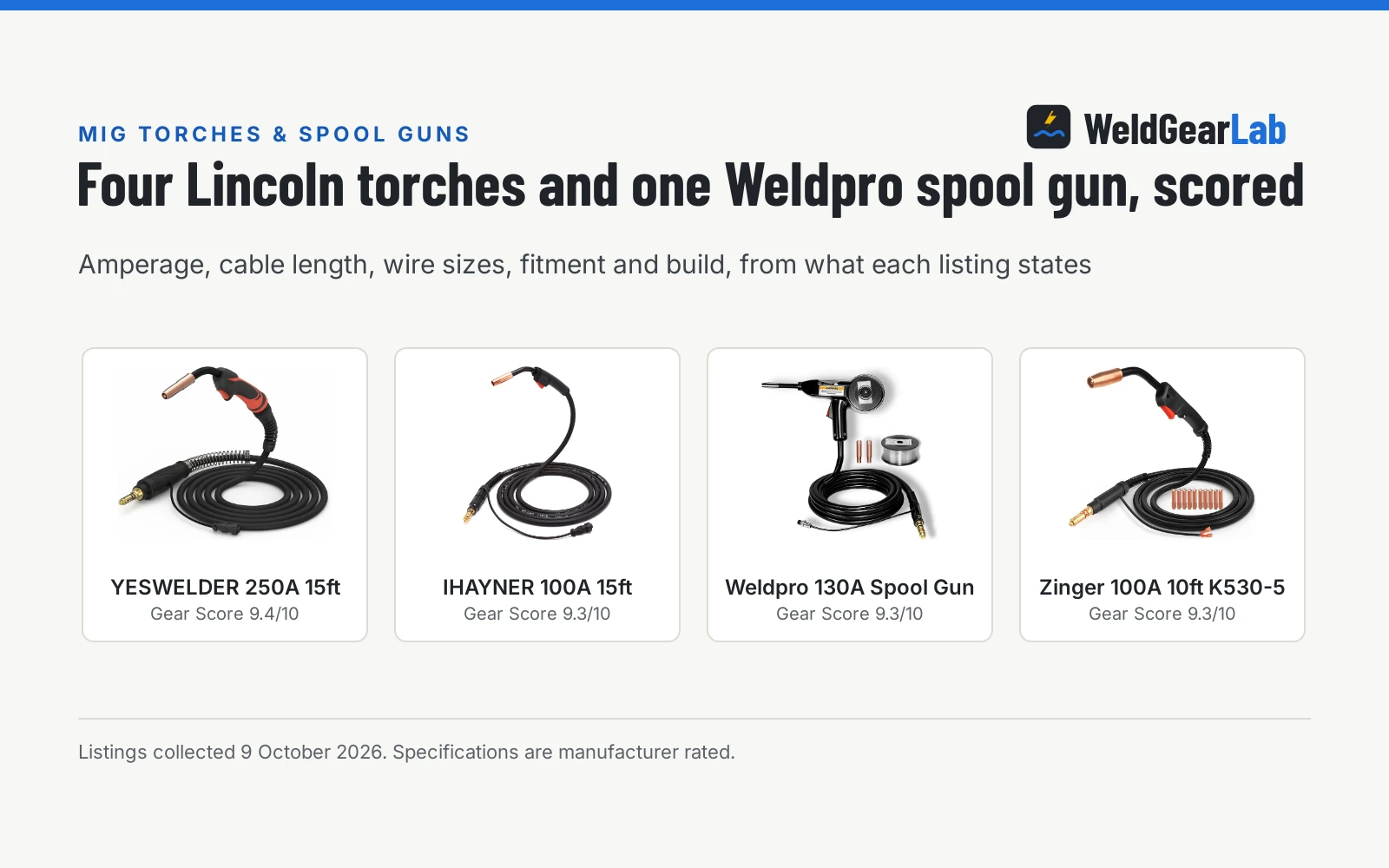
Amperage ratings also reflect the limits of individual torches and machines rather than universal category rules. The Weldpro 130A spool gun listing states a 130A rating, and the TOOLIOM 150A spool gun lists a 150A capacity. Higher capacity machines like the YESWELDER 205A list a 205A output, which provides greater power headroom when running continuous beads on thicker plate. If you are shopping for a complete package, explore our roundup of the best MIG welder with spool gun included, or check dedicated attachments like the spool gun for Lincoln MIG welder. To explore full machine lines across all processes, visit our comprehensive welders hub. If you need precise aesthetic control on thin architectural pieces, compare processes with our guide on TIG vs MIG for aluminum.
Aluminum welding safety and prep. Aluminum spray transfer emits intense ultraviolet radiation that easily burns exposed skin and degrades standard clothing. Always wear heavy leather sleeves and high grade personal protective equipment listed in our welding safety gear section. Aluminum oxide forms naturally on the metal surface and melts at a much higher temperature than the underlying aluminum base metal. Thoroughly clean the joint with a dedicated stainless steel wire brush that has never touched carbon steel, and wipe the area with a residue free degreaser prior to striking an arc. Ensure adequate shop ventilation or local fume extraction to remove ozone and aluminum oxide fumes from your breathing zone.
FAQ for welders
Why use a spool gun for aluminum?
Aluminum wire is soft and bends easily under compressive force. Pushing soft wire through a standard long MIG gun cable causes friction, buckling and birdnesting at the machine drive rolls. A spool gun places a small wire spool and drive motor directly inside the gun handle, reducing the wire feeding distance to a very short path directly at the handle.
How does a spool gun work?
A spool gun holds a compact spool of aluminum wire directly on the torch body. When you pull the trigger, an integrated miniature drive motor inside the handle pulls wire directly from the mounted spool and pushes it through a short internal guide tube into the contact tip. Gas flows through a dedicated valve directly to the nozzle.
How do you set up an aluminum spool gun?
Mount the aluminum wire spool onto the gun spindle and thread the wire through the internal drive rolls. Install a dedicated aluminum contact tip with matching clearance onto the gun neck. Set the welder polarity to direct current electrode positive, connect pure argon shielding gas, adjust drive roll tension to light pressure, and select your initial voltage and wire speed settings.
Why does aluminum wire burn back to the contact tip?
Burnback occurs when the arc climbs the wire faster than the drive motor feeds it forward, fusing the wire directly into the copper tip. Common causes include running excessive arc voltage, setting wire feed speed too slow, wire feeding hesitation caused by slipping drive rolls, or using a standard steel contact tip that binds as the wire expands.
Can you weld aluminum with a standard MIG gun?
Welding aluminum through a standard MIG gun is possible with a Teflon liner, oversized contact tips and U-groove rolls, but wire feeding remains notoriously unreliable over longer cable lengths. Cable bends frequently cause the soft wire to bind and birdnest. A spool gun provides far more reliable feeding for shop and field work.
Related: best MIG welder with spool gun included, best aluminum MIG wire, TIG vs MIG for aluminum, and the welders hub. Also see our guides on how to fix MIG wire birdnesting and why MIG wire burns back to the tip.