Spool Gun vs Push Pull Gun: Which One Should You Buy?
Spool guns and push-pull guns solve aluminum wire feeding in different ways, balancing gun weight, reach, wire spool capacity, and shop budget.

On this page
Top picks at a glance
As an Amazon Associate I earn from qualifying purchases.
- 1
 Spool Gun9.5/10View on Amazon
- 2
 ARCCAPTAIN Spool Gun 4-Pin for Aluminum Welding 150A EuroView on Amazon
- 3
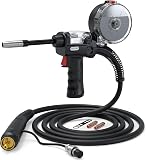 ARCCAPTAIN Spool Gun 5-Pin for Aluminum Welding 150A EuroView on Amazon
- 4
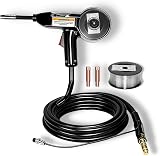 Weldpro 130A Aluminum Spool GunView on Amazon
- 5
 TOOLIOM 150A Aluminum MIG Spool Gun with Euro Connector ForView on Amazon
- 6
 LOTOS MIG225SP MIG Welder with Aluminum Spool GunView on Amazon
- 7
 AZZUNO Aluminum MIG Spool GunView on Amazon
Feeding aluminum wire through a standard MIG gun often turns into a birdnest at the drive rolls. Aluminum wire is soft, kinks easily in a standard cable liner, and needs a dedicated feeding system to lay down a sound bead. When deciding between a spool gun vs push pull gun, the right choice comes down to your production volume, cable reach, and shop budget. A spool gun puts a small wire spool right on the torch to eliminate long liner friction for small jobs and quick repairs. A push-pull gun pairs a feeder motor in the machine cabinet with a synchronized motor in the gun handle, pulling wire smoothly through long cables for continuous production. This guide compares both systems so you can match the feeding method to your bench.
Other welders and gear to compare
 ARCCAPTAIN Spool Gun 4-Pin for Aluminum Welding 150A EuroCheck price on Amazon
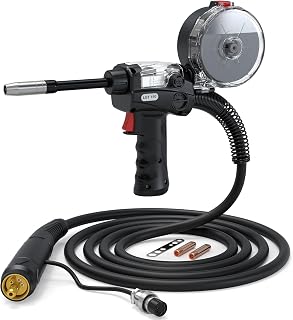 ARCCAPTAIN Spool Gun 5-Pin for Aluminum Welding 150A EuroCheck price on Amazon
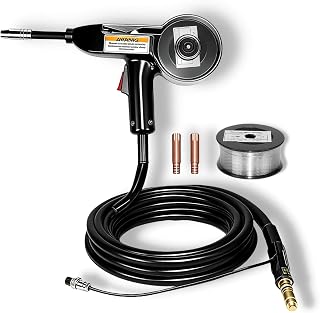 Weldpro 130A Aluminum Spool GunCheck price on Amazon
 TOOLIOM 150A Aluminum MIG Spool Gun with Euro Connector ForCheck price on Amazon
 LOTOS MIG225SP MIG Welder with Aluminum Spool GunCheck price on Amazon
 AZZUNO Aluminum MIG Spool GunCheck price on Amazon
This guide links to our product roundups, where WeldGearLab gets a commission on purchases made through links on this page, and your price stays the same. Read our affiliate disclosure.
The difference in one paragraph
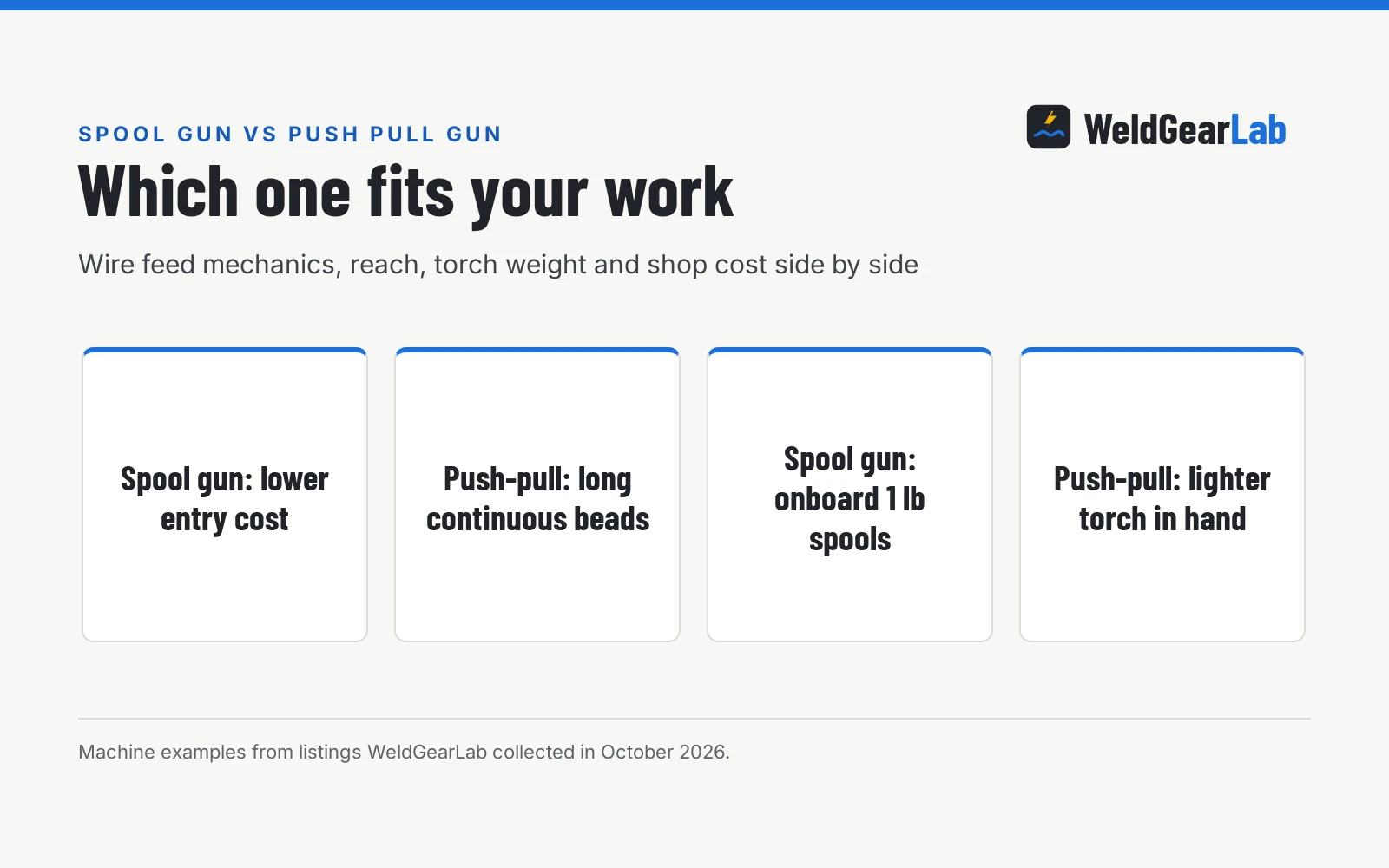
The fundamental difference is where the wire spool sits and how drive motors move the wire. A spool gun mounts the wire roll directly on top of the torch handle, where a dedicated internal motor drives wire through the contact tip, bypassing cable liner drag entirely. A push-pull system leaves standard spools inside the power source cabinet or an external wire feeder. The cabinet drive rolls push the wire into the lead conduit, while a second motor inside the torch grip pulls the wire at matched speed. A spool gun eliminates liner drag by keeping the wire path short, while a push-pull setup manages liner drag by pulling wire from both ends.
Spool gun vs push pull gun side by side
| Spool gun | Push-pull gun | Standard MIG gun | |
|---|---|---|---|
| Wire spool location | Mounted directly on torch handle | Inside welder cabinet or feeder | Inside welder cabinet |
| Drive mechanism | Motor in gun pulls wire off spool | Cabinet motor pushes and gun motor pulls | Cabinet motor pushes wire only |
| Aluminum feed reliability | High, short travel prevents buckling | High, synchronized pull prevents buckling | Poor, prone to birdnesting in liner |
| Torch weight in hand | Heavier due to mounted motor and spool | Light and balanced for long welds | Light and most compact |
| Cable lead reach | Shorter cable runs from power source | Long cable reach across large workpieces | Standard cable runs from power source |
| Wire spool capacity | Small 1 lb spools | Standard full size wire spools | Standard full size wire spools |
| Equipment complexity | Simple plug-in torch accessory | Specialized dual-motor sync circuit | Standard equipment on most machines |
| Best suited work | Maintenance repairs and small fab jobs | High-volume manufacturing and long seams | Steel fabrication (troublesome on aluminum) |
Wire feeding reliability determines whether an aluminum bead stays clean or burns back to the tip. While both designs prevent wire kinking, they place different physical demands on the welder. A spool gun adds the weight of the motor and wire spool directly to your wrist, making out-of-position welds more tiring. A push-pull gun keeps the torch barrel light and nimble, but the synchronized dual-motor drive adds mechanical complexity and requires a dedicated machine interface.
When a spool gun is the better choice
- Quick setup for occasional jobs. Swapping from steel solid wire to aluminum takes minutes by plugging the gun control harness into your machine.
- Direct wire feed path. The short distance from the internal drive roll to the contact tip prevents wire buckling with soft ER4043 wire.
- Compact shop versatility. Well suited for utility trailer repairs, boat patches, farm gates, and hobby fabrication where total cable reach is secondary.
In reference listings, ARCCAPTAIN rates its 10-foot spool guns at 150A with a 60% duty cycle, while VEVOR lists spool gun models rated from 100A to 200A with 10-foot or 20-foot cables. VEVOR also lists spool guns that support 1 lb welding wire spools with contact tips for 0.030-inch and 0.035-inch wire. Match the gun to the machine you already own: reference listings show ARCCAPTAIN spool guns in 4-pin and 5-pin versions with Euro connections, so check your machine control socket before ordering.
When a push-pull gun is the better choice
- Long continuous seams. Feeding wire from full-size spools inside the cabinet lets you lay down long passes without stopping to reload wire spools.
- Extended shop mobility. Long cable leads let operators walk around large trailers, boat hulls, and structural tanks without hauling the power source across the floor.
- Reduced operator fatigue. Without a wire spool mounted overhead on the gun body, the torch remains balanced and nimble in tight joints.
- High-volume production fab. Dedicated fabrication facilities gain consistent wire feeding across multi-shift production runs with minimal downtime.
Push-pull systems excel on large production assemblies where torch weight and cable reach outweigh initial equipment costs. When welding overhead or inside structural frames, handling a stripped-down torch body allows much cleaner torch angles and puddle control than balancing a spool on the gun handle. For smaller wire spools on compact rigs, our breakdown of best aluminum MIG wire covers spool options and alloys.
How to tell what your machine supports
Not every MIG power source can connect to an aluminum gun system. Look for these specific features on your welder cabinet and faceplate before buying accessories:
- Spool gun toggle switch. Many multi-process and MIG machines include a dedicated toggle switch marked Spool Gun or MIG Torch that diverts power and trigger circuits to the secondary port.
- Multi-pin control socket. Dedicated gun connections rely on multi-pin receptacles on the front panel. Listings from ARCCAPTAIN and Hasweld show 4-pin and 5-pin control connections that route motor power and trigger signals directly to the gun handle.
- Push-pull synchronization circuit. Push-pull torches require an internal motor control board or dedicated push-pull receptacle to balance push and pull drive roll speeds. Standard compact MIG welders lack this circuitry.
- Euro or direct power connection. Check the power connector style on the front panel. ARCCAPTAIN listings cite Euro connection fittings, while Hobart listings like the SpoolRunner 200 use direct proprietary plugs for specific power sources.
If your power source lacks a spool gun switch or auxiliary control plug, it cannot power a motorized aluminum gun without an external control box. Check your machine manual and front panel markings before ordering.
Shielding gas and wire for aluminum MIG
Unlike mild steel MIG welding which relies on argon and carbon dioxide blends, aluminum MIG requires pure argon shielding gas. Pure argon stabilizes the spray transfer arc, scours away tough aluminum surface oxides, and shields the puddle from porosity. Using a steel shielding mix of argon and carbon dioxide on aluminum will cause severe oxidation, soot, and puddle contamination. Always set cylinder flow rates according to your machine door chart, and keep a dedicated argon gas regulator on your tank.
Aluminum wire selection also matters for consistent feeding. Harder alloys feed with less drag, while softer alloys require careful drive roll tension and straight cable runs. For alternative methods to join aluminum, read our comparison on TIG vs MIG for aluminum.
Can one machine run both systems?
A MIG power source can only run a spool gun if it includes dedicated control wiring and an internal selector switch, whereas push-pull guns require advanced motor synchronization circuits typically found only on heavy industrial machines. While compact shop welders rarely support push-pull guns, some commercial multi-process power sources provide connections for both systems, allowing operators to choose between a spool gun for small maintenance patches or a push-pull gun for long production seams.
Aluminum welding safety. Aluminum MIG welding produces intense ultraviolet radiation and ozone fumes. Always wear a shade-appropriate welding helmet, leather welding gloves, and protective clothing to protect skin from flash burns. Work in a well-ventilated area to avoid breathing welding fumes, and keep high-pressure shielding gas cylinders chained firmly upright. Review our welding safety gear checklist before setting up your workstation.
FAQ for welders
Can I weld aluminum with a standard MIG gun instead?
You can run aluminum wire through a standard MIG gun by installing a slick polymer liner and matching drive rolls. However, because aluminum wire is soft, any resistance along a standard cable often results in severe wire birdnesting at the drive rolls. A spool gun or push-pull gun is far more reliable because it shortens or actively assists the wire travel distance.
Why does aluminum wire birdnest so easily?
Aluminum wire has lower column strength than solid steel wire and bends readily under drive roll compression. When the wire meets friction inside the gun liner or resistance at the contact tip, the drive rolls continue feeding, crumpling the wire into a tangled knot at the feeder. Dedicated aluminum feeding guns solve this problem by eliminating or motor-assisting the liner run.
What drive rolls do spool guns use for aluminum wire?
In standard push feeders, U-groove rolls are common to prevent shaving wire along long liners, but spool guns feed wire only a short distance to the tip. Reference listings from VEVOR include smooth or lightly knurled V-groove drive rolls designed to grip 0.030-inch and 0.035-inch aluminum wire without slippage. Always check your gun manual to match roll profile and drive tension to your wire alloy.
Can any MIG welder run a spool gun?
No, your MIG machine requires internal circuitry and a control receptacle to power the spool gun motor. Look for an onboard spool gun switch and a multi-pin receptacle on the front faceplate. Machines without these features cannot run a spool gun without a separate outboard power controller.
Is a push-pull gun worth the extra investment for a small shop?
For most farm shops and hobby garages, a spool gun provides plenty of capability for aluminum repairs at a fraction of the equipment cost. Push-pull setups only justify their cost in commercial operations where operators lay down continuous aluminum beads all day. If you only weld aluminum occasionally, a spool gun is the practical choice.
Related: spool gun settings for aluminum, best MIG welder with spool gun included, how to fix MIG wire birdnesting, and the MIG welders hub. Also see our guide on how to choose a MIG welder.