Lift Tig vs Scratch Start Tig: Which One Should You Buy?
Lift TIG and scratch start TIG ignite the arc differently on basic DC machines, affecting tungsten wear, weld cleanliness, and torch setup.

On this page
Top picks at a glance
As an Amazon Associate I earn from qualifying purchases.
- 1
 C910-0725 TIG Foot Pedal9.7/10View on Amazon
- 2
 Bestarc TIG Welding TorchView on Amazon
- 3
 TOOLIOM Lift TIG TorchView on Amazon
- 4
 ARCCAPTAIN DC 5 In 1 TIG Welder With PulseView on Amazon
- 5
 ARCCAPTAIN Stick WelderView on Amazon
- 6
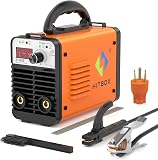 HITBOX 200Amp Stick WelderView on Amazon
- 7
 ARCCAPTAIN 205A Stick WelderView on Amazon
When you have thin tubing or clean steel brackets clamped to the welding bench and need sound TIG welds without high-frequency start, comparing lift tig vs scratch start tig comes down to arc control and tungsten cleanliness. Lift TIG is the better option for shop fabrication and hobby work because touching the tungsten to the work and lifting it establishes an arc without sticking or fouling your sharpened tip. Scratch start TIG strikes the tungsten like a match, which easily sticks and deposits tungsten inclusions into the weld puddle. While scratch start runs off a standard stick machine, lift TIG produces far cleaner bead starts with less grinding.
Other welders and gear to compare
 Bestarc TIG Welding TorchCheck price on Amazon
 TOOLIOM Lift TIG TorchCheck price on Amazon
 ARCCAPTAIN DC 5 In 1 TIG Welder With PulseCheck price on Amazon
 ARCCAPTAIN Stick WelderCheck price on Amazon
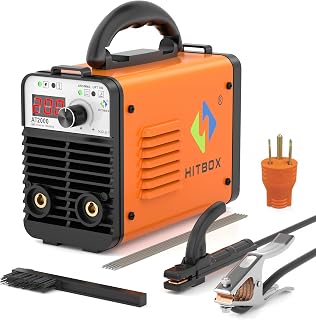 HITBOX 200Amp Stick WelderCheck price on Amazon
 ARCCAPTAIN 205A Stick WelderCheck price on Amazon
This guide links to our product roundups, where WeldGearLab gets a commission on purchases made through links on this page, and your price stays the same. Read our affiliate disclosure.
The difference in one paragraph
Both methods establish a DC welding arc by contacting the tungsten to the workpiece, but internal circuitry operates differently during contact. On scratch start, full open-circuit voltage and welding amperage are present the instant the electrode touches the metal, creating a harsh short circuit that fuses the tip to the plate. Lift TIG uses inverter sensing logic that passes a low current while the tungsten touches the work, ramping to full welding current only after you lift the torch to draw the arc. That transition protects the sharpened tip and keeps the puddle free of tungsten contamination.
Side by side
| Lift TIG | Scratch start TIG | HF start TIG | |
|---|---|---|---|
| Arc ignition | Touch tungsten to work, lift to draw arc | Scratch tungsten across work like a match | High-frequency spark jumps gap without contact |
| Tungsten contamination | Low; minimal tungsten deposits in base metal | High; easy to stick and deposit tungsten into puddle | None; tungsten never touches the base metal |
| Starting current control | Machine limits current during contact | Full welding amperage flows instantly upon contact | Full current controlled by foot pedal or trigger |
| Ease of arc starting | Predictable and smooth for beginners | Requires quick flick technique, sticks easily | Effortless; press pedal or trigger to start |
| Common power source | Dedicated TIG or multi-process inverter | Basic CC stick welder (inverter or transformer) | Dedicated AC/DC or DC TIG machine |
| Shielding gas control | Torch gas valve or internal machine solenoid | Manual torch gas valve on torch body | Automated internal machine solenoid |
| Torch connection | Air-cooled torch with matching DINSE and gas line | Air-cooled torch with manual valve and power block | Air-cooled or water-cooled torch with switch or pedal |
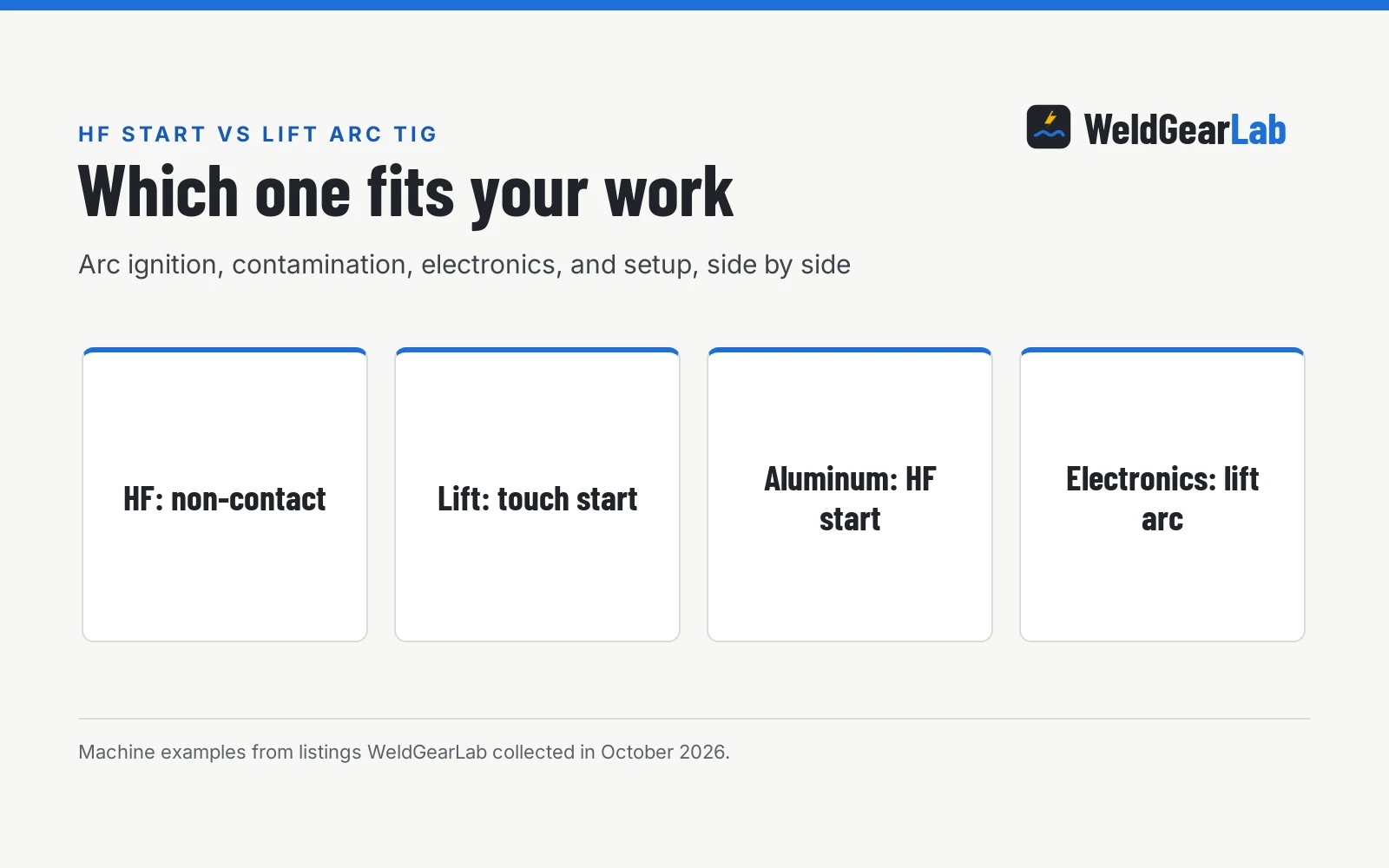
| High-frequency interference | None; safe around sensitive electronics and CNC | None; safe around sensitive electronics and CNC | Yes; high frequency can disrupt nearby computers |
| Tungsten sharpening frequency | Less frequent; tip stays intact longer | Frequent; tip balls or breaks when sticking | Infrequent; tip stays sharp until dipping in puddle |
Polarity for both processes is DCEN, placing the torch on the negative terminal and the clamp on positive. Always check your machine manual, as running reverse polarity immediately overheats the tungsten electrode and ruins the tip.
When lift TIG is the better choice
- Clean welds and visible fab work. Starting without dragging the electrode minimizes tungsten inclusions in sanitary tubing, roll cages, and structural joints.
- Beginners learning puddle control. Resting the gas cup, pivoting the tip onto the joint, and lifting is easier than the quick flick required for scratch starting.
- Thin sheet metal and small parts. Reduced starting current prevents blast-through and edge blow-out on delicate sheet joints.
- Less time at the grinder. A tip that avoids sticking stays sharp across multiple passes, saving grinding wheels and shop time.
Our best entry level TIG welder guide covers machines with smooth lift arc ignition for home and shop work.
When scratch start TIG is the better choice
- Running off an existing stick machine. If you own a constant-current stick welder without TIG circuitry, adding an air-cooled valved torch lets you run DC TIG without buying another welder.
- Field repairs and heavy plate. For farm equipment or structural steel outdoors where tungsten inclusions are not critical, scratch start lays beads with minimal gear.
- Simple setups with zero electronics. Scratch start runs on raw welding current with no circuit boards, relays, or switches to fail in dusty environments.
- Low-cost shop setups. Setting up scratch start requires only a valved torch, an argon regulator, and a cylinder, adding TIG capability to your shop without a new machine.
If you want to run TIG from an existing power supply, check our guide on whether can you TIG weld with a stick welder and how to select a TIG torch for stick welder with a manual gas valve.
How to tell what a machine supports
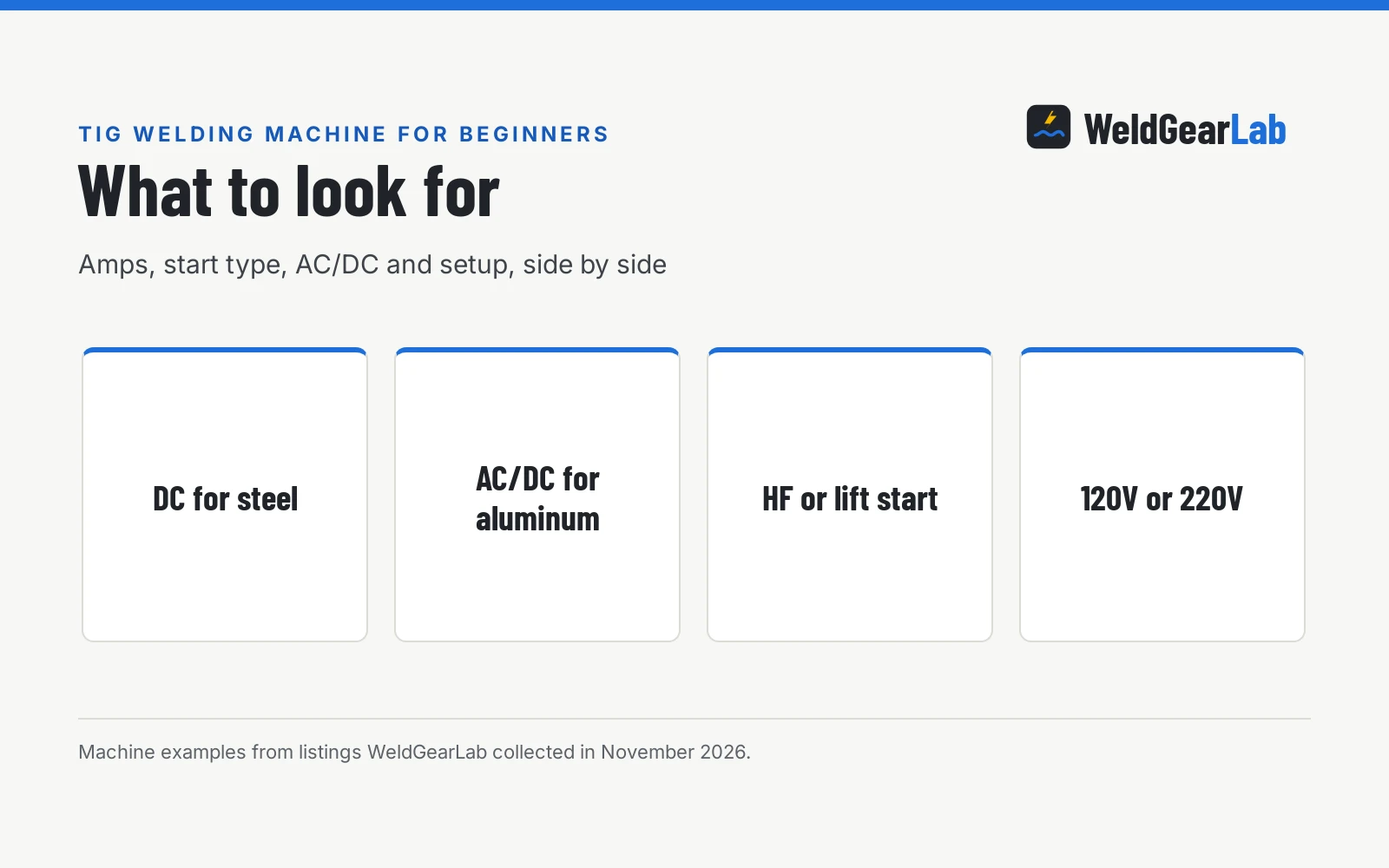
Not every welder supports lift TIG logic. Many compact stick machines offer no dedicated TIG circuitry, meaning any torch you attach operates strictly as scratch start. Look for these details in listings and faceplates:
- A dedicated Lift TIG selector switch. Machines with internal arc sensing feature a panel switch labeled Lift TIG or Lift Arc. For example, Sunstac lists its SS-200S stick welder with a dual-voltage 110/220V design featuring stick and Lift TIG modes, delivering 20-140A on 110V and 20-200A on 220V. Similarly, TOOLIOM lists a 195A stick welder on 110/220V featuring dual stick and Lift TIG operation.
- Dual-process inverter capability. Multi-process inverters state lift start TIG alongside stick. Everlast lists the PowerArc 140ST with lift start TIG capability and adaptive controls on 120V/240V power.
- DINSE connector dimensions. Power leads plug into DINSE receptacles on the front panel. Listings specify connector sizes, such as 10-25mm² connectors on smaller machines or 35-50mm² connectors on higher-output units. Confirming socket dimensions before selecting a torch ensures proper fit.
If a machine listing only mentions stick welding with no TIG mode, it lacks the sensing circuit. You can weld using scratch start, but it cannot perform lift arc starts.
Lift Tig vs Scratch Start Tig: Torch and Gas Setup
Gas delivery depends on whether the machine has an internal solenoid. Scratch start TIG on a stick welder always relies on an air-cooled torch with a manual gas valve on the torch body, because stick machines have no gas plumbing or trigger controls. Many entry-level lift TIG welders also use manual-valve torches, though dedicated inverters can integrate an internal solenoid that automates pre-flow and post-flow. With a manual-valve torch, crack the knob open to start shielding, strike the arc, finish the weld, and snap the torch away before closing the knob.
Air-cooled torches follow standard sizing. For example, ARCCAPTAIN lists WP-17V lift TIG torches rated for 150amp with a 13 FT cable, available with 10-25mm² or 35-50mm² connectors, a 5/8″-18 RH gas connection, and collets for 0.5-2.4MM tungsten electrodes. Bestarc lists the WP-17FV torch with a flexible neck and manual valve rated for 150Amps, packaging a 13FT power cable and 3.2FT gas hose with a 10-25mm² connector. For lighter work, Reboot lists a 150A flexible torch package with a 10-25mm² connector including 1/16 and 1/8 inch collets with a #4 ceramic cup. For higher current on thick steel, PLAXCON lists an air-cooled WP-26F torch body rated for 250A.
Connect the torch gas hose directly to an argon cylinder regulator. Pure argon is required for shielding steel and stainless steel. Review our guide on best TIG torch designs to match cable length and flexibility to your bench.
Can one machine do both?
A machine equipped with lift TIG can technically perform scratch start, because dragging tungsten initiates an arc on any live constant-current source. However, scratching with a lift TIG machine risks tungsten contamination and defeats the sensing circuit. Conversely, a stick machine without lift circuitry cannot perform lift starts because it lacks the low-current sensing logic.
If you want non-contact arc starting where the arc jumps across a gap without touching metal, see our guide on HF start vs lift arc TIG. Welders working without pedals can review how to TIG weld without a foot pedal to master torch manipulation and manual gas control.
TIG safety and electrical supply. TIG arcs emit intense ultraviolet radiation that burns skin and eyes. Always wear a shade-appropriate helmet and complete protective gear, as outlined in our welding safety gear checklist for beginners and our guide to the best welding helmet for TIG welding. Secure gas cylinders upright, maintain ventilation to prevent argon displacement in confined spaces, and inspect power cords before striking an arc. Consult the OSHA welding overview and our Safety Disclaimer.
FAQ for welders
Can you use a lift TIG torch for scratch start?
Yes, an air-cooled torch with a manual gas valve works for both processes. The arc starting mechanism is controlled by the power source, not the torch. Connecting the torch to a stick machine gives you scratch start, while plugging into a lift-capable welder enables lift arc starts.
Why does tungsten stick when scratch starting?
Scratch starting delivers full welding current the instant the electrode touches cold metal. That current creates an intense short circuit that melts the sharp tip and fuses it to the joint before you can lift away. A light, brushing wrist motion is required to strike the arc without sticking.
Do you need a foot pedal for lift TIG or scratch start?
Neither process requires a foot pedal. Both operate with preset amperage on the machine panel, using travel speed and arc length to control the puddle. While select lift TIG machines support an optional pedal, scratch start stick welders do not accept remote pedal connections.
Can you weld aluminum with lift TIG or scratch start?
Standard aluminum TIG requires alternating current (AC) to clean oxide from the joint, while scratch start and basic lift TIG run on direct current (DC). Welding aluminum on DC with argon fails to clear the oxide skin and fouls the tungsten. Dependable aluminum TIG welding requires an AC machine with high-frequency start.
Which is better for a beginner learning TIG welding?
Lift TIG is far better for beginners than scratch start. It minimizes electrode sticking, cuts down on grinding trips, and prevents tungsten inclusions in the bead. Beginners can focus on torch angle, rod feed, and puddle control rather than struggling to strike an arc.
Related: can you TIG weld with a stick welder, TIG torch for stick welder, HF start vs lift arc TIG, and the TIG welders hub. Also see our guide to the best entry level TIG welder.