Pulse Tig vs Standard Tig Welder: Which One Should You Buy?
Pulse TIG and standard TIG differ in heat control, arc stability on thin metal, and operator setup for shop fabrication.

Welding machines for home, farm and small shop work: MIG, TIG, stick and multi-process. We compare them on input voltage, rated output, duty cycle at a stated amperage, and what comes in the box.
Pulse TIG and standard TIG differ in heat control, arc stability on thin metal, and operator setup for shop fabrication.
How to dial in TIG welding settings for sheet metal to control heat input, prevent burn-through, and maintain clean arc stability on thin stock.
Pulse TIG welding cuts heat input on thin sheet metal to stop burn-through and distortion by alternating between peak and background amperage.
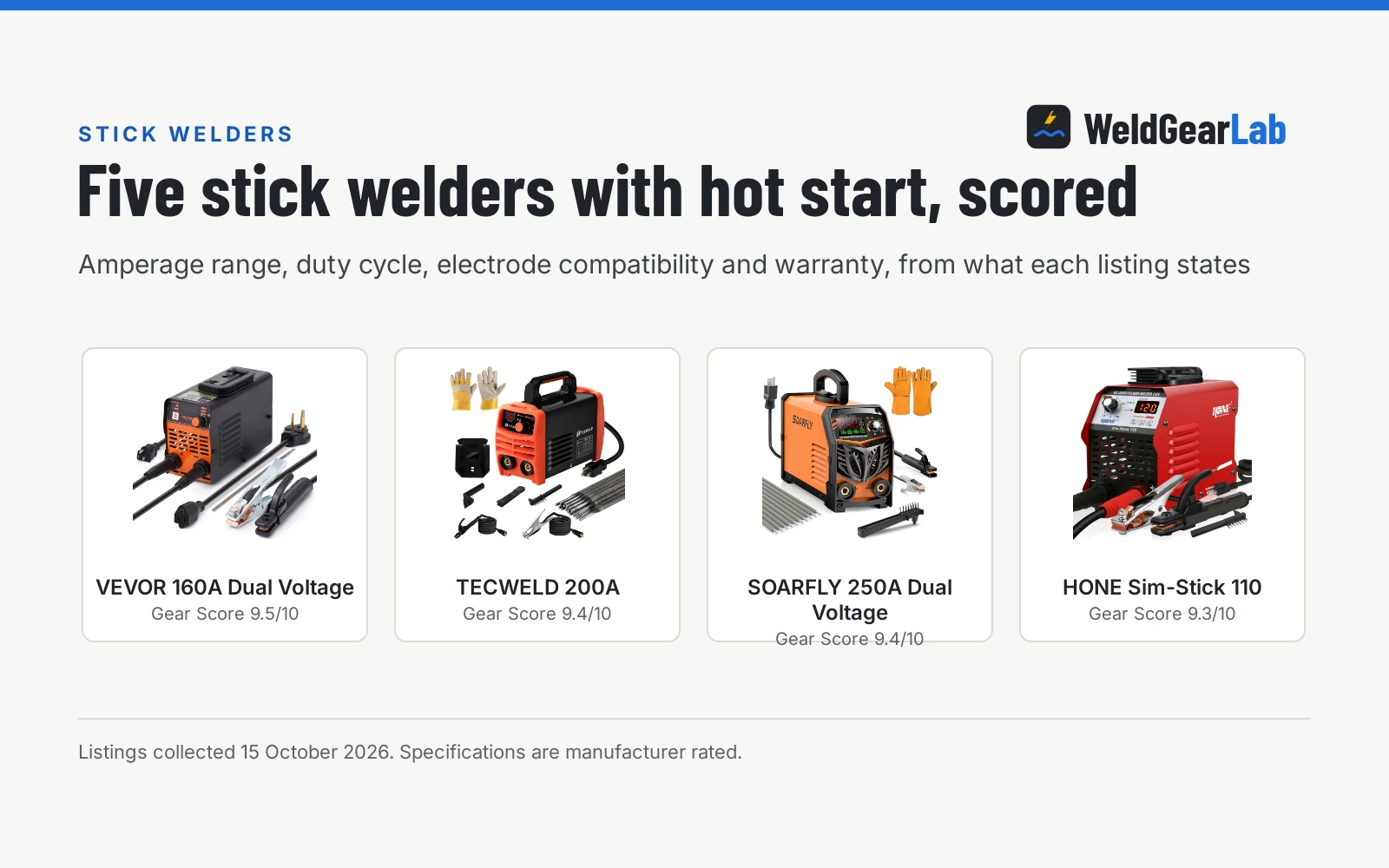
Five portable stick welders with hot start, compared on amperage range, duty cycle, electrode support, weight, and the warranty and safety features each listing…
Cold welding machines use rapid millisecond pulses to minimize heat and distortion on thin metal, while standard TIG welders provide continuous arc control for…
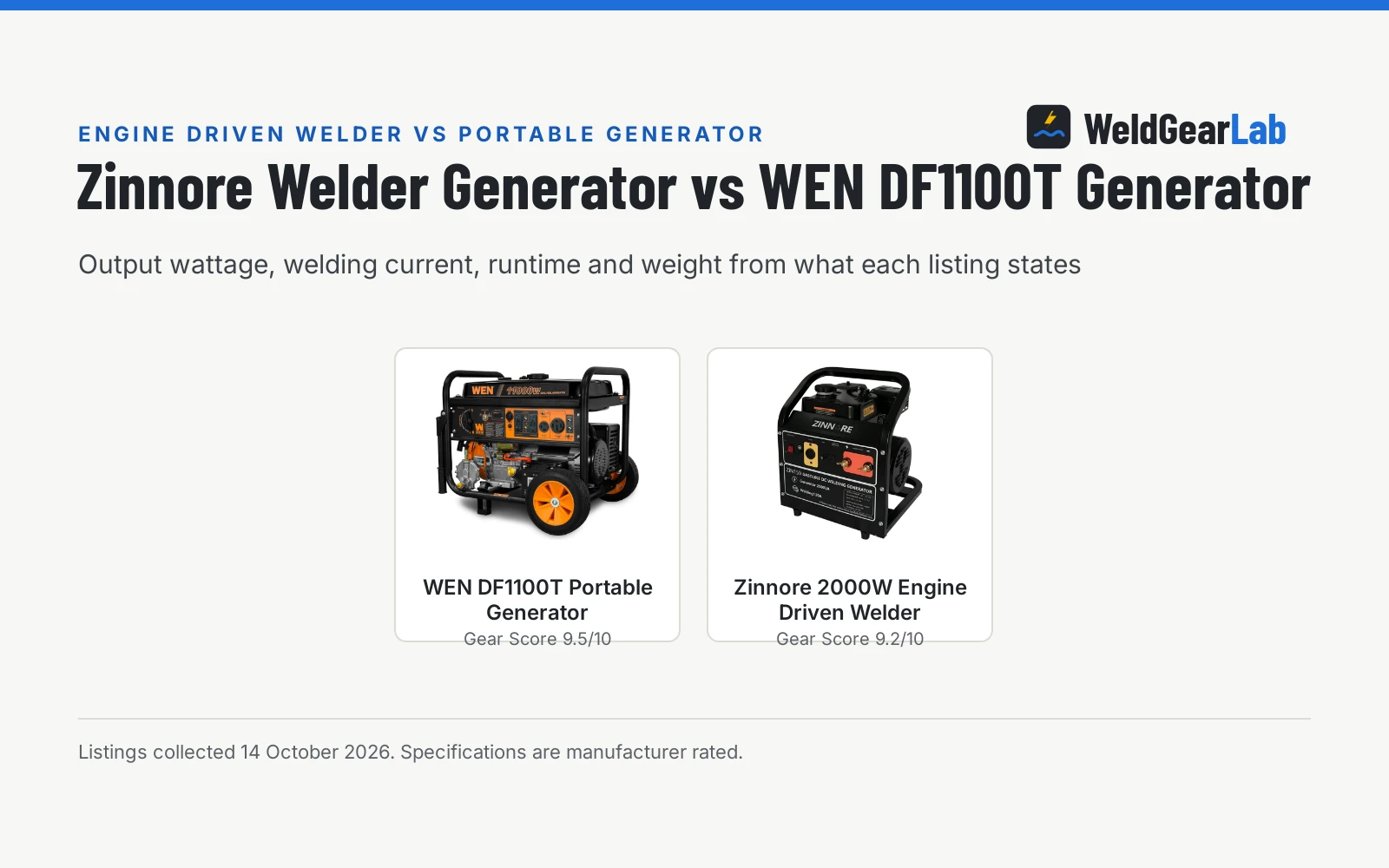
Comparing a dedicated engine driven welder with a dual-fuel portable generator reveals whether an all-in-one arc rig or separate power fits your work.
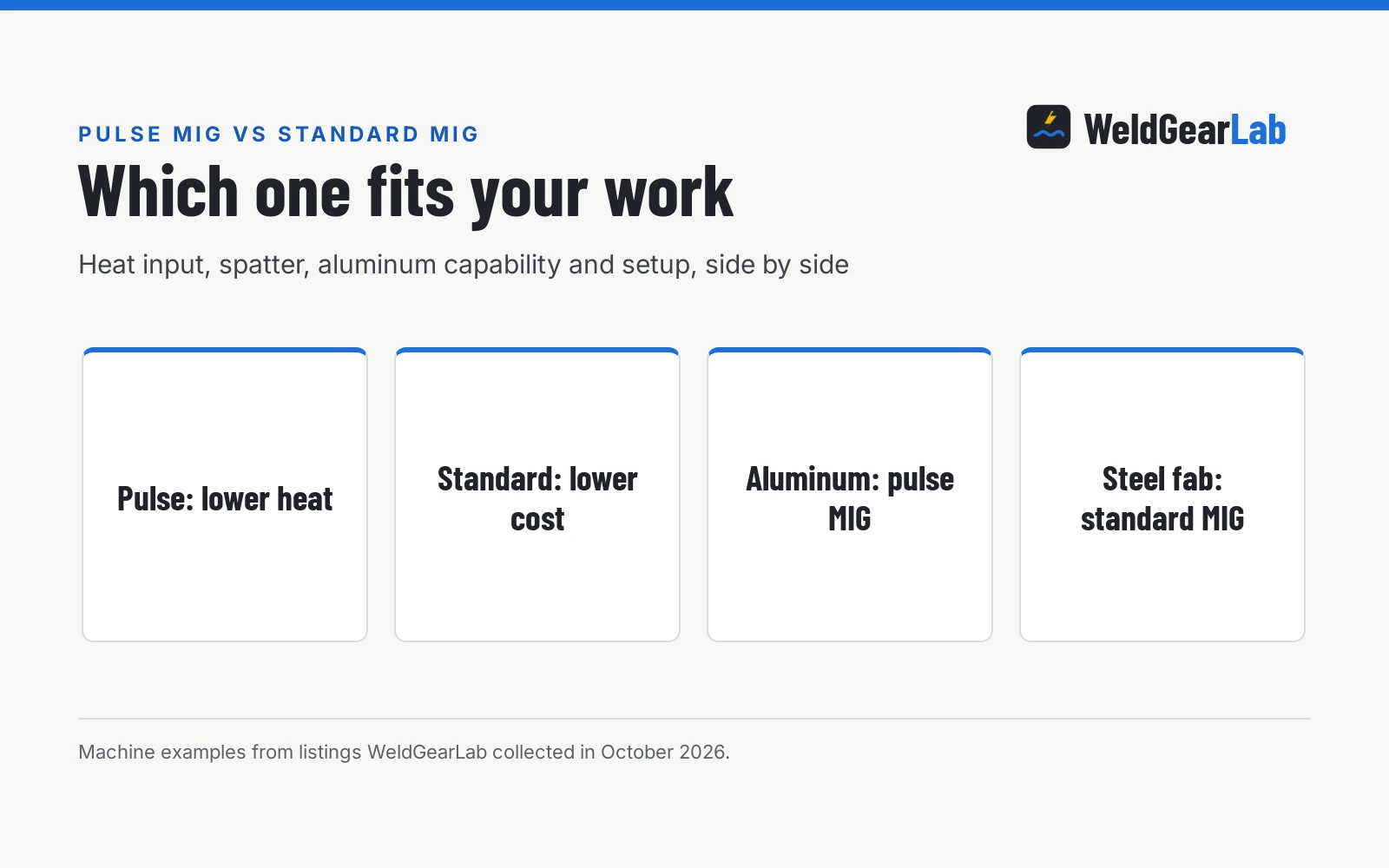
Pulse MIG and standard MIG welders run similar wire feed setups but differ in heat input, spatter control, and how cleanly they weld aluminum…
Multi-process welders offer wire-feed versatility for general shop repairs, while dedicated TIG welders deliver the precise heat and arc control needed for clean welds…
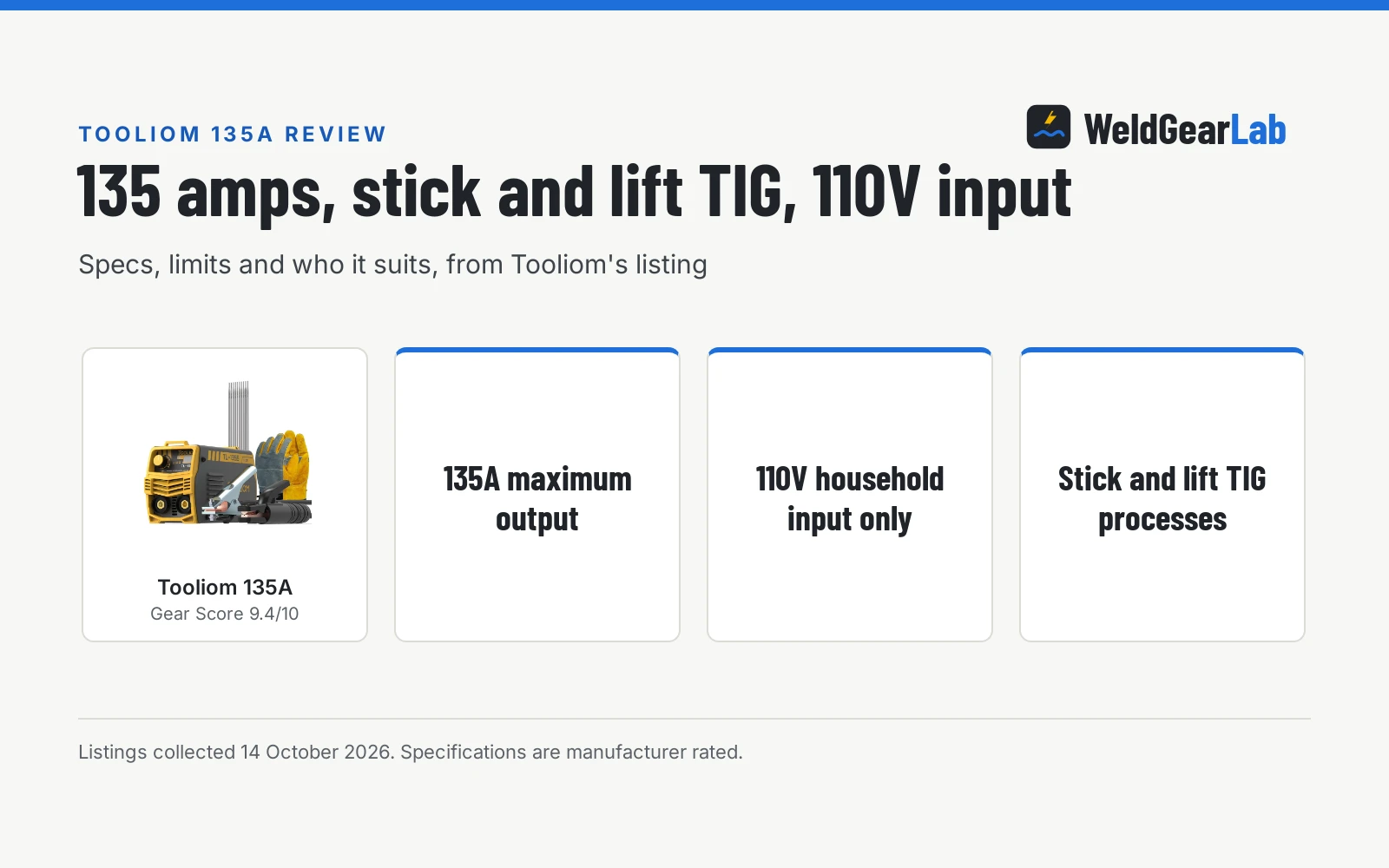
A Tooliom 135A review from the listing: a 135A stick and lift TIG welder for 110V outlets, with its stated specs, gaps and who…
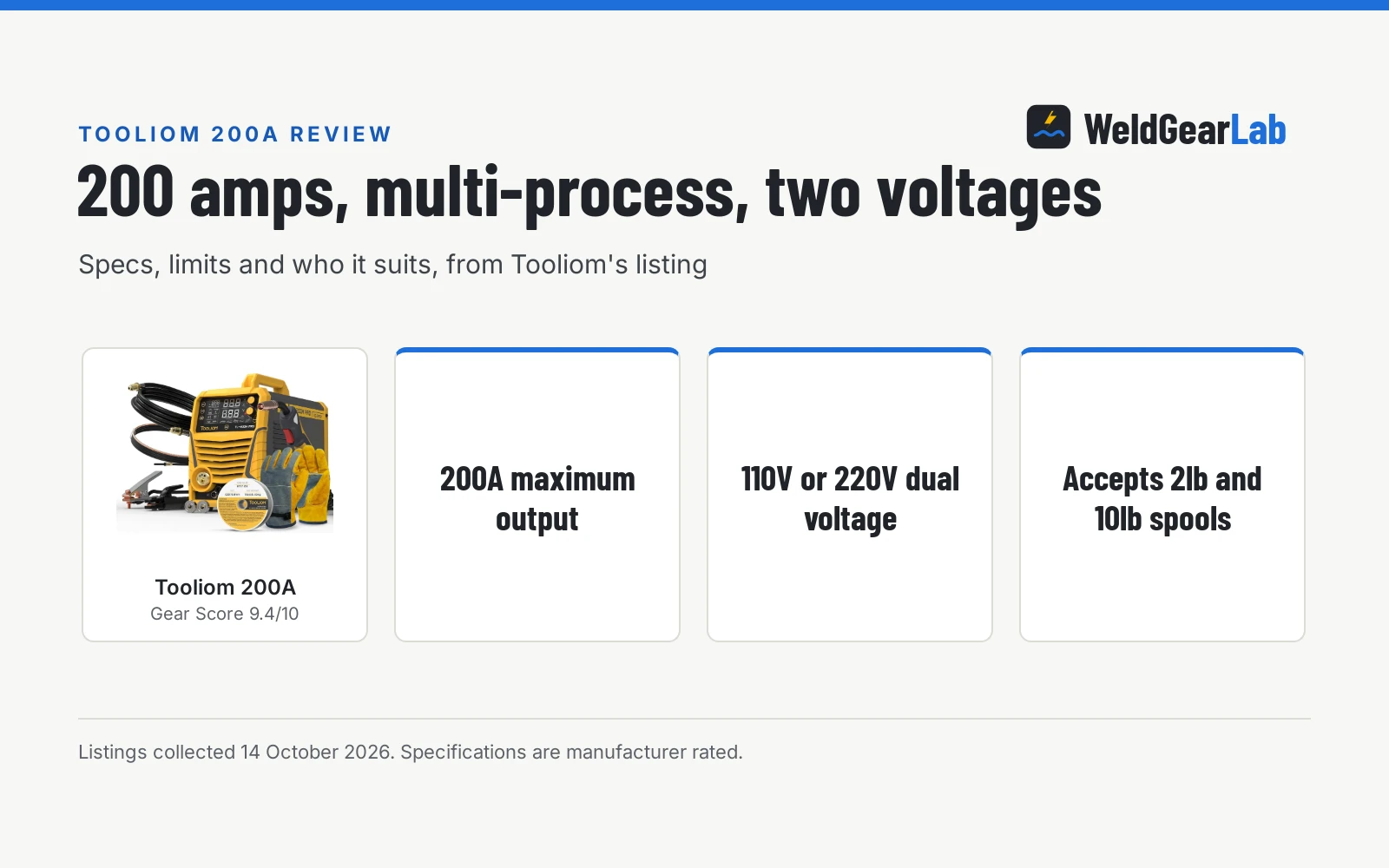
A Tooliom 200A review from the listing: a 200A dual-voltage multi-process welder with synergic control, its stated specs, gaps and who it suits.