Stick vs Mig Welder: Which One Should You Buy?
Stick welding and MIG welding suit different shop tasks, differing on outdoor wind tolerance, metal thickness, cleanup time, and equipment portability.

On this page
Top picks at a glance
As an Amazon Associate I earn from qualifying purchases.
- 1
 HGNVGZ 110V 250A Stick Welder9.7/10View on Amazon
- 2
 035" V Groove Drive Roll Kit Compatible with Miller9.6/10View on Amazon
- 3
 ARCCAPTAIN MIG165 Pro MIG Welder Machine 165A 120V 240V9.5/10View on Amazon
- 4
 HONE Stick Welder 110VView on Amazon
- 5
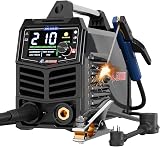 GZ GUOZHI Aluminum Stick Welder 210Amp Large LED DisplayView on Amazon
- 6
 ESAB® HandyArc 1/8" Stick WelderView on Amazon
- 7
 Stick WelderView on Amazon
- 8
 Arc Stick Welder 165AView on Amazon
- 9
 250Amp Stick Welder 110V IGBT Portable Arc Welding MachineView on Amazon
When you have a cracked equipment bracket, broken gate hinge, or sheet metal repair sitting on the shop bench, choosing between a stick vs mig welder comes down to where you weld and how thick the steel is. MIG welding is the better choice for indoor shop fabrication, automotive sheet metal, and fast, clean welds with minimal cleanup. Stick welding is the better choice for outdoor repairs in windy conditions, rusty structural steel, and portable farm maintenance where dragging a shielding gas cylinder is impractical. This guide explains how both processes compare across equipment setup, metal thickness, outdoor capability, and running costs so you can pick the right welder for your work.
Other welders and gear to compare
 HONE Stick Welder 110VCheck price on Amazon
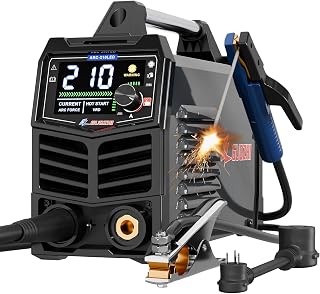 GZ GUOZHI Aluminum Stick Welder 210Amp Large LED DisplayCheck price on Amazon
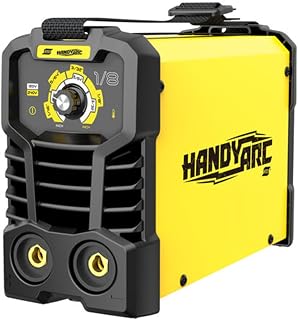 ESAB® HandyArc 1/8" Stick WelderCheck price on Amazon
 Stick WelderCheck price on Amazon
 Arc Stick Welder 165ACheck price on Amazon
 250Amp Stick Welder 110V IGBT Portable Arc Welding MachineCheck price on Amazon
This guide links to our product roundups, where WeldGearLab gets a commission on purchases made through links on this page, and your price stays the same. Read our affiliate disclosure.
The difference in one paragraph
Molten steel reacts with oxygen and nitrogen in the air, which creates a porous, brittle weld. MIG welding protects the puddle by flowing compressed shielding gas through the gun around a continuously fed solid wire spool. Stick welding, or shielded metal arc welding, uses a consumable steel electrode coated in solid flux that melts in the arc, generating a protective gas shield and leaving a crust of slag over the cooling weld bead. MIG requires an electric wire feeder, shielding gas cylinder, regulator, and hose, while stick welding needs only an electrode holder lead, a ground clamp, and consumable stick rods.
Side by side
| Stick (SMAW) | Gas MIG (solid wire) | Flux-core (gasless wire) | |
|---|---|---|---|
| Shielding | Flux coating on electrode creates protective vapor and slag | Compressed shielding gas from an external cylinder | Flux core inside hollow tubular wire |
| Filler feed | Manual consumable stick rod clamped in holder | Continuous solid wire spool fed through gun | Continuous flux-cored wire spool fed through gun |
| Outdoor wind capability | Tolerates outdoor wind and breezes without losing shield | Shielding gas blows away in wind, requires shelter | Tolerates outdoor wind and breezes without losing shield |
| Metal cleanliness | Tolerates rust, mill scale, and light paint | Requires clean, bare steel ground free of rust and paint | Tolerates light rust and mill scale better than solid wire |
| Thin sheet metal | Difficult, high risk of burn through on thin gauge steel | Easy, low heat input with clean beads and minimal burn through | Moderate, hotter than gas MIG with higher burn through risk |
| Thick steel penetration | Deep penetration on heavy plate in fewer passes | Moderate penetration, may require beveling on thick plate | Deep penetration, hotter arc than solid MIG wire |
| Cleanup and spatter | Heavy slag blanket requires chipping and brushing | No slag to chip, minimal spatter when properly tuned | Slag blanket requires chipping and brushing, moderate spatter |
| Gear beyond machine | Electrode holder, work ground clamp, and stick rods | Gas cylinder, regulator flowmeter, gas hose, and solid wire | Work ground clamp, wire feed gun, and flux-cored wire |
| Portability | High, lightweight power source without gas cylinders | Lower, requires securing cylinder, regulator, and hose | High, wire feed without gas cylinder |
| Aluminum capability | Impractical for home and farm shop work | Capable with a spool gun or push-pull setup and pure argon | Cannot weld aluminum |
Settings and rod selection depend on steel thickness and joint design. Always check your machine chart and the electrode or wire package for recommended polarity and amperage ranges before striking an arc.
When stick welding is the better choice
- Outdoor and windy field repairs. Farm fences, corrals, tractor implements, and heavy trailers often need repair outside where wind blows shielding gas away. Stick electrodes create their own shielding vapor directly inside the arc cone, ignoring gusts that would ruin a MIG bead.
- Rusty, painted, or dirty steel. Field steel is rarely clean. Stick electrodes burn through rust, mill scale, and light paint far better than solid MIG wire, which demands clean, bright metal to prevent porosity.
- Maximum portability without gas cylinders. An inverter stick welder needs only the power source, stinger, and ground clamp. There is no heavy compressed gas cylinder, delicate regulator, or fragile gas line to secure in a truck bed.
- Heavy steel and structural joints. Stick machines drive deep penetration into thick plate and structural shapes, making solid joints on heavy repairs where small wire feed welders struggle to fuse the root.
For dedicated farm equipment and field maintenance, see our best stick welder for farm use and our guide to the best portable stick welder.
When MIG welding is the better choice
- Thin sheet metal and auto body repairs. MIG delivers lower heat input and fine trigger control, making it far superior for body panels and light gauge tubing where stick rods easily burn through the base metal.
- Clean appearance and fast production. MIG leaves no slag blanket over the bead and produces minimal spatter when dialed in, eliminating the need to chip slag between passes or before painting.
- Long, continuous seams. Continuous wire spool feeding lets you run long welds on benches, frames, and sheet fabrications without stopping to swap burned-down electrodes.
- Welding aluminum. While stick welding aluminum is notoriously difficult and rarely practical, a MIG machine equipped with a spool gun and pure argon shielding gas can weld aluminum cleanly.
If your work centers on sheet fabrication and garage projects, check our roundup of the best MIG welder for hobbyist and the best 120V MIG welder.
Stick vs mig welder: equipment and setup differences
A stick setup is simple and compact. An inverter power source connects to a stinger electrode holder and a work ground clamp. For example, HONE lists a mini stick welder weighing 5.8 pounds with a 120Amp rating, and TECWELD lists a portable stick machine at 5 lbs rated for steel up to 1/4 inch thick. Dual-voltage units like the TOOLIOM ARC-135 PRO list operation on 110V/220V power, giving field welders flexibility to run on common household outlets or generator supplies. There are no drive rolls to tension, no gas solenoids, and no gun liners to clog.
MIG welding requires a more involved mechanical setup. The power source houses a motorized wire drive system with drive rolls that push continuous wire from an internal spool through a flexible torch liner to the contact tip. You also need a high-pressure shielding gas cylinder, an adjustable pressure regulator flowmeter, and a flexible gas delivery hose connected to an internal solenoid valve. In addition, MIG guns require matching contact tips, gas nozzles, and diffusers that must be kept clear of spatter. If wire feeding tension is set incorrectly, MIG wire can kink inside the drive cabinet into a tangled birdnest.
Consumables and operating costs
Consumable costs and storage requirements differ substantially between stick and MIG machines. Stick welding uses flux-covered electrodes sold in sealed boxes or cans. Common electrode types include fast-freeze rods like E6010 and E6011 that dig deep through contamination, general-purpose rods like E6013 that run smooth beads on thin metal, and low-hydrogen rods like E7018 that produce strong structural joints. Reference listings from makers like HONE, TECWELD, and haxiaoer support electrode diameters from 1/16 inch to 1/8 inch, while higher-amperage systems like the ESAB Rogue ES 180i handle electrodes up to 5/32 inch. Stick rods require dry storage, as moisture in the flux coating can cause porosity and hydrogen cracking.
MIG consumables include spools of solid steel wire, replacement copper contact tips, gas nozzles, and shielding gas refills. Gas cylinders require a deposit or purchase at a local welding supply distributor, followed by ongoing refill fees. Solid wire also demands clean steel surfaces; welding over heavy rust or grease rapidly fouls contact tips and traps gas pockets in the bead. For guidance on selecting rod types, see our welding rods guide.
Can one machine do both?
Yes. Many modern inverter welders are multi-process power supplies capable of running both wire feed and stick processes from a single power supply. A multi-process machine lets you run clean MIG beads on the fabrication table and switch leads to stick weld heavy brackets outside in the wind. Multi-process welders feature selectable process switches that alter the output volt-ampere curve between constant voltage for MIG and constant current for stick. If you want versatility without buying separate machines, see our guide to the best multi-process welder and our comparison of a multi-process welder vs dedicated MIG welder.
Welding fumes, hot slag, and cylinder safety. Both stick and MIG welding present safety hazards that require proper precautions. Stick welding produces dense smoke and fumes from burning electrode flux, along with brittle, red-hot slag that can pop into your face during cooling or chipping. Always chip slag away from your body while wearing safety glasses under your welding helmet, and position your hood out of the rising fume plume. MIG welding produces less visible smoke but requires high-pressure gas cylinders that must remain chained upright to a wall or cart to prevent tip-over damage. Shielding gas can also displace oxygen in enclosed spaces, so always maintain active ventilation. Clear all dry grass, sawdust, and solvent containers from your work area before striking an arc. See the OSHA welding overview and our Safety Disclaimer.
FAQ for welders
Which is easier for a beginner to learn, stick or MIG?
MIG welding is significantly easier for a beginner to pick up and produce clean, sound welds. The continuous wire feed eliminates the struggle of striking an arc without sticking the rod to the workpiece. Most beginners can lay an acceptable MIG bead on clean steel within an afternoon of practice, whereas stick welding requires developing hand control to maintain a steady arc length as the rod burns down.
Is stick welding stronger than MIG welding?
Both processes produce equally strong welds when paired with proper filler metal, heat settings, and joint preparation. Weld strength depends on proper fusion into the base metal rather than the machine type. Stick welding often penetrates deeper into thick, uncleaned plate, which reduces the chance of cold lap defects that can occur with undersized MIG machines.
Can I weld aluminum with a stick welder?
While specialized aluminum stick electrodes exist, stick welding aluminum is exceptionally difficult and rarely yields clean results in a home shop. Aluminum conducts heat away rapidly and forms an oxide layer that creates severe arc instability and porous beads. MIG welding with a spool gun or dedicated push-pull system using pure argon gas is the standard wire method for welding aluminum.
Can you stick weld thin sheet metal?
Stick welding very thin sheet metal is challenging because the concentrated arc easily burns through the base material. While experienced welders can stitch light steel using small diameter electrodes like E6013 on low amperage, MIG welding remains far better suited for sheet metal work. For automotive body panels and ductwork, MIG delivers the low heat input and fine trigger control necessary to prevent blowouts.
Why does my stick welding rod keep sticking to the metal?
Welding rods stick when the arc gap collapses or the amperage is set too low for the electrode diameter. Striking an arc requires a quick striking motion similar to lighting a match rather than stabbing the metal directly. Modern inverter stick welders often include automatic hot start and anti-stick circuits that boost ignition current and cut power if the rod freezes to the joint.
Related: how to choose a MIG welder, how to use a stick welder, stick welder vs wire welder, and the stick welders hub. Also see our stick welder vs MIG welder for farm repairs.