Stick Welder vs MIG Welder for Truck Repairs (2026 Guide)
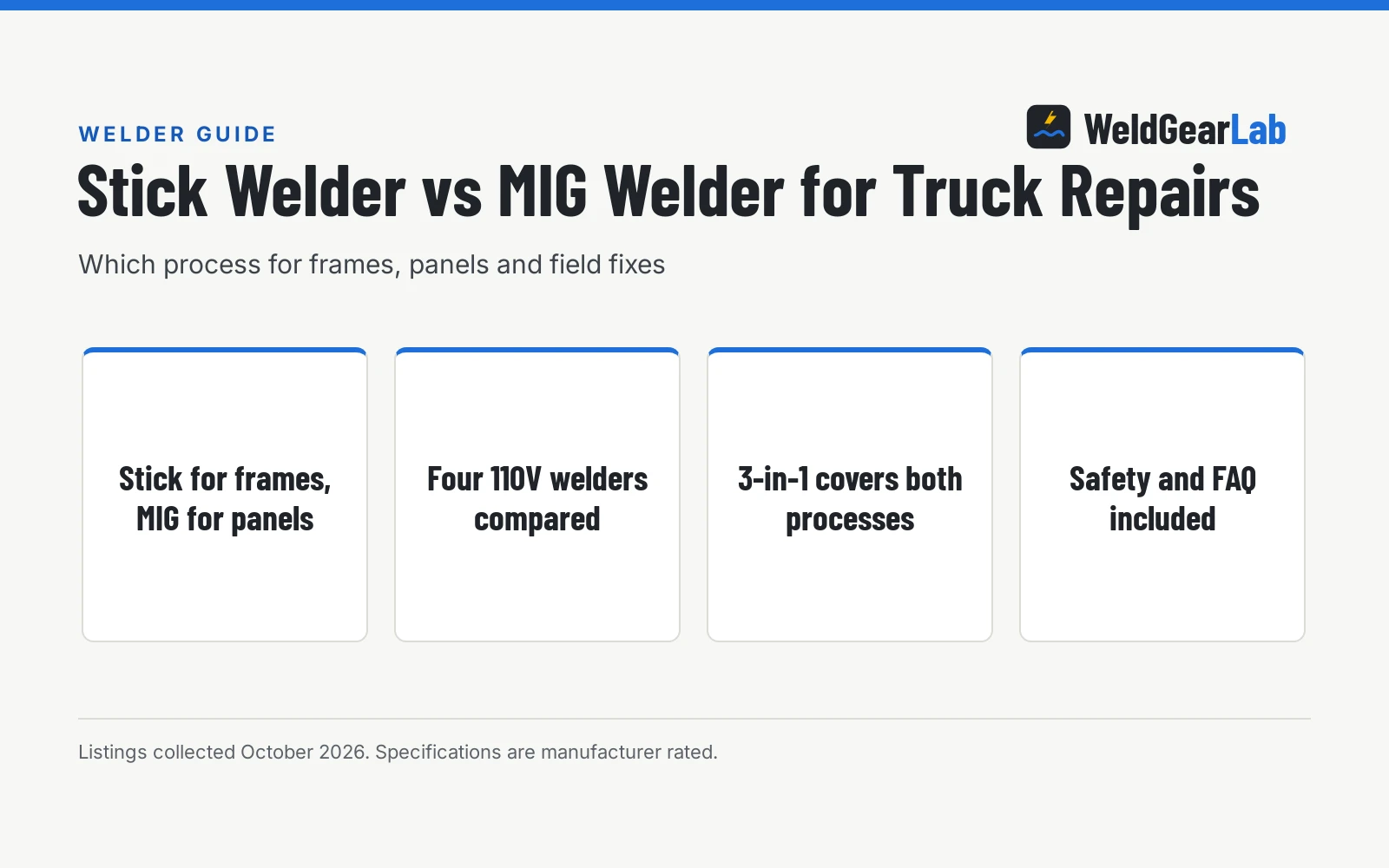
Stick vs MIG for truck repairs: which process for frames, panels and field fixes, plus four welders compared.

On this page
Top picks at a glance
As an Amazon Associate I earn from qualifying purchases.
- 1
 Stick Welder9.6/10View on Amazon
- 2
 TRQWH Portable Welding Machine 110V Handheld Welder IGBTView on Amazon
- 3
 ARCCAPTAIN MIG145 Pro Flux Core MIG Welder 145A 120V 3-in-1View on Amazon
- 4
 PROTMEX Digital Display Handheld WelderView on Amazon
- 5
 Hpoouo Stick/LIFT TIG 2 IN 1 MINI WelderView on Amazon
- 6
 Portable Handheld Welding MachineView on Amazon
- 7
 YESWELDER 135A MIG WelderView on Amazon
For truck repairs, the stick welder vs mig welder for truck repairs choice depends entirely on what you are fixing. Stick welders handle dirty, rusty frame steel and thick brackets outdoors; MIG welders give smoother welds on body panels and thin sheet than stick; gas MIG is the cleanest, while flux-core (like the ARCCAPTAIN gasless mode) trades some spatter for outdoor use. For most truck owners, a 3-in-1 machine that does both is the smart buy. The ARCCAPTAIN MIG145 Pro runs gasless MIG and stick at 145A, plus Lift TIG (torch sold separately), covering frames to fenders in one 9.5 lb box with a 3-year warranty.
Other welders and gear to compare
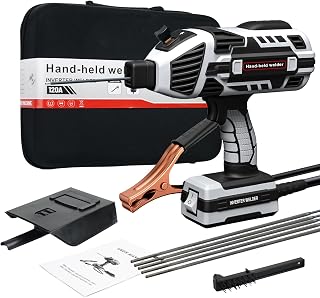 TRQWH Portable Welding Machine 110V Handheld Welder IGBTCheck price on Amazon
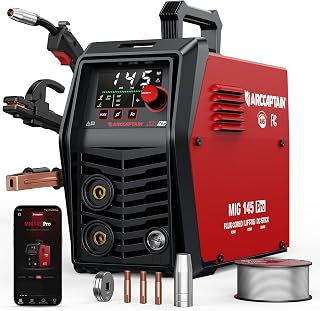 ARCCAPTAIN MIG145 Pro Flux Core MIG Welder 145A 120V 3-in-1Check price on Amazon
 PROTMEX Digital Display Handheld WelderCheck price on Amazon
 Hpoouo Stick/LIFT TIG 2 IN 1 MINI WelderCheck price on Amazon
 Portable Handheld Welding MachineCheck price on Amazon
 YESWELDER 135A MIG WelderCheck price on Amazon
This guide links to our product roundups, where WeldGearLab gets a commission on purchases made through links on this page, and your price stays the same. Read our affiliate disclosure.
Stick welder vs MIG welder for truck repairs: the real differences
The short answer
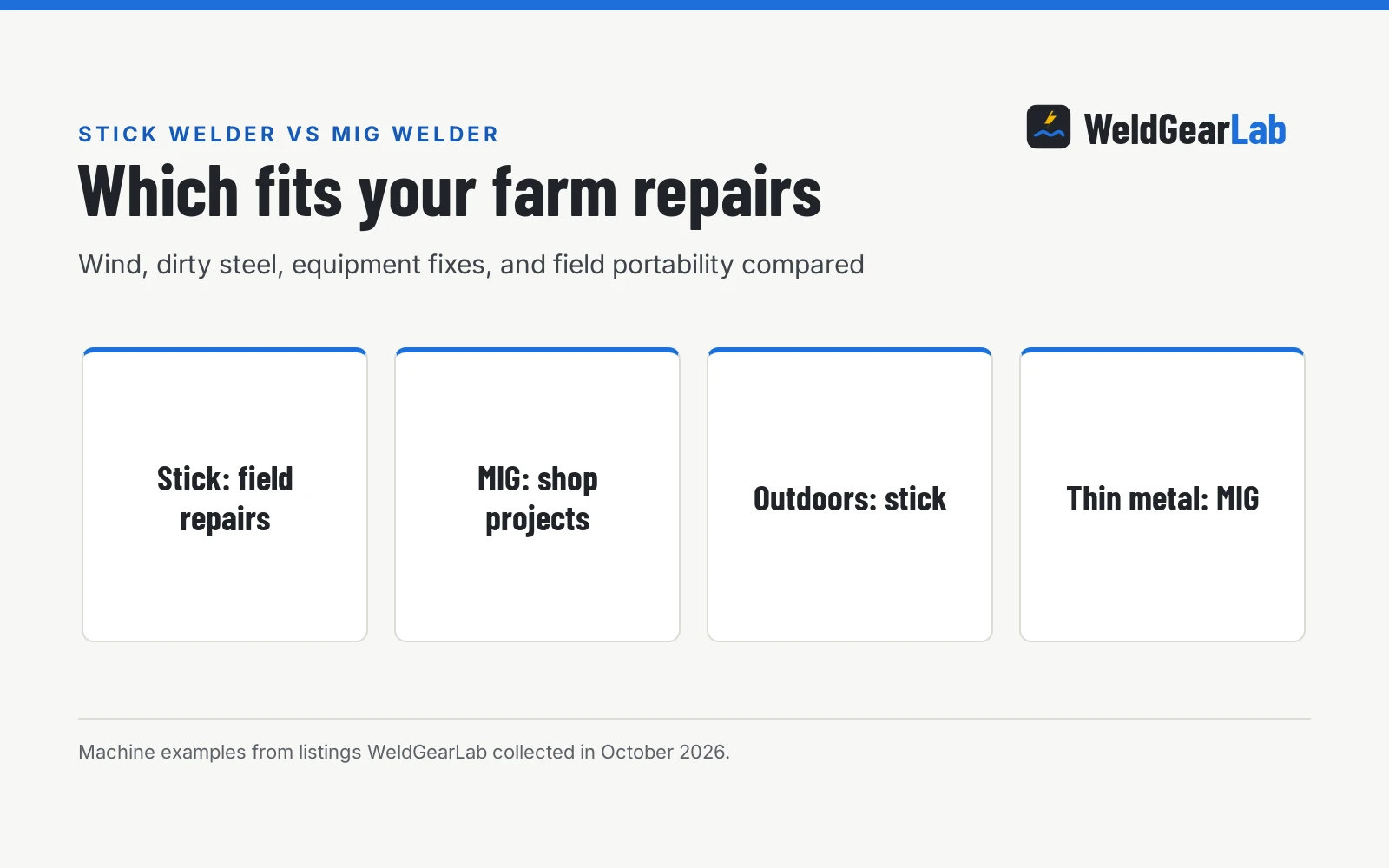
Frames, hitches, and suspension: stick. Body panels, floor pans, and exhaust: MIG. If you can only buy one machine, buy the 3-in-1 ARCCAPTAIN and learn both.
What each process does best
Stick welding (SMAW) burns a flux-coated electrode that shields the weld, so it tolerates rust and dirty steel better than MIG: ideal for frames, hitches and suspension brackets. The HGNVGZ 110V stick welder runs 20-250A with E6013, E7018, E6011, E6010 and E308 rods from 1/16 to 3/32 inch on steel up to 1/8 inch thick. MIG welding (GMAW/FCAW) feeds wire continuously for smooth, fast welds on clean metal: ideal for body panels, floor pans and exhaust. The ARCCAPTAIN MIG145 Pro does gasless flux-core MIG plus stick, with Lift TIG available (torch sold separately), so one machine covers both.
Thickness and penetration
Truck frames are thick; body panels are thin. Stick penetrates deeper on thick steel, which is why the HGNVGZ handles up to 1/8 inch and the listing notes 1/4 inch plate needs 220V. MIG handles sheet metal with less burn-through risk than stick, and the ARCCAPTAIN’s synergic control auto-matches current to wire and thickness. For a cracked frame bracket, stick; for a rusted rocker panel, MIG.
Outdoor and dirty conditions
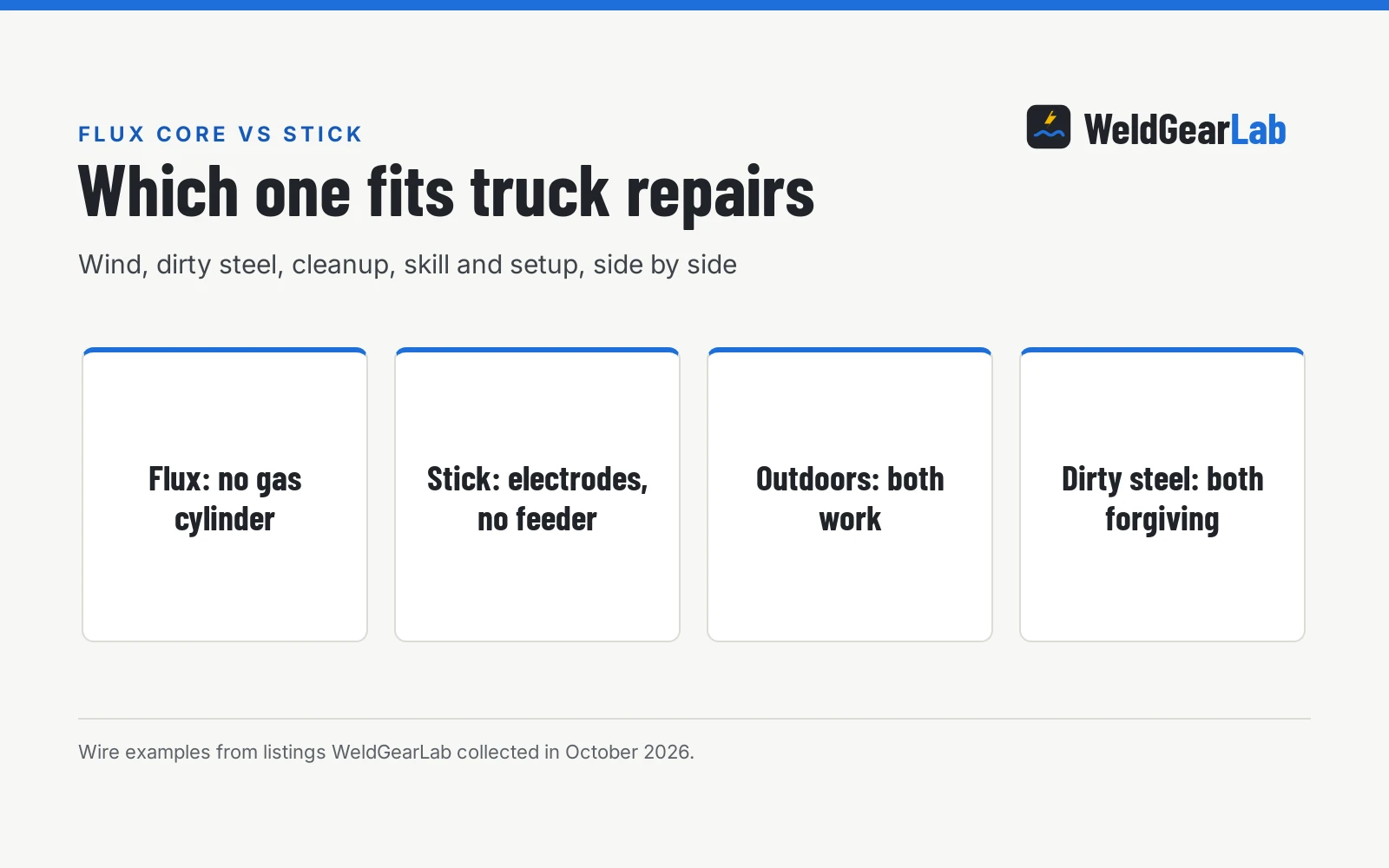
Stick wins outdoors: wind does not blow away the flux shield, and the process tolerates rust. The TRQWH 120A handheld stick welder at 3.9 lbs and the Protmex 120A with digital display are built for field repairs on farms and driveways. MIG with gas is wind-sensitive; flux-core (like the ARCCAPTAIN’s gasless mode) is the outdoor MIG choice.
Ease of learning
MIG is easier to learn: point and shoot, with the ARCCAPTAIN’s synergic control setting current automatically. Stick requires striking and maintaining an arc, though the HGNVGZ’s hot start and arc force, the TRQWH’s hot start, and the Protmex’s anti-stick all help beginners. For a first welder that does truck work, the ARCCAPTAIN’s MIG mode is the gentlest start.
The gear: four welders for truck work
ARCCAPTAIN MIG145 Pro (the 3-in-1)
The versatile pick: 145A, 120V, with gasless MIG and stick modes, plus Lift TIG (torch sold separately). The synergic control auto-sets current and wire speed from wire diameter and thickness, and app control saves settings. At 9.5 lbs with a shoulder strap, it goes to the truck. A 3-year manufacturer warranty is stated, the only warranty of the four. For truck repairs spanning frames to body panels, this is the one machine.
HGNVGZ 110V 250A Stick (the frame welder)
The stick pick: 20-250A IGBT inverter with hot start, arc force and anti-stick, running 1/16 to 3/32 inch rods on steel to 1/8 inch. At 3.5 lbs with 10 rods and 10-foot cables included, plus gloves and mask, it is ready for frame and bracket work. The listing notes a dedicated 20A circuit is recommended. No warranty term is stated.
TRQWH 120A Handheld (the portable stick)
The grab-and-go pick: a 120A handheld stick welder, 20-120A in 5 steps, fitting 1/16 to 1/8 inch rods, at 3.9 lbs. IGBT with hot start, plus overheat, overcurrent and overload protection. The kit includes mask, brush, rods and ground clamp. For quick field repairs on farm trucks, it lives in the toolbox. No warranty term is stated.
Protmex 120A Digital (the precise stick)
The control pick: 110V, 20-120A via rotary knob with a digital display showing current, voltage and status. Fits 3/32 to 1/8 inch rods, with 20 rods included, IGBT, hot start and anti-stick. The 360 cooling and dual protection suit longer sessions. For automotive and fence work needing precise settings, the display helps. No warranty term is stated.
Which should you buy
Buy the ARCCAPTAIN MIG145 Pro if you want one machine for frames, panels and exhaust: the 3-in-1 covers stick and MIG out of the box, with Lift TIG available only after buying the torch separately, and the 3-year warranty backs it. Buy a stick welder (HGNVGZ for power, TRQWH for portability, Protmex for the display) if you weld mostly frames, hitches and outdoor steel. For body panels alone, MIG is the answer.
Garage Fit Check
- Disconnect the truck battery before welding on the vehicle.
- Remove or shield fuel lines, brake lines and wiring near the weld.
- Use a fire extinguisher; grinding sparks ignite undercoating.
- Ventilate; welding galvanized or painted steel produces toxic fumes.
- Wear a proper helmet; the included fixed-shade masks are basic.
FAQ for welders
Can I weld a truck frame with 110V?
For brackets and light repairs, yes: the HGNVGZ runs to 250A on 110V for steel to 1/8 inch. For 1/4 inch plate, the listing says a 220V machine is the better fit.
Is flux-core MIG good for body panels?
Yes, with care: flux-core handles thin sheet, though it spatters more than gas MIG. The ARCCAPTAIN’s synergic control helps dial it in.
Do I need TIG for trucks?
Rarely. The ARCCAPTAIN lists Lift TIG as a third mode, but the torch is sold separately, so TIG is not ready out of the box; stick and MIG cover nearly all truck repairs.
What rods for truck frames?
E7018 for strong, crack-resistant welds on frames; E6013 for general repair. The HGNVGZ runs E6013, E7018, E6011, E6010 and E308.
Can I weld in the driveway?
Stick, yes; the TRQWH and Protmex are built for it. Keep a fire watch and mind the wind with MIG.
Which has a warranty?
The ARCCAPTAIN states a 3-year manufacturer warranty. The others state no warranty term.
Related: portable MIG vs portable stick and stick welders for thin metal. Compare analog vs digital MIG.