Machine Torch vs Hand Torch Plasma Cutter: Which One Should You Buy?
Machine torches mount straight on CNC tables for automated cutting, while hand torches use an angled handle and trigger for manual fab and repairs.

On this page
Top picks at a glance
As an Amazon Associate I earn from qualifying purchases.
- 1
 Plasma Cutter torch9.6/10View on Amazon
- 2
 Bestarc Pilot Arc Plasma Cutting TorchView on Amazon
- 3
 Bestarc CNC Plasma Cutting TorchView on Amazon
- 4
 RIVERWELD PT-31 Air Plasma Cutting Torch Head Body XL 20072View on Amazon
- 5
 ARCCAPTAIN AG-60 Plasma Cutter Torch ConsumablesView on Amazon
- 6
 Reboot Plasma Cutter Torch 40A PT31 16FT High Duty Cycle forView on Amazon
- 7
 RIVERWELD TIG Welding Torch Switch Trigger with Micro SwitchView on Amazon
When you have plate laid out on the bench or clamped to a CNC table, picking a machine torch vs hand torch plasma cutter comes down to how the arc is guided. A machine torch uses a straight cylindrical barrel that clamps into a mechanized Z-axis lifter and fires through controller signals. A hand torch uses an angled handle with a manual trigger for freehand cuts, plate trimming, and mobile repairs. If your shop runs automated shape cutting on a gantry, buy a machine torch; for portable cutting, beveling, and scrap prep, stick with a hand torch.
Other welders and gear to compare
 Bestarc Pilot Arc Plasma Cutting TorchCheck price on Amazon
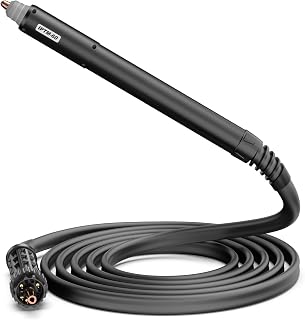 Bestarc CNC Plasma Cutting TorchCheck price on Amazon
 RIVERWELD PT-31 Air Plasma Cutting Torch Head Body XL 20072Check price on Amazon
 ARCCAPTAIN AG-60 Plasma Cutter Torch ConsumablesCheck price on Amazon
 Reboot Plasma Cutter Torch 40A PT31 16FT High Duty Cycle forCheck price on Amazon
 RIVERWELD TIG Welding Torch Switch Trigger with Micro SwitchCheck price on Amazon
This guide links to our product roundups, where WeldGearLab gets a commission on purchases made through links on this page, and your price stays the same. Read our affiliate disclosure.
The difference in one paragraph
Both torches use the same plasma process: compressed air feeds past an electrode and through a copper nozzle, where an electric arc turns the gas into a high-temperature plasma jet. The difference is shape and control. A machine torch has a straight cylindrical barrel without a handle or finger switch, built to mount square inside a motorized gantry clamp so the torch stays perpendicular to the plate during automated travel. A hand torch places the nozzle at an angle to an insulated handle with an operator trigger, letting you trace irregular lines, bevel weld joints, and make cuts wherever your lead reaches.
Side by side
| Feature | Machine torch (straight) | Hand torch (angled) | Shop consideration |
|---|---|---|---|
| Primary application | Automated CNC cutting tables and track burners | Manual cutting, trimming, and mobile repairs | Machine torches require a rigid gantry mount |
| Body geometry | Straight cylindrical barrel with no handle | Angled head with molded grip handle | Straight body aligns perpendicular in lifters |
| Arc triggering | Remote CNC interface wiring or controller relay | Manual finger trigger or micro-switch on handle | Machine torches cannot be triggered by hand |
| Lead lengths in listings | 20ft and 32ft leads (bestarc IPTM60) | 13ft and 13.12ft leads (bestarc AG60P, Cuwiny PT-31) | Gantry drag chains require longer cable reach |
| Arc ignition types | Available in blowback (IPTM60) or HF designs | Available in HF pilot arc (AG60P) or contact HF (PT-31) | Blowback avoids electrical noise on CNC tables |
| Assembly weight in listings | 5.66 pounds to 7.52 pounds with long leads | 11.3 ounces head up to 3.82 pounds with lead | Hand torches prioritize light handling in the shop |
| Gas pressure | 4.4-5.0 bar listed on bestarc IPTM60 | Depends on torch model and nozzle size | Always set pressure to the specific torch spec |
| Recommended post flow | 55sce listed on bestarc IPTM60 | 40 second listed on Cuwiny PT-31 | Post flow cools consumables after arc shutoff |
| Cut flexibility | Restricted to the programmed table travel | Free to move around tables, vehicles, and curved parts | Hand torches excel at beveling and field work |
Torch lead pinouts and gas interfaces vary by maker; check connector pins, air interface fittings, and arc starting methods in your machine manual before connecting a torch.
When a machine torch is the better choice
- Automated CNC cutting tables. Computer-controlled gantry systems demand a torch that mounts perpendicular to the bed. The straight barrel of a machine torch clamps into a motorized Z-axis lifter without the clamping stress or misalignment of adapting an angled hand torch into a bracket.
- Repeatable precision cuts. When cutting duplicate baseplates, brackets, or decorative parts, a machine torch follows programmed toolpaths without hand tremor, travel speed variations, or bevel errors.
- Automated signal control. Machine torches wire directly to CNC plasma controllers or machine automation ports. In listings from bestarc, the IPTM60 straight pencil torch specifies dedicated pin connections, including pins 1 and 4 for pilot arc firing, allowing machine controls to initiate the arc automatically.
- Gantry cable track reach. CNC cutting beds require lead lengths that route through moving drag chains without binding. Listings from bestarc offer the IPTM60 torch with cable lengths of 20ft and 32ft to span shop cutting tables cleanly.
If you are planning an automated cutting table build, read our guide on how to use a CNC plasma table and our breakdown of the CNC plasma vs plasma cutter difference to pair your gantry with the right power supply.
When a hand torch is the better choice
- Manual fabrication and trimming. Slicing tubing, cutting angle iron, squaring plate, and trimming sheet metal happen right at the fab table or floor where a gantry cannot travel.
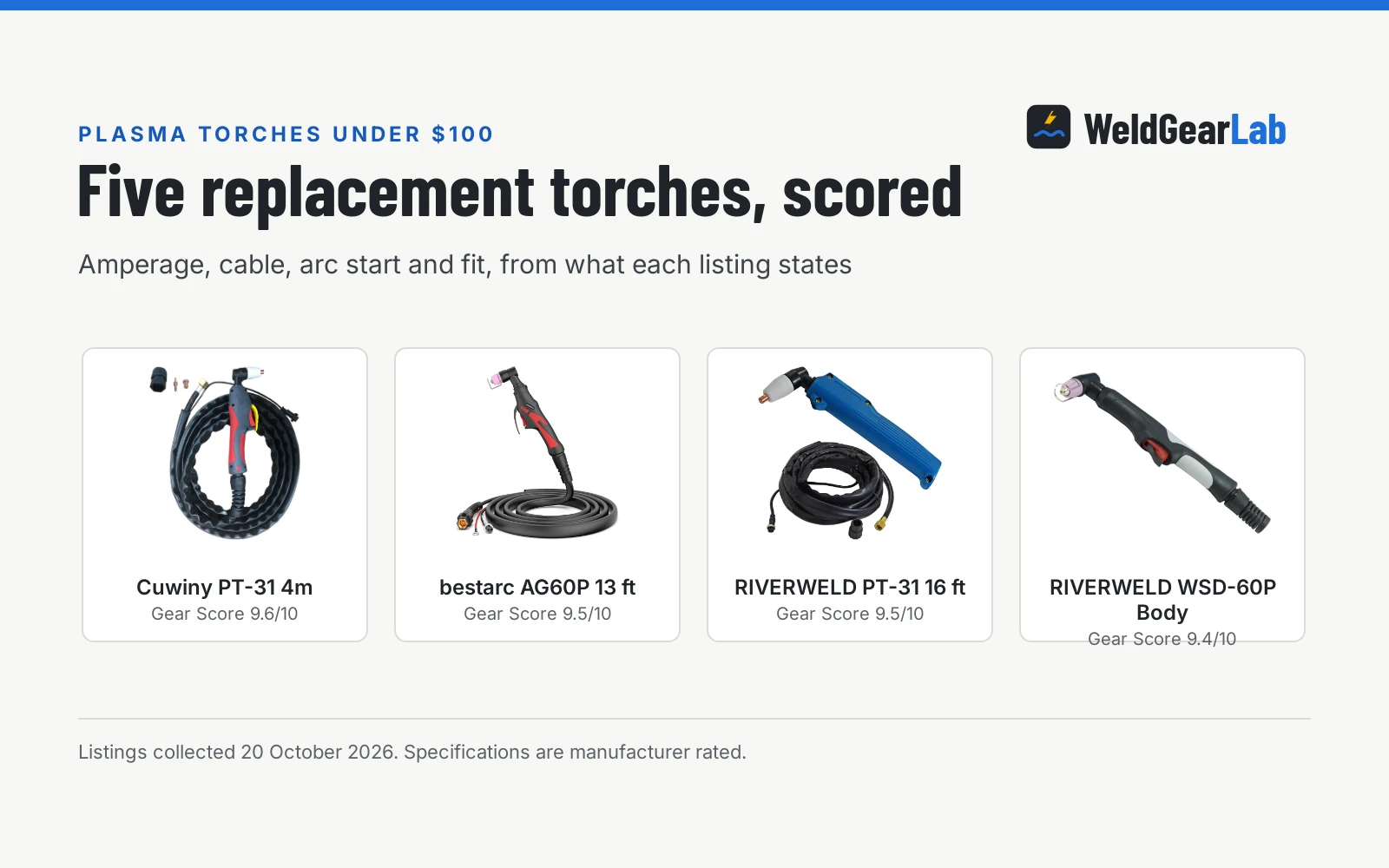
- Mobile repair and field maintenance. A hand torch lets you walk around farm implements, climb onto trailers, or work under a chassis. Torches like the Cuwiny PT-31 with a 13.12ft lead or the bestarc AG60P with a 13ft cable allow easy repositioning without fighting heavy cables.
- Weld prep, gouging, and beveling. The angled head allows your wrist to roll the nozzle into bevel angles or wash out cracked welds before welding, giving you direct visual control over the cut.
- Straightforward setup and low entry cost. Hand torches connect straight to the front panel receptacle with no computer interfaces, breakout boards, or height sensors required. You connect the ground clamp, set air pressure, and cut.
For manual cutting around the shop, review our scored guide to the best home hobby plasma cutter picks and practice our techniques on how to plasma cut a straight line using guide straightedges.
How to tell what your plasma power source supports
Not every plasma power source can run every torch, and matching torch requirements to your power supply prevents damaged components or failed arc transfer. Check these machine details before buying:
- Arc starting method. Match the torch design to your machine’s ignition circuitry. Power sources using non-touch blowback pilot arc, such as the bestarc BTC500XP and BTC650XP, require blowback torches where air pressure moves an internal electrode. Machines using high frequency starting, noted on listings like the Cuwiny PT-31, require HF-compatible torches. A blowback torch will not strike an arc on an HF-only machine, and an HF torch will not fire on a blowback power source.
- CNC trigger interface. To fire a machine torch automatically, your CNC electronics must interface with the power supply. Many cutters provide a dedicated CNC automation port with arc start relay pins and divided arc voltage outputs for torch height control. On basic machines without a dedicated CNC port, users often interface with the machine’s two-wire start circuit.
- Torch connector pinout. Match the torch fittings and pins to the machine panel. For example, listings from Cuwiny specify an M16*1.5 air interface with a 2 pins connector, while CNC pencil torches from bestarc specify dedicated pin assignments, including pins 1 and 4 for pilot arc firing and pins 8 and 9 for shield cup safety sensing.
- Air pressure and post flow cooling. Check your compressed air setup against torch requirements. The bestarc IPTM60 straight pencil torch lists a gas pressure range of 4.4-5.0 bar and recommends a post flow cooling time of 55sce to protect internal consumables, while the Cuwiny PT-31 listing specifies a 40 second post flow.
Before ordering replacement parts or torch upgrades, check our plasma cutting consumables guide and our roundup of the best arc plasma cutter consumables to ensure nozzles, swirl rings, and electrodes match your torch head.
Arc ignition and high-frequency noise on CNC tables
Understanding arc starting is essential when selecting a torch for CNC cutting. Hand plasma cutters frequently use high frequency (HF) ignition, like the Cuwiny PT-31 torch, or HF pilot arc starting, like the Cuwiny AG60 and bestarc AG60P torches. In manual cutting, HF starting is dependable because a high-voltage spark ionizes the air gap without touching the nozzle to the metal. Because there are no computerized controls nearby during manual cutting, the high-frequency burst causes no operational issues.
On a CNC plasma table, however, high frequency radiation acts like electrical interference next to sensitive electronics. HF noise can travel through cables, freezing computer programs, interrupting USB communication, and causing stepper motor drives to miss steps unless the gantry and table are heavily grounded. For this reason, many CNC table operators choose blowback pilot arc systems, like the bestarc IPTM60 torch. In a blowback torch, air pressure pushes an internal electrode backward against a spring to strike the pilot arc mechanically, eliminating high-frequency electrical bursts. Learn how these arc ignition systems compare in our guide on pilot arc vs blowback start plasma cutter systems and our review of contact start vs pilot arc plasma cutter options.
Machine torch vs hand torch plasma cutter: can one machine run both?
Yes, many fab shops run both a machine torch and a hand torch from a single plasma power source. You can leave a straight machine torch clamped into your CNC gantry for plate cutting, then disconnect it and plug in a handheld torch when you need to bevel plate, trim scrap, or make manual repairs across the shop floor.
The key requirement is that both torches must match your power source’s arc starting circuitry and connector fittings. A blowback power source, like the bestarc BTC500XP or BTC650XP, must run blowback-compatible torches, such as the IPTM60 straight machine torch or a blowback hand torch. Similarly, a high-frequency machine, like the PrimeWeld CUT50, requires torches designed for HF starting. You cannot swap between blowback and high-frequency torches on the same machine because their internal ignition circuits are incompatible. Check your machine manual and explore our guide to plasma cutter types and our PrimeWeld CUT50 review.
Plasma cutting safety and ventilation. Both cutting methods generate ultraviolet radiation, molten sparks, noise, and airborne metal fumes. Always wear proper eye protection: review our guide on what shade for plasma cutting to select the right shade number for your amperage. Wear heavy leather welding gloves and flame-resistant clothing to protect skin from flying dross. When running automated tables, use a water table or downdraft exhaust table to pull fumes away from the workspace, and keep dry fire extinguishers mounted near the cutting station.
FAQ for welders
Can I clamp a hand torch onto a CNC plasma table?
You can mount a hand torch to a CNC gantry using custom brackets, but it presents several practical problems. The angled torch head makes vertical alignment difficult, which causes bevel errors on your cut edges. In addition, hand torch leads are shorter than machine torch cables and can bind inside gantry cable tracks during long axis travels.
Why do CNC plasma cutters use straight pencil torches?
Straight pencil torches feature a uniform cylindrical barrel that clamps securely into automated Z-axis lifters without tilting. This cylindrical shape ensures the nozzle stays perpendicular to the metal sheet across the entire cutting bed. Without a bulky plastic handle or manual trigger in the way, the torch clears gantry clamps and moves smoothly along programmed toolpaths.
How does a machine torch fire without a manual trigger?
A machine torch relies on internal wiring connected to your plasma cutter CNC port or trigger circuit rather than a physical finger switch. The CNC controller software sends an electronic relay signal to close the start circuit when the program begins a cut. The power source then strikes the pilot arc, verifies arc transfer, and begins torch motion automatically.
Can I use high-frequency start torches on a CNC table?
High-frequency start torches are generally avoided on CNC tables because the high-voltage spark generates electrical noise. This interference can freeze computer screens, disrupt USB connections, and cause stepper motors to skip steps. Non-high-frequency blowback torches are preferred for CNC tables because they strike the arc mechanically without radiating electrical interference.
Are consumables interchangeable between hand and machine torches?
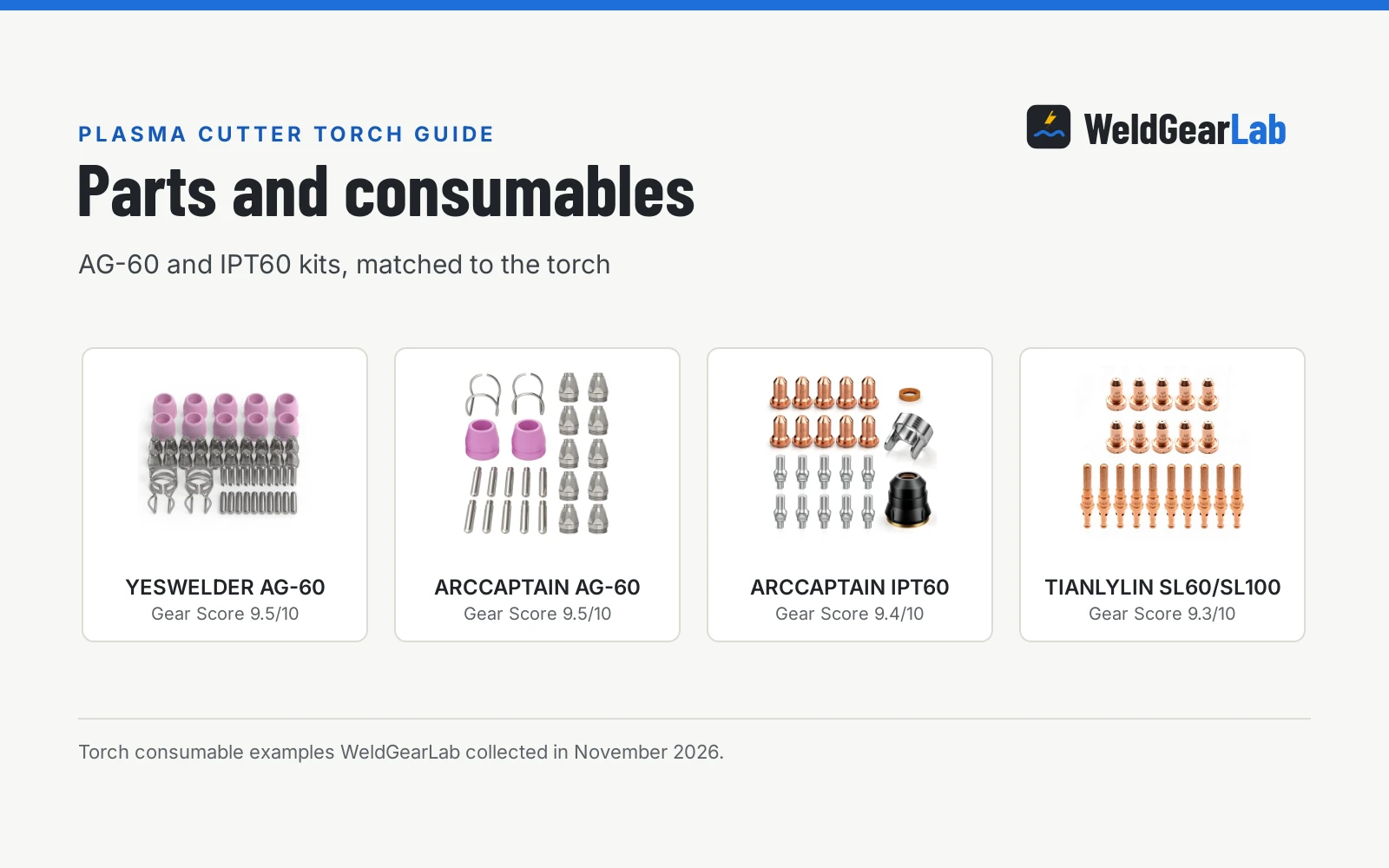
Consumables depend on the torch model series rather than the handle style. Torches sharing the same model series often share electrodes, swirl rings, nozzles, and shield cups. However, you should always check the manufacturer parts breakdown because machine torches frequently use specialized shield caps designed for automated torch height control sensing.
Related: how to use a CNC plasma table, CNC plasma vs plasma cutter difference, best home hobby plasma cutter, and the plasma cutters hub. Also see our plasma cutting consumables guide.