Plasma Cutter Types: How Arc Start, Air Supply, and Power Differ
Plasma cutter types differ by arc starting method, air compressor supply, and input voltage, shaping how cleanly and reliably they cut metal in your shop.

On this page
Top picks at a glance
As an Amazon Associate I earn from qualifying purchases.
- 1
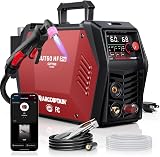 ARCCAPTAIN iControl CUT60 Pro Plasma Cutter Machine9.8/10View on Amazon
- 2
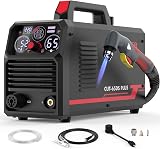 YESWELDER CUT-65DS PLUS Plasma Cutter9.7/10View on Amazon
- 3
 YESWELDER 45PCS Plasma Cutting Torch Consumables Set Tip9.7/10View on Amazon
When slicing warped plate or rusted steel on your bench, choosing the right machine comes down to arc ignition, air supply, and electrical input. Plasma cutter types divide into three core choices: blowback pilot arc versus high-frequency and contact start; built-in compressors versus shop air systems; and dual-voltage convenience versus dedicated shop power. Matching these plasma cutter types to your shop power and metal condition matters. Our plasma cutter types guide explains each design so you can pick the right setup for your shop.
This guide links to our product roundups, where WeldGearLab gets a commission on purchases made through links on this page, and your price stays the same. Read our affiliate disclosure.
The main plasma cutter types summarized
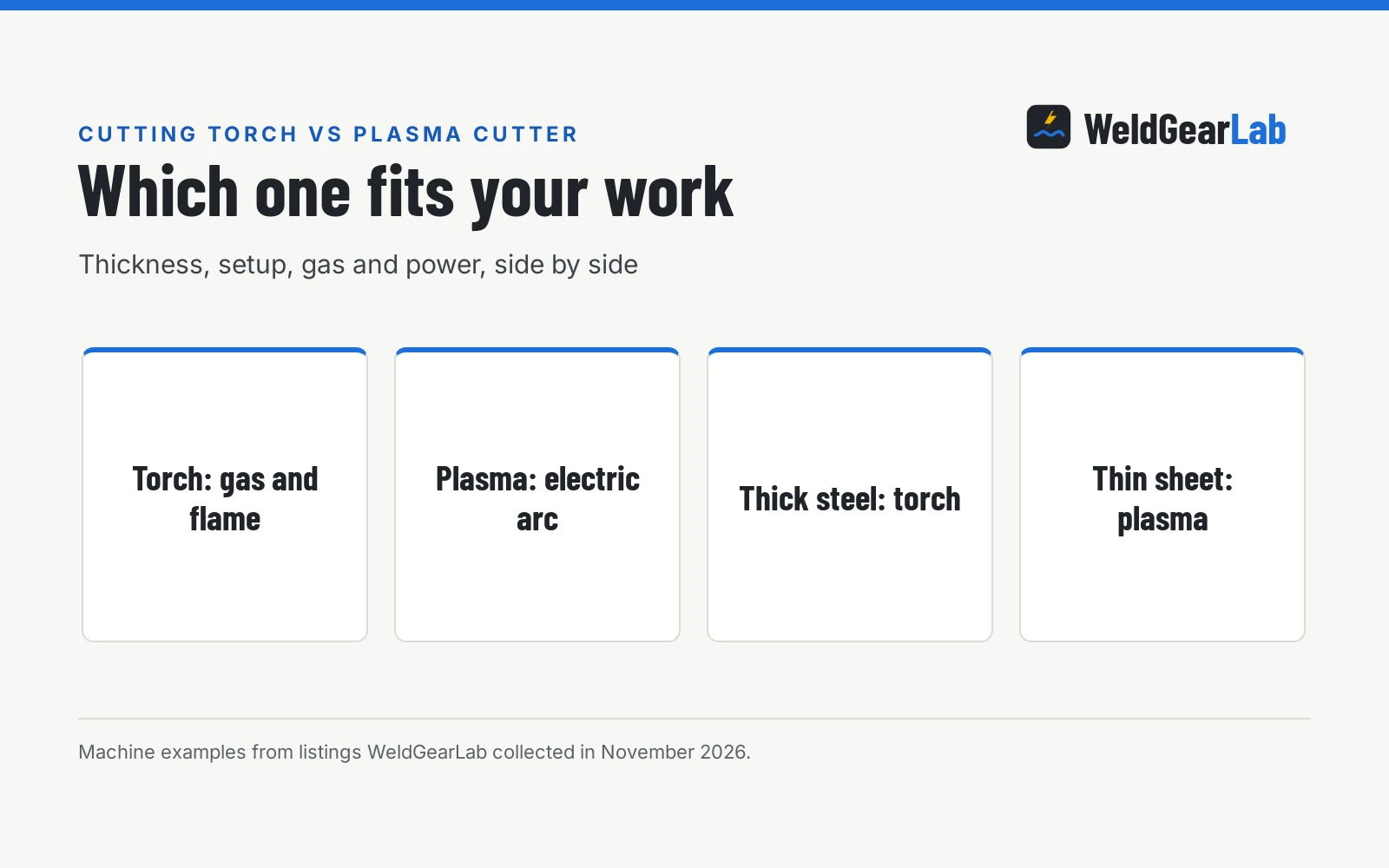
A plasma cutter passes compressed air through an electric arc constricted by a torch nozzle, ionizing the air into a high-velocity plasma stream that melts conductive metal and blows dross clear of the kerf. While all models share this principle, they differ in how they strike the arc, supply compressed air, and draw electrical current.
Selecting a design requires balancing these trade-offs. An internal air pump provides portable convenience for field repairs, while an external shop compressor allows cutting thicker plate. Similarly, blowback torches operate near CNC tables without electrical interference, while high-frequency pilot arc machines suit manual cutting where electrical noise is not a concern.
Side by side
| Blowback Pilot Arc | High-Frequency Pilot Arc | Contact Start | |
|---|---|---|---|
| Arc ignition | Air pressure moves internal electrode | High-voltage high-frequency spark | Torch tip touches workpiece directly |
| Torch contact needed | No, non-touch standoff cutting | No, non-touch standoff cutting | Yes, tip contacts metal to strike |
| Dirty or painted steel | Ignites without stripping surface | Ignites without stripping surface | Needs bare clean metal to strike |
| Electrical interference | None, safe around CNC and computers | High-frequency pulses can scramble electronics | Low, but requires physical contact |
| Consumable nozzle wear | Lower wear from standoff distance | Lower wear from standoff distance | Higher wear from direct surface contact |
| Expanded metal and mesh | Requires grid mode or arc timer | Requires grid mode or arc timer | Loses arc when crossing open voids |
| Common torch series | IPT40, IPT60 | AG60, AG60P, P80 | PT31 |
| Typical workshop role | CNC tables, garage fab, automotive repair | Manual cutting, farm repair, general fab | Entry level cutting, thin sheet metal |
Consumable models and capacities reflect maker listings; always match replacement nozzles and electrodes to your torch model. Capacities assume clean, dry air at recommended operating pressures.
When a blowback pilot arc is the better choice
Blowback arc ignition, or pneumatic non-high-frequency start, uses compressed air to initiate the pilot arc inside the torch. Pressing the trigger directs air to push an internal piston and electrode back from the nozzle, drawing a pilot arc without high-voltage radio-frequency bursts. The arc then transfers smoothly to the workpiece.
The main advantage is zero electromagnetic interference. High-frequency bursts can scramble computer readouts, freeze digital controllers, and disrupt CNC stepper motors. Blowback torches eliminate this noise, making them ideal for automated cutting tables and shops with sensitive electronic equipment.
Non-touch starting preserves nozzle life on painted or rusted metal, and maintaining pilot timing allows cutting expanded mesh without arc dropouts. Our pilot arc vs blowback start plasma cutter guide reviews these differences.
Maker listings show typical blowback performance. YESWELDER lists its CUT-65DS PLUS with an IPT40 torch, delivering 65A on dual-voltage 110V and 220V power. On 110V, it rates clean cuts at 5/16 inch with a 5/8 inch maximum severance cut. On 220V, clean cuts reach 9/16 inch with a 1 inch maximum cut, backed by an IP21 rating. See our best portable plasma cutter guide for dual-voltage picks.
When high-frequency start fits the work
High-frequency pilot arc machines use a spark gap circuit to project an arc flame before the torch touches the plate. Once within standoff distance, current transfers to the metal to begin cutting.
These torches suit agricultural and maintenance fabrication on dirty or scaled steel. Because the arc establishes across the nozzle orifice without mechanical parts, it fires reliably through paint and rust. Machines equipped with pilot arc timing functions maintain this arc across expanded grating and wire mesh.
Listings demonstrate typical ratings. bestarc lists its 50A machine with an AG60P torch and 0.040 inch nozzle, running on 110V and 220V. On 110V at 35A under 55 PSI air pressure, clean cuts reach 1/2 inch; on 220V at 50A under 65 PSI, clean cuts measure 1/2 inch with a 2/3 inch maximum severance cut. See our guide on the best plasma cutter for farm use, and source wear parts via our arc plasma cutter consumables guide.
Built-in compressor units versus external air systems
Plasma cutting requires steady compressed air to create the plasma jet and eject molten metal from the kerf. Units divide into built-in compressor models and external air machines.
Built-in compressor models feature an internal pump inside the case, eliminating the need to transport a separate compressor and air lines to field repairs. They offer practical mobility for pasture fence and gate repairs, though internal air volume limits severance thickness and duty cycle.
External air cutters connect to a standalone shop compressor, providing higher volume and pressure for thicker plate and prolonged cutting. Clean, dry air is critical to prevent nozzle erosion. bestarc lists an air filter with a 1/4 inch NPT quick connector, operating within 65 PSI at 250 liters per minute airflow. Reboot specifies 90 PSI at 60 liters per minute or above for its 60A machine, rating 1/2 inch clean cuts and 3/4 inch maximum severance.
Read our guide to the plasma cutter with air compressor for portable units, or pair shop machines with picks from our best air compressor for plasma cutter and best air dryer filter for plasma cutter guides.
Dual voltage versus dedicated shop power
Input voltage determines the amperage delivered to the torch, controlling cutting speed and severance thickness.
Dual-voltage machines run on 110V or 220V circuits via adapter plugs. On standard 110V circuits, amperage must remain low to prevent tripping 15A or 20A breakers, limiting work to sheet metal and thin tubing. Switching to 220V provides full amperage for cutting heavy plate.
Running high output on 110V draws heavy current: bestarc lists breaker ratings of 40A on 110V and 30A on 220V for its 50A unit, while Reboot specifies 50A on 120V and 30A on 240V for its 60A unit. ARCCAPTAIN notes that cutting metals over 18mm requires a stable 220V supply. Dedicated 220V machines serve continuous fabrication work; review our guide on what size plasma cutter do I need.
How to tell what features a machine includes
Listing specifications highlight torch technology, air demands, and electronic controls.
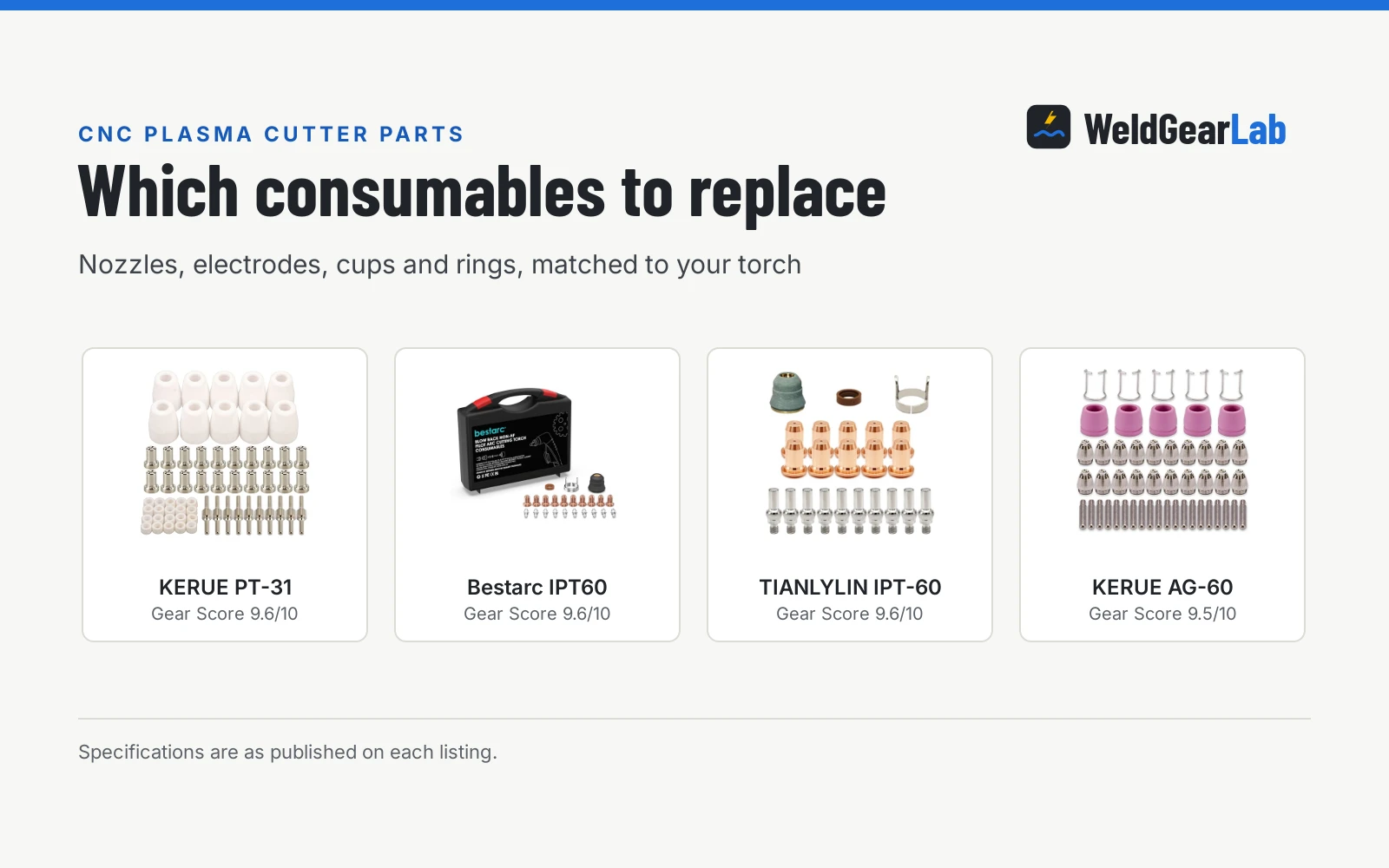
- Arc ignition type. Blowback non-high-frequency models (IPT40, IPT60) avoid electrical noise for CNC work. High-frequency pilot arc units (AG60P, P80) provide reliable non-contact starts, while contact start torches (PT31) require striking directly against metal.
- Air pressure monitoring. Digital sensors display real-time pressure. ARCCAPTAIN monitors air pressure with error code E80 below 30 PSI and E81 above 80 PSI to prevent improper cutting.
- Trigger latching. The 2T mode requires holding the trigger down; 4T acts as a latch to prevent finger fatigue during long plate cuts.
- Post-flow cooling. Air flows after the cut to protect electrodes from oxidation. Listings cite adjustable ranges, such as bestarc specifying 3 to 15 seconds and YESWELDER listing 5 to 20 seconds.
- Multi-mode cutting. Specialized settings handle varied tasks. YESWELDER lists its CUT-65DS PLUS with plate cutting, grid cutting, gouging, and marking modes.
Find practical tips in cut 50 plasma cutter tips, minimize slag via how to reduce dross when plasma cutting, and troubleshoot cuts with why is my plasma cutter not cutting through.
FAQ for welders
What is the difference between pilot arc and contact start plasma cutters?
A contact start torch must touch the workpiece to strike an arc, which accelerates tip wear on dirty metal. A pilot arc ignites inside the nozzle before transferring to the plate, allowing standoff cutting through paint and rust.
Can a plasma cutter operate without an external air compressor?
Only machines built with an integrated internal compressor operate without an external air supply. Standard plasma cutters require clean, dry compressed air from a separate shop compressor to form the plasma stream and blow dross clear.
Why does a blowback plasma cutter matter for CNC tables?
Blowback torches use air pressure rather than high-voltage spark pulses to strike the arc. This eliminates high-frequency electromagnetic noise that can scramble CNC stepper motors, corrupt computer signals, and interrupt automated cutting.
What does 2T and 4T mean on a plasma cutter?
The 2T setting requires holding the torch trigger throughout the cut, which suits short trimming jobs. The 4T mode locks the trigger on after starting, letting you cut long plate seams without continuous finger pressure.
Which plasma cutter type is best for rusty or painted metal?
Pilot arc cutters, including blowback and high-frequency units, handle rusty or painted metal best. Because the pilot flame ignites before contacting the work, the arc burns directly through surface coatings without pre-grinding.
Related: plasma cutter types hub, pilot arc vs blowback start plasma cutter, best portable plasma cutter, plasma cutter with air compressor, and our guide on what shade for plasma cutting.