CNC Plasma vs Plasma Cutter Difference: Which One Should You Buy?
A handheld plasma cutter and a CNC plasma table share the same cutting arc but serve different shop needs, motion controls, and fabrication scales.

On this page
Top picks at a glance
As an Amazon Associate I earn from qualifying purchases.
- 1
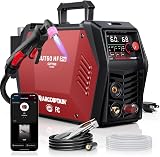 ARCCAPTAIN iControl CUT60 Pro Plasma Cutter Machine9.8/10View on Amazon
- 2
 SILATU 85A CNC Plasma Cutter MachineView on Amazon
- 3
 ANDELI 65 Amp Plasma Cutter [CNC Enabled][ Non-HF]View on Amazon
- 4
 Bestarc 50A Non-HF CNC Plasma CutterView on Amazon
- 5
 Bestarc 80Amp Non-HF CNC Plasma CutterView on Amazon
- 6
 LOTOS Apex Plasma CutterView on Amazon
- 7
 LOTOS LTP6300DCNC 63A CNC Plasma CutterView on Amazon
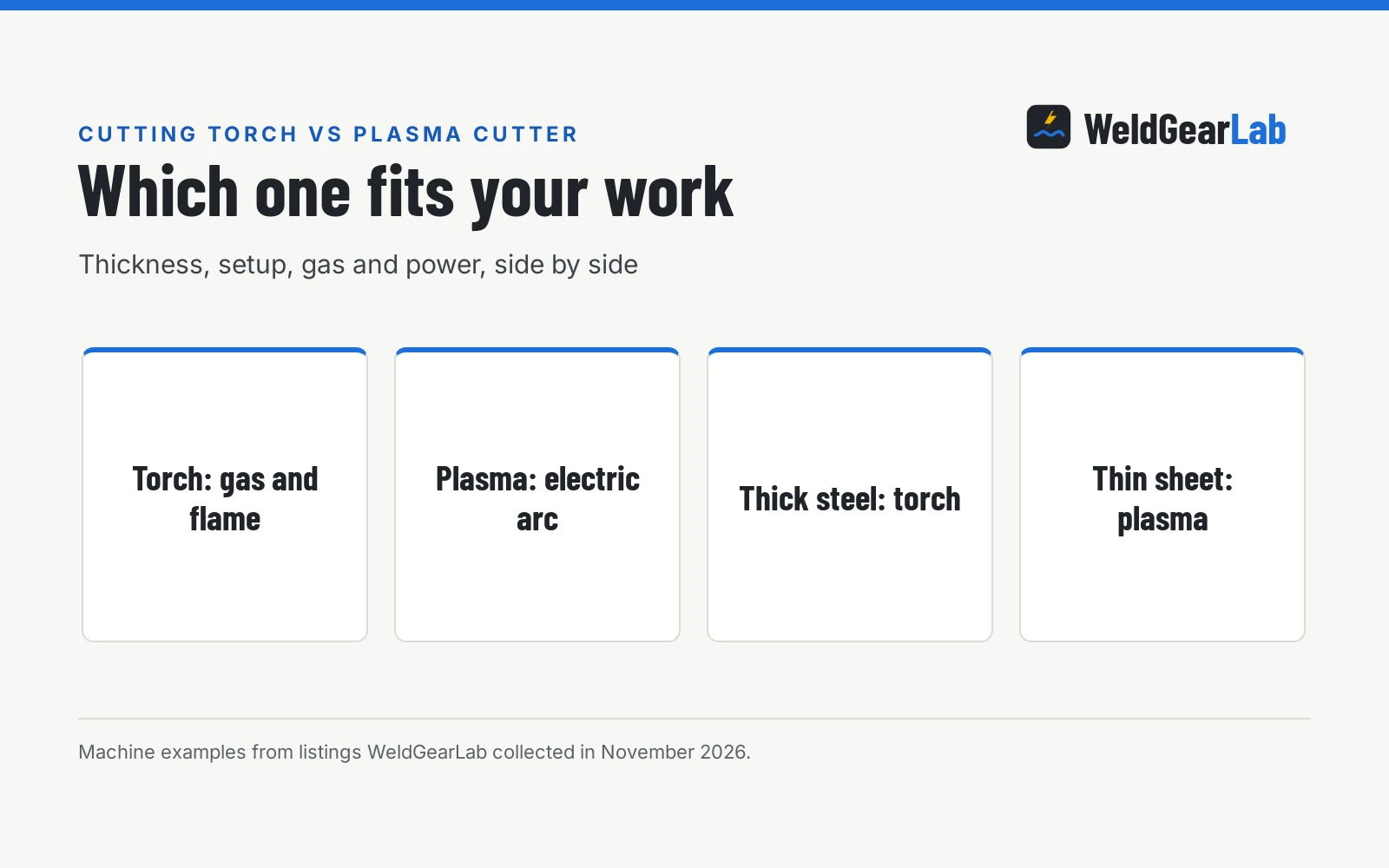
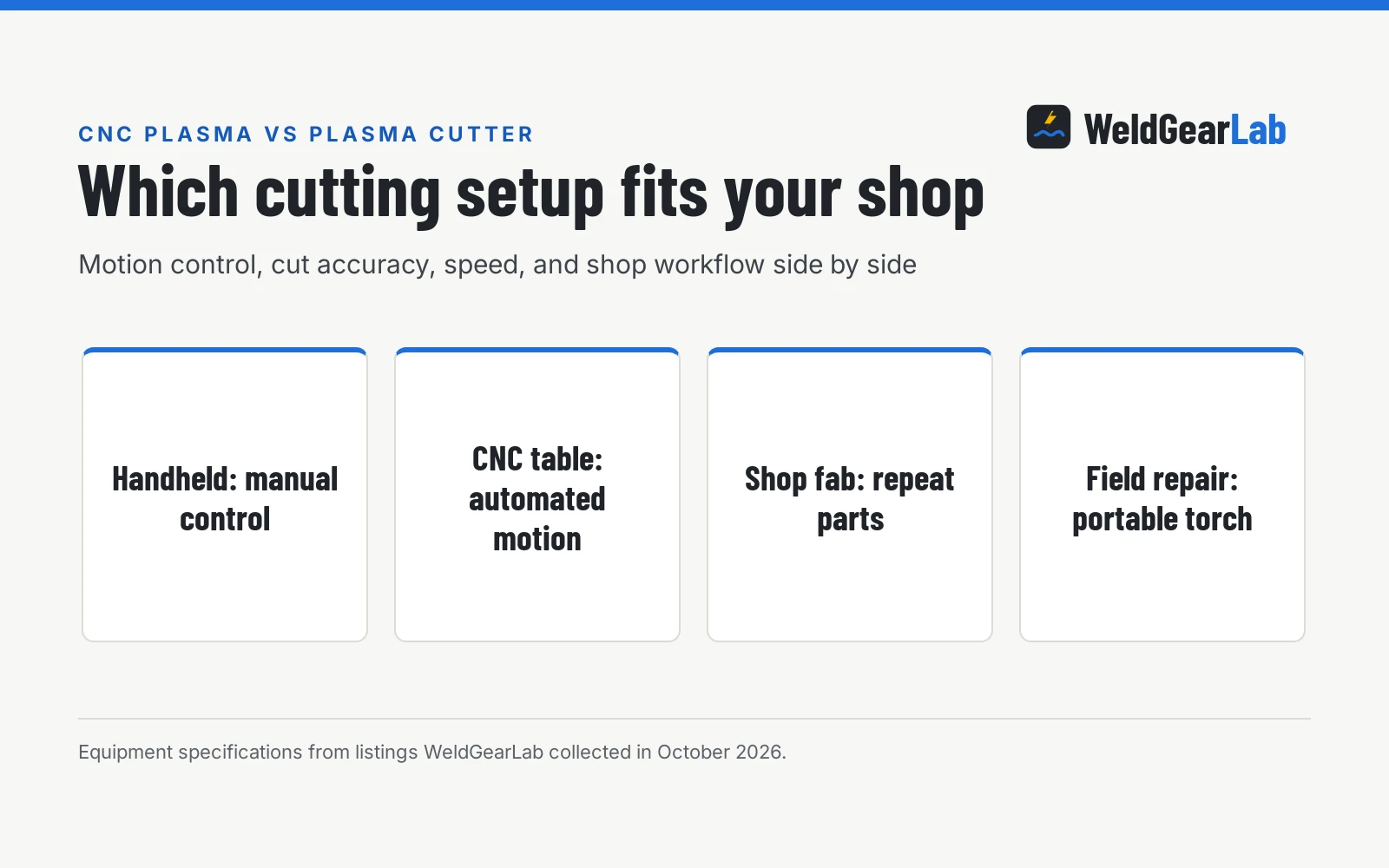
When cutting bracket shapes, gussets, or sheet metal parts on the fab shop bench, choosing between a handheld torch and an automated cutting table determines your cut speed, accuracy, and workflow. The cnc plasma vs plasma cutter difference comes down to control: a plasma cutter is the standalone power source and torch that melts and blows away metal, while a CNC plasma system mounts that plasma cutter to a computer-controlled table to automate precise, repeatable cuts. A handheld torch provides manual portability for rough cuts and repairs, while an automated table delivers mechanized precision across full metal sheets. This guide compares both cutting setups for farm, hobby, and small fab shops, detailing motion controls, torch styles, shop space demands, and machine compatibility.
Other welders and gear to compare
 SILATU 85A CNC Plasma Cutter MachineCheck price on Amazon
 ANDELI 65 Amp Plasma Cutter [CNC Enabled][ Non-HF]Check price on Amazon
 Bestarc 50A Non-HF CNC Plasma CutterCheck price on Amazon
 Bestarc 80Amp Non-HF CNC Plasma CutterCheck price on Amazon
 LOTOS Apex Plasma CutterCheck price on Amazon
 LOTOS LTP6300DCNC 63A CNC Plasma CutterCheck price on Amazon
This guide links to our product roundups, where WeldGearLab gets a commission on purchases made through links on this page, and your price stays the same. Read our affiliate disclosure.
The CNC plasma vs plasma cutter difference explained
A plasma cutter is an electrical power source that ionizes compressed gas into a high-velocity plasma jet, directing focused thermal energy through a nozzle orifice to sever electrically conductive metal. By contrast, a CNC plasma setup is a complete motion system that integrates a plasma power supply with a mechanized gantry, drive motors, torch height controls, and computer software. The plasma cutter supplies the cutting arc, while the computer numerical control table steers the torch along programmed toolpaths. Without a plasma power unit, a cutting table has no arc to cut metal; without a motorized table, a plasma cutter relies on manual guidance, straightedges, or hand-traced templates.
Side by side
| Feature | Manual Plasma Cutter | CNC Plasma System | Fab Shop Role |
|---|---|---|---|
| Motion control | Hand guided by operator | Computer numerical control gantry | Automated gantry ensures steady speed |
| Torch mounting | Handheld torch with finger trigger | Straight machine torch or clamped hand torch | Machine barrel clamps square to table |
| Cut path accuracy | Varies with operator hand steadiness | Consistent mechanical accuracy | Eliminates operator wobble on curves |
| Repeat part cutting | Requires manual layout or templates | Automated nesting and repeat cycles | Digital toolpaths repeat identical parts |
| Setup complexity | Connect power, air line, and ground clamp | Requires table setup, software, and tuning | Manual units cut immediately with clean air |
| Shop space required | Compact machine on cart or bench | Dedicated cutting table footprint | Manual machines tuck under fab benches |
| Torch height control | Maintained manually by operator eye | Automated arc voltage height control | Arc voltage tracking handles warped plate |
| Portability | Easy to carry for field and mobile repair | Stationary shop table installation | Manual units travel easily in truck beds |
| Intended workload | Demolition, bevels, fit-up, and quick repair | Production fabrication, brackets, and signs | Table handles high volume fabrication |
Motion control and torch mounting create the practical boundary between these cutting setups. A handheld torch features an angled head and a trigger suited for manual severance, gouging out old welds, and beveling plate edges. A mechanized setup typically uses a straight machine torch clamped squarely into a motorized z-axis carriage, though some entry-level tables can also accept a secured hand torch. Torch height control electronics monitor arc voltage continuously during the cut, adjusting the vertical distance between the nozzle and the plate to compensate for warped metal. Handheld cutting depends on operator stance, travel speed consistency, and visual standoff control.
When a manual plasma cutter is the better choice
- Field repairs and mobile fabrication. A compact inverter power supply rides in a service truck bed, runs off a generator, and reaches rusted farm equipment, trailer frames, and fence posts far away from a shop table.
- Demolition, scrap cleanup, and rough severance. Slicing seized tractor bolts, cutting apart rusted pipe, and gutting damaged automotive sheet metal requires fast maneuverability rather than mechanical precision.
- Beveling plate edges and odd angles. Angling the torch by hand lets you prepare weld bevels on heavy plate edges, copes on structural tubing, or wash away defective weld beads without complex computer programming.
- Small workshops with limited floor space. A portable plasma unit sits on a rolling welding cart or tucks under a workbench, requiring only wall power and a clean compressed air connection.
Our best portable plasma cutter guide highlights standalone inverter units that balance cutting power with easy transport for mobile field jobs and tight garage spaces.
When a CNC plasma system is the better choice
- Repeat bracket fabrication and production runs. Cutting identical mounting tabs, gussets, base plates, or suspension brackets is fast once programmed, eliminating tedious hand tracing and band saw work.
- Complex curves, decorative signs, and internal holes. Digital software drives the machine torch through intricate scrollwork, artistic wall signs, bolt circles, and slotted holes that are difficult to guide smoothly by hand.
- Superior edge squareness and minimal dross. Controlled mechanical travel speed and automatic torch height tracking produce clean cut faces that require little to no grinding before tack welding and final bead deposition.
- Efficient plate nesting to reduce scrap. Nesting software arranges multiple distinct parts across a sheet of steel or aluminum, maximizing material yield and reducing scrap drops.
Our overview explaining what is a CNC plasma table breaks down how drive racks, linear rails, water trays, and controller software coordinate to handle automated plate cutting.
How to tell if a plasma cutter is CNC ready
Not every plasma power unit connects directly to an automated table with equal ease. While some fabricators adapt basic machines using external wiring, purpose-built or CNC-ready units provide dedicated connections and cleaner electrical behavior. Check the equipment specifications for these key features before choosing a cutter for automated table use:
- Dedicated CNC interface port. Look for an automation interface connector on the machine chassis. This port typically provides start and stop trigger signals, arc transfer confirmation signals, and divided arc voltage leads for table controls.
- Blowback pilot arc start rather than high frequency. High frequency arc starting emits electrical noise that can interfere with sensitive computer electronics, stepper motor drivers, and digital signals on entry-level tables unless extensive shielding and grounding are installed. Blowback torches ignite through mechanical electrode movement, making electrical isolation much simpler. Review our comparison on pilot arc vs blowback start plasma cutter options to verify ignition styles.
- Arc voltage divider output. Automated torch height controls require a scaled-down arc voltage signal to gauge torch-to-work standoff. Units with built-in divider cards output safe low-voltage signals directly, while machines without dividers require external voltage divider modules.
- Machine torch support. While many hobby tables can clamp a standard handheld torch, a straight barrel machine torch mounts more rigidly, stays square to the table slats, and simplifies consumable replacement during long production runs.
If a machine lacks a factory automation port, adding remote triggering and arc voltage monitoring may require opening the chassis to tap internal leads. Doing so can void manufacturer warranty coverage and introduces high-voltage electrical hazards, making factory-equipped CNC ports a much safer and cleaner choice for automated shop fabrication.
Air supply and gas requirements
Both manual and mechanized plasma cutting rely on a continuous flow of compressed gas to cool the torch head and blow molten puddle metal out of the cut kerf. Clean, bone-dry compressed air serves as the everyday workhorse gas for cutting mild carbon steel, stainless sheet, and aluminum plate. Moisture or oil contamination in the air line destroys copper consumables rapidly, causes sputtering arcs, and leaves heavy dross clinging to the bottom edge of the cut.
Mechanized cutting demands higher air volume and tighter pressure consistency than intermittent hand work because a table runs long continuous cut paths without letting the compressor rest. Equipping your shop air line with dedicated moisture separators, coalescing filters, or desiccant drying stages protects both the power unit internal solenoids and delicate torch parts. Check our guide on gas for plasma cutter options to see when specialty gases like nitrogen or argon-hydrogen mixtures make sense for stainless edges.
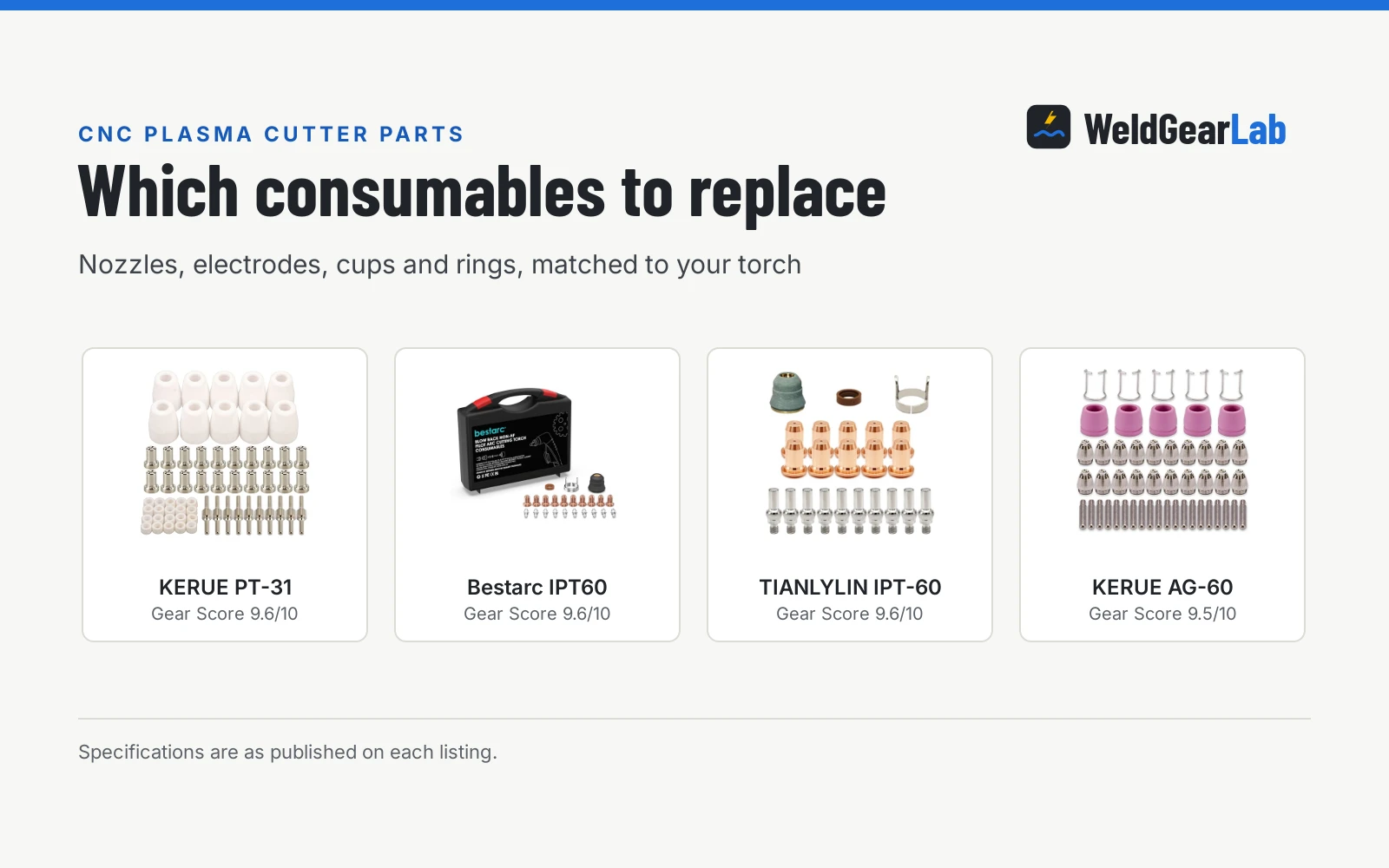
Consumables also experience different wear patterns between these systems. In manual cutting, resting an unshielded nozzle tip directly against the plate or catching molten blowback during an unguided pierce damages the copper orifice. CNC tables use programmed pierce delays, pierce height retracts, and automated height sensing to protect the nozzle shield from molten spatter. Maintaining quality, manufacturer-matched consumables ensures proper swirl gas distribution, steady arc centering, and extended electrode life across extensive cutting sessions.
Can a machine do both handheld and CNC cutting?
Many fabricators start with a standalone plasma power supply and later expand their capabilities by mounting that same unit to an automated gantry. Investing in a versatile inverter machine with a factory CNC connector allows you to disconnect the machine torch from the table and plug in an ergonomic hand torch whenever you need to slice structural tubing, chop up scrap iron, or tackle equipment repairs in the yard.
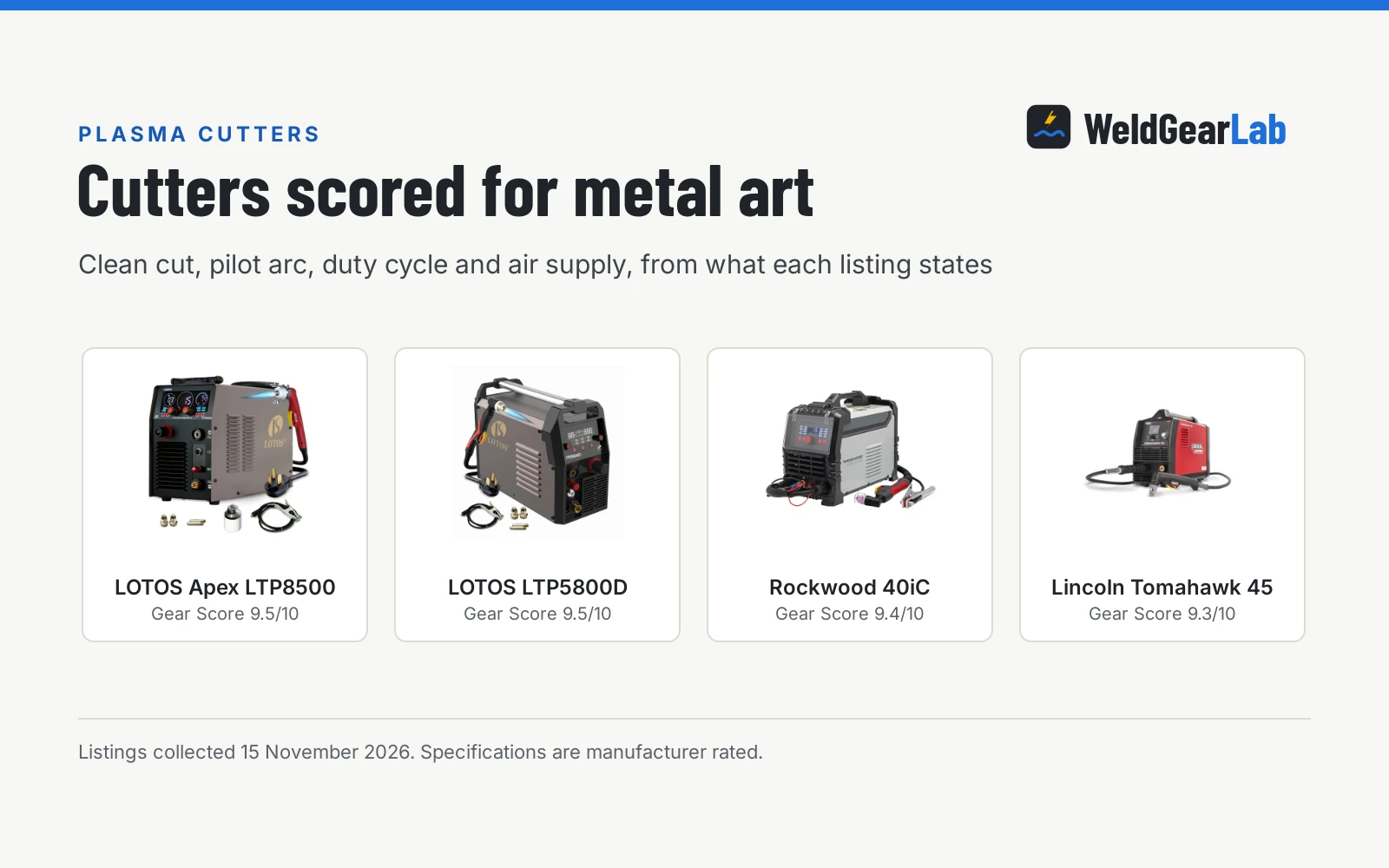
If you are outfitting a shop step by step, machines reviewed across our plasma cutters hub offer dependable cutting current and solid duty cycles. For smaller garages and hobby spaces, exploring picks in our best home hobby plasma cutter and best plasma cutter for farm use roundups will help you evaluate cutting capacities, air requirements, and torch lead lengths before committing to a larger automated table footprint.
Plasma cutting ventilation and eye protection. Plasma arcs generate intense ultraviolet radiation, sparks, and hot metallic fumes. Always wear proper shade eye protection, fire-resistant leather gear, and operate cutting equipment in a well-ventilated shop area or over a downdraft or water table to control smoke and fine metal dust.
FAQ for welders
Can you use a regular plasma cutter on a CNC table?
You can use a standard plasma cutter on a CNC table, though machines equipped with blowback arc starting and factory automation ports are much simpler to integrate. Units with high frequency starting require careful grounding and electrical noise isolation to avoid disrupting computer controls. You will also need a reliable way to trigger the torch through table software and monitor arc voltage for automatic height tracking.
Is a CNC plasma table hard to learn for a welder?
Learning to run a cutting table involves mastering computer design software, toolpath generation, and cutting machine controls. Welders familiar with metal behavior, cut speeds, dross formation, and kerf widths often pick up table operation quickly because they already understand how plasma arcs react to plate thickness. Creating basic bracket profiles takes minimal practice, while complex multi-part nesting takes longer to master.
Why do CNC plasma tables need torch height control?
Metal plate is rarely completely flat, and heat from the cutting arc causes thin sheet metal to expand, bow, and warp upward during long cuts. Torch height control systems measure the electrical arc voltage between the torch electrode and the work plate, automatically raising or lowering the z-axis gantry to keep the nozzle at the correct standoff distance. Without automated height tracking, the torch can crash into warped metal or drift too high, losing the cutting arc and ruining the part.
Do CNC plasma tables cut cleaner than handheld torches?
A CNC plasma table cuts significantly cleaner than a handheld torch because machine drives maintain steady travel speed and rigid torch alignment throughout the entire cut path. Human operators inevitably speed up, slow down, or hesitate around tight corners, creating inconsistent dross buildup and gouged edge faces. Automated movement produces smooth, perpendicular edges that require minimal grinding before welding.
Which setup should a small fab shop start with?
A small shop or farm repair business should almost always start with a capable manual plasma cutter. A handheld unit handles demolition, equipment repair, scrap trimming, and mobile maintenance tasks that a stationary table cannot reach. As shop workload expands to include repeat parts, decorative signs, custom brackets, or production sheet metal fabrication, adding an automated cutting table becomes the logical next upgrade.
Related: how to use a CNC plasma table, what size plasma cutter do I need, plasma cutting consumables guide, and the plasma cutters hub. Also see our guide on how to reduce dross when plasma cutting.