Gas for Plasma Cutter: Which Gas Fits Your Shop (2026)
Learn which gas for plasma cutter setups works for steel, stainless, and aluminum, comparing shop air, bottled nitrogen, and specialty mixes for clean cuts and long consumable life.

On this page
Top picks at a glance
As an Amazon Associate I earn from qualifying purchases.
- 1
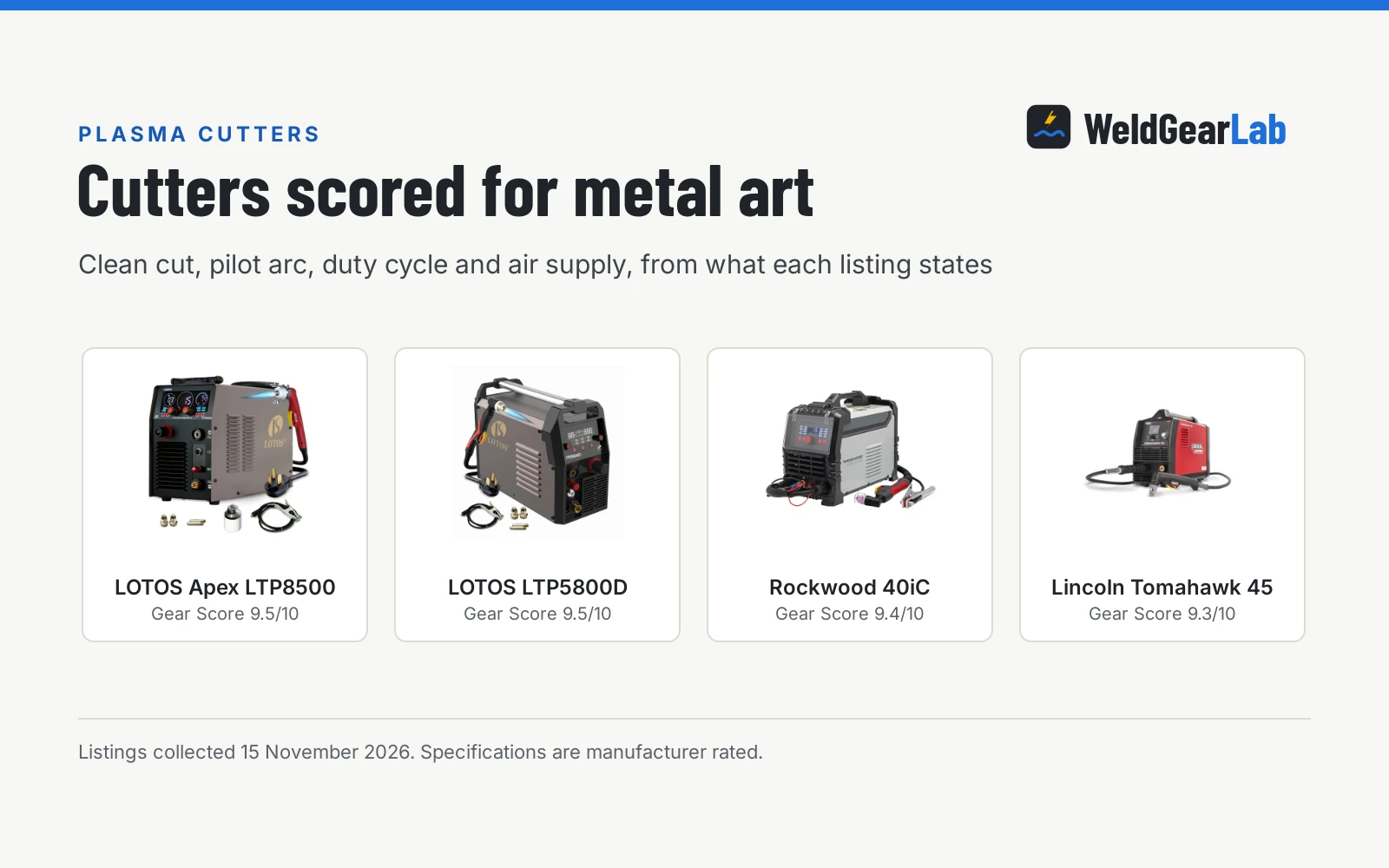
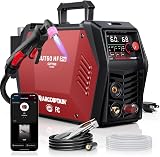 ARCCAPTAIN iControl CUT60 Pro Plasma Cutter Machine9.8/10View on Amazon
- 2
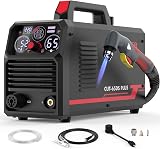 YESWELDER CUT-65DS PLUS Plasma Cutter9.7/10View on Amazon
- 3
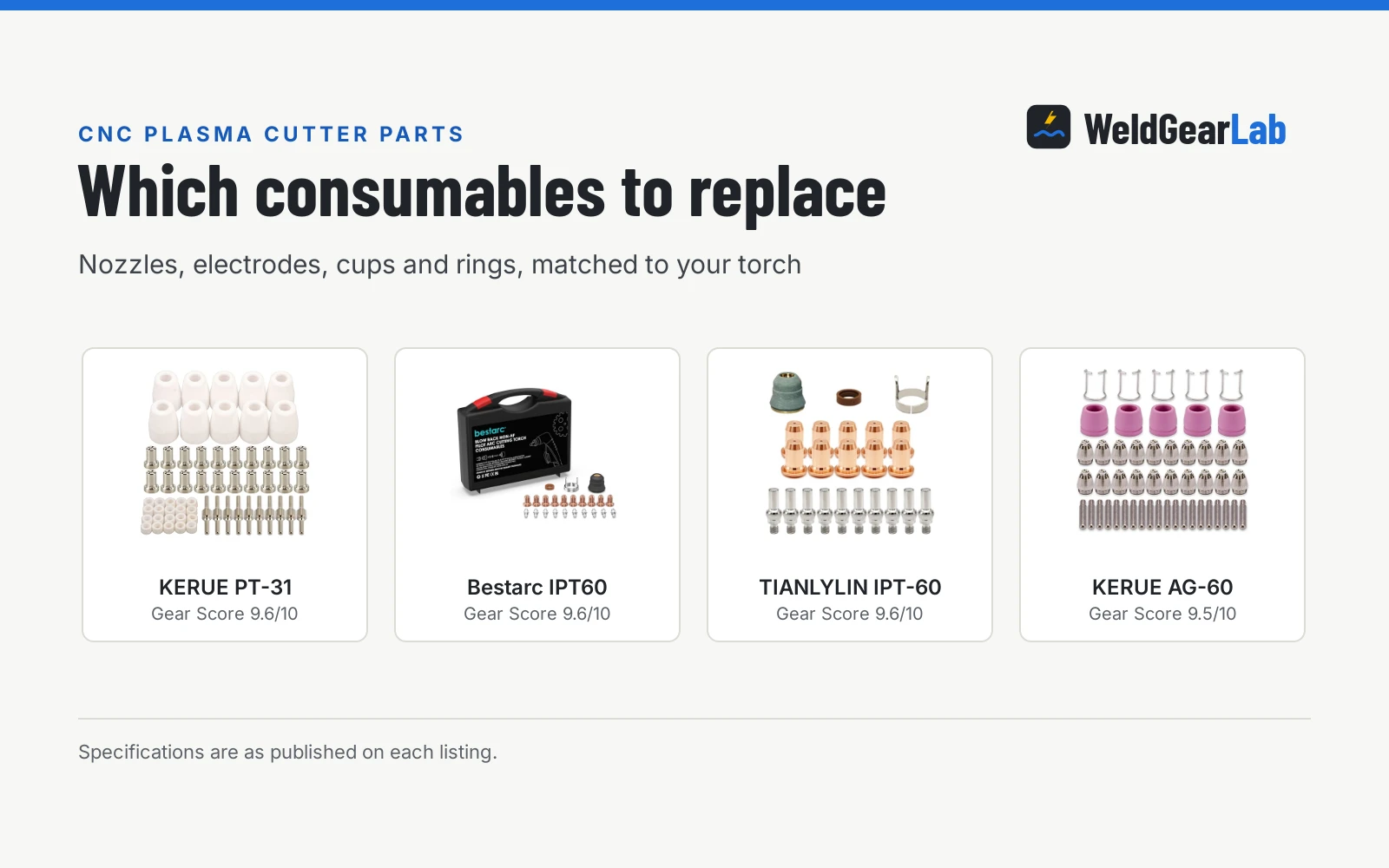
 YESWELDER 45PCS Plasma Cutting Torch Consumables Set Tip9.7/10View on Amazon
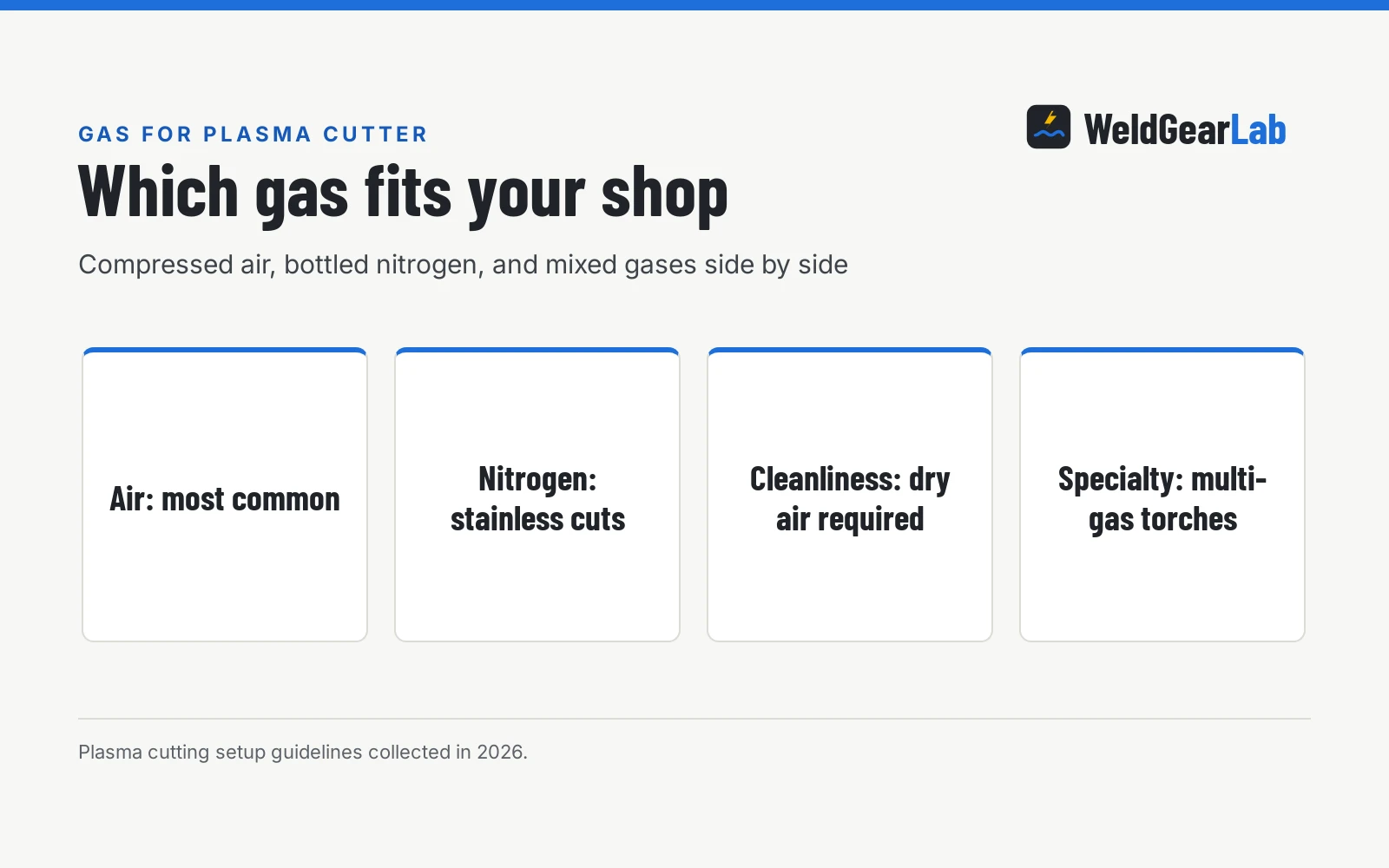
When you clamp plate to the cutting bench or trim square tubing for a weld, selecting the right gas for plasma cutter work decides how square your edge looks and how long your torch tip survives. For most home shops, farms, and fabrication benches, the direct answer is clean, dry compressed air. Compressed air powers the plasma arc, blows molten metal out of the kerf, and cuts carbon steel cleanly without the ongoing expense of gas cylinders. If you cut stainless steel or aluminum where edge oxidation creates welding problems later, bottled nitrogen provides a cleaner edge. Specialty gas mixes exist for automated CNC tables, but everyday shop cutting relies on clean compressed air.
This guide links to our product roundups, where WeldGearLab gets a commission on purchases made through links on this page, and your price stays the same. Read our affiliate disclosure.
The difference in one paragraph
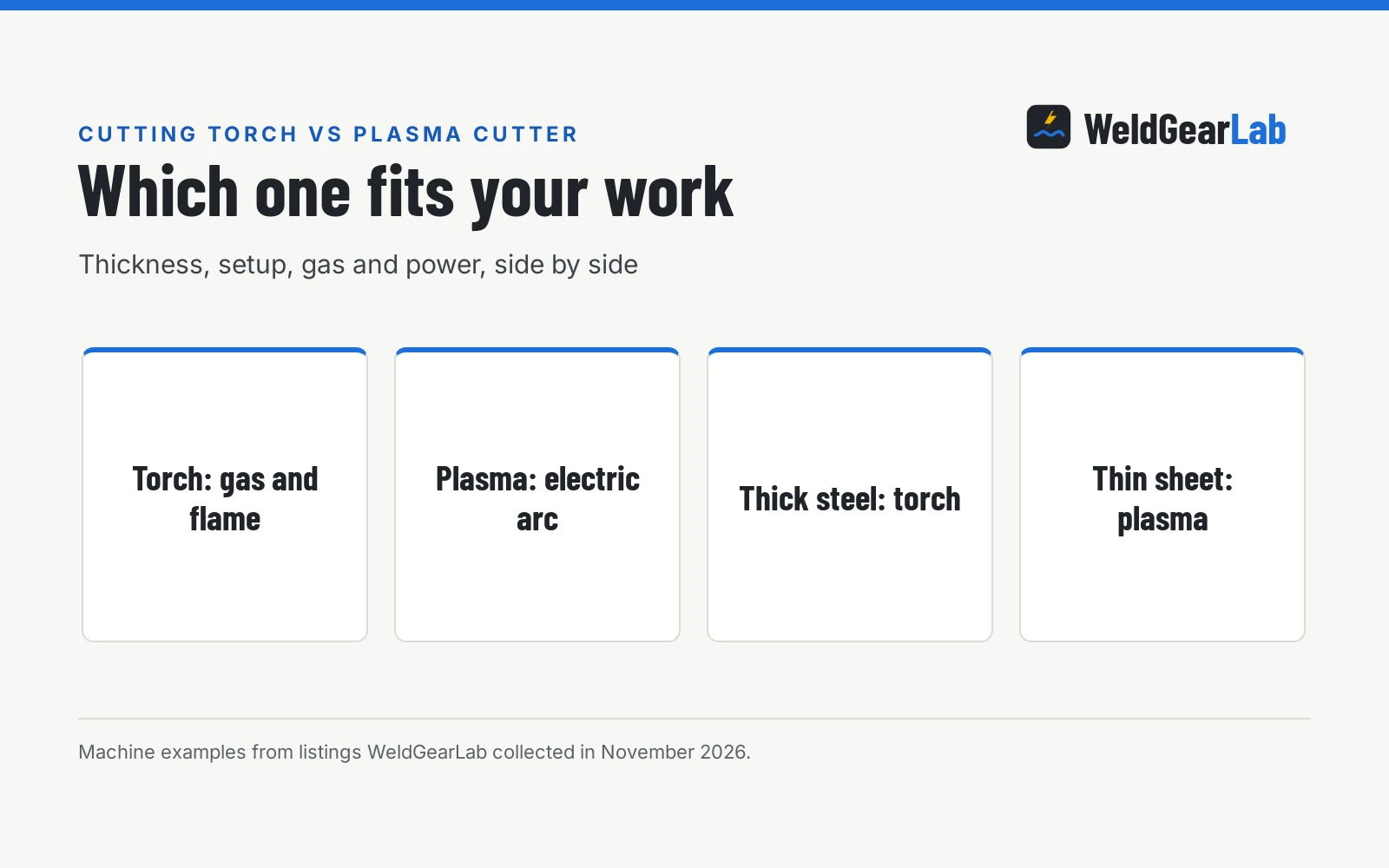
A plasma cutter works by passing an electric arc through a stream of pressurized gas flowing through a narrow nozzle orifice. The arc superheats the gas into an electrically conductive plasma jet that melts the workpiece, while the high-velocity gas stream blows the molten puddle out of the cut. Different gases change how the arc transfers thermal energy to the plate, how fast the kerf clears, and whether the cut face forms an oxide layer. Shop air contains oxygen that accelerates cutting speed on carbon steel through an exothermic reaction, while gases like nitrogen shield stainless steel and aluminum from atmospheric oxidation.
Side by side
| Compressed Air | Bottled Nitrogen | Specialty Gases | |
|---|---|---|---|
| Primary metal | Mild steel, general fabrication | Stainless steel and aluminum | Heavy alloy and production plate |
| Source | Air compressor with dryer | High-pressure cylinder | Dedicated cylinder or gas console |
| Cut edge quality | Square cut with light oxide layer | Clean edge with minimal oxide | Dross-free finish on alloys |
| Operating expense | Lowest running expense | Cylinder refill expense | Higher gas and consumable expense |
| Torch requirement | Standard handheld plasma torch | Standard torch rated for nitrogen | Dedicated multi-gas torch |
| Supply prep needed | Moisture and oil filtration | Clean cylinder regulator | Regulated multi-gas console |
| Common use | Home, farm, and fab shops | Sanitary and precision sheet | Automated CNC plasma tables |
Air pressure and flow volume requirements depend on torch design and amperage settings. Always set supply line pressure according to your machine manual, as low pressure causes torch overheating and slag blowback, while excessive pressure can destabilize the arc and accelerate nozzle wear.
When compressed air is the right choice
Compressed air is the standard choice for general fabrication because it is readily available and economical to run. Common shop machines in this category are engineered around compressed air delivery; see our guide to the best home hobby plasma cutter options. Compressed air suits the following shop situations:
- Carbon steel cutting. The oxygen content in compressed air creates an exothermic reaction with molten iron. This chemical boost increases cut speed and helps clear slag rapidly from the kerf.
- General repair and farm equipment work. When severing rusty brackets, gouging out cracked welds, or trimming plate for farm implements, compressed air delivers plenty of cutting force without hauling gas bottles.
- Lower ongoing operating expense. An air compressor draws shop electricity rather than requiring cylinder leasing fees, exchange trips to the welding gas supplier, and pressure regulator maintenance.
- Standard handheld torch compatibility. Typical shop plasma torches, including standard blowback and pilot arc torches, are engineered around compressed air flow rates and cooling requirements.
To run shop air reliably, your compressor must deliver steady volume without pressure dropping during extended cuts. See our guide on the best air compressor for plasma cutter setups to match tank storage and air delivery to your machine.
When bottled nitrogen is the right choice
Bottled nitrogen is the preferred alternative gas when cutting materials that react poorly with oxygen. While shop air cuts stainless steel and aluminum, the oxygen in the air leaves a discolored, oxidized cut edge that can cause porosity if you weld directly over it. Nitrogen provides several distinct advantages:
- Clean stainless steel edges. Nitrogen prevents chrome oxidation along the cut face. The resulting edge stays bright, shiny, and ready for welding without heavy grinding or chemical pickling.
- Smoother cuts on aluminum. Aluminum cut with compressed air develops a thick, rough aluminum oxide layer. Nitrogen shielding minimizes oxide buildup and produces a much smoother cut face.
- Reduced carbide precipitation on thin alloys. When fabricating stainless exhaust, sanitary tubing, or sheet projects, nitrogen preserves corrosion resistance along the cut zone.
- Dry gas delivery straight from the cylinder. Bottled nitrogen contains negligible moisture, eliminating airline condensation issues that plague shop compressors during humid weather.
Running nitrogen requires a dedicated high-pressure cylinder, a compatible regulator, and a torch rated for nitrogen gas. The torch consumables must also be checked against the maker manual, as some torches use distinct swirl rings or nozzles for bottled nitrogen.
Gas for plasma cutter: why moisture ruins your cuts
The biggest threat to cut quality and consumable life is not gas selection for general steel work, but moisture and oil contamination inside your airline. When moisture reaches the plasma torch, the high arc temperature dissociates water molecules into hydrogen and oxygen. This causes arc instability, violently errant arc wandering, and rapid erosion of the hafnium electrode insert.
Wet air produces noticeable defects on your cut parts:
- Heavy bottom dross. Sputtering arcs fail to eject molten metal cleanly, leaving thick, hardened slag along the bottom edge that requires heavy grinding to remove.
- Severe edge beveling. Unstable plasma jets swirl unevenly through the nozzle, producing severely beveled cut edges instead of a square, perpendicular cut.
- Blackened torch consumables. Moisture burns the copper nozzle bore out of round and pits the electrode face, drastically shortening consumable life.
- Pilot arc failure. Water droplets inside the torch head cause internal short circuits, preventing the pilot arc from transferring reliably to the steel plate.
To protect your machine, install dedicated filtration between your compressor tank and the plasma cutter inlet. A reliable setup uses a water separator near the compressor, a particulate filter along the airline, and a coalescing or desiccant dryer directly before the cutter. Read our guide on the best air dryer filter for plasma cutter systems and our plasma cutting consumables guide to keep your torch firing cleanly.
Specialty gases for automated and heavy cutting
Beyond standard shop air and nitrogen, industrial metal fabrication shops and automated cutting operations use specialized gas blends. These gases require multi-gas consoles, specialized power supplies, and liquid-cooled machine torches that differ from standard manual units.
- Oxygen plasma. Industrial CNC tables frequently use pure oxygen plasma on heavy mild steel plate. Oxygen creates an intense exothermic reaction that produces square, dross-free edges at rapid travel speeds, though it requires specialized consumables designed for pure oxygen service.
- Argon-hydrogen mixtures. Blends of argon and hydrogen provide higher arc temperatures than pure nitrogen. This intense heat penetrates thick stainless steel and heavy aluminum plate, producing clean cut faces in demanding industrial environments.
- Dual-gas shielding systems. High-end automated systems use distinct plasma gas and shield gas streams. A primary gas forms the core plasma arc, while an outer shield gas stream shrouds the arc to narrow the kerf, cool the nozzle, and blow spatter away from the torch shield cap.
For portable shop cutters and manual fabrication, these specialized mixtures add unnecessary complexity and cost. Understanding how torch design differs across machine categories is covered in our breakdown of plasma cutter types.
Can you run welding shielding gas in a plasma cutter?
Welders often ask whether they can hook up an existing cylinder of MIG or TIG shielding gas to their plasma cutter. The short answer is that standard welding shielding mixes should not be substituted for proper plasma cutting gas.
Using pure argon in a standard plasma torch produces a weak arc with poor thermal conductivity. Argon ionizes easily at low arc voltage, but it lacks the heat transfer capacity to blow through steel plate, causing the molten puddle to bridge across the nozzle and destroy torch consumables. Carbon dioxide and argon-carbon dioxide welding mixes alter arc voltage characteristics and cause erratic cutting performance without offering any benefit over compressed air.
Flammable gas hazard. Never connect fuel gases such as acetylene, propane, or natural gas to a plasma cutter. Introducing flammable fuel gases into an electric arc chamber causes catastrophic torch explosion, severe fire risk, and grave physical injury. Always secure high-pressure gas cylinders upright with safety chains, inspect gas hoses for cracking or leaks before opening cylinder valves, and ensure your shop has adequate mechanical ventilation to disperse fumes. For protective gear recommendations, review our guide on do you need a welding helmet for plasma cutting.
FAQ for welders
What are plasma cutters?
Plasma cutters are thermal cutting tools that use an electric arc and pressurized gas to slice through electrically conductive metals. The arc superheats the gas stream into a focused plasma jet that melts the workpiece while blowing molten metal out of the cut path. They cut mild steel, stainless steel, aluminum, copper, and brass without requiring preheating.
Can I use regular shop air for plasma cutting?
Yes, regular compressed shop air is the standard and most economical gas for handheld plasma cutting. It provides clean cuts on mild steel and plenty of cutting speed for shop fabrication. The air must be thoroughly filtered and dried, as water and oil droplets inside the airline destroy torch consumables and ruin cut quality.
Can you use argon in a plasma cutter?
Standard handheld plasma cutters cannot cut effectively with pure argon. Argon ionizes at low voltage and fails to transfer sufficient heat to melt and clear steel plate, causing slag buildup and rapid nozzle damage. While argon is used in specialized industrial mixtures for heavy stainless plate, everyday shop cutting relies on clean compressed air.
Why is clean, dry air so critical for plasma cutting?
Moisture inside the compressed air supply breaks down in the plasma arc into hydrogen and oxygen, creating violent arc instability. This errant arc causes heavy dross, beveled cut edges, and severe electrode erosion. Installing a water separator and desiccant dryer upstream from the machine preserves consumable life and ensures clean cuts.
Can you use oxygen or propane in a standard plasma cutter?
Standard shop plasma cutters must never be connected to fuel gases like propane or acetylene due to severe fire and explosion hazards. Pure oxygen must also never be introduced into a standard cutter, as standard torches and airlines contain seals and lubricants that ignite violently in oxygen service. While industrial CNC systems use dedicated oxygen plasma equipment, standard manual machines are built to run on clean compressed air.
Related: what size air compressor for a plasma cutter, can a plasma cutter cut aluminum, how long plasma cutter consumables last, and the plasma cutters hub.