How to Use a CNC Plasma Table: Step-by-Step Shop Guide
How to use a CNC plasma table step by step, covering software toolpaths, torch height control, waterbed operation, and clean cut settings for the shop.

On this page
Top picks at a glance
As an Amazon Associate I earn from qualifying purchases.
- 1
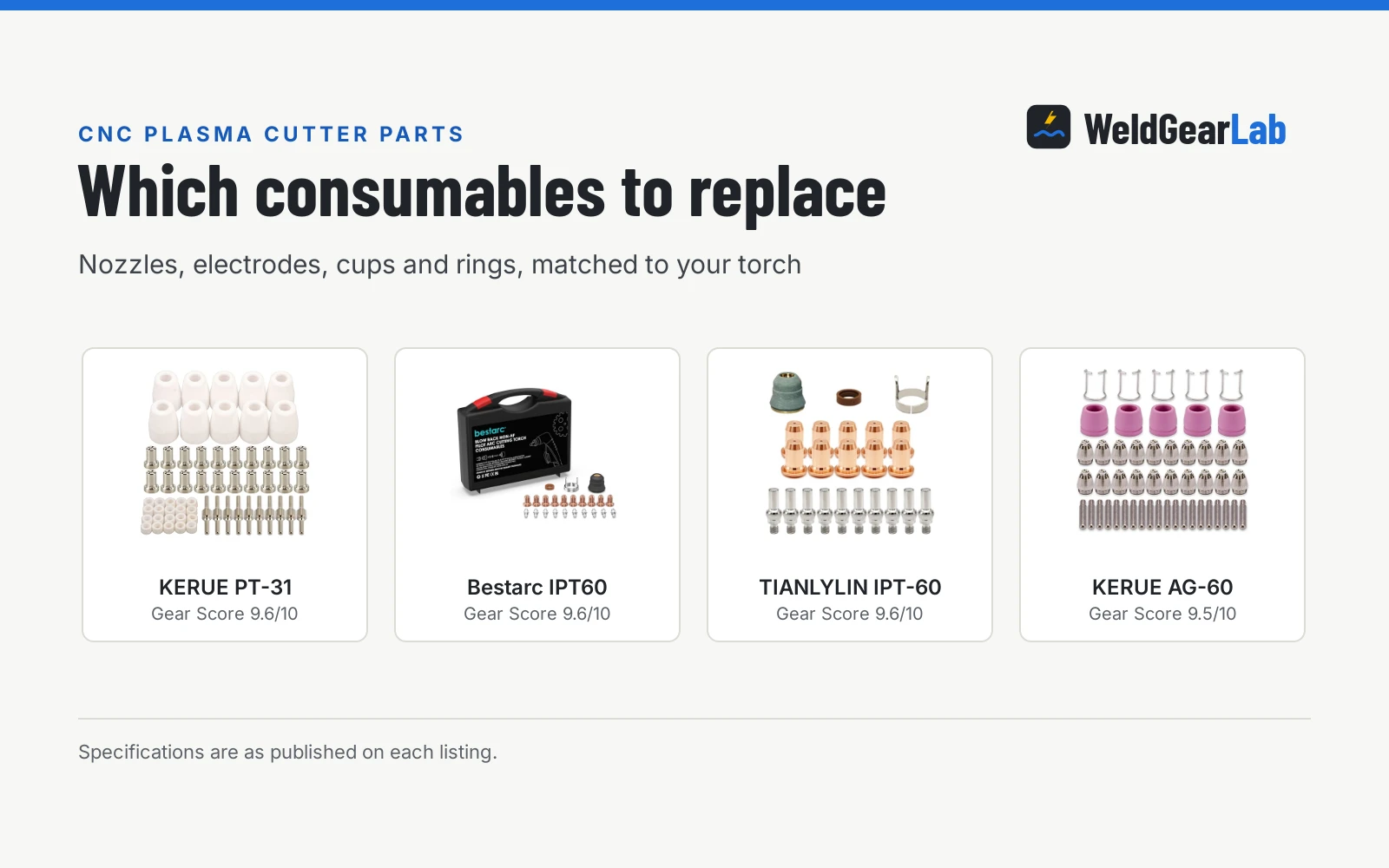
 60pcs PT-31 Nickel Plated Extended Air Plasma Cutting Nozzle9.6/10View on Amazon
- 2
 Bestarc Blow Back Plasma Cutter Torch Consumables9.6/10View on Amazon
- 3
 TIANLYLIN 23 Pcs IPT-60 Plasma Cutter Torch Consumables Kit9.6/10View on Amazon
- 4
 Plasma CutView on Amazon
- 5
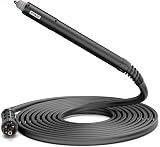 Bestarc CNC Plasma Cutting TorchView on Amazon
- 6
 SILATU 85A CNC Plasma Cutter MachineView on Amazon
- 7
 Drill Press Hold Down ClampsView on Amazon
- 8
 ANDELI 65 Amp Plasma Cutter [CNC Enabled][ Non-HF]View on Amazon
- 9
 Bestarc 50A Non-HF CNC Plasma CutterView on Amazon
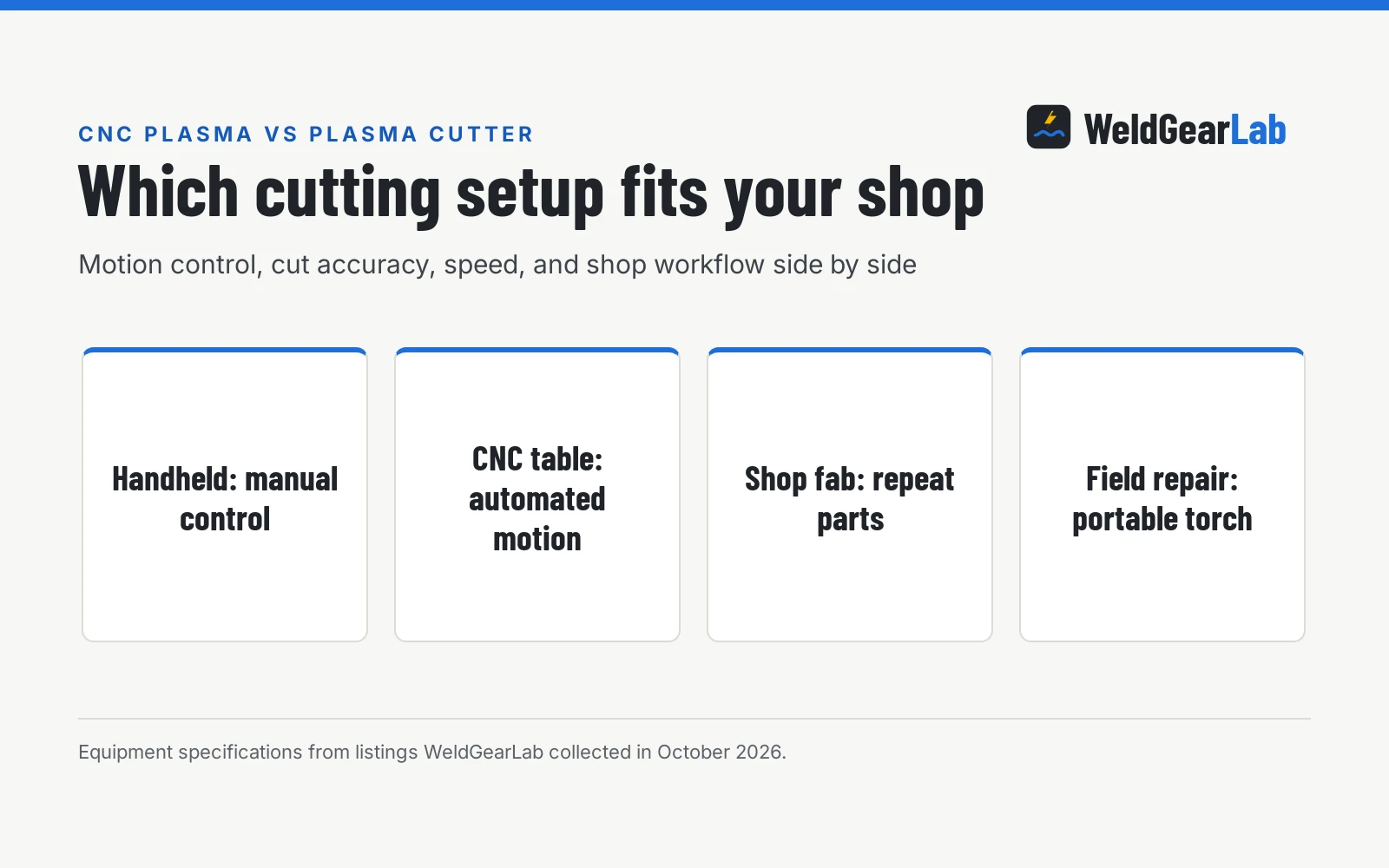
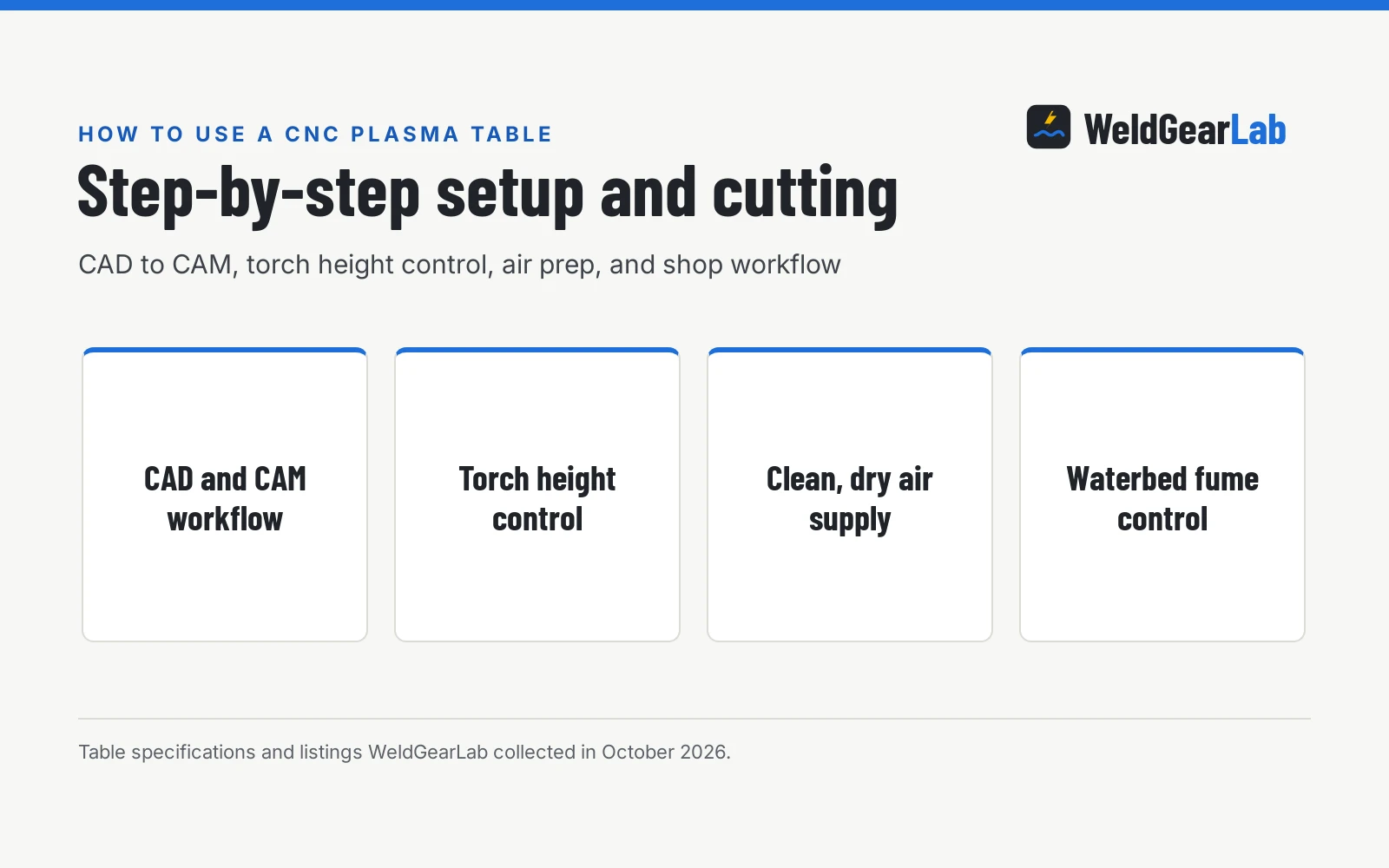
When you need to cut repeat gussets, clean bracket tabs, or decorative sheet panels that take too long with an angle grinder, learning how to use a cnc plasma table gives you clean, repeatable parts straight from digital drawings. Using a table comes down to a straightforward sequence of shop steps: draw your vector shape in CAD, generate toolpaths and cutting speeds in CAM software, place your workpiece onto the slats over a filled waterbed and attach the ground clamp, and zero the gantry before starting the automated arc. Once the program starts, the machine torch pierces the plate, follows the programmed path, and uses automatic torch height control to keep the arc steady across the metal. This guide walks through each setup step for your shop.
Other welders and gear to compare
 Plasma CutCheck price on Amazon
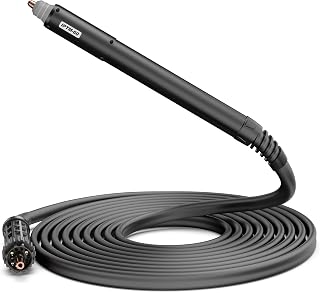 Bestarc CNC Plasma Cutting TorchCheck price on Amazon
 SILATU 85A CNC Plasma Cutter MachineCheck price on Amazon
 Drill Press Hold Down ClampsCheck price on Amazon
 ANDELI 65 Amp Plasma Cutter [CNC Enabled][ Non-HF]Check price on Amazon
 Bestarc 50A Non-HF CNC Plasma CutterCheck price on Amazon
This guide links to our product roundups, where WeldGearLab gets a commission on purchases made through links on this page, and your price stays the same. Read our affiliate disclosure.
How to Use a CNC Plasma Table
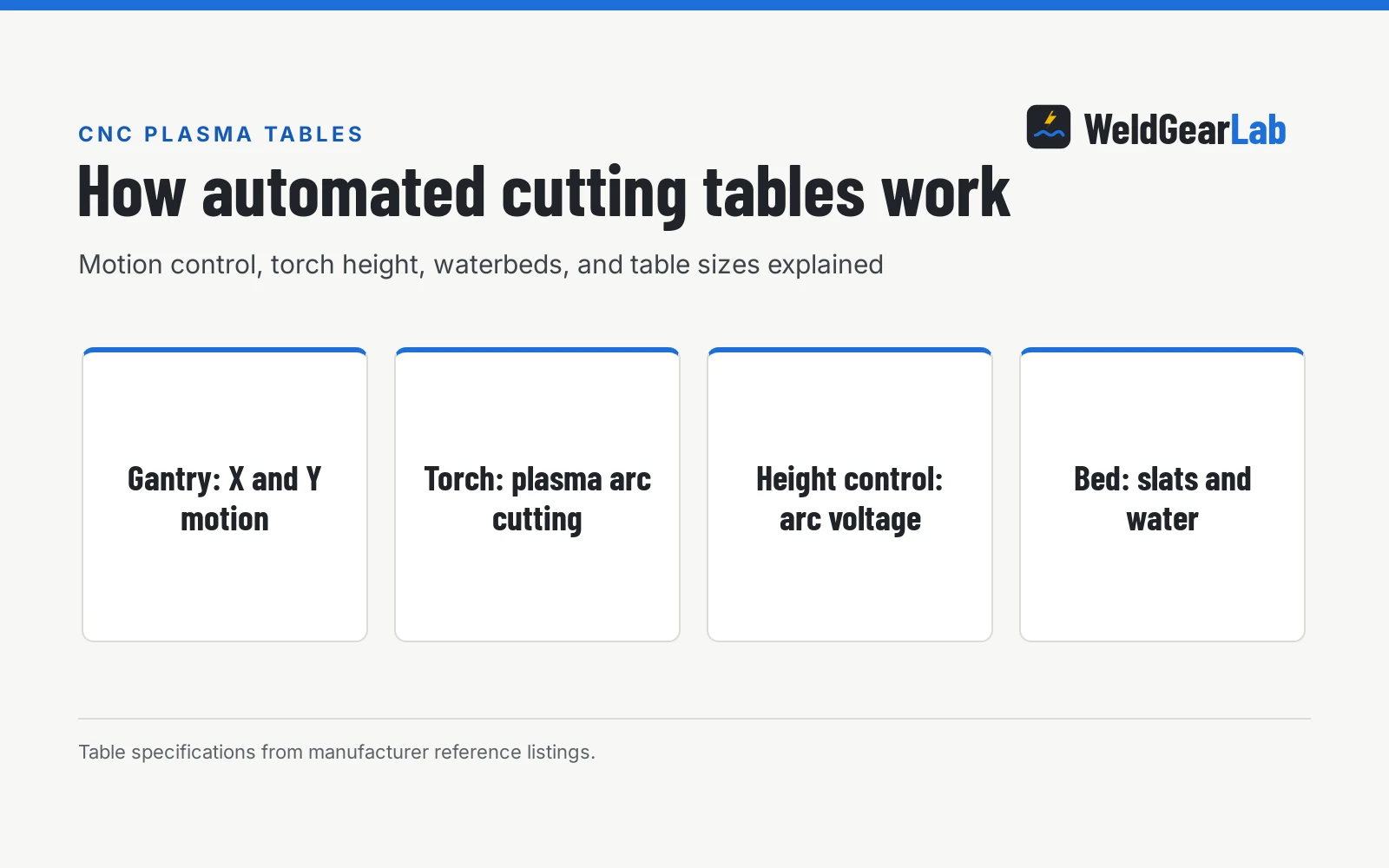
A CNC plasma table pairs a multi-axis motion gantry with a plasma power source to cut metal shapes automatically. Instead of guiding a handheld torch by eye or riding against a clamped straightedge, the table follows digital coordinates from a G-code program. Stepper motors drive the torch along linear rails across the plate, while tables equipped with automatic torch height control sense arc voltage to keep the nozzle at the correct standoff distance. Waterbed tables catch sparks, reduce smoke, and minimize plate warpage during extended cutting runs.
Side by side
| Eastwood Versa Cut 4X8 | Baileigh PT-22 | STV Motorsports SparX 5×10 | |
|---|---|---|---|
| Cutting area | 49″ x 96″ | 24″ x 24″ | 5×10 |
| Thickness capacity | 7/8-inch | 3/4″ | 3/4″ |
| Power input | Dual-voltage 120V/240V | 110V | Not stated |
| Torch height control | Automatic torch height control | Not stated | Automatic torch height control |
| Item weight | 149 pounds | 550 pounds | 400 pounds |
| Controller setup | Dedicated LCD controller | Handheld panel with jog dial | Windows-based software |
| Water table | 67 gallons | Not stated | Water table included |
Reference listings show table configurations from compact 24″ x 24″ frames up to full 4′ x 8′ and 5×10 production beds. Choosing the right table comes down to available shop space, whether the controller requires an external computer, and whether you need to process full sheets without pre-cutting.
Preparing drawing files in CAD and CAM
Every cut begins with clean vector geometry. You draw your part in CAD software or create decorative art using vector graphics tools, then export the geometry as a standard DXF file. Keep cut paths clean by removing overlapping lines, closing open contours, and joining broken segments before exporting.
Next, import the DXF into CAM software to generate the cutting toolpaths. In CAM, you assign cutting parameters: kerf width compensation, lead-in and lead-out styles, cut direction, and travel speed. Lead-ins ensure the initial pierce happens in the scrap skeleton rather than on your finished part edge. The software then post-processes these paths into G-code that your table controller understands.
Setting up the table and waterbed
Table footprint dictates the sheet sizes you can process. Eastwood lists tables ranging from 2’X2′ and 4’X4′ models up to full-sheet 4′ x 8′ tables with a 49″ x 96″ cutting area, while Baileigh lists a 24″ x 24″ cutting area. For larger fabrication work, STV Motorsports lists a 5×10 table capacity. Eastwood rates its 4X8 steel frame for an industrial weight capacity of 1,543 lbs, which supports heavy plate and full waterbed fluid.
Fill the waterbed before cutting. Water traps hot slag, catches sparks, and absorbs the heavy smoke that plasma cutting generates. Eastwood lists a 10 Gal waterbed capacity on its 2’X2′ table, while its 4X8 frame holds up to 67 gallons of fluid. Keep the water level just below or touching the bottom of the plate to control fumes without splashing water back onto the torch nozzle.
Air supply and torch consumable prep
Plasma cutting requires clean, dry compressed air. Moisture and oil degrade torch consumables quickly and cause erratic arc behavior. Route your shop air through a dedicated coalescing filter and desiccant setup, such as those covered in our best air dryer filter for plasma cutter guide. Set the regulated pressure at the plasma machine to the value specified in your plasma cutter manual.
Inspect your machine torch consumables before loading material. Match your nozzle orifice size to your planned amperage. Eastwood lists plasma cutters rated at 40 amps and 60 amps, with dual-voltage 120V/240V operation and a 60% duty cycle at 40 amps. Baileigh lists 110V power for its table electronics. Check our plasma cutting consumables guide to identify worn electrodes, pitted swirl rings, and damaged shield caps before they ruin a cut.
Zeroing the gantry and setting torch height
Place your sheet flat on the table slats. Clamp the work ground clamp directly to the workpiece whenever possible, or secure it firmly to a clean metal section of the table frame. A solid ground connection ensures reliable arc transfer from the pilot arc to the plate and maintains stable cutting voltage.
Load your G-code file into the controller. Eastwood provides a dedicated controller with an LCD screen and USB slot that runs files without an external computer, while Baileigh lists a handheld control panel with a jog dial. Jog the torch to your starting origin corner on the sheet and zero your X and Y axes. Tables equipped with initial height sensing or a floating head touch off the sheet to establish pierce height before firing, while automatic torch height control monitors arc voltage during the cut to adjust the Z-axis dynamically as the cut progresses.
Running the program and dialing in cut speed
Perform a dry run with the plasma torch switched off to confirm the gantry travel clears all clamps and stays within the sheet margins. Once verified, turn on the plasma cutter, ensure proper air flow, and initiate the cut program.
Watch the sparks exiting beneath the plate. At the correct travel speed, the sparks exit beneath the cut at a slight trailing angle behind torch travel. If the sparks exit straight down with no angle, travel speed is too slow and will build up heavy low-speed dross. If the sparks spray upward across the top surface, travel speed is too fast or the machine lacks amperage for the plate thickness. Baileigh lists a 3/4″ mild steel capacity, while Eastwood lists cutting up to 7/8-inch thick metal. If you notice excessive slag sticking to the bottom edge, consult our guide on how to reduce dross when plasma cutting to adjust torch speed and standoff distance.
Shop safety and eye protection
Plasma cutting emits intense ultraviolet radiation, bright visible light, and airborne metal fumes. Never look directly at an operating plasma arc with unprotected eyes. Check our guide on what shade for plasma cutting to select the proper shade level for your cutting amperage. Wear leather gloves, ear protection, and fire-resistant clothing to protect against flying sparks and hot dropouts. If you are comparing machines for your garage, explore our roundup of the best home hobby plasma cutter models or compare portable units in our best portable plasma cutter guide.
FAQ for welders
Do you need a computer connected to the CNC plasma table while cutting?
It depends on your table controller setup. Some systems, like the Eastwood Versa-Cut, include a dedicated controller with an LCD screen and USB port so you can run jobs without a laptop at the table. Other machines rely on a dedicated Windows computer connected via USB or Ethernet to stream G-code directly to the motion control board.
Why is dry air necessary for CNC plasma cutting?
Moisture and oil in your compressed air line cause rapid consumable wear, erratic arc transfer, and excessive bevel on cut edges. A dedicated coalescing filter and desiccant air dryer remove water before it reaches the machine torch. Clean, dry air keeps your electrode and nozzle running longer and produces cleaner cuts.
What causes excessive dross on CNC plasma cut parts?
Excessive dross usually comes from incorrect torch travel speed, worn torch consumables, or wrong cut height. Traveling too slowly creates heavy low-speed dross that clings to the bottom edge, while traveling too quickly leads to high-speed dross and incomplete severance. Check your torch consumables and follow your plasma cutter chart for the plate thickness on the bench.
How does automatic torch height control work?
Automatic torch height control monitors arc voltage during the cut, which correlates directly to the physical distance between the torch tip and the plate. When the controller senses voltage fluctuations caused by warped metal, it adjusts the Z-axis stepper motor to keep the torch at the right standoff. This prevents torch crashes and maintains a consistent cut bevel across large sheets.
Can you cut aluminum and stainless steel on a CNC plasma table?
Yes, CNC plasma tables cut any electrically conductive metal, including mild steel, stainless steel, and aluminum. Eastwood rates its machines for mild steel, stainless, and aluminum from thin sheet up to heavy plate. Both metals require clean, dry air and proper travel speed to minimize dross, and you should ensure adequate shop ventilation while cutting.
Related: what is a CNC plasma table, plasma cutting consumables guide, best home hobby plasma cutter, and the plasma cutters hub. Also see our plasma cutter amperage vs thickness chart.