Drilling Tips for Metal: Speed, Feed and Bits
Drilling tips for metal work: bit materials and point styles, speed and feed by size and material, cutting oil use, and setup habits that keep holes on size.

On this page
Top picks at a glance
As an Amazon Associate I earn from qualifying purchases.
- 1
 DEWALT Drill Bit Set9.5/10View on Amazon
- 2
 Makita B-65399 Impact Gold 14 Pc. Titanium Drill Bit Set9.5/10View on Amazon
- 3
 13Pcs9.4/10View on Amazon
Most bad holes in steel come from the wrong bit, the wrong speed or no cutting oil, and good drilling tips fix all three before the drill ever spins. This guide covers bit material and point style for metal, how speed and feed change with bit size and material, and the setup habits that keep holes on size and bits alive in a home shop.
This guide links to our product roundups, where WeldGearLab gets a commission on purchases made through links on this page, and your price stays the same. Read our affiliate disclosure.
Pick the bit material for the metal: drilling tips
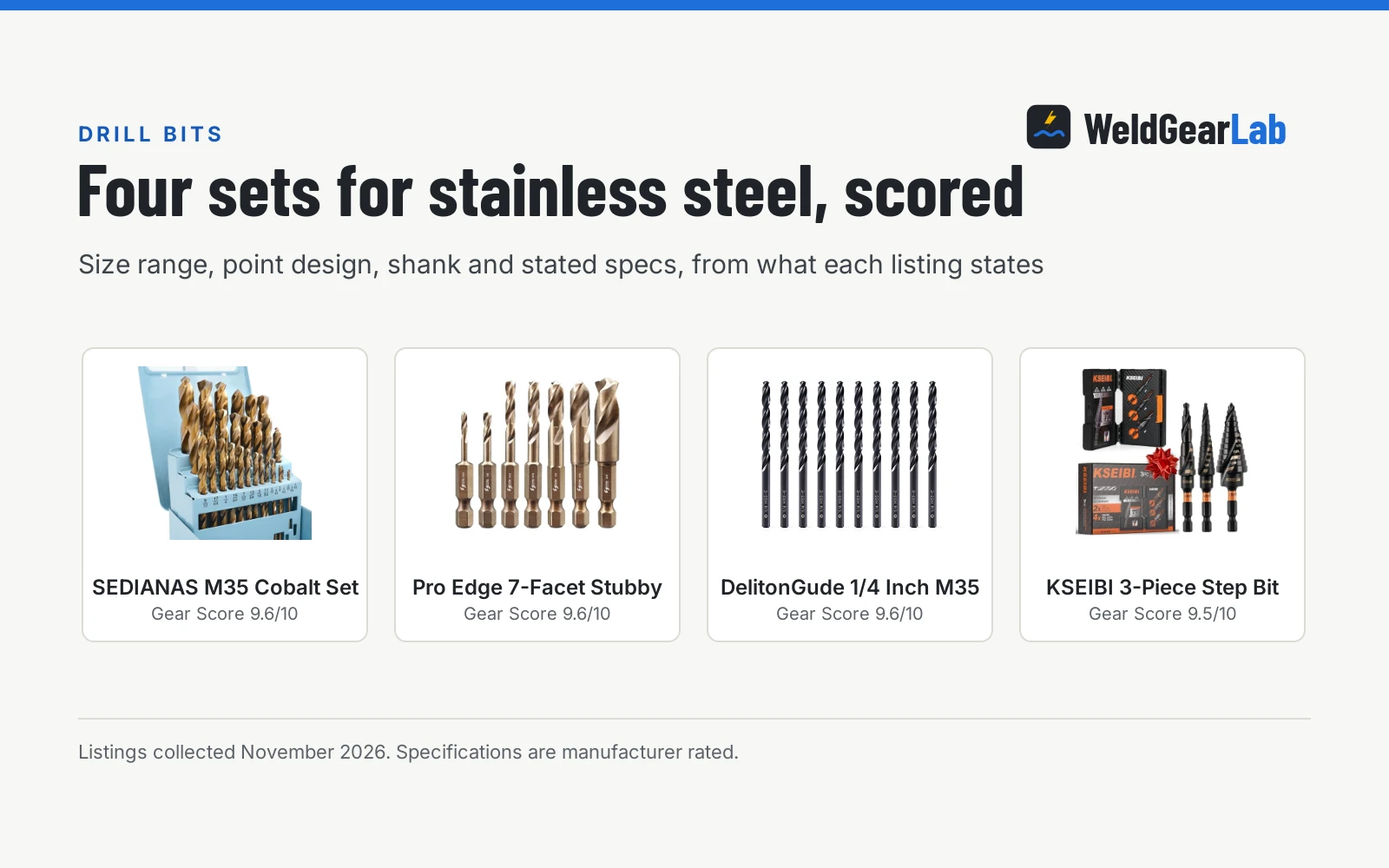
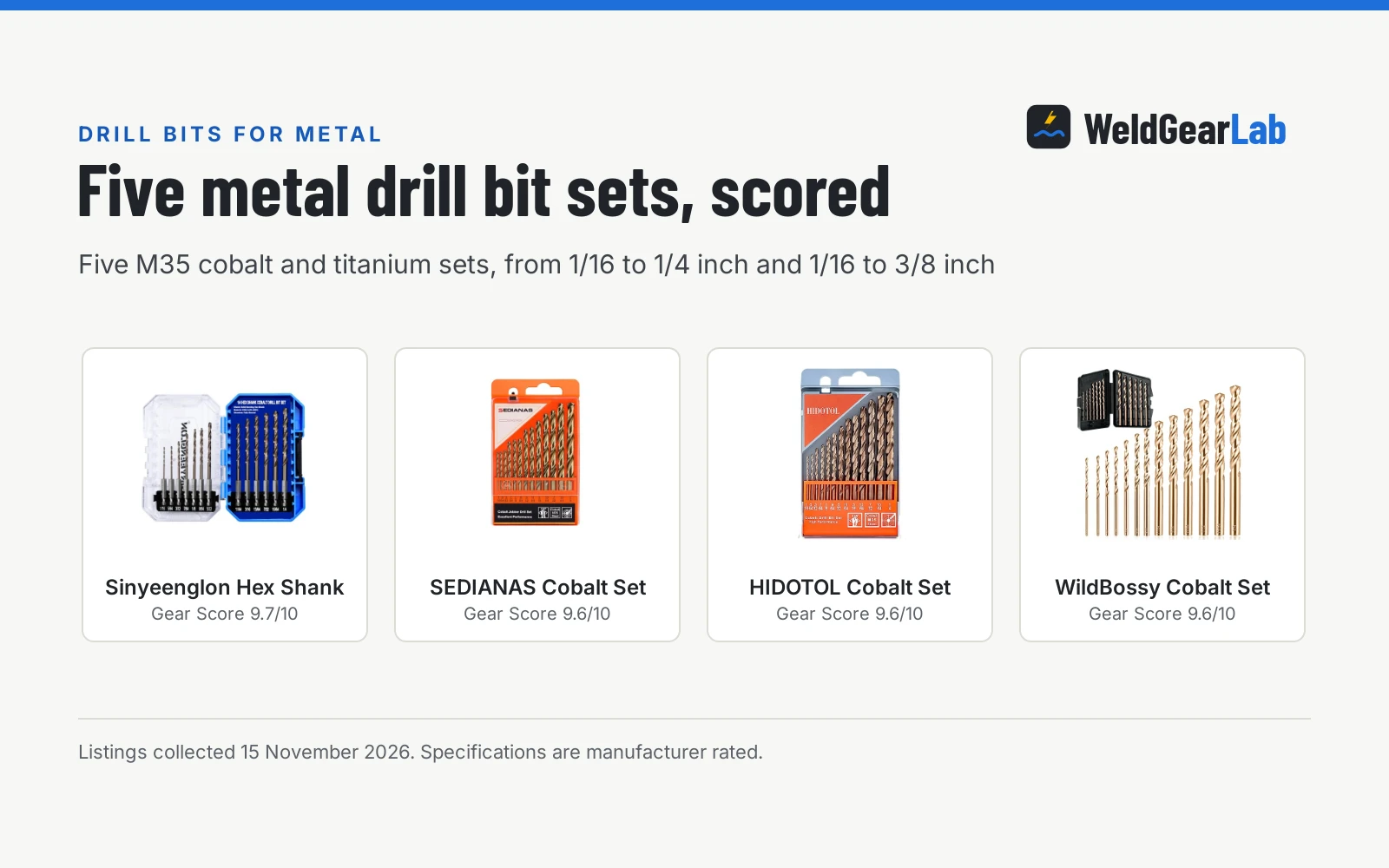
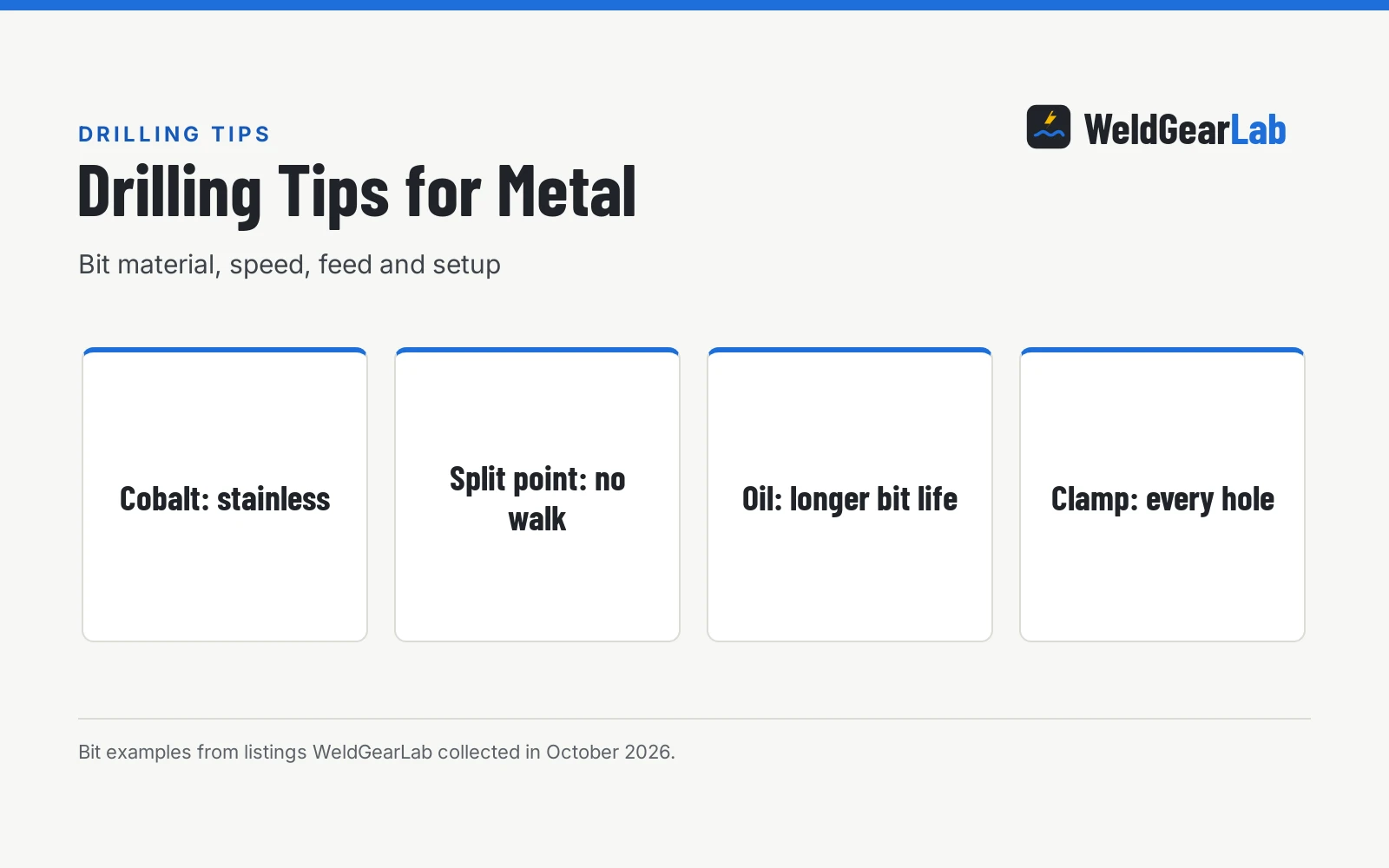
Bit material decides how long the edge survives in metal. Plain high speed steel with a black oxide finish handles mild steel, wood and plastic for general shop work; the DEWALT 21 (on Amazon) piece set runs from 1/16 inch to 1/2 inch with a 135 degree split point and a 31 degree helix. Titanium coated HSS adds a harder surface layer for longer edge life; Makita lists its titanium nitride coating as lasting 2.5x longer than non-coated bits and rates it for ferrous metal, cast iron and stainless steel as well as wood and plastic. M35 cobalt HSS is the step up for stainless steel, cast iron and hardened steel, where plain HSS dulls fast. The MACXCOIP 13 piece cobalt set covers 1/16 inch to 1/4 inch with a 135 degree point. Our best drill bit for stainless steel and best drill bit set for hard steel guides compare cobalt and HSS sets by size range.
Point style, flutes and shank
A 135 degree split point starts on contact and resists walking on hard surfaces, which matters when you cannot center punch every hole. Split points also need less thrust to start cutting. Flutes carry chips out of the hole; the DEWALT set uses a parabolic flute design for increased chip ejection, and its 31 degree helix reduces over-aggressiveness for deep holes. Shank style decides the tool: round shanks suit drill chucks and drill presses, while 1/4 inch hex shanks lock into impact drivers and quick change chucks. The COMOWARE titanium set and the Makita Impact Gold (on Amazon) set both use 1/4 inch hex shanks. Keep bits in an indexed case so sizes stay readable; our drill index sizes guide shows how cases are laid out.
Side by side
| HSS black oxide | Titanium coated HSS | M35 cobalt | |
|---|---|---|---|
| Suits | Mild steel, wood, plastic | Mild steel, wood, plastic, cast iron, stainless | Stainless steel, cast iron, hardened steel |
| Point | 135 degree split point | 135 degree split point | 135 degree point |
| Shank | Not stated | 1/4 inch hex | Not stated |
| Example set | DEWALT 21 Pc, 1/16 to 1/2 inch | Makita 14 Pc, 1/4 inch hex shank | MACXCOIP 13 Pcs, 1/16 to 1/4 inch |
Set sizes and point angles above are the makers’ stated figures for the named sets.
Speed and feed basics
Speed goes down as bit diameter goes up, and harder metal wants slower speed than mild steel at the same diameter. Stainless steel and cast iron punish fast speeds: the edge overheats, work hardens the surface and stops cutting. Feed pressure should stay steady enough to make a continuous chip; too light a feed rubs and heats the bit, too heavy a feed chips edges or stalls small drills. Peck drilling, lifting the bit to clear chips, helps in deeper holes and in gummy materials like aluminum. Step drills change the rules for sheet metal: one bit covers many hole sizes, and our best step drill bit for thick metal guide covers when a step bit beats a twist bit. For tap drill sizes before threading, use our drilling and tapping chart.
Cutting oil and chip control
Cutting oil lowers friction and heat at the edge, which is where bits die in steel. A drop on the bit and the work before starting, and another during longer holes, keeps chips flowing and sizes closer to nominal. Aluminum wants lubrication even more, since chips weld to the flutes when dry. Cast iron is the exception many shops drill dry, because the graphite in the iron lubricates the cut. Clear chips often in deep holes, and never reach for chips with a bare hand while the drill can start. Our best cutting oil for drilling metal guide compares oils for drilling, tapping and sawing.
Setup habits that save bits
- Center punch first. A punch mark gives the point a seat and stops the bit skating across the surface.
- Clamp the work. A clamped part cannot spin if the bit grabs; hand held stock is how wrists get hurt.
- Start with a pilot hole. Large holes go faster and straighter when a smaller bit goes first.
- Keep the bit sharp. A dull bit needs more thrust, runs hotter and leaves oversize, rough holes.
- Support thin stock. Sheet metal on a wood backer or clamped flat breaks through cleaner with less grabbing.
Drilling safety. Wear eye protection, clamp the work, keep gloves and loose sleeves away from rotating parts, and keep guards in place on drill presses. Clear chips with a brush, not fingers, and let hot bits cool before handling. See the OSHA machine guarding overview and our Safety Disclaimer.
FAQ for welders
What drill bit material is best for stainless steel?
M35 cobalt HSS is the common step up for stainless steel, cast iron and hardened steel. The MACXCOIP cobalt (on Amazon) set covers 1/16 inch to 1/4 inch with a 135 degree point. Plain HSS works in stainless for a few holes but dulls quickly, especially at fast speeds.
Why does my drill bit walk across the metal?
A standard point with no center punch mark tends to skate on flat metal. A 135 degree split point starts on contact and resists walking, and a center punch mark gives any bit a seat. The DEWALT and Makita sets here both use split point geometry.
Do I need cutting oil for drilling steel?
Cutting oil lowers friction and heat, which extends bit life and improves hole finish in steel. A drop before starting and more during the hole is enough for most shop work. Cast iron is often drilled dry because its graphite lubricates the cut.
Hex shank or round shank bits?
Hex shanks in 1/4 inch fit impact drivers and quick change chucks, which suits portable drilling. Round shanks suit drill chucks and drill presses and run truer in a press. The COMOWARE and Makita sets here use hex shanks.
How do I drill a large hole in steel plate?
Start with a pilot hole, then step up in sizes, or use a step drill for sheet and plate within its size range. Keep speed down as diameter rises, use cutting oil, and clamp the plate so it cannot spin at breakthrough.
Related: best drill bit for stainless steel, best drill bit set for hard steel, best cutting oil for drilling metal, and the metal fab tools hub. Also see our drill index sizes guide.