Drill Index Sizes: How to Read the Case and Pick the Right Bit
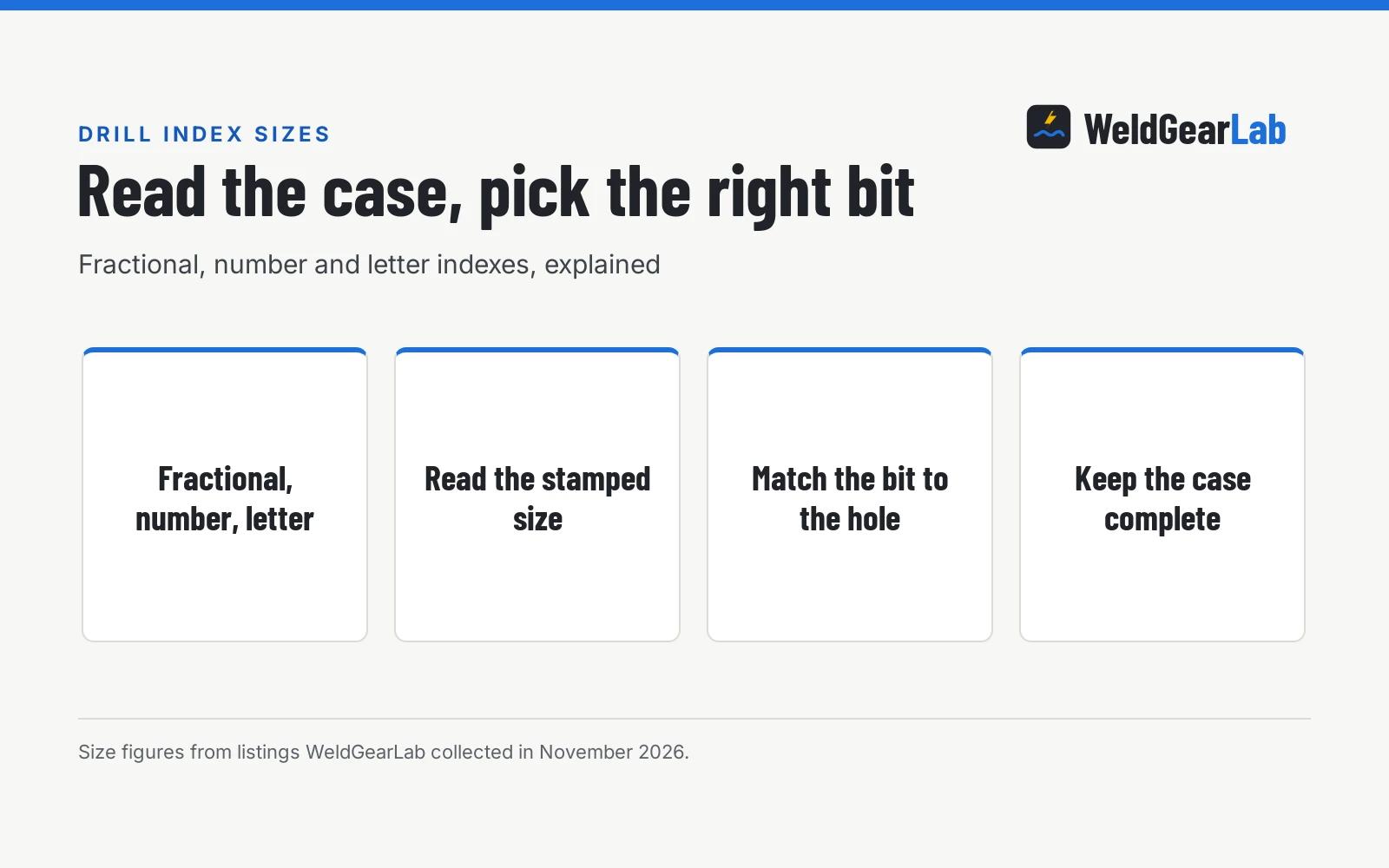
A drill index keeps a set of bits in size order, and this guide explains how fractional, number and letter sizes are marked, read and matched to the hole.

On this page
Top picks at a glance
As an Amazon Associate I earn from qualifying purchases.
- 1
 ZELCAN 10 Sizes Titanium Step Drill BitView on Amazon
- 2
 Anfrere 10 Sizes Step Drill Bit for Metal SheetView on Amazon
- 3
 NordWolf 14-Piece M35 Cobalt Drill Bit SetView on Amazon
- 4
 5PC Countersink Bits for SteelView on Amazon
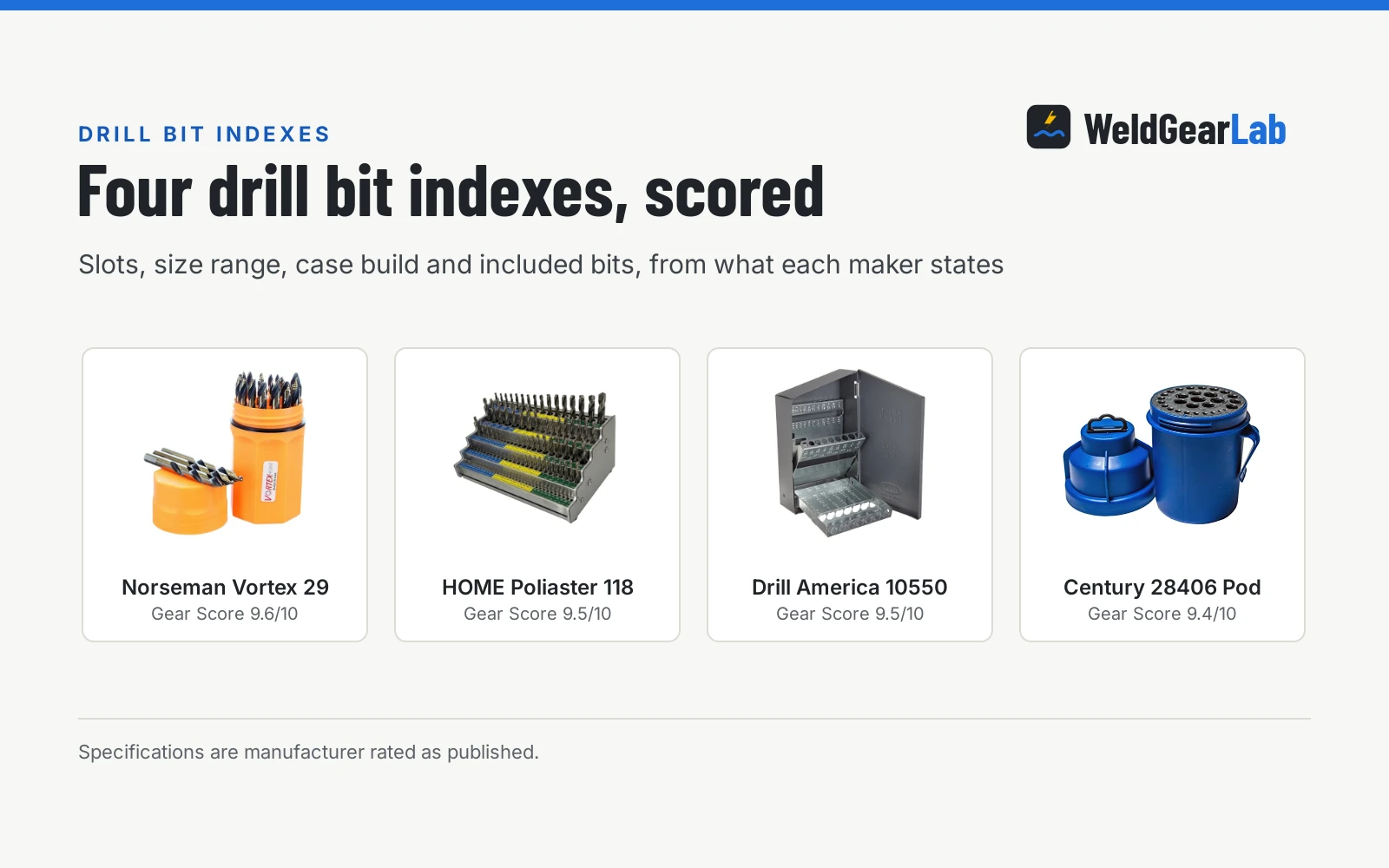
A drill index looks like a plain metal case until you open it and see a row of bits standing in marked slots, each one in its place. That case is the whole point of drill index sizes: the set is organized so you can find the size you need without sorting through loose bits. A drill index holds a set of bits in size order, and the size stamped on each bit matches the label on its slot. Fractional, number and letter indexes cover the sizes a home shop reaches for, and this guide explains how each one is organized, how to read it, and how to pick the right bit for the hole.
Other welders and gear to compare
 ZELCAN 10 Sizes Titanium Step Drill BitCheck price on Amazon
 Anfrere 10 Sizes Step Drill Bit for Metal SheetCheck price on Amazon
 NordWolf 14-Piece M35 Cobalt Drill Bit SetCheck price on Amazon
 5PC Countersink Bits for SteelCheck price on Amazon
This guide links to our product roundups, where WeldGearLab gets a commission on purchases made through links on this page, and your price stays the same. Read our affiliate disclosure.
Drill index sizes in one paragraph
A drill index is a case with a slot for every bit in the set, arranged from the smallest size to the largest. Fractional indexes use fractions of an inch, number indexes use wire gauge numbers, and letter indexes use letters. The size is stamped on the shank of each bit, and the slot carries the same mark, so you can check a bit against its slot before you drill. An index keeps the set together, keeps the sizes in order, and makes a missing bit easy to spot.
Side by side
| Fractional index | Number index | Letter index | |
|---|---|---|---|
| Size system | Fractions of an inch | Wire gauge numbers | Letters A to Z |
| How the size is marked | Stamped as a fraction | Stamped as a number | Stamped as a letter |
| Order in the case | Small to large | Small to large | Small to large |
| Common shop use | General drilling in metal | Small holes and tap drills | Holes between fractional sizes |
| What to check | Slot label matches the stamped size | Slot label matches the stamped size | Slot label matches the stamped size |
The table above shows each system side by side. Fractional sizes are the ones most shop hands reach for first, and the marks read as fractions of an inch. Number and letter sizes fill the gaps between fractional sizes, and they matter most when a hole has to match a tap or a close-fitting part. When you read a size, trust the stamp on the bit and the label on the slot, and set aside any bit whose mark you cannot read.
How to read the size on a bit
Hold the bit up to the light and read the mark stamped on the shank. A fractional bit reads as a fraction, such as 1/2 or 3/4, and the slot with the same mark is its home. A number bit reads as a plain number, and a letter bit reads as a letter, so the mark itself tells you which system you are holding. If the stamp is worn smooth, check the bit against the slot it came from, and keep worn bits out of the case until you can read them again. A bit in the wrong slot is worse than a bit in a drawer, because the case tells you it is a size it is not.
How to pick the right bit for the hole
Start from the hole you need, not from the bit in your hand. A hole for a bolt or a screw has to match the fastener, and a hole for a tap has to match the tap drill the chart calls for. The drilling and tapping chart shows how to read the chart and pick the right drill. Read the size stamped on the bit, check the slot label, and drill a pilot hole when the bit is wide and the metal is thick. If the bit chatters or wanders, stop, check the point, and check that the work is clamped tight. A sharp bit at the right size cuts clean; a dull bit or the wrong size fights you all the way through.
Keeping an index complete
An index only works when every slot holds the right bit. Put each bit back in its marked slot after use, and keep the case shut in the shop so chips and dust stay out of the slots. When a bit snaps or goes dull, pull it out and leave its slot empty so you know a replacement is due. A case with empty slots still drills, but it stops telling you the truth about what you own. Keep the case off the floor where it can be kicked across the room, and keep it shut when it is not in use.
Drill press safety. Clamp the work before you drill, keep guards in place, and wear eye and face protection. Keep gloves away from rotating parts, and keep loose sleeves and hair clear of the chuck. Check the machine guarding rules OSHA publishes for metalworking machines, and clear chips with a brush, never with a bare hand near a spinning bit.
FAQ for welders
What is a drill index?
A drill index is a case that holds a set of drill bits in size order, with a marked slot for every bit in the set. The size stamped on each bit matches the label on its slot, so you can find the size you need and spot a missing bit at a glance. An index keeps the set together and keeps the sizes in order.
What do fractional, number and letter sizes mean?
Fractional sizes are fractions of an inch, number sizes are wire gauge numbers, and letter sizes are letters. Each system covers a range of hole sizes, and the mark on the bit tells you which system you are holding. A bit stamped 1/2 belongs to the fractional system, and a bit stamped with a letter belongs to the letter system.
How do I pick the right bit for a hole?
Start from the hole you need and the fastener or tap it has to fit. Read the size stamped on the bit and check it against the slot label, then check the drilling and tapping chart when the hole has to match a tap. Drill a pilot hole when the bit is wide and the metal is thick, and check the size again after the first hole.
Can bits from one index go in another index?
Only when the size marks match. A bit belongs in the slot whose label matches its stamp, and a bit from a fractional set does not belong in a number or letter slot. When the mark is worn and you cannot read it, keep the bit out of the case until you can tell its size.
What do I do when a bit is missing?
Leave the slot empty so the gap stays visible, and note the size you need to replace. Drill with the bits you still have, and fill the gap with a bit of the same size and system. An index with a marked empty slot still tells the truth about what you own.
Related: metalworking machines, best drill bit set for metal, best drill bit for stainless steel metal, drill press safety, and tapping drill chart.