Drill Press Safety: Tips for Safe Drilling
Drill press safety comes down to clamping the work, keeping hands clear of the chuck, and wearing eye protection, with a vise that holds the part still.

On this page
Top picks at a glance
As an Amazon Associate I earn from qualifying purchases.
- 1
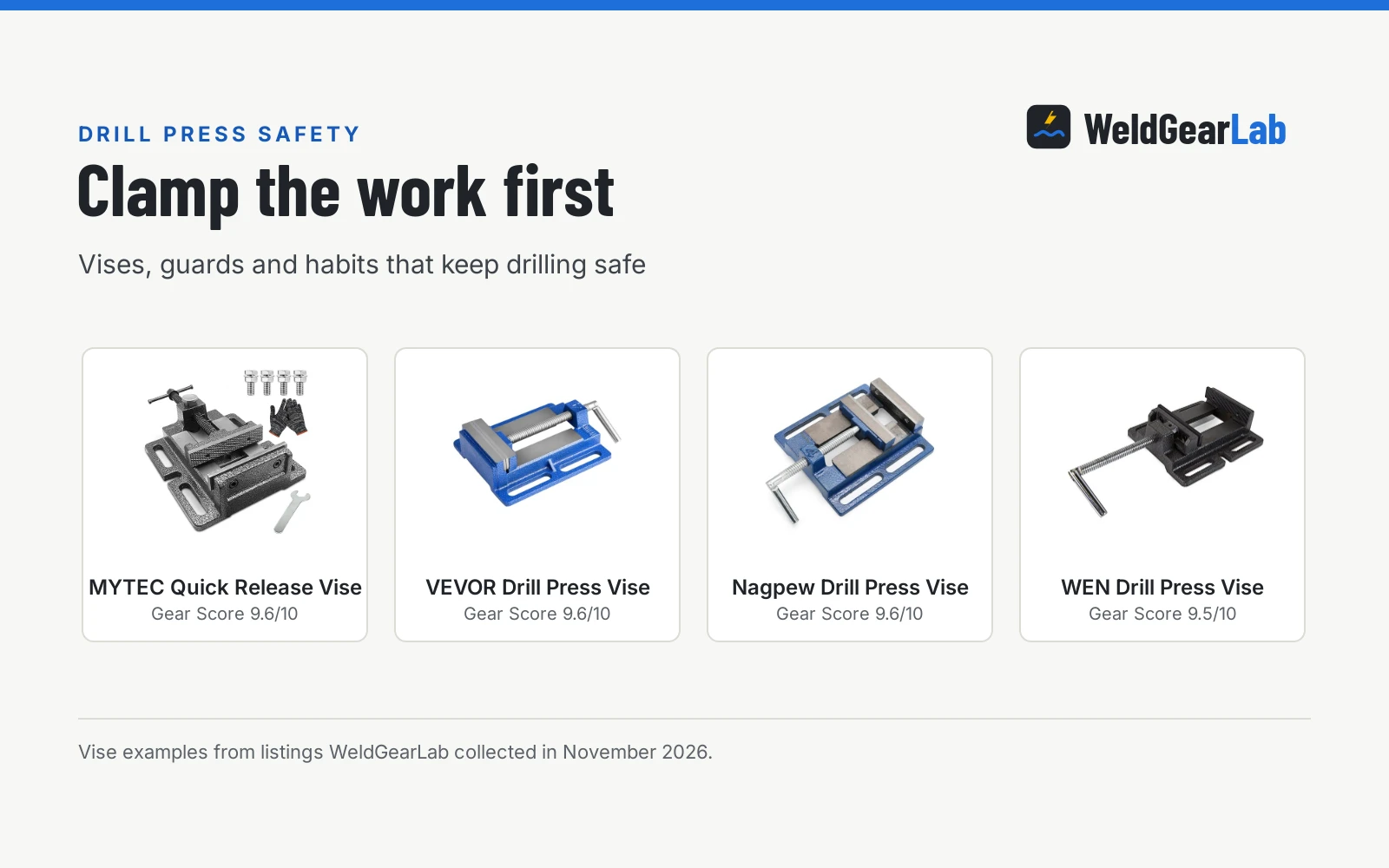
 MYTEC Heavy Duty Vice for Drill Press, 5.0" Black9.6/10View on Amazon
- 2
 VEVOR Drill Press Vise, 4 Inch Jaw Width9.6/10View on Amazon
- 3
 Nagpew Drill Press Vise, 4 Inch Jaw Opening9.6/10View on Amazon
- 4
 WEN Drill Press Vise, 4-Inch (DPA424)9.5/10View on Amazon
A drill press can grab a loose part and spin it before you can react, so drill press safety starts before the bit touches metal: clamp the work, keep hands clear of the chuck, and wear eye protection. A vise bolted to the table holds the part still while you drill, which is why this guide pairs the safety habits with the four vises below. Read the habits first, then pick the vise that fits your press and your parts.
This guide links to our product roundups, where WeldGearLab gets a commission on purchases made through links on this page, and your price stays the same. Read our affiliate disclosure.
MYTEC Heavy Duty Vice for Drill Press, 5.0" Black
A quick release cast steel vise with a 5.15 inch max opening, a 5.0 inch jaw and a stated max weight of 1870 lb.
Pros
- Widest opening here, 5.15 in
- Quick release button positions the jaws in one second
- Cast steel body with hardened steel jaws
- Stated max weight of 1870 lb
Cons
- Listed weight differs between the spec table and the bullets
- No warranty term stated
- Jaw depth only 0.87 in
- No safety standard stated
VEVOR Drill Press Vise, 4 Inch Jaw Width
A cast iron vise with a 4 inch jaw, anti-slip textured jaws and a stated clamping force of up to 7KN, on a slotted base.
Pros
- Stated clamping force up to 7KN
- Anti-slip textured jaws
- Dual long slots on both sides for mounting
- Labor-saving handle for easy jaw adjustment
Cons
- No max opening stated
- No warranty term stated
- No safety standard stated
- Jaw depth not stated
Nagpew Drill Press Vise, 4 Inch Jaw Opening
A low profile cast iron vise with 45 steel jaws and a 4.3 inch jaw opening, sized 8.0 by 6.5 by 2.0 inches.
Pros
- Widest stated jaw opening of the 4 inch vises, 4.3 in
- 45 steel jaws and pivot on a cast iron body
- Low profile at 2.0 in high
- Slotted base for easy mounting
Cons
- No weight stated
- No warranty term stated
- No safety standard stated
- Oil paint finish needs wiping to stay clean
WEN Drill Press Vise, 4-Inch (DPA424)
A cast iron vise with 4 inch jaws that open to 4 inches, a 1 inch throat depth and four onboard mounting slots.
Pros
- Four onboard mounting slots
- 1 in throat depth stated
- Cast iron construction
- Fits the majority of drill presses, per the listing
Cons
- No max opening beyond the 4 in jaws
- No warranty term stated
- No safety standard stated
- Throat depth of 1 in limits deep parts
Drill press safety starts with clamping the work
It starts with a part that was never clamped. A spinning bit catches an edge, the part spins with it, and hands, sleeves and hair get pulled in. A vise breaks that chain: a clamped part stays put, so your hands stay clear of the spinning bit.
Clamp every part, even a small one, and clamp it to the table or in a vise bolted to the table. Never hold a part by hand, and never wear gloves near a spinning chuck: gloves catch and pull a hand in faster than bare skin. If the part is round or thin, use a V block or a clamp that fits its shape, and check the clamp before you start the press.
Keep hands clear of the chuck and the bit
The chuck and the bit are the moving parts, and hands belong nowhere near them while the press runs. Set the depth stop with the press off, change bits with the press off, and brush chips away with a brush, not a hand. A chip hook or a brush keeps fingers out of the flutes, and a vacuum keeps the table clear without a hand near the bit.
Long hair, loose sleeves, rings and lanyards have no place near a drill press. Tie hair back, roll sleeves up, and take rings off before you drill. If a bit binds, switch the press off and wait for the chuck to stop before you touch the part: a bound bit can spin the part suddenly when it frees.
Guards, glasses and the work area
Wear safety glasses every time the press runs, and add a face shield when you drill cast iron or anything that throws chips. Keep the chuck guard in place where the press has one, and keep the belt guard closed. OSHA machine guarding rules expect guards on moving parts, and a missing guard is a reason to stop and fix the press before you drill.
Clear the table before you drill, and keep the floor clear of cutoffs and cords. A clean table lets you see the mark and the bit, and a clear floor keeps you from tripping with a part in hand. Good light helps too: if you cannot see the mark, stop and move a lamp before you start the cut.
The vises that hold the work
Each vise below holds the part still while you drill, so pick the one whose jaw opening and mounting slots fit your press table and your parts.
Side by side
| Gear Score | Jaw width | Max opening | Notes | |
|---|---|---|---|---|
| MYTEC Quick Release Vise | 9.6/10 | 5.0 in | 5.15 in | 1870 lb max weight stated |
| VEVOR Drill Press Vise | 9.6/10 | 4 in | Not stated | 7KN clamping force stated |
| Nagpew Drill Press Vise | 9.6/10 | 4 in | 4.3 in | 45 steel jaws |
| WEN Drill Press Vise | 9.5/10 | 4 in | 4 in | 1 in throat depth |
MYTEC leads on opening and quick release, VEVOR leads on stated clamping force, and Nagpew and WEN cover the plain 4 inch vise with a slotted base. No listing here states a safety standard or a warranty term, so safety and warranty sit at the bottom for all four.
FAQ for welders
Should gloves be worn when using a drill press?
No. Gloves catch on a spinning chuck or bit and pull a hand in. Work bare handed, tie hair back, roll sleeves up, and take rings off before you drill.
What is the safest way to hold a small part on a drill press?
Clamp it in a drill press vise bolted to the table, with the jaws gripping the part and the vise slots lined up with the table slots. Never hold a small part by hand: a small part gives your hand little to grip, so it can spin out of your hold and cut deep before you let go.
Do I need a vise for every drill press job?
Every job needs the part held by a vise or a clamp that does the same work. A vise holds the part still and keeps hands clear, while a clamp can hold flat stock that will not fit a vise. The habit is the same: the part must be held by the table, not by a hand.
What should I check before I switch a drill press on?
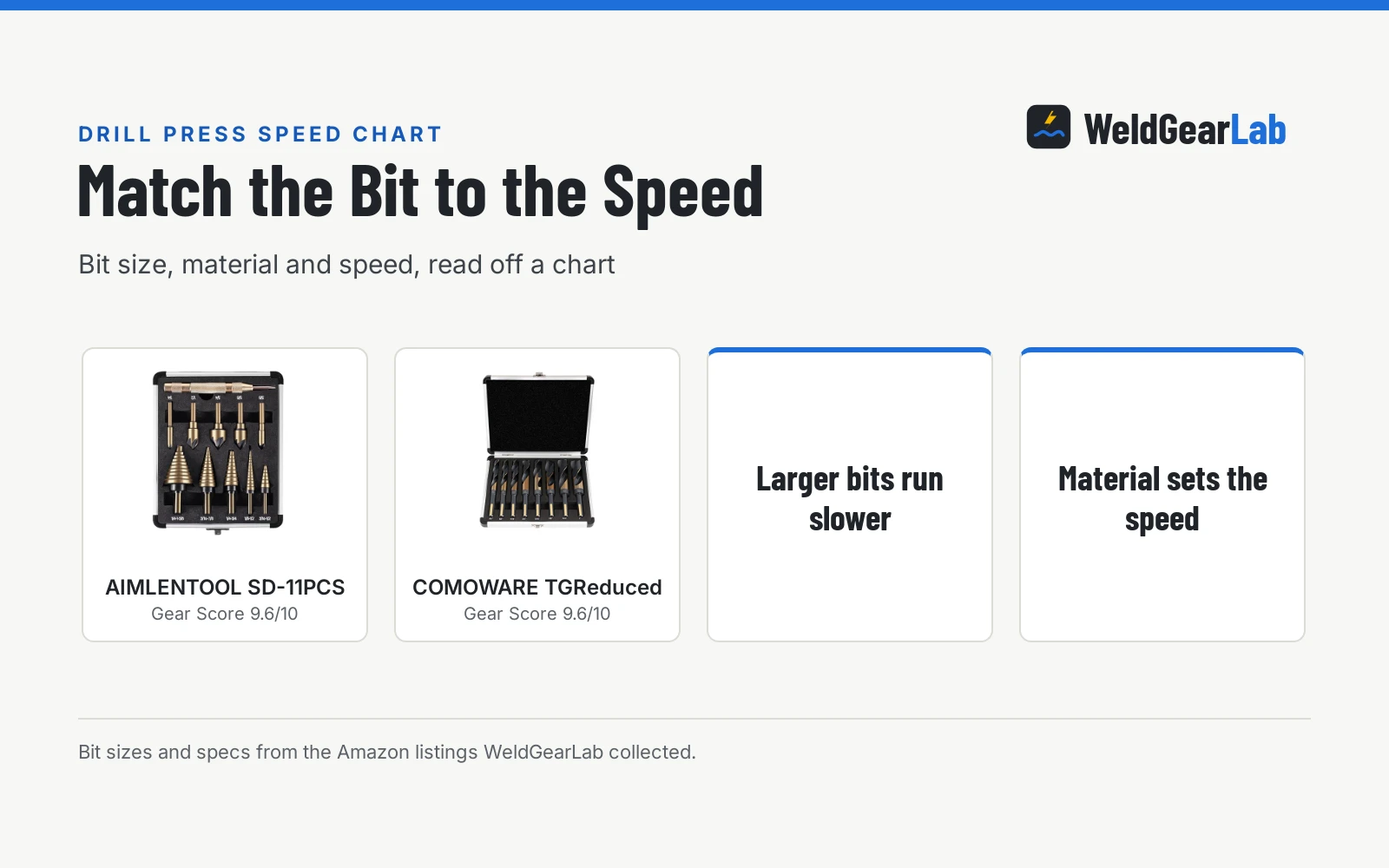
Check that the part is clamped, the chuck key is out, the guard is in place, and the table is clear. Check the bit is tight in the chuck and the depth stop is set, then stand clear and switch on. Our drill press speed chart helps you pick the right speed for the bit size.
Can a drill press vise fit any drill press?
Not every vise fits every press. The WEN and MYTEC listings say their vises fit the majority of drill presses on the market, but check the base slots against your table slots and the jaw opening against your parts. VEVOR, Nagpew and WEN state slotted bases that bolt to a drill press table, and the MYTEC opens to 5.15 inches for wider parts. See our drill press vise picks roundup for more.
Related: our best drill press roundup, our bench vise vs drill press vise guide, our drill bit tips, and the metal fab tools hub.