Drill Press vs Mini Mill: Which One Should You Buy?
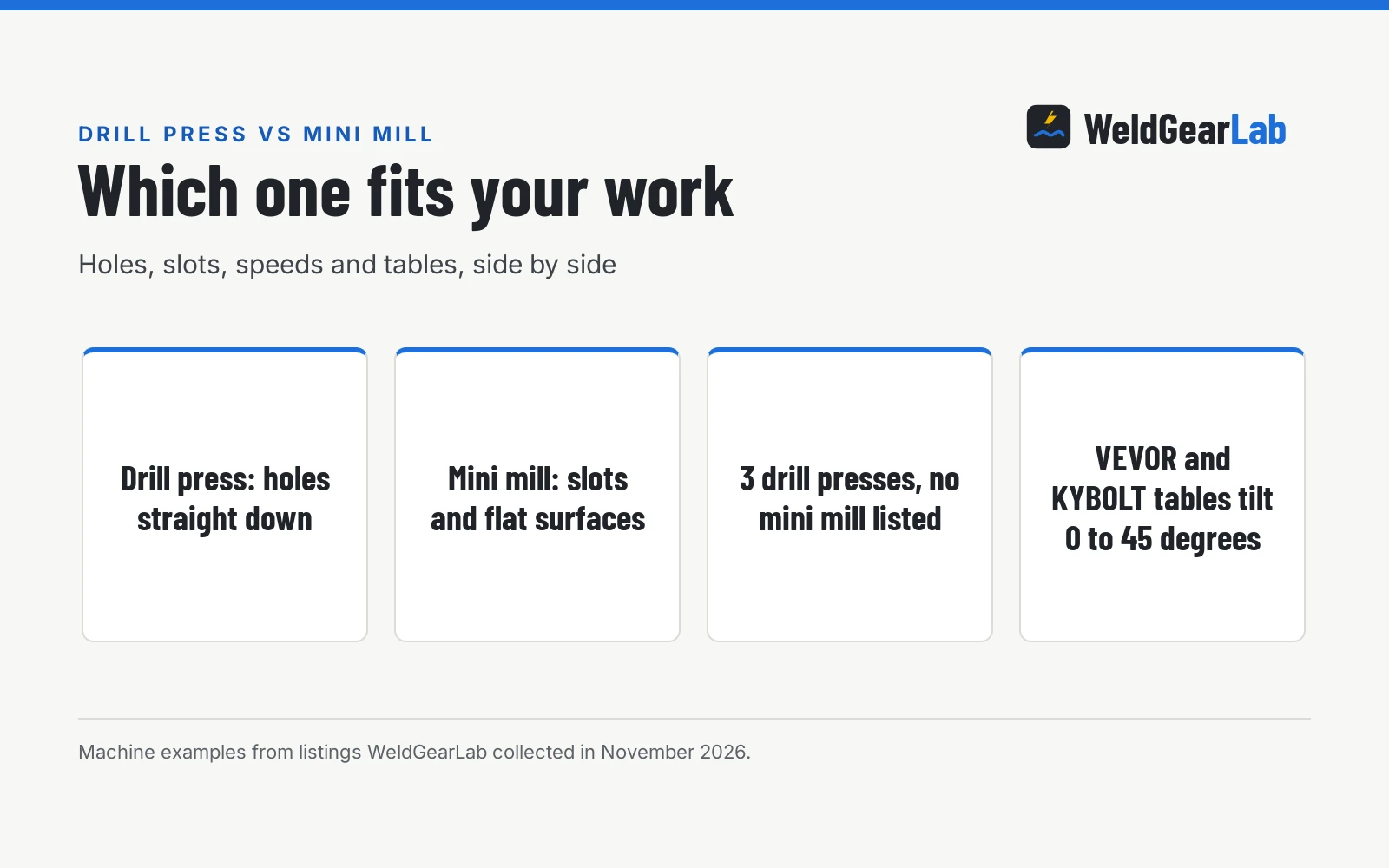
A drill press bores straight holes and a mini mill also cuts slots and flat surfaces, and the 3 drill presses here show what the drill press side offers, with no mini mill listed.

On this page
Top picks at a glance
As an Amazon Associate I earn from qualifying purchases.
- 1
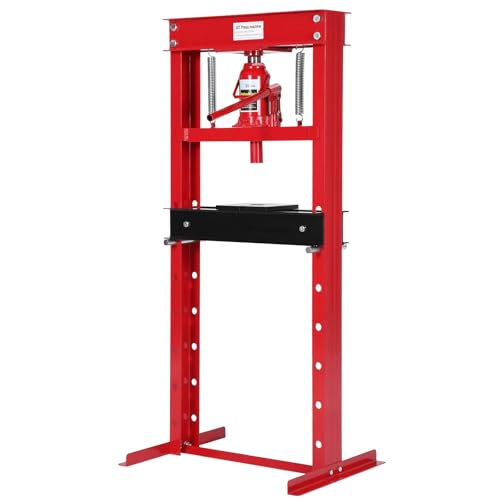 MAXSA 20T Hydraulic Press9.5/10View on Amazon
- 2
 NovelLife Precision Mini Drill Press Benchtop Driller MachineView on Amazon
- 3
 VEVOR 10 Inch Benchtop Drill Press 3.2 Amp Tabletop BenchView on Amazon
- 4
 8-Inch Benchtop Drill PressView on Amazon
- 5
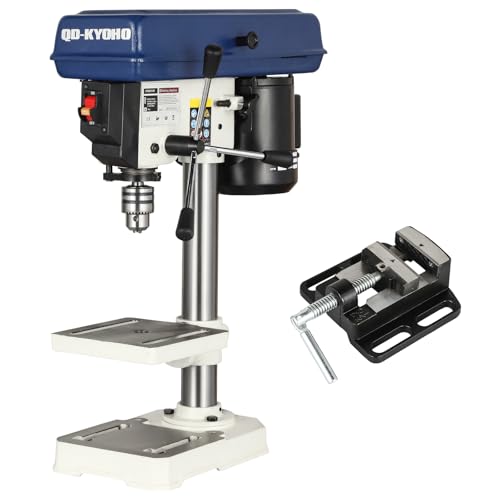 QD-KYOHO 8" Benchtop Drill PressView on Amazon
- 6
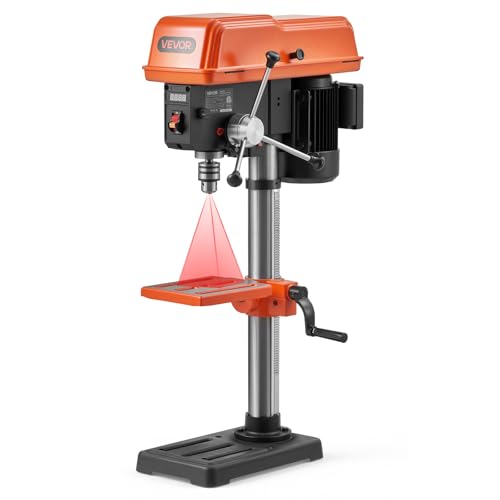 VEVOR 10-Inch Benchtop Drill PressView on Amazon
- 7
 8" Benchtop Drill PressView on Amazon
A bracket needs a row of holes, and the choice is drill press vs mini mill: a drill press bores straight holes, while a mini mill also cuts slots and flat surfaces. No mini mill is listed here, so this guide compares the drill press side with the drill presses in hand and says plainly which jobs need a mill instead.
Other welders and gear to compare
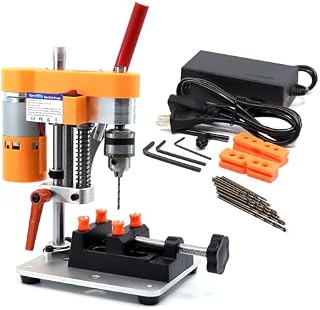 NovelLife Precision Mini Drill Press Benchtop Driller MachineCheck price on Amazon
 VEVOR 10 Inch Benchtop Drill Press 3.2 Amp Tabletop BenchCheck price on Amazon
 8-Inch Benchtop Drill PressCheck price on Amazon
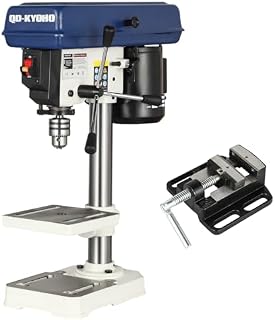 QD-KYOHO 8" Benchtop Drill PressCheck price on Amazon
 VEVOR 10-Inch Benchtop Drill PressCheck price on Amazon
 8" Benchtop Drill PressCheck price on Amazon
This guide links to our product roundups, where WeldGearLab gets a commission on purchases made through links on this page, and your price stays the same. Read our affiliate disclosure.
Drill press vs mini mill: the difference
A drill press moves the spindle straight down to bore a hole, and the table holds the work still. A mini mill also bores holes, but its table moves the work under the spindle, so the cutter can carve slots, pockets and flat surfaces. Table movement is one half of the difference. The other half is the spindle: a drill press spindle is built for straight-down drilling loads, while a mini mill spindle is built to take the side loads of milling. A drill press drills, and a mini mill drills and mills.
Side by side
| Drill press | Mini mill | Which to pick | |
|---|---|---|---|
| What it does | Drills holes straight down | Mills flat surfaces and slots, and drills holes | Drill press for holes; mini mill for milling |
| Work moves | The spindle moves down; the table holds the work still | The table moves the work under the spindle | Mill table movement makes milling possible |
| Typical work | Holes in plate, brackets and frames | Slots, pockets, facing and light milling | Match the machine to the work |
| Speeds | 650 to 3100 RPM on the VEVOR, 740 to 3100 RPM on the KYBOLT | Not stated | Not stated for a mini mill |
| Table | Tilts 0 to 45 degrees on the VEVOR and KYBOLT | Not stated | Not stated for a mini mill |
| Listed here | 3 drill presses | No mini mill listed | Drill press side only |
The drill press column uses the 3 drill presses in this guide. No mini mill is listed here, so the mini mill column describes the machine type.
When a drill press is the better choice
- Holes in plate and brackets. The VEVOR 10 inch press and the KYBOLT 8 inch press drill wood and metal, with 5 speeds each.
- Angled holes. The VEVOR and KYBOLT tables tilt 0 to 45 degrees for angled drilling.
- Small, light work. The MXBAOHENG mini press handles basswood, balsa wood, resin, PCB and plastic, plus thin aluminum and copper, with a vise that clamps 1 to 55 mm.
- Batch drilling. The MXBAOHENG has a 5 cm red-scaled stroke column and a locking depth ring, and the KYBOLT has an adjustable depth stop.
When a mini mill is the better choice
- Slots and pockets. A mill moves the work under the cutter to carve slots and pockets a drill press cannot.
- Facing flat surfaces. A mill cuts a flat surface true, where a drill press only bores holes.
- Milling and drilling in one machine. A mini mill drills holes too, so one machine covers both jobs.
- No mini mill listed. No mini mill is listed here, so pick the mill on the work it must do: slots, pockets and facing.
The 3 drill presses in this guide
The 3 presses below are the drill press side of this comparison, ranked from the largest swing to the smallest machine.
| Drill press | Swing | Speeds | Table | Weight |
|---|---|---|---|---|
| VEVOR 10 inch | 10 in | 650 to 3100 RPM | Tilts 0 to 45 degrees | 41.89 lb |
| KYBOLT 8 inch | 8 in | 740 to 3100 RPM | Tilts 0 to 45 degrees | 34.17 lb |
| MXBAOHENG mini | Not stated | 1500 RPM at 12V, 3000 RPM at 24V | Vise clamps 1 to 55 mm | Not stated |
The VEVOR 10 inch benchtop drill press runs a 3.2A induction motor with 5 speeds from 650 to 3100 RPM, a 0 to 45 degree tilting worktable and a cast iron frame, and it weighs 41.89 lb. The box holds 2 hex wrenches, a table assembly, a base, a column assembly, a table crank handle, 3 M8 by 16 hex bolts, 3 feed handles, a worm gear, a table lock handle, a chuck and a chuck key.
The KYBOLT 8 inch benchtop drill press runs a 2.5A motor with 5 speeds from 740 to 3100 RPM, a worktable that tilts 0 to 45 degrees, a cast iron base and 50 mm of spindle travel, and it weighs 34.17 lb. An adjustable depth stop sets the drilling depth.
The MXBAOHENG mini benchtop drill press runs a rear-mounted 795 motor at 120W on 12 to 24V, with 1500 RPM at 12V and 3000 RPM at 24V. The B10 chuck clamps 1 to 6 mm, the drilling depth is 3.5 cm, or 1.3 inches, and the vise clamps 1 to 55 mm. It handles basswood, balsa wood, resin, PCB and plastic, plus thin aluminum and copper, and the maker says to use oil or water for cooling when drilling metals.
How to tell what a machine does
Look at the table first. A drill press table holds the work still and may tilt for angled holes, as on the VEVOR and KYBOLT presses here. A mill table moves the work under the cutter, and a mill spindle is built to take the side loads of milling. Check the spindle travel and the chuck next: the KYBOLT lists 50 mm of spindle travel, and the MXBAOHENG lists a B10 chuck that clamps 1 to 6 mm. Check the speeds last: the VEVOR runs 650 to 3100 RPM and the KYBOLT runs 740 to 3100 RPM, both in 5 speeds, while the MXBAOHENG runs 1500 RPM at 12V and 3000 RPM at 24V. For speed settings by bit size, see our drill press speed chart.
FAQ for welders
Can a drill press mill metal?
No, not as listed. The 3 drill presses here are drilling machines: the spindle moves down to bore a hole, the table holds the work still, and the spindle is built for straight-down loads, not the side loads of milling. Milling needs a mill spindle and a mill table that moves the work under the cutter.
Can a mini mill drill holes?
Yes. A mini mill drills holes as well as milling slots and flat surfaces, so one machine covers both jobs. No mini mill is listed here, so match the machine to the work: holes alone suit a drill press, while slots and facing need a mill.
What size drill press do I need?
Match the swing to the work. The VEVOR has a 10 in swing and the KYBOLT an 8 in swing, while the MXBAOHENG mini suits small work in basswood, balsa, resin, PCB, plastic and thin aluminum and copper.
What speeds do these drill presses run?
The VEVOR runs 650 to 3100 RPM in 5 speeds, and the KYBOLT runs 740 to 3100 RPM in 5 speeds. The MXBAOHENG runs 1500 RPM at 12V and 3000 RPM at 24V.
Do these drill presses tilt for angled holes?
The VEVOR and KYBOLT tables tilt 0 to 45 degrees. The MXBAOHENG listing states no tilting table.
Related: mini lathe vs mini mill, best magnetic drill press, drill press safety, and the metalworking machines hub. Also see our drill press speed chart. Also see our drill index sizes. Also see our rx safety glasses. Also see our types of cnc machine. Also see our cnc machine for beginners. Also see our how does a hydraulic press work. Also see our best cnc machine for metal work.