Drill Press vs Mill: Which One Should You Buy?
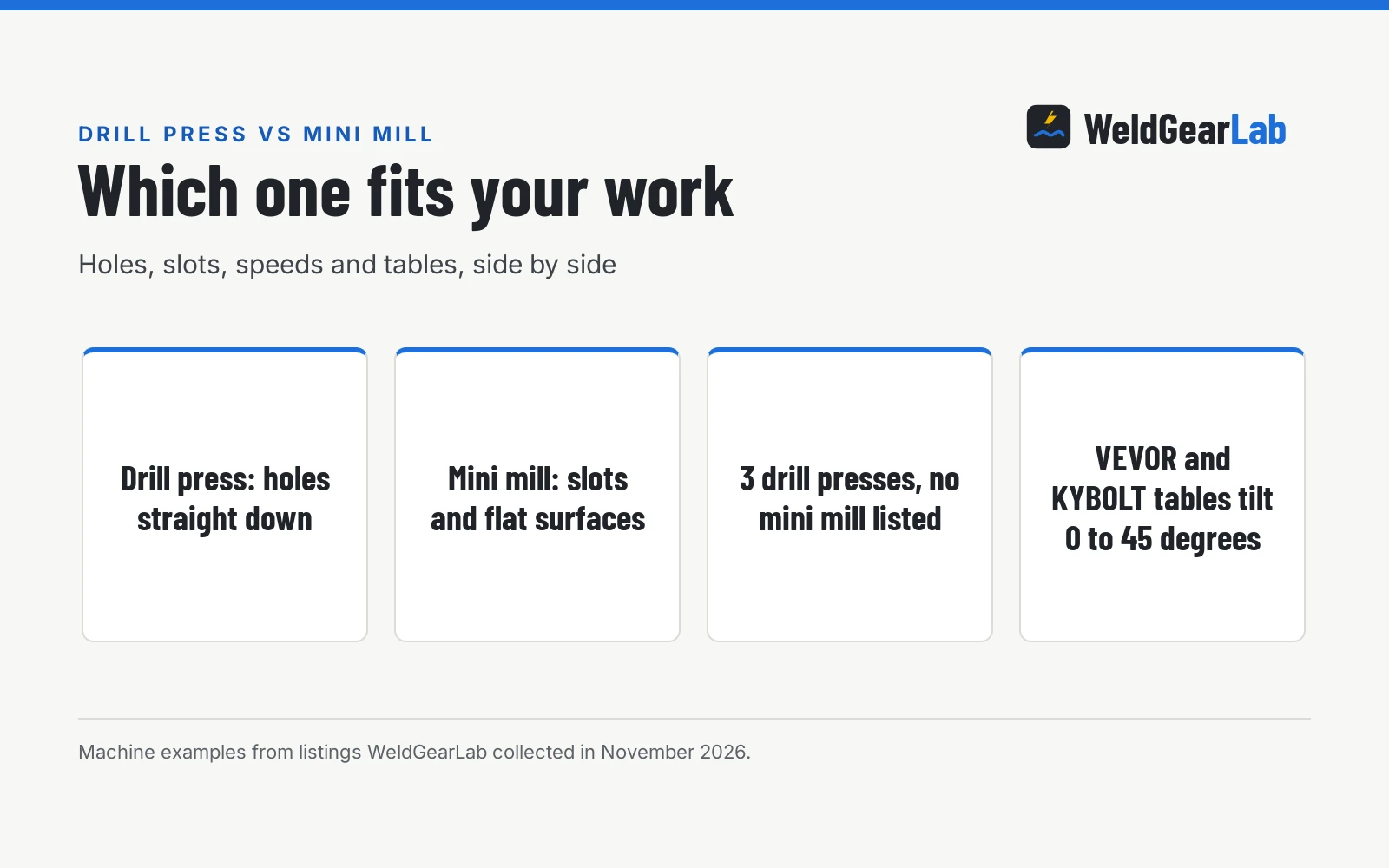
A drill press plunges straight down for clean holes while a mill handles sideways cutting forces, and understanding how rigidity, bearings, and tool holding differ keeps your shop safe.

On this page
Top picks at a glance
As an Amazon Associate I earn from qualifying purchases.
- 1
 BUCKTOOL 10-Inch Drill Press 6.2 Amp 3/4 HP Bench Drill Press9.7/10View on Amazon
- 2
 Accusize Industrial Tools 20 Pc H.S.S. Tin Coated End Mill Set9.7/10View on Amazon
- 3
 JET 12" Benchtop Drill PressView on Amazon
- 4
 VEVOR 12-Inch Benchtop Drill PressView on Amazon
- 5
 VEVOR 12 in Benchtop Drill PressView on Amazon
- 6
 WEN 12-Inch Benchtop Drill PressView on Amazon
- 7
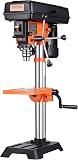 VEVOR Benchtop Drill PressView on Amazon
- 8
 JET 15-Inch Floor Drill PressView on Amazon
When you clamp a piece of steel tubing or plate to the bench for a bracket, slot, or hole pattern, choosing between a drill press vs mill comes down to the direction of cutting force. A drill press plunges straight down along the spindle axis to cut clean round holes, while a milling machine resists heavy sideways cutting forces to carve slots, face stock flat, and square up edges. Trying to make one tool do the other’s job either ruins your workpiece or creates a severe shop hazard. This guide compares them for home, farm and hobby metal fabrication, and explains what each machine can safely handle.
Other welders and gear to compare
 JET 12" Benchtop Drill PressCheck price on Amazon
 VEVOR 12-Inch Benchtop Drill PressCheck price on Amazon
 VEVOR 12 in Benchtop Drill PressCheck price on Amazon
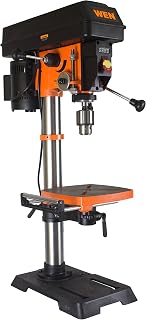 WEN 12-Inch Benchtop Drill PressCheck price on Amazon
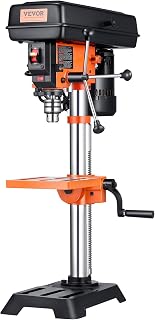 VEVOR Benchtop Drill PressCheck price on Amazon
 JET 15-Inch Floor Drill PressCheck price on Amazon
This guide links to our product roundups, where WeldGearLab gets a commission on purchases made through links on this page, and your price stays the same. Read our affiliate disclosure.
The difference in one paragraph
Every cutting operation exerts force on the machine spindle. A drill press is engineered strictly for axial thrust, meaning force pushing straight up into the quill as the twist drill bites downward. Its bearings, quill assembly, and friction-fit taper mounting have practically no resistance to sideways deflection. A milling machine is built with heavy iron castings, wide dovetail or box ways, preloaded angular contact spindle bearings, and a threaded drawbar that locks the collet solidly into the spindle taper. That rigid construction lets a mill absorb aggressive radial side loads without chatter, tool deflection, or dislodging the cutter.
Drill press vs mill side by side
| Drill Press | Mill-Drill | Milling Machine | |
|---|---|---|---|
| Primary cutting direction | Downward plunge along spindle axis | Plunge drilling and light side milling | Full multi-axis plunge and lateral side milling |
| Spindle bearings | Standard ball bearings arranged for downward drilling thrust | Angular contact or tapered roller bearings for axial and radial loads | Heavy preloaded precision bearings for high radial cutting forces |
| Tool holding system | Keyed chuck on friction taper arbor or spindle | Morse taper or collets with threaded drawbar | Rigid collet or end mill holder secured by drawbar |
| Work table mechanics | Pivoting or slotted table clamped to round column | Compound X-Y table with lead screws and T-slots | Precision ground knee-and-saddle table with lead screws and power feed |
| Lateral load resistance | Quill and column deflect, taper slips loose | Rigid column absorbs moderate side deflection | Heavy iron casting and wide ways absorb aggressive side deflection |
| Table movement under cut | Fixed positioning table, workpiece clamped in vise | Manual feed along X and Y axes via handwheels | Smooth manual or power feed along X, Y, and vertical axes |
| Typical fabrication tasks | Drilling round holes in plate, tube, and bar stock | Drilling, light slotting, and small bracket facing | Heavy slotting, squaring stock, facing, and precision boring |
| Safety under side load | Severe hazard: taper dislodges under lateral pressure | Tooling retained securely by drawbar | Tooling retained securely by drawbar |
Bearing style and tool retention are the defining physical differences. A drill press relies on friction to keep its chuck and taper mounted in the quill, whereas a milling machine uses a solid drawbar through the center of the spindle to physically clamp tooling in place.
When a drill press is the better choice
- Drilling clean round holes. Twist drills, hole saws, step bits, and annular cutters run straight down into plate, tube, and angle iron with minimal setup.
- Fast shop workflow. For drilling bolt patterns in brackets or suspension tabs, setting the table height and plunging the quill takes seconds.
- Vertical stroke and clearance. Deep vertical quill travel allows clearing tall weldments and drilling through thick structural stock.
- Compact footprint and standard power. Benchtop drill presses fit on standard workbenches and plug into common household circuits without requiring heavy dedicated electrical drops.
Benchtop drill presses give metal fabricators substantial drilling capacity without demanding heavy industrial power. For instance, compact models like the VEVOR benchtop draw 3.2 Amp on 120 volts with 0.5 inches of chuck capacity, weighing 41.9 pounds. Stepping up to 12-inch benchtop units, the JET 12-inch model runs a 1/2 HP motor drawing 5A on 115 volts, providing 3-1/8 inches of spindle travel with a 5/8-inch chuck at 85 pounds. Higher-amperage 10-inch units like the BUCKTOOL provide a 6.2A motor with 2 inches of spindle travel and a weight of 86.5 pounds, while the WEN 12-inch benchtop pairs a 6.2-amp motor with 3-1/8-inch spindle travel and 85 pounds of cast iron weight. For dedicated floor space, a standing machine like JET’s 15-inch floor drill press offers 5 inches of spindle travel, powered by a 3/4 HP motor drawing 9A on 115 volts while recommending a 15A circuit at 187 pounds. Our best drill press for metalworking roundup compares shop-ready models across these power and travel classes.
When a milling machine is the better choice
- Cutting slots and keyways. End mills carve clean slots for bolt adjustment, slides, and structural joints by cutting sideways through solid steel or aluminum.
- Facing and squaring stock. Fly cutters and shell mills skim rough hot-rolled scale, weld buildup, or uneven torch cuts to produce flat, true mating surfaces.
- Pocketing and complex profiling. Controlled table travel allows clearing out internal pockets, machining stepped flanges, and profiling bracket perimeters.
- Precision hole spacing and boring. Using calibrated table handwheels or digital readouts lets you locate hole centers precisely without relying on punch marks.
A milling machine provides rigidity that no drill press can deliver. When an end mill cuts horizontally through steel plate, the cutter flutes hammer the material with interrupted impacts. A mill’s massive column, wide knee, and hand-scraped gibs absorb those vibrations so the cutter shears metal smoothly rather than shattering.
How to tell what each machine handles
Looking at machine specifications reveals how each unit is designed to handle shop work:
- Spindle taper retention. Drill presses rely on friction to hold the tooling in place, either via a Morse taper arbor seated in the quill socket or a chuck pressed onto a tapered spindle nose. Without a drawbar to secure it, lateral forces quickly unseat the taper. Mills feature a hollow spindle with a drawbar running down from the top, threading directly into the collet or tool holder to prevent downward or sideways dislodgement.
- Spindle bearing design. Drill presses employ standard deep-groove ball bearings sized to support vertical plunge thrust during hole drilling. Mills utilize heavy paired angular contact or tapered roller bearings capable of handling aggressive radial cutting loads.
- Work table mechanics. A drill press work table clamps to a round vertical column and swings or bevels for angle holes, but offers no controlled feed. A milling machine features precision T-slotted tables riding on dovetail ways with calibrated lead screws for smooth travel along longitudinal and cross axes.
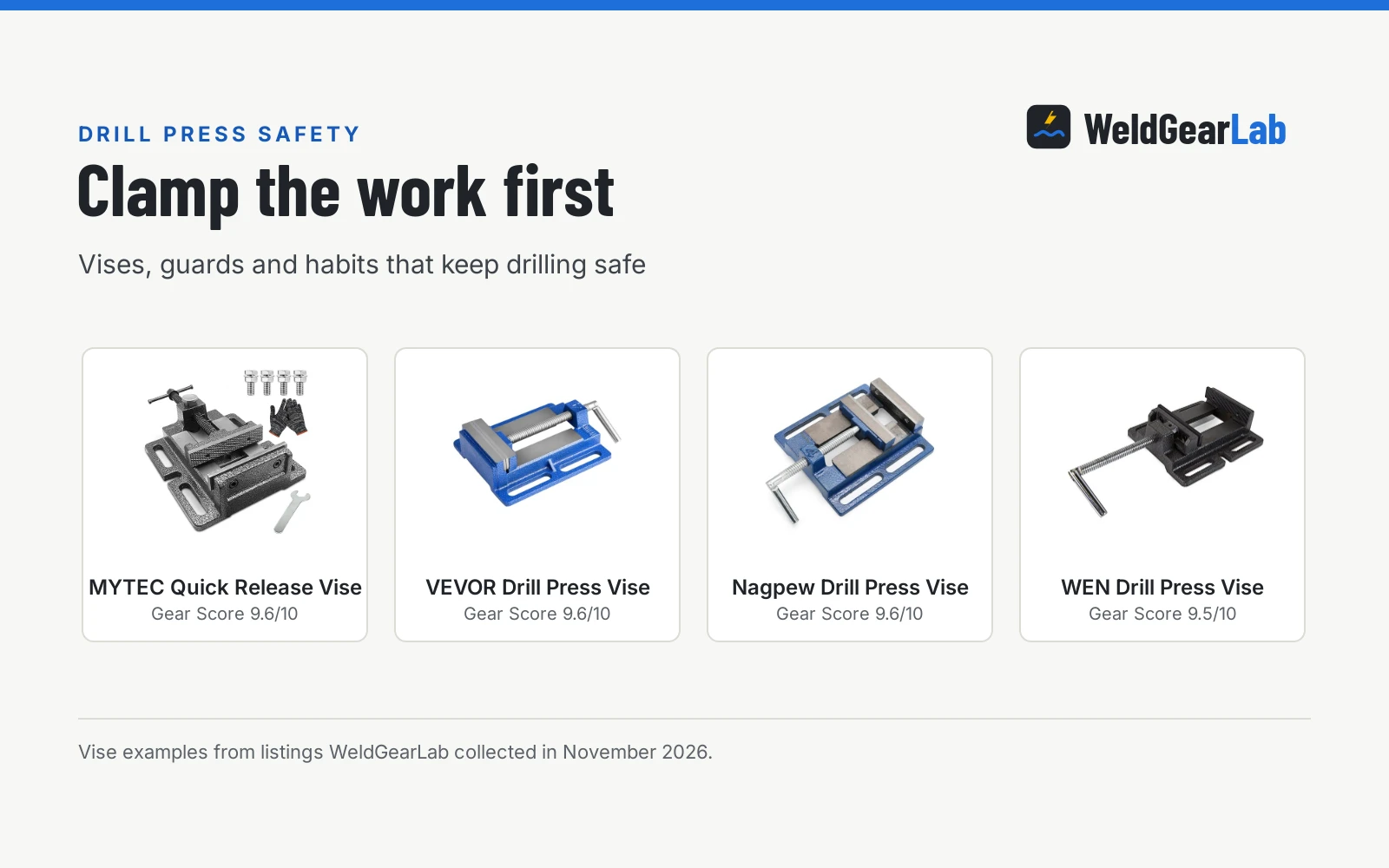
For fabricators working with drill presses, selecting a solid clamp or vise is essential for preventing spinning workpieces. Budget setups often pair a benchtop drill press with a dedicated clamp, as detailed in our guide to the best drill press under 200.
Which tooling and work holding to choose
Using the correct tooling and holding fixtures ensures accurate cuts and prevents shop accidents:
- Tool holding. Drill presses rely on keyed Jacobs chucks designed to grip cylindrical drill bit shanks for vertical drilling. Mills utilize precision collets or solid end mill holders that lock ground flats with set screws, preventing cutting tools from pulling out under heavy spiral flute chip evacuation.
- Work holding vises. A drill press vise holds parts flat for downward drilling and bolts securely to table slots once aligned with the quill. A precision milling vise features ground surfaces, hardened jaws, and a clamping mechanism designed to pull down on the movable jaw, preventing workpiece lift under lateral cutter loads.
- Table clamping kits. Milling setups frequently use step blocks, studs, and strap clamps secured directly into table T-slots to fasten irregular weldments and thick plates securely against the table surface.
Can one machine do both jobs?
Many fabricators wonder if adding a cross-slide table and an end mill to a drill press turns it into a budget milling machine. The short answer is no. Even with a cross-slide vise bolted down, the fundamental mechanical weaknesses of the drill press remain. The round column twists under side loads, the quill chatters in its housing, and the side pressure quickly works the taper arbor loose. Once that taper unseats, the chuck and spinning cutter drop out instantly.
If your shop requires both capabilities in a single compact footprint, look at a dedicated mill-drill machine. Mill-drills incorporate rigid box or dovetail columns, a heavy cast base, lead screw tables, and a genuine drawbar spindle system. While lighter than a full vertical knee mill, a true mill-drill provides the mechanical retention and bearing support required for safe side milling operations.
Drill press and milling safety. Never side load a drill press chuck or attempt to mill slots on a standard drill press table. The side pressure will dislodge the taper arbor, sending the spinning chuck and cutter across your bench. Always clamp workpieces securely in a vise bolted to the table, wear eye protection, remove chuck keys before starting the motor, and keep hands clear of spinning tooling. Never wear gloves, loose sleeves, or jewelry around a spinning spindle.
FAQ for welders
Can you mill on a drill press?
No, you should never mill on a standard drill press. Drill press bearings and friction-fit taper arbors are built only for downward axial thrust, not sideways radial cutting pressure. Side loading causes the friction taper to drop out of the spindle quill, creating a flying projectile hazard and ruining your work.
How to use a drill press for metal fabrication?
Center punch your hole location, clamp the metal securely in a drill press vise bolted to the work table, and set the spindle speed to match your drill bit diameter and material. Use cutting fluid on steel to keep the bit cool and clear chips by clearing the flutes periodically. Pull the feed handle with smooth, even downward pressure to form clean chips without bogging the motor.
Can you use an end mill in a drill press chuck?
No, an end mill should never be held in a standard drill press Jacobs chuck. End mills produce high lateral forces that loosen the chuck jaws and pull the taper arbor out of the spindle socket. Even if the chuck holds temporarily, the flexible quill causes violent chatter that instantly chips carbide or high-speed steel cutting flutes.
How much is a drill press worth for a home shop?
A drill press is worth every dollar for anyone who regularly fabricates brackets, frames, or hole patterns in metal. It saves drill bits, cuts perpendicular holes that hand drills cannot match, and speeds up fabrication by keeping repetitive depths consistent. Entry benchtop models provide plenty of utility, while heavier shop models add deeper throat depth and broader speed ranges.
How to fix a drill press with excessive spindle play?
Start by checking if the chuck arbor is fully seated in the quill socket, cleaning out any grit or metal chips from the taper mating surfaces. If the quill itself wobbles inside the head casting, tighten the quill lock bolt or split casting take-up screw according to the manual until side play disappears without binding the vertical feed. Worn quill bearings require pressing in fresh bearings, while bent arbors must be replaced.
Related: best drill press for metalworking, best drill press under 200, best magnetic drill under 1000, and the metal fab tools category.