Rx Safety Glasses: What They Are and How to Choose Them
Rx safety glasses put your prescription into frames and lenses made as safety eyewear with side protection, so you can see the work clearly and keep chips and grit out of your eyes.

On this page
Top picks at a glance
As an Amazon Associate I earn from qualifying purchases.
- 1
 NoCry Welding GlassesView on Amazon
- 2
 MAGID Gemstone Y50 Performance Anti-Fog Safety Glasses withView on Amazon
A drill press throws chips, a grinder throws sparks and grit, and a wire wheel throws fine wire and dust. When you wear prescription glasses, that leaves a gap: regular glasses correct your vision but leave your eyes open at the sides, and plain safety glasses give protection without correction. Rx safety glasses close that gap. They are prescription glasses built as safety eyewear, with lenses ground to your prescription, frames and lenses made as safety eyewear, and side shields that narrow the gaps at the edges. This guide explains what they are, how they differ from regular glasses and over-glasses, and what to check before ordering.
Other welders and gear to compare
 NoCry Welding GlassesCheck price on Amazon
 MAGID Gemstone Y50 Performance Anti-Fog Safety Glasses withCheck price on Amazon
This guide links to our product roundups, where WeldGearLab gets a commission on purchases made through links on this page, and your price stays the same. Read our affiliate disclosure.
What Rx Safety Glasses Are
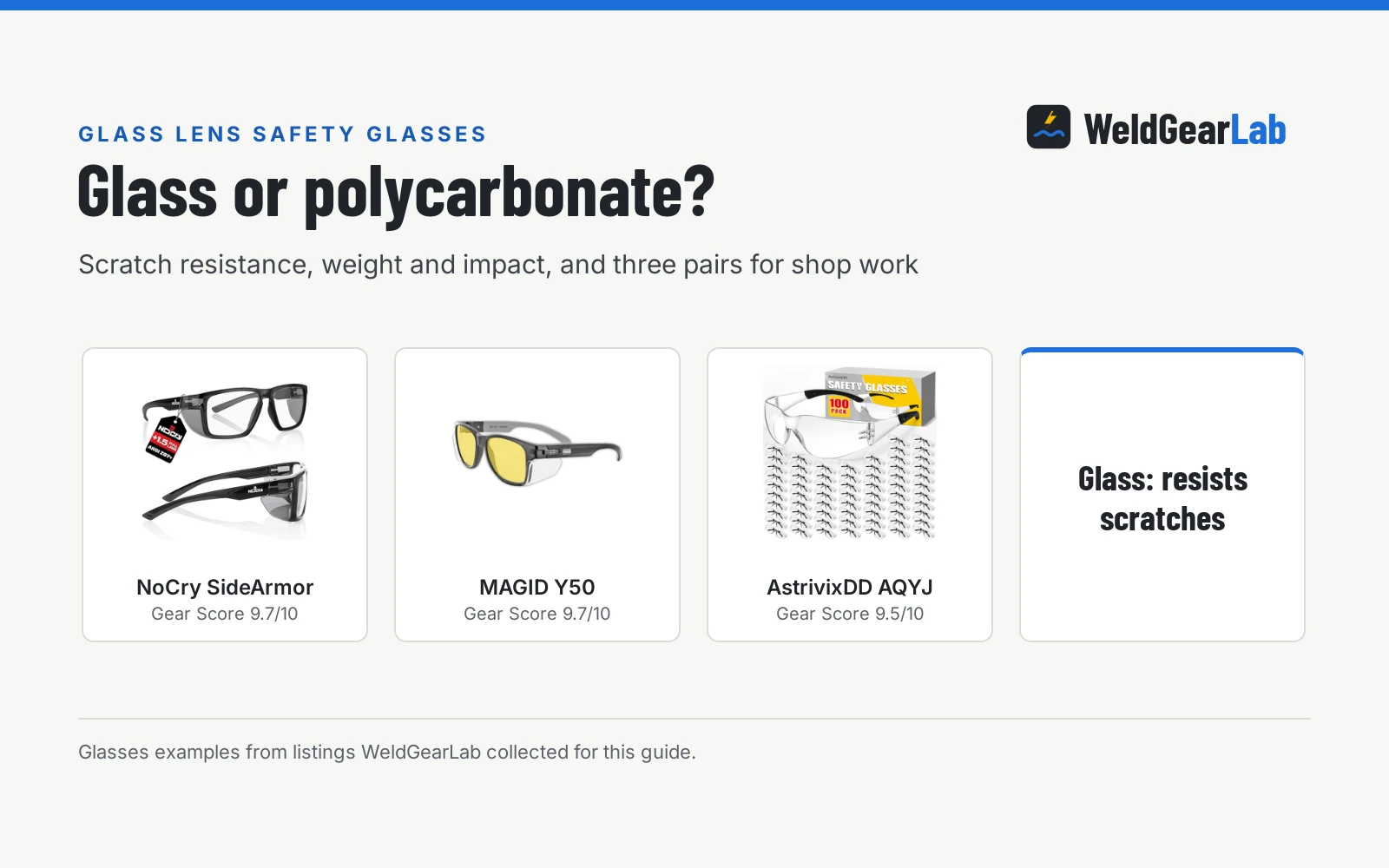
Rx safety glasses start with a normal eye prescription and put it into frames and lenses made for the shop. The lenses are impact resistant, the frames are sturdier than street frames, and side shields or a wraparound shape guard the edges where chips and dust slip in. Polycarbonate is a common lens material, a light plastic chosen for impact resistance, with scratch and fog resistant coatings. The safety marking is stamped on the frame and on the lens, so you can check what the glasses are rated for before you buy. Regular glasses are not marked as safety eyewear: that marking is the line between eyewear that corrects vision and eyewear made to protect it.
Side by side
| Rx safety glasses | Safety glasses over prescription glasses | Regular prescription glasses | |
|---|---|---|---|
| What it is | Prescription lenses in safety-rated frames | Safety glasses worn over regular glasses | Everyday glasses, standard frames |
| Vision correction | Built in, matched to your prescription | Your regular glasses underneath | Built in, matched to your prescription |
| Side protection | Side shields or wraparound frames | Varies; gaps at the sides are common | Open at the sides, no shields |
| Impact rating | Built to meet the eye protection standard | Rated when the frame is marked | Not rated as safety eyewear |
| Under a welding helmet | Slim frames can fit; check your helmet | Bulkier; can press on the helmet | Fits, but no impact protection |
| Fogging | Coatings and vents help | Extra lens layer fogs more readily | Coatings help, but no safety rating |
| Care | Lens cleaner and a soft cloth | Clean the inner and outer lenses | Lens cleaner and a soft cloth |
| Suits | Daily shop work with correction | Occasional shop visits | Street wear, not shop work |
The table shows the trade. Rx safety glasses give correction and protection together, which is why they suit daily shop work. Over-glasses work when you only step into the shop now and then, and regular glasses are fine for the street but not for the bench.
When Rx Safety Glasses Are the Better Choice
- Daily shop work. Grinding, drilling, cutting and fitting, where chips and dust are part of every session and you need sharp vision at arm’s length.
- Under a welding helmet. Slim frames sit close to the face and clear the helmet shell, so you can see the joint clearly when the hood comes up.
- Dusty and dirty jobs. Side shields help block chips and grit from the side when you sweep the bench, blow out a machine or open a bag of abrasive; fine dust can still reach the eyes, so sealed goggles suit heavy dust.
- Shared benches and teaching. When you move between machines and help others set up, the same glasses cover correction and protection without swapping.
Fogging is the usual complaint. Coatings and vents help, and the best anti-fog safety glasses guide covers frames and coatings that hold up in a warm shop. For the full range of frames, see types of safety glasses for shop work.
When Safety Glasses Over Prescription Glasses Make Sense
- Occasional visits. If you step into the shop to check a job or lend a hand, marked, rated over-glasses give protection without another prescription order.
- Visitors and helpers. A spare set kept by the door suits many visitors, with or without their own glasses underneath, and it needs no prescription order.
- Short tasks. A quick cut or a short drilling job calls for protection for a few minutes, not a dedicated frame.
The trade is comfort and clarity. Over-glasses add another layer over your regular frames, which can press at the temples, slide on your nose and fog more readily. For a short visit that trade is easy to accept; for a full day at the bench it wears thin.
How to Tell What Glasses Offer
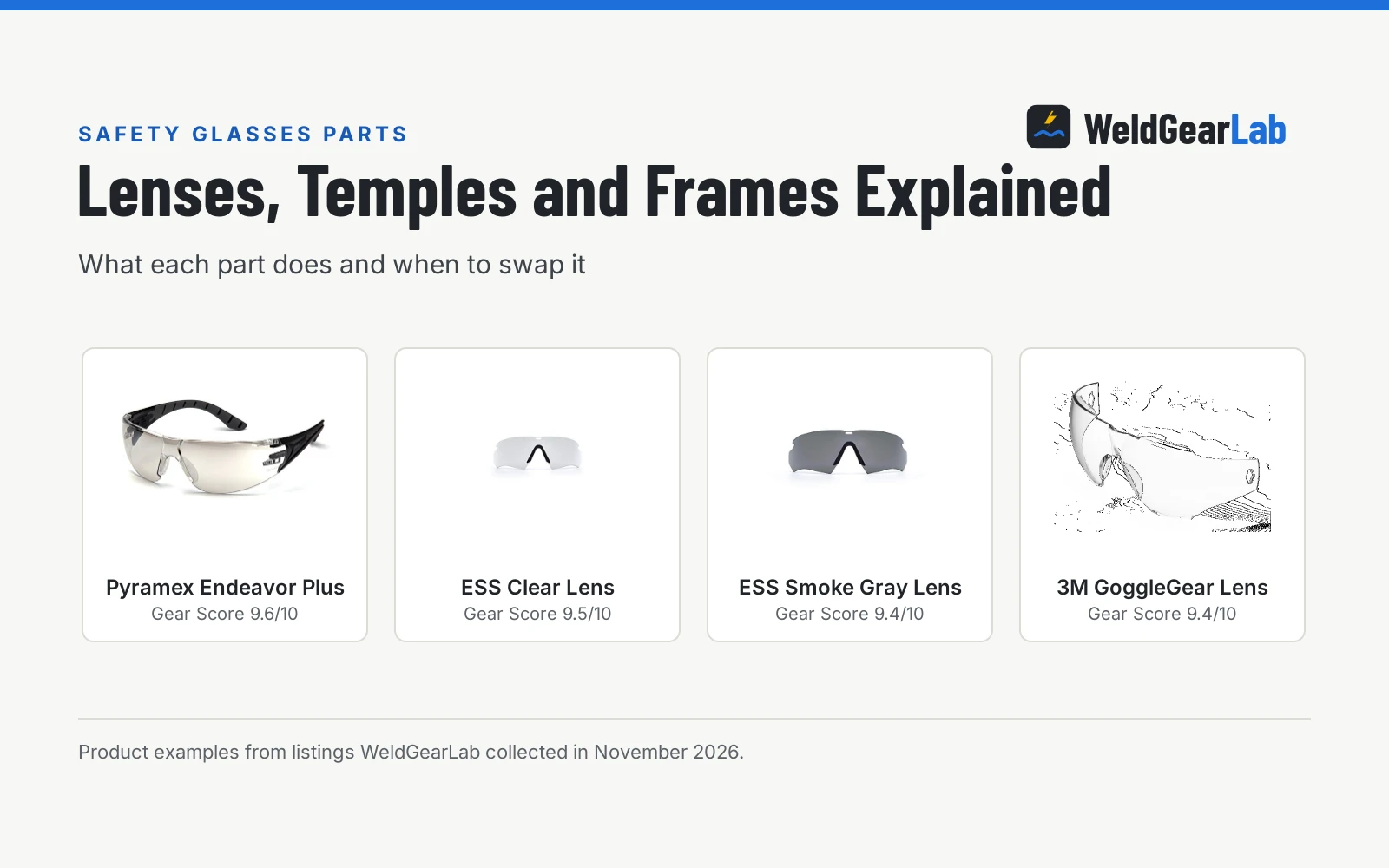
Start with the marking. Safety eyewear carries a stamp on the frame and lens showing it meets the eye protection standard, and the maker states which standard applies. If a listing shows no marking and no standard, treat the glasses as regular eyewear, whatever the title claims. Check the side shields next: they should sit close to the face with no wide gaps at the temples. Then check the fit: the frames should sit level, the temples should not press behind your ears, and the lenses should cover your line of sight when you look down at the work. Order with a current prescription, and check the return terms, since a wrong prescription means a new set of lenses. The safety glasses parts guide explains lenses, temples and frames, and the safety glass standard guide covers what to look for.
Fit, Fogging and the Welding Helmet
Fit decides whether the glasses stay put through a long session. Frames that slide or pinch end up on the bench, where they guard nothing. Try the frames with your helmet: drop the hood, lift it, and look down at a joint, checking that the lenses still cover your sight line and the temples clear the shell. A helmet that fits over glasses matters too; see the best welding helmet for price. Fogging follows the same logic: warm breath meets cool lenses, so vents, coatings and a good seal at the brow all help. Keep the lenses clean, since grime holds moisture and makes fog worse.
Can Regular Prescription Glasses Do the Job?
For the street, yes; for the bench, no. Regular glasses correct vision, but their lenses and frames are not rated for impact, and the open sides let chips and dust reach your eyes from the sides. A face shield adds a layer over the whole face, yet it does not replace rated eyewear underneath, since chips can slip under the shield. If you wear prescription glasses in the shop, the safe move is rated eyewear: rx safety glasses for daily work, or over-glasses for a short visit.
Chips, dust and slag. Grinding and drilling throw chips and dust at your face, and chipping slag flicks hot scale off the bead. Wear rx safety glasses under the helmet when chipping, keep guards in place, clamp the work, and keep gloves away from rotating parts. See the drill press safety and grinding wheel safety guides, the OSHA welding overview and the Safety Disclaimer.
FAQ for welders
Can rx safety glasses be worn under a welding helmet?
Often, if the frames are slim. Slim frames sit close to the face and can clear the helmet shell, so the hood drops without pressing the temples into your head. Try the helmet over the glasses first, and check the lenses still cover your line of sight when you look down at the joint.
Do rx safety glasses replace a face shield when grinding?
No. The glasses guard your eyes from chips and dust, while a face shield guards the whole face from larger fragments and sparks. For grinding and cutting, wear the glasses under a shield and keep the guard on the tool: the shield is an extra layer, not a substitute for rated eyewear.
What keeps rx safety glasses from fogging in the shop?
Fogging comes from warm air meeting cool lenses, common when you step from a cold shop into a warm one or work up a sweat. Anti-fog coatings and vented frames help, as does keeping the lenses clean, since grime holds moisture. The best anti-fog safety glasses guide covers coatings and frames for a warm shop.
Are rx safety glasses available with progressive lenses?
Yes, many makers offer them. They suit shop work where you shift between the bench and the machine across the room, though the reading zone sits low in the lens, so check the fit with your head tilted down at the work. If that zone feels narrow, ask the maker about wider lens shapes for arm’s length work.
What should be checked when new rx safety glasses arrive?
Check the safety marking on the frame and lens, the side shields, and the fit: level frames, temples that do not press, and lenses that cover your sight line looking down. Check the prescription against your order and the return terms, since a wrong prescription means new lenses. Keep the case and cloth, and store the glasses where they will not get scratched.
Related: rx safety glasses and other types for shop work, safety glass standards, safety glasses for dust, and the metalworking machines hub. Also see the welding safety gear checklist for beginners.