Best Electric Metal Nibbler (2026): 4 Shop Picks Scored
Four electric metal nibblers for sheet fabrication, compared on cutting capacity, motor power, speed, weight, and the specifications each listing publishes.

On this page
Top picks at a glance
As an Amazon Associate I earn from qualifying purchases.
- 1
 Best OverallMakita JN16019.5/10View on Amazon
- 2
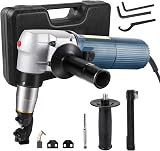 Highest CapacityVEVOR 625W9.5/10View on Amazon
- 3
 Best CordlessMtiolHig 20V Cordless9.5/10View on Amazon
When you are fitting up a replacement floor pan, trimming corrugated siding for a pole barn, or cutting an access hole in a steel tank, an angle grinder throws hot sparks and warps thin sheet, while tin snips curl and twist the edge. A dedicated electric nibbler punches out tiny crescent chips to follow tight curves and scribe lines without distorting the metal. This guide looks at four corded and cordless tools to help you pick the best electric metal nibbler for your bench, comparing cutting capacity, motor power, stroke speed, and the specifications published on each listing.
WeldGearLab gets a commission on purchases made through links on this page, and your price stays the same. Read our affiliate disclosure.
Quick picks
- Best Overall Makita JN1601: 3.6 lb corded 16 gauge nibbler with 360 degree rotating die and 1/4 inch stroke Check price on Amazon
- Highest Capacity VEVOR 625W: 625W corded nibbler, up to 0.16 inch steel and 0.1 inch stainless, 360 degree head Check price on Amazon
- Best Cordless MtiolHig 20V Cordless: 2.2 lb brushless cutter for DeWalt 20V batteries, 3 speeds up to 1900 RPM Check price on Amazon
The machines

Makita JN1601 16 Gauge Nibbler 18 ga stainless
A corded 16 gauge sheet metal nibbler with a 360 degree rotating die, 1/4 inch stroke, and built-in thickness gauge.
Pros
- Cuts 16 gauge mild steel, 18 gauge stainless, and 13 gauge aluminum
- Die rotates 360 degrees with a large 1/4 inch stroke
- Weighs 3.6 lbs in bullets with a slim barrel grip design
- Built-in thickness gauge and lock-on sliding switch for continuous operation
Cons
- Ships with the unit and guide only, with no carrying case or spare die in the box
- Motor wattage and operating amperage are not stated in the listing
- Listing states manufacturer warranty without giving a concrete duration
- Cutting speed in RPM or strokes per minute is not stated

VEVOR Electric Metal Nibbler 625W Nibbler Metal
A heavy-duty 625W corded electric nibbler capable of cutting steel plate up to 0.16 inch (4 mm) and stainless up to 0.1 inch (2.5 mm).
Pros
- Heavy cutting capacity up to 0.16 inch (4 mm) steel sheet and 0.1 inch (2.5 mm) stainless
- Powerful 625W corded electric motor operating at 1000 RPM
- Head rotates 360 degrees for straight lines, curves, and patterns
- Includes replacement tool blocks, wrench, hook-type tools, 2 hexagon spanners, and a toolbox
Cons
- Heaviest machine here at 11 pounds, increasing arm fatigue during overhead or vertical cuts
- Output speed of 1000 RPM is slower than lighter gauge nibblers
- No warranty term is stated in the listing
- No safety certifications are stated in the specifications

MtiolHig Cordless Metal Nibbler Compatible
A cordless brushless nibbler compatible with DeWalt 20V batteries, featuring 3-speed settings, 1900 RPM, and an ambidextrous assist handle.
Pros
- Brushless motor with 3-speed adjustable settings reaching up to 1900 RPM
- Compatible with DeWalt 20V batteries such as DCB200, DCB204, and DCB205
- Adjustable assist handle mounts on either side for two-handed control
- Lightest pick here at 2.2 pounds, reducing fatigue on long cutting jobs
Cons
- Sold as a bare tool without battery or charger included
- Title says 18-gauge while bullets claim 16 gauge (1.6 mm) mild steel capacity
- No warranty term is stated in the listing
- No safety certifications are stated in the specifications

VEVOR Electric Metal Nibbler 380W Nibbler Metal
A compact 380W corded electric nibbler running at 1800 RPM, rated for 0.5 to 1.8 mm steel sheet and 0.5 to 1.2 mm stainless.
Pros
- Cuts 0.5 to 1.8 mm steel sheet and 0.5 to 1.2 mm stainless steel
- Fast 1800 RPM cutting speed leaves clean edges without sparks
- Head rotates 360 degrees to cut straight lines, arcs, and irregular profiles
- Comes with toolbox, replacement tool blocks, wrench, hook tools, hex keys, and carbon brushes
Cons
- Operating voltage is unclear: both 220V and 110V are given, so check the supplied cord before plugging in
- Weighs 6 pounds, heavier than the 3.6-pound Makita corded unit
- No warranty term is stated in the listing
- No safety certifications are stated in the specifications
Other welders and gear to compare
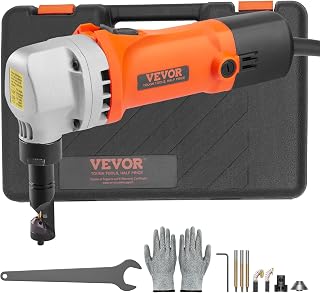 VEVOR Sheet Metal NibblerCheck price on Amazon
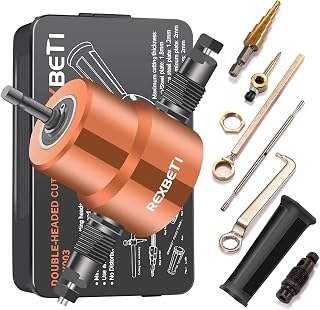 REXBETI Double Head Sheet Metal NibblerCheck price on Amazon
 Draper 35748 Expert Hand Nibbler for Metal SheetCheck price on Amazon
Spec sheet comparison
| Model | Gear Score | Power Source | Power | Speed | Capacity (steel / stainless) | Weight | Warranty |
|---|---|---|---|---|---|---|---|
| Makita JN1601 | 9.5/10 | Corded Electric | Not stated | Not stated | 16 ga steel / 18 ga stainless | 3.6 lb | Not stated |
| VEVOR 625W | 9.5/10 | Corded (110V) | 625W | 1000 RPM | 4 mm steel / 2.5 mm stainless | 11 lb | Not stated |
| MtiolHig 20V Cordless | 9.5/10 | Cordless (DeWalt 20V) | Brushless | 1900 RPM | 1.6 mm steel / 1.2 mm stainless | 2.2 lb | Not stated |
| VEVOR 380W | 9.3/10 | Corded (220V / 110V) | 380W | 1800 RPM | 1.8 mm steel / 1.2 mm stainless | 6 lb | Not stated |
All specs here repeat what the maker rates and the listing prints, copied down 9 November 2026.
Best electric metal nibbler buying guide: what matters in the shop
Cutting capacity and sheet gauge
Cutting capacity dictates whether a tool can handle your fit-up work. Most standard nibblers handle up to 16 gauge (1.6 mm) mild steel, 18 gauge (1.2 mm) stainless steel, and 12 to 13 gauge aluminum. Stainless steel work-hardens quickly and demands more punch force, which is why stainless capacities are always lower than mild steel ratings. If your shop regularly works with heavier plate or structural brackets up to 4 mm (0.16 inches), a heavy-duty unit like the VEVOR 625W provides the punch diameter and motor torque needed to push through without stalling.
Corded vs cordless power
Corded nibblers provide constant power for long runs along corrugated roofing or production sheet cutting, avoiding battery swap interruptions. Tools like the Makita JN1601 draw power from a corded electric outlet and keep total weight down to 3.6 lbs by omitting an onboard battery pack. Cordless models running on DeWalt 20V batteries offer mobility around a truck bed, trailer frame, or ladder without dragging an extension cord across the shop floor. Cordless tools are typically sold as bare tools, so make sure you have compatible battery packs on hand.
Head rotation and cutting speed
All four picks feature a cutting head or die that rotates 360 degrees. This allows you to position the tool body comfortably while guiding the punch along straight edges, corrugated valleys, or tight radius circles. Speed is stated in RPM or strokes per minute (SPM). Lighter units operate between 1800 and 1900 RPM for fast feed rates through thin sheet, while high-capacity plate cutters operate around 1000 RPM to maximize shearing torque.
Punch, die, and blade maintenance
Nibblers operate with a reciprocating punch that shears metal against a stationary die block. Over time, burrs and dull cutting edges develop, especially when cutting abrasive or work-hardened metals. Check what consumables arrive with the tool: models that include spare guide blocks, replacement punch needles, and dedicated service wrenches reduce downtime when a punch wears down mid-project. Regularly lubricate the punch head with light cutting oil to reduce friction and extend die life.
Managing waste chips and clean fit-up
Unlike an abrasive cut-off disc that leaves grit, heat discoloration, and heavy slag, a nibbler produces cold cuts that do not bake out rust-preventive coatings or warp thin sheet panels. However, nibblers produce thousands of tiny, razor-sharp crescent chips that drop below the cut line. These chips will scratch automotive paint, embed themselves in work boot soles, and short out exposed welding table fixtures if not swept up promptly. Clamp your workpiece securely, lay a drop cloth beneath the cut, and blow chips away from the tool housing.
Shop safety and prep. Always wear safety glasses and leather work gloves when running a nibbler, as flying chips and raw sheared edges present immediate puncture hazards. Secure sheets with clamps before cutting so the tool does not catch and rattle the workpiece. If you are prepping sheet for welding, wipe the cut edge clean of cutting oil and verify proper fit-up before tacking. Review workshop safety rules and related sheet cutting guides for proper workshop setup.
Before You Strike an Arc
- Check voltage before plugging in corded machines: the VEVOR 380W lists both 220V and 110V, so confirm your cord and outlet match before powering up.
- Verify battery lock on cordless models: ensure your DeWalt 20V slide packs snap firmly into the tool body, as battery vibration can loosen unseated contacts.
- Inspect the punch and die alignment out of the box: confirm the die rotates smoothly through 360 degrees and that the locking collar tightens firmly with the supplied wrench.
- Check included spare consumables on arrival: verify that replacement punch needles, guide blocks, and carbon brushes listed in the package are present before starting a fabrication job.
FAQ for welders
What is an electric metal nibbler?
An electric metal nibbler is a motorized cutting tool that shears sheet metal by driving a small reciprocating punch through a fixed die. It cuts cleanly through flat sheet, corrugated deck plate, and curved profiles without heat, sparks, or distorted edges. Fabricators use nibblers when they need distortion-free cuts and tight radius turns that shears or angle grinders cannot deliver.
How do metal nibblers work?
A nibbler works much like a continuous hole punch. An electric motor drives a punch rapidly up and down against a die opening, shearing out small crescent-shaped metal chips with each stroke. Because the punch cuts a narrow path through the material, you can turn the tool 360 degrees to cut intricate shapes, circles, or straight lines.
How to use a sheet metal nibbler?
Secure the sheet metal firmly to your welding table or workbench using clamps. Mark your cut line, place the die opening over the edge of the sheet, and start the motor before contacting the metal. Feed the tool forward with steady, moderate pressure along your scribe line, allowing the punch to cut at its own pace without forcing it.
How to use a nibbler to cut metal inside a panel?
To make an interior cutout, drill a starter hole in the scrap portion of the panel that is slightly larger than the nibbler’s die head. Insert the die through the hole, start the motor, and guide the punch toward your layout line. Keep the base plate flat against the sheet to maintain clean punch engagement and prevent chatter.
Can a metal nibbler cut corrugated sheet?
Yes, electric nibblers excel at cutting corrugated roofing, deck plate, and keystone panels because the slim die head rides over ridges and down into valleys without bending the profile. Unlike metal shears that bind on ribs, a nibbler’s punch continues shearing cleanly regardless of sheet contour.
Related: best sheet metal nibbler, metal nibbler for drill, cold saw for metal, and the metal fab tools hub. Also see our best angle grinder. Also see our best cordless band saw. Also see our best die grinder. Also see our TIG welding settings for sheet metal. Also see our how to MIG weld thin sheet metal without burning through. Also see our best welding table for home shop. Also see our how to use bead roller. Also see our how to use a shrinker stretcher.
Scoring, line by line
Each metal nibbler is scored on performance, build, value, safety listing and warranty, following the criteria explained on our metal fab tools hub. None of the four listings publishes an electrical safety standard such as UL or ETL, and none provides a concrete warranty duration, so all four score zero on those two criteria. The overall rankings are driven by stated cutting capacity in mild and stainless steel, motor power, ergonomics, and accessory inclusions.
| Product | Gear Score | Perf. /35 | Build /25 | Value /25 | Safety /10 | Warranty /5 |
|---|---|---|---|---|---|---|
| Makita JN1601 | 9.5 | 30 | 22 | 21 | 0 | 0 |
| VEVOR 625W | 9.5 | 32 | 20 | 21 | 0 | 0 |
| MtiolHig 20V Cordless | 9.5 | 29 | 20 | 21 | 0 | 0 |
| VEVOR 380W | 9.3 | 26 | 18 | 19 | 0 | 0 |
A pick’s weighted total decides where it lands between a 9.2 floor and a 9.8 ceiling, and a bigger total never produces a smaller number.