Manual Sheet Metal Nibbler: How to Choose and Use It
A manual sheet metal nibbler punches a narrow strip out of thin sheet, so it cuts straight lines, curves and small cutouts with hand power only.

On this page
Top picks at a glance
As an Amazon Associate I earn from qualifying purchases.
- 1
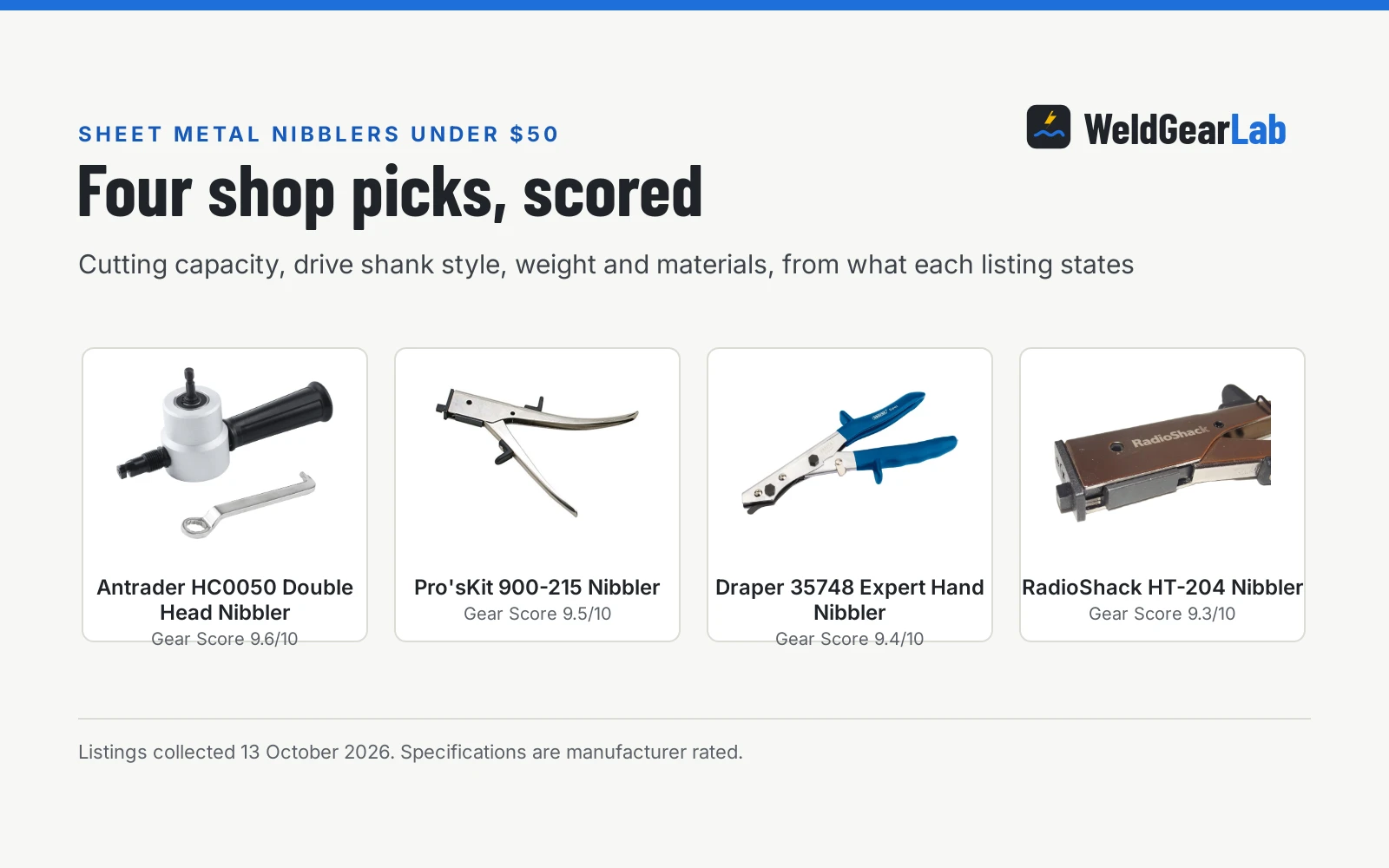
 Antrader Double Head Sheet Metal Nibbler Cutter Hole Saw9.6/10View on Amazon
- 2
 2026 Upgraded Electric Drill Plate Cutter Metal Nibbler Drill9.5/10View on Amazon
- 3
 Hoteche Electric Sheet Metal Nibbler 16 Gauge Precision Metal9.4/10View on Amazon
A sheet of thin steel needs a notch for a switch, a curve around a duct, or a straight trim along a roof edge, and the usual shears can curl thin sheet or struggle to turn tight enough. A manual sheet metal nibbler solves that job by cutting a narrow path through the sheet, so the sheet stays flat and the cut follows the line you mark. This guide explains what a manual sheet metal nibbler does, which sheet it handles, and how to pick the right tool for home and shop work.
This guide links to our product roundups, where WeldGearLab gets a commission on purchases made through links on this page, and your price stays the same. Read our affiliate disclosure.
What a manual sheet metal nibbler does
A manual sheet metal nibbler is a hand tool that cuts sheet metal by hand power. A punch style tool works a small punch and die with the handles, taking a narrow strip out of the sheet, while a roller style tool pulls double wheels along the line. Either way, the cut edge stays flat instead of curling the way shears can. That makes it a good fit for straight cuts, curves, and cutouts in thin sheet, such as panels, ducts, and roof flashing.
The listings in this guide describe a roller style and a punch style. The roller style, such as the MufaKnp cutter, uses a double roller wheel cutting structure and a hand pull design, so you pull the tool along the line. The punch style, such as the Dreyoo and GOLD DEER nibblers (on Amazon), works the punch with the handles, which suits small cutouts and tight spots. The Knipex nibbler (on Amazon) is a plier style tool with a chip breaker, made for sheet steel, copper, and aluminium.
Side by side
| Manual nibbler | Tin snips | Electric nibbler | |
|---|---|---|---|
| Cut style | Punch style removes a narrow strip; roller style cuts along the line | Shear cuts along a line | Motor drives the punch head |
| Straight cuts | Long straight cuts with a steady pull | Straight trims | Fast straight cuts with power |
| Curves and cutouts | Tight curves and small cutouts | Gentle curves only | Curves and cutouts with less effort |
| Edge left behind | Flat edge with little burring | Edge can curl on thin sheet | Clean edge, chips to clear |
| Power needed | Hand power only | Hand power only | Mains or battery power |
| Suits | Thin sheet, panels, ducts, roofs | Quick trims and light sheet | Long runs and thicker sheet |
A manual nibbler keeps the sheet flat while it cuts, which is the main reason to reach for it over snips on thin stock. Snips suit a rough straight trim, and a powered nibbler takes over when the job runs long.
When a manual nibbler is the better choice
- Cutouts in a panel. Switch holes, vent openings, and outlet boxes in sheet and enclosures, where shears cannot start a cut in the middle of a panel.
- Curves and tight turns. Duct work, auto body patches, and trim that follows a marked curve.
- Long straight cuts in thin sheet. Roof panels, flashing, and coil stock, where the roller style pulls along the line.
- Work with no power nearby. Roof work, site repairs, and garage jobs where a corded tool is awkward.
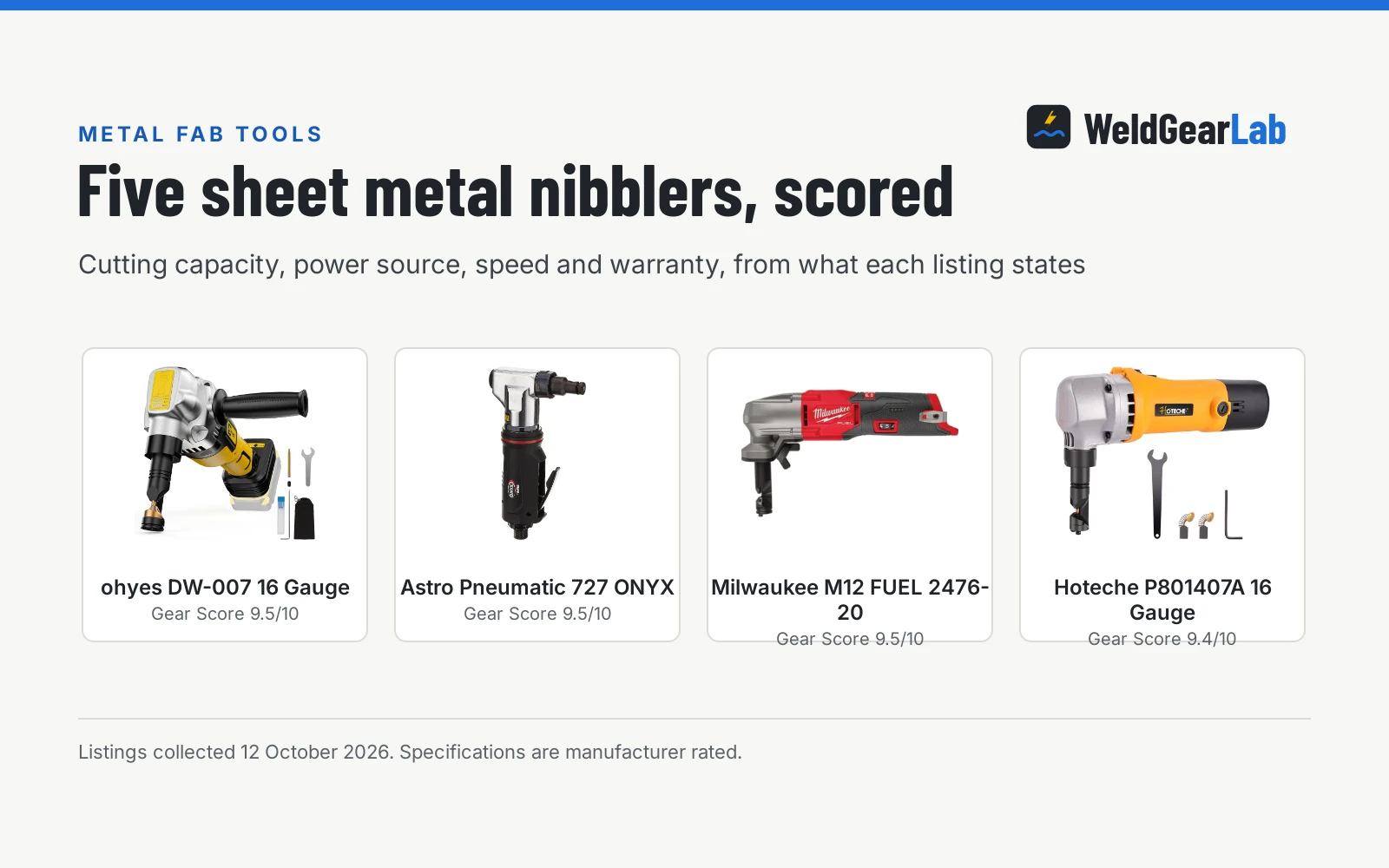
Our best sheet metal nibbler guide covers hand and powered models scored for the shop.
When snips or a powered nibbler fit better
- Fast rough cuts. Tin snips suit a rough trim where the edge will be hidden or filed later. See our best tin snips for sheet metal guide.
- Thick sheet. A manual nibbler is rated for thin sheet only, so thicker stock needs a powered tool or a shear.
- Long production runs. An electric nibbler keeps the pace up when the job runs all day. See our best electric metal nibbler guide.
- Straight cuts in heavy stock. A bench shear or a powered shear handles stock that a hand nibbler cannot.
How to use a manual sheet metal nibbler
Mark the cut line, clamp the sheet so it cannot move, and start the cut at an edge or a drilled starter hole. Work the tool with a steady rhythm and let it do the cutting; forcing the tool bends the sheet and dulls the cutting edge. On a punch style tool, keep the waste strip clear of the cut line so it does not jam the head.
For the MufaKnp roller cutter, the maker states it cuts 28 GA (0.4 mm) galvanized sheet and cold-rolled steel sheet with ease, and 23 GA (0.7 mm) galvanized sheet with the sheet secured first and more force applied. The maker also states it works on thicker aluminium, copper, and plastic panels, and that the hand pull design reduces hand effort by up to 60-80%.
The GOLD DEER hand nibbler is stated for iron, copper, and aluminium up to 0.8 mm, with a locking buckle that holds the pliers closed in storage. The Knipex nibbler cuts sheet steel, copper, and aluminium up to 1.2 mm thick, and plastics up to 2.0 mm, and the maker lists it at 280 mm. The Dreyoo nibbler (on Amazon) is listed at 0.4 pounds.
How to choose a manual sheet metal nibbler
Start from the sheet you cut most. Match the rated thickness to your work: the listings here cover 28 GA (0.4 mm) and 23 GA (0.7 mm) galvanized sheet, 0.8 mm sheet on the GOLD DEER model, and 1.2 mm sheet steel on the Knipex model, with plastics to 2.0 mm on that same tool. Pick a tool rated for the thickest sheet you plan to cut.
Then match the shape to the job. A roller cutter suits long straight runs, such as roof panels and coil stock; the MufaKnp cutter comes in a 13.7 IN size and a shorter 9 IN size for tight spaces. A punch style nibbler suits cutouts and curves in panels and enclosures. A cushioned grip and a lock that holds the tool closed make storage and long sessions easier.
Check the cutting material as well. The MufaKnp cutter lists chromium alloy steel wheels, CNC-machined, with a hardness rating of HRC 35-40, and the maker warns against hardened steel, metal rods, and wire mesh, which can damage the wheels.
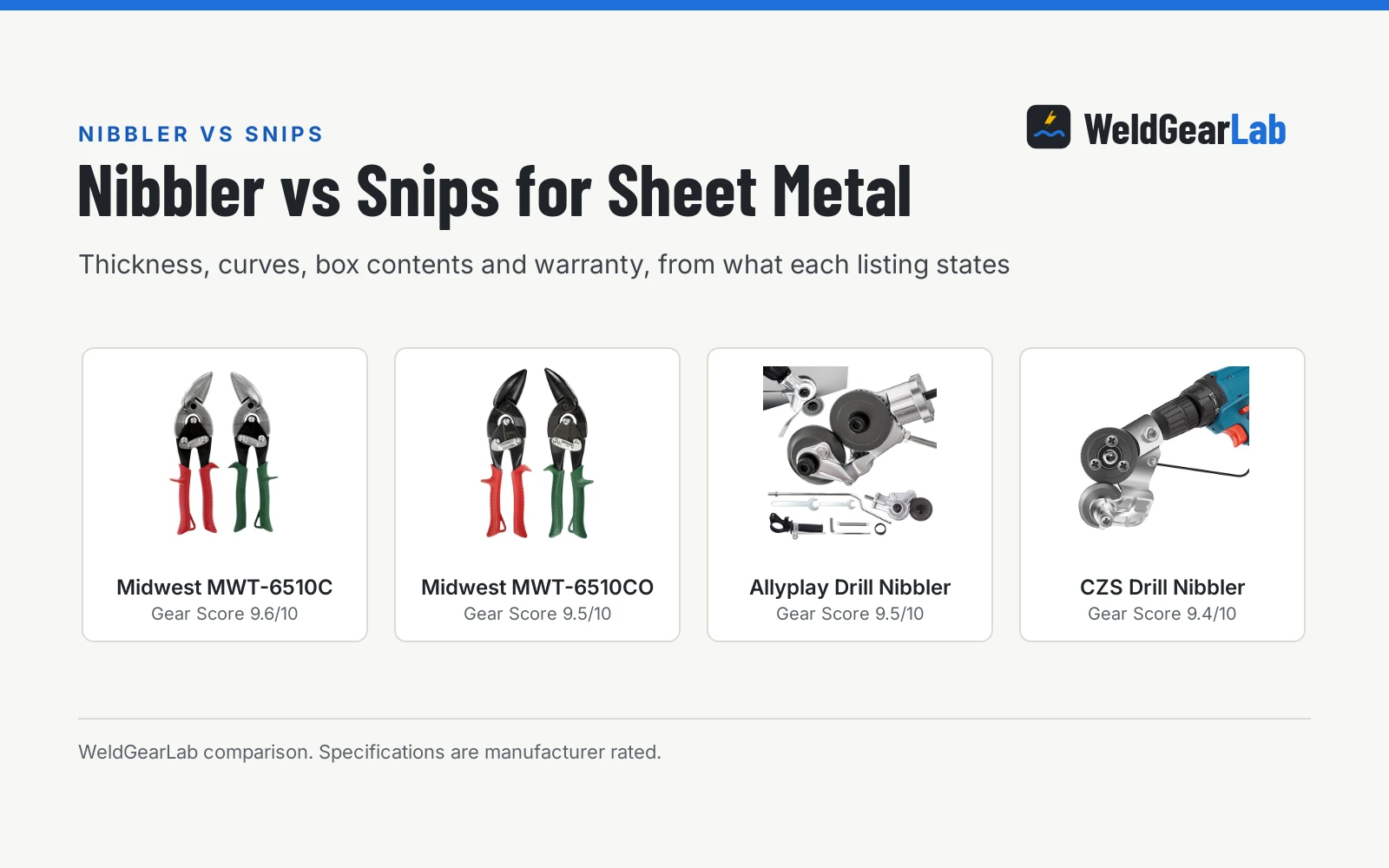
For a closer look at the models in this guide, see our best sheet metal nibbler roundup and the nibbler vs snips for sheet metal comparison, which sets out when each tool earns its place.
FAQ for welders
What sheet thickness can a manual sheet metal nibbler cut?
It depends on the model. The listings in this guide state 28 GA (0.4 mm) galvanized sheet and cold-rolled steel for the MufaKnp roller cutter, 23 GA (0.7 mm) galvanized sheet with the sheet secured first, 0.8 mm for the GOLD DEER hand nibbler, and 1.2 mm sheet steel for the Knipex nibbler. Check the rated thickness of the model you buy against the sheet you cut most.
Can a manual sheet metal nibbler cut curves?
Yes. The punch style cuts curves and small cutouts, and the roller style follows a marked line around gentle curves. Mark the line first, work at a steady pace, and on a punch style tool, keep the waste strip clear so the head does not jam.
Does a manual nibbler leave burrs?
Two makers in this guide state burr-free edges: the MufaKnp cutter cuts long straight edges without burrs, and the GOLD DEER nibbler leaves clean and burr-free cutting edges. File the edge if the work will be handled or painted.
What is the difference between a nibbler and tin snips?
A punch style nibbler punches a narrow strip out of the sheet, so the sheet stays flat and the tool can start a cut in the middle of a panel from a drilled starter hole, or follow a curve. Tin snips shear along a line, which suits straight trims but can curl thin sheet and cannot turn as tight. Our nibbler vs snips for sheet metal guide compares them in more detail.
Do I need power for a manual sheet metal nibbler?
No. A manual sheet metal nibbler runs on hand power alone, with no cord, battery, or air supply. It works on a roof, in a yard, or in a garage with no outlet nearby. For long runs, a powered nibbler saves effort, and our best electric metal nibbler guide covers those models.
Related: best tin snips for sheet metal, best sheet metal shears, sheet metal shears vs tin snips, best sheet metal gauge thickness tool, and the metal fab tools hub.