Best Aluminum MIG Wire for Beginners: 5 Spools Compared
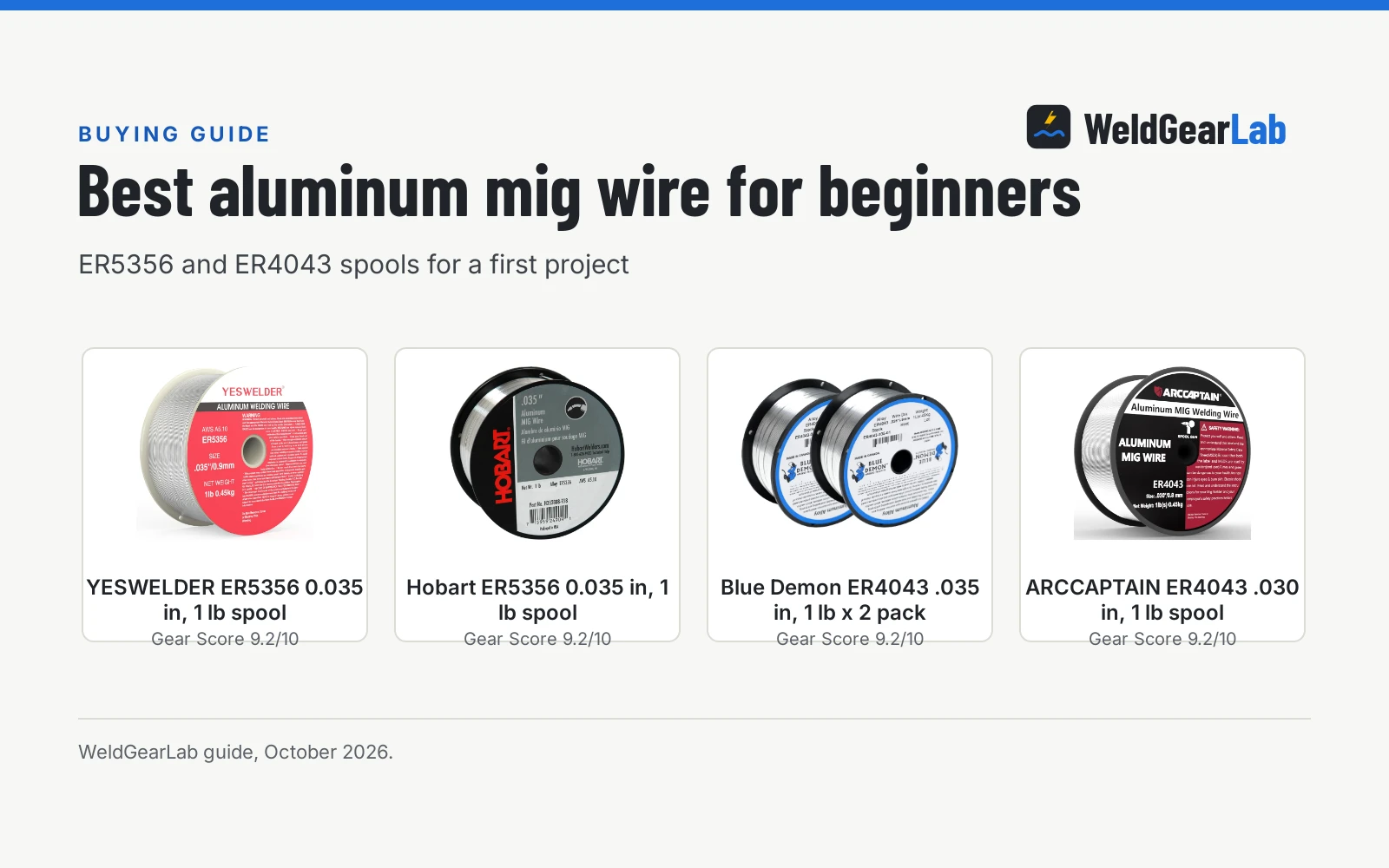
Five 1 lb spools of ER5356 and ER4043 aluminum MIG wire compared by alloy, diameter and base-metal match, for a first aluminum project.

TIG welders for clean, precise welds on steel, stainless and, with AC output, aluminum. We compare AC and DC capability, amperage range, pedal and torch options, and input power.
Five 1 lb spools of ER5356 and ER4043 aluminum MIG wire compared by alloy, diameter and base-metal match, for a first aluminum project.
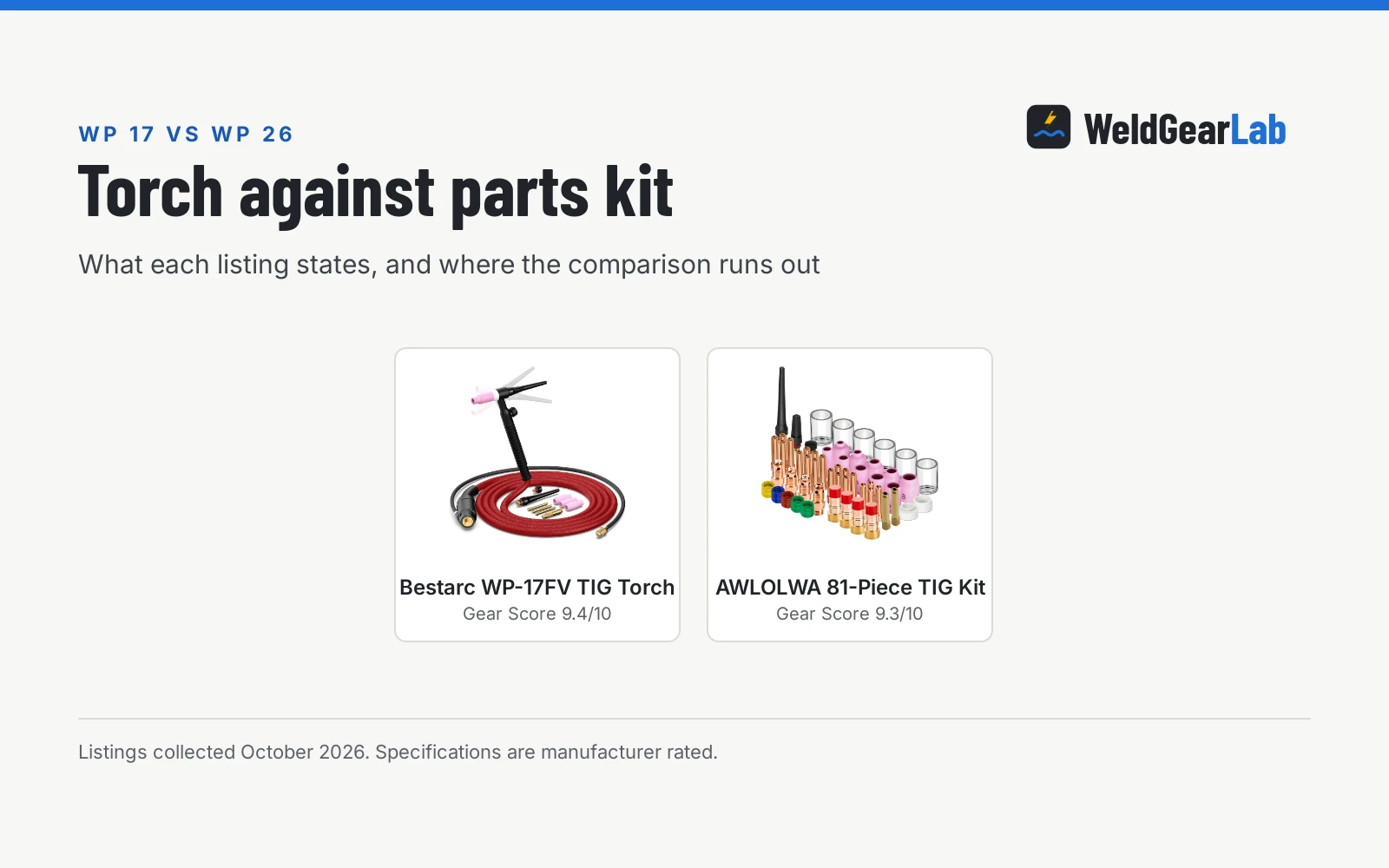
WP 17 vs WP 26 TIG torch: a 150A WP-17 torch against an 81-piece WP-17/18/26 accessories kit, compared on what each listing actually states.
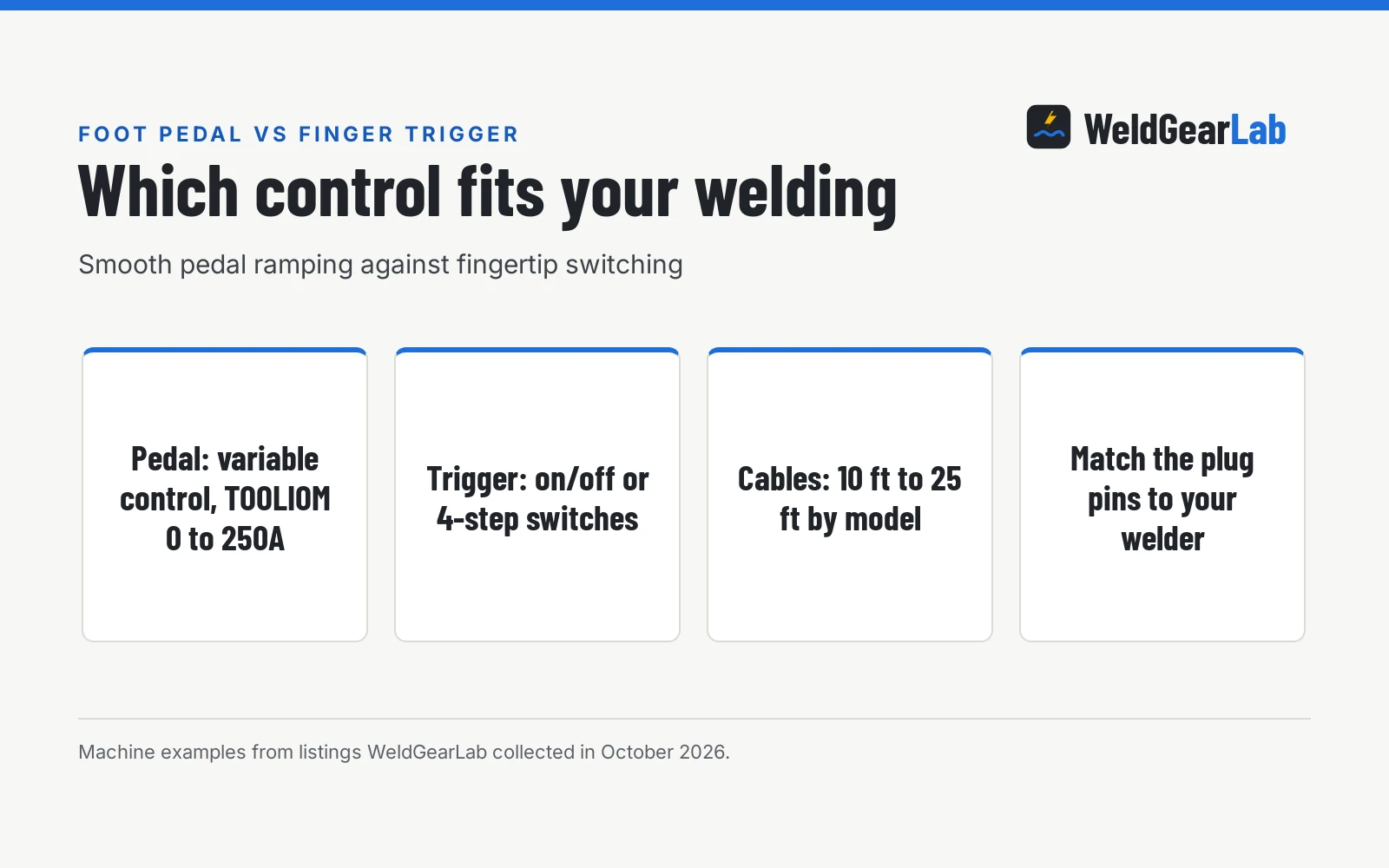
Foot pedal vs finger trigger TIG torch: how smooth pedal control compares with fingertip switches, with real cable lengths, plugs and amperage ranges from…
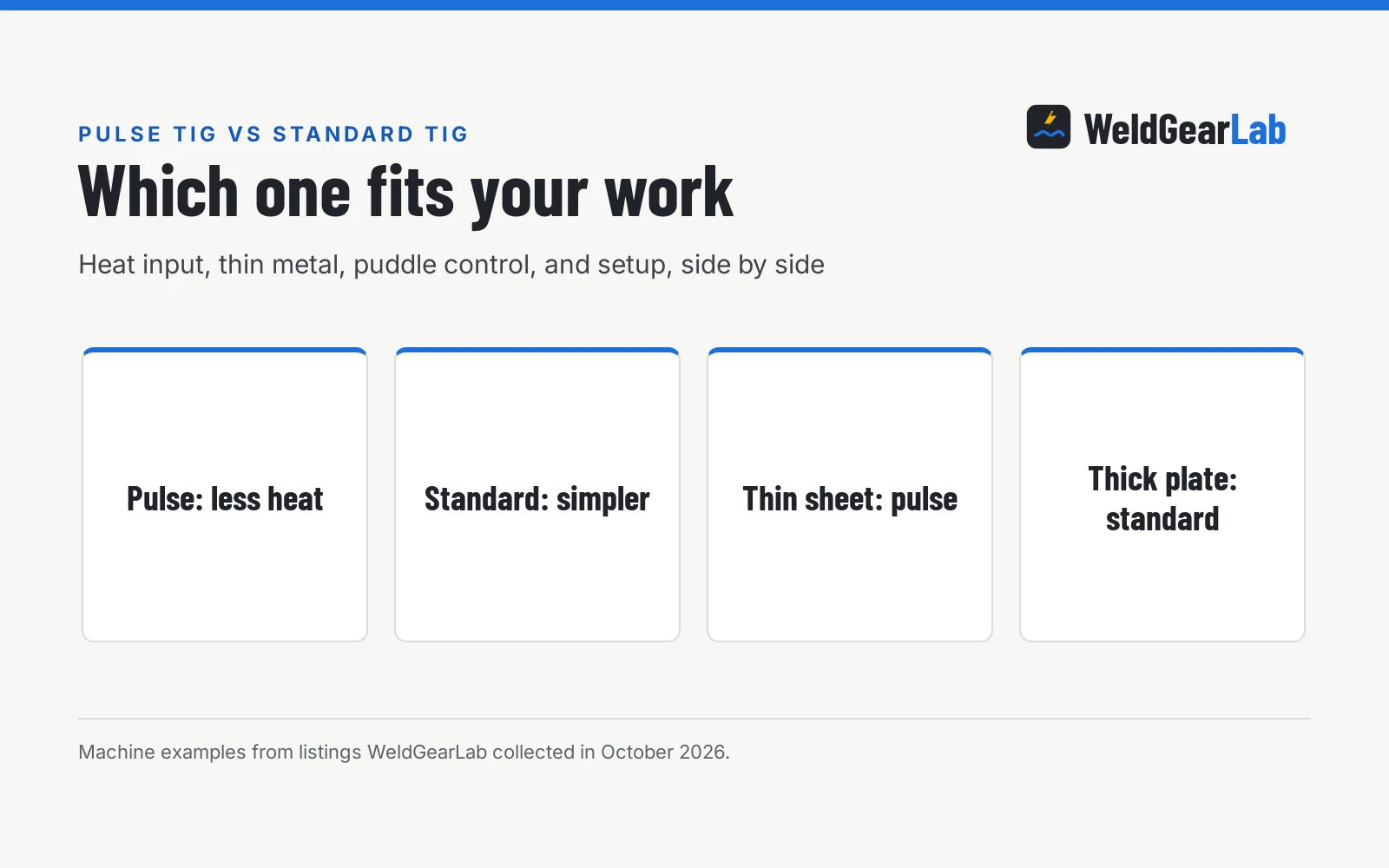
Pulse TIG and standard TIG differ in heat control, arc stability on thin metal, and operator setup for shop fabrication.
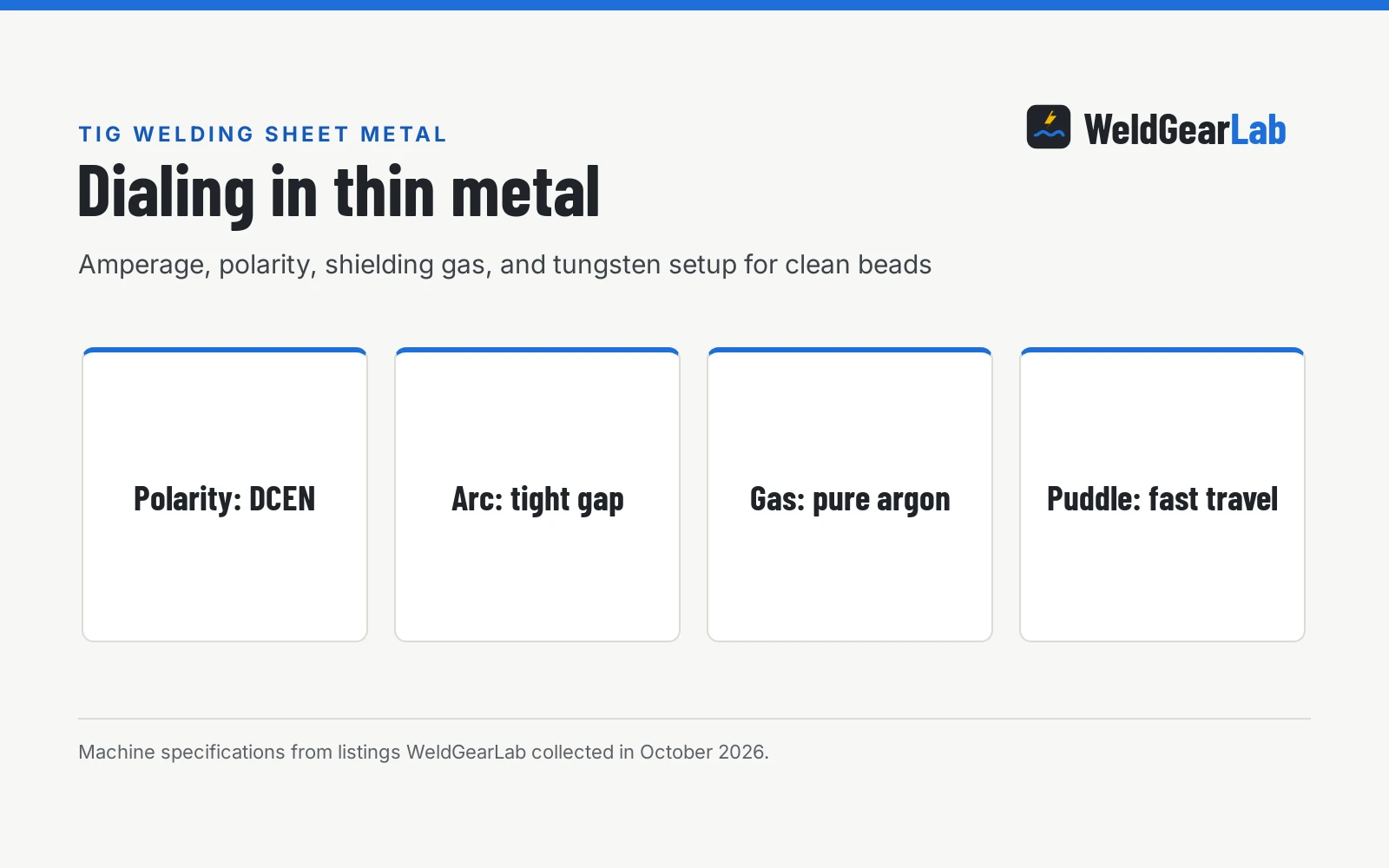
How to dial in TIG welding settings for sheet metal to control heat input, prevent burn-through, and maintain clean arc stability on thin stock.
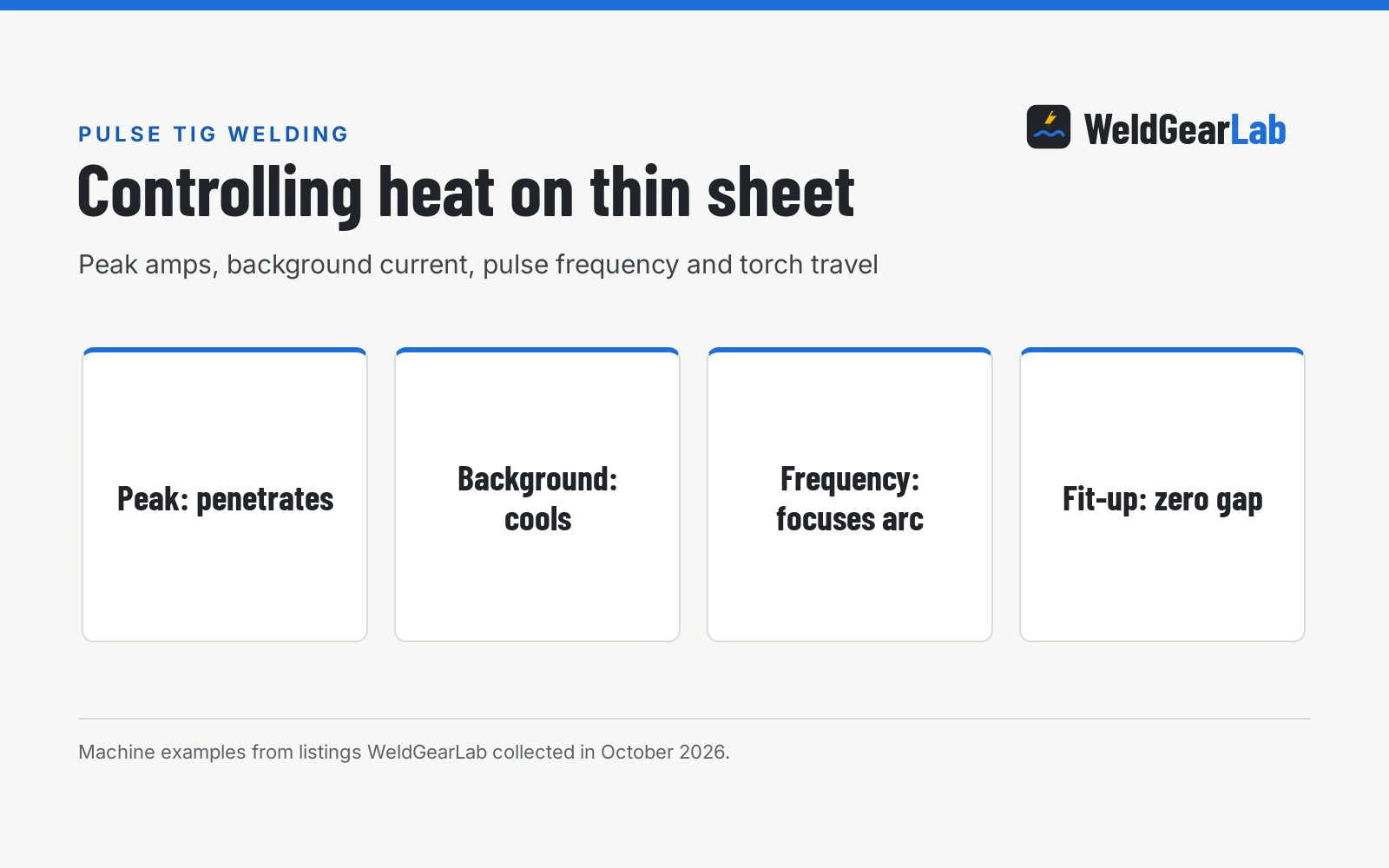
Pulse TIG welding cuts heat input on thin sheet metal to stop burn-through and distortion by alternating between peak and background amperage.
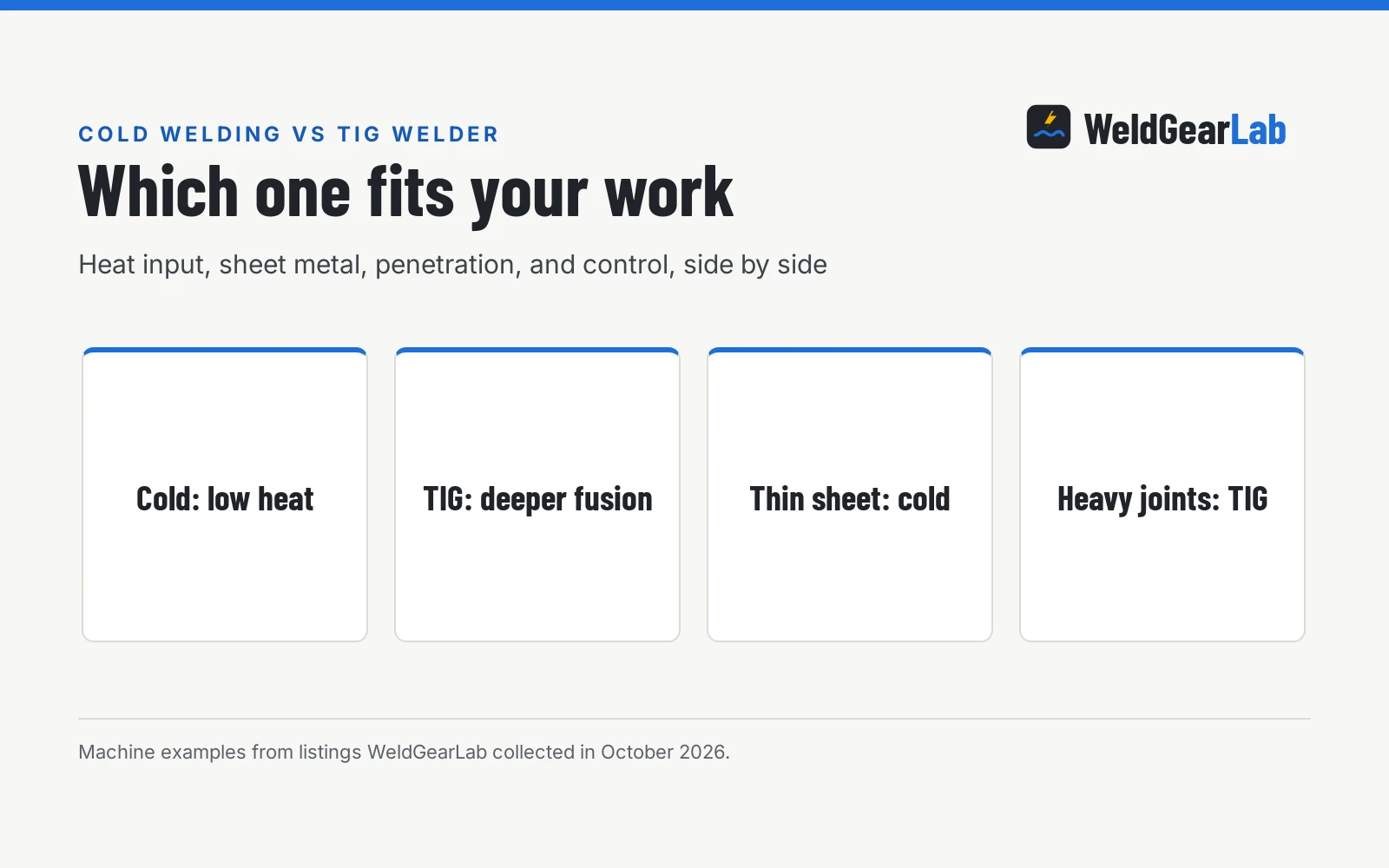
Cold welding machines use rapid millisecond pulses to minimize heat and distortion on thin metal, while standard TIG welders provide continuous arc control for…
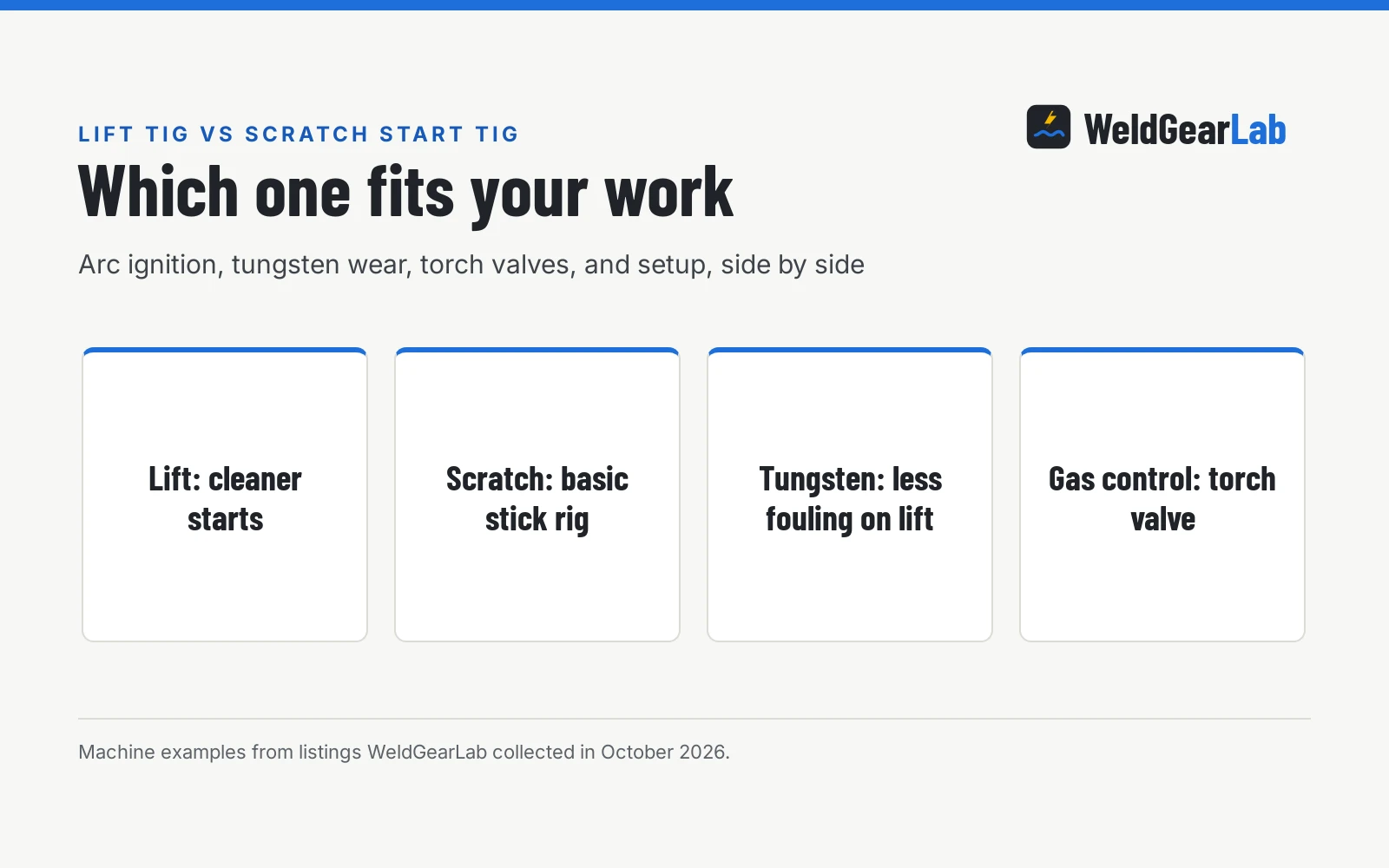
Lift TIG and scratch start TIG ignite the arc differently on basic DC machines, affecting tungsten wear, weld cleanliness, and torch setup.
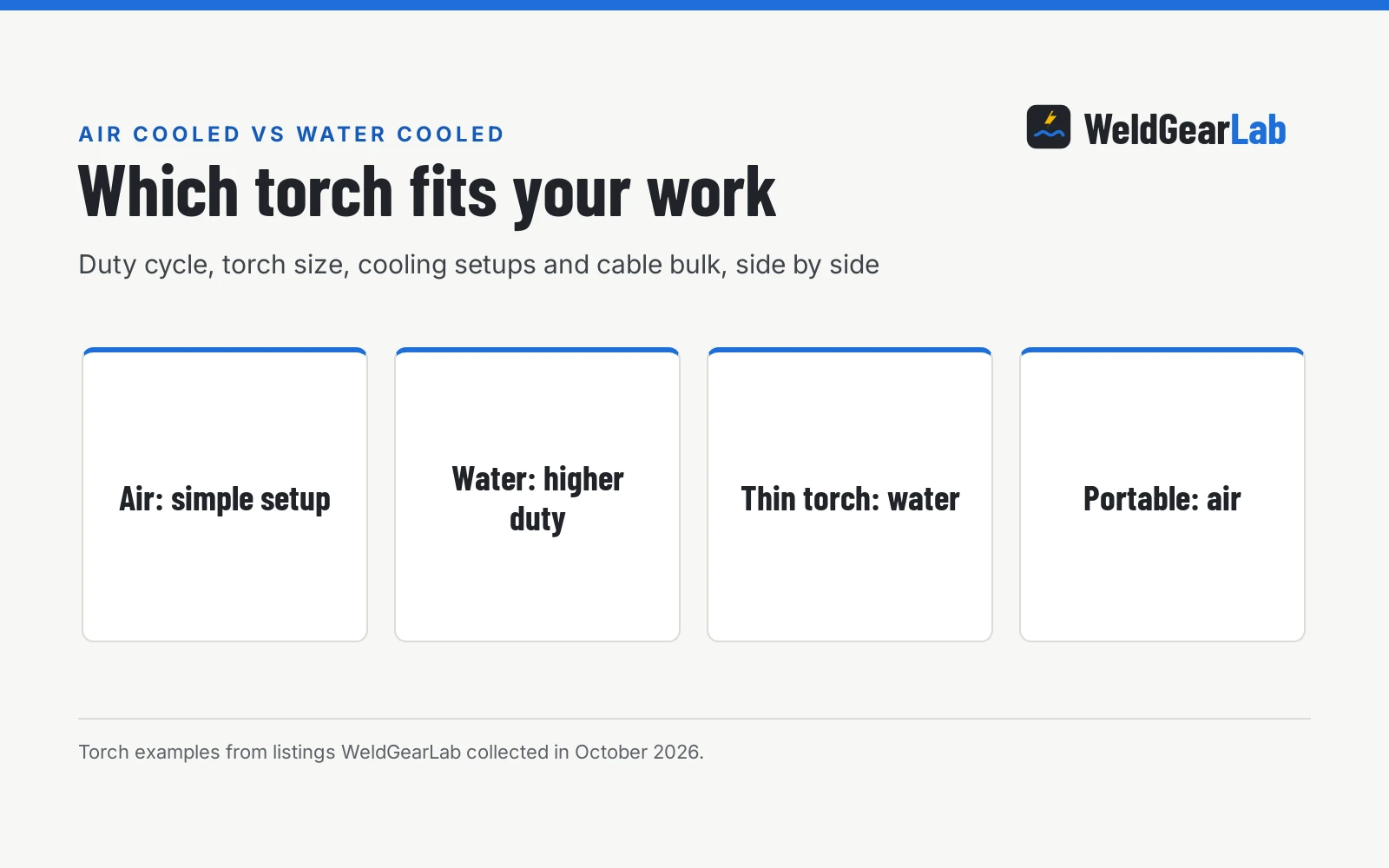
Air cooled and water cooled TIG torches handle heat differently, shaping torch size, duty cycle, cable weight and cooler requirements for your welding setup.
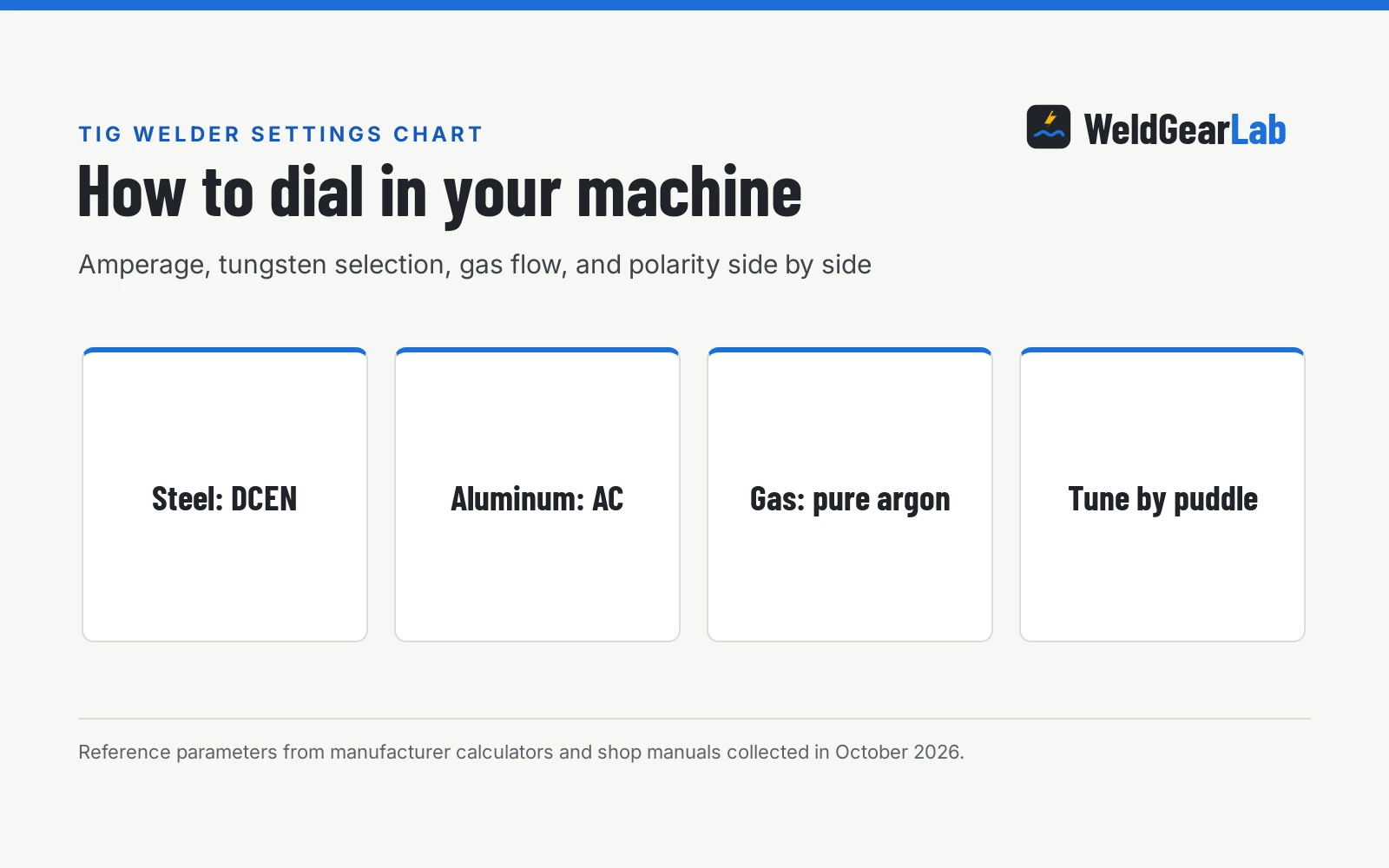
A TIG welder settings chart maps amperage, tungsten selection, shielding gas flow, and cup size to your metal type and joint thickness so you…