Types of Welding Gloves Explained
TIG, MIG and stick gloves differ in leather, cuff and lining, and this guide shows how each style fits its process and how to pick a pair for the work ahead.

On this page
Top picks at a glance
As an Amazon Associate I earn from qualifying purchases.
- 1
 Hobart Premium Goatskin MIG Welding Gloves9.7/10View on Amazon
- 2
 Leather Welding & Gardening Gloves for Women- Pink9.7/10View on Amazon
- 3
 ARCCAPTAIN Tig Welding Gloves: Premium Goatskin Grain Leather9.7/10View on Amazon
The torch is lit, the joint is fit up, and the only thing between your hands and the heat is the leather on them. Types of welding gloves differ by process, leather, cuff and lining, and the wrong match leaves you fighting the glove instead of running the bead. This guide walks through the main styles, what each style is made for, and how to pick a pair that fits the work in front of you.
This guide links to our product roundups, where WeldGearLab gets a commission on purchases made through links on this page, and your price stays the same. Read our affiliate disclosure.
The main types of welding gloves
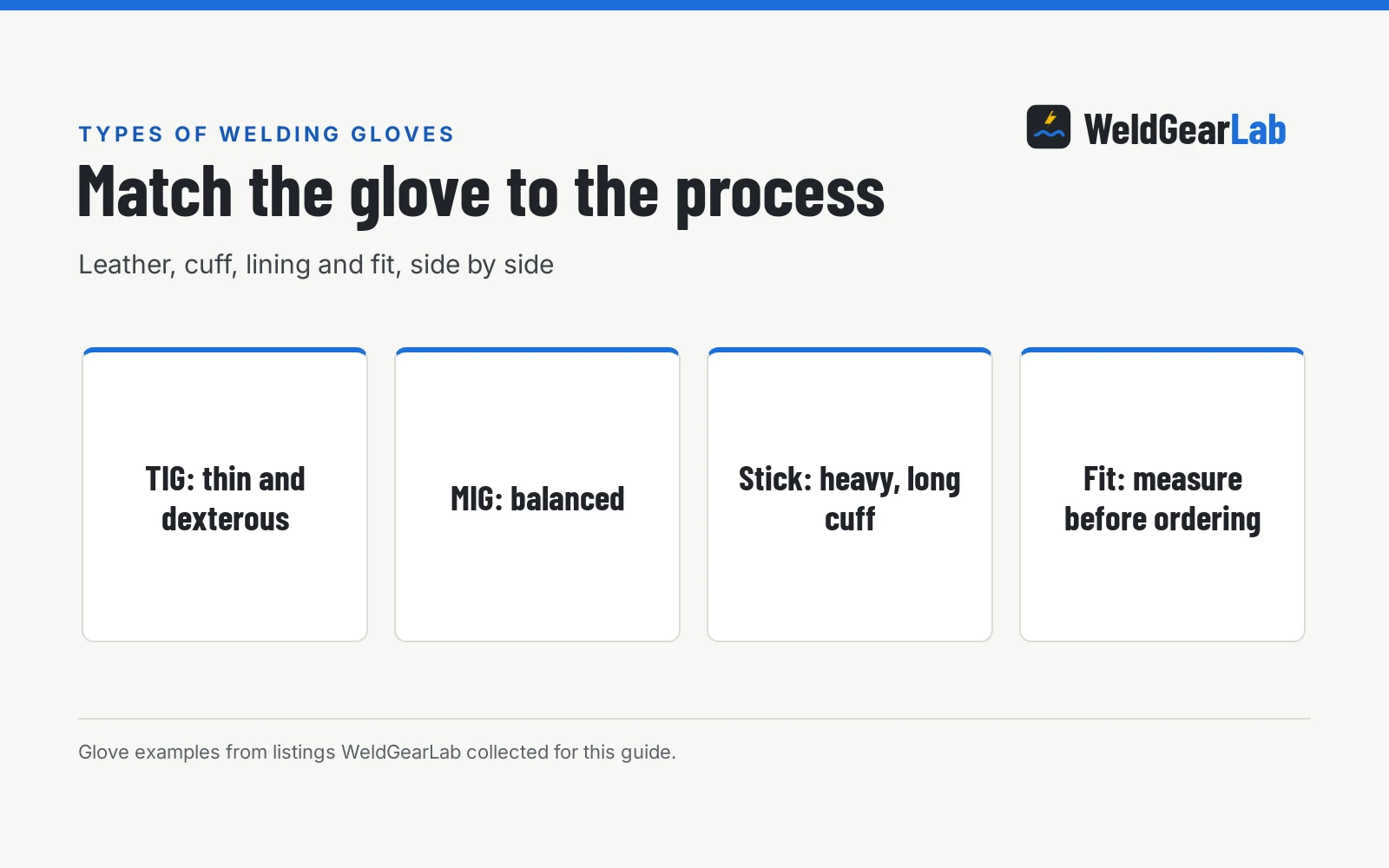
Welding gloves fall into a few broad styles, and the process names them: TIG, MIG and stick gloves, plus general work gloves that also list welding among their uses. TIG work needs thin leather and a close fit so you can feed filler rod. MIG work sits in the middle, with enough leather to take spatter and enough feel to run a gun. Stick work needs the heaviest leather and the longest cuff, since the arc runs hot and overhead work drops spatter onto the wrist.
Side by side
| TIG gloves | MIG gloves | Stick gloves | General work gloves | |
|---|---|---|---|---|
| Leather | Split cowhide or goatskin | Split cowhide or cowhide | Heavy split cowhide | Genuine cowhide |
| Dexterity | High, for feeding filler rod | Moderate, for torch and gun work | Lower, built for heat | Moderate, for tools and handling |
| Cuff | Short cuff | Adjustable wrist | Long gauntlet cuff | Short cuff or elastic wrist |
| Lining | Often unlined | Lined or unlined | Lined for heat | Soft lining |
| Heat and spatter | Light spatter, lower heat | Moderate spatter | Heavy spatter and heat | General heat and abrasion |
| Typical use | TIG on thin metal | MIG and general shop welding | Stick and overhead work | Farm, yard and general work |
The table shows the trade at a glance: thinner leather buys dexterity and costs heat protection, while heavier leather buys protection and costs feel. Match the glove to the process you run most, and keep another pair on the shelf for the rest.
TIG welding gloves
TIG gloves run thin, made to let you feel the filler rod and the torch cup through the leather. The cuff runs short, since TIG throws little spatter and the arc stays close to the joint. A close fit keeps the glove from bunching when you roll the rod between your fingers.
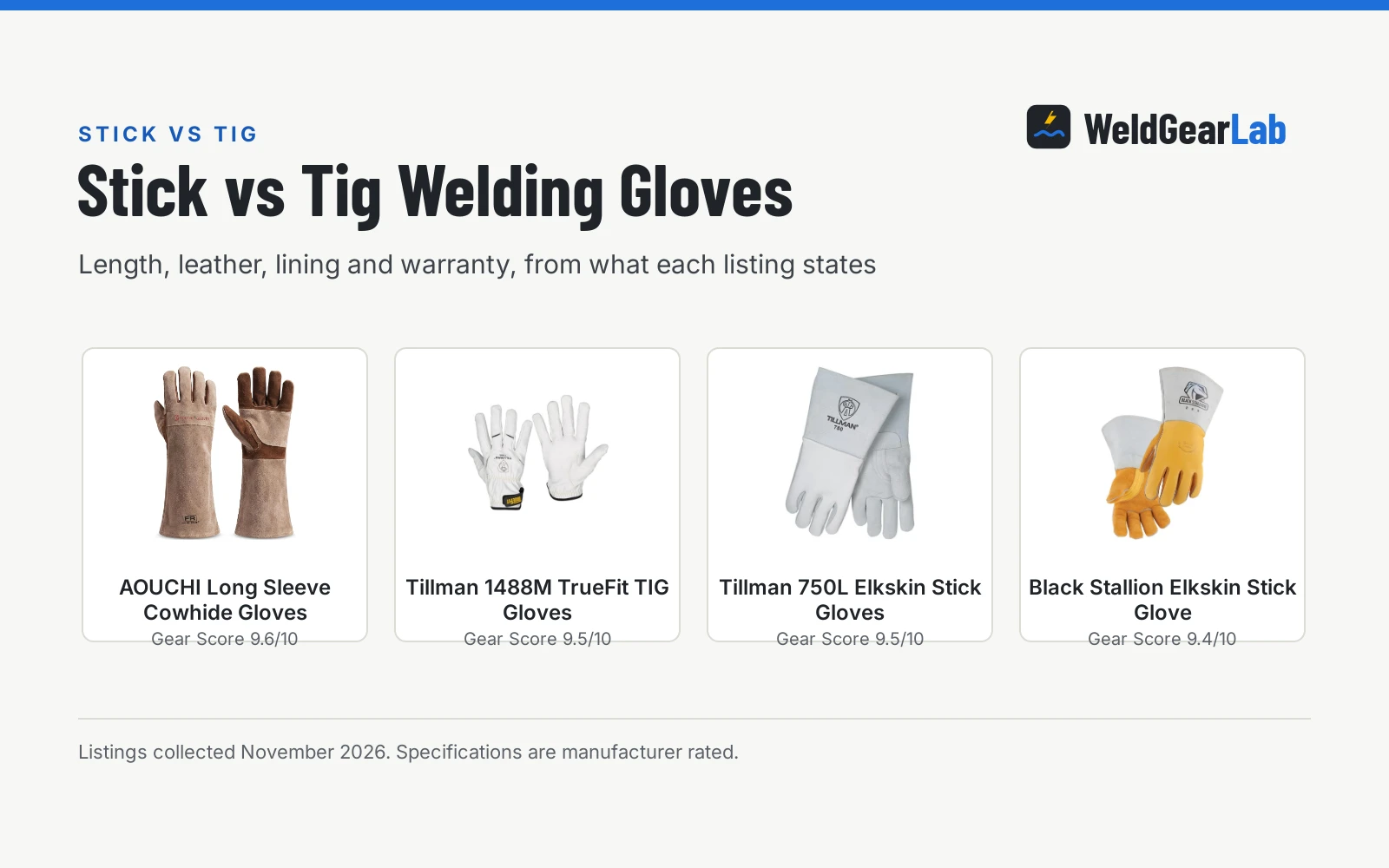
The SAFEGEAR listing names TIG welding among its uses and lists a wing thumb with a seamless forefinger, which keeps the forefinger free of a seam. It also lists EN 388 3131 certification and a 4-inch tan split cowhide safety cuff, which covers the wrist while the hand stays free to feed rod. See the stick vs TIG welding gloves guide to compare the styles side by side.
MIG welding gloves
MIG gloves balance protection and feel. MIG throws more spatter than TIG, so the glove needs leather that takes spatter without giving up the feel to run a gun, and a cuff that covers the wrist when the gun points up or overhead. Strong stitching matters, since spatter and heat wear out weak seams first.
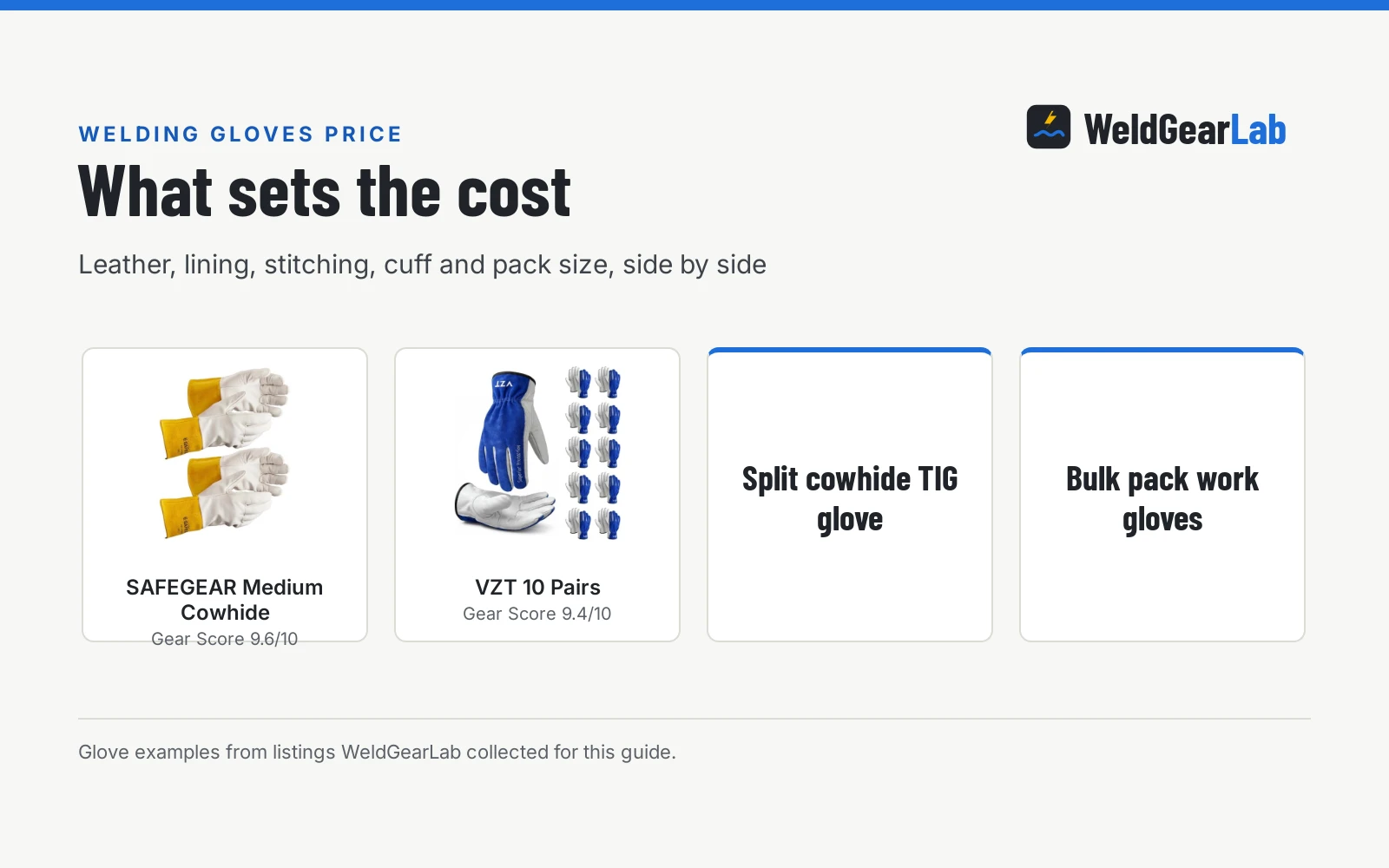
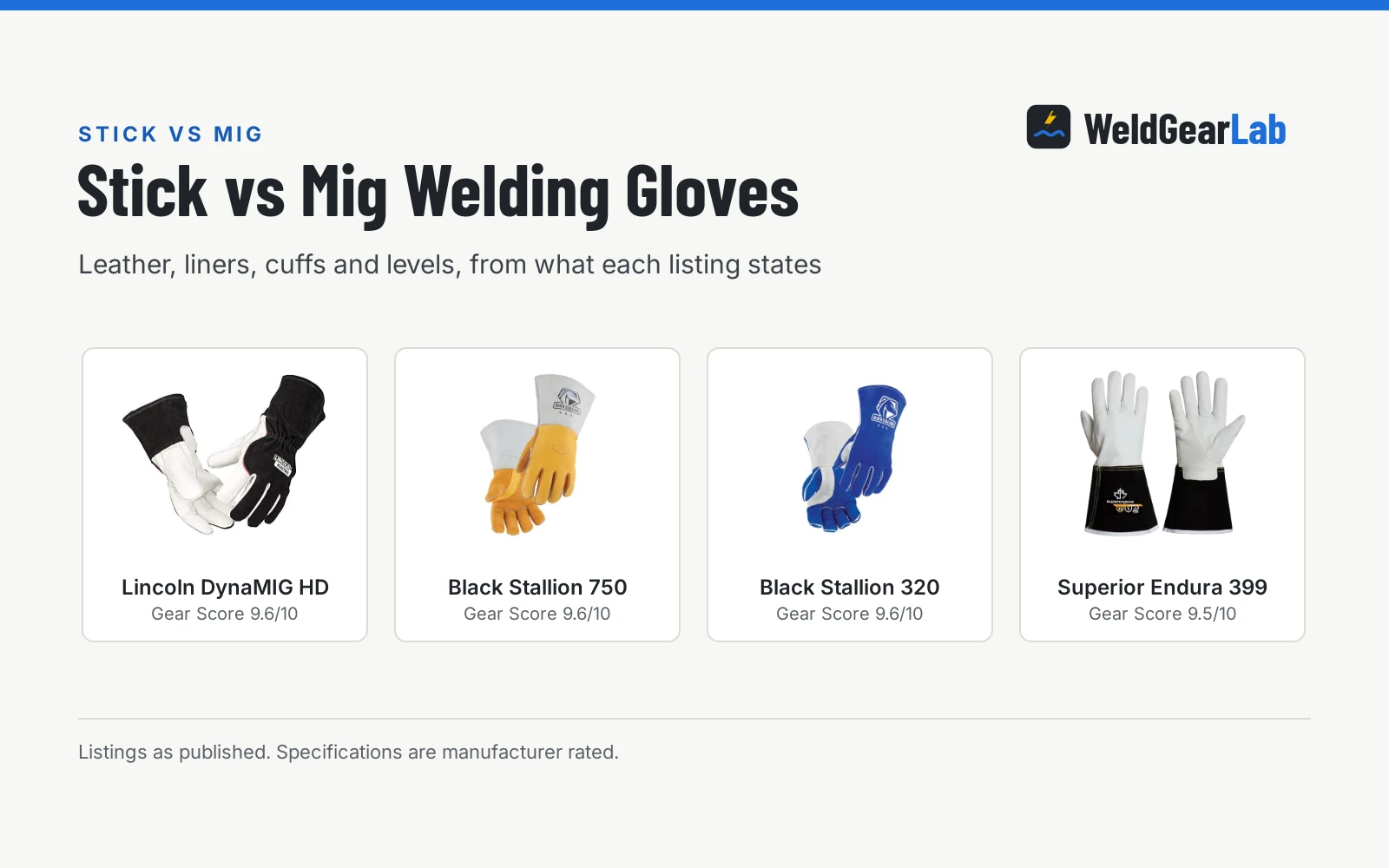
The WZQH listing names MIG among its uses, uses split cowhide leather with a soft lining, and comes in 6 sizes, from XSmall to 2XLarge. The VZT listing adds double stitching and an elastic wrist, and comes as a pack of 10 pairs, which suits a crew that burns through gloves. See the best welding gloves for MIG roundup for pairs scored for this process.
Stick welding gloves
Stick gloves are the heavyweights of the group: thick split cowhide, a long gauntlet cuff, and a lining that stands between your hand and the heat of a long bead. Spatter falls from above on overhead work, so the cuff matters as much as the palm, and a loose cuff lets sparks in at the wrist. Thick leather dulls the feel of the rod holder, but for stick work heat matters more. If your days mix stick with MIG, keep the stick pair for the hot work and a lighter pair for the rest.
Leather types
Split cowhide is the common leather in this group: tough, heat resistant, and easy to replace when it wears through. The SAFEGEAR and WZQH listings both use split cowhide, and the VZT listing uses genuine cowhide in a bulk pack. Goatskin runs thinner and softer, which suits TIG work, while pigskin and sheepskin show up in lighter gloves made for dexterity. The full grain vs split leather welding gloves guide, the goatskin vs sheepskin welding gloves guide and the lined vs unlined welding gloves guide compare these choices in detail.
Cuffs, linings and fit
The cuff is the part buyers skip, and it is the part that keeps spatter off the wrist. A gauntlet cuff runs up the forearm for stick and overhead work, a short cuff suits TIG and bench work, and an elastic wrist keeps a short glove snug without a strap. The VZT listing uses an elastic wrist, while the SAFEGEAR listing uses a 4-inch safety cuff.
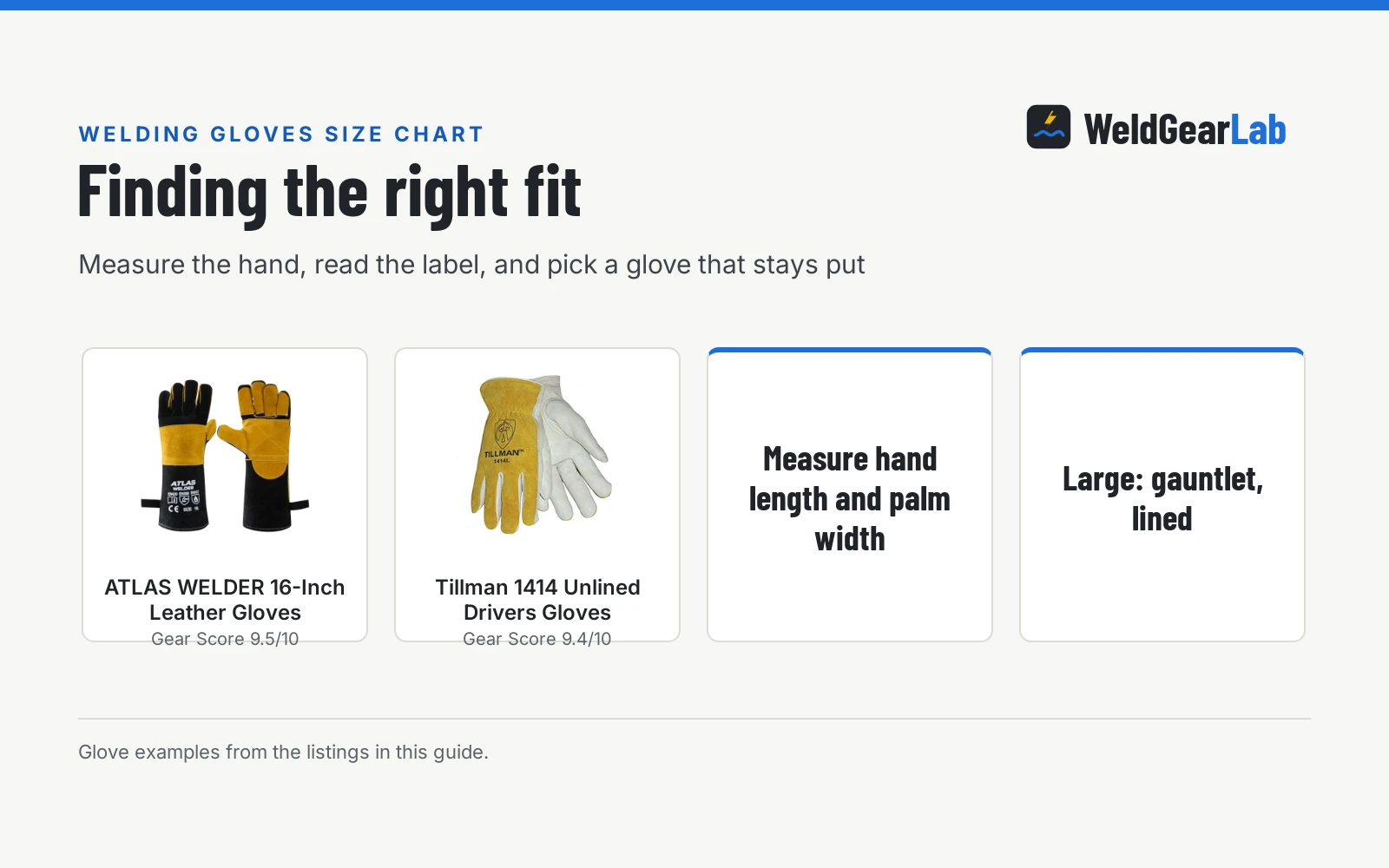
Fit matters more than brand. A glove that bunches at the palm fights the torch, and a glove that pinches at the knuckles tires the hand by lunch. The WZQH listing comes in 6 sizes, from XSmall to 2XLarge, and the SAFEGEAR listing comes in Medium as a pack of 2 pairs. Measure your hand against the welding gloves size chart before ordering, and see the gauntlet vs short welding gloves guide for overhead work.
How to choose
Start with the process you run most, then match the leather and cuff to it. TIG calls for thin leather and a short cuff, MIG calls for split cowhide and a snug wrist, and stick calls for heavy leather and a gauntlet. Check the lining if you weld long days, check the stitching if spatter eats your gloves, and check the cuff length if you weld overhead. Beginners who are still finding their process can start with a general MIG style glove and add a TIG pair later; the best welding gloves for beginners roundup covers pairs that suit a new shop. Replace them when the leather thins or the stitching opens.
FAQ for welders
Can a pair of gloves cover TIG, MIG and stick?
A general MIG style glove covers light work across the processes, but it is a compromise: it gives up the close feel TIG work wants and runs short on heat for long stick beads. Keep a heavy pair for stick work and a lighter pair for TIG.
What leather suits welding gloves?
Split cowhide is the common choice for MIG and stick work, since it stands up to heat and spatter and stays easy to replace. Goatskin suits TIG work, where thin leather and feel matter more than bulk. Genuine cowhide in bulk packs suits crews and general work, where gloves wear out from handling as much as from heat.
Do welding gloves need a lining?
A lining adds warmth and comfort, and it keeps the inside of the glove from sticking to a sweaty hand. Unlined gloves run cooler and break in faster, which suits summer shop work and short jobs. The WZQH and VZT listings both use a soft lining. TIG gloves often run unlined for feel.
How should welding gloves fit?
Snug at the fingers with room to close the hand, and no bunching at the palm when you grip the torch. A glove that is too tight tires the hand, while a loose glove catches on the work and dulls the feel of the rod. Measure your hand and check the size chart before ordering, since sizes run small or large by maker.
How do you keep leather welding gloves in good shape?
Let them dry away from direct heat after work, and brush off slag and dust before it grinds into the leather. Do not soak them, and keep them out of the rain when the job moves outside. See the how to clean leather work gloves guide. Replace a pair when the palm thins, the stitching opens, or the cuff no longer covers the wrist.
Related: stick vs TIG welding gloves, stick vs MIG welding gloves, best welding gloves for MIG, and the welding safety gear hub. Also see the best goatskin welding gloves roundup.