Shop Press vs Arbor Press: Which One Should You Buy?
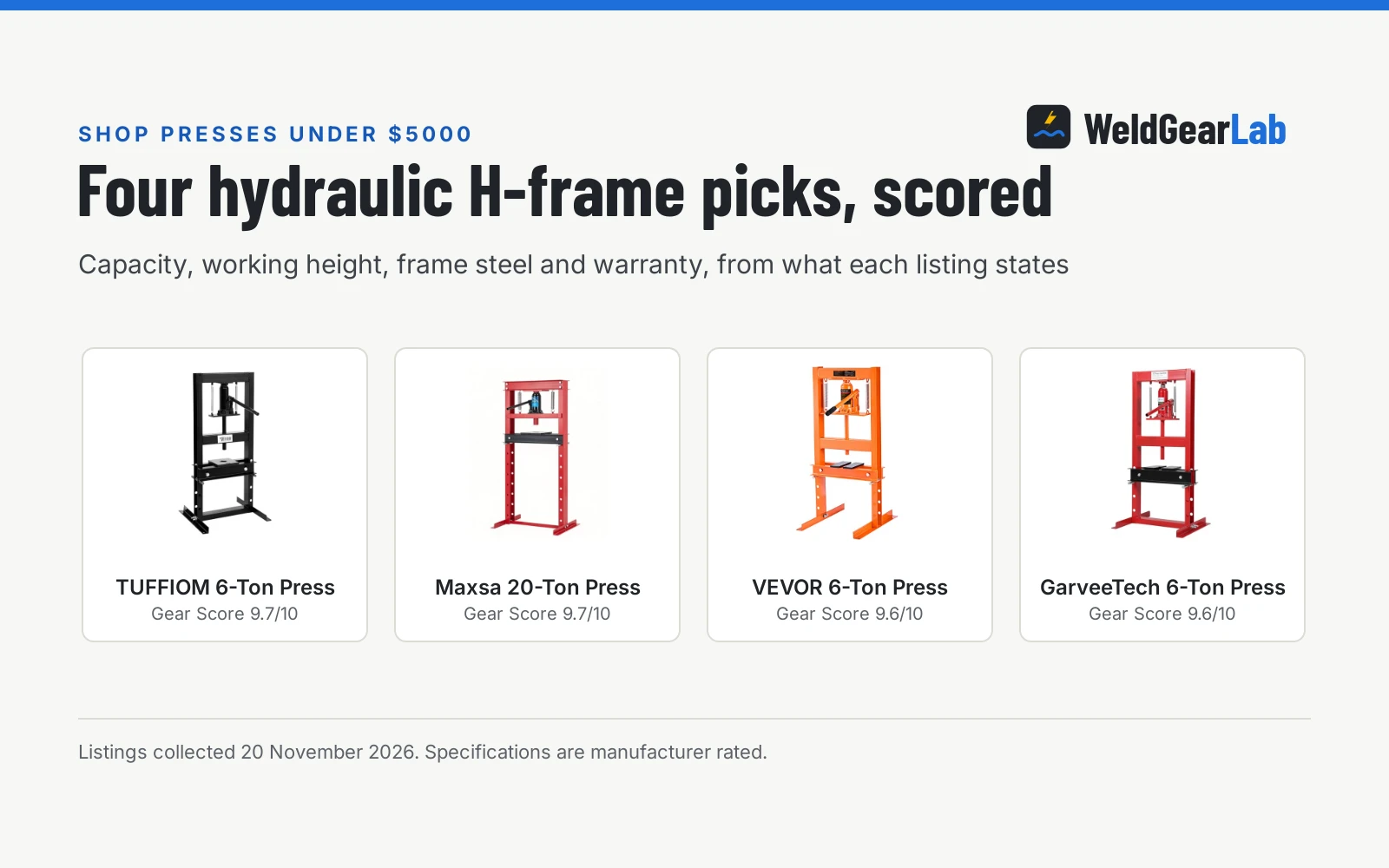
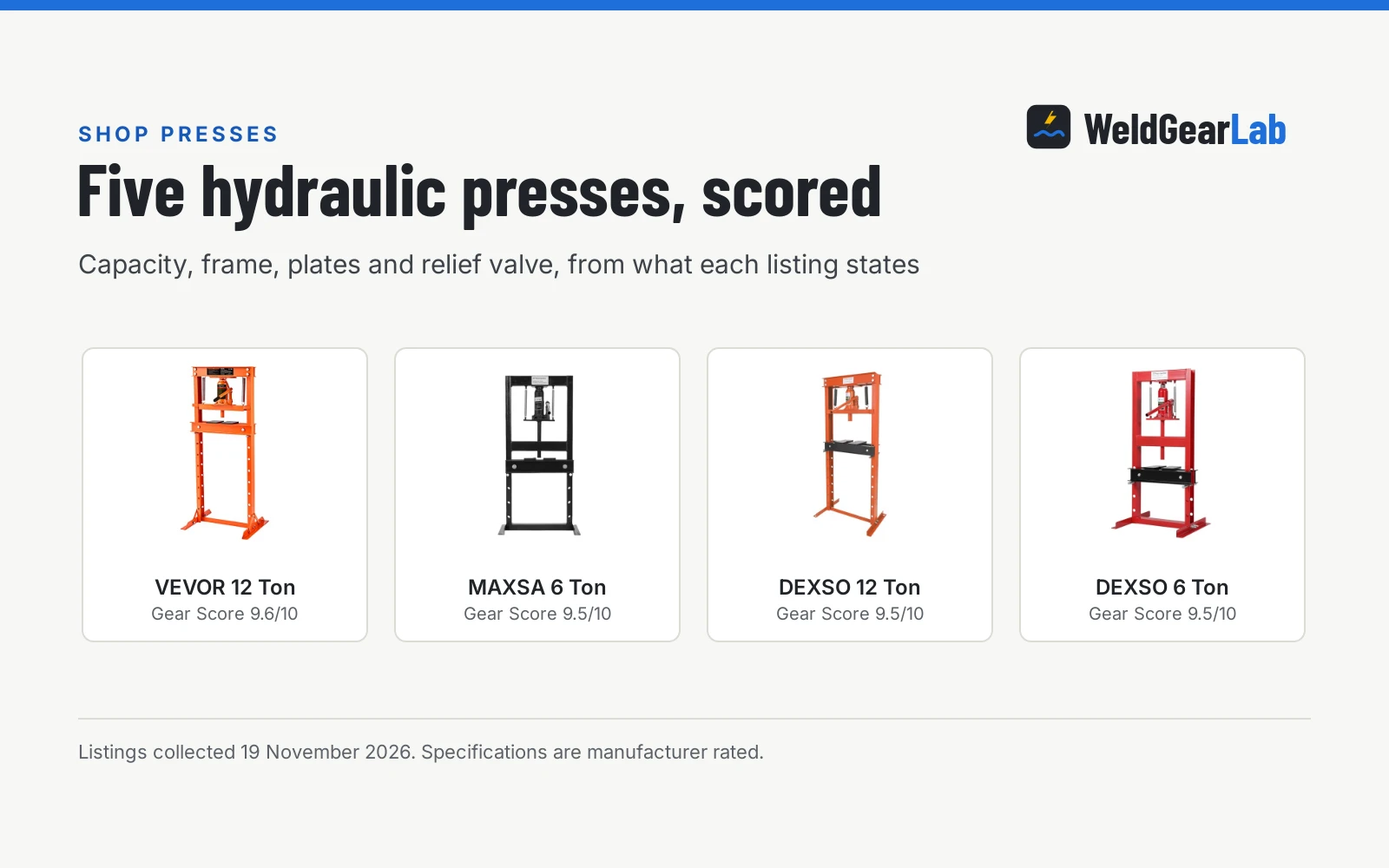
Four hydraulic shop presses rated at 6, 12 and 20 tons are compared on force, frame, table height and relief valves, with a plain note that no arbor press is listed in this guide.

On this page
Top picks at a glance
As an Amazon Associate I earn from qualifying purchases.
- 1
 12" Press Brake Attachment/Press Brake Attachment For9.5/10View on Amazon
- 2
 VEVOR Arbor Press9.6/10View on Amazon
- 3
 VEVOR Arbor Press9.6/10View on Amazon
- 4
 VEVOR Hydraulic Shop PressView on Amazon
- 5
 MAXSA 20 Ton H-Frame Hydraulic Shop PressView on Amazon
- 6
 IDEALHOUSE 20 Ton Hydraulic Shop PressView on Amazon
- 7
 MAXSA 6 Ton Hydraulic Shop PressView on Amazon
- 8
 20T Hydraulic PressView on Amazon
- 9
 DEXSO 12 Ton H-Frame Hydraulic Shop PressView on Amazon
A bearing that refuses to move, a bushing that needs pressing home, a bracket that needs straightening: that is the work waiting on the bench. Shop press vs arbor press is the choice behind it, and this guide answers it directly. The presses in this guide are all hydraulic shop presses, and no arbor press is among them, so the comparison weighs the shop presses on their stated force and build and explains where the other tool fits.
Other welders and gear to compare
 VEVOR Hydraulic Shop PressCheck price on Amazon
 MAXSA 20 Ton H-Frame Hydraulic Shop PressCheck price on Amazon
 IDEALHOUSE 20 Ton Hydraulic Shop PressCheck price on Amazon
 MAXSA 6 Ton Hydraulic Shop PressCheck price on Amazon
 20T Hydraulic PressCheck price on Amazon
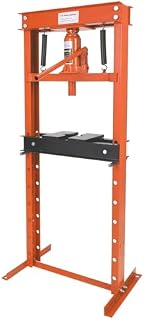 DEXSO 12 Ton H-Frame Hydraulic Shop PressCheck price on Amazon
This guide links to our product roundups, where WeldGearLab gets a commission on purchases made through links on this page, and your price stays the same. Read our affiliate disclosure.
The difference in one paragraph
A hydraulic shop press drives a ram with a jack, and the presses in this guide are built that way: a steel H-frame, a floor-standing stance, a work table that moves to fit the job, and a relief valve that opens when pressure passes the stated tonnage. The other side of the comparison is the arbor press, and no such press is part of this guide, so no arbor press force, size or finish is stated here to set against the shop press figures.
Side by side
| Feature | Hydraulic shop press | Arbor press | Notes |
|---|---|---|---|
| Power source | Hydraulic jack | Not stated | Each press in this guide uses a hydraulic jack |
| Pressing force | 6 ton, 12 ton and 20 ton | Not stated | 44,000 lbs stated for the IDEALHOUSE 20 ton model |
| Frame | H-frame steel, floor standing | Not stated | Each press in this guide uses an H-frame |
| Work table | Adjustable height | Not stated | 1.6 to 27.8 inches on the VEVOR 12 ton and IDEALHOUSE 20 ton models |
| Relief valve | Built-in relief valve | Not stated | Valve stated on each model |
| Press plates | Two plates included | Not stated | Plates stated on each model |
| Typical jobs | Bearings, bushings, ball joints, bending, straightening | Not stated | Jobs stated across the models in this guide |
Force is the headline figure, and the range in this guide runs from 6 ton to 20 ton. Table height, plates and relief valves are the details that decide whether a given press fits the work on the bench.
When a shop press is the better choice
- Seized bearings and bushings. Each press in this guide states bearing and bushing work, with ball joints, U-joints, gears and pulleys stated across the range.
- Bending and straightening. Three of the presses in this guide state bending and straightening, so bent brackets and press-fit work sit inside their stated use.
- Heavy force in a small shop. The 20 ton models state 20 ton force for heavy automotive and metalworking jobs, and the IDEALHOUSE model states 44,000 lbs of pressing force.
- Adjustable working height. The VEVOR 12 ton model states a working height range of 1.6 to 27.8 inches, and the IDEALHOUSE 20 ton model states the same range.
See the press brake vs sheet metal brake guide for a related comparison, and the drill press vs hand drill guide for another shop tool choice.
When an arbor press is the better choice
No arbor press is listed in this guide, so no arbor press pick is named here. A reader looking for an arbor press will find no matching model among the presses in this guide, and the choice below rests on the shop press side alone. Force, frame and table details are stated for shop presses only, so this guide gives no arbor press figure to weigh.
How to tell what a press offers
The presses in this guide differ on force, table height and weight. These are the figures to weigh:
- Stated tonnage. The range in this guide is 6 ton, 12 ton and 20 ton, with the relief valve on each press stated to open when pressure passes the stated tonnage.
- Table height. The VEVOR 12 ton model and the IDEALHOUSE 20 ton model state a working height range of 1.6 to 27.8 inches, adjusted by a pin system. The MAXSA 20 ton model states a 7-hole adjustable table, and the MAXSA 6 ton model states a 4-level adjustable table.
- Press plates. Each press in this guide states two press plates for holding small parts, with the MAXSA 20 ton model adding a movable press plate.
- Weight and build. The VEVOR 12 ton model is stated at 86.0 pounds, the MAXSA 6 ton model at 52.91 pounds, and each 20 ton model at 108.03 pounds, all with a powder-coated steel H-frame.
For related shop tool choices, see the bench vise vs drill press vise guide and the steel workbench vs welding table guide.
Shop press vs arbor press: which tonnage fits the job
Every press in this guide states bearings, bushings and ball joints among its jobs, so the stated job list does not split by tonnage. The VEVOR 12 ton model states bushings, bearings, ball joints, U-joints, pulleys and gears, plus bending, straightening and stamping. The IDEALHOUSE 20 ton model states the same core jobs plus frame straightening and press-fit work. The choice, then, is about the stated force and the stated table height, not about a different job list.
Can one press cover each side?
The presses in this guide cannot cover each side of this comparison: they are hydraulic shop presses, and no arbor press is listed to pair with them. For pressing, bending and straightening at the stated tonnages, a shop press from this guide covers the work stated for it. For work that calls for an arbor press, this guide names no model.
Press safety. Use only the rated capacity stated on the press, and never press past it. Keep hands clear of the ram and the work, clamp the work where the press allows, and wear eye protection. Check the relief valve, the table pins and the press plates before each job.
Before You Strike an Arc
- Check the relief valve. Each press in this guide states a built-in relief valve, so confirm it is present and free to move before pressing.
- Seat the table pins. Set the work table to the height the job needs and confirm the pins are seated before loading the ram.
- Set the press plates. Place the plates under the work so the part sits flat and the force bears on the part, not on the table edge.
- Match the tonnage to the job. Use the rated capacity stated on the press and never press past it.
- Clear the area. Keep hands, tools and loose parts away from the ram path while pressing.
FAQ for welders
Is a shop press the same as an arbor press?
No. The presses in this guide are hydraulic shop presses with a jack, an H-frame and a relief valve, while no arbor press is listed here, so this guide states no arbor press design to set beside them. The choice rests on the stated shop press figures.
Which shop press in this guide presses with the most force?
The two 20 ton models state the most force in this guide. The IDEALHOUSE 20 ton model states 44,000 lbs of pressing force, and the MAXSA 20 ton model states 20 ton hydraulic force.
Do the presses in this guide have a relief valve?
Yes. Each press in this guide states a built-in relief valve: the VEVOR valve guards 12 ton, the MAXSA valves guard 20 ton and 6 ton, and the IDEALHOUSE valve guards 20 ton.
Can a shop press bend and straighten metal?
Yes, as stated for the models in this guide. The VEVOR 12 ton model and the IDEALHOUSE 20 ton model state bending, straightening and stamping, and the MAXSA 20 ton model states pressing, bending and straightening, so bent brackets and press-fit work sit inside their stated use.
What to check before pressing a bearing?
Check the table height, the press plates and the relief valve before loading the ram, and confirm the bearing sits flat on the plates. Use only the rated capacity stated on the press, and never press past it. If the part does not move under steady pressure, stop and reset the setup rather than forcing the ram.
Related: press brake vs sheet metal brake, drill press vs hand drill, bench vise vs drill press vise, and the electric hoist vs chain hoist guide. Also see the twist drill bit set picks.