Press Brake vs Sheet Metal Brake: Which One Should You Buy?
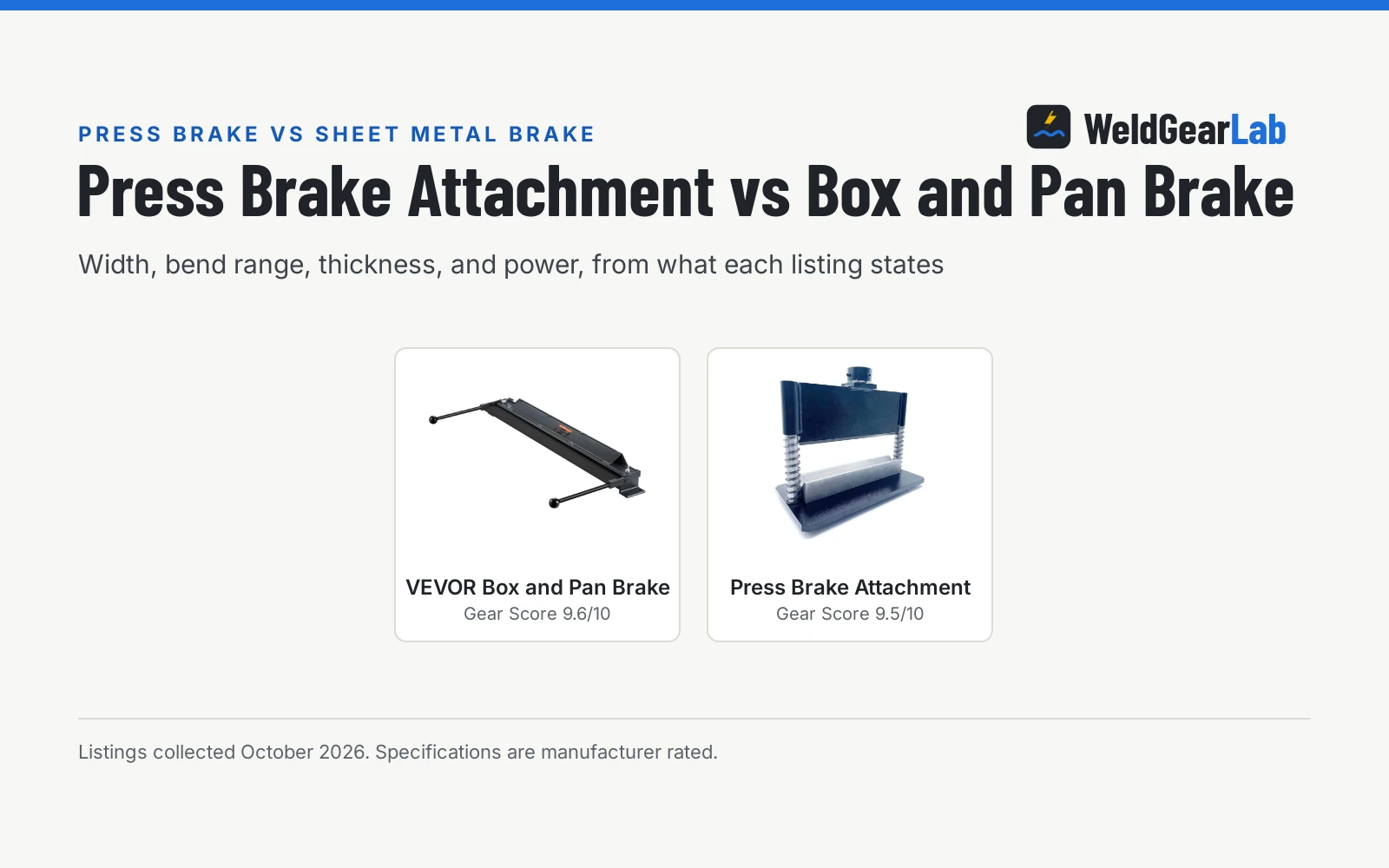
A 12 inch press brake attachment and a 48 inch box and pan brake compared on width, bend range, thickness, and what each tool needs.

On this page
Top picks at a glance
As an Amazon Associate I earn from qualifying purchases.
- 1
 VEVOR Box and Pan Brake, 48-Inch9.6/10View on Amazon
- 2
 12" Press Brake Attachment/Press Brake Attachment9.5/10View on Amazon
Verdict. Pick the sheet metal brake if you want a standalone tool that bends wide sheets without any other machine. Pick the press brake attachment if you already own a hydraulic shop press and need to bend mild steel in short widths.
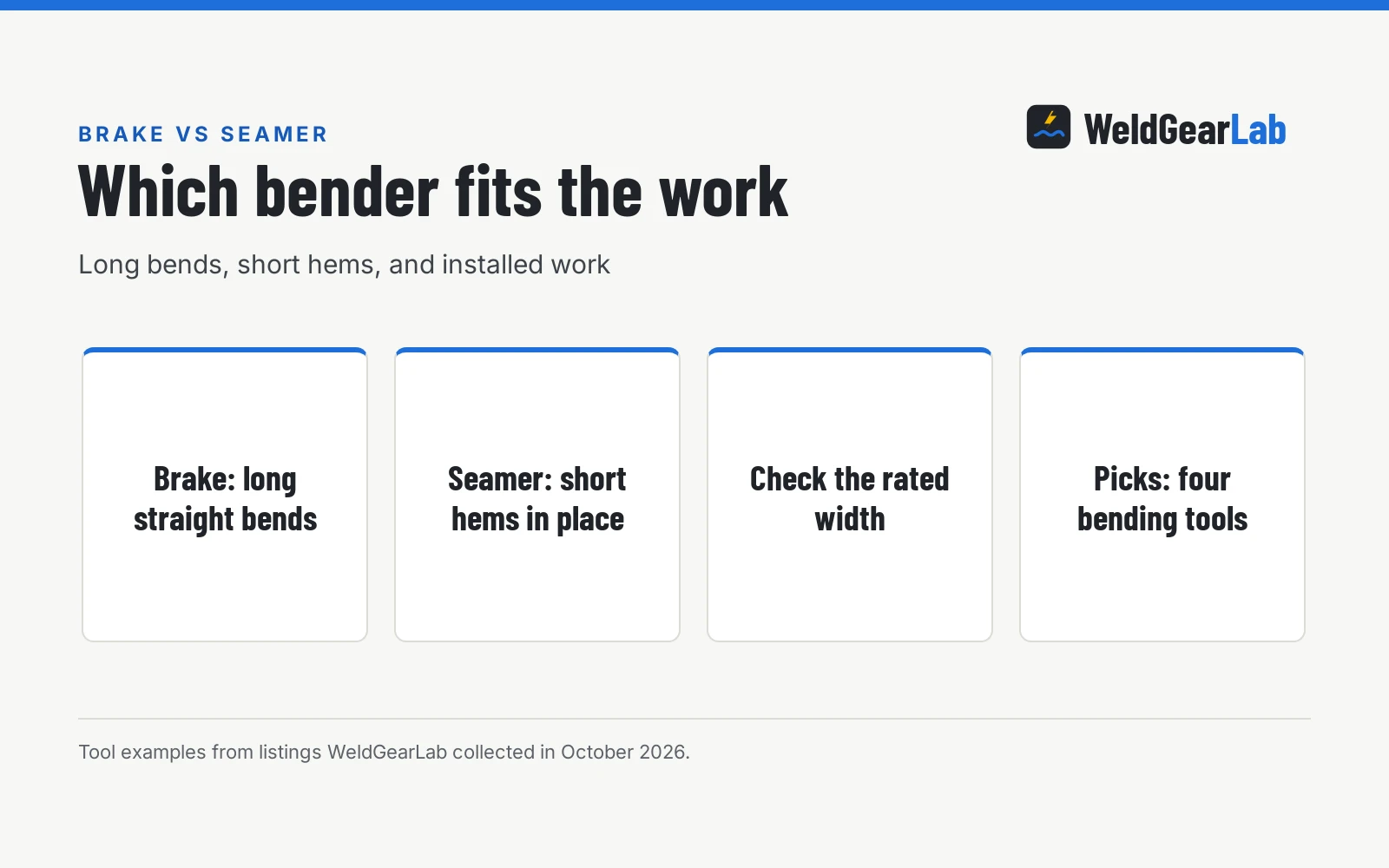
A press brake and a sheet metal brake both fold sheet metal, but they do it in different ways. This comparison covers press brake vs sheet metal brake on width, bend range, thickness, and what each tool needs, using only what each listing states.
WeldGearLab gets a commission on purchases made through links on this page, and your price stays the same. Read our affiliate disclosure.
The two brakes

VEVOR Box and Pan Brake, 48-Inch
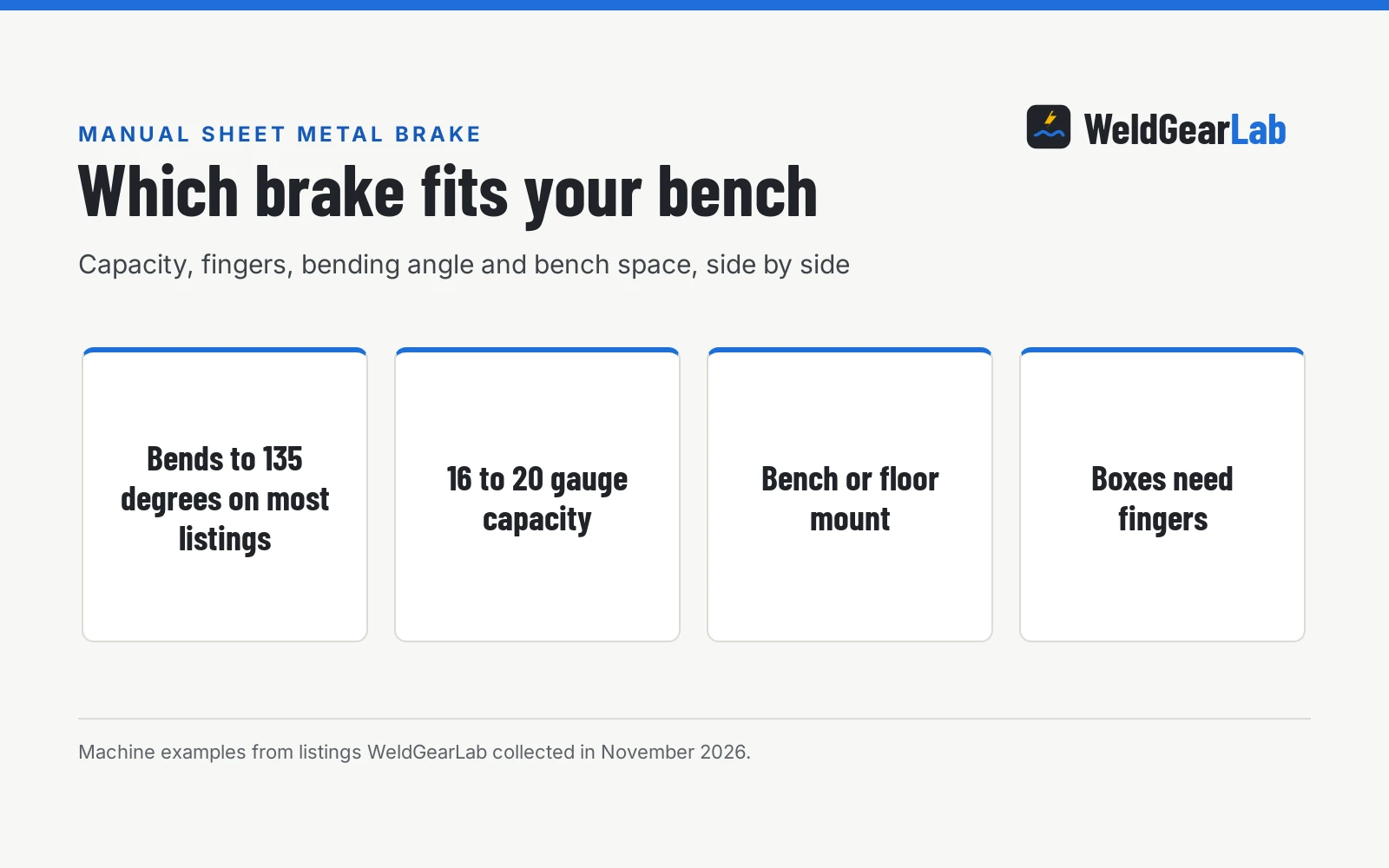
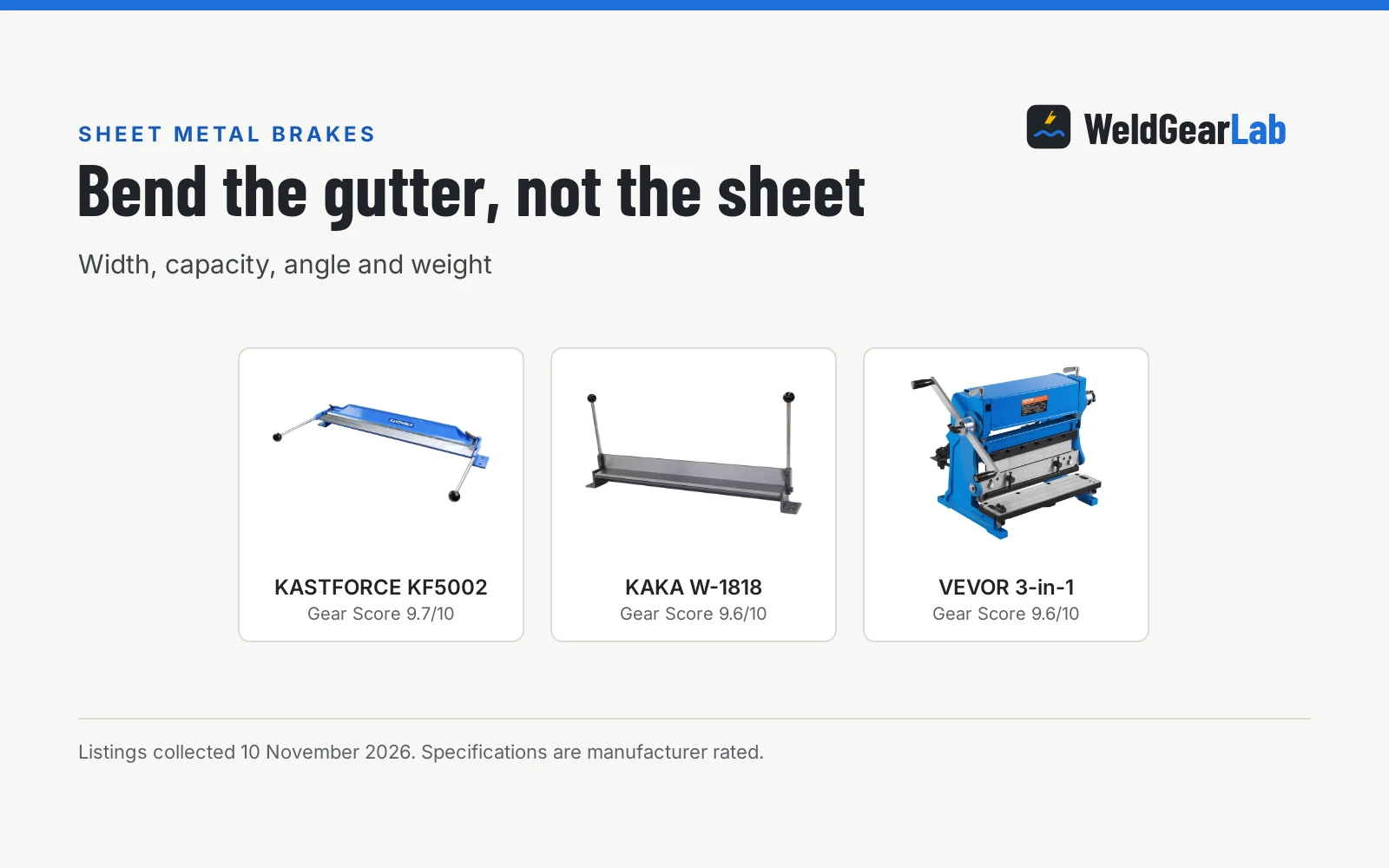
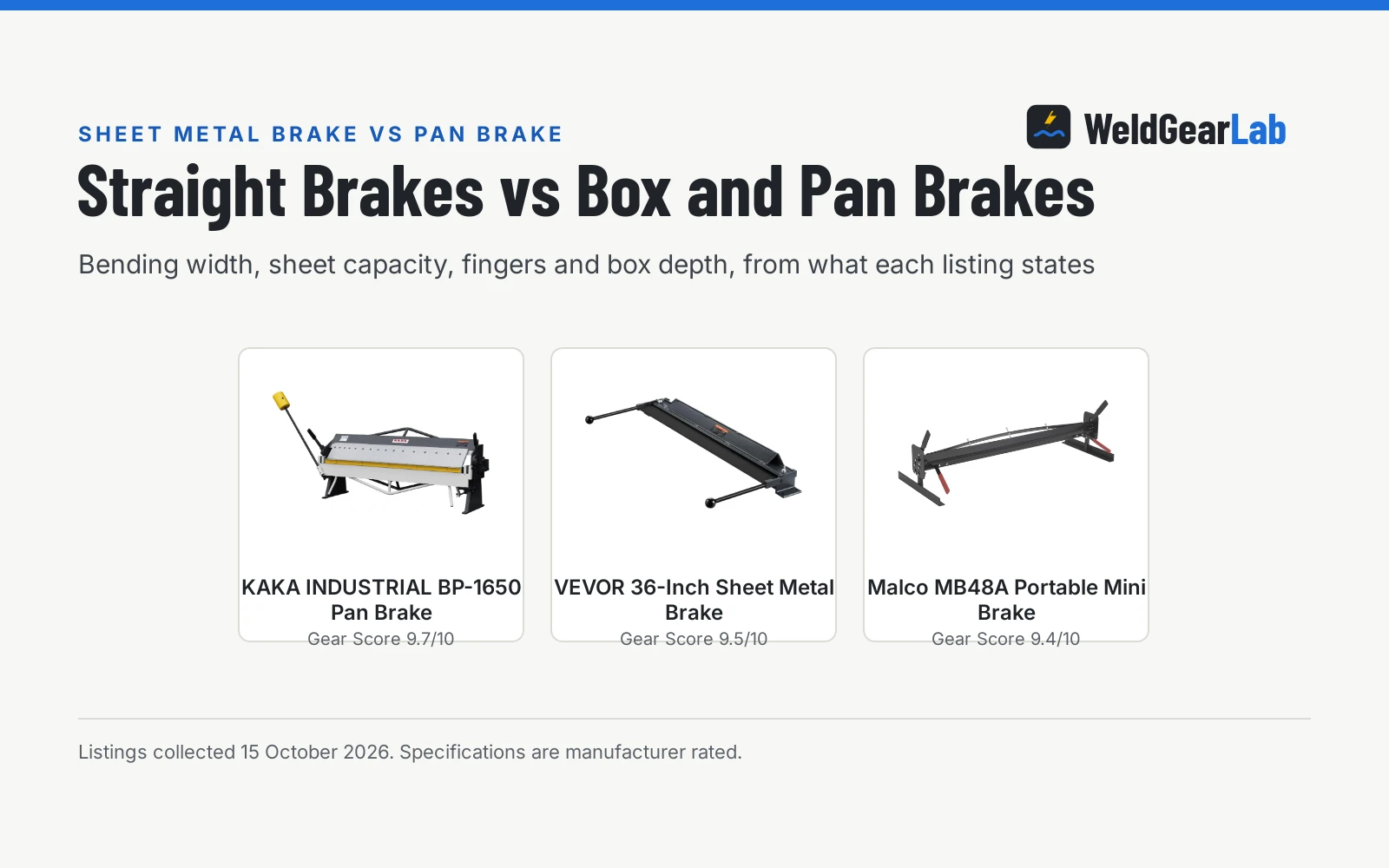
A 48-inch box and pan brake in Q235 steel with a 0.31 inch blade, bending 20-gauge low carbon steel and 14-gauge aluminum.
Pros
- 48-inch maximum bending width, or 1220 millimeters
- Bend range to 135 degrees per the bullets
- Q235 steel construction with a reinforced rib design
- Integrated press plate removes the need for external clamps
Cons
- 61.7 pounds, heavy to move
- Thickness stated in gauge only, not inches
- No warranty term is stated

12" Press Brake Attachment/Press Brake Attachment
A 12 inch press brake attachment for standard 12/20 ton hydraulic shop presses, bending mild steel up to 3/16 inch at full width.
Pros
- Bends 3/16 inch mild steel at the full 12 inch width
- Fits most standard 12 and 20 ton hydraulic shop presses
- Upper die mounting cup with a 1-7/8 inch, 48mm inside diameter
- Compact 14.5 x 7.5 x 10 inch size per the bullets
Cons
- Needs a separate 12 or 20 ton hydraulic shop press
- Maximum width of only 12 inches
- Bullets state 14.5 x 7.5 x 10 inches while the table states 14 x 8 x 14 inches
- No warranty term is stated
Other welders and gear to compare
 KF5017 Press Brake Attachment for 12-20 Ton Hydraulic PressesCheck price on Amazon
 VEVOR Sheet Metal BrakeCheck price on Amazon
 KAKA INDUSTRIAL Sheet Metal BrakeCheck price on Amazon
 DURATECH 90 Degree Tubing BenderCheck price on Amazon
 KAKA INDUSTRIAL Metal BrakeCheck price on Amazon
Press brake vs sheet metal brake side by side
| VEVOR Box and Pan Brake | Press Brake Attachment | Edge | |
|---|---|---|---|
| Gear Score | 59 | 55 | Sheet metal brake |
| Type | Box and pan brake | Attachment for 12/20 ton shop presses | Different tools |
| Max bending width | 48 inches / 1220 millimeters | 12 inches | Sheet metal brake |
| Bend range | 0 to 135 degrees (bullets); title says 0-130 degrees | 0 to 90 degrees | Sheet metal brake |
| Max thickness | 20-gauge low carbon steel, 14-gauge aluminum | 3/16 inch mild steel at 12 inches wide | Unclear (gauge vs inches) |
| Power | Hand powered | Hydraulic shop press | Different power |
| Weight | 61.7 pounds | 36.4 pounds | Press brake (attachment only) |
| Footprint | 54.7 x 17.7 x 6.1 inches | 14.5 x 7.5 x 10 inches (bullets) | Press brake (attachment only) |
| Material | Q235 steel | Not stated | Unclear (one side only) |
| Warranty | Not stated | Not stated | Neither stated |
Treat the specs as maker ratings pulled straight from the listings; we gathered them on 25 October 2026. Neither listing states a certification or a warranty term.
Bending width
Width is the clearest gap between the two sides. The VEVOR sheet metal brake bends up to 48 inches, or 1220 millimeters, in one pass, while the press brake attachment tops out at 12 inches of width. For wide panels or box sides up to 48 inches, the sheet metal brake covers the work in one bend, while the attachment cannot bend that width in one pass. For bends up to 12 inches wide, the attachment’s width covers the work.
Bend range
The press brake attachment lists a brake range of 0 to 90 degrees. The VEVOR listing is less tidy: its title states 0 to 130 degrees while its bullets state 0 to 135 degrees, so the top of its range is unclear from the listing alone. Either figure clears the attachment’s 90 degrees, so the sheet metal brake wins on range whichever figure is right. A sheet metal brake vs pan brake comparison sorts box and pan styles further.
Thickness and material
Thickness cannot be compared head to head here, because the two listings state it in different units. The press brake attachment lists mild steel at 3/16 inch by 12 inches wide, 1/4 inch by 6 inches wide, and 5/16 inch by 2 inches wide, so thicker stock means a narrower bend. The VEVOR brake lists 20-gauge low carbon steel and 14-gauge aluminum, with a 0.31 inch thick blade and Q235 steel construction. Inches against gauge is not a comparison, so judge each listing on its own figures.
What each tool needs
The biggest practical difference is what else you need. The press brake attachment is not a standalone tool: it attaches to most standard hydraulic shop presses, and the listing names 12 and 20 ton presses. If no press is in the shop, the attachment alone bends nothing. The VEVOR brake is standalone and hand powered, with two handles, an integrated press plate that removes the need for external clamps, and screw-mounted installation holes for fixing it to a workbench. The attachment weighs 36.4 pounds against the brake’s 61.7 pounds, but the attachment’s weight leaves out the press it needs.
Choose the press brake attachment if
- You already own a 12 or 20 ton hydraulic shop press.
- Your bends are short, up to 12 inches wide.
- You bend mild steel in narrow widths.
- You want a compact attachment rather than another bench tool.
Choose the sheet metal brake if
- You want a standalone tool with no press to buy.
- Your work runs wide, up to 48 inches.
- You bend boxes and pans with the integrated press plate.
- You want a bend range past 90 degrees.
FAQ for welders
What is the difference between a press brake and a sheet metal brake?
A press brake attachment forms metal with dies driven by a hydraulic shop press, while a sheet metal brake bends by hand with handles and a clamping plate.
How wide can each bend?
The VEVOR sheet metal brake bends up to 48 inches, or 1220 millimeters. The press brake attachment bends up to 12 inches wide.
Can the press brake attachment work without a shop press?
No. The listing describes it as an attachment for standard 12 and 20 ton hydraulic shop presses, and no press is included with it.
What thickness can each handle?
The press brake attachment lists mild steel at 3/16 inch by 12 inches wide, 1/4 inch by 6 inches wide, and 5/16 inch by 2 inches wide. The VEVOR brake lists 20-gauge low carbon steel and 14-gauge aluminum, so the two cannot be compared directly.
Which one should a small shop pick?
Pick the sheet metal brake for standalone wide work with no press to buy. Pick the press brake attachment if a 12 or 20 ton press is already in the shop and the bends are short and in mild steel.
Related: sheet metal brake vs pan brake, slip roll vs sheet metal brake, and the metal fab tools hub.
Scoring, line by line
Both brakes are scored on performance, build, value, safety listing, and warranty, with the weights published on our How We Pick page. Neither listing states a safety certification or a warranty term, so both score zero on those two criteria and the ranking comes from the other three.
| Product | Gear Score | Perf. /35 | Build /25 | Value /25 | Safety /10 | Warranty /5 |
|---|---|---|---|---|---|---|
| VEVOR Box and Pan Brake | 9.6 | 29 | 21 | 21 | n/a | 0 |
| Press Brake Attachment | 9.5 | 26 | 21 | 20 | n/a | 0 |
Think of 9.2 as the bottom and 9.8 as the top. Totals are placed between them in proportion, which keeps the order intact: more points, higher score. Safety points apply to gear that runs on power or lists safety features. Without either, we score out of 90 instead of 100.
Before you bend. Keep hands clear of moving dies and clamping plates, fasten the sheet metal brake to the workbench before bending, and check that the press matches the attachment’s stated tonnage. Wear eye protection and gloves suited to sheet metal edges.